
Instructior

2050740494_3b05ae9326

Certe quidem ipse orbis in promptu est, cultior de die, et instructior pristino. omnia iam pervia, omnia nota, omnia negotiosa; solitudines famosas retro fundi amoenissimi oblitteraverunt, silvas arva domuerunt, feras pecora fugaverunt, harenae seruntur, saxa panguntur, paludes eliquantur, tantae urbes quantae non casae quondam. iam nec insulae horrent nec scopuli terrent; ubique domus, ubique populus, ubique respublica, ubique vita. summum testimonium frequentiae humanae: onerosi sumus mundo, vix nobis elementa sufficiunt, et necessitates arctiores, et querellae apud omnes, dum iam nos natura non sustinet. revera lues et fames et bella et voragines civitatum pro remedio deputanda, tamquam tonsura insolescentis generis humani; et tamen, cum eiusmodi secures maximam mortalium vim semel caedant, numquam restitutionem eius vivos ex mortuis reducentem post mille annos semel orbis expavit.
(Tertullian, De Anima 30.3-4)

Surely it is obvious enough, if one looks at the whole world, that it is becoming daily better cultivated and more fully peopled than anciently. All places are now accessible, all are well known, all open to commerce; most pleasant farms have obliterated all traces of what were once dreary and dangerous wastes; cultivated fields have subdued forests; flocks and herds have expelled wild beasts; sandy deserts are sown; rocks are planted; marshes are drained; and where once were hardly solitary cottages, there are now large cities. No longer are (savage) islands dreaded, nor their rocky shores feared; everywhere are houses, and inhabitants, and settled government, and civilized life. What most frequently meets our view (and occasions complaint), is our teeming population: our numbers are burdensome to the world, which can hardly supply us from its natural elements; our wants grow more and more keen, and our complaints more bitter in all mouths, whilst Nature fails in affording us her usual sustenance. In very deed, pestilence, and famine, and wars, and earthquakes have to be regarded as a remedy for nations, as the means of pruning the luxuriance of the human race; and yet, when the hatchet has once felled large masses of men, the world has hitherto never once been alarmed at the sight of a restitution of its dead coming back to life after their millennial exile*.

* An allusion to Plato’s notion that, at the end of a thousand years, such a restoration of the dead, took place. See his Phaedrus, p. 248, and De Republ. x. p. 614.

(tr. Peter Holmes, with his note)

Desiccabatur

Psycho-Norman-Bates-Mother-490x249

Vidi et alium eiusdem ordinis virum beatum, valde longaeva aetate provectum, Donodem nomine, Frisonem natione, qui praedicatione sedula, tantum in sua Frisonum gente profecit ut eam a ferocitate sua plurimum mitigaret. ab antiquissimo enim tempore in consuetudinem immanissimam haec habebant Frisones: ut occiso homine unius cognationis ab altera, occisum corpus non sepeliebatur a suis, sed suspensum in loculo servabatur et desiccabatur in domo, quousque ex cognatione contraria in vindictam occisi, plures vel saltem unum adversa cognatio, pro morte vicaria, trucidaret; et tunc primum mortuum suum sepulturae debitae cum magna solemnitate tradebat. hunc crudelissimum et inauditum morem dictus frater in illa gente removit, et ad mitiorem statum crebra exhortatione promovit.
(Thomas of Cantimpré, Bonum Universale de Apibus 2.1.15)

I have also seen another blessed man of the same order*, advanced to an extremely high age, called Dodo, a Frisian. He had served his Frisian people through dedicated preaching so that he greatly pacified them from their savageness. From very ancient times the Frisians had cherished a most horrible custom that when a man of one kindred had been killed by another kindred, the corpse of the killed man was not buried by his kinsmen but was preserved, suspended in a corner, and dehydrated in the house until the hostile kindred slaughtered many or at least one of the opposing kindred in revenge by way of compensatory death. And only then their victim was given a proper burial with great ceremony. The aforementioned brother removed from his people this most cruel and unheard of custom and advanced them to a gentler condition of life by frequent exhortation.

*of Premonstratensians

(tr. Rolf Bremmer, with his note)

Apalamon

Εἰ δὲ δή τιν’ ἄνδρα θνατὸν Ὀλύμπου σκοποί
ἐτίμασαν, ἦν Τάνταλος οὗτος· ἀλ-
λὰ γὰρ καταπέψαι
μέγαν ὄλβον οὐκ ἐδυνάσθη, κόρῳ δ’ ἕλεν
ἄταν ὑπέροπλον, ἅν τοι πατὴρ ὕπερ
κρέμασε καρτερὸν αὐτῷ λίθον,
τὸν αἰεὶ μενοινῶν κεφαλᾶς βαλεῖν
εὐφροσύνας ἀλᾶται.
ἔχει δ’ ἀπάλαμον βίον τοῦτον ἐμπεδόμοχθον
μετὰ τριῶν τέταρτον πόνον, ἀθανάτους ὅτι κλέψαις
ἁλίκεσσι συμπόταις
νέκταρ ἀμβροσίαν τε
δῶκεν, οἷσιν ἄφθιτον
θέν νιν. εἰ δὲ θεὸν ἀνήρ τις ἔλπεταί
τι λαθέμεν ἔρδων, ἁμαρτάνει.
(Pindar, Ol. 1.54-64)

If they who watch on Olympos have honored
any man, that was Tantalos; but he was not
able to swallow his great fortune, and for his high stomach
drew a surpassing doom when our father
hung the weight of the stone above him.
He waits ever the stroke at his head and is divided from joy.
That life is too much for his strength; he is buckled fast in torment,
agony fourth among three others, because he stole
and gave to his own fellowship
that ambrosia and nectar
wherewith the gods made him immortal. If any man thinks to swindle
God, he is wrong.
(tr. Richard Lattimore)

Paidopoiēsomenos

amazonsandgreeks

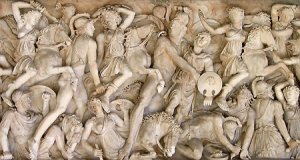
Ἐνταῦθα λέγουσιν ὅτι Ἀτροπάτης ὁ τῆς Μηδίας σατράπης γυναῖκας ἑκατὸν αὐτῷ ἔδωκεν, ταύτας φάσκων εἶναι τῶν Ἀμαζόνων, καὶ ταύτας σκευῇ ἀνδρῶν ἱππέων ἐσταλμένας, πλήν γε δὴ ὅτι πελέκεις ἀντὶ δοράτων ἐφόρουν καὶ ἀντὶ ἀσπίδων πέλτας· οἱ δὲ καὶ τὸν μαστὸν λέγουσιν ὅτι μείονα εἶχον τὸν δεξιόν, ὃν δὴ καὶ ἔξω εἶχον ἐν ταῖς μάχαις. ταύτας μὲν δὴ ἀπαλλάξαι τῆς στρατιᾶς Ἀλέξανδρον, μή τι νεωτερισθείη κατ᾽ αὐτὰς ἐς ὕβριν πρὸς τῶν Μακεδόνων ἢ βαρβάρων· κελεῦσαι δὲ ἀπαγγεῖλαι πρὸς τὴν βασίλισσαν σφῶν ὅτι αὐτὸς ἥξει πρὸς αὐτὴν παιδοποιησόμενος.
(Arrian, Anabasis Alexandrou 7.13.2-3)

There they say that Atropates the satrap of Media handed over to him a hundred women, saying that they were of the Amasons ; they were equipped like cavalry troopers, except that they carried axes
instead of spears, and small targets instead of shields. Some say that they had the right breast smaller, and that this was uncovered in battle. Alexander sent them away from the army, lest they should
meet any roughness from the Macedonians or foreign troops; but he bade them announce to their queen that he was coming to see her in hope of offspring. (tr. Ernest Iliff Robson)

Rudimenta

0e10b8c860de5ea2b3e1d277d5a9c12c--pintura-medieval-arundel

This is part 3 of 3. Part 1 is here. Part 2 is here.

Tentabo tamen et hunc Aristippum, virum
quem ab omnibus doctum audio probarier,
et philosophum et rhetora, pientis quoque animi, ut
sine verbere dialecticum atque rhetorem
eum faciat, is namque casus, tempora,
et alia Donati rudimenta (ut ferunt)
iamdudum ad unguem callet. ut si fata me e
medio ferant, habeat puer vitam suam
qui suave, molliter, et honeste transigat.
(Georgius Macropedius, Rebelles 101-109)

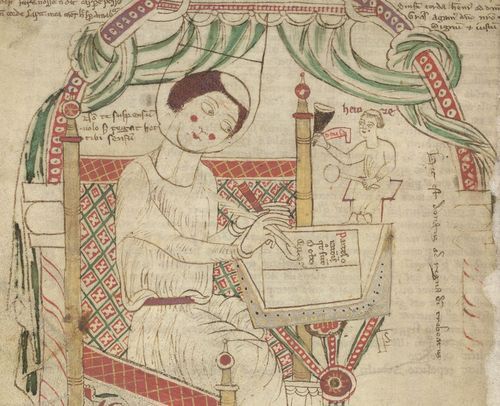
Even so, I am also going to try this Aristippus, a teacher praised by all for his skill in philosophy and rhetoric. And he is supposed to be a pious man as well, so that he may yet make a dialectician and rhetorician out of my boy without beating him to a pulp. They say he also knows the ins and outs of the cases and the tenses and all the other fundamentals of the Latin primer, as it is called. So that, if God forbid, I should die, the boy can fend for himself and build himself a life that is pleasant, comfortable and also respectable.

Rigore

cruel teacher

This is part 2 of 3. Part 1 is here. Part 3 is here.

Nam ob istuc Dyscolum
gnatum meum, qui grandior natu est, scholis
pridem docendum tradidi, et mirum in modum
proficeret, id si liceat (heu) per improbam
didascalorum amentiam, qua tenerior
pueri cutis diverberatur, et eadem
est omnibus crudelitas doctoribus,
quasi sit rigore docendum, haud clementia.
id usque sensi a primo ad octavum ultimum,
quibus omnibus mores iidem et par rigor.
liventibus nam clunibus semper domum a
scholis puer revertitur, vibicibusque
ostendit (heu) magistri amaritudinem.
(Georgius Macropedius, Rebelles 88b-100)

For that is what I had in mind when I handed my son Dyscolus (he is the oldest one) over to be taught in school, a long time ago. And he would have done exceptionally well – if only that were possible. But alas, for the wicked, mindless attitude of the teachers who have been beating his delicate young boy’s skin – and that goes for all the instructors: the same cruelty everywhere, as if teaching were a matter of being harsh rather than being gentle. From teacher number one to teacher number eight and last, we have seen nothing but hard and cruel measures: always the same story, the lad returns home from school with his buttocks black and blue, thus showing through the punishment he receives (oh woe is me) the venom and hatred of the master. (tr. Yehudi Lindeman)

Puellulam

oldlady

This is part 1 of 3. Part 2 is here. Part 3 is here.

[PHILOTECNIVM]
Cum aetatis huius et peracti temporis
rationem habeo, considero haud me paucula
Paschalia edisse ova; nam rugosa fit
cutis, genaeque flaccidae, canis quoque
respersa tempora. quin et ipse filius
iam natus annos quindecim, puellulam
me pernegat. sed neque parum accelerant mihi
gravem hanc senectutem graves curae omnium
rerum domesticarum et immitis iugum
mariti, et ingens prolium curatio,
quibus locupletandis honestandisque diu
noctuque pervigilo.
(Georgius Macropedius, Rebelles 77-88a)

When I think of my age and all the time that has passed, I realize that I am no longer young. Too many times has Easter come and gone: my skin is getting wrinkled, my cheeks flabby and my hair is greying at the temples. That’s how it is and my son (who is fifteen) is the living proof that I am no longer a spring chicken. But this heavy old age of mine is aggravated by other matters as well: the care for all the household duties, the burden of a coarse man for a husband, and the huge responsibility for the future of my children. How to assure for them a rich and respectable life: that is the thought that keeps me awake at night. (tr. Yehudi Lindeman)

Adonis

hb_37.162
Peter Paul Rubens, Venus & Adonis

Labitur occulte fallitque volatilis aetas,
et nihil est annis velocius: ille sorore
natus avoque suo, qui conditus arbore nuper,
nuper erat genitus, modo formosissimus infans,
iam iuvenis, iam vir, iam se formosior ipso est,
iam placet et Veneri matrisque ulciscitur ignes.
namque pharetratus dum dat puer oscula matri,
inscius exstanti destrinxit harundine pectus;
laesa manu natum dea reppulit: altius actum
vulnus erat specie primoque fefellerat ipsam.
capta viri forma non iam Cythereïa curat
litora, non alto repetit Paphon aequore cinctam
piscosamque Cnidon gravidamve Amathunta metallis;
abstinet et caelo: caelo praefertur Adonis.
(Ovid, Met. 10.519-532)

Time swiftly glides by in secret, escaping our notice,
and nothing goes faster than years do: the son of his sister
by his grandfather, the one so recently hidden
within a tree, so recently born, a most beautiful infant,
now is an adolescent and now a young man
even more beautiful than he was as a baby,
pleasing now even to Venus and soon the avenger
of passionate fires that brought his mother to ruin.
For while her fond Cupid was giving a kiss to his mother,
he pricked her unwittingly, right in the breast, with an arrow
projecting out of his quiver; annoyed, the great goddess
swatted him off, but the wound had gone in more deeply
than it appeared to, and at the beginning deceived her.
Under the spell of this fellow’s beauty, the goddess
no longer takes any interest now in Cythera,
nor does she return to her haunts on the island of Paphon,
or to fish-wealthy Cnidus or to ore-bearing Amethus;
she avoids heaven as well, now—preferring Adonis…
(tr. Charles Martin)

Urorum

Enichires

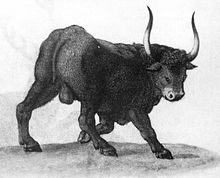
Eodem anno Frisii, transrhenanus populus, pacem exuere, nostra magis avaritia quam obsequii impatientes. tributum iis Drusus iusserat modicum pro angustia rerum, ut in usus militaris coria boum penderent, non intenta cuiusquam cura quae firmitudo, quae mensura, donec Olennius e primipilaribus regendis Frisiis impositus terga urorum delegit quorum ad formam acciperentur. id aliis quoque nationibus arduum apud Germanos difficilius tolerabatur, quis ingentium beluarum feraces saltus, modica domi armenta sunt. ac primo boves ipsos, mox agros, postremo corpora coniugum aut liberorum servitio tradebant. hinc ira et questus et postquam non subveniebatur remedium ex bello. rapti qui tributo aderant milites et patibulo adfixi: Olennius infensos fuga praevenit receptus castello cui nomen Flevum; et haud spernenda illic civium sociorumque manus litora Oceani praesidebat.
(Tacitus, Ann. 4.72)

 That same year a people beyond the Rhine, the Frisians, abandoned their peace, more through our rapacity than because they were chafing at their subjection. Drusus had levied from them a modest tribute, taking account of their straitened circumstances: their payment was to be oxhides for military use. However, nobody had paid attention to the firmness or measurements of the hides until Olennius, a man of senior centurion rank who had been appointed to govern the Frisians, chose the skin of the auroch as the yardstick of acceptability. That would even have posed a problem for any other tribes, but in the case of the Germans it was particularly difficult to tolerate in that, while they have woods teeming with huge beasts, their domestic animals are quite small. At first, they were surrendering just the oxen; then it was their lands; and finally it was their wives or children delivered into slavery. From this came rage and protests; and when no relief arrived, war was the solution. The soldiers who were there to take the tribute were kidnapped and nailed to gibbets. Olennius escaped the fury of the Frisians by flight, and was taken in at a fortress called Flevum. There a unit of no mean size, comprising citizens and allies, stood watch over the Ocean coastline. (tr. John C. Yardley)

Gustulum

chicken-lovers-day_hen-chick1544

Iamque iis poculis mutuis altercantibus mirabile prorsus evenit ostentum. una de cetera cohorte gallina per mediam cursitans aream clangore genuino velut ovum parere gestiens personabat. eam suus dominus intuens, “o bona” inquit “ancilla et satis fecunda, quae multo iam tempore cotidianis nos partubus saginasti. nunc etiam cogitas, ut video, gustulum nobis praeparare.” et “heus,” inquit “puer, calathum fetui gallinaceo destinatum angulo solito collocato.” ita uti fuerat iussum procurante puero, gallina consuetae lecticulae spreto cubili ante ipsos pedes domini praematurum sed magno prorsus futurum scrupulo prodidit partum. non enim ovum, quod scimus, illud; sed pinnis et unguibus et oculis et voce etiam perfectum edidit pullum, qui matrem suam coepit continuo comitari.
(Apuleius, Met. 9.33.4-6)

Then, as they were conversing and sharing cups of wine, a truly remarkable portent occurred. One of the flock of hens began running round the middle of the yard cackling in the usual way, as if she wanted to lay an egg. Her master looked at her and said, “What a good, productive girl you are! You have been fattening us such a long time now with your daily deliveries. Now too, I see, you are planning to prepare us our appetiser. Boy,” he went on, “put the basket that is kept for the laying hens in its usual corner.” The slave made the preparations just as he was ordered, but the hen spurned the nest of her customary couch and laid her egg right at her master’s feet. The delivery was premature but destined to cause very great anxiety, for it was not an egg as we know them that she laid, but a fully developed chick with feathers and claws and eyes and a chirp, and it immediately began to follow its mother around. (tr. John Arthur Hanson)