Ἃ δεῖ παρὼν φρόντιζε, μὴ παρὼν ἀπῇς.
(Anonymous, Tragica Adespota fr. 517 Nauck)
Do what you must when present, do not feign absence. (tr. Marinos Yeroulanos)

Ἃ δεῖ παρὼν φρόντιζε, μὴ παρὼν ἀπῇς.
(Anonymous, Tragica Adespota fr. 517 Nauck)
Do what you must when present, do not feign absence. (tr. Marinos Yeroulanos)

L. Veratius fuit egregie homo improbus atque immani vecordia. is pro delectamento habebat, os hominis liberi manus suae palma verberare. eum servus sequebatur ferens crumenam plenam assium; ut quemque depalmaverat, numerari statim secundum Duodecim Tabulas quinque et viginti asses iubebat.
(Aulus Gellius, Noctes Atticus 20.1.13)
One Lucius Veratius was an exceedingly wicked man and of cruel brutality. He used to amuse himself by striking free men in the face with his open hand. A slave followed him with a purse full of asses; as often as he had buffeted anyone, he ordered twenty-five asses to be counted out at once, according to the provision of the Twelve Tables. (tr. John C. Rolfe)
Ἡ παιδεία, κἂν μηδὲν ἕτερον ἀγαθὸν ἔχῃ, τό γε συμφοιτᾶν δι’ αὐτὴν νυκτὸς καὶ ἡμέρας ἔξω κακίας, οἷς ἂν ᾖ τις αἰδώς· καὶ πολλοὶ σφᾶς αὐτοὺς καὶ ἄλλους.
(Plutarch, fr. 159)
Even if education has no other merits, attending school at least keeps pupils who have any sense of decency away from wrongdoing, whether by day or by night. (tr. James C. McKeown)
Coronant et publicos ordines laureis publicae causae, magistratus vero insuper aureis, ut Athenis, ut Romae. Superferuntur etiam illis Etruscae. hoc vocabulum est coronarum quas
gemmis et foliis ex auro quercinis ab Iove insignes ad deducendas tensas cum palmatis togis sumunt. sunt et provinciales aureae, imaginum pro numero capita maiora quaerentes. sed tui ordines et tui magistratus et ipsum curiae nomen ecclesia est Christi. illius es concriptus in libris vitae. illic purpurae tuae sanguis Domini, et clavus latus in cruce ipsius; illic secures, ad caudicem iam arboris positae; illic virgae ex radice Iesse.
(Tertullian, De Corona Militis 13.1-2)
For state reasons, the various orders of the citizens also are crowned with laurel crowns; but the magistrates besides with golden ones, as at Athens, and at Rome. Even to those are preferred the Etruscan. This appellation is given to the crowns which, distinguished by their gems and oak leaves of gold, they put on, with mantles having an embroidery of palm branches, to conduct the chariots containing the images of the gods to the circus. There are also provincial crowns of gold, needing now the larger heads of images instead of those of men. But your orders, and your magistracies, and your very place of meeting, the church, are Christ’s. You belong to Him, for you have been enrolled in the books of life. (Philippians 4:3) There the blood of the Lord serves for your purple robe, and your broad stripe is His own cross; there the axe is already laid to the trunk of the tree (Matthew 3:10); there is the branch out of the root of Jesse (Isaiah 11:1). (tr. Sidney Thelwall)

Romanis eam* legionibus Gaius Marius in secundo consulatu suo proprie dicavit. erat et antea prima cum quattuor aliis: lupi, minotauri, equi aprique singulos ordines anteibant; paucis ante annis sola in aciem portari coepta erat, reliqua in castris relinquebantur; Marius in totum ea abdicavit. ex eo notatum non fere legionis umquam hiberna esse castra ubi aquilarum non sit iugum.
* sc. aquilam
(Pliny the Elder, Nat. Hist. 10.16)
The eagle was assigned to the Roman legions as their special badge by Gaius Marius in his second consulship. Even previously it had been their first badge, with four others, wolves, minotaurs, horses and boars going in front of the respective ranks; but a few years before the custom had come in of carrying the eagles alone into action, the rest being left behind in camp. Marius discarded them altogether. Thenceforward it was noticed that there was scarcely ever a legion’s winter camp without a pair of eagles being in the neighbourhood. (tr. Harris Rackham)

In ore quoque quaedam manu curantur. ubi in primis dentes nonnumquam moventur, modo propter radicum inbecillitatem, modo propter gingivarum arescentium vitium. – oportet in utrolibet candens ferramentum gingivis admoveri, ut attingat leviter, non insidat. adustae gingivae melle illinendae et mulso eluendae sunt. ut pura ulcera esse coeperunt, arida medicamenta infrianda sunt ex is, quae reprimunt. si vero dens dolores movet eximique eum, quia medicamenta nihil adiuvant, placuerit, circumradi debet, ut gingivae ab eo resolvantur; tum is concutiendus est. eaque facienda, donec bene moveatur: nam dens haerens cum summo periculo evellitur, ac nonnumquam maxilla loco movetur; idque etiam maiore periculo in superioribus dentibus fit, quia potest tempora oculosve concutere. tum, si fieri potest, manu; si minus, forfice, dens excipiendus est.
(Celsus, De Medicina 7.12.1a-b)
In the mouth too some conditions are treated by surgery. In the first place, teeth sometimes become loose, either from weakness of the roots, or from disease drying up the gums. In either case the cautery should be applied so as to touch the gums lightly without pressure. The gums so cauterized are smeared with honey, and swilled with honey wine. When the ulcerations have begun to clean, dry medicaments, acting as repressants, are dusted on. But if a tooth gives pain and it is decided to extract it because medicaments afford no relief, the tooth should be scraped round in order that the gum may become separated from it; then the tooth is to be shaken. And this is to be done until it is quite moveable: for it is very dangerous to extract a tooth that is tight, and sometimes the jaw is dislocated. With the upper teeth there is even greater danger, for the temples or eyes may be concussed. Then the tooth is to be extracted, by hand, if possible, failing that with the forceps. (tr. Walter George Spencer)
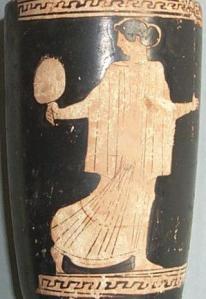
[ΦΑΙΔΡΑ]
Μόνον δὲ τοῦτο φασ’ ἁμιλλᾶσθαι βίῳ,
γνώμην δικαίαν κἀγαθὴν ὅτῳ παρῇ.
κακοὺς δὲ θνητῶν ἐξέφην’ ὅταν τύχῃ,
προθεὶς κάτοπτρον ὥστε παρθένῳ νέᾳ,
χρόνος· παρ’ οἷσι μήποτ’ ὀφθείην ἐγώ.
[PHAEDRA]
One thing only, they say, competes in value with life, the possession of a heart blameless and good. But as for the base among mortals, they are exposed, late or soon, by Time, who holds up to them, as to a young girl, a mirror. In their number may I never be found! (tr. David Kovacs)

Ἕκτορ, Ἀρήϊον αἷμα, κατὰ χθονὸς εἴ που ἀκούεις,
χαῖρε, καὶ ἄμπνευσον βαιὸν ὑπὲρ πατρίδος.
Ἴλιον οἰκεῖται κλεινὴ πόλις, ἄνδρας ἔχουσα
σοῦ μὲν ἀφαυροτέρους, ἀλλ’ ἔτ’ ἀρηϊφίλους·
Μυρμιδόνες δ’ ἀπόλοντο. παρίστασο, καὶ λέγ’ Ἀχιλλεῖ
Θεσσαλίην κεῖσθαι πᾶσαν ὑπ’ Αἰνεάδαις.
(Hadrian or Germanicus, Anth. Gr. 9.387)
Hector of the race of Ares, if thou hearest where’er thou art under ground, hail! and stay a little thy sighs for thy country. Ilion is inhabited, and is a famous city containing men inferior to thee, but still lovers of war, while the Myrmidons have perished. Stand by his side and tell Achilles that all Thessaly is subject to the sons of Aeneas. (tr. William Roger Paton)
In parentibus vero quam plurimum esse eruditionis optaverim, nec de patribus tantum loquor. nam Gracchorum eloquentiae multum contulisse accepimus Corneliam matrem, cuius doctissimus sermo in posteros quoque est epistulis traditus: et Laelia C. filia reddidisse in loquendo paternam elegantiam dicitur, et Hortensiae Q. filiae oratio apud triumviros habita legitur non tantum in sexus honorem. nec tamen ii, quibus discere ipsis non contigit, minorem curam docendi liberos habeant; sed sint propter hoc ipsum ad cetera magis diligentes.
(Quintilian, Inst. Or. 1.1.6-7)
As regards parents, I should like to see them as highly educated as possible, and I do not restrict this remark to fathers alone. We are told that the eloquence of the Gracchi owed much to their mother Cornelia, whose letters even to-day testify to the cultivation of her style. Laelia, the daughter of Gaius Laelius, is said to have reproduced the elegance of her father’s language in her own speech, while the oration delivered before the triumvirs by Hortensia, the daughter of Quintus Hortensius, is still read and not merely as a compliment to her sex. And even those who have not had the fortune to receive a good education should not for that reason devote less care to their son’s education; but should on the contrary show all the greater diligence in other matters where they can be of service to their children. (tr. Harold Edgeworth Butler)
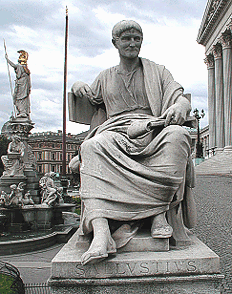
Omnes homines, qui sese student praestare ceteris animalibus summa ope niti decet ne vitam silentio transeant veluti pecora, quae natura prona atque ventri oboedientia finxit. sed nostra omnis vis in animo et corpore sita est; animi imperio, corporis servitio magis utimur; alterum nobis cum dis, alterum cum beluis commune est. quo mihi rectius videtur ingeni quam virium opibus gloriam quaerere, et, quoniam vita ipsa qua fruimur brevis est, memoriam nostri quam maxume longam efficere; nam divitiarum et formae gloria fluxa atque fragilis est, virtus clara aeternaque habetur.
(Sallust, Bell. Cat. 1.1-4)
All human beings who want to be superior to the other animals ought to struggle with every resource not to be like cattle passing silently through life. It is natural for the cattle to hang their heads and obey their stomachs, but all our strength is situated in our mind as well as our body: we use the mind more for control, the body for servitude; the one we have in common with the gods, the other with the beasts. And so I think it more upright to seek glory with our inner resources than with our physical strength and, since life is itself brief, to make the memory of our lives as long as possible. I say this because the glory of wealth and physical beauty is fluid and fragile; but virtue is held brilliant and eternal. (tr. William W. Batstone)
 Crambe Repetita