Abracadabra

abracadabra

Mortiferum magis est quod Graecis hemitritaeon
vulgatum verbis; hoc nostra dicere lingua
non potuere ulli, puto, nec voluere parentes.
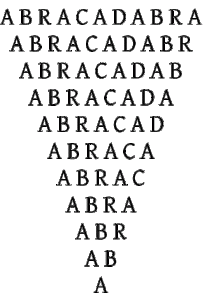
inscribes chartae quod dicitur abracadabra
saepius et subter repetes, sed detrahe summam,
et magis atque magis desint elementa figuris
singula, quae semper rapies, et cetera figes,
donec in angustum redigatur littera conum:
his lino nexis collum redimire memento.
(Serenus Sammonicus, Liber Medicinalis 932-942)

Rather more deadly is what in Greek words is commonly called hemitritaion*. This no one could express in our language, I believe, and neither did parents wish for that. Write on a sheet (of papyrus) the word ABRACADABRA, repeat it rather more often underneath, but omit the last letter, so that more and more individual letters will be missing from the lines, the elements that you remove, which you continually snatch away, while you commit to writing the others, until a single letter is to be rendered as the narrow end of a cone. Remember to attach this to the neck with a linen thread.

*  half-of-three, i.e. a fever whose attacks last for approximately 1 1/2 days = 36 hours; ‘tertian fever’ in English.

(tr. Peter Kruschwitz, with his note)

Basima

98713d5b11f0d1bb248419c73c4bb4f3

Πρὸ τῆς αὐλῆς τοῦ Δρύαντος ἐπ’ αὐτῇ τῇ αὐλῇ μυρρίναι μεγάλαι δύο καὶ κιττὸς ἐπεφύκει, αἱ μυρρίναι πλησίον ἀλλήλων, ὁ κιττὸς ἀμφοτέρων μέσος, ὥστε ἐφ’ ἑκατέραν διαθεὶς τοὺς ἀκρεμόνας ὡς ἄμπελος ἄντρου σχῆμα διὰ τῶν φύλλων ἐπαλλαττόντων ἐποίει, καὶ ὁ κόρυμβος πολὺς καὶ μέγας ὅσος βότρυς κλημάτων ἐξεκρέματο. ἦν οὖν πολὺ πλῆθος περὶ αὐτὸν τῶν χειμερινῶν ὀρνίθων ἀπορίᾳ τῆς ἔξω τροφῆς· πολὺς μὲν κόψιχος, πολλὴ δὲ κίχλη, καὶ φάτται καὶ ψᾶρες καὶ ὅσον ἄλλο κιττοφάγον πτερόν. τούτων τῶν ὀρνίθων ἐπὶ προφάσει θήρας ἐξώρμησεν ὁ Δάφνις, ἐμπλήσας μὲν τὴν πήραν ὀψημάτων μεμελιτωμένων, κομίζων δὲ ἐς πίστιν ἰξὸν καὶ βρόχους. τὸ μὲν οὖν μεταξὺ σταδίων ἦν οὐ πλέον δέκα, οὔπω δὲ ἡ χιὼν λελυμένη πολὺν αὐτῷ κάματον παρέσχεν. ἔρωτι δὲ ἄρα πάντα βάσιμα, καὶ πῦρ καὶ ὕδωρ καὶ Σκυθικὴ χιών.
(Longus, Daphnis & Chloe 3.5)

Right in front of Dryas’ farmyard grew two large myrtles and an ivy bush, the myrtles close together and the ivy between them, so that it spread its tendrils over each of them like a vine and with its intertwining leaves formed a kind of cave, and many a cluster of berries, as big as grapes, hung from the stems. So there was a crowd of winter birds around it, owing to the scarceness of food outside: many a blackbird, many a thrush, pigeons and starlings and every other winged ivy-eater. Daphnis set out on the pretext of hunting these birds, filling his knapsack with honeyed tidbits and packing birdlime and snares to add credibility. Although the trip was no longer than ten stades, the still unmelted snow made considerable work for him. But love finds a way through everything, be it fire, water, or Scythian snow. (tr. Jeffrey Henderson)

Exarmaveris

fdb319b2-beb6-412e-aad4-fa127cf4a0dc

Quisquis composito serenus aevo
fatum sub pedibus egit superbum
fortunamque tuens utramque rectus
invictum potuit tenere vultum,
non illum rabies minaeque ponti
versum funditus exagitantis aestum
nec ruptis quotiens vagus caminis
torquet fumificos Vesaevus ignes
aut celsas soliti ferire turres
ardentis via fulminis movebit.
quid tantum miseri saevos tyrannos
mirantur sine viribus furentes?
nec speres aliquid nec extimescas:
exarmaveris impotentis iram;
at quisquis trepidus pavet vel optat,
quod non sit stabilis suique iuris,
abiecit clipeum locoque motus
nectit qua valeat trahi catenam.
(Boëthius, De Consolatione Philosophiae 1.4 metrum)

In tranquillity, life secure and settled,
Upright, feet on the neck of peacock Fortune,
Looking squarely at fate, benign or brutal –
He, unconquered, who kept his bearings, dreads not
The insanity of the ocean’s menace,
When it churns up the waves from depths abyssal;
Nor Vesuvius, when from fractured chimneys
Fire flies spiraling up with smoke at random;
Nor bright trails of the lightning bolts, accustomed
To demolish the lofty towers of princes.
Tell me, why are the weak in awe of tyrants,
Feral, violent, but without true power?
If you hope for and fear for nothing ever
Then you’ve broken the sword of the madman’s anger.
But a coward who dreads or longs for something,
Who cannot stand his ground upon his own rights,
Has discarded his shield; out of position,
He has fashioned the chain he’ll wear in slavery.
(tr. Joel C. Relihan)

Hepsomai

cleanthes1

Ἄγου δέ μ’, ὦ Ζεῦ, καὶ σύ γ’ ἡ Πεπρωμένη,
ὅποι ποθ’ ὑμῖν εἰμι διατεταγμένος·
ὡς ἕψομαί γ’ ἄοκνος· ἢν δέ γε μὴ θέλω,
κακὸς γενόμενος, οὐδὲν ἧττον ἕψομαι.
(Cleanthes, fr. 2 Powell)

Lead me, Zeus, and you too, Destiny,
To wherever your decrees have assigned me.
I follow readily, but if I choose not,
Wretched though I am, I must follow still.
(tr. Nicholas P. White)

Et sic adloquamur Iovem, cuius gubernaculo moles ista derigitur, quemadmodum Cleanthes noster versibus disertissimis adloquitur, quos mihi in nostrum sermonem mutare permittitur Ciceronis, disertissimi viri, exemplo. si placuerint, boni consules; si displicuerint, scies me in hoc secutum Ciceronis exemplum:
Duc, o parens celsique dominator poli,
quocumque placuit; nulla parendi mora est.
adsum impiger. fac nolle, comitabor gemens
malusque patiar, facere quod licuit bono.
ducunt volentem fata, nolentem trahunt.
(Seneca Minor, Ep. ad Luc. 107.10-11)

(…) and let us address Jupiter, the pilot of this vessel, as our Cleanthes addresses him in most eloquent verses, and as our most eloquent Cicero’s example allows me to adapt in our own language. If you like them, you will take it well, but if they don’t please you, you will know that in this I followed Cicero’s lead:
Lead me, father and lord of heaven’s lofty pole
Where’er you choose; I’ll not delay obedience;
Here I am, active. If I’m reluctant, I will follow groaning,
A bad man suffering what the good man chooses.
The Fates lead on the willing but drag behind the laggard.
(tr. Elaine Fantham)

Centum

Homeri est:
‘οὐδ’ εἴ μοι δέκα μὲν γλῶσσαι δέκα δὲ στόματ’ εἶεν…’
hunc secutus Hostius poeta in libro secundo belli Histrici ait:
‘non si mihi linguae
centum atque ora sient totidem vocesque liquatae…’
hinc Vergilius ait:
‘non mihi si linguae centum sint oraque centum…’
(Macrobius, Sat. 6.3.6)

Homer’s line is (Il. 2.489):
Not if I had ten tongues, ten mouths…
The poet Hostius followed Homer in Book 2 of his Histria War (fr. 3 FPL³):
Not if I had one hundred tongues and as many mouths and a clear-sounding voice…
Hence Virgil says (A. 6.625):
Not if I should have one hundred tongues, one hundred mouths…
(tr. Robert A. Kaster)

Ekekeleusto

copertina-iraq-seleucia

Φασὶ δὲ αὐτῷ τὰς Σελευκείας οἰκίζοντι, τὴν μὲν ἐπὶ τῇ θαλάσσῃ, διοσημίαν ἡγήσασθαι κεραυνοῦ, καὶ διὰ τοῦτο θεὸν αὐτοῖς κεραυνὸν ἔθετο, καὶ θρησκεύουσι καὶ ὑμνοῦσι καὶ νῦν κεραυνόν· ἐς δὲ τὴν ἐπὶ τοῦ Τίγρητος ἡμέραν ἐπιλέξασθαι τοὺς μάγους κελευομένους, καὶ τῆς ἡμέρας ὥραν, ᾗ τῶν θεμελίων ἄρξασθαι τῆς ὀρυχῆς ἔδει, ψεύσασθαι τὴν ὥραν τοὺς μάγους, οὐκ ἐθέλοντας ἐπιτείχισμα τοιόνδε σφίσι γενέσθαι. καὶ Σέλευκος μὲν ἐν τῇ σκηνῇ τὴν δεδομένην ὥραν ἀνέμενεν, ὁ δὲ στρατὸς ἐς τὸ ἔργον ἕτοιμος, ἀτρεμῶν ἔστε σημήνειεν ὁ Σέλευκος, ἄφνω κατὰ τὴν αἰσιωτέραν ὥραν δόξαντές τινα κελεύειν ἐπὶ τὸ ἔργον ἀνεπήδησαν, ὡς μηδὲ τῶν κηρύκων ἐρυκόντων ἔτι ἀνασχέσθαι. τὸ μὲν δὴ ἔργον ἐξετετέλεστο, Σελεύκῳ δὲ ἀθύμως ἔχοντι, καὶ τοὺς μάγους αὖθις ἀνακρίνοντι περὶ τῆς πόλεως, ἄδειαν αἰτήσαντες ἔλεγον οἱ μάγοι· “τὴν πεπρωμένην ὦ βασιλεῦ μοῖραν, χείρονά τε καὶ κρείσσονα, οὐκ ἔστιν οὔτε ἀνδρὸς οὔτε πόλεως ἐναλλάξαι. μοῖρα δέ τις καὶ πόλεών ἐστιν ὥσπερ ἀνδρῶν. καὶ τήνδε χρονιωτάτην μὲν ἐδόκει τοῖς θεοῖς γενέσθαι, ἀρχομένην ἐκ τῆσδε τῆς ὥρας ἧς ἐγένετο· δειμαίνοντες δ’ ἡμεῖς ὡς ἐπιτείχισμα ἡμῖν ἐσομένην, παρεφέρομεν τὸ πεπρωμένον. τὸ δὲ κρεῖσσον ἦν καὶ μάγων πανουργούντων καὶ βασιλέως ἀγνοοῦντος αὐτό. τοιγάρτοι τὸ δαιμόνιον τὰ αἰσιώτερα τῷ στρατῷ προσέταξεν. καὶ τοῦτο ἔνι σοι καταμαθεῖν ὧδε, ἵνα μή τι καὶ νῦν ἡμᾶς ἔτι τεχνάζειν ὑπονοῇς. αὐτός τε γὰρ ὁ βασιλεὺς σὺ τῷ στρατῷ παρεκάθησο, καὶ τὸ κέλευσμα αὐτὸς ἐδεδώκεις ἀναμένειν· καὶ ὁ εὐπειθέστατος ὤν σοι πρὸς κινδύνους καὶ πόνους οὐκ ἠνέσχετο νῦν οὐδὲ ἀναπαύσεως ἐπιτάγματος, ἀλλ’ ἀνέθορεν, οὐδὲ ἀνὰ μέρος ἀλλ’ ἀθρόως, ἐπιστάταις αὐτοῖς, καὶ ἐνόμιζε κεκελεῦσθαι. καὶ ἐκεκέλευστο δή· διόπερ οὐδὲ σοῦ κατερύκοντος αὐτοὺς ἔτι ἐπείθοντο. τί ἂν οὖν βασιλέως ἐν ἀνθρώποις εἴη καρτερώτερον ἄλλο θεοῦ; ὃς τῆς σῆς γνώμης ἐπεκράτησε, καὶ ἡγεμόνευσέ σοι τῆς πόλεως ἀντὶ ἡμῶν, δυσμεναίνων ἡμῖν τε καὶ γένει παντὶ τῷ περιοίκῳ. ποῦ γὰρ ἔτι τὰ ἡμέτερα ἰσχύσει, δυνατωτέρου γένους παρῳκισμένου; ἡ μὲν δὴ πόλις σοι γέγονε σὺν τύχῃ καὶ μεγιστεύσει καὶ χρόνιος ἔσται: σὺ δὲ ἡμῖν, ἐξαμαρτοῦσιν ὑπὸ δέους οἰκείων ἀγαθῶν ἀφαιρέσεως, τὴν συγγνώμην βεβαίου.” (Appian, Rhōmaïka 11. [= Syr.] 58)

They say that when he was about to build the two Seleucias a portent of thunder preceded the foundation of the one by the sea, for which reason he consecrated thunder as a divinity of the place. Accordingly the inhabitants worship thunder and sing its praises to this day. They say, also, that when the Magians were ordered to indicate the propitious day and hour for beginning the foundations of Seleucia-on-the-Tigris they falsified as to the hour because they did not want to have such a stronghold built against themselves. While the king was waiting in his tent for the appointed hour, and the army, in readiness to begin the work, stood quietly till Seleucus should give the signal, suddenly, at the true hour of destiny, they seemed to hear a voice ordering them on. So they sprang to their work with such alacrity that the heralds who tried to stop them were not able to do so. When the work was brought to an end Seleucus, being troubled in his mind, again made inquiry of the Magians concerning his city, and they, having first secured a promise of impunity, replied, “That which is fated, o king, whether it be for better or worse, neither man nor city can change, for there is a fate for cities as well as for men. It pleases the gods that this city shall endure for ages, because it was begun on the hour on which it was begun. We feared lest it should be a stronghold against ourselves, and falsified the appointed time. Destiny is stronger than crafty Magians or an unsuspecting king. For that reason the deity announced the more propitious hour to the army. It is permitted you to know these things so surely that you need not suspect us of deception still, for you were presiding over the army yourself, as king, and you had yourself ordered them to wait; but the army, ever obedient to you in facing danger and toil, could not now be restrained, even when you gave them the order to stop, but sprang to their work, not a part of them merely, but all together, and their officers with them, thinking that the order had been given. In fact it had been given. That was the reason why not even you could hold them back. What can be stronger in human affairs than a king, unless it be a god, who overcame your intention and supplanted us in giving you directions about the city; for the god is in hostility to us and to all the people round about? What can our resources avail hereafter with a more powerful race settled along side of us? This city of yours has had a fortunate beginning, it will be great and enduring. We beg that you will confirm your pardon of our fault which we committed from fear of the loss of our own prosperity.” The king was pleased with what the Magians said and pardoned them. (tr. Horace White)

Stimuleum

[PERIPLECTOMENVS. SCELEDRVS]

PER. An quia latrocinamini, arbitramini
quidvis licere vobis, verbero?
SCE. licetne?
PER. at ita me di deaeque omnes ament
nisi mi supplicium virgarum de te datur
longum diutinumque, a mani ad vesperum,
quod meas confregisti imbrices et tegulas,
ibi dum condignam te sectatu’s simiam,
quodque inde inspectavisti meum apud me hospitem
amplexum amicam, quom osculabatur, suam,
quodqu’ concubinam erilem insimulare ausus es
probri pudicam meque summi flagiti,
tum quod tractavisti hospitam ante aedis meas:
nisi mi supplicium stimuleum de te datur,
dedecoris pleniorem erum faciam tuom
quam magno vento plenum est undarum mare.
(Plautus, Miles Gloriosus 499-513)

[PERIPLECTOMENVS. SCELEDRVS]

PER. Do you think that because you’re mercenaries you can do anything you like, you whipping-stock?
SCE. May I?
PER. As truly as all the gods and goddesses may love me, unless I’m given your punishment with rods as compensation, a long and enduring one, from dawn till dusk, because you broke my top and bottom tiles while you were chasing after a monkey quite worthy of yourself, and because you watched my guest from there while he was embracing and kissing his girlfriend, and because you dared to accuse your master’s chaste concubine of unchastity and me of the greatest wickedness, and finally because you mistreated my guest in front of my house: unless I’m given your punishment with rods as compensation, I’ll fill your master with more disgrace than the sea has waves when there’s a strong wind. (tr. Wolfgang De Melo)

Saltare

makani-yerg-12-participates-with-other-boys-in-the-master-class-on-modern-dance-on-the-vma-stage-in-providence-photo-by-mary-murphy-2014

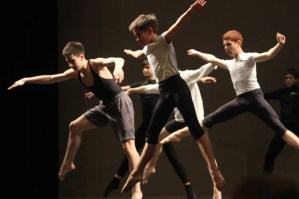
Docentur praestigias inhonestas, cum cinaedulis et sambuca psalterioque eunt in ludum histrionum, discunt cantare, quae maiores nostri ingenuis probro ducier voluerunt. eunt, inquam, in ludum saltatorium inter cinaedos virgines puerique ingenui! haec cum mihi quisquam narrabat, non poteram animum inducere ea liberos suos homines nobiles docere: sed cum ductus sum in ludum saltatorium, plus medius fidius in eo ludo vidi pueris virginibusque quinquaginta, in his unum – quod me rei publicae maxime miseritum est – puerum bullatum, petitoris filium non minorem annis duodecim, cum crotalis saltare quam saltationem inpudicus servulus honeste saltare non posset.
(Scipio Africanus Aemilianus, ORF2 fr. 30)

They’re taught disreputable tricks, they go to acting school with little pansies toting this an that kind of harp, they learn to sing – things our ancestors wished to be considered disgraceful for freeborn children. They go to dancing school, I say, freeborn maidens and boys, in a crowd of pansies! When someone told me this, I could not believe that noble men were teaching their own children these things; but when I was taken to a dancing school, ‘pon my word, I saw more than fifty boys and maidens there, and among these – this above all made me grieve for our commonwealth – one of them a boy wearing the amulet of the well-born, the son of an office-seeker, not less than twelve years old, doing a dance with castanets that it would disgrace a shameless little slave to dance. (tr. Robert A. Kaster)

Novitas

new-years-eve_s345x230

Sumpsi animum, gratesque deo* non territus egi,
verbaque sum spectans plura locutus humum:
“dic, age, frigoribus quare novus incipit annus,
qui melius per ver incipiendus erat?
omnia tunc florent, tunc est nova temporis aetas,
et nova de gravido palmite gemma tumet,
et modo formatis operitur frondibus arbor,
prodit et in summum seminis herba solum,
et tepidum volucres concentibus aëra mulcent,
ludit et in pratis luxuriatque pecus.
tum blandi soles, ignotaque prodit hirundo
et luteum celsa sub trabe figit opus:
tum patitur cultus ager et renovatur aratro.
haec anni novitas iure vocanda fuit.”

* sc. Iano

(Ovid, Fasti 1.147-160)

I gained courage and thanked the god fearlessly,
And spoke these few words, gazing at the ground:
“Tell me why the new-year begins with cold,
When it would be better started in the spring?
Then all’s in flower, then time renews its youth,
And the new buds swell on the fertile vines:
The trees are covered in newly formed leaves,
And grass springs from the surface of the soil:
Birds delight the warm air with their melodies,
And the herds frisk and gambol in the fields.
Then the sun’s sweet, and brings the swallow, unseen,
To build her clay nest under the highest roof beam.
Then the land’s cultivated, renewed by the plough.
That time rightly should have been called New Year.”
(tr. Tony Kline)


Hesperan

haze_and_clouds_obscure_the_setting_sun_-_noaa

Habet et cuiusque hominis aetas suam vesperam, quae simul atque advenit, iuventae gratia vertitur in taedium. ita senex quidam apud Alexidem: ἤδη γὰρ ὁ βίος οὑμὸς ἑσπέραν ἄγει [fr. 230 K-A], id est: mea quippe seram vita ducit vesperam. sub occasum autem solis incumbunt umbrae, unde Euripides: τί δ’ ἄλλο; φωνὴ καὶ σκιὰ γέρων ἀνήρ [fr. 509 N]. quid aliud atque vox et umbra vir senex?
(Erasmus, Adagia 2215)

And every man’s life has its evening, at whose onset the graces of youth change into weariness. There is an old man in Alexis, who says ‘For now the evening of my life draws on,’ and at the setting of the sun the shadows gather. Hence, as Euripides has it, ‘Old age: a voice, a shadow, and no more.’ (tr. Roger Aubrey Baskerville Mynors)