Suavia

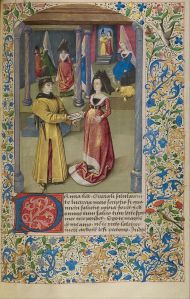
Euryalus_Sends_His_First_Letter_to_Lucretia_-_Google_Art_Project

Cum sic invicem fantur in thalamum pergunt ubi talem noctem habuerunt qualem credimus inter duos amantes fuisse, postquam navibus altis raptam Helenam Paris abduxit, tamque dulcis nox ista fuit ut ambo negarent tam bene inter Martem Veneremque fuisse. “tu meus es Gaminides, tu meus Ypolitus Dyamedesque meus” dicebat Lucrecia. “tu mihi Pollixena es,” Eurialus referebat, “tu Emilia, tu Venus ipsa;” et nunc os, nunc genas, nunc oculos commendabat. elevataque nonnumquam lodice secreta quae non viderat antea comtemplabatur, et “plus” dicebat “invenio quam putaram. talem lavantem vidit Acheon in fonte Dyanam. quid his membris formosius, quid candidius? iam redemi pericula. quid est quod propter te non debeat sustineri? o pectus decorum! o papillae praenitidae! vosne tango, vosne habeo, vosne meas incidistis manus? o teretes artus! o redolens corpus! tene ego possideo? nunc mori satius est, quando hoc gaudium est recens, ne qua interveniat calamitas! anime mi! teneo te, an somnio? verane ista voluptas est, an extra mentem positus, sic reor? non somnio, certe vera res agitur. o suavia basia, o dulces amplexus, o melliflui morsus! nemo me felicius vivit, nemo beatius. sed heu! quam veloces horae. invida nox, cur fugis? mane Appollo, mane apud inferos diu! cur equos tam cito in iugum trahis? sine plus graminis edant. da mihi noctem, ut Alcmenae dedisti! cur tu tam repente Citoni tui cubile relinquis Aurora? si tam illi grata esses quam mihi Lucrecia, haud tam mane surgere te permitteret. numquam mihi nox visa est hac brevior, quamvis apud Britanos Dacosque fuerim.” sic Eurialus; nec minora dicebat Lucrecia. nec osculum, nec verbum irrepensatum praeteriit. stringebat hic, stringebat illa. nec post Venerem lassi iacebant, sed, ut Antheus ex terra validior resurgebat, sic post bellum alacriores isti robustioresque fiebant.
(Aeneas Silvius Piccolomini, De Duobus Amantibus Historia 132v-133r)

Speaking together thus, they went into her room, where they passed such a night as, I imagine, the two lovers spent, when Paris had carried off Helen in his tall ship; so sweet a night that both said Mars and Venus could not have been better together. ‘You are my Ganymede, my Hippolytus, my Diomedes,’ said Lucretia. ‘And you my Polyxena,’ he replied, ‘my Aemilia, Venus herself.’ And now he praised her mouth, now her cheeks, and now her eyes. And sometimes, raising the blanket, he gazed at those secret parts he had not seen before, and cried: ‘I find more than I had expected. Thus must Diana have appeared to Actaeon, when she bathed in the spring. Could anything be lovelier or whiter than your body? Now I am rewarded for all perils. What would I not suffer for your sake? Oh lovely bosom, most glorious breasts! Can it be that I touch you, possess you, hold you in my hands? Smooth limbs, sweet-scented body, are you really mine? Now it were well to die, with such a joy still fresh, before any misfortune could befall. My darling, do I hold you, or is it a dream? Is all this pleasure true, or am I mad to think so? No, it is no dream, it is the very truth. Dear kisses, soft embraces, bites sweet as honey! No one was ever happier than I, no one more fortunate! But woe is me! how swift the hours. Jealous night, why do you fly? Stay, Apollo, tarry a little longer among the dead. Why in such a hurry to yoke your steeds? Let them still graze. Give me such a night as you gave Alcmenus. And you, Aurora, why in such haste to leave Tithonus’ bed? If you were half as dear to him as Lucretia is to me, he’d never let you rise so early. Never have I known a night so short as this, although I have been in Britain and the land of the Dacians.’ Thus Euryalus, and Lucretia echoed him. She returned him kiss for kiss, and word for word. They clasped each other close; nor were they wearied by their love, but as Antaeus rose stronger from the earth, so they gained strength and energy from their strife. (tr. Flora Grierson)
Kronos

SI Exif

Οὗτος* παρὰ Πτολεμαίῳ τῷ Σωτῆρι διατρίβων λόγους τινὰς διαλεκτικοὺς ἠρωτήθη πρὸς Στίλπωνος· καὶ μὴ δυνάμενος παραχρῆμα διαλύσασθαι, ὑπὸ τοῦ βασιλέως τά τε ἄλλα ἐπετιμήθη καὶ δὴ καὶ Κρόνος ἤκουσεν ἐν σκώμματος μέρει. ἐξελθὼν δὴ τοῦ συμποσίου καὶ λόγον γράψας περὶ τοῦ προβλήματος ἀθυμίᾳ τὸν βίον κατέστρεψε. καὶ ἔστιν ἡμῶν εἰς αὐτόν·
Κρόνε Διόδωρε, τίς σε δαιμόνων κακῇ
ἀθυμίῃ ξυνείρυσεν,
ἵν’ αὐτὸς αὑτὸν ἐμβάλῃς εἰς Τάρταρον
Στίλπωνος οὐ λύσας ἔπη
αἰνιγματώδη; τοιγὰρ εὑρέθης Κρόνος
ἔξωθε τοῦ ῥῶ κάππα τε.

* i.e. Διόδωρος Κρόνος

(Diogenes Laertius, Bioi kai Gnōmai 2.112)

When he was staying with Ptolemy Soter, he had certain dialectical questions addressed to him by Stilpo, and, not being able to solve them on the spot, he was reproached by the king and, among other slights, the nickname Cronus was applied to him by way of derision. He left the banquet and, after writing a pamphlet upon the logical problem, ended his days in despondency. Upon him too I have written lines:
Diodorus Cronus, what sad fate
Buried you in despair,
So that you hastened to the shades below,
Perplexed by Stilpo’s quibbles?
You would deserve your name of Cronus better
If C and R were gone.*

* Leaving ὄνος = “ass.”

(tr. Robert Drew Hicks, with his note)

Conglobabat

9013da9ad1feea177cc80ac9cf3bc76c

Ceterum prae strepitu ac tumultu nec consilium nec imperium accipi poterat, tantumque aberat ut sua signa atque ordines et locum noscerent, ut vix ad arma capienda aptandaque pugnae competeret animus, opprimerenturque quidam onerati magis iis quam tecti. et erat in tanta caligine maior usus aurium quam oculorum. ad gemitus volnerum ictusque corporum aut armorum et mixtos strepentium paventiumque clamores circumferebant ora oculosque. alii fugientes pugnantium globo inlati haerebant; alios redeuntes in pugnam avertebat fugientium agmen. deinde, ubi in omnes partes nequiquam impetus capti et ab lateribus montes ac lacus, a fronte et ab tergo hostium acies claudebant, apparuitque nullam nisi in dextera ferroque salutis spem esse, tum sibi quisque dux adhortatorque factus ad rem gerendam, et nova de integro exorta pugna est, non illa ordinata per principes hastatosque ac triarios, nec ut pro signis antesignani, post signa alia pugnaret acies, nec ut in sua legione miles aut cohorte aut manipulo esset: fors conglobabat, et animus suus cuique ante aut post pugnandi ordinem dabat; tantusque fuit ardor animorum, adeo intentus pugnae animus, ut eum motum terrae qui multarum urbium Italiae magnas partes prostravit avertitque cursu rapidos amnes, mare fluminibus invexit, montes lapsu ingenti proruit, nemo pugnantium senserit.
(Livy 22.3-8)

But the din and confusion were so great that neither advice nor orders could be heard, and so far were the men from knowing their proper standards companies and places, that they had hardly enough spirit to arm and prepare themselves to fight, and some were borne down while more encumbered than protected by their armour. Indeed the fog was so thick that ears were of more use than eyes, and the groans of the wounded, the sound of blows on body or armour and the mingled shouts and screams of assailants and assailed made them turn and gaze, now this way and now that. Some, as they sought to escape, were swept into a crowd of combatants and held there; others, trying to get back into the fight, were turned aside by a throng of fugitives. When attempts to break through had resulted everywhere in failure and they found themselves shut in on the flanks by the mountains and the lake, and in front and rear by the enemy; when it became apparent that their only hope of safety lay in their right arms and their swords; then every man became his own commander and urged himself to action, and the battle began all over again. It was no ordered battle, with the troops marshalled in triple line, nor did the vanguard fight before the standards and the rest of the army behind them, neither did each soldier keep to his proper legion cohort and maniple: it was chance that grouped them, and every man’s own valour assigned him his post in van or rear; and such was the frenzy of their eagerness and so absorbed were they in fighting, that an earthquake, violent enough to overthrow large portions of many of the towns of Italy, turn swift streams from their courses, carry the sea up into rivers, and bring down mountains with great landslides, was not even felt by any of the combatants. (tr. Benjamin Oliver Foster)

Miscere

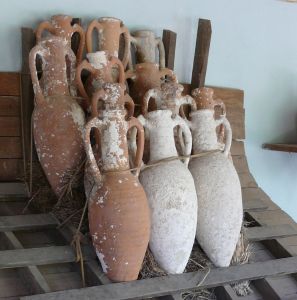
1200px-Amphorae_stacking

Quid te, Tucca, iuvat vetulo miscere Falerno
in Vaticanis condita musta cadis?
quid tantum fecere boni tibi pessima vina?
aut quid fecerunt optima vina mali?
de nobis facile est; scelus est iugulare Falernum
et dare Campano toxica saeva mero.
convivae meruere tui fortasse perire:
amphora non meruit tam pretiosa mori.
(Martial 1.18)

Tucca, what satisfaction do you get out of mixing must stored in Vatican* jars with old Falernian? What great good have vile wines done you or fine wines what harm? Never mind about us; it’s a crime to murder Falernian and put fierce toxins into a Campanian vintage. Maybe your guests deserved to perish, but so costly a jar did not deserve to die. (tr. David Roy Shackleton-Bailey)

Reum

Bu3FJQwIAAAao51

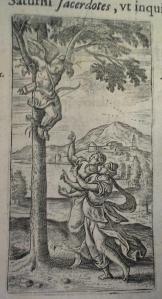
Quas inter medias furvae caliginis umbram
dispulit inconsultus Amor stridentibus alis.
agnovere omnes puerum memorique recursu
communem sensere reum, quamquam umida circum
nubila et auratis fulgentia cingula bullis
et pharetram et rutilae fuscarent lampados ignem.
agnoscunt tamen et vanum vibrare vigorem
occipiunt hostemque unum loca non sua nanctum,
cum pigros ageret densa sub nocte volatus,
facta nube premunt: trepidantem et cassa parantem
suffugia in coetum mediae traxere catervae.
(Ausonius, Cupido Cruciatus 45-55)

Into the midst of these Love rashly broke scattering the darkness of that murky gloom with rustling wings. All recognized the boy, and as their
thoughts leapt back, they knew him for the one transgressor against them all, though the damp clouds obscured the sheen of his golden-studded
belt, his quiver, and the flame of his glowing torch. Yet they recognize him, and essay to wield their phantom strength against him, and upon their one
foe, now lighted on a realm not his own where he could ply his wings but feebly under the clogging weight of night, gathering in a throng they press:
him trembling and vainly seeking to escape, they dragged into the midst of the crowding band. (tr. Hugh G. Evelyn White)

Parca

salviati parcae
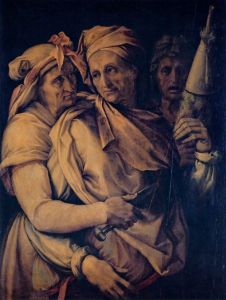
Francesco Salviati, Tre Parche

Laetus in praesens animus quod ultra est
oderit curare et amara lento
temperet risu; nihil est ab omni
parte beatum.

abstulit clarum cita mors Achillem,
longa Tithonum minuit senectus,
et mihi forsan, tibi quod negarit,
porriget hora.

te greges centum Siculaeque circum
mugiunt vaccae, tibi tollit hinnitum
apta quadrigis equa, te bis Afro
murice tinctae

vestiunt lanae: mihi parva rura et
spiritum Graiae tenuem Camenae
Parca non mendax dedit et malignum
spernere vulgus.

(Horace, Carm. 2.16.25-40)

The mind that is happy for the present should refuse to worry about what is further ahead; it should dilute bitter things with a mild smile. Nothing is happy in every respect. An early death overtook the famous Achilles; a protracted old age wasted Tithonus away; it may be that time will offer me what it has denied to you. All around you a hundred herds of Sicilian cattle low; you have a whinnying mare just right for the four-horse chariot; you wear woollen clothes dyed twice over in African crimson. To me the Thrifty One* that does not belie her name has given a small estate, a slight puff of inspiration from the Graeco-Roman Muse, and a scorn for the resentful mob.

* One of the Parcae, or Fates.

(tr. Niall Rudd)


Xunarmosas

Busto di Solone (640 a.C ca-560 a.C ca), marmo

Ἐγὼ δὲ τῶν μὲν οὕνεκα ξυνήγαγον
δῆμον, τί τούτων πρὶν τυχεῖν ἐπαυσάμην;
συμμαρτυροίη ταῦτ’ ἂν ἐν δίκῃ χρόνου
μήτηρ μεγίστη δαιμόνων Ὀλυμπίων
ἄριστα, Γῆ μέλαινα, τῆς ἐγώ ποτε
ὅρους ἀνεῖλον πολλαχῇ πεπηγότας·
πρόσθεν δὲ δουλεύουσα, νῦν ἐλευθέρη.
πολλοὺς δ’ Ἀθήνας πατρίδ’ ἐς θεόκτιτον
ἀνήγαγον πραθέντας, ἄλλον ἐκδίκως,
ἄλλον δικαίως, τοὺς δ’ ἀναγκαίης ὑπὸ
χρειοῦς φυγόντας, γλῶσσαν οὐκέτ’ Ἀττικὴν
ἱέντας, ὡς δὴ πολλαχῇ πλανωμένους·
τοὺς δ’ ἐνθάδ’ αὐτοῦ δουλίην ἀεικέα
ἔχοντας, ἤθη δεσποτέων τρομεομένους,
ἐλευθέρους ἔθηκα. ταῦτα μὲν κράτει
ὁμοῦ βίην τε καὶ δίκην ξυναρμόσας
ἔρεξα, καὶ διῆλθον ὡς ὑπεσχόμην·
θεσμοὺς δ’ ὁμοίως τῶι κακῷ τε κἀγαθῷ
εὐθεῖαν εἰς ἕκαστον ἁρμόσας δίκην
ἔγραψα. κέντρον δ’ ἄλλος ὡς ἐγὼ λαβών,
κακοφραδής τε καὶ φιλοκτήμων ἀνήρ,
οὐκ ἂν κατέσχε δῆμον· εἰ γὰρ ἤθελον
ἃ τοῖς ἐναντίοισιν ἥνδανεν τότε,
αὖτις δ’ ἃ τοῖσιν οὕτεροι φρασαίατο,
πολλῶν ἂν ἀνδρῶν ἥδ’ ἐχηρώθη πόλις.
τῶν οὕνεκ’ ἀλκὴν πάντοθεν ποιεόμενος
ὡς ἐν κυσὶν πολλῇσιν ἐστράφην λύκος.
(Solon, fr. 36)

Before achieving what of the goals for which I brought the people together* did I stop? In the verdict of time I will have as my best witness the mighty mother of the Olympian gods, dark Earth, whose boundary markers** fixed in many places I once removed; enslaved before, now she is free. And I brought back to Athens, to their homeland founded by the gods, many who had been sold, one legally another not, and those who had fled under necessity’s constraint, no longer speaking the Attic tongue, as wanderers far and winde are inclined to do. And those who suffered shameful slavery right here, trembling before the whims of their masters, I set free. These things I did by the exercise of my power, blending together force and justice, and I persevered to the end as I promised. I wrote laws for the lower and upper classes alike, providing a straight legal process for each person. If another had taken up the goad as I did, a man who gave bad counsel and was greedy, he would not have restrained the masses. For if I had been willing to do what then was pleasing to their opponents and in turn whatever the others [i.e., the masses] planned for them, this city would have been bereft of many men. For that reason I set up a defence on everyside and turned about like a wolf among a pack of dogs.

* Precise meaning disputed.
** As a sign of mortgaged land.

(tr. Douglas E. Gerber, with his notes)

Emicem

328F67DA00000578-3509799-image-a-28_1458936051549

This is part 2 of 2. Part 1 is here.

Numquid talia proderunt
carnis post obitum vel bona vel mala,
cum iam, quidquid id est, quod fueram, mors aboleverit?

dicendum mihi: “quisquis es,
mundum, quem coluit, mens tua perdidit;
non sunt illa Dei, quae studuit, cuius habeberis.”

atqui fine sub ultimo
peccatrix anima stultitiam exuat;
saltem voce Deum concelebret, si meritis nequit.

hymnis continuet dies,
nec nox ulla vacet, quin Dominum canat;
pugnet contra hereses, catholicam discutiat fidem;

conculcet sacra gentium,
labem, Roma, tuis inferat idolis;
carmen martyribus devoveat, laudet apostolos.

haec dum scribo vel eloquor,
vinclis o utinam corporis emicem
liber, quo tulerit lingua sono mobilis ultimo.

(Prudentius, Cathemerinon: Praefatio 28-45)

Will such things, good or bad, be of any profit after my flesh is dead, when death shall have wiped out all that I was? It must be said to me: “Whosoever thou art, thy soul hath lost the world it cherished; not to God, who will claim thee as His, belong the things for which it was zealous.” Yet as my last end draws near let my sinning soul put off her folly. With voice at least let her honour God, if with good deeds she cannot. With hymns let her link the days together, and no night pass without singing of her Lord. Let her fight against heresies, expound the Catholic faith, trample on the rites of the heathen, strike down thy idols, O Rome, devote song to the martyrs, and praise the apostles. And while I write or speak of these themes, O may I fly forth in freedom from the bonds of the body, to the place whither my busy tongue’s last word shall tend. (tr. Henry John Thomson)

Irrepsit

1lbeyi

This is part 1 of 2. Part 2 is here.

Per quinquennia iam decem,
ni fallor, fuimus; septimus insuper
annum cardo rotat, dum fruimur sole volubili.

instat terminus et diem
vicinum senio iam Deus applicat:
quid nos utile tanti spatio temporis egimus?

aetas prima crepantibus
flevit sub ferulis; mox docuit toga
infectum vitiis falsa loqui, non sine crimine.

tum lasciva protervitas,
et luxus petulans (heu pudet ac piget!)
foedavit iuvenem nequitiae sordibus ac luto.

exim iurgia turbidos
armarunt animos et male pertinax
vincendi studium subiacuit casibus asperis.

bis legum moderamine
frenos nobilium reximus urbium:
ius civile bonis reddidimus, terruimus reos.

tandem militiae gradu
evectum pietas principis extulit,
adsumptum propius stare iubens ordine proximo.

haec dum vita volans agit,
irrepsit subito canities seni,
oblitum veteris me Saliae consulis arguens,

sub quo prima dies mihi.
quam multas hiemes volverit et rosas
pratis post glaciem reddiderit, nix capitis probat.

(Prudentius, Cathemerinon: Praefatio 1-27)

Full fifty years, if I err not, have I lived, and beyond that it is the seventh time that the heaven is wheeling the year and I have the benefit of the circling sun. The end is close upon me, and by now what God is adding to my days is on the border of old age. What profitable thing have I done in all this length of time? My first years wept under the crack of the rod; after that the toga corrupted me and taught me to utter sinful falsehoods*; then lewd sauciness and wanton indulgence, to my shame and sorrow now, marred my youth with the filthy dirt of wickedness. Next disputings armed my vehement spirit, and a perversely stubborn passion for victory laid itself open to cruel falls. Twice with the law’s controlling curb I governed famed cities, rendering civil justice to good men and striking terror into evil-doers. Finally His Grace the Emperor advanced me in his service and raised me up, attaching me closer to him and bidding me stand in the nearest rank.* While fleeting life thus busied itself, of a sudden the hoar of age has stolen upon me, convicting me of having forgotten Salia’s consulship of long ago. Under him my time began, and how many winters it has seen roll on, how often seen the roses given back to the meadows after the frost, the snow on my head proves.

* I.e. after assuming the toga virilis he attended a school of rhetoric, where he would practise the art of making the best of a case.

(tr. Henry John Thomson, with his note)


Homuncio

Altichiero,_ritratto_di_Francesco_Petrarca

Fuerit tibi forsan de me aliquid auditum—quamquam et hoc dubium sit: an exiguum et obscurum longe nomen seu locorum seu temporum perventurum sit—et illud forsitan optabis, nosse, quid hominis fuerim aut quis operum exitus meorum, eorum maxime, quorum ad te fama pervenerit vel quorum tenue nomen audieris. et de primo quidem variae erunt hominum voces: ita enim ferme quisque loquitur, ut impellit non veritas, sed voluptas; nec laudis nec infamiae modus est. fui autem vestro de grege unus, mortalis homuncio, nec magne admodum nec vilis originis, familia—ut de se ait Augustus Caesar—antiqua. honestis parentibus, florentinis origine, fortuna mediocri, et—ut verum fatear—ad inopiam vergente, sed patria pulsis Arretii in exilio natus sum, anno huius aetatis ultimae quae a Cristo incipit MCCCIV, die lunae ad auroram XIII kalendas Augusti. natura quidem non iniquo neque inverecundo animo, nisi ei consuetudo contagiosa nocuisset. adolescentia me fefellit, iuventa corripuit, senecta autem correxit experimentoque perdocuit verum illud quod diu ante perlegeram: quoniam adolescentia et voluptas vana sunt; immo etatum temporumque omnium Conditor, qui miseros mortales de nihilo tumidos aberrare sinit interdum, ut peccatorum suorum vel sero memores se se cognoscant. corpus iuveni non magnarum virium sed multe dexteritatis obtigerat. forma non glorior excellenti, sed quae placere viridioribus annis posset: colore vivido inter candidum et subnigrum, vivacibus oculis et visu per longum tempus acerrimo, qui praeter spem supra sexagesimum aetatis annum me destituit, ut indignanti mihi ad ocularium confugiendum esset auxilium. tota aetate sanissimum corpus senectus invasit, et solita morborum acie circumvenit.
(Francesco Petrarca, Rerum Senilium Libri 18.1 (= Epistola Posteritati) 1-4)

It is possible that some word of me may have come to you, though even this is doubtful, since an insignificant and obscure name will scarcely penetrate far in either time or space. If, however, you should have heard of me, you may desire to know what manner of man I was, or what was the outcome of my labors, especially those of which some description or, at any rate, the bare titles may have reached you. To begin, then, with myself. The utterances of men concerning me will differ widely, since in passing judgment almost every one is influenced not so much by truth as by preference, and good and evil report alike know no bounds. I was, in truth, a poor mortal like yourself, neither very exalted in my origin, nor, on the other hand, of the most humble birth, but belonging, as Augustus Cæsar says of himself, to an ancient family. My parents were honorable folk, Florentine in their origin, of medium fortune, or, I may as well admit it, in a condition verging upon poverty. They had been expelled from their native city, and consequently I was born in exile, at Arezzo, in the year 1304 of this latter age, which begins with Christ’s birth, July the 20th, on a Monday, at dawn. As to my disposition, I was not naturally perverse or wanting in modesty, however the contagion of evil associations may have corrupted me. My youth was gone before I realized it; I was carried away by the strength of manhood. But a riper age brought me to my senses and taught me by experience the truth I had long before read in books, that youth and pleasure are vanity—nay, that the Author of all ages and times permits us miserable mortals, puffed up with emptiness, thus to wander about, until finally, coming to a tardy consciousness of our sins, we shall learn to know ourselves. In my prime I was blessed with a quick and active body, although not exceptionally strong; and while I do not lay claim to remarkable personal beauty, I was comely enough in my best days. I was possessed of a clear complexion, between light and dark, lively eyes, and for long years a keen vision, which, however, deserted me, contrary to my hopes, after I reached my sixtieth birthday, and forced me, to my great annoyance, to resort to glasses. Although I had previously enjoyed perfect health, old age brought with it the usual array of discomforts. (tr. James Harvey Robinson)