Seismos

tsunami

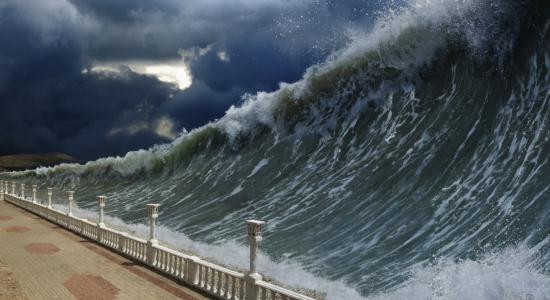
Τοῦ δ᾿ ἐπιγιγνομένου θέρους Πελοποννήσιοι καὶ οἱ ξύμμαχοι μέχρι μὲν τοῦ Ἰσθμοῦ ἦλθον ὡς ἐς τὴν Ἀττικὴν ἐσβαλοῦντες Ἄγιδος τοῦ Ἀρχιδάμου ἡγουμένου Λακεδαιμονίων βασιλέως, σεισμῶν δὲ γενομένων πολλῶν ἀπετράποντο πάλιν καὶ οὐκ ἐγένετο ἐσβολή. καὶ περὶ τούτους τοὺς χρόνους, τῶν σεισμῶν κατεχόντων, τῆς Εὐβοίας ἐν Ὀροβίαις ἡ θάλασσα ἐπανελθοῦσα ἀπὸ τῆς τότε οὔσης γῆς καὶ κυματωθεῖσα ἐπῆλθε τῆς πόλεως μέρος τι, καὶ τὸ μὲν κατέκλυσε, τὸ δ’ ὑπενόστησε, καὶ θάλασσα νῦν ἐστὶ πρότερον οὖσα γῆ· καὶ ἀνθρώπους διέφθειρεν ὅσοι μὴ ἐδύναντο φθῆναι πρὸς τὰ μετέωρα ἀναδραμόντες. καὶ περὶ Ἀταλάντην τὴν ἐπὶ Λοκροῖς τοῖς Ὀπουντίοις νῆσον παραπλησία γίγνεται ἐπίκλυσις, καὶ τοῦ τε φρουρίου τῶν Ἀθηναίων παρεῖλε καὶ δύο νεῶν ἀνειλκυσμένων τὴν ἑτέραν κατέαξεν. ἐγένετο δὲ καὶ ἐν Πεπαρήθῳ κύματος ἐπαναχώρησίς τις, οὐ μέντοι ἐπέκλυσέ γε· καὶ σεισμὸς τοῦ τείχους τι κατέβαλε καὶ τὸ πρυτανεῖον καὶ ἄλλας οἰκίας ὀλίγας. αἴτιον δ’ ἔγωγε νομίζω τοῦ τοιούτου, ᾗ ἰσχυρότατος ὁ σεισμὸς ἐγένετο, κατὰ τοῦτο ἀποστέλλειν τε τὴν θάλασσαν καὶ ἐξαπίνης πάλιν ἐπισπωμένην βιαιότερον τὴν ἐπίκλυσιν ποιεῖν· ἄνευ δὲ σεισμοῦ οὐκ ἄν μοι δοκεῖ τὸ τοιοῦτο ξυμβῆναι γενέσθαι.
(Thucydides, Hist. 3.89)

In the following summer the Peloponnesians and their allies, under the command of Agis, the son of Archidamus and king of Sparta, went as far as the Isthmus with the intention of invading Attica, but the occurrence of several earthquakes turned them back and no invasion took place. At around this time when the earthquakes were prevalent, the sea at Orobiae in Euboea retreated from what was then the coastline and returned in a tidal wave which hit one part of the town, and as a result of flooding combined with subsidence what was once land is now sea: the tidal wave killed the people who could not escape to higher ground in time. There was a similar inundation at Atalante, the island off Opuntian Locris, which carried away part of the Athenian fort and smashed one of the two ships laid up there. At Peparethus there was also a withdrawal of the sea, but not in this case followed by a surge: and an earthquake demolished part of the wall, the town hall, and a few other buildings. I believe the cause of this phenomenon to be that the sea retires at the point where the seismic shock is strongest, and is then suddenly flung back with all the greater violence, creating the inundation. I do not think that tidal waves could occur without an earthquake. (tr. Martin Hammond)

Paschalia

Colourful easter eggs on grass

Πολλῶν πανηγύρεων Διὸς βαλάνων ἔφαγεν [Michael Apostolius, Paroimiai 14.66], id est Multorum festorum Iovis glandes comedit. de sene longoque plurimarum rerum usu docto; perinde valet quasi dicas; ‘multas vixit Olympiadas’. quercus autem Iovi sacra; unde nuces iuglandes. simili ioco et hodie dicunt nostrates: Comedit multa ova paschalia, senem indicantes.
(Erasmus, Adagia 3149)

He has eaten acorns at many feasts of Jupiter. Said of a man who is old and wise through long and varied experience; it means exactly the same as ‘He has lived many Olympiads.’ The oak is sacred to Jupiter, whence the expression ‘Jove’s oak nuts.’ People in my country still say nowadays, ‘He has eaten many Easter eggs’ as a humorous way of referring to an old man. (tr. Denis L. Drysdall)

Delevimus

7cf2a1bfb740301fa32eace4323bbbc0

“Claudius Broccho. delevimus trecenta viginti milia Gothorum, duo milia navium mersimus. tecta sunt flumina scutis, spathis et lanceolis omnia litora operiuntur. campi ossibus latent tecti, nullum iter purum est, ingens carrago deserta est. tantum mulierum cepimus ut binas et ternas mulieres victor sibi miles possit adiungere. et utinam Gallienum non esset passa res publica! utinam sescentos tyrannos non pertulisset! salvis militibus, quos varia proelia sustulerunt, salvis legionibus quas Gallienus male victor occidit, quantum esset additum rei publicae! si quidem nunc membra naufragii publici colligit nostra diligentia ad Romanae rei publicae salutem.”
(Historia Augusta, Vita Claudii Gothici 8.4-9.2)

“From Claudius to Brocchus. We have destroyed three hundred and twenty thousand Goths, we have sunk two thousand ships. The rivers are covered over with their shields, all the banks are buried under their swords and their spears. The fields are hidden beneath their bones, no road is clear, their mighty waggon-train has been abandoned. We have captured so many women that the victorious soldiers can take for themselves two or three apiece. And would that the commonwealth had not had to endure Gallienus! Would that it had not had to bear six hundred pretenders! Had but those soldiers been saved who fell in divers battles, those legions saved which Gallienus destroyed, disastrously victorious, how much strength would the state have gained! Now, indeed, my diligence has but gathered together for the preservation of the Roman commonwealth the scattered remains of the shipwrecked state.” (tr. David Magie)

Amempton

Ἔτι δὲ μᾶλλον ἠδόξησε Τάχῳ τῳ Αἰγυπτίῳ στρατηγὸν ἐπιδοὺς ἑαυτόν. οὐ γὰρ ἠξίουν ἄνδρα τῆς Ἑλλάδος ἄριστον κεκριμένον καὶ δόξης ἐμπεπληκότα τὴν οἰκουμένην, ἀποστάτῃ βασιλέως, ἀνθρώπῳ βαρβάρῳ, χρῆσαι τὸ σῶμα καὶ τοὔνομα καὶ τὴν δόξαν ἀποδόσθαι χρημάτων, ἔργα μισθοφόρου καὶ ξεναγοῦ διαπραττόμενον. κεἰ γὰρ ὑπὲρ ὀγδοήκοντα γεγονὼς ἔτη καὶ πᾶν ὑπὸ τραυμάτων τὸ σῶμα κατακεκομμένος ἐκείνην αὖθις ἀνεδέξατο τὴν καλὴν καὶ περίβλεπτον ἡγεμονίαν ὑπὲρ τῆς τῶν Ἑλλήνων ἐλευθερίας, οὐ πάμπαν ἄμεμπτον εἶναι τὴν φιλοτιμίαν· τοῦ γὰρ καλοῦ καιρὸν οἰκεῖον εἶναι καὶ ὥραν, μᾶλλον δὲ ὅλως τὰ καλὰ τῶν αἰσχρῶν τῷ μετρίῳ διαφέρειν.
(Plutarch, Bios Agesilaou 36.1-2)

He* lost still more reputation by offering to take a command under Tachos the Egyptian. For it was thought unworthy that man who had been judged noblest and best in Hellas, and who had filled the world with his fame, should furnish a rebel against the Great King, a mere Barbarian, with his person, his name, and his fame, and take money for him, rendering the service of a hired captain of mercenaries. For even if, now that he was past eighty years of age and his whole body was disfigured with wounds, he had taken up again his noble and conspicuous leadership in behalf of the freedom of the Hellenes, his ambition would not have been altogether blameless, as men thought. For honourable action has its fitting time and season; nay, rather, it is the observance of due bounds that constitutes an utter difference between honourable and base actions.

* Agesilaus II of Sparta

(tr. Bernadotte Perrin)

Damiane

father_damien_photograph_by_william_brigham
Father Damien in the leper colony at Molokai.

Qui tandem populi campos coluere beatos?
anne Ada genitis hic habitare licet?
heu! genus infelix istaec per amoena vagatur;
heu! roseum tumulum funera viva tenent.
splendida crudelis sunt ista palatia Morbi,
hic domat albentem lurida Lepra gregem.
qua circumspicias – durus qui sustinet ista –
formae hominum turpes turpia membra trahunt.
os turgens, patulae nares, auresque ferinae;
lumina foeda natant, tuber ubique tumet.
rimosum corpus non corpus, vulnus hiulcum;
albedo nigrante in cute tetra magis.
carnes – horrendum! – pendentque caduntque peresae
tormentique comes non tolerandus odor.
luxuriae tandem malesanos adde furores,
queis in carne putri morbo agitante flagrant.
hos si quando ausit festinus visere nauta,
daemonas in caelo se reperisse refert.
tristia tu solus cunctanter litora linquis,
nec festinus abis, o Damiane pater!
te, Damiane pater, tulerat quem Belgica tellus,
mox animarum audax per freta misit Amor.
(Rudolph van Oppenraaij, Amor 25-42)

But what people inhabit these blessed lands? Can it be that Adam’s offspring live here? Alas! Unfortunate the race that wanders this delightful ground. Alas! Living corpses dwell in this flowery grave. This is the splendid palace of cruel Disease, lurid Leprosy plagues this pale throng. Everywhere you look (but who can endure the sight!) monstrous human forms drag their monstrous limbs. Swollen faces, gaping noses, misshapen ears; repulsive swimming eyes, and tumors everywhere. A fissured body that is not a body, with gaping wounds; the white spots the more hideous on their swarthy skin. Their flesh – oh, gruesome! – hangs and droops, eaten away, and a loathsome stench attends their agony. On top of all that there is the wild, raging madness that the festering disease ignites in their putrid flesh. Any hasty sailor that dares lay eyes on them reports back that he has seen devils in heaven. Only you are hesitant to leave this sorrowful shores, and do not hasten home, Father Damian! Oh Father Damian, sprung from Belgian soil: it was your bold Love of the living that sent you across the waves. (tr. David Bauwens)

Displicuisse

naked swimmer

Invitas nullum nisi cum quo, Cotta, lavaris
et dant convivam balnea sola tibi.
mirabar quare numquam me, Cotta, vocasses:
iam scio me nudum displicuisse tibi.
(Martial 1.23)

You never invite anybody, Cotta, unless you have bathed with him; only the baths give you a guest. I used to wonder why you had never asked me to dinner. Now I know that you didn’t like me in the nude. (tr. David Roy Shackleton Bailey)

Hugiaineis

13

Ὥστε διὰ ταῦτα ὑγιαίνεις τε καὶ ἔρρωσαι τὸ σῶμα καὶ διακαρτερεῖς πρὸς τὸ κρύος· οἱ πόνοι γάρ σε παραθήγοντες οὐκ εὐκαταφρόνητον ἀνταγωνιστὴν ἀποφαίνουσι πρὸς τὰ δοκοῦντα τοῖς ἄλλοις ἄμαχα εἶναι. ἀμέλει οὐδέν σοι τῶν χαλεπῶν τούτων νοσημάτων πρόσεισιν, ἀλλ’ ἤν ποτε κοῦφος πυρετὸς ἐπιλάβηται, πρὸς ὀλίγον ὑπηρετήσας αὐτῷ ἀνεπήδησας εὐθὺς ἀποσεισάμενος τὴν ἄσην, ὁ δὲ φεύγει αὐτίκα φοβηθείς, ψυχροῦ σε ὁρῶν ἐμφορούμενον καὶ μακρὰ οἰμώζειν λέγοντα ταῖς ἰατρικαῖς περιόδοις· οἱ δὲ ὑπ’ ἀκρασίας ἄθλιοι τί τῶν κακῶν οὐκ ἔχουσι, ποδάγρας καὶ φθόας καὶ περιπλευμονίας καὶ ὑδέρους; αὗται γὰρ τῶν πολυτελῶν ἐκείνων δείπνων ἀπόγονοι. τοιγαροῦν οἱ μὲν αὐτῶν ὥσπερ ὁ Ἴκαρος ἐπὶ πολὺ ἄραντες αὑτοὺς καὶ πλησιάσαντες τῷ ἡλίῳ οὐκ εἰδότες ὅτι κηρῷ ἥρμοστο αὐτοῖς ἡ πτέρωσις, μέγαν ἐνίοτε τὸν πάταγον ἐποίησαν ἐπὶ κεφαλὴν ἐς πέλαγος ἐπεσόντες· ὅσοι δὲ κατὰ τὸν Δαίδαλον μὴ πάνυ μετέωρα μηδὲ ὑψηλὰ ἐφρόνησαν ἀλλὰ πρόσγεια, ὡς νοτίζεσθαι ἐνίοτε τῇ ἅλμῃ τὸν κηρόν, ὡς τὸ πολὺ οὗτοι ἀσφαλῶς διέπτησαν.
(Lucian, Oneiros ē Alektruōn) 23)

So in consequence of all this you are sound and strong in body and can stand the cold, for your hardships have trained you fine and made you no mean fighter against adverse conditions that seem to the rest of the world irresistible. No chance that one of their severe illnesses will come near you: on the contrary, if ever you get a light fever, after humouring it a little while you jump out of bed at once, shaking off your discomfort, and the fever in terror takes flight immediately on seeing that you drink cold water and have no use for doctors’ visits. But the rich, unhappy that they are – what ills are they not subject to through intemperance? Gout and consumption and pneumonia and dropsy are the consequences of those splendid dinners. In brief, some of them who like Icarus fly high and draw near the sun without knowing that their wings are fitted on with wax, now and then make a great splash by falling head-first into the sea, while of those who, copying Daedalus, have not let their ambitions soar high in the air but have kept them close to earth so that the wax is occasionally wet with spray, the most part reach their journey’s end in safety. (tr. Austin Morris Harmon)

Monosyllabis

Versus monosyllabis et coepti et finiti ita ut a fine versus ad principium recurrant

RES hominum fragiles alit et regit et perimit FORS
FORS dubia aeternumque labans: quam blanda fovet SPES
SPES nullo finita aevo: cui terminus est MORS
MORS avida, inferna mergit caligine quam NOX
NOX obitura vicem, remeaverit aurea cum LUX
LUX dono concessa deum, cui praevius est SOL
SOL, cui nec furto in Veneris latet armipotens MARS
MARS nullo de patre satus, quem Thraessa colit GENS
GENS infrena virum, quibus in scelus omne ruit FAS
FAS hominem mactare sacris: ferus iste loci MOS
MOS ferus audacis populi, quem nulla tenet LEX
LEX naturali quam condidit imperio IUS
IUS genitum pietate hominum, ius certa dei MENS
MENS, quae caelesti sensu rigat emeritum COR
COR vegetum mundi instar habens, animae vigor et VIS:
VIS tamen hic nulla est: tantum est iocus et nihili RES.
(Ausonius, Technopaegnion 3)

Verses beginning and ending with monosyllables so contrived that the word which ends one verse makes the beginning of the next

Things that concern man are frail, prospered, guided, and destroyed by Chance – Chance the unstable, ever-changing goddess, who is flattered by fond Hope – Hope, who knows no bounds of time; whose only end is Death – Death the insatiate, who is steeped in infernal gloom by Night – Night, who must yield place on the return of golden Light – Light bestowed by Heaven’s gift, whose harbinger is the Sun – the Sun, who even in their stolen loves beholds Venus and warrior Mars – Mars unbegotten of a father, who is worshiped by the Thracian race – a race of uncurbed folk, with whom every crime is right: – Right bids them offer men in sacrifice: such is their savage wont – wont of a savage and daring folk, all unrestrained by Law – Law, which was founded by the natural sway of Right – Right which is sprung from man’s natural affection, Right which is God’s unerring mind – mind which bedews with heavenly influence the deserving heart – the heart, alive, formed like the globe, the life’s power and its strength: – strength, however, there is none in this: ’tis but a jest and a worthless thing. (tr. Hugh G. Evelyn White)

Colubrarium

483bd353012d36909ed11ce10011ec64

Delatus ego in augusti litoris sinum, qua Salonas usque per anfractus terrae pronum pelagus inlabitur, nactus sum quendam qui se tuis recentibus gestis interfuisse memoraret. “Gothorum” inquit “manus universa cum rege exierat Romana populatum. hoc ut dux* comperit” – iam non exspectavi ut diceret: “progressus est, manum contulit”, neque enim haec a te acta dubitabam, quaesivi statim, ubi qualiter quantosve fudisses. tunc ille: “ad montem” inquit “quem Colubrarium quasi praescia vocavit antiquitas (in eo enim nunc rei publicae venena prostrata sunt), maximam hostium partem improvisus, ut solet, neci dedit fusisque peditum copiis, que plurimae erant, ipse palantes turmas persecutus stantes robore, fugientes alacritate compressit. nec multo post rex ipse cum reliquis copiis suis adfuit defixusque horrore subito calcata prope cadavera…

* sc. Flavius Aëtius

(Flavius Merobaudes, Paneg. 1 fr. 2B 7-24)

When I came down to the winding, majestic shore, where the rushing sea flows in as far as Salonae through indentations of the land, I met someone who related that he had participated in your recent campaigns. “All the forces of the Goths,” he exclaimed, “had sallied forth with their king to ravage Roman territory. When our leader learned of this -” – no longer did I wait for him to say, “He went forth and joined in conflict,” for I did not doubt that this was done by you; I asked immediately where, how, and how many you had put to flight. “At the mountain,” he then replied, “which the ancients as if by premonition called Snake Mountain (for here the poisons of the state have now been destroyed), he surprised – as is his custom – and killed the greatest part of the enemy; once the infantry units, which were very numerous, were routed, he himself followed hard on the scattering cavalry troops and overwhelmed those standing fast with his might, and those fleeing with his eager rapidity. Not long afterwards the king himself was on hand with the remainder of his forces, and, stupefied with sudden horror near the trampled bodies… (tr. Frank M. Clover)

Ginōskein

Πολλῷ ἄμεινον μὴ ἁμαρτάνειν, ἁμαρτάνοντα δὲ ἄμεινον γινώσκειν ἢ ἀγνοεῖν.
(Sententiae Pythagoreorum 84)

Best is not to do wrong; but having erred it is better to be conscious of it than to ignore it. (tr. Henry Chadwick)