Huomenos

000548

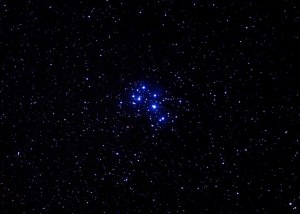
Νὺξ μακρὴ καὶ χεῖμα, †μέσην δ’ ἐπὶ Πλειάδα δύνει†·
κἀγὼ πὰρ προθύροις νίσσομαι ὑόμενος,
τρωθεὶς τῆς δολίης κείνης πόθῳ· οὐ γὰρ ἔρωτα
Κύπρις, ἀνιηρὸν δ’ ἐκ πυρὸς ἧκε βέλος.
(Asclepiades, Anth. Pal. 5.189)

It’s a long night, and there’s a storm, and it sets towards the Pleiad (?),
and I’m walking by the outer doors getting drenched with rain,
wounded by desire for that deceptive girl. For Cypris sent
not love but a painful bolt made of fire.
(tr. Alexander Sens)

Schemae

ancient_artwork_of_roman_gay_sex

Secessu vero Caprensi etiam sellaria excogitavit, sedem arcanarum libidinum, in quam undique conquisiti puellarum et exoletorum greges monstrosique concubitus repertores, quos spintrias appellabat, triplici serie conexi, in vicem incestarent coram ipso, ut aspectu deficientis libidines excitaret. cubicula plurifariam disposita tabellis ac sigillis lascivissimarum picturarum et figurarum adornavit librisque Elephantidis instruxit, ne cui in opera edenda exemplar imperatae schemae deesset.
(Suetonius, Tib. 43)

Then, on retiring to Capri, he* even established a suite which was to be the location for his secret pleasures. Here groups of girls and adult pathics selected from all over and the most inventive of sexual deviants whom he used to call ‘tight-bums’, would take it in turns to engage in filthy threesomes in his presence, so that the sight would arouse his flagging libido. The bedrooms were variously decked out with paintings and sculptures showing the most provocative images and figures, while the library was equipped with the works of Elephantis,** so that an illustration of the required position would always be available if anyone needed guidance in completing their performance.

* Tiberius.
** a Greek author notorious for her lewd writings.

(tr. Catharine Edwards, with her note on Elephantis)

Reprehensio

220px-%d0%b0%d1%80%d0%bd%d0%be%d0%b1%d0%b8%d0%b9_%d1%81%d1%82%d0%b0%d1%80%d1%88%d0%b8%d0%b9_-arnobius_of_sicca

“Barbarismis, soloecismis obsitae sunt, inquit, res vestrae et vitiorum deformitate pollutae.” puerilis sane atque angusti pectoris reprehensio, quam si admittemus ut vera sit, abiciamus ex usibus nostris quorundam fructuum genera, quod cum spinis nascuntur et purgamentis aliis, quae nec alere nos possunt nec tamen impediunt perfrui nos eo, quod principaliter antecedit et saluberrimum nobis voluit esse natura. quid enim officit, o quaeso, aut quam praestat intellectui tarditatem, utrumne quid grave an hirsuta cum asperitate promatur, inflectatur quod acui an acuatur quod oportebat inflectis? aut qui minus id quod dicitur verum est, si in numero peccetur aut casu, praepositione, participio, coniunctione? pompa ista sermonis et oratio missa per regulas contionibus litibus foro iudiciisque servetur deturque illis immo qui, voluptatum delinimenta quaerentes, omne suum studium verborum in lumina contulerunt. cum de rebus agitur ab ostentatione summotis, quid dicatur spectandum est, non quali cum amoenitate dicatur, nec quid aures commulceat, sed quas adferat audientibus utilitates: maxime cum sciamus etiam quosdam sapientiae deditos non tantum abiecisse sermonis cultum verum etiam, cum possent ornatius atque uberius eloqui, trivialem studio humilitatem secutos, ne corrumperent scilicet gravitatis rigorem et sophistica se potius ostentatione iactarent.
(Arnobius, Adversus Nationes 1.59.1-5)

Your narratives, my opponent says, are overrun with barbarisms and solecisms, and disfigured by monstrous blunders. A censure, truly, which shows a childish and petty spirit; for if we allow that it is reasonable, let us cease to use certain kinds of fruit because they grow with prickles on them, and other growths useless for food, which on the one hand cannot support us, and yet do not on the other hinder us from enjoying that which specially excels, and which nature has designed to be most wholesome for us. For how, I pray you, does it interfere with or retard the comprehension of a statement, whether anything be pronounced smoothly or with uncouth roughness? whether that have the grave accent which ought to have the acute, or that have the acute which ought to have the grave? Or how is the truth of a statement diminished, if an error is made in number or case, in preposition, participle, or conjunction? Let that pomposity of style and strictly regulated diction be reserved for public assemblies, for lawsuits, for the forum and the courts of justice, and by all means be handed over to those who, striving after the soothing influences of pleasant sensations, bestow all their care upon splendour of language. But when we are discussing matters far removed from mere display, we should consider what is said, not with what charm it is said nor how it tickles the ears, but what benefits it confers on the hearers, especially since we know that some even who devoted themselves to philosophy, not only disregarded refinement of style, but also purposely adopted a vulgar meanness when they might have spoken with greater elegance and richness, lest forsooth they might impair the stern gravity of speech and revel rather in the pretentious show of the Sophists. (tr. Hamilton Bryce & Hugh Campbell)

Menda

Tunc etiam iubeo totas aperire fenestras,
turpiaque admisso membra notare die.
at simul ad metas venit finita voluptas,
lassaque cum tota corpora mente iacent,
dum piget, et malis nullam tetigisse puellam,
tacturusque tibi non videare diu,
tunc animo signa, quaecumque in corpore menda est,
luminaque in vitiis illius usque tene.
forsitan haec aliquis (nam sunt quoque) parva vocabit,
sed, quae non prosunt singula, multa iuvant.
parva necat morsu spatiosum vipera taurum:
a cane non magno saepe tenetur aper.
(Ovid, Rem. Am. 411-422)

Then too order all the windows to be opened,
and note her worst features in broad daylight.
As soon as pleasure’s reached the finishing post,
and the spirit lies there exhausted, and the whole body,
while you’’re repenting, and you’’d rather never have touched
a girl, and you don’’t think you’’re going to touch one for years,
then impress your mind with whatever’’s wrong with her body,
and keep your eyes fixed all the time on those faults.
Perhaps someone might call these things trivial (as they are too),
but what has no benefit on its own, is useful in numbers.
And a little viper may kill a vast bull with its bite:
the boar is often gripped by a not very large hound.
(tr. Tony Kline)

Sustentata

700523

Ergo ubi concubitus et opus iuvenale petetur,
et prope promissae tempora noctis erunt,
gaudia ne dominae, pleno si corpore sumes,
te capiant, ineas quamlibet ante velim;
quamlibet invenias, in qua tua prima voluptas
desinat: a prima proxima segnis erit.
sustentata venus gratissima; frigore soles,
sole iuvant umbrae, grata fit unda siti.
et pudet, et dicam: venerem quoque iunge figura,
qua minime iungi quamque decere putas.
nec labor efficere est: rarae sibi vera fatentur,
et nihil est, quod se dedecuisse putent.
(Ovid, Rem. Am. 399-410)

When you are called to taste the delights of love and youthful dalliance, when the night of promised bliss approaches, then, lest you should have too much joy of your mistress if you go to her with a full quiver, find another charmer with whom you may blunt the edge of your attack. The love that follows love is not so fierce. But sweeter than any is the love for which we have waited long. When it is cold, we love the sun; when hot, the shade. Water is pleasant to the parching tongue. I blush to say it, yet I will say it; when you’re about the act of love with your mistress, take her in the posture that becomes her least. That will be easily accomplished. Rare is the woman who tells herself the truth. They deem themselves beautiful in every aspect. (tr. James Lewis May)

Eschatēn

36656

Πάσης ὥρας φρόντιζε στιβαρῶς, ὡς Ῥωμαῖος καὶ ἄρρην, τὸ ἐν χερσὶ μετὰ τῆς ἀκριβοῦς καὶ ἀπλάστου σεμνότητος καὶ φιλοστοργίας καὶ ἐλευθερίας καὶ δικαιότητος πράσσειν· καὶ σχολὴν σαυτῷ ἀπὸ πασῶν τῶν ἄλλων φαντασιῶν πορίζειν. ποριεῖς δέ, ἂν ὡς ἐσχάτην τοῦ βίου ἑκάστην πρᾶξιν ἐνεργῇς ἀπηλλαγμένην πάσης εἰκαιότητος καὶ ἐμπαθοῦς ἀποστροφῆς ἀπὸ τοῦ αἱροῦντος λόγου καὶ ὑποκρίσεως καὶ φιλαυτίας καὶ δυσαρεστήσεως πρὸς τὰ συμμεμοιραμένα.
(Marcus Aurelius, Ta eis heauton 2.5.1-2)

At every hour, give your full concentration, as a Roman and a man, to carrying out the task in hand with a scrupulous and unaffected dignity and affectionate concern for others and freedom and justice, and give yourself space from all other concerns. You will give yourself this if you carry out each act as if it were the last of your life, freed from all randomness and passionate deviation from the rule of reason and from pretence and self- love and dissatisfaction with what has been allotted to you. (tr. Christopher Gill)

Peregrinum

the-beggar_2403272

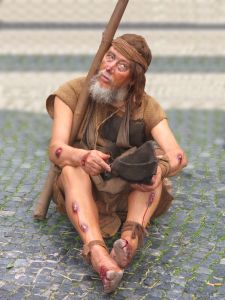
Brundisium comes aut Surrentum ductus amoenum
qui queritur salebras et acerbum frigus et imbres
aut cistam effractam et subducta viatica plorat,
nota refert meretricis acumina, saepe catellam,
saepe periscelidem raptam sibi flentis, uti mox
nulla fides damnis verisque doloribus adsit.
nec semel irrisus triviis attollere curat
fracto crure planum. licet illi plurima manet
lacrima, per sanctum iuratus dicat Osirim
‘credite, non ludo; crudeles, tollite claudum’,
‘quaere peregrinum’ vicinia rauca reclamat.
(Horace, Ep. 1.17.52-62)

When a companion travelling to Brundisium
Or sweet Surrentum moans about the ruts, the bitter
Cold, the rain, his trunk broken open, his money gone,
It’’s like a girl’’s cute tricks, always weeping to herself
About a stolen chain, or an anklet, so later
Her genuine losses and grief won’t be believed.
He who’’s been fooled before won’’t bother to help
That joker, with a broken leg, at the crossroads,
Who in floods of tears swears by sacred Osiris:
‘’It’’s no jest, believe me: don’’t be cruel, help the lame!’ ’
‘‘Go ask a stranger,’’ the raucous neighbours shout.
(tr. Tony Kline)

Metabalein

battle_of_carthage_iii_by_radojavor-d6i0i6x
(C) RadoJavor

Ὁ δὲ Σκιπίων πόλιν ὁρῶν ἑπτακοσίοις ἔτεσιν ἀνθήσασαν ἀπὸ τοῦ συνοικισμοῦ, καὶ γῆς τοσῆσδε καὶ νήσων καὶ θαλάσσης ἐπάρξασαν, ὅπλων τε καὶ νεῶν καὶ ἐλεφάντων καὶ χρημάτων εὐπορήσασαν ἴσα ταῖς ἀρχαῖς ταῖς μεγίσταις, τόλμῃ δὲ καὶ προθυμίᾳ πολὺ διασχοῦσαν, ἥ γε καὶ ναῦς καὶ ὅπλα πάντα περιῃρημένη τρισὶν ὅμως ἔτεσιν ἀντέσχε πολέμῳ τοσῷδε καὶ λιμῷ, τότε ἄρδην τελευτῶσαν ἐς πανωλεθρίαν ἐσχάτην, λέγεται μὲν δακρῦσαι καὶ φανερὸς γενέσθαι κλαίων ὑπὲρ πολεμίων, ἐπὶ πολὺ δ’ ἔννους ἐφ’ ἑαυτοῦ γενόμενός τε, καὶ συνιδὼν ὅτι καὶ πόλεις καὶ ἔθνη καὶ ἀρχὰς ἁπάσας δεῖ μεταβαλεῖν ὥσπερ ἀνθρώπους δαίμονα, καὶ τοῦτ’ ἔπαθε μὲν Ἴλιον, εὐτυχής ποτε πόλις, ἔπαθε δὲ ἡ Ἀσσυρίων καὶ Μήδων καὶ Περσῶν ἐπ’ ἐκείνοις ἀρχὴ μεγίστη γενομένη, καὶ ἡ μάλιστα ἔναγχος ἐκλάμψασα ἡ Μακεδόνων, εἴτε ἑκὼν εἴτε προφυγόντος αὐτὸν τοῦδε τοῦ ἔπους,
“ἔσσεται ἦμαρ ὅταν ποτ’ ὀλώλῃ Ἴλιος ἱρὴ
καὶ Πρίαμος καὶ λαὸς ἐϋμμελίω Πριάμοιο.” [Hom., Il. 6.448-449]
Πολυβίου δ’ αὐτοῦ ἐρομένου σὺν παρρησίᾳ (καὶ γὰρ ἦν αὐτοῦ καὶ διδάσκαλος) ὅ τι βούλοιτο ὁ λόγος, φασὶν οὐ φυλαξάμενον ὀνομάσαι τὴν πατρίδα σαφῶς, ὑπὲρ ἧς ἄρα, ἐς τἀνθρώπεια ἀφορῶν, ἐδεδίει.
(Appian, Rhōmaïka 8.132)

Scipio, beholding this city, which had flourished 700 years from its foundation and had ruled over so many lands, islands, and seas, rich with arms and fleets, elephants and money, equal to the mightiest monarchies but far surpassing them in bravery and high spirit (since without ships or arms, and in the face of famine, it had sustained continuous war for three years), now come to its end in total destruction – Scipio, beholding this spectacle, is said to have shed tears and publicly lamented the fortune of the enemy. After meditating by himself a long time and reflecting on the rise and fall of cities, nations, and empires, as well as of individuals, upon the fate of Troy, that once proud city, upon that of the Assyrians, the Medes, and the Persians, greatest of all, and later the splendid Macedonian empire, either voluntarily or otherwise the words of the poet escaped his lips: –
“The day shall come in which our sacred Troy
And Priam, and the people over whom
Spear-bearing Priam rules, shall perish all.”
Being asked by Polybius in familiar conversation (for Polybius had been his tutor) what he meant by using these words, he said that he did not hesitate frankly to name his own country, for whose fate he feared when he considered the mutability of human affairs. And Polybius wrote this down just as he heard it. (tr. Horace White)

Aitias

Ἐγὼ δὲ τὴν ἐπὶ πλεῖον διαστολὴν πεποίημαι περὶ τούτων οὐχ ἕνεκα τῆς τῶν συγγραφέων ἐπιτιμήσεως, χάριν δὲ τῆς τῶν φιλομαθούντων ἐπανορθώσεως. τί γὰρ ὄφελος ἰατροῦ κάμνουσιν ἀγνοοῦντος τὰς αἰτίας τῶν περὶ τὰ σώματα διαθέσεων; τί δ’ ἀνδρὸς πραγματικοῦ μὴ δυναμένου συλλογίζεσθαι πῶς καὶ διὰ τί καὶ πόθεν ἕκαστα τῶν πραγμάτων τὰς ἀφορμὰς εἴληφεν; οὔτε γὰρ ἐκεῖνον εἰκὸς οὐδέποτε δεόντως συστήσασθαι τὰς τῶν σωμάτων θεραπείας οὔτε τὸν πραγματικὸν οὐδὲν οἷόν τε κατὰ τρόπον χειρίσαι τῶν προσπιπτόντων ἄνευ τῆς τῶν προειρημένων ἐπιγνώσεως. διόπερ οὐδὲν οὕτω φυλακτέον καὶ ζητητέον ὡς τὰς αἰτίας ἑκάστου τῶν συμβαινόντων, ἐπειδὴ φύεται μὲν ἐκ τῶν τυχόντων πολλάκις τὰ μέγιστα τῶν πραγμάτων, ἰᾶσθαι δὲ ῥᾷστόν ἐστι παντὸς τὰς πρώτας ἐπιβολὰς καὶ διαλήψεις.
(Polybius, Hist. 3.7.4-7)

In speaking at such length on this matter, my object has not been to censure previous writers, but to rectify the ideas of students. For of what use to the sick is a physician who is ignorant of the causes of certain conditions of the body? And of what use is a statesman who cannot reckon how, why, and whence each event has originated? The former will scarcely be likely to institute proper treatment for the body and it will be impossible for the latter without such knowledge to deal properly with circumstances. Nothing, therefore, should be more carefully guarded against and more diligently sought out than the first causes of each event, since matters of the greatest moment often originate from trifles, and it is the initial impulses and conceptions in every matter which are most easily remedied. (tr. William Roger Paton, revised by F.W. Walbank and Christian Habicht)

Nobiliores

pammachius_ss_giovanni_e_paolo

Respice sanctum virum Pammachium, et ferventissimae fidei Paulinum Presbyterum, qui non solum divitias, sed se ipsos Domino obtulerunt. qui contra diaboli tergiversationem, nequaquam pellem pro pelle, sed carnes, et ossa, et animas suas Domino consecrarunt. qui te et exemplo, et eloquio, id est, et opere, et lingua possunt ad maiora perducere. nobilis es, et illi, sed in Christo nobiliores.
(Jerome, Ep. 118.5)

Look at Pammachius and at Paulinus that presbyter of glowing faith both of whom have offered to the Lord not only their riches but themselves. In spite of the devil and his shuffling they have by no means given skin for skin, but have consecrated their own flesh and bones, yea and their very souls unto the Lord. Surely these may lead you to higher things both by their example and by their preaching, that is, by their deeds and words. You are of noble birth, so are they: but in Christ they are made nobler still. (tr. William Henry Fremantle)