At sea the historian suffered much and hardly survived. In his account he tells a marellous story about a star which fell down upon the mast of the ship and they were in dange rof sinking. The sailors call this phenomenon Urania. He also speaks of a parrot which he had for twenty years. He says there was hardly any human action which it could not imitate. It could dance, sing, call out names, and do other things. (tr. Roger C. Blockley)
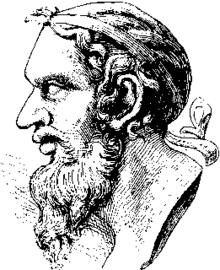
Anacreon received from Polycrates five talents as gifts. After he reflected on them for two nights he returned them saying that they were not worth that amount of reflection. (tr. Marinos Yeroulanos)
Tunc diabolus vel ministri ipsius, daemones, qui de caelo deiecti sunt, videntes ignaros homines dimisso Deo creatore suo, per creaturas errare, coeperunt se illis in diversas formas ostendere et loqui cum eis et expetere ab eis, ut in excelsis montibus et in silvis frondosis sacrificia sibi offerrent et ipsos colerent pro deo, imponentes sibi vocabula sceleratorum hominum, qui in omnibus criminibus et sceleribus suam egerant vitam, ut alius Iovem se esse diceret, qui fuerat magus et in tantis adulteriis incestus ut sororem suam haberet uxorem, quae dicta est Iuno, Minervam et Venerem filias suas corruperit, neptes quoque et omnem parentelam suam turpiter incestaverit. alius autem daemon Martem se nominavit, qui fuit litigiorum et discordiae commissor. alius deinde daemon Mercurium se appellare voluit, qui fuit omnis furti et fraudis dolosus inventor; cui homines cupidi quasi deo lucri, in quadriviis transeuntes, iactatis lapidibus acervos petrarum pro sacrificio reddunt. alius quoque daemon Saturni sibi nomen adscripsit, qui, in omni crudelitate vivens, etiam nascentes suos filios devorabat. alius etiam daemon Venerem se esse confinxit, quae fuit mulier meretrix. non solum cum innumerabilibus adulteris, sed etiam cum patre suo Iove et cum fratre suo Marte meretricata est. ecce quales fuerunt illo tempore isti perditi homines, quos ignorantes rustici per adinventiones suas pessime honorabant, quorum vocabula ideo sibi daemones apposuerunt, ut ipsos quasi deos colerent et sacrificia illis offerrent et ipsorum facta imitarentur, quorum nomina invocabant.
(Martin of Braga, De Correctione Rusticorum 7-8)
Then the Devil and his servants, the demons, began showing themselves to humans in various forms, talking to people and trying to get them to offer sacrifices to them high in the mountains and deep in the woods, worshipping them as gods. And they used the names of people who were criminals, people who had spent their lives in all sorts of criminality and law-breaking. So one demon would claim to be Jupiter, who had been a magus so sunk in incestuous adultery that he took his own sister—whose name was Juno—as his wife, seduced his daughters, Minerva and Venus, and also committed the most disgusting incest with his grandchildren and all his relatives. But another demon named himself Mars, the instigator of discord and conflict. Then another demon, the deceitful deviser of all theft and fraud, decided to call himself Mercury: people who lust as much for profit as this god sacrifice to him when they pass through a crossroads by making mounds of rocks and throwing stones at them. Also, another demon took the name Saturn for as himself: since cruelty was his whole existence, he even ate his own children as they were being born. Another pretended to be Venus, a woman who was a whore and had whored herself not only in countless adulteries but also with Jupiter, her father, and her brother Mars. See how lost people were in those days when ignorant peasants honoured the demons—sinning grievously—with devices of their own, and then for their own purposes the demons used the language invented by such people, so that they would worship them as gods, offer them sacrifices and imitate the evil deeds of the demons whose names they invoked. (tr. Brian Copenhaver)
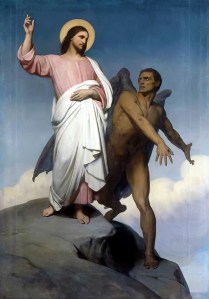
Then Jesus was led up into the desert by the Spirit, to be tempted by the devil. And he fasted forty days and forty nights, and afterward he was hungry. The tempter came to him and said, “If you are the Son of God, command that these stones become loaves of bread.” But he in answer said, “It is written, ‘Man shall not live on bread alone, but on every word coming out of the mouth of God.'” Then the devil takes him into the holy city and had him stand on the gable of the temple, and he says to him, “If you are the Son of God, throw yourself down. For it is written: ‘He will command his angels concerning you; and they will lift you up on their hands, so you will not strike your foot against a stone.'” Jesus said to him, “It is also written: ‘You shall not put Yahweh your God to a test.'” Again, the devil led him to a very high mountain, and showed him all the kingdoms of the world and their splendor, and said to Jesus, “These I will give to you, if you will fall down and worship me.” Then Jesus said to him, “Go away, Satan! For it is written: ‘You shall worship Yahweh your God, and him only shall you serve.'” Then the devil left him alone, and lo, angels had come and were attending him. (tr. David Robert Palmer)
Et iam prima novo spargebat lumine terras
Tithoni croceum linquens Aurora cubile.
regina e speculis ut primam albescere lucem
vidit et aequatis classem procedere velis,
litoraque et vacuos sensit sine remige portus,
terque quaterque manu pectus percussa decorum
flaventisque abscissa comas ‘pro Iuppiter! ibit
hic,’ ait ‘et nostris illuserit advena regnis?
non arma expedient totaque ex urbe sequentur,
diripientque rates alii navalibus? ite,
ferte citi flammas, date tela, impellite remos!
quid loquor? aut ubi sum? quae mentem insania mutat?
infelix Dido, nunc te facta impia tangunt?
tum decuit, cum sceptra dabas. en dextra fidesque,
quem secum patrios aiunt portare penates,
quem subiisse umeris confectum aetate parentem!
non potui abreptum divellere corpus et undis
spargere? non socios, non ipsum absumere ferro
Ascanium patriisque epulandum ponere mensis?
verum anceps pugnae fuerat fortuna. fuisset:
quem metui moritura? faces in castra tulissem
implessemque foros flammis natumque patremque
cum genere exstinxem, memet super ipsa dedissem.
Sol, qui terrarum flammis opera omnia lustras,
tuque harum interpres curarum et conscia Iuno,
nocturnisque Hecate triviis ululata per urbes
et Dirae ultrices et di morientis Elissae,
accipite haec, meritumque malis advertite numen
et nostras audite preces. si tangere portus
infandum caput ac terris adnare necesse est,
et sic fata Iovis poscunt, hic terminus haeret,
at bello audacis populi vexatus et armis,
finibus extorris, complexu avulsus Iuli
auxilium imploret videatque indigna suorum
funera; nec, cum se sub leges pacis iniquae
tradiderit, regno aut optata luce fruatur,
sed cadat ante diem mediaque inhumatus harena.
haec precor, hanc vocem extremam cum sanguine fundo.
tum vos, o Tyrii, stirpem et genus omne futurum
exercete odiis, cinerique haec mittite nostro
munera. nullus amor populis nec foedera sunto.
exoriare aliquis nostris ex ossibus ultor
qui face Dardanios ferroque sequare colonos,
nunc, olim, quocumque dabunt se tempore vires.
litora litoribus contraria, fluctibus undas
imprecor, arma armis: pugnent ipsique nepotesque.’
(Vergil, Aen. 4.584-629)
Dawn was by now beginning to stipple the earth with new brightness,
Leaving Tithonus’ saffron bed. From her watchtower, the ruler
Watched as the early light whitened and noticed the fleet under full sail
Standing seaward, well under way, and observed that the empty
Coastline displayed not a single oarsman strolling the harbours.
Three times, four times she pounds on her beautiful breast, and rips golden
Hair from her head by the roots. ‘Oh Jupiter! Shall this intruder
Go on his way,’ she exclaims, ‘mocking me and the power of my kingdom?
Get a force fitted, pursue them with all of our city’s resources,
Others must haul out our vessels from storage docks. Go to it, right now!
Hurry, bring fire, issue weapons, have rowers press hard upon oarlocks!
What am I saying? Where am I? What madness is warping my reason?
Unfulfilled Dido, your unrighteous acts come to haunt you!
When action was the appropriate course, you were giving him your power.
Witness the word and the honour of one, who, they say, carries with him,
Gods of ancestral shrines, who once took on his shoulders his agèd
Father! Could I not have taken him off, torn his body to pieces,
Scattered it over the sea, or murdered his comrades, and even
Served up Ascanius himself as a treat for his banqueting father?
If war’d ensued, though, the outcome was not, and could not have been, certain.
Whom did I fear? I was going to die. I’d have torched his encampment,
Filled up his holds with my fires, and once I’d extinguished the father,
Child, and the whole of his race, I’d have thrown myself onto the bonfire.
Sun: your cleansing flames survey all earthly endeavours!
Juno: you sense, and are my intercessor in, all of my anguish!
Hecate: your name is howled by night throughout cities, at crossroads!
Demons of vengeance, gods of the dying, forgotten Elissa!
Take it all in, focus your divine will, as you should, on my sufferings.
Hear what I pray. If it must be that this indescribable person
Makes it to port, that he floats back to dry land, and if this is really
Jupiter’s last word on fate and he must reach the goal of his journey,
Let him be hammered in war by the armies of valiant people,
Forced from his borders, torn far away from Iulus’ embraces.
Let him beg help, let him watch as his men are disgracefully slaughtered!
When he surrenders himself to an unjust peace and its strict terms,
Grant him no joy in his realm or the light he so loves. Let him lie dead,
Well before his due day, halfway up a beach and unburied.
This is my prayer; these final words I express with my life-blood:
Tyrians, drive with relentless hate against his stock and every
Future brood, and dispatch them as ritual gifts to my ashes.
No love must ever exist between our two peoples, no treaties.
Rise from my bones, my avenger—and there will be an avenger!—
So you can hound these Dardan settlers with hot fire and cold steel,
Now, or some day in the future, whenever that strength coalesces.
Menace of coast against coast and of waters hurled against waters,
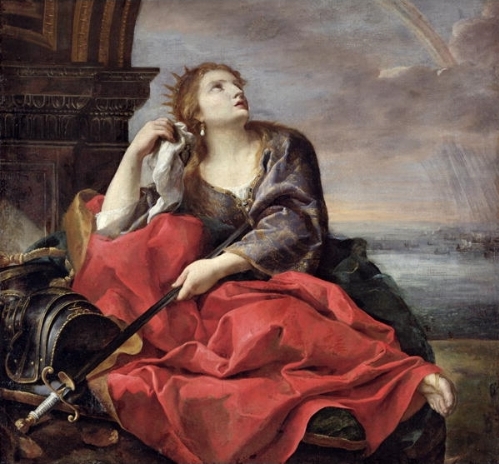
Arms against arms, I invoke. Let them fight, they themselves and their grandsons!’ (tr. Frederick Ahl)
Iam stabant Thebae, poteras iam, Cadme, videri
exilio felix: soceri tibi Marsque Venusque
contigerant; huc adde genus de coniuge tanta,
tot natos natasque et, pignora cara, nepotes,
hos quoque iam iuvenes; sed scilicet ultima semper
exspectanda dies hominis, dicique beatus
ante obitum nemo supremaque funera debet.
(Ovid, Met. 3.131-137)
Thebes has been founded now, and even though
an exile still, you might seem fortunate
in having Mars and Venus as your in-laws,
Cadmus; nor is this all, for in addition
are offspring worthy of your noble wife,
your sons and daughters, the pledges of your love,
and grandsons too, already grown to manhood.
But “fortunate”? A judgment best reserved
for a man’s last day: call no one blest, until
he dies and the last rites are said for him. (tr. Charles Martin)
Transeamus ad alienas iniurias, in quibus vindicandis haec tria lex secuta est, quae princeps quoque sequi debet: aut ut eum, quem punit, emendet, aut ut poena eius ceteros meliores reddat, aut ut sublatis malis securiores ceteri vivant. ipsos facilius emendabis minore poena; diligentius enim vivit, cui aliquid integri superest. nemo dignitati perditae parcit; impunitatis genus est iam non habere poenae locum. civitatis autem mores magis corrigit parcitas animadversionum; facit enim consuetudinem peccandi multitudo peccantium, et minus gravis nota est, quam turba damnationum levat, et severitas, quod maximum remedium habet, assiduitate amittit auctoritatem. constituit bonos mores civitati princeps et vitia eluit, si patiens eorum est, non tamquam probet, sed tamquam invitus et cum magno tormento ad castigandum veniat. verecundiam peccandi facit ipsa clementia regentis; gravior multo poena videtur, quae a miti viro constituitur.
(Seneca Minor, De Clementia 1.22)
Let’s move along to other people’s injuries, in requiting which the law pursues these three goals, which the prince also ought to pursue: either to correct the person punished, or to improve everyone else by punishing him, or to allow everyone else to live more securely once the malefactors have been removed from their midst. You will more easily correct the wrongdoer himself with a lesser penalty: a person conducts his life more carefully when he is left something whole and unsullied, whereas no one is chary of a self-respect he has utterly lost. Having nothing that punishment can affect is a kind of impunity. However, a sparing use of punishment does more to correct a community’s habits, for a multitude of wrongdoers makes wrongdoing a matter of habit; condemnations that come thick and fast relieve the stigma of punishment, and strictness, when unrelieved, loses its moral authority, which is its most important healing power. The prince establishes good practices for the community, and clears away vices, if he is patient with the latter—not in an approving manner but as one who undertakes their chastisement unwillingly and with great anguish. A ruler’s clemency makes men blush to do wrong: punishment seems much more grievous when ordained by a mild-mannered man. (tr. Robert A. Kaster)
Spectaculorum plurima et varia genera edidit: iuvenales, circenses, scaenicos ludos, gladiatorium munus. iuvenalibus senes quoque consulares anusque matronas recepit ad lusum. circensibus loca equiti secreta a ceteris tribuit commisitque etiam camelorum quadrigas. ludis, quos pro aeternitate imperii susceptos appellari “maximos” voluit, ex utroque ordine et sexu plerique ludicras partes sustinuerunt; notissimus eques Romanus elephanto supersidens per catadromum decucurrit; inducta Afrani togata, quae Incendium inscribitur, concessumque ut scaenici ardentis domus supellectilem diriperent ac sibi haberent; sparsa et populo missilia omnium rerum per omnes dies: singula cotidie milia avium cuiusque generis, multiplex penus, tesserae frumentariae, vestis, aurum, argentum, gemmae, margaritae, tabulae pictae, mancipia, iumenta atque etiam mansuetae ferae, novissime naves, insulae, agri. hos ludos spectavit e proscaeni fastigio. munere, quod in amphitheatro ligneo regione Martii campi intra anni spatium fabricato dedit, neminem occidit, ne noxiorum quidem. exhibuit autem ad ferrum etiam quadringentos senatores sescentosque equites Romanos et quosdam fortunae atque existimationis integrae, ex isdem ordinibus confectores quoque ferarum et varia harenae ministeria. exhibuit et naumachiam marina aqua innantibus beluis; item pyrrichas quasdam e numero epheborum, quibus post editam operam diplomata civitatis Romanae singulis optulit. inter pyrricharum argumenta taurus Pasiphaam ligneo iuvencae simulacro abditam iniit, ut multi spectantium crediderunt; Icarus primo statim conatu iuxta cubiculum eius decidit ipsumque cruore respersit. nam perraro praesidere, ceterum accubans, parvis primum foraminibus, deinde toto podio adaperto spectare consueverat.
(Suetonius, Nero 11.1-12.2)
He gave many entertainments of different kinds: the Juvenales, chariot races in the Circus, stage-plays, and a gladiatorial show. At the first mentioned he had even old men of consular rank and aged matrons take part. For the games in the Circus he assigned places to the knights apart from the rest, and even matched chariots drawn by four camels. At the plays which he gave for the “Eternity of the Empire,” which by his order were called the Ludi Maximi, parts were taken by several men and women of both the orders; a well known Roman knight mounted an elephant and rode down a rope; a Roman play of Afranius, too, was staged, entitled “The Fire,” and the actors were allowed to carry off the furniture of the burning house and keep it. Every day all kinds of presents were thrown to the people; these included a thousand birds of every kind each day, various kinds of food, tickets for grain, clothing, gold, silver, precious stones, pearls, paintings, slaves, beasts of burden, and even trained wild animals; finally, ships, blocks of houses, and farms. These plays he viewed from the top of the proscenium. At the gladiatorial show, which he gave in a wooden amphitheatre, erected in the district of the Campus Martius within the space of a single year, he had no one put to death, not even criminals. But he compelled four hundred senators and six hundred Roman knights, some of whom were well to do and of unblemished reputation, to fight in the arena. Even those who fought with the wild beasts and performed the various services in the arena were of the same orders. He also exhibited a naval battle in salt water with sea monsters swimming about in it; besides pyrrhic dances by some Greek youths, handing each of them certificates of Roman citizenship at the close of his performance. The pyrrhic dances represented various scenes. In one a bull mounted Pasiphae, who was concealed in a wooden image of a heifer; at least many of the spectators thought so. Icarus at his very first attempt fell close by the imperial couch and bespattered the emperor with his blood; for Nero very seldom presided at the games, but used to view them while reclining on a couch, at first through small openings, and then with the entire balcony uncovered. (tr. John C. Rolfe)
The Romans, it is true, say that the many virtues of Crassus were obscured by his sole vice of avarice; and it is likely that the one vice which became stronger than all the others in him, weakened the rest. The chief proofs of his avarice are found in the way he got his property and in the amount of it. For at the outset he was possessed of not more than three hundred talents; then during his consulship he sacrificed the tenth of his goods to Hercules, feasted the people, gave every Roman out of his own means enough to live on for three months, and still, when he made a private inventory of his property before his Parthian expedition, he found that it had a value of seventy-one hundred talents. The greatest part of this, if one must tell the scandalous truth, he got together out of fire and war, making the public calamities his greatest source of revenue. For when Sulla took the city and sold the property of those whom he had put to death, considering it and calling it spoil of war, and wishing to defile with his crime as many and as influential men as he could, Crassus was never tired of accepting or of buying it. And besides this, observing how natural and familiar at Rome were such fatalities as the conflagration and collapse of buildings, owing to their being too massive and close together, he proceeded to buy slaves who were architects and builders. Then, when he had over five hundred of these, he would buy houses that were afire, and houses which adjoined those that were afire, and these their owners would let go at a trifling price owing to their fear and uncertainty. In this way the largest part of Rome came into his possession. But though he owned so many artisans, he built no house for himself other than the one in which he lived; indeed, he used to say that men who were fond of building were their own undoers, and needed no other foes. (tr. Bernadotte Perrin)
Ἡ κομψή, μεῖνόν με. τί σοι καλὸν οὔνομα; ποῦ σε
ἔστιν ἰδεῖν; ὃ θέλεις δώσομεν. οὐδὲ λαλεῖς;
ποῦ γίνῃ; πέμψω μετὰ σοῦ τινα. μή τις ἔχει σε;
ὦ σοβαρή, ὑγίαιν’. οὐδ’ “ὑγίαινε” λέγεις;
καὶ πάλι καὶ πάλι σοι προσελεύσομαι· οἶδα μαλάσσειν
καὶ σοῦ σκληροτέρας. νῦν δ’ ὑγίαινε, γύναι.
(Antiphilus or Philodemus, Anth. Gr. 5.308)
Pretty woman, wait for me. What is your first name? Where can I see you? I will give you what you want.
Won’t you even talk? Where do you live? I will send someone with you. You aren’t claimed by someone, are you?
Well, you stuck-up thing, goodbye.
Won’t you even say goodbye? Then again and again I will accost you; I know how to soften even women more hard-hearted than you; Goodbye, woman—for now. (tr. William Roger Paton, revised by Michael A. Tueller)






 Crambe Repetita