Triumphe

octavian-triumph-2

Concines laetosque dies et Urbis
publicum ludum super impetrato
fortis Augusti reditu forumque
litibus orbum.

tum meae, si quid loquar audiendum,
vocis accedet bona pars, et, “o Sol
pulcher! o laudande!” canam, recepto
Caesare felix.

tuque dum procedis, “io Triumphe!”
non semel dicemus, “io Triumphe!”
civitas omnis, dabimusque divis
tura benignis.

(Horace, Carm. 4.2.41-52)

You will celebrate the days of joy, the capital’s public holiday, and the Forum bereft of lawsuits in honour of the valiant Augustus’ return which has been granted to our prayers. Then, if I have anything to say that is worth hearing, I shall join in to the best of my ability, singing “O glorious day, o worthy of all praise!” in my joy at Caesars’ return. And while you take the lead, we shall cry more than once “Io Triumphe!” The whole city will cry “Io Triumphe” and we shall offer incense to the kindly gods. (tr. Niall Rudd)

Pempazete

image-2

Πεμπάζετ’ ὀρθῶς ἐκβολὰς ψήφων, ξένοι,
τὸ μὴ ἀδικεῖν σέβοντες ἐν διαιρέσει.
γνώμης ἀπούσης πῆμα γίγνεται μέγα . . .
(Aeschylus, Eum. 748-750)

Shake out the lots and count them fairly, friends. Honour justice. An error in judgement now can mean disaster. (tr. Robert Fagles)

Sunachthomenon

the-greeks-and-the-trojans-fighting-over-the-body-of-patroclus-by-antoine-wiertz
Antoine Wiertz, The Greeks and the Trojans fighting over the body of Patroclus (1836)

ἔνθ’ ἄρα τοι, Πάτροκλε, φάνη βιότοιο τελευτή·
(Homer, Il. 16.787)

then, Patroclus, the end of life came blazing up before you, (tr. Robert Fagles)

Ἡ ἀποστροφὴ σημαίνει τὸν συναχθόμενον· σοὶ γάρ, ὦ Πάτροκλε, τῷ οὕτως ὑπ’ Ἀχιλλέως ἀγαπωμένῳ, τῷ πᾶν εἰς σωτηρίαν τῶν Ἑλλήνων πραγματευσαμένῳ, τῷ Νέστορος φιλοπόνως ἀνασχομένῳ, τῷ Εὐρύπυλον φιλοστόργως ἰασαμένῳ, τῷ ὑπὲρ τῶν Ἑλλήνων δακρύσαντι καὶ τὸν σκληρῶς διακείμενον Ἀχιλλέα πείσαντι, τῷ κατὰ τῆς ἑαυτοῦ ψυχῆς τὴν ἔξοδον κατορθώσαντι. ταῦτα πάντα ἔνεστιν ἐπαναφέροντας ἐπὶ τὴν ἀποστροφὴν ὁρᾶν τὸ ἐν αὐτῇ περιπαθές.
(Scholia vetera in Iliadem 16.787)

The apostrophe shows that he [the poet] condoles with you, O Patroclus, who were loved so much by Achilles, who had exerted yourself to save your fellow Greeks, who had patiently endured Nestor’s garrulity, who had lovingly tended Eurypylus, who had shed tears because of the [disaster of the] Greeks, who had persuaded unyielding Achilles, who had secured a way out [for the Greeks] at the cost of your own life. By relating all this to the apostrophe one can detect its highly pathetic meaning. (tr. Irene J.F. de Jong)

Amictu

6455667

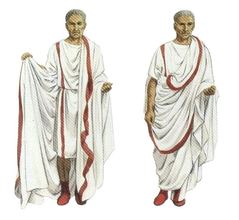
Cultus non est proprius oratoris aliquis sed magis in oratore conspicitur. quare sit, ut in omnibus honestis debet esse, splendidus et virilis. nam et toga et calceus et capillus tam nimia cura quam negligentia sunt reprehendenda. est aliquid in amictu, quod ipsum aliquatenus temporum condicione mutatum est. nam veteribus nulli sinus, perquam breves post illos fuerunt. Itaque etiam gestu necesse est usos esse in principiis eos alio, quorum brachium, sicut Graecorum, veste continebatur. (Quintilian, Inst. Or. 11.3.137-138)

With regard to dress, there is no special garb peculiar to the orator, but his dress comes more under the public eye than that of other men. It should, therefore, be distinguished as manly, as, indeed, it ought to be with all men of position. For excessive care with regard to the cut of the toga, the style of the shoes, or the arrangement of the hair, is just as reprehensible as excessive carelessness. There are also details of dress which are altered to some extent by successive changes in fashion. The ancients, for example, wore no folds, and their successors wore them very short. Consequently it follows that in view of the fact that their arms were, like those of the Greeks, covered by the garment, they must have employed a different form of gesture in the exordium from that which is now in use. (tr. Harold Edgeworth Butler)

Clavum

220px-pax_romana04

Peregrinis in senatum allectis libellus propositus est: ‘Bonum factum: ne quis senatori novo curiam monstrare velit!’ et illa vulgo canebantur:
‘Gallos Caesar in triumphum ducit, idem in curiam;
Galli bracas deposuerunt, latum clavum sumpserunt.’
(Suetonius, Div. Iul. 80.2)

When foreigners were admitted to the senate, the following placard was set up: ‘Well done, those who refuse to show a new senator where the senate house is!’ And the following verse was heard everywhere:
Caesar led Gauls in his triumph – and into the senate house;
The Gauls put aside their trousers and put on the broad stripe*.

* an emblem of senatorial rank.

(tr. Catharine Edwards, with her note)

Diamochthoumen

oapic21

Μάτην ἡμῖν τὰ πάντα πονεῖται, ὦ Κύρτων, δι’ ἡμέρας μὲν ὑπὸ τῆς εἵλης φλεγομένοις νύκτωρ δὲ ὑπὸ λαμπάσι τὸν βυθὸν ἀποξύουσι, καὶ τὸ λεγόμενον δὴ τοῦτο εἰς τὸν τῶν Δαναΐδων τοὺς ἀμφορέας ἐκχέομεν πίθον· οὕτως ἄπρακτα καὶ ἀνήνυτα διαμοχθοῦμεν.
(Alciphron, Epist. 1.2.1)

All of our work is for nothing, Kyrton. By day we are burnt by the heat of the sun, and at night we scrape at the abyss by torchlight, emptying our amphorae into the jar of the Danaids, as the saying goes. That’s how unprofitable and endless our labour is. (tr. Jason König)

Eudaimonēsein

Ἆρ’ οὖν ἂν ἐξαρκέσειεν ἡμῖν, εἰ τήν τε πόλιν ἀσφαλῶς οἰκοῖμεν καὶ τὰ περὶ τὸν βίον εὐπορώτεροι γιγνοίμεθα καὶ τὰ τε πρὸς ἡμᾶς αὐτοὺς ὁμονοοῖμεν καὶ παρὰ τοῖς Ἕλλησιν εὐδοκιμοῖμεν; ἐγὼ μὲν γὰρ ἡγοῦμαι τούτων ὑπαρξάντων τελέως τὴν πόλιν εὐδαιμονήσειν. ὁ μὲν τοίνυν πόλεμος ἁπάντων ἡμᾶς τῶν εἰρημένων ἀπεστέρηκεν· καὶ γὰρ πενεστέρους πεποίηκε, καὶ πολλοὺς κινδύνους ὑπομένειν ἠνάγκασε, καὶ πρὸς τοὺς Ἕλληνας διαβέβληκε, καὶ πάντας τρόπους τεταλαιπώρηκεν ἡμᾶς. ἢν δὲ τὴν εἰρήνην ποιησώμεθα, καὶ τοιούτους ἡμᾶς αὐτοὺς παράσχωμεν οἵους αἱ κοιναὶ συνθῆκαι προστάττουσι, μετὰ πολλῆς μὲν ἀσφαλείας τὴν πόλιν οἰκήσομεν, ἀπαλλαγέντες πολέμων καὶ κινδύνων καὶ ταραχῆς, εἰς ἣν νῦν πρὸς ἀλλήλους καθέσταμεν, καθ’ ἑκάστην δὲ τὴν ἡμέραν πρὸς εὐπορίαν ἐπιδώσομεν, ἀναπεπαυμένοι μὲν τῶν εἰσφορῶν καὶ τῶν τριηραρχιῶν καὶ τῶν ἄλλων τῶν περὶ τὸν πόλεμον λειτουργιῶν, ἀδεῶς δὲ γεωργοῦντες καὶ τὴν θάλατταν πλέοντες καὶ ταῖς ἄλλαις ἐργασίαις ἐπιχειροῦντες, αἳ νῦν διὰ τὸν πόλεμον ἐκλελοίπασιν.
(Isocrates, Or. 8.19-20)

Now, would we be satisfied if we could live in our city securely and have our daily needs well provided, if we are united in spirit within our city and have a good reputation among the other Greeks? In my opinion, if we have all this, I think our city will be completely prosperous. Now, the war has deprived us of all those things I just mentioned. It has made us poorer, has forced us to endure many dangers, has ruined our reputation among the Greeks, and has burdened us with every possible hardship. If we make peace, on the other hand, and behave as the common peace requires us to, we will govern our city with great security, we will be freed from the war, dangers, and confusion that now govern our relations with one another, we will make progress toward prosperity every day since we will be relieved of paying war taxes, fitting out triremes, or the other duties connected with war, and we will be able without fear to farm, to sail the sea, and to undertake all those other tasks that are suspended now because of the war. (tr. Terry L. Papillon)

Capillus

bad-hair

Capillus puero qui primum decisus est podagrae impetus dicitur levare circumligatus, et in totum impubium impositus. virorum quoque capillus canis morsibus medetur ex aceto et capitum volneribus ex oleo aut vino; si credimus, a revulso cruci quartanis, combustus utique capillus carcinomati. pueri qui primus ceciderit dens, ut terram non attingat, inclusus in armillam et adsidue in bracchio habitus muliebrium locorum dolores prohibet.
(Pliny the Elder, Nat. Hist. 28.41)

The hair cut off first from a child’s head, if tied round the affected part, is said to relieve attacks of gout, as does the application of the hair of all, generally speaking, who have not arrived at puberty. The hair of adult men also, applied with vinegar, is good for dog bites, with oil or wine for wounds on the head. If we believe it, the hair of a man torn from the cross is good for quartan ague; burnt hair is certainly good for carcinoma. The first tooth of a child to fall out, provided that it does not touch the ground, if set in a bracelet and worn constantly on a woman’s arm, keeps pain away from her private parts. (tr. William Henry Samuel Jones)

Chamaitupēs

tumblr_mg6ls44k3w1rlwljio1_1280

Ὅσον τὸ μεταξὺ μετὰ κορίσκης ἢ μετὰ
χαμαιτύπης τὴν νύκτα κοιμᾶσθαι. βαβαί,
ἡ στιφρότης, τὸ χρῶμα, πνεῦμα, δαίμονες.
τὸ μὴ σφόδρ’ εἶναι πάνθ’ ἕτοιμα, δεῖν δέ τι
ἀγωνιᾶσαι καὶ ῥαπισθῆναί τε καὶ
πληγὰς λαβεῖν ἁπαλαῖσι χερσίν· ἡδύ γε
νὴ τὸν Δία τὸν μέγιστον.
(Timocles, fr. 24)

What an ernormous difference between spending the night
with a free girl and with a prostitute! Damn!
The firmness of her flesh! Her color, and the smell of her breath! Ye gods!
The fact that everything’s not too ready for you, and you have
to wrestle a little, and get slapped and
punched by her soft hands. That’s nice,
by Zeus the greatest!
(tr. Stuart Douglas Olson)

Theous

Φησίν τις εἶναι δῆτ’ ἐν οὐρανῷ θεούς;
οὐκ εἰσίν, οὐκ εἴσ’, εἴ τις ἀνθρώπων θέλει
μὴ τῷ παλαιῷ μῶρος ὢν χρῆσθαι λόγῳ.
σκέψασθε δ’ αὐτοί, μὴ ἐπὶ τοῖς ἐμοῖς λόγοις
γνώμην ἔχοντες. φήμ’ ἐγὼ τυραννίδα
κτείνειν τε πλείστους κτημάτων τ’ ἀποστερεῖν
ὅρκους τε παραβαίνοντας ἐκπορθεῖν πόλεις·
καὶ ταῦτα δρῶντες μᾶλλόν εἰσ’ εὐδαίμονες
τῶν εὐσεβούντων ἡσυχῇ καθ’ ἡμέραν.
πόλεις τε μικρὰς οἶδα τιμώσας θεούς,
αἳ μειζόνων κλύουσι δυσσεβεστέρων
λόγχης ἀριθμῷ πλείονος κρατούμεναι.
(Euripides, fr. 286 Nauck2)

Does someone say there are indeed gods in heaven? There are not, there are not, if a man is willing not to rely foolishly on the antiquated reasoning. Consider for yourselves, do not base your opinion on words of mine. I say myself that tyranny kills very many men and deprives them of their possessions; and that tyrants break their oaths to ransack cities, and in doing this they are more prosperous under heaven than men who live quietly in reverence from day to day. I know too of small cities doing honor to the gods which are subject to larger, more impious ones, because they are overcome by a more numerous army. (tr. Christopher Collard)