
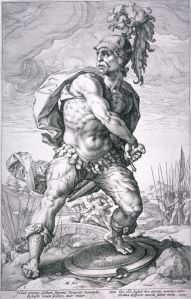
Cum consulis vocem subsecuta patrum indignatio esset, proditur memoriae adversus crebram implorationem deum, quos testes foederum saepius invocabant consules, vocem Anni spernentis numina Iovis Romani auditam. certe, cum commotus ira se a vestibulo templi citato gradu proriperet, lapsus per gradus capite graviter offenso impactus imo ita est saxo ut sopiretur. exanimatum auctores quoniam non omnes sunt, mihi quoque in incerto relictum sit, sicut inter foederum ruptorum testationem ingenti fragore caeli procellam effusam; nam et vera esse et apte ad repraesentandam iram deum ficta possunt. Torquatus missus ab senatu ad dimittendos legatos cum iacentem Annium vidisset, exclamat, ita ut populo patribusque audita vox pariter sit: ‘bene habet: di pium movere bellum. est caeleste numen; es, magne Iuppiter; haud frustra te patrem deum hominumque hac sede sacravimus. quid cessatis, Quirites, vosque patres conscripti, arma capere deis ducibus? sic stratas legiones Latinorum dabo, quemadmodum legatum iacentem videtis.’
(Livy 8.6.1-7)
The consul’s speech having been warmly seconded by the indignant senators, it is recorded that in answer to the numerous supplications of the gods, whom the consuls repeatedly invoked as the witnesses of treaties, the voice of Annius was heard spurning the power of the Roman Jupiter. At all events, as he hurried, beside himself with rage, from the entrance of the temple, he slipped on the stairs, and struck his head so hard on the lowest stone that he lost consciousness. That he was killed is not asserted by all writers, wherefore I, too, may leave the question undecided, as also the tradition that while men were calling on the gods to witness the breaking of the treaty, there was a loud crash in the heavens, and a hurricane burst forth: for these things may be true, or they may be apt inventions to express in a lively manner the wrath of Heaven. Torquatus, who had been sent by the senate to dismiss the envoys, saw Annius lying there, and exclaimed in a voice that was heard alike by the people and the senators: “It is well; the gods have begun a righteous war. There is a heavenly power; thou dost exist, great Jupiter: not in vain have we established thee in this holy seat, the Father of gods and men. Why do you hesitate to arm, Quirites, and you Conscript Fathers, with the gods to lead you? As you behold their ambassador brought low, even so will I cast down the Latin legions.” (tr. Benjamin Oliver Foster)

 Crambe Repetita