Damason

ingres-ambassadeurs-achille
J.A.D. Ingres, Les ambassadeurs d’Agamemnon et des principaux de l’armée grecque, précédés des hérauts, arrivent dans la tente d’Achille pour le prier de combattre (1801)

Καί σε τοσοῦτον ἔθηκα, θεοῖς ἐπιείκελ’ Ἀχιλλεῦ,
ἐκ θυμοῦ φιλέων, ἐπεὶ οὐκ ἐθέλεσκες ἅμ’ ἄλλῳ
οὔτ’ ἐς δαῖτ᾽ ἰέναι οὔτ’ ἐν μεγάροισι πάσασθαι,
πρίν γ’ ὅτε δή σ’ ἐπ’ ἐμοῖσιν ἐγὼ γούνεσσι καθίσσας
ὄψου τ’ ἄσαιμι προταμὼν καὶ οἶνον ἐπισχών.
πολλάκι μοι κατέδευσας ἐπὶ στήθεσσι χιτῶνα
οἴνου ἀποβλύζων ἐν νηπιέῃ ἀλεγεινῇ.
ὣς ἐπὶ σοὶ μάλα πολλὰ πάθον καὶ πολλ’ ἐμόγησα,
τὰ φρονέων, ὅ μοι οὔ τι θεοὶ γόνον ἐξετέλειον
ἐξ ἐμεῦ. ἀλλὰ σὲ παῖδα, θεοῖς ἐπιείκελ’ Ἀχιλλεῦ,
ποιεύμην, ἵνα μοί ποτ’ ἀεικέα λοιγὸν ἀμύνῃς.
ἀλλ’, Ἀχιλεῦ, δάμασον θυμὸν μέγαν· οὐδέ τί σε χρὴ
νηλεὲς ἦτορ ἔχειν· στρεπτοὶ δέ τε καὶ θεοὶ αὐτοί,
τῶν περ καὶ μείζων ἀρετὴ τιμή τε βίη τε.
(Homer, Il. 9.485-498)

And I made you what you are – strong as the gods, Achilles –
I loved you from the heart. You’d never go with another
to banquet on the town or feast in your own halls.
Never, until I’d sat you down on my knees
and cut you the first bits of meat, remember?
You’d eat your fill, I’d hold the cup to your lips
and all too often you soaked the shirt on my chest,
spitting up some wine, a baby’s way… a misery.
Oh I had my share of troubles for you, Achilles,
did my share of labor. Brooding, never forgetting
the gods would bring no son of mine to birth,
not from my own loins. So you, Achilles –
great godlike Achilles – I made you my son, I tried,
so someday you might fight disaster off my back.
But now, Achilles, beat down your mounting fury!
It’s wrong to have such an iron, ruthless heart.
Even the gods themselves can bend and change,
and theirs is the greater power, honor, strength.
(tr. Robert Fagles)

Olumpon

c35e00f0c5973577647f45e46f4200c6

τοῦτον οὖν ἔχει τὸν λόγον ὁ θεὸς ἐν κόσμῳ, συνέχων τὴν τῶν ὅλων ἁρμονίαν τε καὶ σωτηρίαν, πλὴν οὔτε μέσος ὤν, ἔνθα ἡ γῆ τε καὶ ὁ θολερὸς τόπος οὗτος, ἀλλ’ ἄνω καθαρὸς ἐν καθαρῷ χωρῷ βεβηκώς, ὃν ἐτύμως καλοῦμεν οὐρανὸν μὲν ἀπὸ τοῦ ὅρον εἶναι εἶναι τὸν ἄνω, Ὄλυμπον δὲ οἷον ὁλολαμπῆ τε καὶ παντὸς ζόφου καὶ ἀτάκτου κινήματος κεχωρισμένον, οἷα γίνεται παρ’ ἡμῖν διὰ χειμῶνος καὶ ἀνέμων βίας, ὥσπερ ἔφη καὶ ὁ ποιητὴς
Οὔλυμπόνδ’, ὅθι φασὶ θεῶν ἕδος ἀσφαλὲς αἰεὶ
ἔμμεναι· οὔτ’ ἀνέμοισι τινάσσεται οὔτε ποτ’ ὄμβρῳ
δεύεται, οὔτε χιὼν ἐπιπίλναται, ἀλλὰ μάλ’ αἴθρη
πέπταται ἀνέφελος, λευκὴ δ’ ἐπιδέδρομεν αἴγλη. [Homer, Od. 6.42-45]
(Pseudo-Aristotle, Peri Kosmou 400a3-14)

And this is the position held in the cosmos by God, who maintains the orderliness and preservation of the whole: except that he is not in the centre – for there lies the earth, this turbulent, troubled place – but high aloft, pure in a pure region, which we rightly call “heaven” (οὐρανός) because it forms the uppermost boundary (ὅρος… ἄνω) or “Olympus” because it shines brightly all over (ὁλολαμπής) and is removed from all darkness and disorderly motion such as occurs among us when there is a storm or a violent wind; as the poet says,
To Olympus, where they say the gods’ dwelling stands
always safe; it is not shaken by winds, nor drenched
by showers of rain, nor does snow come near it; always unclouded
the air spreads out, and a white radiance lies upon it.
(tr. D.J. Furley)

Erriphthō

l_pl1_37646_fnt_tr_t89iia
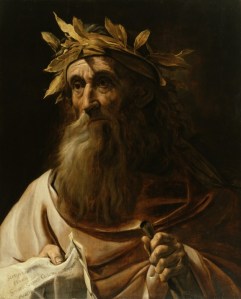
Anonymous portrait of Homer

Εἰ δ’ ἀμαθεῖς τινες ἄνθρωποι τὴν Ὁμηρικὴν ἀλληγορίαν ἀγνοοῦσιν οὐδ’ εἰς τὰ μύχια τῆς ἐκείνου σοφίας καταβεβήκασιν, ἀλλ’ ἀβασάνιστος αὐτοῖς ἡ τῆς ἀληθείας κρίσις ἔρριπται, καὶ τὰ φιλοσόφως ῥηθὲν οὐκ εἰδότες, ὃ μυθικῶς δοκεῖ πλάσαι προαρπάζουσιν, οὗτοι μὲν ἐρρέτωσαν. ἡμεῖς δ’ οἳ τῶν ἀβεβήλων ἐντὸς περιρραντηρίων ἠγνίσμεθα, σεμνὴν ὑπὸ νόμῳ τῶν ποιημάτων τὴν ἀλήθειαν ἀνιχνεύωμεν. ἐρρίφθω δὲ καὶ Πλάτων ὁ κόλαξ καὶ Ὁμήρου συκοφάντης, ἔνδοξον ἀπὸ τῆς ἰδίας πολιτείας μύρῳ τὴν κεφαλὴν διάβροχον. οὐδ’ Ἐπικούρου φροντὶς ἡμῖν, ὃς τῆς ἀσέμνου περὶ τοὺς ἰδίους κήπους ἡδονῆς γεωργός ἐστιν, ἅπασαν ὁμοῦ ποιητικὴν ὥσπερ ὀλέθριον μύθων δέλεαρ ἀφοσιούμενος. πρὸς οὓς μέγα δή τι στενάξας εἴποιμ’ ἂν εὐλόγως·
ὦ πόποι, οἷον δή νυ θεοὺς βροτοὶ αἰτιόωνται. [Od. 1.32]
καὶ τὸ πικρότατον, ἀρχὴν ἑκάτεροι τῶν παρ’ ἑαυτοῖς δογμάτων ἔχοντες Ὅμηρον, ἀφ’ οὗ τὰ πλεῖστα τῆς ἐπιστήμης ὠφέληνται, περὶ τοῦτον ἀχαρίστως εἰσὶν ἀσεβεῖς.
(Heraclitus Stoicus, Hom. Probl. 3.2-4.4)

If some ignorant people fail to recognize Homeric allegory and have not descended into the secret caverns of his wisdom but instead have risked a hasty judgment of the truth without proper consideration, and if then they seize hastily on what they take to be his mythical invention, because they do not know what is said in a philosophical sense – well, off with them and good riddance! But let us, who have been hallowed within the sacred enclosure, methodically track down the grand truth of the poems. Away too with Plato, the flatterer, Homer’s dishonest accuser, who banishes him from his private Republic as an honored exile, garlanded with white wool and with his head drenched with costly perfumes! Nor need we trouble ourselves with Epicurus, who cultivates his low pleasure in his private garden, and abominates all poetry indiscriminately as a lethal allurement of fable. In the face of these two, I might very reasonably groan and cry
Ah me, how mortals put the blame on gods!
And the irony is that both these philosophers found the basis of their doctrines in Homer, and are ungrateful as well as impious toward the person from whom they gained most of their knowledge.
(tr. Donald A. Russell & David Konstan)

Mixesthai

william_mcgregor_paxton_-_nausicaa_study
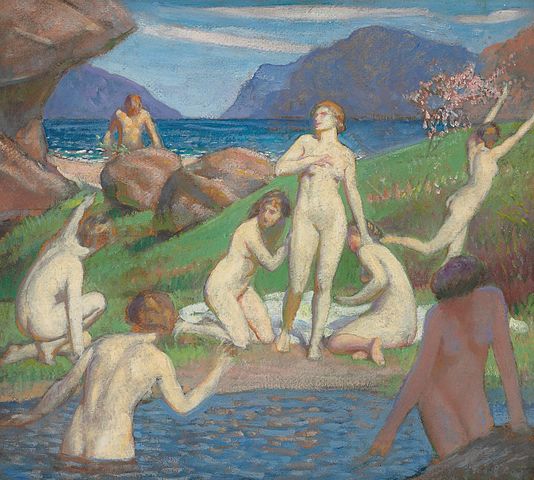
William McGregor Paxton, Nausicaä (study)

Σφαῖραν ἔπειτ’ ἔρριψε μετ’ ἀμφίπολον βασίλεια·
αἱ δ’ ἐπὶ μακρὸν ἄυσαν· ὁ δ’ ἔγρετο δῖος Ὀδυσσεύς,
ἑζόμενος δ’ ὥρμαινε κατὰ φρένα καὶ κατὰ θυμόν·
“ὢ μοι ἐγώ, τέων αὖτε βροτῶν ἐς γαῖαν ἱκάνω;
ἦ ῥ’ οἵ γ’ ὑβρισταί τε καὶ ἄγριοι οὐδὲ δίκαιοι,
ἦε φιλόξεινοι καί σφιν νόος ἐστὶ θεουδής;
ὥς τέ με κουράων ἀμφήλυθε θῆλυς ἀϋτή,
νυμφάων, αἳ ἔχουσ’ ὀρέων αἰπεινὰ κάρηνα
καὶ πηγὰς ποταμῶν καὶ πίσεα ποιήεντα.
ἦ νύ που ἀνθρώπων εἰμὶ σχεδὸν αὐδηέντων;
ἀλλ’ ἄγ’ ἐγὼν αὐτὸς πειρήσομαι ἠδὲ ἴδωμαι.”
ὣς εἰπὼν θάμνων ὑπεδύσετο δῖος Ὀδυσσεύς,
ἐκ πυκινῆς δ’ ὕλης πτόρθον κλάσε χειρὶ παχείῃ
φύλλων, ὡς ῥύσαιτοι περὶ χροῒ μήδεα φωτός.
βῆ δ’ ἴμεν ὥς τε λέων ὀρεσίτροφος ἀλκὶ πεποιθώς,
ὅς τ’ εἶσ’ ὑόμενος καὶ ἀήμενος, ἐν δέ οἱ ὄσσε
δαίεται· αὐτὰρ ὁ βουσὶ μετέρχεται ἢ ὀΐεσσιν
ἠὲ μετ’ ἀγροτέρας ἐλάφους· κέλεται δέ ἑ γαστὴρ
μήλων πειρήσοντα καὶ ἐς πυκινὸν δόμον ἐλθεῖν·
ὣς Ὀδυσεὺς κούρῃσιν ἐϋπλοκάμοισιν ἔμελλε
μίξεσθαι, γυμνός περ ἐών· χρειώ γὰρ ἵκανε.
(Homer, Od. 6.115-136)

Accordingly, when the princess threw the ball to one of her maids, it missed her and fell into the deep, eddying current. At this they all gave a loud shriek. The noble Odysseus awoke, and, sitting up, wondered to himself.
‘What country have I come to this time?’ he said with a groan. ‘What people are there here? Hostile and uncivilized savages, or kindly and god-fearing people? There’s a shrill echo in my ears, as though some girls were shrieking – Nymphs, who haunt the steep hill-tops, the springs of rivers, and the grassy meadows. Or am I by any chance among human beings who can talk as I do? Well, I must go and use my own eyes to find out.’
So the noble Odysseus crept out from under the bushes, after breaking off with his great hand a leafy bough from the thicket to conceal his naked manhood. Then he advanced on them like a mountain lion who sallies out, defying wind and rain in the pride of his power, with fire in his eyes, to hunt down the oxen or sheep or pursue the wild deer. Forced by hunger, he will even attack flocks in a well-protected fold. So Odysseus, naked as he was, made a move towards these girls with their braided hair; necessity compelled him. (tr. Robert Fagles)

Tisis

3225219490_f1220551a6

Τοῦ ὅ γ’ ἐπιμνησθεὶς ἔπε’ ἀθανάτοισι μετηύδα·
“ὢ πόποι, οἷον δή νυ θεοὺς βροτοὶ αἰτιόωνται·
ἐξ ἡμέων γάρ φασι κάκ’ ἔμμεναι, οἱ δὲ καὶ αὐτοὶ
σφῇσιν ἀτασθαλίῃσιν ὑπὲρ μόρον ἄλγε’ ἔχουσιν,
ὡς καὶ νῦν Αἴγισθος ὑπὲρ μόρον Ἀτρεΐδαο
γῆμ’ ἄλοχον μνηστήν, τὸν δ’ ἔκτανε νοστήσαντα,
εἰδὼς αἰπὺν ὄλεθρον, ἐπεὶ πρό οἱ εἴπομεν ἡμεῖς,
Ἑρμείαν πέμψαντες, ἐΰσκοπον Ἀργεϊφόντην,
μήτ’ αὐτὸν κτείνειν μήτε μνάασθαι ἄκοιτιν·
ἐκ γὰρ Ὀρέσταο τίσις ἔσσεται Ἀτρεΐδαο,
ὁππότ’ ἂν ἡβήσῃ τε καὶ ἧς ἱμείρεται αἴης.
ὣς ἔφαθ’ Ἑρμείας, ἀλλ’ οὐ φρένας Αἰγίσθοιο
πεῖθ’ ἀγαθὰ φρονέων· νῦν δ’ ἁθρόα πάντ’ ἀπέτισεν.”
(Homer, Od. 1.31-42)

Recalling Aegisthus, Zeus harangued the immortal powers:
“Ah how shameless – the way these mortals blame the gods.
From us alone, they say, come all their miseries, yes,
but they themselves, with their own reckless ways,
compound their pains beyond their proper share.
Look at Aegisthus now…
Above and beyond his share he stole Atrides’ wife,
he murdered the warlord coming home from Troy
though he knew it meant his own total ruin.
Far in advance we told him so ourselves,
dispatching the guide, the giant-killer Hermes.
‘Don’t murder the man,’ he said, ‘don’t court his wife.
Beware, revenge will come from Orestes, Agamemnon’s son,
that day he comes of age and longs for his native land.’
So Hermes warned, with all the good will in the world,
but would Aegisthus’ hardened heart give way?
Now he pays the price – all at a single stroke.”
(tr. Robert Fagles)

Metabalein

battle_of_carthage_iii_by_radojavor-d6i0i6x
(C) RadoJavor

Ὁ δὲ Σκιπίων πόλιν ὁρῶν ἑπτακοσίοις ἔτεσιν ἀνθήσασαν ἀπὸ τοῦ συνοικισμοῦ, καὶ γῆς τοσῆσδε καὶ νήσων καὶ θαλάσσης ἐπάρξασαν, ὅπλων τε καὶ νεῶν καὶ ἐλεφάντων καὶ χρημάτων εὐπορήσασαν ἴσα ταῖς ἀρχαῖς ταῖς μεγίσταις, τόλμῃ δὲ καὶ προθυμίᾳ πολὺ διασχοῦσαν, ἥ γε καὶ ναῦς καὶ ὅπλα πάντα περιῃρημένη τρισὶν ὅμως ἔτεσιν ἀντέσχε πολέμῳ τοσῷδε καὶ λιμῷ, τότε ἄρδην τελευτῶσαν ἐς πανωλεθρίαν ἐσχάτην, λέγεται μὲν δακρῦσαι καὶ φανερὸς γενέσθαι κλαίων ὑπὲρ πολεμίων, ἐπὶ πολὺ δ’ ἔννους ἐφ’ ἑαυτοῦ γενόμενός τε, καὶ συνιδὼν ὅτι καὶ πόλεις καὶ ἔθνη καὶ ἀρχὰς ἁπάσας δεῖ μεταβαλεῖν ὥσπερ ἀνθρώπους δαίμονα, καὶ τοῦτ’ ἔπαθε μὲν Ἴλιον, εὐτυχής ποτε πόλις, ἔπαθε δὲ ἡ Ἀσσυρίων καὶ Μήδων καὶ Περσῶν ἐπ’ ἐκείνοις ἀρχὴ μεγίστη γενομένη, καὶ ἡ μάλιστα ἔναγχος ἐκλάμψασα ἡ Μακεδόνων, εἴτε ἑκὼν εἴτε προφυγόντος αὐτὸν τοῦδε τοῦ ἔπους,
“ἔσσεται ἦμαρ ὅταν ποτ’ ὀλώλῃ Ἴλιος ἱρὴ
καὶ Πρίαμος καὶ λαὸς ἐϋμμελίω Πριάμοιο.” [Hom., Il. 6.448-449]
Πολυβίου δ’ αὐτοῦ ἐρομένου σὺν παρρησίᾳ (καὶ γὰρ ἦν αὐτοῦ καὶ διδάσκαλος) ὅ τι βούλοιτο ὁ λόγος, φασὶν οὐ φυλαξάμενον ὀνομάσαι τὴν πατρίδα σαφῶς, ὑπὲρ ἧς ἄρα, ἐς τἀνθρώπεια ἀφορῶν, ἐδεδίει.
(Appian, Rhōmaïka 8.132)

Scipio, beholding this city, which had flourished 700 years from its foundation and had ruled over so many lands, islands, and seas, rich with arms and fleets, elephants and money, equal to the mightiest monarchies but far surpassing them in bravery and high spirit (since without ships or arms, and in the face of famine, it had sustained continuous war for three years), now come to its end in total destruction – Scipio, beholding this spectacle, is said to have shed tears and publicly lamented the fortune of the enemy. After meditating by himself a long time and reflecting on the rise and fall of cities, nations, and empires, as well as of individuals, upon the fate of Troy, that once proud city, upon that of the Assyrians, the Medes, and the Persians, greatest of all, and later the splendid Macedonian empire, either voluntarily or otherwise the words of the poet escaped his lips: –
“The day shall come in which our sacred Troy
And Priam, and the people over whom
Spear-bearing Priam rules, shall perish all.”
Being asked by Polybius in familiar conversation (for Polybius had been his tutor) what he meant by using these words, he said that he did not hesitate frankly to name his own country, for whose fate he feared when he considered the mutability of human affairs. And Polybius wrote this down just as he heard it. (tr. Horace White)

Centum

Homeri est:
‘οὐδ’ εἴ μοι δέκα μὲν γλῶσσαι δέκα δὲ στόματ’ εἶεν…’
hunc secutus Hostius poeta in libro secundo belli Histrici ait:
‘non si mihi linguae
centum atque ora sient totidem vocesque liquatae…’
hinc Vergilius ait:
‘non mihi si linguae centum sint oraque centum…’
(Macrobius, Sat. 6.3.6)

Homer’s line is (Il. 2.489):
Not if I had ten tongues, ten mouths…
The poet Hostius followed Homer in Book 2 of his Histria War (fr. 3 FPL³):
Not if I had one hundred tongues and as many mouths and a clear-sounding voice…
Hence Virgil says (A. 6.625):
Not if I should have one hundred tongues, one hundred mouths…
(tr. Robert A. Kaster)

Olethros

achilleskillshector

Οἷος δ’ ἀστὴρ εἶσι μετ’ ἀστράσι νυκτὸς ἀμολγῷ
ἕσπερος, ὃς κάλλιστος ἐν οὐρανῷ ἵσταται ἀστήρ,
ὣς αἰχμῆς ἀπέλαμπ᾽ εὐήκεος, ἣν ἄρ’ Ἀχιλλεὺς
πάλλεν δεξιτερῇ φρονέων κακὸν Ἕκτορι δίῳ,
εἰσορόων χρόα καλόν, ὅπῃ εἴξειε μάλιστα.
τοῦ δὲ καὶ ἄλλο τόσον μὲν ἔχε χρόα χάλκεα τεύχεα
καλά, τὰ Πατρόκλοιο βίην ἐνάριξε κατακτάς·
φαίνετο δ’ ᾗ κληῗδες ἀπ’ ὤμων αὐχέν’ ἔχουσι
λαυκανίην, ἵνα τε ψυχῆς ὤκιστος ὄλεθρος·
τῇ ῥ’ ἐπὶ οἷ μεμαῶτ’ ἔλασ’ ἔγχεϊ δῖος Ἀχιλλεύς,
ἀντικρὺ δ’ ἁπαλοῖο δι’ αὐχένος ἤλυθ’ ἀκωκή.
(Homer, Il. 22.317-327)

Bright as that star amid the stars in the night sky,
star of the evening, brightest star that rides the heavens,
so fire flared from the sharp point of the spear Achilles
brandished high in his right hand, bent on Hector’s death,
scanning his splendid body – where to pierce it best?
The rest of his flesh seemed all encased in armor,
burnished, brazen – Achilles’ armor that Hector stripped
from strong Patroclus when he killed him – true,
but one spot lay exposed,
where collarbones lift the neckbone off the shoulders,
the open throat, where the end of life comes quickest – there
as Hector charged in fury brilliant Achilles drove his spar
and the point went stabbing clean through the tender neck (…)
(tr. Robert Fagles)

Sunachthomenon

the-greeks-and-the-trojans-fighting-over-the-body-of-patroclus-by-antoine-wiertz
Antoine Wiertz, The Greeks and the Trojans fighting over the body of Patroclus (1836)

ἔνθ’ ἄρα τοι, Πάτροκλε, φάνη βιότοιο τελευτή·
(Homer, Il. 16.787)

then, Patroclus, the end of life came blazing up before you, (tr. Robert Fagles)

Ἡ ἀποστροφὴ σημαίνει τὸν συναχθόμενον· σοὶ γάρ, ὦ Πάτροκλε, τῷ οὕτως ὑπ’ Ἀχιλλέως ἀγαπωμένῳ, τῷ πᾶν εἰς σωτηρίαν τῶν Ἑλλήνων πραγματευσαμένῳ, τῷ Νέστορος φιλοπόνως ἀνασχομένῳ, τῷ Εὐρύπυλον φιλοστόργως ἰασαμένῳ, τῷ ὑπὲρ τῶν Ἑλλήνων δακρύσαντι καὶ τὸν σκληρῶς διακείμενον Ἀχιλλέα πείσαντι, τῷ κατὰ τῆς ἑαυτοῦ ψυχῆς τὴν ἔξοδον κατορθώσαντι. ταῦτα πάντα ἔνεστιν ἐπαναφέροντας ἐπὶ τὴν ἀποστροφὴν ὁρᾶν τὸ ἐν αὐτῇ περιπαθές.
(Scholia vetera in Iliadem 16.787)

The apostrophe shows that he [the poet] condoles with you, O Patroclus, who were loved so much by Achilles, who had exerted yourself to save your fellow Greeks, who had patiently endured Nestor’s garrulity, who had lovingly tended Eurypylus, who had shed tears because of the [disaster of the] Greeks, who had persuaded unyielding Achilles, who had secured a way out [for the Greeks] at the cost of your own life. By relating all this to the apostrophe one can detect its highly pathetic meaning. (tr. Irene J.F. de Jong)

Threptra

interior_homer_iliadbkiv422to472

Ἔνθ’ ἔβαλ’ Ἀνθεμίωνος υἱὸν Τελαμώνιος Αἴας
ἠΐθεον θαλερὸν Σιμοείσιον, ὅν ποτε μήτηρ
Ἴδηθεν κατιοῦσα παρ’ ὄχθῃσιν Σιμόεντος
γείνατ’, ἐπεί ῥα τοκεῦσιν ἅμ’ ἕσπετο μῆλα ἰδέσθαι·
τοὔνεκά μιν κάλεον Σιμοείσιον· οὐδὲ τοκεῦσι
θρέπτρα φίλοις ἀπέδωκε, μινυνθάδιος δέ οἱ αἰὼν
ἔπλεθ’ ὑπ’ Αἴαντος μεγαθύμου δουρὶ δαμέντι.
πρῶτον γάρ μιν ἰόντα βάλε στῆθος παρὰ μαζὸν
δεξιόν· ἀντικρὺ δὲ δι’ ὤμου χάλκεον ἔγχος
ἦλθεν· ὃ δ’ ἐν κονίῃσι χαμαὶ πέσεν αἴγειρος ὣς
ἥ ῥά τ’ ἐν εἱαμενῇ ἕλεος μεγάλοιο πεφύκει
λείη, ἀτάρ τέ οἱ ὄζοι ἐπ’ ἀκροτάτῃ πεφύασι·
τὴν μέν θ’ ἁρματοπηγὸς ἀνὴρ αἴθωνι σιδήρῳ
ἐξέταμ’, ὄφρα ἴτυν κάμψῃ περικαλλέϊ δίφρῳ·
ἣ μέν τ’ ἀζομένη κεῖται ποταμοῖο παρ’ ὄχθας.
τοῖον ἄρ’ Ἀνθεμίδην Σιμοείσιον ἐξενάριξεν
Αἴας διογενής.
(Homer, Il. 4.473-489)

Then Telamonian Aias struck Anthemion’s son, the vigorous youth Simoeisius, whom his mother had born beside the banks of Simois, as she came down from Ida, where she had followed with her parents to see their flocks. For this reason they called him Simoeisius; yet he paid not back to his dear parents the recompense of his upbringing, and but brief was the span of his life, as he was laid low by the spear of great-hearted Aias. For as he strode among the foremost he was struck on the right of his chest beside the nipple; and clean through his shoulder went the spear of bronze, and he fell to the ground in the dust like a poplar tree that has grown up in the bottom land of a great marsh, smooth, but from its top grow branches: this a chariot-maker has felled with the gleaming iron so that he may bend a wheel rim for a beautiful chariot, and it lies drying by a river’s banks. In this way did Zeus-born Aias slay Simoeisius, son of Anthemion. (tr. Augustus Taber Murray, revised by William F. Wyatt)