Vastationem

af45cf_91b4473916fe43a4898256a99a5d18cd
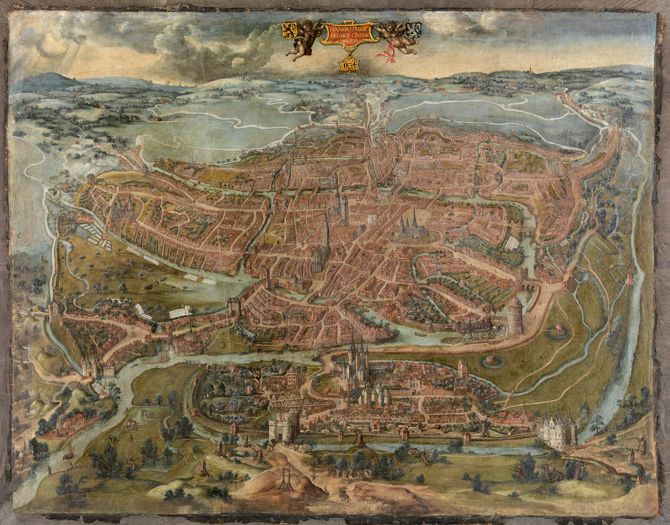
Unknown artist, The explosion of the Zandpoort

Part 3 of 3. Part 1 is here. Part 2 is here.

Concursum est Mechliniam ex omnibus Brabantiae oppidis atque urbibus, immo et e vicinis Provinciis, ad tantae cladis inspectionem. nam reperta fuere mortua mutilaque corpora ad sesquimilliare extra civitatem variis locis disiecta, quaedam horrendum in modum ex arboribus pendentia; ut concubinae praetoris ab AA, quae flavescenti capillitio ex arboris ramo nuda dependens, aperto ventre, intestina in terram defluentia omnibus cum horrore ostentabat. civitatis fossa ab utraque dirutae turris parte ad ducentos passus sicca conspiciebatur: murus ad idem spatium, quo turris steterat, ab utroque latere excisus erat, cum eo loco aqua, quae in fossa erat, pedestris lanceae altitudinem fere aequaret. pisces quoque magno numero per agros dispersi exstinctique conspiciebantur, vicinarumque arborum rami iis abundabant. arbores cerasis ceterisque pomorum generibus scatentes (consita enim erat Mechlinia in circuitu omni pomiferarum arborum exquisito genere) pro maiori parte radicitus eversae: ceterae foliis fructibusque spoliatae, paulo post (dictu mirum, sed verissimum) primum folia, deinde flores, postea fructus eodem autumno iterum reddidere, sed pars maior non plane maturuit. memini me Mechliniae in Templo D. Petri, haud procul Santporta sito, ubi mortui fuere sepulti, hoc legisse ante Templorum vastationem, sub Calvinismo factam, distichon, annum, diem, causamque cladis continens:
tVrres ContrItae LaCerant VI pVLVerIs aedes,
septena AVgVstI, fVLgVre MeChLInIae.
(Pontus Heuterus, Res Austriacae 12.8)

From every town and city in Brabant, even from the neighboring provinces, people rushed to Mechelen to inspect this terrible tragedy, for up to a mile and a half outside the city mangled corpses had been found scattered in various places, some hanging gruesomely from the trees. There was for example the concubine of the praetor appointed by the Archduke of Austria, whose corpse hung naked from a tree branch by her blonde hair, her belly open, showing her intestines dangling to the ground, to the horror of all onlookers. The city’s moat was found to be empty up to a distance of 200 feet on either side of the demolished tower. An equal length of the city wall on both sides of the spot where the tower had stood was razed as well, and there the water from the moat was about as deep as the length of an infantry lance. Large numbers of fish were seen as well, lying dead all across the fields. The branches of the trees too were full of them. The entire area around Mechelen was planted with magnificent fruit trees, but most of them (the abundant cherry trees and other types) were utterly destroyed, and the ones that weren’t were robbed of their fruits and foliage. After a little while though (it sounds incredible but is absolutely true) these regained first their leaves and then their flowers, and that same autumn the fruit had returned, albeit in most cases without attaining complete ripeness. I remember being in the church of Saint Peter in Mechelen, which is located not at all far from the Zandpoort and which served as burial ground for the dead. This was before the destruction of the churches by the Calvinists. There I read this distich which mentions the year*, the day, and the cause of the catastrophe:
The ruined towers devastated the houses with the force of the powder,
on the seventh of August, by the lightning of Mechelen.

* The year is ‘hidden’ in the capitalized letters of the original Latin verse.

(tr. David Bauwens)


Rudera

history2

Part 2 of 3. Part 1 is here. Part 3 is here.

Puer in platea negotii causa cum lumine incedens, in aërem a lapide abreptus, eidem incumbens in terram illaesus, sed extra se repertus, rediit. multi instar Aethiopum a pervolante pulvere infecti ac sauciati, miserabile sanis praebebant exemplum spectaculumque. congerrones aliquot potatum ad tabernam cerevisiariam ierant, temporisque terendi symbolique conficiendi causa chartis lusoriis certabant. hospita ad promendam cerevisiam in subterranea erat cella: rediens, hospites ad mensam ut eos reliquerat sedentes omnes, sed mortuos, repperit, manibus chartas lusorias tenentes. per octo dies cives rudera perscrutantes, saucios ac mortuos detexere. repertus est inter alios vir nudus, inter duas macerias coniectus, rogans, num mutato universitatis statu Christus ad generale totius humani generis iudicium venisset. temporis puncto haec clades incidit ac cessavit, tota exinde nocte summa in aëre fuit serenitas. discurrentes per citatem ditiores ac magistratus cum taedis ac facibus, saucios calamitososque inter collapsarum aedium ruinas ac rudera perquirebant, iuvabantque. mortui promiscue in coemeterio Divi Petri sepeliebantur. nullus enim suos agnoscere poterat, quod mutilata corpora, tormentarioque pulvere tincta, mirum in modum intumuissent, deformataque essent.
(Pontus Heuterus, Res Austriacae 12.8)

A boy who was walking in the street on an errand, carrying a lantern, was flung into the air by a rock, clung to it, and dashed to the ground again. He was found astonished but unscathed, and went back on his way. Many who were stained or injured by the gun powder flying by looked like Ethiopians and offered a sad spectacle to the healthy. A bunch of mates who had gone down to the pub for some beers, were playing at cards to kill time and to settle the bill. The hostess had gone to the cellar to get beer, and when she came back up, she found her guests sitting at their tables, just as she had left them, but dead, still holding the cards in their hands. For eight days the people of Mechelen searched the rubble and uncovered the wounded and the dead. Among others they found a naked man who had been thrown between two walls. He asked them if the state of the universe had been transformed and Christ had returned to pass judgment on all mankind. This catastrophe occurred and passed in a brief instant; and afterwards the sky was completely still throughout the night. The well-off and the magistrates ran this way and that through the city, armed with torches and firebrands, looking for the hurt and the suffering between the rubble and the ruins of collapsed houses, offering assistance. All the dead were buried without distinction in the cemetery of Saint Peter. Nobody was able to recognize those dear to him anyway, because the mutilated bodies, discoloured by the gun powder, were deformed and oddly swollen. (tr. David Bauwens)

Mechlinia

zandpoort_web
Jan Verhuyck, Ontploffing van de Zandpoort in 1546

Part 1 of 3. Part 2 is here. Part 3 is here.

Septimo Augusti ingentem Mechlinia cladem ab incenso a fulmine pulvere tormentario accepit. erat in muri ambitu, qui civitatem amplectitur, iuxta portam Neckerspoeliam turris rotunda, veteri more e quadrato albo lapide vivo aedificata, dicta Santporta, quod arenosam sonat portam. altissimo eius fundamento opus concameratum erat superinstructum. in huius fundo ad septingenta dolia pulvere tormentario plena in belli usum custodiebantur. turris vero aliquot locis vetustate rimas agebat. conquesta fuerat hac de re ad magistratum non semel vetula paupercula, in ea gratis habitans. cumque pomeridiano tempore tonitrua ac fulgura excitari vehementia consideraret, formidine correpta, circa vesperam cum rebus pretiosioribus alio divertit. nocte hora undecima redeunt tonitrua, fulmina, ac fulgura, intrantiaque per rimas, pulverem incendunt. turris ingentis altitudinis e fundamentis in altum integra sublata, antequam vis pulveris, quae eam elevarat, evanesceret, in aëre disrumpitur, quadratique ingentes lapides, per universam disiecti urbem, evertunt in proximo ultra ducentas civium domos, ac totidem in amplissimo suburbio aedes, quarum latices vivique lapides non minus detrimenti, quam turris, intulere. vitreae fere omnes Mechliniae fenestrae lapidum, tegularum, laticumque volatu, atque immenso disrumpentis turris fragore sunt confractae: fenestrae ligneae, ianuae, atque ostia, seris pessulisque dissilientibus, ubique patuere, omnibus non parum admirantibus subitae cladis causam. homines utriusque sexus variae aetatis ultra quingentos oppressi, vulnerati ad bis mille. nulla enim universa in civitate fuit domus, quae non cladem, damnum, aut utrumque pertulerit. variis locis utriusque sexus homines e lectis surgentes, capitaque fenestris, ut tumultus causam discerent, exserentes, ea transvolantium lapidum violentia perdidere. multis locis vir uxorem, illa maritum, aut parvos liberos iuxta se exstinctos luxere.
(Pontus Heuterus, Res Austriacae 12.8)

On the 7th of August the city of Mechelen suffered a major catastrophe due to gun powder being ignited by lightning. In the town wall surrounding the city, next to the Nekkerspoel gate, there was a round tower, built in the old fashion from rough, white, square-cut stone blocks, called Zandpoort (Sand Gate). Built on its very deep foundation there was a vaulted construction, at the bottom of which some 700 barrels full of gun powder were stored, ready for use in war. Because of its age, the tower had begun to show cracks in a number of places. A poor old woman who lived there for free had complained about this several times to the magistrate. She had noticed in the afternoon that thunder and lightning became increasingly violent, and, seized with fear, in the evening she picked up her precious belongings and went elsewhere. At night, around eleven, the thunderbolts and lightning flashes returned, and, entering through the cracks, they lit the powder on fire. High as it was, the tower was lifted whole from its foundations and hurled into the air, before the force of the gun powder, which had elevated it, faded. It exploded in mid-air, and the big square stones, cast about across the entire city, destroyed more than 200 civilian houses in the vicinity, and as many houses again in the wide suburb, their bricks and rough stones inflicting no less harm than the tower itself. Nearly all glass windows in Mechelen were broken by the flying stones, roof-tiles and bricks, and by the enormous crash of the bursting tower. Bars and bolts were flung open, and wooden windows, gates and doors everywhere stood ajar. Everyone was filled with wonder at the cause of the sudden calamity. More than 500 people of both sexes and all ages were crushed, some 2000 were injured. For there was no house in the entire city that didn’t suffer disaster or damage, or both. Here and there men or women got out of bed and, in order to learn the cause of the commotion, stuck their head out of the windows – only to lose it because of the violence of stones sweeping past. In many places a husband lamented his wife, a wife her husband, or the little children found dead beside them. (tr. David Bauwens)

Apōthoumestha

heracles children-1

[ΙΟΛΑΟΣ]

Ὦ τέκν’, ἔοιγμεν ναυτίλοισιν οἵτινες
χειμῶνος ἐκφυγόντες ἄγριον μένος
ἐς χεῖρα γῇ συνῆψαν, εἶτα χερσόθεν
πνοιαῖσιν ἠλάθησαν ἐς πόντον πάλιν.
οὕτω δὲ χἠμεῖς τῆσδ’ ἀπωθούμεσθα γῆς
ἤδη πρὸς ἀκταῖς ὄντες ὡς σεσωμένοι.
οἴμοι· τί δῆτ’ ἔτερψας ὦ τάλαινά με
ἐλπὶς τότ’, οὐ μέλλουσα διατελεῖν χάριν;
συγγνωστὰ γάρ τοι καὶ τὰ τοῦδ’, εἰ μὴ θέλει
κτείνειν πολιτῶν παῖδας, αἰνέσαι δ’ ἔχω
καὶ τἀνθάδ’· εἰ θεοῖσι δὴ δοκεῖ τάδε
πράσσειν ἔμ’, οὔτοι σοί γ’ ἀπόλλυται χάρις.
ὦ παῖδες, ὑμῖν δ’ οὐκ ἔχω τί χρήσομαι.
ποῖ τρεψόμεσθα; Τίς γὰρ ἄστεπτος θεῶν;
ποῖον δὲ γαίας ἕρκος οὐκ ἀφίγμεθα;
ὀλούμεθ’, ὦ τέκν’· ἐκδοθησόμεσθα δή.
κἀμοῦ μὲν οὐδὲν εἴ με χρὴ θανεῖν μέλει,
πλὴν εἴ τι τέρψω τοὺς ἐμοὺς ἐχθροὺς θανών·
ὑμᾶς δὲ κλαίω καὶ κατοικτίρω, τέκνα,
καὶ τὴν γεραιὰν μητέρ’ Ἀλκμήνην πατρός.
ὦ δυστάλαινα τοῦ μακροῦ βίου σέθεν,
τλήμων δὲ κἀγὼ πολλὰ μοχθήσας μάτην.
χρῆν χρῆν ἄρ’ ἡμᾶς ἀνδρὸς εἰς ἐχθροῦ χέρας
πεσόντας αἰσχρῶς καὶ κακῶς λιπεῖν βίον.
(Euripides, Heraclid. 427-450)

[IOLAUS]

My children, we are like sailors who have escaped the wild blast of the storm and are a hand’s breadth from dry land, but then are driven by winds into the deep again! That is how we are being thrust from this land when we are already at its shores and feeling safe. Ah me! Why did you give me pleasure before, cruel Hope, if you did not intend to carry out your favor to the end? For, of course, Demophon’s position is quite understandable, that he is unwilling to kill the children of his citizens, and I can find words of praise even for what has happened here: if it is the gods’ will that I should fare thus, you at any rate have not lost the gratitude we owe you.
My children, I do not know what I am to do for you. Where shall we turn? What god’s altars have we not garlanded? To what land have we not come for refuge? We are doomed, my children, now we shall be given up! I do not care for myself if I must die, unless my death gives pleasure to my enemies. It is you I weep for, you I pty, my children, and Alcmene your aged grandmother! How unlucky you are in your long life! I too am luckless for having toiled so long in vain. It was fated, fated, I see it now, that we must fall into the hands of our enemy and lose our lives in disgrace and pain! (tr. David Kovacs)

Gandavi

1341634346

Ad hos stimulos haudquaquam segnes accedit et urbis Gandavi splendor. neque enim arbitror, quaqua patet Christiana dicio, civitatem ullam reperiri quae cum hac conferri queat, sive spectes amplitudinem urbis ac potentiam, sive politiam, sive gentis indolem. nec enim aliunde feliciora prodeunt ingenia, nec expressiora priscae virtutis exempla.
(Erasmus, Ep. 2093)

On top of these stimuli, hardly ineffectual in themselves, there is the splendor of the city of Ghent. For I don’t believe that in the entire Christian world a single city can be found that compares to this one, whether you look at its size or might, its political regime, or the character of its inhabitants. Nowhere else in fact do we encounter more fertile minds or clearer examples of ancient virtue. (tr. David Bauwens)

Dissecta

the-anatomy-lesson-of-doctor-tulp-by-rembrandt
Rembrandt van Rijn, The Anatomy Lesson of Dr. Nicolaes Tulp (1632)

Dum enim medici solam interiorum affectuum curationem ad se pertinere autumabant, viscerum dumtaxat cognitionem sibi abunde sufficere arbitrati, ossium, musculorum, nervorum, venarum, arteriarum quae ossa musculosque perreptant fabricam, veluti ad ipsos non spectantem, neglexerunt. ad haec, quum universa administratio tonsoribus committebatur, non solum vera viscerum cognitio medicis periit, verum etiam dissecandi industria prorsus intercidit, eo quod scilicet hi reflectionem non aggrederentur, illi vero quibus manus artificium delegabatur, indoctiores essent, quam ut dissectionis professorum scripta intelligerent: tantum abest, ut difficillimam artem, manu ipsis traditam, id hominum genus nobis asservaret, utque haec deploranda curativae partis dispersio, detestabilem ritum in gymnasiis non inveheret, quo alii humani corporis sectionem administrare, alii partium historiam enarrare consueverunt. his quidem graculorum modo, quae numquam aggressi sunt, sed tantum ex aliorum libris memoriae commendant, descriptave ob oculos ponunt, alte in cathedra egregio fastu occinentibus: illis autem adeo linguarum imperitis, ut dissecta spectatoribus explicare nequeant, atque ex physici praescripto ostendanda lacerent, qui manu sectioni nunquam adhibita, tantum ex commentario nautam non sine supercilio agit. atque ut sic omnia perperam docentur, ac ridiculis quaestionibus dies aliquot abeunt, ita quoque spectatoribus in illo tumultu pauciora proponuntur, quam lanius in macello medicum docere posset.
(Andras Vesalius, De Humani Corporis Fabrica, ad Carolum V. imperatorem praefatio)

For as long as physicians maintained that only the treatment of interior diseases was their concern, they believed that knowledge of the viscera was all they needed, and they neglected the fabric of bones and muscles and the nerves, veins and arteries that run throughout the bones and muscles, as if these were irrelevant to them. Moreover, when all operations were entrusted to barbers, not only did true knowledge of the viscera perish from the medical profession, but the work of dissection completely died out. Physicians did not undertake surgery, while those to whom the manual craft was entrusted were too uneducated to understand what professors of dissection had written. So far this class of men is from preserving for us the difficult and abstruse art handed down to them, and so far has this pernicious dispersal of the healing art failed to avoid importing the vile ritual in the universities by which some perform dissections of the human body while others recite the anatomical information. While the latter in their egregious conceit squawk like jackdaws from their lofty professorial chairs things they have never done but only memorize from the books of others or see written down, the former are so ignorant of languages that they are unable to explain dissections to an audience and they butcher the things they are meant to demonstrate, following the instructions of a physician who in a haughty manner navigates out of a manual alone matters he has never subjected to dissection by hand. And as everything is being thus wrongly taught in the universities and as days pass in silly questions, fewer things are placed before the spectators in all that confusion than a butcher in a market could teach a doctor. (tr. Daniel Garrison & Malcolm Hast)

Kallipugoi

hb_52.11.5_av2

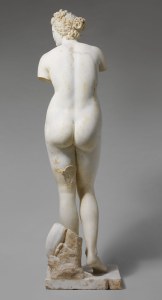
Οὕτω δ’ ἐξήρτηντο τῶν ἡδυπαθειῶν οἱ τότε ὡς καὶ Καλλιπύγου Ἀφροδίτης ἱερὸν ἱδρύσασθαι ἀπὸ τοιαύτης αἰτίας. ἀνδρὶ ἀγροίκῳ ἐγένοντο δύο καλαὶ θυγατέρες· αὗται φιλονικήσασαί ποτε πρὸς ἑαυτὰς προελθοῦσαι ἐπὶ τὴν λεωφόρον διεκρίνοντο ποτέρα εἴη καλλιπυγοτέρα. καί ποτε παρίοντος νεανίσκου πατέρα πρεσβύτην ἔχοντος ἐπέδειξαν ἑαυτὰς καὶ τούτῳ· καὶ ὃς θεασάμενος ἔκρινε τὴν πρεσβυτέραν· ἧς καὶ εἰς ἔρωτα ἐμπεσὼν ἐλθὼν εἰς ἄστυ κλινήρης γίνεται καὶ διηγεῖται τὰ γεγενημένα τῷ ἀδελφῷ ἑαυτοῦ ὄντι νεωτέρῳ. ὁ δὲ καὶ αὐτὸς ἐλθὼς εἰς τοὺς ἀγροὺς καὶ θεασάμενος τὰς παῖδας ἐρᾷ καὶ αὐτὸς τῆς ἑτέρας. ὁ δ’ οὖν πατὴρ ἐπεὶ παρακαλῶν αὐτοὺς ἐνδοξοτέρους λαβεῖν γάμους οὐκ ἔπειθεν, ἄγεται ἐκ τοῦ ἀγροῦ τὰς παῖδας αὐτοῖς, πείσας ἐκείνων τὸν πατέρα, καὶ ζεύγνυσι τοῖς υἱοῖς. αὗται οὖν ὑπὸ τῶν πολιτῶν Καλλίπυγοι ἐκαλοῦντο, ὡς καὶ ὁ Μεγαλοπολίτης Κερκιδᾶς ἐν τοῖς Ἰάμβοις ἱστορεῖ λέγων·
ἦν καλλιπύγων ζεῦγος ἐν Συρακούσαις. [fr. 14]
αὗται οὖν ἐπιλαβόμεναι οὐσίας λαμπρᾶς ἱδρύσαντο Ἀφροδίτης ἱερὸν καλέσασαι Καλλίπυγον τὴν θεόν, ὡς ἱστορεῖ καὶ Ἀρχέλαος ἐν τοῖς Ἰάμβοις.
(Athenaeus, Deipnosophistai 12.554c-e)

People in those days were so attached to a life of luxury that they actually dedicated a temple to Aphrodite Kallipugos (“of the Beautiful Ass”), for the following reason. A farmer had two beautiful daughters, who got into an argument with one another one day and went out to the road and began soliciting opinions as to which of them had the nicer ass. A young fellow, whose father was an old man, came along at that point, and they showed themselves off to him. After he saw them, he voted for the older girl and fell in love with her; and after he reached the city he got sick, and told his brother, who was younger than him, what had happened. His brother also went out into the country, and after he got a look at the girls, he fell in love with the other one. Their father tried to convince them to marry someone more respectable; but when he failed to convince them, he fetched the girls for them from the countryside, having persuaded their father, and joined them to his sons in marriage. The inhabitants of the city accordingly referred to them as the Kallipugoi (“Women with Beautiful Asses”), as Cercidas of Megalopolis reports in his Iambs, where he says:
There were a pair of kallipugoi in Syracuse.
After the became owners of some valuable property, therefore, they dedicated a temple to Aphrodite and called the goddess Kallipugos, according to Archelaus in his Iambs (SH 131). (tr. Stuart Douglas Olson)

Robur

tit017

In puero statim corporis animique dotes exsplenduerunt, magisque ac magis deinceps per aetatis gradus: forma egregia et cui non minus auctoritatis inesset quam gratiae, praecipuum robur, quamquam neque procera statura et ventre paulo proiectiore; memoria singularis, docilitas ad omnis fere tum belli tum pacis artes. armorum et equitandi peritissimus, Latine Graeceque vel in orando vel in fingendis poematibus promptus et facilis ad extemporalitatem usque; sed ne musicae quidem rudis, ut qui cantaret et psalleret iucunde scienterque. e pluribus comperi, notis quoque excipere velocissime solitum, cum amanuensibus suis per ludum iocumque certantem, imitarique chirographa quaecumque vidisset, ac saepe profiteri maximum falsarium esse potuisse.
(Suetonius, Div. Tit. 3)

His qualities of mind and body at once stood out even when he was a boy but still more so as he advanced towards maturity. His appearance was striking, conveying authority as well as charm, and he was unusually strong, though not tall in stature, while his stomach protruded a little. He had an exceptional memory and a great gift for acquiring almost all the arts of war as well as those of peace. He was highly skilled in the use of weapons and in horsemanship and had a ready fluency in both Latin and Greek to such a degree that he could make a speech or compose a poem without preparation. Even in music he was not without talent and could sing and play the cithara with grace and skill. I have discovered from a number of sources that he used to write shorthand at great speed and for fun would play at competing with his secretaries and that he could imitate any handwriting he had seen and often confessed he could have been the greatest of forgers. (tr. Catharine Edwards)

Aision

Kite_1911736c

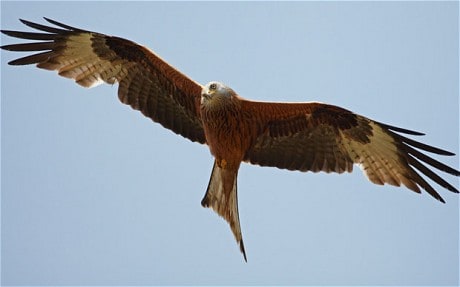
Ὁ δὲ ἐν Ὀλυμπίᾳ βωμὸς παρέχεται καὶ ἄλλο τοιόνδε ἐς θαῦμα· οἱ γὰρ ἰκτῖνες πεφυκότες ἁρπάζειν μάλιστα ὀρνίθων ἀδικοῦσιν οὐδὲν ἐν Ὀλυμπίᾳ τοὺς θύοντας· ἢν δὲ ἁρπάσῃ ποτὲ ἰκτῖνος ἤτοι σπλάγχνα ἢ τῶν κρεῶν, νενόμισται τῷ θύοντι οὐκ αἴσιον εἶναι τὸ σημεῖον. φασὶ δὲ Ἡρακλεῖ τῷ Ἀλκμήνης θύοντι ἐν Ὀλυμπίᾳ δι’ ὄχλου μάλιστα γενέσθαι τὰς μυίας· ἐξευρόντα οὖν αὐτὸν ἢ καὶ ὑπ’ ἄλλου διδαχθέντα Ἀπομυίῳ θῦσαι Διί, καὶ οὕτως ἀποτραπῆναι τὰς μυίας πέραν τοῦ Ἀλφειοῦ. λέγονται δὲ κατὰ ταὐτὰ καὶ Ἠλεῖοι θύειν τῷ Ἀπομυίῳ Διί, ἐξελαύνοντες τῆς Ἠλείας Ὀλυμπίας τὰς μυίας.
(Pausanias 5.14.1)

The altar at Olympia shows another strange peculiarity, which is this. The kite, the bird of prey with the most rapacious nature, never harms those who are sacrificing at Olympia. Should ever a kite seize the entrails or some of the flesh, it is regarded as an unfavorable sign for the sacrificer. There is a story that when Heracles the son of Alcmena was sacrificing at Olympia he was much worried by the flies. So either on his own initiative or at somebody’s suggestion he sacrificed to Zeus Averter of Flies, and thus the flies were diverted to the other side of the Alpheius. It is said that in the same way the Eleans too sacrifice to Zeus Averter of Flies, to drive* the flies out of Olympia.

* I take ἐξελαύνοντεςto be a conative present participle; Frazer takes it as an ordinary temporal participle; “when they drive out.”

(tr. William Henry Samuel Jones, with his note)

Kuria

averylargebeautifulandelegantancientegyptianbronzestatueofthegoddessisisdatingtothe25thkushitedynastyartsite

Δημήτριος Ἀρτεμιδώρου ὁ καὶ Θρασέας Μάγνης ἀπὸ Μαιάνδρου Ἴσιδι εὐχήν·
τάδε ἐγράφηι ἐκ τῆς στήλης τῆς ἐν Μέμφει, ἥτις ἕστηκεν πρὸς τῷ Ἡφαιστιήωι·
Εἶσις ἐγώ εἰμι ἡ τύραννος πάσης χώρας·
καὶ ἐπαιδεύθην ὑπὸ Ἑρμοῦ καὶ
γράμματα εὗρον μετὰ Ἑρμοῦ, τά τε ἱερὰ καὶ τὰ δημόσια γράμματα, ἵνα μὴ ἐν τοῖς αὐτοῖς πάντα γράφηται.
ἐγὼ νόμους ἀνθρώποις ἐθέμην, καὶ ἐνομοθέτησα ἃ οὐθεὶς δύναται μεταθεῖναι.
ἐγώ εἰμι Κρόνου θυγάτηρ πρεσβυτάτηι.
ἐγώ εἰμι γυνὴ καὶ ἀδελφὴ Ὀσείριδος βασιλέως.
ἐγώ εἰμι ἡ καρπὸν ἀνθρώποις εὑροῦσα.
ἐγώ εἰμι μήτηρ Ὥρου βασιλέως.
ἐγώ εἰμι ἡ ἐν τῷ τοῦ Κυνὸς ἄστρῳ ἐπιτέλλουσα.
ἐγώ εἰμι ἡ παρὰ γυναιξὶ θεὸς καλουμένη.
ἐμοὶ Βούβαστος πόλις ᾠκοδομήθη.
ἐγὼ ἐχώρισα γῆν ἀπ’ οὐρανοῦ.
ἐγὼ ἄστρων ὁδοὺς ἔδειξα.
ἐγὼ ἡλίου καὶ σελήνης πορέαν συνεταξάμην.
ἐγὼ θαλάσσια ἔργα εὗρον.
ἐγὼ τὸ δίκαιον ἰσχυρὸν ἐποίησα.
ἐγὼ γυναῖκα καὶ ἄνδρα συνήγαγον.
ἐγὼ γυναικὶ δεκαμηνιαῖον βρέφος εἰς φῶς ἐξενεγκεῖν ἔταξα.
ἐγὼ ὑπὸ τέκνου γονεῖς ἐνομοθέτησα φιλοστοργῖσθαι.
ἐγὼ τοῖς ἀστόργως γονεῦσιν διακειμένοις τειμωρίαν ἐπέθηκα.
ἐγὼ μετὰ τοῦ ἀδελφοῦ Ὀσίριδος τὰς ἀνθρωποφαγίας ἔπαυσα.
ἐγὼ μυήσεις ἀνθρώποις ἐπέδειξα.
ἐγὼ ἀγάλματα θεῶν τειμᾶν ἐδίδαξα.
ἐγὼ τεμένη θεῶν ἱδρυσάμην.
ἐγὼ τυράννων ἀρχὰς κατέλυσα.
ἐγὼ φόνους ἔπαυσα.
ἐγὼ στέργεσθαι γυναῖκας ὑπὸ ἀνδρῶν ἠνάγκασα.
ἐγὼ τὸ δίκαιον ἰσχυρότερον χρυσίου καὶ ἀργυρίου ἐποίησα.
ἐγὼ τὸ ἀληθὲς καλὸν ἐνομοθέτησα νομίζεσθαι.
ἐγὼ συνγραφὰς γαμικὰς εὗρον.
ἐγὼ διαλέκτους Ἕλλησι καὶ βαρβάροις ἔταξα.
ἐγὼ τὸ καλὸν καὶ αἰσχρὸν διαγεινώσκεσθαι ὑπὸ τῆς Φύσεως ἐποίησα.
ἐγὼ ὅρκου φοβερώτερον οὐθὲν ἐποίησα.
ἐγὼ τὸν ἀδίκως ἐπιβουλεύοντα ἄλλοις ὑποχείριον τῷ ἐπιβουλευομένῳ παρέδωκα.
ἐγὼ τοῖς ἄδικα πράσσουσιν τειμωρίαν ἐπιτίθημι.
ἐγὼ ἱκέτας ἐλεᾶν ἐνομοθέτησα.
ἐγὼ τοὺς δικαίως ἀμυνομένους τειμῶ.
πὰρ’ ἐμοὶ τὸ δίκαιον ἰσχύει.
ἐγὼ ποταμῶν καὶ ἀνέμων καὶ θαλάσσης εἰμὶ κυρία.
οὐθεὶς δοξάζεται ἄνευ τῆς ἐμῆς γνώμης.
ἐγώ εἰμι πολέμου κυρία.
ἐγὼ κεραυνοῦ κυρία εἰμί.
ἐγὼ πραΰνω καὶ κυμαίνω θάλασσαν.
ἐγὼ ἐν ταῖς τοῦ ἡλίου αὐγαῖς εἰμί.
ἐγὼ παρεδρεύω τῇ τοῦ ἡλίου πορείᾳ.
ὃ ἂν ἐμοὶ δόξῃ, τοῦτο καὶ τελεῖται.
ἐμοὶ πάντ’ ἐπείκει.
ἐγὼ τοὺς ἐν δεσμοῖς λύωι.
ἐγὼ ναυτιλίας εἰμὶ κυρία.
ἐγὼ τὰ πλωτὰ ἄπλωτα ποιῶ ὅταν ἐμοὶ δόξῃ.
ἐγὼ περιβόλους πόλεων ἔκτισα.
ἐγώ εἰμι ἡ Θεσμοφόρος καλουμένη.
ἐγὼ νήσσους ἐγ βυθῶν εἰς φῶς ἀνήγαγον.
ἐγὼ ὄμβρων εἰμὶ κυρία.
ἐγὼ τὸ ἱμαρμένον νικῶ.
ἐμοῦ τὸ εἱμαρμένον ἀκούει.
χαῖρε Αἴγυπτε θρέψασά με.
(IG XII Supp. 14)

Demetrios son of Artemidoros, also called Thraseas, from Magnesia on the Maeander, fulfilled his vow to Isis. The following text was copied from the inscription in Memphis which is positioned in front of the temple of Hephaistos:
I am Isis the tyrant of the whole land.
I was educated by Hermes and
with the help of Hermes devised both sacred and secular scripts, so that everything should not be written in the same script.
I established laws for humans, and created legislation which no one has the power to change.
I am the eldest daughter of Kronos.
I am the wife and sister of King Osiris.
I am she who invented crops for humans.
I am the mother of King Horus.
I am she who rises in the Dog Star.
I am she who is called God by women.
By me was the city of Boubastos built.
I divided earth from heaven.
I appointed the paths of the stars.
I regulated the passage of sun and moon.
I invented fishing and seafaring.
I made justice strong.
I coupled woman and man.
I arranged that women should bring babies to the light after nine months.
I legislated that parents be loved by their child.
I inflicted punishment on those who are not affectionately disposed towards their parents.
I , with my brother Osiris, ended cannibalism.
I showed initiations to humans.
I taught them to honour images of the gods.
I founded sanctuaries of the gods.
I ended the rule of tyrants.
I ended murders.
I forced women to be loved by men.
I made justice stronger than gold and silver.
I legislated that truth be considered a fine thing.
I invented marriage contracts.
I assigned languages for Greeks and barbarians.
I made good and evil be distinguished by nature.
I made nothing more respected than the oath.
I delivered the person plotting unjustly against another into the hands of the person plotted against.
I inflict punishment on chose acting unjustly.
I legislated mercy for the suppliant.
I honour those who avenge themselves with justice.
By me justice is mighty.
I am mistress of rivers, winds and sea.
No one is held in honour without my assent.
I am mistress of war.
I am mistress of the thunderbolt.
I calm and agitate the sea.
I am in the rays of the sun.
I accompany the passage of the sun.
Whatever I decide is actually accomplished.
To me everything yields.
I free those in chains.
I am mistress of seamanship.
I make the navigable unnavigable whenever I decide.
I built the walls of cities.
I am she who is called Thesmophoros*.
I raised islands from the deep to the light.
I am mistress of rainstorms.
I conquered fate.
To me fate listens.
Hail Egypt who nourished me.

* ‘Lawgiver’, an epithet normally applied to the Greek goddess Demeter.

(tr. Mary Beard, John North & Simon Price, with their note)