Thaumaston

7738496496_3714e600a5_b

This is part 2 of 3. Part 1 is here. Part 3 is here.

Ἐπεὶ δὲ περὶ ἐκείνων διήλθομεν λέγοντες τὸ φαινόμενον ἡμῖν, λοιπὸν περὶ τῆς ζωϊκῆς φύσεως εἰπεῖν, μηδὲν παραλιπόντας εἰς δύναμιν μήτε ἀτιμότερον μήτε τιμιώτερον. καὶ γὰρ ἐν τοῖς μὴ κεχαρισμένοις αὐτῶν πρὸς τὴν αἴσθησιν κατὰ τὴν θεωρίαν ὁμοίως ἡ δημιουργήσασα φύσις ἀμηχάνους ἡδονὰς παρέχει τοῖς δυναμένοις τὰς αἰτίας γνωρίζειν καὶ φύσει φιλοσόφοις. καὶ γὰρ ἂν εἴη παράλογον καὶ ἄτοπον, εἰ τὰς μὲν εἰκόνας αὐτῶν θεωροῦντες χαίρομεν ὅτι τὴν δημιουργήσασαν τέχνην συνθεωροῦμεν, οἷον τὴν γραφικὴν ἢ τὴν πλαστικήν, αὐτῶν δὲ τῶν φύσει συνεστώτων μὴ μᾶλλον ἀγαπῷμεν τὴν θεωρίαν, δυνάμενοί γε τὰς αἰτίας καθορᾶν. διὸ δεῖ μὴ δυσχεραίνειν παιδικῶς τὴν περὶ τῶν ἀτιμοτέρων ζῴων ἐπίσκεψιν· ἐν πᾶσι γὰρ τοῖς φυσικοῖς ἔνεστί τι θαυμαστόν·
(Aristotle, Part. An. 645a4-645a19)

And since we have completed the account of our views concerning these, it remains to speak about animal nature, omitting nothing if possible whether of lesser or greater value. For even in the study of animals unattractive to the senses, the nature that fashioned them offers immeasurable pleasures in the same way to those who can learn the causes and are naturally lovers of wisdom. It would be unreasonable, indeed absurd, to enjoy studying their representations on the grounds that we thereby study the art that fashioned them (painting or sculpture), but not to welcome still more the study of the actual things composed by nature, at least when we can survey their causes. Therefore we must avoid a childish distaste for examining the less valued animals. For in all natural things there is something wonderful. (tr. David M. Balme)
Suntrophon

insectholy-vesuvian-cow-inside-hoops-com_jpg

This is part 1 of 3. Part 2 is here. Part 3 is here.

Τῶν οὐσιῶν ὅσαι φύσει συνεστᾶσι, τὰς μὲν <λέγομεν> ἀγενήτους καὶ ἀφθάρτους εἶναι τὸν ἅπαντα αἰῶνα, τὰς δὲ μετέχειν γενέσεως καὶ φθορᾶς. συμβέβηκε δὲ περὶ μὲν ἐκείνας τιμίας οὔσας καὶ θείας ἐλάττους ἡμῖν ὑπάρχειν θεωρίας (καὶ γὰρ ἐξ ὧν ἄν τις σκέψαιτο περὶ αὐτῶν, καὶ περὶ ὧν εἰδέναι ποθοῦμεν, παντελῶς ἐστὶν ὀλίγα τὰ φανερὰ κατὰ τὴν αἴσθησιν), περὶ δὲ τῶν φθαρτῶν φυτῶν τε καὶ ζῴων εὐποροῦμεν μᾶλλον πρὸς τὴν γνῶσιν διὰ τὸ σύντροφον· πολλὰ γὰρ περὶ ἕκαστον γένος λάβοι τις ἂν τῶν ὑπαρχόντων βουλόμενος διαπονεῖν ἱκανῶς. ἔχει δ’ ἑκάτερα χάριν. τῶν μὲν γὰρ εἰ καὶ κατὰ μικρὸν ἐφαπτόμεθα, ὅμως διὰ τὴν τιμιότητα τοῦ γνωρίζειν ἥδιον ἢ τὰ παρ’ ἡμῖν ἅπαντα, ὥσπερ καὶ τῶν ἐρωμένων τὸ τυχὸν καὶ μικρὸν μόριον κατιδεῖν ἥδιόν ἐστιν ἢ πολλὰ ἕτερα καὶ μεγάλα δι’ ἀκριβείας ἰδεῖν· τὰ δὲ διὰ τὸ μᾶλλον καὶ πλείω γνωρίζειν αὐτῶν λαμβάνει τὴν τῆς ἐπιστήμης ὑπεροχήν, ἔτι δὲ διὰ τὸ πλησιαίτερα ἡμῶν εἶναι καὶ τῆς φύσεως οἰκειότερα ἀντικαταλλάττεταί τι πρὸς τὴν περὶ τὰ θεῖα φιλοσοφίαν.
(Aristotle, Part. An. 644b23-645a4)

Of all beings naturally composed, some are ungenerated and imperishable for the whole of eternity, but others are subject to coming-to-be and perishing. It has come about that in relation to the former, which possess value—indeed divinity—the studies we can make are less, because both the starting-points of the inquiry and the things we long to know about present extremely few appearances to observation. We are better equipped to acquire knowledge about the perishable plants and animals because they grow beside us: much can be learned about each existing kind if one is willing to take sufficient pains. Both studies have their attractions. Though we grasp only a little of the former, yet because the information is valuable we gain more pleasure than from everything around us, just as a small and random glimpse of those we love pleases us more than seeing many other things large and in detail. But the latter, because the information about them is better and more plentiful, take the advantage in knowledge. Also, because they are closer to us and belong more to our nature, they have their own compensations in comparison with the philosophy concerned with the divine things. (tr. David M. Balme)

Velificans

tumblr_static_filename_640_v2

This is part 2 of 2. Part 1 is here.

Quid inter haec animi Erasmo tuo fuisse credis? insidebat attonito equo eques attonitus; qui quoties aures erigebat, ego animum deiciebam, quoties ille in genua procumbebat, mihi pectus saliebat. iam Bellerophon ille poeticus suo terrebat exemplo, iam meam ipse temeritatem exsecrabar, qui mutae beluae vitam et una literas meas commiserim. sed audi quiddam, quod tu credas ex veris Luciani narrationibus petitum, ni mihi ipsi Batto teste accidisset. cum arx iam ferme in prospectu esset, offendimus omnia undique glacie incrustata, quae ut dixi in nivem inciderat. et erat tanta ventorum vis, ut eo die unus atque alter collapsi perierint. flabant autem a tergo. itaque per declive montium me demittebam, per summam glaciem velificans, atque interim hastili cursum moderans. id erat clavi vice. novum navigandi genus. toto fere itinere obvius fit nemo, sequitur nemo, adeo non solum saeva sed etiam monstruosa erat tempestas. quarto vix demum die solem aspeximus. hoc unum ex tantis malis commodi excerpsimus, quod latronum incursus timuimus minus; timuimus tamen, ut homines pecuniosos decebat.
(Erasmus, Ep. 88)

How do you think your Erasmus responded to all this? He sat, a terrified rider, on a terrified horse. When my mount’s ears pricked up, my spirit fell; and as often as he fell down on his knees, my heart jumped up into my mouth. I was becoming alarmed at the precedent set by the poets’ Bellerophon, and cursing my foolhardiness in entrusting my life and my letters at one and the same time to a dumb creature. But I will tell you something you would suppose I had borrowed from Lucian’s Vera historia, if I did not have Batt to witness that it really happened to me. When we were almost within sight of the castle, we found the entire countryside covered with a layer of ice which, as I have explained, had fallen on top of the snow. The wind blew so hard that more than one person was blown down and died that day. Since it blew from behind us, I slid down the slopes of the hills, sailing on the surface of the ice, and from time to time steering with my staff, using it as a rudder, a new kind of navigation. In our entire journey we scarcely met a soul or were overtaken by anyone, so wild, indeed monstrous, was the weather. It was only on the fourth day that at last we had a glimpse of the sun. All these difficulties brought us only one advantage: we stood in less fear of attack by robbers; yet fear it we did, as rich men should! (tr. R.A.B. Mynors & D.F.S. Thomson)

Glacies

winter forest

This is part 1 of 2. Part 2 is here.

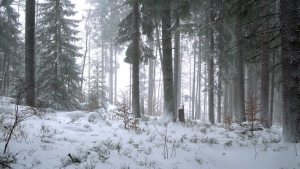
Pervenimus tandem et quidem incolumes, tametsi invitis (ut apparet) et superis et inferis. o durum iter! quem ego posthac Herculem, quem Ulyssem non contemnam? pugnabat Iuno semper poëticis viris infesta; rursum Aeolum sollicitarat; nec ventis modo in nos saeviebat, omnibus armis in nos dimicabat, frigore acerrimo, nive, grandine, pluvia, imbre, nebulis, omnibus denique iniuriis. hisque nunc singulis nunc universis nos oppugnabat. prima nocte post diutinam pluviam subitum atque acre obortum gelu viam asperrimam effecerat; accessit nivis vis immodica; deinde grando, tum et pluvia, quae simul atque terram arboremve contigit, protinus in glaciem concreta est. vidisses passim terram glacie incrustatam, neque id aequali superficie, sed colliculis acutissimis passim exstantibus. vidisses arbores glacie vestitas adeoque pressas, ut aliae summo cacumine imum solum contingerent, aliae ramis lacerae, aliae medio trunco discissae starent, aliae funditus evulsae iacerent. iurabant nobis e rusticis homines natu grandes se simile nihil umquam in vita vidisse antea. equis interim eundum erat nunc per profundos nivium cumulos, nunc per sentes glacie incrustatos, nunc per sulcos bis asperos, quos primum gelu duraverat, deinde et glacies acuerat, nunc per crustum quod summas obduxerat nives; quod quidem mollius erat quam ut equum sustineret, durius quam ut ungulas non scinderet.
(Erasmus, Ep. 88)

We have arrived at last, and safely, too, though the gods above and below, it seems, conspired against us. What a dreadful journey! From now on, I shall feel superior to heroes such as Hercules or Ulysses. Juno was against us: she always dislikes poets. She stirred Aeolus up once again and, not content with unleashing the winds’ rage at us, used every weapon in her armoury: biting cold, snow, hail, rain, showers, mist, in fact every mean trick, sometimes one at a time and sometimes all together. The first evening, after a prolonged period of rain, a sudden keen frost made the road extremely hard going; on top of this came a heavy snowfall, followed by hail, and then again rain, which as soon as it touched the ground, or a tree, turned immediately into ice. Everywhere you would have seen the ground covered with a layer of ice; and its surface was not even flat, but had horribly sharp little ridges protruding all over it. You would also have seen the trees so heavily laden with ice that some of them were bent over, with their tops touching the very ground, while others had branches ripped off or their trunks split in two, and others again lay completely uprooted. The old countrymen swore to us that they had never seen such a sight in their lives before. The horses meanwhile had sometimes to walk through deep drifts of snow or through thickets coated with ice; sometimes in ruts which were doubly difficult going, because first they set hard with frost and then ice made their edges sharp; and sometimes upon a surface crust which had covered the top layer of snow and was too soft to bear the horses’ weight, yet hard enough to injure their hooves. (tr. Roger Aubrey Baskerville Mynors & Douglas Ferguson Scott Thomson)

Niphades

snow stones

Ὣς τώ γε προβοῶντε μάχην ὄτρυνον Ἀχαιῶν.
τῶν δ’, ὥς τε νιφάδες χιόνος πίπτωσι θαμειαὶ
ἤματι χειμερίῳ, ὅτε τ’ ὤρετο μητίετα Ζεὺς
νιφέμεν, ἀνθρώποισι πιφαυσκόμενος τὰ ἃ κῆλα·
κοιμήσας δ’ ἀνέμους χέει ἔμπεδον, ὄφρα καλύψῃ
ὑψηλῶν ὀρέων κορυφὰς καὶ πρώονας ἄκρους
καὶ πεδία λωτοῦντα καὶ ἀνδρῶν πίονα ἔργα,
καί τ’ ἐφ’ ἁλὸς πολιῆς κέχυται λιμέσιν τε καὶ ἀκταῖς,
κῦμα δέ μιν προσπλάζον ἐρύκεται· ἄλλα τε πάντα
εἴλυται καθύπερθ’, ὅτ’ ἐπιβρίσῃ Διὸς ὄμβρος·
ὣς τῶν ἀμφοτέρωσε λίθοι πωτῶντο θαμειαί,
αἱ μὲν ἄρ’ ἐς Τρῶας, αἱ δ’ ἐκ Τρώων ἐς Ἀχαιούς,
βαλλομένων· τὸ δὲ τεῖχος ὕπερ πᾶν δοῦπος ὀρώρει.
(Homer, Il. 12.277-289)

So their cries urged on the Achaeans’ war-lust.
Thick-and-fast as the snows that fall on a winter dawn
when Zeus who rules the world brings on a blizzard,
displaying to all mankind his weaponry of war…
and he puts the winds to sleep, drifting on and on
until he has shrouded over the mountains’ looming peaks
and the headlands jutting sharp, the lowlands deep in grass
and the rich plowed work of farming men, and the drifts fall
on the gray salt surf and the harbors and down along the beaches
and only breakers beating against the drifts can hold them off
but all else on the earth they cover over, snows from the sky
when Zeus comes storming down—now so thick-and-fast
they volleyed rocks from both sides, some at the Trojans,
some from Trojans against the Argives, salvos landing,
the whole long rampart thundering under blows.
(tr. Robert Fagles)

Misericors

Giovanni Battista Pittoni de Jongere, Il sacrificio di Polissena sulla tomba di Achille, ca. 1735 (2)
Giovanni Battista Pittoni, Il sacrificio di Polissena sulla tomba di Achille (ca. 1735)

[PYRRHVS. AGAMEMNON]

PYR. Est regis alti spiritum regi dare.
AGA. cur dextra regi spiritum eripuit tua?
PYR. mortem misericors saepe pro vita dabit.
AGA. et nunc misericors virginem busto petis?
PYR. iamne immolari virgines credis nefas?
AGA. praeferre patriam liberis regem decet.
PYR. lex nulla capto parcit aut poenam impedit.
AGA. quod non vetat lex, hoc vetat fieri pudor.
PYR. quodcumque libuit facere victori licet.
AGA. minimum decet libere cui multum licet.
(Seneca Minor, Troades 327-336)

[PYRRHVS. AGAMEMNON]

PYR. It is the act of a great king to grant life to a king.
AGA. Why then did your hand deprive the king of life?
PYR. Often a compassionate man will grant death rather than life.
AGA. And now as a compassionate man you seek a virgin for the tomb?
PYR. So nowadays you consider sacrifice of virgins a crime?
AGA. To put fatherland before children befits a king.
PYR. No law spares a prisoner, or forbids reprisal.
AGA. What law does not forbid, a sense of restraint forbids.
PYR. The victor has a right to do whatever he pleases.
AGA. He who has much right should please himself least.
(tr. John G. Fitch)

Vidisti

Rome, Arch of Constantine. Sacrifice to Apollo. Relief on the Ar
Sacrifice to Apollo on the Arch of Constantine

Quod quidem nobis sempter optandum est ut prosperos habeas etiam ultra tua vota successus, qui omnem spem in gremio maiestatis tuae ponimus et tuam ubique praesentiam, quasi dari possit, expetimus. ecce enim, dum a limite paulisper abscesseras, quibus se terroribus barbarorum perfidia iactaverat, scilicet dum sibi illa proponunt: quando perveniet? quando vincet? quando fessum reducet exercitum? cum repente audito reditu tuo velut attoniti conciderunt, ne tuum pro re publica votum aplius quam unius noctis cura tetigisset. postridie enim quam accepto illo nuntio geminatum itineris laborem susceperas, omnes fluctus resedisse, omnem quam relinqueras tranquillitatem redisse didicisti, ipsa hoc sic ordinante Fortuna ut te ibi rerum tuarum felicitas admoneret dis immortalibus ferre quae voveras, ubi deflexisses ad templum toto orbe pulcherrimum, immo ad praesentem, ut vidisti, deum. vidisti enim, credo, Constantine, Apollinem tuum comitante Victoria coronas tibi laureas offerentem, quae tricenum singulae ferunt omen annorum. hic est enim humanarum numerus aetatum quae tibi utique debentur ultra Pyliam senectutem. et—immo quid dico ‘credo’?—vidisti teque in illius specie recognovisti, cui totius mundi regna deberi vatum carmina divina cecinerunt. quod ego nunc demum arbitror contigisse, cum tu sis, ut ille, iuvenis et laetus et salutifer et pulcherrimus, imperator. merito igitur augustissima illa delubra tantis donariis honestasti, ut iam vetera non quaerant. iam omnia te vocare ad se templa videantur praecipueque Apollo noster, cuius ferventibus aquis periuria puniantur, quae te maxime oportet odisse.
(XII Panegyrici Latini, 6.21)

What we must always hope for, indeed, is that you prosper and succeed even beyond your prayers, we who put all our hopes in the lap of your majesty, and wish for your presence everywhere, as if that boon were feasible. Take for instance the short time you were way from the frontier. In what terrifying fashion did barbarian perfidy vaunt itself! Of course all the while they asked themselves: “When will he reach here? When will he conquer? When will he lead back his exhausted army?” when all of a sudden upon the news of your return they were prostrated, as if thunderstruck, so that no more than one night’s anxiety should lay its claim on your pledge to save the commonwealth. For on the day after that news had been received and you had undertaken the labor of double stages on your journey, you learnt that all the waves had subsided, and that the all-pervading calm which you had left behind had been restored. Fortune herself so ordered this matter that the happy outcome of your affairs prompted you to convey to the immortal gods what you had vowed at the very spot where you had turned aside toward the most beautiful temple in the whole world, or rather, to the deity made manifest, as you saw. For you saw, I believe, O Constantine, your Apollo, accompanied by Victory, offering you laurel wreaths, each one of which carries a portent of thirty years. For this is the number of human ages which are owed to you without fail—beyond the old age of a Nestor. And—now why do I say “I believe”?—you saw, and recognized yourself in the likeness of him to whom the divine songs of the bards had prophesied that rule over the whole world was due. And this I think has now happened since you are, O Emperor, like he, youthful, joyful, a bringer of health and very handsome. Rightly, therefore, have you honored those most venerable shrines with such great treasures that they do not miss their old ones, any longer. Now may all the temples be seen to beckon you to them, and particularly our Apollo, whose boiling waters punish perjuries—which ought to be especially hateful to you. (tr. Charles E.V. Nixon and Barbara Saylor Rodgers)

Alienatione

now-aram9f0b-Straitjacketinteriorscaled.jpg.640.360

Divus Marcus et Commodus Scapulae Tertullo rescripserunt in haec verba: ‘si tibi liquido compertum est Aelium Priscum in eo furore esse, ut continua mentis alienatione omni intellectu careat, nec subest ulla suspicio matrem ab eo simulatione dementiae occisam: potes de modo poenae eius dissimulare, cum satis furore ipso puniatur. et tamen diligentius custodiendus erit ac, si putabis, etiam vinculo coërcendus, quoniam tam ad poenam quam ad tutelam eius et securitatem proximorum pertinebit. si vero, ut plerumque adsolet, intervallis quibusdam sensu saniore, non forte eo momento scelus admiserit nec morbo eius danda est venia, diligenter explorabis et si quid tale compereris, consules nos, ut aestimemus, an per immanitatem facinoris, si, cum posset videri sentire, commiserit, supplicio adficiendus sit. cum autem ex litteris tuis cognoverimus tali eum loco atque ordine esse, ut a suis vel etiam in propria villa custodiatur: recte facturus nobis videris, si eos, a quibus illo tempore observatus esset, vocaveris et causam tantae neglegentiae excusseris et in unumquemque eorum, prout tibi levari vel onerari culpa eius videbitur, constitueris. nam custodes furiosis non ad hoc solum adhibentur, ne quid perniciosius ipsi in se moliantur, sed ne aliis quoque exitio sint: quod si committatur, non immerito culpae eorum adscribendum est, qui neglegentiores in officio suo fuerint.’
(Macer, Digesta Iustiniani 1.18.14)

The deified Marcus and Commodus issued a rescript to Scapula Tertullus in the following terms: “If you have clearly ascertained that Aelius Priscus is in such a state of insanity that he lacks all understanding through the continuous alienation of his mental faculties, and if there remains no suspicion that his mother was murdered by him under pretence of madness; then you can abandon consideration of the measure of his punishment, since he is being punished enough by his very madness. And yet it will be necessary for him to be all too closely guarded, and, if you think it advisable, even bound in chains, this being a matter of not so much punishing as protecting him and of the safety of his neighbors. If, however, as very often happens, he has intermittent periods of relative sanity, you shall diligently explore the question whether in one such moment he committed the crime, and whether no indulgence is due to his illness. If you ascertain any such thing, you shall consult us, that we may consider whether the enormity of his crime (in the event of his having committed it when he could be held to have been fully aware) merits the infliction of extreme punishment. But since we have learned from your letter that his position and rank are such that he is in the custody of his own people or even in his own house, it seems to us that you will act rightly if you summon those by whom at the material time he was being looked after, and if you make inquiry into the cause of so neglectful an act, and if you make a decision against each one of them according as you find his culpability lesser or greater. For those who have custody of the insane are not responsible only for seeing that they do not do themselves too much harm but also for seeing that they do not bring destruction on others. But if that should happen, it may deservedly be imputed to the fault of those who were too neglectful in performing their duties.” (tr. Alan Watson)


Feminini

female body

This is part 3 of 3. Part 1 is here. Part 2 is here.

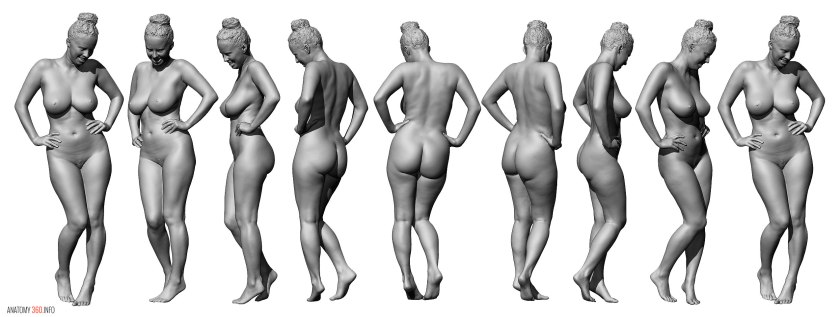
Veniamus ad indicia corporis feminini. caput breve, capillus niger vel a rubeo fuscior, quem Graeci φαιὰν τρίχα, rario, idem flexibilior ac mollior, cervix exilior eademque longior, color candidus vel cum pallore nigrior, quem Graeci μελάγχλωρον vocant, pupillae, quas Graeci κόρας dicunt, subnigrae vel evidenter nigrae, vultus omnis lenis, inoffensus ac mollis, serenus, affabilis, labia compressa tamquam sint incisa, iuguli cohaerentes atque constricti, ab humeris usque ad umbilicum corpus angustius et brevius, ab umbilico usque ad genua prolixius ac plenius, a genibus usque ad pedum ima deductius, imae manus ac pedes subtiles et eleganter circumscripti, planta concava et a reliquo vestigio elatior, vox tenuis, moderata, acceptissima auribus, sermo volubilis ac facilis, incessus decens, brevibus passis et acceleratis.
(Anonymous, De Physiognomonia 6)

Let us come to the signs of the feminine body. The head is small, the hair black or darker than red, which the Greeks call φαιὰ θρίξ (‘grey hair’), rather thin, at the same time somewhat flexible and soft, the neck is rather slender and also long, the colour is white or rather black with paleness, which the Greeks call μελάγχλωρος, the pupils, which the Greeks call κόραι, are somewhat black or obviously black, the whole face is smooth, placid and soft, calm and affable, the lips are compressed as if incised, the collar-bones are bound and stuck together, the body is narrower and smaller from the shoulders to the navel, from the navel to the knees it is more extended and thicker and from the knees to the ends of the feet it is more drawn in, the ends of the hands and feet are slender and elegantly delineated, the soles are hollow and higher than the rest of the step, the voice is thin, moderate, very pleasing to the ears, the speech is fluent and easy, and the gait is comely, with short and quick steps. (tr. Ian Repath)

Masculini

male body

This is part 2 of 3. Part 1 is here. Part 3 is here.

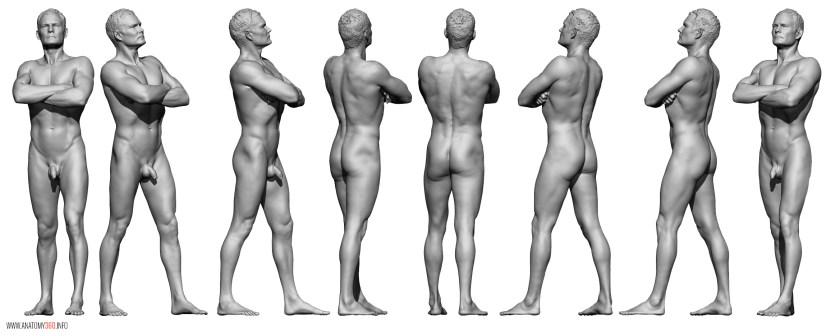
Veniamus ad indicia corpora masculini. caput grande, capillus crassior, rubeus vel niger cum rubore, stabilis, modice inflexus, color rubeus non clari ruboris vel niger, suffusus tamen rubore, oculi paulo impressiores, minaces, subnigri, quos Graeci χαροποὺς vocant, vel glauci. cervix esse debet moderatae plenitudinis, aliquanto prolixior, vertex capitis subrectior, scapulae ingentes, humeri et superioris corporis partes usque ad umbilicum latiores, inferiores deductae paulatim plenitudine desinente, lacertosus, ossibus magnis, nodis et articulis summorum pedum et summarum manuum firmis, non tamen rigidis, sed absolutis, prope imum seiunctis atque discretis, pectore alto et prominente, iugulis absolutis, ventre lato compresso paululum intrinsecus, pectus non nimia carne contectum, solido et spisso corpore, ossibus quae sunt sub ilibus, quae a Graecis ἰσχία dicuntur, siccioribus et solidis. item masculinum corpus forte et tolerans laborum est, vocis solidae, aliquanto raucioris, interdum gravis tamquam ex abdito et concavo resonantis, ut est leonum, spiritus densior, multum aëris concipiens ac referens, passibus longis, motus corporis, cum tranquillus est animus, tardior est, cuius minor sit pars inferior ab umbilico quam est a summo capite ad umbilicum.
(Anonymous, De Physiognomonia 5)

Let us come to the signs of the masculine body. The head is large, the hair rather thick, red or black with red, straight, moderately wavy, the colour is red, but not bright red, or black, although suffused with red, the eyes are a little sunken, threatening, somewhat black, which the Greeks call χαροποί (‘dark blue’), or light blue. The neck should be of moderate thickness, somewhat extended, the top of the head rather upright, the shoulder-blades huge, the shoulders and upper parts of the body to the navel rather broad, the lower parts rather drawn in with decreasing width. He should be muscular, with big bones, the knuckles and joints at the ends of the feet and hands solid, yet not stiff, but just right, apart and separate near the end, with a high and prominent chest, detached collar-bones, a broad stomach pressed slightly inwards, a chest not excessively covered in flesh, a hard and compact body, with the bones which are below the loins, which are called ἰσχία (‘hips’) by the Greeks, rather dry and hard. Also the masculine body is strong and tolerant of hard work, has a strong voice which is rather hoarse and occasionally deep as if echoing from somewhere hidden and hollow, like that of lions, rather frequent breath which draws in and expels much air, and long steps; the movement of the body, when the mind is peaceful, is rather slow, and the part below the navel is smaller than that from the top of the head to the navel. (tr. Ian Repath)