
Apollumai

hemlock

This is part 2 of 3. Part 1 is here. Part 3 is here.

Ἐξιοῦσι δ’ ἐμοὶ καὶ Πείσωνι ἐπιτυγχάνει Μηλόβιός τε καὶ Μνησιθείδης ἐκ τοῦ ἐργαστηρίου ἀπιόντες, καὶ καταλαμβάνουσι πρὸς αὐταῖς ταῖς θύραις, καὶ ἐρωτῶσιν ὅποι βαδίζοιμεν· ὁ δ’ ἔφασκεν εἰς τὰ τοῦ ἀδελφοῦ τοῦ ἐμοῦ, ἵνα καὶ τὰ ἐν ἐκείνῃ τῇ οἰκίᾳ σκέψηται. ἐκεῖνον μὲν οὖν ἐκέλευον βαδίζειν, ἐμὲ δὲ μεθ’ αὑτῶν ἀκολουθεῖν εἰς Δαμνίππου. Πείσων δὲ προσελθὼν σιγᾶν μοι παρεκελεύετο καὶ θαρρεῖν, ὡς ἥξων ἐκεῖσε. καταλαμβάνομεν δὲ αὐτόθι Θέογνιν ἑτέρους φυλάττοντα· ᾧ παραδόντες ἐμὲ πάλιν ᾤχοντο. ἐν τοιούτῳ δ᾽ ὄντι μοι κινδυνεύειν ἐδόκει, ὡς τοῦ γε ἀποθανεῖν ὑπάρχοντος ἤδη. καλέσας δὲ Δάμνιππον λέγω πρὸς αὐτὸν τάδε, “ἐπιτήδειος μέν μοι τυγχάνεις ὤν, ἥκω δ᾽ εἰς τὴν σὴν οἰκίαν, ἀδικῶ δ’ οὐδέν, χρημάτων δ᾽ ἕνεκα ἀπόλλυμαι. σὺ οὖν ταῦτα πάσχοντί μοι πρόθυμον παράσχου τὴν σεαυτοῦ δύναμιν εἰς τὴν ἐμὴν σωτηρίαν.” ὁ δ᾽ ὑπέσχετο ταῦτα ποιήσειν. ἐδόκει δ᾽ αὐτῷ βέλτιον εἶναι πρὸς Θέογνιν μνησθῆναι· ἡγεῖτο γὰρ ἅπαν ποιήσειν αὐτόν, εἴ τις ἀργύριον διδοίη. ἐκείνου δὲ διαλεγομένου Θεόγνιδι (ἔμπειρος γὰρ ὢν ἐτύγχανον τῆς οἰκίας, καὶ ᾔδειν ὅτι ἀμφίθυρος εἴη) ἐδόκει μοι ταύτῃ πειρᾶσθαι σωθῆναι, ἐνθυμουμένῳ ὅτι, ἐὰν μὲν λάθω, σωθήσομαι, ἐὰν δὲ ληφθῶ, ἡγούμην μέν, εἰ Θέογνις εἴη πεπεισμένος ὑπὸ τοῦ Δαμνίππου χρήματα λαβεῖν, οὐδὲν ἧττον ἀφεθήσεσθαι, εἰ δὲ μή, ὁμοίως ἀποθανεῖσθαι. ταῦτα διανοηθεὶς ἔφευγον, ἐκείνων ἐπὶ τῇ αὐλείῳ θύρᾳ τὴν φυλακὴν ποιουμένων· τριῶν δὲ θυρῶν οὐσῶν, ἃς ἔδει με διελθεῖν, ἅπασαι ἀνεῳγμέναι ἔτυχον. ἀφικόμενος δὲ εἰς Ἀρχένεω τοῦ ναυκλήρου ἐκεῖνον πέμπω εἰς ἄστυ, πευσόμενον περὶ τοῦ ἀδελφοῦ· ἥκων δὲ ἔλεγεν ὅτι Ἐρατοσθένης αὐτὸν ἐν τῇ ὁδῷ λαβὼν εἰς τὸ δεσμωτήριον ἀπαγάγοι. καὶ ἐγὼ τοιαῦτα πεπυσμένος τῆς ἐπιούσης νυκτὸς διέπλευσα Μέγαράδε. Πολεμάρχῳ δὲ παρήγγειλαν οἱ τριάκοντα τοὐπ’ ἐκείνων εἰθισμένον παράγγελμα, πίνειν κώνειον, πρὶν τὴν αἰτίαν εἰπεῖν δι’ ἥντινα ἔμελλεν ἀποθανεῖσθαι· οὕτω πολλοῦ ἐδέησε κριθῆναι καὶ ἀπολογήσασθαι. καὶ ἐπειδὴ ἀπεφέρετο ἐκ τοῦ δεσμωτηρίου τεθνεώς, τριῶν ἡμῖν οἰκιῶν οὐσῶν ἐξ οὐδεμιᾶς εἴασαν ἐξενεχθῆναι, ἀλλὰ κλεισίον μισθωσάμενοι προὔθεντο αὐτόν. καὶ πολλῶν ὄντων ἱματίων αἰτοῦσιν οὐδὲν ἔδοσαν εἰς τὴν ταφήν, ἀλλὰ τῶν φίλων ὁ μὲν ἱμάτιον ὁ δὲ προσκεφάλαιον ὁ δὲ ὅ τι ἕκαστος ἔτυχεν ἔδωκεν εἰς τὴν ἐκείνου ταφήν.
(Lysias, Or. 12.12-18)

As we were leaving the house, Peison and I ran into Melobius and Mnesitheides coming out of the slave workshop. They met us just at the doors of the house and asked where we were going. Peison said to my brother’s, to examine the contents of that house as well. They told him to carry on but ordered me to accompany them to Damnippus’ house. Peison came near me, and told me to stay quiet and keep my spirits up, because he would join us there. At Damnippus’, we found Theognis keeping guard over various others. They handed me over to him and left. It seemed to me that the situation was so dangerous that death was already staring me in the face. So I called Damnippus and said, “You are a close friend of mine, and I am in your house. I have done nothing wrong but am being killed for my wealth. Please help me in my suffering, and use your power to rescue me.” He promised me to do this, but he felt that it would be best to have a word with Theognis, who he thought would do anything for money. While he was talking to Theognis—as it happened, I was familiar with the house and knew it had two doors—I decided to try and save myself. I reckoned that if I was unnoticed I would be safe, and if I got caught, nothing worse would happen to me if Theognis had yielded to Damnippus’ persuasion to accept money, whereas otherwise I would die anyway. With this in mind, I began my escape while the others were engaged in guarding the outer door; the three doors I had to get through all happened to be open. I went to the house of Archeneus the shipowner and sent him to the town to find out about my brother. He came back an told me that Eratosthenes had caught him in the street and dragged him off to prison. After hearing this, I sailed the following night to Megara. As for Polemarchus, the Thirty sent him their customary instruction to drink hemlock, without telling him why he was to die. He did not even get a hearing and a chance to defend himself. His body was brought back from the prison, but they would not allow us to conduct the funeral from any of our three houses. Instead, we had to hire a shed in which to lay him out. We owned plenty of cloaks, but when we asked, they would not give us a single one for the burial. Instead, one of our friends gave us the cloak for the burial, another the pillow, and others what each one happened to have. (tr. Stephen C. Todd)
Kibōton

forrest-fenn-treasure-chest-620

This is part 1 of 3. Part 2 is here. Part 3 is here.

Οὑμὸς πατὴρ Κέφαλος ἐπείσθη μὲν ὑπὸ Περικλέους εἰς ταύτην τὴν γῆν ἀφικέσθαι, ἔτη δὲ τριάκοντα ᾤκησε, καὶ οὐδενὶ πώποτε οὔτε ἡμεῖς οὔτε ἐκεῖνος δίκην οὔτε ἐδικασάμεθα οὔτε ἐφύγομεν, ἀλλ’ οὕτως ᾠκοῦμεν δημοκρατούμενοι ὥστε μήτε εἰς τοὺς ἄλλους ἐξαμαρτάνειν μήτε ὑπὸ τῶν ἄλλων ἀδικεῖσθαι. ἐπειδὴ δ’ οἱ τριάκοντα πονηροὶ καὶ συκοφάνται ὄντες εἰς τὴν ἀρχὴν κατέστησαν, φάσκοντες χρῆναι τῶν ἀδίκων καθαρὰν ποιῆσαι τὴν πόλιν καὶ τοὺς λοιποὺς πολίτας ἐπ’ ἀρετὴν καὶ δικαιοσύνην τραπέσθαι, τοιαῦτα λέγοντες οὐ τοιαῦτα ποιεῖν ἐτόλμων, ὡς ἐγὼ περὶ τῶν ἐμαυτοῦ πρῶτον εἰπὼν καὶ περὶ τῶν ὑμετέρων ἀναμνῆσαι πειράσομαι. Θέογνις γὰρ καὶ Πείσων ἔλεγον ἐν τοῖς τριάκοντα περὶ τῶν μετοίκων, ὡς εἶέν τινες τῇ πολιτείᾳ ἀχθόμενοι· καλλίστην οὖν εἶναι πρόφασιν τιμωρεῖσθαι μὲν δοκεῖν, τῷ δ’ ἔργῳ χρηματίζεσθαι· πάντως δὲ τὴν μὲν πόλιν πένεσθαι τὴν ἀρχὴν ‹δὲ› δεῖσθαι χρημάτων. καὶ τοὺς ἀκούοντας οὐ χαλεπῶς ἔπειθον· ἀποκτιννύναι μὲν γὰρ ἀνθρώπους περὶ οὐδενὸς ἡγοῦντο, λαμβάνειν δὲ χρήματα περὶ πολλοῦ ἐποιοῦντο. ἔδοξεν οὖν αὐτοῖς δέκα συλλαβεῖν, τούτων δὲ δύο πένητας, ἵνα αὐτοῖς ᾖ πρὸς τοὺς ἄλλους ἀπολογία, ὡς οὐ χρημάτων ἕνεκα ταῦτα πέπρακται, ἀλλὰ συμφέροντα τῇ πολιτείᾳ γεγένηται, ὥσπερ τι τῶν ἄλλων εὐλόγως πεποιηκότες. διαλαβόντες δὲ τὰς οἰκίας ἐβάδιζον· καὶ ἐμὲ μὲν ξένους ἑστιῶντα κατέλαβον, οὓς ἐξελάσαντες Πείσωνί με παραδιδόασιν· οἱ δὲ ἄλλοι εἰς τὸ ἐργαστήριον ἐλθόντες τὰ ἀνδράποδα ἀπεγράφοντο. ἐγὼ δὲ Πείσωνα μὲν ἠρώτων εἰ βούλοιτό με σῶσαι χρήματα λαβών· ὁ δ’ ἔφασκεν, εἰ πολλὰ εἴη. εἶπον οὖν ὅτι τάλαντον ἀργυρίου ἕτοιμος εἴην δοῦναι· ὁ δ’ ὡμολόγησε ταῦτα ποιήσειν. ἠπιστάμην μὲν οὖν ὅτι οὔτε θεοὺς οὔτ’ ἀνθρώπους νομίζει, ὅμως δ’ ἐκ τῶν παρόντων ἐδόκει μοι ἀναγκαιότατον εἶναι πίστιν παρ᾽ αὐτοῦ λαβεῖν. ἐπειδὴ δὲ ὤμοσεν, ἐξώλειαν ἑαυτῷ καὶ τοῖς παισὶν ἐπαρώμενος, λαβὼν τὸ τάλαντόν με σώσειν, εἰσελθὼν εἰς τὸ δωμάτιον τὴν κιβωτὸν ἀνοίγνυμι· Πείσων δ᾽ αἰσθόμενος εἰσέρχεται, καὶ ἰδὼν τὰ ἐνόντα καλεῖ τῶν ὑπηρετῶν δύο, καὶ τὰ ἐν τῇ κιβωτῷ λαβεῖν ἐκέλευσεν. ἐπεὶ δὲ οὐχ ὅσον ὡμολόγητο εἶχεν, ὦ ἄνδρες δικασταί, ἀλλὰ τρία τάλαντα ἀργυρίου καὶ τετρακοσίους κυζικηνοὺς καὶ ἑκατὸν δαρεικοὺς καὶ φιάλας ἀργυρᾶς τέτταρας, ἐδεόμην αὐτοῦ ἐφόδιά μοι δοῦναι, ὁ δ’ ἀγαπήσειν με ἔφασκεν, εἰ τὸ σῶμα σώσω.
(Lysias, Or. 12.4-11)

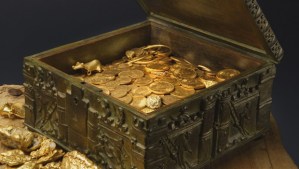
My father Cephalus was invited by Pericles to move to this land, and he lived here for thirty years. Neither he nor the rest of the family was ever involved in any litigation, either as prosecutor or as defendant. We lived our lives under the democracy in such a way as to do no wrong to others and to suffer no harm from others. Later on, however, the Thirty, who were criminals and sykophants, established themselves in the office, claiming that they needed to cleanse the city of wrongdoers and redirect the remaining citizens towards goodness and justice. But despite this assertion, they did not venture to do anything of the kind. I shall do my best to refresh your memories of this, by speaking first about my own affairs and then about yours. It was at a meeting of the Thirty that Theognis and Peison raised the subject of the metics, claiming that some were hostile to the new constitution. This would provide an excellent pretext for appearing to punish them while in reality making money, because the city was completely impoverished, and the regime needed cash. They had no difficulty persuading their audience, who thought nothing of taking human life but were very keen to make money. They decided to arrest ten metics, two of them poor, so that they could plead in the case of the others that this had not been done for money but was for the benefit of the constitution—as if they had had valid reasons for any of their actions! They divided up the houses and set out. They found me entertaining guests at dinner, drove them out, and handed me over to Peison. The others went to the slave workshop and began to draw up a confiscation list of the slaves. I asked Peison whether he would be willing to take a bribe for rescuing me. He said yes, if it was a big one. I replied that I was prepared to give him a talent of silver, and he agreed to this. I knew he had no respect for gods or for men, but given my situation, I thought it absolutely essential to get a pledge from him. He swore an oath that he would rescue me if he received the talent, and he called down destruction on himself and his children. I then went into my bedroom and opened my treasure chest. Peison noticed this and came in, and seeing its contents, he called two of his attendants and told them to take what was in the chest. He now had not simply the agreed amount, gentlemen of the jury, but three talents of silver, four hundred Cyzicene staters, one hundred Persian darics, and four silver cups. So I asked him to give me some traveling money, but he said that I should be glad to save my skin. (tr. Stephen C. Todd)

Philozōioi

Joseph Wright of Derby, The old man and death, 1773
Joseph Wright of Derby, The old man and death (1773)

Ἄνθρωπός τις ἦν πένης, ὃς καὶ ξύλων γόμον ἐπὶ τῶν νώτων ἐβάσταζε. κατὰ δὲ τὴν ὁδοιπορίαν ἰλιγγιάσας ἐκαθέσθη καὶ τὸν γόμον κατέθετο καὶ τὸν Θάνατον οἰκτρῶς ἐνεκαλεῖτο, λέγων “ὦ Θάνατε.” αὐτίκα γοῦν ὁ Θάνατος ἔφθασε καὶ πρὸς αὐτὸν ἔφη “τίνος χάριν ἐκάλεσάς με;” λέγει πρὸς αὐτὸν ὁ ἀνήρ “ἵνα τὸν γόμον ἀπὸ τῆς γῆς συνεξάρῃς μοι.”
οὗτος δηλοῖ ὅτι πάντες ἄνθρωποι φιλόζῳοι τυγχάνουσιν, εἰ καὶ θλίψεσι καὶ ἀνάγκαις συνέχονται.
(Syntipas, Fabulae 2)

A poor man was carrying a load of wood on his shoulders. After a while he was feeling faint, so he sat down by the side of the road. Putting aside his burden, he bitterly called out to Death, summoning Death with the words ‘O Death!’ Death immediately showed up and said to the man, ‘Why have you summoned me?’ The man said, ‘Oh, just to have you help me pick this burden up off the ground!’
The fable shows that everyone clings to life, even if they suffer from affliction and oppression. (tr. Laura Gibbs)

Dormi

kids-with-dogs-53__700

Naenia decima. Mater blanditur catellae ac somnum invitat.

Ne latra, ne pelle bonum, bona Luscula, somnum;
et tibi iam somnus, Luscula, gratus erit.
ingredere, o bone somne; nihil bona Luscula latrat;
Luscula Luciolo, Luscula blanda tibi est;
innuit ipsa oculis tibi Luscula, Lucius ipse
innuit, et dicunt: ‘somnule lenis, ades.’
Luscula iam dormit, stertit quoque bella catella,
et sua Luciolo lumina fessa cadunt.
dormi, Luciole, Luci dilecte, quiesce;
en canit ad cunas garrula Lisa tibi.
‘mulcet languidulos, saturat quoque somnus ocellos;
somnus alit venas, corpora somnus alit
et sedat curas requiemque laboribus affert,
odit tristitiam, gaudia semper amat.
somne bone o cunctis, assis mihi, candide somne,
somne bone et pueris, somne bone et senibus,
ipse mihi tumidas satura, bone somne, mamillas,
ubera Luciolo quo mea plena fluant.’
sentit Luciolus dormitque et ridet et optat
et mammas digitis prensitat usque suis.
euge, puer, sitibunde puer, cape, lassule, somnos;
mox tibi iam vigili lacteus amnis erit.
(Giovanni Pontano, De amore coniugali 2.17)

Tenth lullaby. The mother soothes the pup and invites sleep.

Don’t bark, good Luscula, do not drive away good sleep.
To you too sleep will be a welcome thing.
Come, good sleep; good Luscula does not bark at all.
Luscula’s sweet to Lucio, sweet to you.
Luscula makes a sign for you with her eyes; with his,
Lucio makes a sign. They say: “Mild Sleep,
be here.” Now Luscula sleeps; the fine pup’s snoring too;
Lucietto’s tired eyes flutter closed. Sleep, rest,
Lucietto, darling Lucio; see, Lisa sings,
murmuring to you by your cradle’s side.
“Sleep is caressing, filling up little drooping eyes.
Sleep nourishes the body and its veins,
it pacifies anxieties, brings rest to toils;
hates melancholy, always loves delights.
O Sleep, come to my aid, Sleep good for all, fair Sleep,
Sleep good for boys, and Sleep good for old men;
fill up my swelling breasts, good Sleep, so they may flow
abundantly with milk for Lucio.”
Lucietto senses it in his sleep, he smiles and yearns for them,
his fingers constantly try to seize the breasts.
Bravo! my ever-thirsty, my sleepy boy; sleep now;
soon, when you wake, you will have streams of milk.
(tr. Luke Roman)

Adiaphoron

tumblr_mnbklaYK0u1rodz1bo1_500-2

This is part 2 of 2. Part 1 is here.

Ἄθεσμον τέ ἐστι παρ’ ἡμῖν μητέρα ἢ ἀδελφὴν ἰδίαν γαμεῖν· Πέρσαι δέ, καὶ μάλιστα αὐτῶν οἱ σοφίαν ἀσκεῖν δοκοῦντες, οἱ Μάγοι, γαμοῦσι τὰς μητέρας, καὶ Αἰγύπτιοι τὰς ἀδελφὰς ἄγονται πρὸς γάμον, καὶ ὡς ὁ ποιητής φησιν,
“Ζεὺς Ἥρην προσέειπε κασιγνήτην ἄλοχόν τε” [Homer, Il. 18.356].
ἀλλὰ καὶ ὁ Κιτιεὺς Ζήνων φησὶ μὴ ἄτοπον εἶναι τὸ μόριον τῆς μητρὸς τῷ ἑαυτοῦ μορίῳ τρῖψαι, καθάπερ οὐδὲ ἄλλο τι μέρος τοῦ σώματος αὐτῆς τῇ χειρὶ τρῖψαι φαῦλον ἂν εἴποι τις εἶναι. καὶ ὁ Χρύσιππος δὲ ἐν τῇ πολιτείᾳ δογματίζει τόν τε πατέρα ἐκ τῆς θυγατρὸς παιδοποιεῖσθαι καὶ τὴν μητέρα ἐκ τοῦ παιδὸς καὶ τὸν ἀδελφὸν ἐκ τῆς ἀδελφῆς. Πλάτων δὲ καὶ καθολικώτερον κοινὰς εἶναι τὰς γυναῖκας δεῖν ἀπεφήνατο. τό τε αἰσχρουργεῖν ἐπάρατον ὂν παρ’ ἡμῖν ὁ Ζήνων οὐκ ἀποδοκιμάζει· καὶ ἄλλους δὲ ὡς ἀγαθῷ τινι τούτῳ χρῆσθαι τῷ κακῷ πυνθανόμεθα. ἀλλὰ καὶ τὸ ἀνθρωπείων γεύεσθαι σαρκῶν παρ’ ἡμῖν μὲν ἄθεσμον, παρ’ ὅλοις δὲ βαρβάροις ἔθνεσιν ἀδιάφορόν ἐστιν. καὶ τί δεῖ τοὺς βαρβάρους λέγειν, ὅπου καὶ ὁ Τυδεὺς τὸν ἐγκέφαλον τοῦ πολεμίου λέγεται φαγεῖν, καὶ οἱ ἀπὸ τῆς Στοᾶς οὐκ ἄτοπον εἶναί φασι τὸ σάρκας τινὰ ἐσθίειν ἄλλων τε ἀνθρώπων καὶ ἑαυτοῦ; τό τε ἀνθρωπείῳ μιαίνειν αἵματι βωμὸν θεοῦ παρ’ ἡμῖν μὲν τοῖς πολλοῖς ἄθεσμον, Λάκωνες δὲ ἐπὶ τοῦ βωμοῦ τῆς Ὀρθωσίας Ἀρτέμιδος μαστίζονται πικρῶς ὑπὲρ τοῦ πολλὴν αἵματος ἐπὶ τοῦ βωμοῦ τῆς θεοῦ γενέσθαι ῥύσιν. ἀλλὰ καὶ τῷ Κρόνῳ θύουσιν ἄνθρωπόν τινες, καθάπερ καὶ Σκύθαι τῇ Ἀρτέμιδι τοὺς ξένους· ἡμεῖς δὲ χραίνεσθαι τὰ ἱερὰ δοκοῦμεν ἀνθρώπου φόνῳ. τούς γε μὴν μοιχοὺς κολάζει παρ’ ἡμῖν νόμος, παρὰ δέ τισιν ἀδιάφορόν ἐστι ταῖς τῶν ἑτέρων γυναιξὶ μίγνυσθαι· καὶ φιλοσόφων δέ τινές φασιν ἀδιάφορον εἶναι τὸ ἀλλοτρίᾳ γυναικὶ μίγνυσθαι.
(Sextus Empiricus, Purrh. Hup. 3.205-209)

And with us it is sinful to marry one’s mother or one’s own sister; but the Persians, and especially those of them who are reputed to practise wisdom—namely, the Magi,—marry their mothers; and the Egyptians a take their sisters in marriage, even as the poet says—
“Thus spake Zeus unto Hera, his wedded wife and his sister.”
Moreover, Zeno of Citium says that it is not amiss for a man to rub his mother’s private part with his own private part, just as no one would say it was bad for him to rub any other part of her body with his hand. Chrysippus, too, in his book The State approves of a father getting children by his daughter, a mother by her son, and a brother by his sister. And Plato, in more general terms, has declared that wives ought to be held in common. Masturbation, too, which we count loathsome, is not disapproved by Zeno; and we are informed that others, too, practise this evil as though it were a good thing. Moreover, the eating of human flesh is sinful with us, but indifferent amongst whole tribes of barbarians. Yet why should one speak of  “barbarians” when even Tydeus is said to have devoured the brains of his enemy, and the Stoic School declare that it is not wrong for a man to eat either other men’s flesh or his own? And with most of us it is sinful to defile an altar of a god with human blood, but the Laconians lash themselves fiercely over the altar of Artemis Orthosia in order that a great stream of blood may flow over the altar of the goddess. Moreover, some sacrifice an human victim to Cronos, just as the Scythians sacrifice strangers to Artemis; whereas we deem that holy places are defiled by the slaying of a man. Adulterers are, of course, punished by law with us, but amongst some peoples intercourse with other men’s wives is a thing indifferent; and some philosophers, too, declare that intercourse with the wife of another is indifferent. (tr. Robert Gregg Bury)

Paranomon

paranomon

This is part 1 of 2. Part 2 is here.

Οὐκ ἄτοπον δ’ ἂν ἴσως εἴη πρὸς τούτοις καὶ εἰδικώτερον ἐπιστῆσαι διὰ βραχέων ταῖς ὑπολήψεσι ταῖς περὶ αἰσχρῶν καὶ οὐκ αἰσχρῶν, ἀθέσμων τε καὶ οὐ τοιούτων καὶ νόμων καὶ ἐθῶν καὶ τῆς εἰς θεοὺς εὐσεβείας καὶ τῆς περὶ τοὺς κατοιχομένους ὁσιότητος καὶ τῶν ἐοικότων· καὶ γὰρ οὕτω περὶ τῶν πρακτέων ἢ μὴ πολλὴν εὑρήσομεν ἀνωμαλίαν. οἷον γοῦν παρ’ ἡμῖν μὲν αἰσχρόν, μᾶλλον δὲ καὶ παράνομον νενόμισται τὸ τῆς ἀρρενομιξίας, παρὰ Γερμανοῖς δέ, ὡς φασίν, οὐκ αἰσχρόν, ἀλλ’ ὡς ἕν τι τῶν συνήθων. λέγεται δὲ καὶ παρὰ Θηβαίοις τὸ παλαιὸν οὐκ αἰσχρὸν τοῦτο εἶναι δόξαι, καὶ τὸν Μηριόνην τὸν Κρῆτα οὕτω κεκλῆσθαί φασι δι’ ἔμφασιν τοῦ Κρητῶν ἔθους, καὶ τὴν Ἀχιλλέως πρὸς Πάτροκλον διάπυρον φιλίαν εἰς τοῦτο ἀνάγουσί τινες. καὶ τί θαυμαστόν, ὅπου γε καὶ οἱ ἀπὸ τῆς κυνικῆς φιλοσοφίας καὶ οἱ περὶ τὸν Κιτιέα Ζήνωνα καὶ Κλεάνθην καὶ Χρύσιππον ἀδιάφορον τοῦτο εἶναί φασιν; καὶ τὸ δημοσίᾳ γυναικὶ μίγνυσθαι, καίτοι παρ’ ἡμῖν αἰσχρὸν εἶναι δοκοῦν, παρά τισι τῶν Ἰνδῶν οὐκ αἰσχρὸν εἶναι νομίζεται· μίγνυνται γοῦν ἀδιαφόρως δημοσίᾳ, καθάπερ καὶ περὶ τοῦ φιλοσόφου Κράτητος ἀκηκόαμεν. ἀλλὰ καὶ τὸ τὰς γυναῖκας ἑταιρεῖν παρ’ ἡμῖν μὲν αἰσχρόν ἐστι καὶ ἐπονείδιστον, παρὰ δὲ πολλοῖς τῶν Αἰγυπτίων εὐκλεές· φασὶ γοῦν, ὅτι αἱ πλείστοις συνιοῦσαι καὶ κόσμον ἔχουσι περισφύριον, σύνθημα τοῦ παρ’ αὐταῖς σεμνολογήματος. παρ’ ἐνίοις δὲ αὐτῶν αἱ κόραι πρὸ τῶν γάμων τὴν προῖκα ἐξ ἑταιρήσεως συνάγουσαι γαμοῦνται. καὶ τοὺς Στωικοὺς δὲ ὁρῶμεν οὐκ ἄτοπον εἶναι λέγοντας τὸ ἑταίρᾳ συνοικεῖν ἢ τὸ ἐξ ἑταίρας ἐργασίας διαζῆν. ἀλλὰ καὶ τὸ ἐστίχθαι παρ’ ἡμῖν μὲν αἰσχρὸν καὶ ἄτιμον εἶναι δοκεῖ, πολλοὶ δὲ Αἰγυπτίων καὶ Σαρματῶν στίζουσι τὰ γεννώμενα. τό τε ἐλλόβια ἔχειν τοὺς ἄρρενας παρ’ ἡμῖν μὲν αἰσχρόν ἐστι, παρ’ ἐνίοις δὲ τῶν βαρβάρων, ὥσπερ καὶ Σύροις, εὐγενείας ἐστὶ σύνθημα. τινὲς δὲ ἐπιτείνοντες τὸ σύνθημα τῆς εὐγενείας, καὶ τὰς ῥῖνας τῶν παίδων τιτρώσκοντες κρίκους ἀπ’ αὐτῶν ἀργυρέους ἢ χρυσοῦς ἀπαρτῶσιν, ὃ παρ’ ἡμῖν οὐκ ἂν ποιήσειέ τις, ὥσπερ οὐδὲ ἀνθοβαφῆ καὶ ποδήρη τις ἄρρην ἐνταῦθα ἂν ἀμφιέσαιτο ἐσθῆτα, καίτοι παρὰ Πέρσαις εὐπρεπεστάτου τοῦ παρ’ ἡμῖν αἰσχροῦ τούτου δοκοῦντος εἶναι. καὶ παρὰ Διονυσίῳ δὲ τῷ τῆς Σικελίας τυράννῳ τοιαύτης ἐσθῆτος Πλάτωνι καὶ Ἀριστίππῳ τοῖς φιλοσόφοις προσενεχθείσης ὁ μὲν Πλάτων ἀπεπέμψατο, εἰπὼν
“οὐκ ἂν δυναίμην θῆλυν ἐνδῦναι στολήν
ἄρρην πεφυκώς,” [Euripides, Bacch. 836-837]
ὁ δὲ Ἀρίστιππος προσήκατο, φήσας
“καὶ γὰρ ἐν βακχεύμασιν
οὖσ’ ἥ γε σώφρων οὐ διαφθαρήσεται.” [Euripides, Bacch. 317-318]
οὕτω καὶ τῶν σοφῶν ᾧ μὲν οὐκ αἰσχρόν, ᾧ δὲ αἰσχρὸν ἐδόκει τοῦτο εἶναι.
(Sextus Empiricus, Purrh. Hup. 3.198-204)

And perhaps it may not be amiss, in addition to what has been said, to dwell more in detail, though briefly, on the notions concerning things shameful and not shameful, unholy and not so, laws and customs, piety towards the gods, reverence for the departed, and the like. For thus we shall discover a great variety of belief concerning what ought or ought to be done. For example, amongst us sodomy is regarded as shameful or rather illegal, but by the Germani, they say, it is not looked on as shameful but as a customary thing. It is said, too, that in Thebes long ago this practice was not held to be shameful, and they say that Meriones the Cretan was so called by way of indicating the Cretans’ customed and some refer to this the burning love of Achilles for Patroclus. And what wonder, when both the adherents of the Cynic philosophy and the followers of Zeno of Citium, Cleanthes and Chrysippus, declare that this practice is indifferent? Having intercourse with a woman, too, in public, although deemed by us to be shameful, is not thought to be shameful by some of the Indians; at any rate they couple publicly with indifference, like the philosopher Crates, as the story goes. Moreover, prostitution is with us a shameful and disgraceful thing, but with many of the Egyptians it is highly esteemed; at least, they say that those women who have the greatest number of lovers wear an ornamental ankle-ring as a token of their proud position. And with some of them the girls marry after collecting a dowry before marriage by means of prostitution. We see the Stoics also declaring that it is not amiss to keep company with a prostitute or to live on the profits of prostitution. Moreover, with us tattooing is held to be shameful and degrading, but many of the Egyptians and Sarmatians tattoo their offspring. Also, it is a shameful thing with us for men to wear earrings, but amongst some of the barbarians, like the Syrians, it is a token of nobility. And some, by way of marking their nobility still further, pierce the nostrils also of their children and suspend from them rings of silver or gold—a thing which nobody with us would do, just as no man here would dress himself in a flowered robe reaching to the feet, although this dress, which with us is thought shameful, is held to be highly respectable by the Persians. And when, at the Court of Dionysius the tyrant of Sicily, a dress of this description was offered to the philosophers Plato and Aristippus, Plato sent it away with the words—
“A man am I, and never could I don
A woman’s garb;”
but Aristippus accepted it, saying—
“For e’en midst revel-routs
She that is chaste will keep her purity.”
Thus, even in the case of these sages, while the one of them deemed this practice shameful, the other did not. (tr. Robert Gregg Bury)


Amne

maxresdefault-6

Symmachus Siburio.

Fortunae tuae gaudia in meo aere duco atque huius sententiae te nobis iudicem capio, qui animum meum spectatum habes, cum tuum consulis. debebatur hoc teneris temporum bonis, ut consilio publico vir laudatus accederes. ergo quia res sese ex voto omnium dedit, perage operam iudicio tanti principis congruentem. urguet te expectatio bonis semper onerosa. nam etsi dignos respicit, periculo tamen proxima est, dum sibi amplius pollicetur. habes saeculum virtuti amicum, quo nisi optimus quisque gloriam parat, hominis est culpa, non temporis. vides certe: ut ille ipse qui Romanis rebus antistat, ad bonum publicum natus est, non tibi adverso nunc amne nitendum est, secundo, ut ita dicam, cursu probae artes et virtutes feruntur. sed haec tibi plenius tuus animus quam stilus noster expediet. ego amici functus officium admonentis potius quam docentis personam recepi et spero actutum fore, ut expectatione quae de te magna est, maior habearis. nec ego istius modi scriptum recepissem, nisi apud me liqueret, quod emendato pectori bona verba mandarem. quod restat, memento salute referenda et tuum munus exsequi et mei officii diligentiam provocare. vale.
(Symmachus, Ep. 3.43)

Symmachus to Siburius.

I sense the joy of your good fortune as if it were my own and I make you the judge of this sentiment of mine: when you consult your own heart, you will have examined my own. To the happy beginnings of the current reign should be added that a man of good reputation such as yourself has joined the senate. So, since things have turned out in accordance with everyone’s wishes, it’s up to you to comport yourself in a manner suited to the judgement of such a great emperor. The expectation that always weighs heavy on honourable people presses upon you now; and even though it looks only upon men of worth, it is nevertheless close to danger, as it always promises more of itself. Yours is an age that is friendly to virtue, and if not every outstanding man acquires glory in it, it is the fault of the individual, not of the age. Surely you can see that, as he who leads the Roman state is born for the benefit of the people, you do not have to make your way counter to the current: good qualities and virtues are borne on a favorable stream, so to speak. But you will be able to understand all this more fully through your own intellect than by my pen. In fulfilling my duty of friendship, I have taken on the role of adviser rather than instructor. I hope that soon you will prove to be even greater than the expectation people have of you, however big that is. I would not have proceeded to write to you like this, if it were not clear to me that I was entrusting these lofty words to a noble soul. In closing, please remember to practice your usual courtesy in writing back to me and to urge me likewise to diligence in this obligation. Be well. (tr. David Bauwens)

Inops

emptypocketsnomoney-580x358

Crescentem sequitur cura pecuniam
maiorumque fames. iure perhorrui
late conspicuum tollere verticem,
Maecenas, equitum decus.

quanto quisque sibi plura negaverit,
ab dis plura feret; nil cupientium
nudus castra peto et transfuga divitum
partes linquere gestio,

contemptae dominus splendidior rei,
quam si quicquid arat imnpiger Apulus
occultare meis dicerer horreis,
magnas inter opes inops.

purae rivus aquae silvaque iugerum
paucorum et segetis certa fides meae
fulgentem imperio fertilis Africae
fallit sorte beatior.

(Horace, Carm. 3.16.17-32)

Care follows growing wealth and hunger to
have more; rightly I have trembled to
lift up my head too ostentatiously,
Maecénas, honored knight.

The more each one denies himself, the more
he will have from the gods: I naked seek
the camp of those not covetous and
eagerly desert the rich,

of wealth despised more grand as master than
if I were said to hoard within my barns
all that is tilled by brisk Apúlia—
‘mid great means, lacking means.

A limpid stream, a forest of few acres,
and continued trust in my own crops
—this more blessed lot eludes a magnate ruling
fertile Africa.

(tr. Jeffrey H. Kaimowitz)