Pugnabant

fight-club_0

Cum prorepserunt primis animalia terris,
mutum et turpe pecus, glandem atque cubilia propter
unguibus et pugnis, dein fustibus atque ita porro
pugnabant armis, quae post fabricaverat usus,
donec verba, quibus voces sensusque notarent,
nominaque invenere; dehinc absistere bello,
oppida coeperunt munire et ponere leges,
ne quis fur esset neu latro neu quis adulter.
nam fuit ante Helenam cunnus taeterrima belli
causa, sed ignotis perierunt mortibus illi,
quos venerem incertam rapientis more ferarum
viribus editior caedebat ut in grege taurus.
iura inventa metu iniusti fateare necesse est,
tempora si fastosque velis evolvere mundi.
nec natura potest iusto secernere iniquum,
dividit ut bona diversis, fugienda petendis,
nec vincet ratio hoc, tantundem ut peccet idemque,
qui teneros caules alieni fregerit horti
et qui nocturnus sacra divum legerit. adsit
regula, peccatis quae poenas irroget aequas,
ne scutica dignum horribili sectere flagello.
(Horace, Serm. 1.3.99-109)

When the first living creatures crawled on primeval Earth,
mute, formless beasts, they fought for their food and shelter
with claws and fists, and then with sticks, and so on up
fighting with the weapons that experience had forged,
until they found words, to give meaning to feelings
and cries, and then names. They began to shun war,
they started to lay out towns and to lay down laws,
by which no man might be thief, brigand, or adulterer.
Even before Helen’’s day cunts were a dire cause for battle,
but those who snatched promiscuous love like beasts
and were killed like a bull in the herd by a stronger bull,
died an unsung death. If you want to study the record
of those past ages of the world, you’’ll be forced to accept
that justice was created out of the fear of injustice.
Nature doesn’’t, can’’t, distinguish between right and wrong,
as she does between sweet and sour, attractive and hostile:
and Reason can never show it’s the same offence
to cull fresh cabbages out of a neighbour’’s garden
as to steal the god’’s sacred emblems by night: let’’s have
rules, to lay down a fair punishment for every crime,
lest we flay with the terrible whip what merits the strap.
(tr. Tony Kline)

Corrupere

rose petals

Inde et illud sequitur, ut minimis sordidissimisque rebus non exacerbemur. parum agilis est puer aut tepidior aqua poturo aut turbatus torus aut mensa neglegentius posita: ad ista concitari insania est. aeger et infelicis valetudinis est quem levis aura contraxit, affecti oculi quos candida vestis obturbat, dissolutus deliciis cuius latus alieno labore condoluit. Mindyriden aiunt fuisse ex Sybaritarum civitate qui, cum vidisset fodientem et altius rastrum adlevantem, lassum se fieri questus vetuit illum opus in conspectu suo facere; idem habere se peius questus est, quod foliis rosae duplicatis incubuisset. ubi animum simul et corpus voluptates corrupere, nihil tolerabile videtur, non quia dura sed quia mollis patitur. quid est enim cur tussis alicuius aut sternutamentum aut musca parum curiose fugata in rabiem agat aut obversatus canis aut clavis neglegentis servi manibus elapsa? feret iste aequo animo civile convicium et ingesta in contione curiave maledicta cuius aures tracti subsellii stridor offendit? perpetietur hic famem et aestivae expeditionis sitim qui puero male diluenti nivem irascitur? nulla itaque res magis iracundiam alit quam luxuria intemperans et impatiens: dure tractandus animus est ut ictum non sentiat nisi gravem.
(Seneca Minor, De Ira 2.25)

From this it also follows that very trivial and petty matters will not aggravate us. The slave is not quick enough, the water’s too hot to drink, the bed has been mussed, the table’s been carelessly set: to get riled at such things is crazy. Someone whom a slight breeze has made shiver is weak and sickly; eyes that a bright white garment offends aren’t healthy; a person whose own back feels pain at another’s toil has been made effete by luxury. They say that Mindyrides, from the city of the Sybarites, complained that he was becoming exhausted when he saw someone digging and lifting his hoe too high, and he forbade him to work in his sight; the same man complained that he felt worse when he lay down on rose petals that were creased. When pleasures have corrupted mind and body at once, nothing seems bearable, not because things are hard but because the person experiencing them is soft. For why should someone’s cough or a sneeze send you into a frenzy, or a fly chased too negligently, or a dog that has got underfoot, or a key that slipped from the hands of a careless slave? Will someone whose ears are bruised by the scraping of a bench being dragged bear with equanimity the abuse of public life and the curses heaped on him in an assembly or the Senate? Will someone who becomes angry when a slave does a bad job of melting the snow endure hunger and the thirst of a summer campaign? That’s why I say that nothing feeds anger more than luxury that’s out of control and incapable of forbearance: the mind must be treated roughly so it feels only a serious blow. (tr. Robert A. Kaster)

Inenarrabilia

bride-on-a-horse-east-texas-08

Eidem Alexandro et equi magna raritas contigit. Bucephalan eum vocarunt sive ab aspectu torvo sive ab insigni taurini capitis armo impressi. XVI talentis ferunt ex Philonici Pharsalii grege emptum, etiam tum puero capto eius decore. neminem hic alium quam Alexandrum regio instratu ornatus recepit in sedem, alias passim recipiens. idem in proeliis memoratae cuiusdam perhibetur operae, Thebarum oppugnatione vulneratus in alium transire Alexandrum non passus, multa praeterea eiusdem modi, propter quae rex defuncto ei duxit exsequias urbemque tumulo circumdedit nomine eius. nec Caesaris dictatoris quemquam alium recepisse dorso equus traduntur, idemque similes humanis pedes priores habuisse, hac effigie locatus ante Veneris Genetricis aedem. fecit et Divus Augustus equo tumulum, de quo Germanici Caesaris carmen est. Agrigenti conplurium equorum tumuli pyramides habent. equum adamatum a Samiramide usque in coitum Iuba auctor est. Scythici quidem equitatus equorum gloria strepunt: occiso regulo ex provocatione dimicante hostem, cum ad spoliandum venisset, ab equo eius ictibus morsuque confectum; alio detracto oculorum operimento et cognito cum matre coitu petiisse praerupta atque exanimatum. eadem ex causa in Reatino agro laceratum prorigam invenimus. namque et cognationum intellectus his est, atque in grege prioris anni sororem libentius etiam quam matrem equa comitatur. docilitas tanta est, ut universus Sybaritani exercitus equitatus ad symphoniae cantum saltatione quadam moveri solitus inveniatur. iidem praesagiunt pugnam et amissos lugent dominos: lacrimas interdum desiderio fundunt. interfecto Nicomede rege equus eius inedia vitam finivit. Phylarchus refert Centaretum e Galatis, in proelio occiso Antiocho, potitum equo eius conscendisse ovantem, at illum indignatione accensum domitis frenis, ne regi posset, praecipitem in abrupta isse exanimatumque una. Philistus a Dionysio relictum in caeno haerentem, ut se evellisset, secutum vestigia domini examine apium iubae inhaerente, eoque ostento tyrannidem a Dionysio occupatam. ingenia eorum inenarrabilia. iaculantes obsequia experiuntur difficiles conatus corpore ipso nisuque iuvantium; item tela humi collecta equiti porrigunt. nam in circo ad currus iuncti non dubie intellectum adhortationis et gloriae fatentur. Claudi Caesaris saecularium ludorum circensibus, excusso in carceribus auriga albati Corace, occupavere primatum, obtinuere opponentes, effundentes omniaque contra aemulos, quae debuissent peritissimo auriga insistente, facientes, cum puderet hominum artes ab equis vinci, peracto legitimo cursu ad cretam stetere. maius augurium apud priscos plebeis circensibus excusso auriga ita, ut si staret, in Capitolium cucurrisse equos aedemque ter lustrasse; maximum vero eodem pervenisse a Veis cum palma et corona, effuso Ratumenna qui ibi vicerat, unde postea nomen portae est. Sarmatae longinquo itineri inedia pridie praeparant eos, potum exiguum inpertientes, atque ita per centena milia et quinquaginta continuo cursu euntibus insident.
(Pliny the Elder, Nat. Hist. 8.154-162)

Alexander also had the good fortune to own a great rarity in horseflesh. They called the animal Bucephalus, either because of its fierce appearance or from the mark of a bull’s head branded on its shoulder. It is said that it was bought for sixteen talents a from the herd of Philonicus of Pharsalus while Alexander was still a boy, as he was taken by its beauty. This horse when adorned with the royal saddle would not allow itself to be mounted by anybody except Alexander, though on other occasions it allowed anybody to mount. It is also celebrated for a memorable feat in battle, not having allowed Alexander during the attack on Thebes to change to another mount when it had been wounded; and a number of occurrences of the same kind are also reported, on account of which when it died the king headed its funeral procession, and built a city round its tomb which he named after it. Also the horse that belonged to Caesar the Dictator is said to have refused to let anyone else mount it ; and it is also recorded that its fore feet were like those of a man, as it is represented in the statue that stands in front of the Temple of Venus Genetrix. The late lamented Augustus also made a funeral mound for a horse, which is the subject of a poem by Germanicus Caesar. At Girgenti a great number of horses’ tombs have pyramids over them. Juba attests that Semiramis fell so deeply in love with a horse that she married it. The Scythian cavalry regiments indeed resound with famous stories of horses: a chieftain was challenged to a duel by an enemy and killed, and when his adversary came to strip his body of its armour, his horse kicked him and bit him till he died; another horse, when its blinkers were removed and it found out that a mare it had covered was its dam, made for a precipice and committed suicide. We read that an ostler in the Reate district was savaged by a horse for the same reason. For horses actually understand the ties of relationship, and a filly in a herd is even fonder of going with a sister a year older than with their dam. Their docility is so great that we learn that the entire cavalry of the army of Sybaris used to perform a sort of ballet to the music of a band. The Sybarite horses also know beforehand when there is going to be a battle, and when they lose their masters mourn for them: sometimes they shed tears at the bereavement. When King Nicomedes was killed his horse ended its life by refusing food. Phylarchus records that when Antiochus fell in battle one of the Galatians Centaretus caught his horse and mounted it in triumph, but it was fired with indignation and taking the bit between its teeth so as to become unmanageable, galloped headlong to a precipice where it perished with its rider. Philistus records that Dionysius left his horse stuck in a bog, and when it extricated itself it followed its master’s tracks with a swarm of bees clinging to its mane; and that in consequence of this portent Dionysius seized the tyranny. The cleverness of horses is beyond description. Mounted javelinmen experience their docility in assisting difficult attempts with the actual swaying of their body; also they gather up the weapons lying on the ground and pass them to their rider. Horses harnessed to chariots in the circus unquestionably show that they understand the shouts of encouragement and applause. At the races in the circus forming part of the Secular Games of Claudius Caesar a charioteer of the Whites named Raven was thrown at the start, and his team took the lead and kept it by getting in the way of their rivals and jostling them aside and doing everything against them that they would have had to do with a most skilful charioteer in control, and as they were ashamed for human science to be beaten by horses, when they had completed the proper course they stopped dead at the chalk line. A greater portent was when in early days a charioteer was thrown at the plebeian circus races and the horses galloped on to the Capitol and raced round the temple three times just the same as if he still stood at the reins; but the greatest was when a chariot-team reached the same place from Veii with the palm-branch and wreath after Ratumenna who had won at Veii had been thrown: an event which subsequently gave its name to the gate. The Sarmatians get their horses into training for a long journey by giving them no fodder the day before and only allowing them a small amount of water, and by these means they ride them on a journey of 150 miles without drawing rein. (tr. Harris Rackham)

Megaloprepes

pairing-red-wine-and-food-1024x680

Ἦν δὲ καὶ πρὸς οἶνον ἧττον ἢ ἐδόκει καταφερής, ἔδοξε δὲ διὰ τὸν χρόνον, ὃν οὐ πίνων μᾶλλον ἢ λαλῶν εἷλκεν, ἐφ’ ἑκάστης κύλικος ἀεὶ μακρόν τινα λόγον διατιθέμενος, καὶ ταῦτα πολλῆς σχολῆς οὔσης. ἐπεὶ πρός γε τὰς πράξεις οὐκ οἶνος ἐκεῖνον, οὐχ ὕπνος, οὐ παιδιά τις, οὐ γάμος, οὐ θέα, καθάπερ ἄλλους στρατηγούς, ἐπέσχε· δηλοῖ δ’ ὁ βίος, ὃν βιώσας βραχὺν παντάπασι πλείστων καὶ μεγίστων πράξεων ἐνέπλησεν. ἐν δὲ ταῖς σχολαῖς πρῶτον μὲν ἀναστὰς καὶ θύσας τοῖς θεοῖς, εὐθὺς ἠρίστα καθήμενος· ἔπειτα διημέρευε κυνηγῶν ἢ συντάττων ἢ διδάσκων τι τῶν πολεμικῶν ἢ ἀναγινώσκων. εἰ δ’ ὁδὸν βαδίζοι μὴ λίαν ἐπείγουσαν, ἐμάνθανεν ἅμα πορευόμενος ἢ τοξεύειν ἢ ἐπιβαίνειν ἅρματος ἐλαυνομένου καὶ ἀποβαίνειν. πολλάκις δὲ παίζων καὶ ἀλώπεκας ἐθήρευε καὶ ὄρνιθας, ὡς ἔστι λαβεῖν ἐκ τῶν ἐφημερίδων. καταλύσας δὲ καὶ τρεπόμενος πρὸς λουτρὸν ἢ ἄλειμμα, τοὺς ἐπὶ τῶν σιτοποιῶν καὶ μαγείρων ἀνέκρινεν, εἰ τὰ πρὸς τὸ δεῖπνον εὐτρεπῶς ἔχουσι. καὶ δειπνεῖν μὲν ὀψὲ καὶ σκότους ἤδη κατακλινόμενος ἤρχετο, θαυμαστὴ δ’ ἦν ἡ ἐπιμέλεια καὶ περίβλεψις ἐπὶ τῆς τραπέζης, ὅπως μηδὲν ἀνίσως μηδ’ ὀλιγώρως διανέμοιτο· τὸν δὲ πότον ὥσπερ εἴρηται μακρὸν ὑπ’ ἀδολεσχίας ἐξέτεινε. καὶ τἆλλα πάντων ἥδιστος ὢν βασιλέων συνεῖναι καὶ χάριτος οὐδεμιᾶς ἀμοιρῶν, τότε ταῖς μεγαλαυχίαις ἀηδὴς ἐγίνετο καὶ λίαν στρατιωτικός, αὐτός τε πρὸς τὸ κομπῶδες ὑποφερόμενος, καὶ τοῖς κόλαξιν ἑαυτὸν ἀνεικὼς ἱππάσιμον, ὑφ’ ὧν οἱ χαριέστατοι τῶν παρόντων ἐπετρίβοντο, μήθ᾽ ἁμιλλᾶσθαι τοῖς κόλαξι μήτε λείπεσθαι βουλόμενοι τῶν αὐτῶν ἐπαίνων· τὸ μὲν γὰρ αἰσχρὸν ἐδόκει, τὸ δὲ κίνδυνον ἔφερε. μετὰ δὲ τὸν πότον λουσάμενος, ἐκάθευδε πολλάκις μέχρι μέσης ἡμέρας· ἔστι δ᾽ ὅτε καὶ διημέρευεν ἐν τῷ καθεύδειν. αὐτὸς μὲν οὖν καὶ ὄψων ἐγκρατὴς ἦν, ὥστε καὶ τὰ σπανιώτατα πολλάκις τῶν ἀπὸ θαλάττης αὐτῷ κομιζομένων ἀκροδρύων καὶ ἰχθύων ἑκάστῳ διαπεμπόμενος τῶν ἑταίρων ἑαυτῷ μόνῳ μηδὲν καταλιπεῖν. τὸ μέντοι δεῖπνον ἦν ἀεὶ μεγαλοπρεπές, καὶ τοῖς εὐτυχήμασι τῆς δαπάνης ἅμα συναυξομένης, τέλος εἰς μυρίας δραχμὰς προῆλθεν· ἐνταῦθα δ’ ἔστη, καὶ τοσοῦτον ὡρίσθη τελεῖν τοῖς ὑποδεχομένοις Ἀλέξανδρον.
(Plutarch, Bios Alexandrou 23)

He also had less of a penchant for wine than was generally thought. He gained this reputation because he dragged out the time he took over each cup, but it was time spent talking rather than drinking, since he was constantly presiding over some lengthy conversation or other, at any rate when he had plenty of time. When action was called for, unlike other commanders he was not detained by wine, sleep, some trivial pursuit or other, marriage, or a showas is proved by his life, which for all its brevity he packed with exploit after major exploit. When he had time on his hands, however, he would get up and sacrifice to the gods, and then immediately sit down to eat his morning meal. Then he would go on to spend the day hunting or arranging his affairs or teaching some aspect of warfare or reading. If he was on a leisurely journey he would try to improve his archery during it, or practise mounting and dismounting from a moving chariot; as we can learn from the Royal Diary, he also often used to hunt foxes and birds for fun. Once he had found quarters for the night, he would ask his bakers and cooks, while he was busy with bathing or washing, whether they had everything they needed for his evening meal. He used to take to his couch and eat his evening meal late, after dark, and take an astonishing amount of care and consideration at the table to make sure that everyone got equaland equally generousportions. As I have already said, he would prolong the after-dinner drinking with conversation. Although he was basically better company than any other monarch, and had all the social graces, during these conversations he tended to flaunt his achievements in a disagreeable manner and become too boastful. And not only did he indulge in selfglorification, but he also allowed himself to be ridden by flatterers, who made things difficult for any particularly refined people present, because they had no desire to try to beat the flatterers at their own game and yet did not want to lag behind in praising Alexander; they found the first option degrading, but the second was risky. After he had finished drinking, he would wash, and then go to sleep, often until midday, but occasionally for the whole of the next day. He was also self-controlled where savouries were concerned. In fact, when especially rare fruits and fish were brought to him from the coast he used to have them sent to each of his Companions, often until he was the only one left with nothing. But his evening meals were magnificent affairs, and the cost of them increased along with his successes, until in the end it reached 10,000 drachmas. It stopped there, however, and this was the stipulated amount which those who entertained Alexander were to spend. (tr. Robin Waterfield)


Ornarent

hand-laying-flowers-on-a-grave_nygvkfm0__F0003

Obiit tricesimo et secundo aetatis anno, die quo quondam Octaviam interemerat, tantumque gaudium publice praebuit, ut plebs pilleata tota urbe discurreret. et tamen non defuerunt qui per longum tempus vernis aestivisque floribus tumulum eius ornarent ac modo imagines praetextatas in rostris proferrent, modo edicta quasi viventis et brevi magno inimicorum malo reversuri. quin etiam Vologaesus Parthorum rex missis ad senatum legatis de instauranda societate hoc etiam magno opere oravit, ut Neronis memoria coleretur. denique cum post viginti annos adulescente me exstitisset condicionis incertae qui se Neronem esse iactaret, tam favorabile nomen eius apud Parthos fuit, ut vehementer adiutus et vix redditus sit.
(Suetonius, Nero 57)

He met his end in his thirty-second year on the anniversary of Octavia’s death, thereby provoking such great public joy that the common people ran throughout the city dressed in liberty caps. Yet there were also some who for a long time would decorate his tomb with spring and summer flowers, and would sometimes display on the rostra statues of him dressed in a toga or post his edicts as if he were still alive and would soon return to avenge himself on his enemies. Indeed, even Vologaesus, king of the Parthians, when he sent ambassadors to the senate to renew his alliance, also made an earnest appeal that the memory of Nero should be honoured. Moreover, twenty years later, when I was a young man, there was an individual of unknown origins who boasted that he was Nero, and the name was so popular with the Parthians that they gave him vigorous support and could scarcely be made to surrender him. (tr. Catharine Edwards)


Terpeu

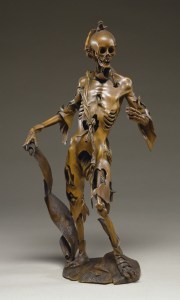
Hans Leinberger, Memento mori, ca. 1520
Hans Leinberger, Memento mori (ca. 1520)

Αὐτῶν δὲ δὴ Αἰγυπτίων οἳ μὲν περὶ τὴν σπειρομένην Αἴγυπτον οἰκέουσι, μνήμην ἀνθρώπων πάντων ἐπασκέοντες μάλιστα λογιώτατοι εἰσὶ μακρῷ τῶν ἐγὼ ἐς διάπειραν ἀπικόμην, τρόπῳ δὲ ζόης τοιῷδε διαχρέωνται· συρμαΐζουσι τρεῖς ἡμέρας ἐπεξῆς μηνὸς ἑκάστου, ἐμέτοισι θηρώμενοι τὴν ὑγιείην καὶ κλύσμασι, νομίζοντες ἀπὸ τῶν τρεφόντων σιτίων πάσας τὰς νούσους τοῖσι ἀνθρώποισι γίνεσθαι. εἰσὶ μὲν γὰρ καὶ ἄλλως Αἰγύπτιοι μετὰ Λίβυας ὑγιηρέστατοι πάντων ἀνθρώπων τῶν ὡρέων δοκέειν ἐμοὶ εἵνεκα, ὅτι οὐ μεταλλάσσουσι αἱ ὧραι· ἐν γὰρ τῇσι μεταβολῇσι τοῖσι ἀνθρώποισι αἱ νοῦσοι μάλιστα γίνονται τῶν τε ἄλλων πάντων καὶ δὴ καὶ τῶν ὡρέων μάλιστα. ἀρτοφαγέουσι δὲ ἐκ τῶν ὀλυρέων ποιεῦντες ἄρτους, τοὺς ἐκεῖνοι κυλλήστις ὀνομάζουσι. οἴνῳ δὲ ἐκ κριθέων πεποιημένῳ διαχρέωνται· οὐ γάρ σφι εἰσὶ ἐν τῇ χώρῃ ἄμπελοι. ἰχθύων δὲ τοὺς μὲν πρὸς ἥλιον αὐήναντες ὠμοὺς σιτέονται, τοὺς δὲ ἐξ ἅλμης τεταριχευμένους. ὀρνίθων δὲ τούς τε ὄρτυγας καὶ τὰς νήσσας καὶ τὰ μικρὰ τῶν ὀρνίθων ὠμὰ σιτέονται προταριχεύσαντες. τὰ δὲ ἄλλα ὅσα ἢ ὀρνίθων ἢ ἰχθύων σφι ἐστὶ ἐχόμενα, χωρὶς ἢ ὁκόσοι σφι ἱροὶ ἀποδεδέχαται, τοὺς λοιποὺς ὀπτοὺς καὶ ἑφθοὺς σιτέονται. ἐν δὲ τῇσι συνουσίῃσι τοῖσι εὐδαίμοσι αὐτῶν, ἐπεὰν ἀπὸ δείπνου γένωνται, περιφέρει ἀνὴρ νεκρὸν ἐν σορῷ ξύλινον πεποιημένον, μεμιμημένον ἐς τὰ μάλιστα καὶ γραφῇ καὶ ἔργῳ, μέγαθος ὅσον τε πηχυαῖον ἢ δίπηχυν, δεικνὺς δὲ ἑκάστῳ τῶν συμποτέων λέγει “ἐς τοῦτον ὁρέων πῖνέ τε καὶ τέρπευ· ἔσεαι γὰρ ἀποθανὼν τοιοῦτος.” ταῦτα μὲν παρὰ τὰ συμπόσια ποιεῦσι.
(Herodotus, Hist. 2.77-78)

As for the actual people of Egypt, those who live in the cultivated part of the country make a particular practice of recording the history of all peoples, and are consequently by far the most learned people I have ever come across and questioned. Here are some aspects of their lifestyle. They purge themselves for three consecutive days of every month; they make emetics and douches their means of pursuing health, because they believe that all human illness is due to food causing colic. In fact, the Egyptians are, after the Libyans, the most healthy people in the world, which in my opinion is due to the fact that the climate is very stable there. I mean, we generally get ill when things change— and by ‘things’ here I mean especially, but not exclusively, the seasons. The loaves they eat—which are called kyllestis in their language—are made out of emmer wheat. They have no vines in their country, so they drink an ale made out of barley. They eat raw sun-dried fish as well as salted fish. As for birds, they eat quail, duck, and raw salted young birds. In general, however, they first bake or boil any species of bird or fish their country provides, except for those which have been consecrated, before eating them. After the meal at a party of well-to-do Egyptians, a man carries round the room in a coffin a corpse made of wood, which has been painted and carved so as to be as lifelike as possible, and whose length is about a cubit or two. The man shows the corpse to all the guests, one by one, while saying: “Look on this while you drink, for this will be your lot when you are dead.’ That is what happens at their parties. (tr. Robin Waterfield)

Pamphthartōi

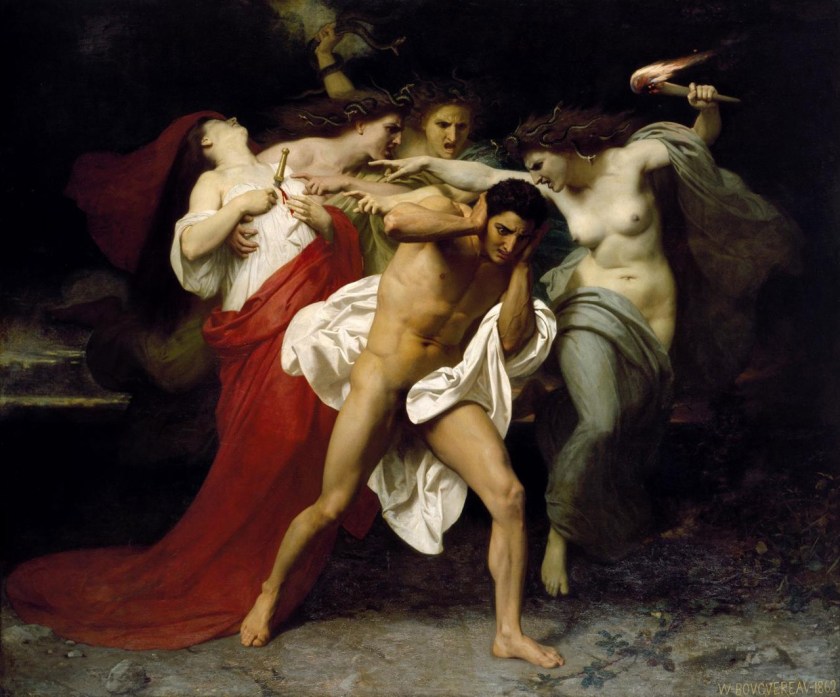
William-Adolphe Bouguereau, Oreste, 1862
William-Adolphe Bouguereau, Oreste (1862)

[ΟΡΕΣΤΗΣ]

Οὔτοι προδώσει Λοξίου μεγασθενὴς
χρησμὸς κελεύων τόνδε κίνδυνον περᾶν,
κἀξορθιάζων πολλὰ καὶ δυσχειμέρους
ἄτας ὑφ’ ἧπαρ θερμὸν ἐξαυδώμενος,
εἰ μὴ μέτειμι τοῦ πατρὸς τοὺς αἰτίους
τρόπον τὸν αὐτόν, ἀνταποκτεῖναι λέγων·
αὐτὸν δ’ ἔφασκε τῇ φίλῃ ψυχῇ τάδε
τείσειν μ’ ἔχοντα πολλὰ δυστερπῆ κακά,
ἀποχρημάτοισι ζημίαις μαυρούμενον.
τὰ μὲν γὰρ ἐκ γῆς δυσφρόνων μηνίματα
βροτοῖς πιφαύσκων εἶπε τάσδ’ αἰνὰς νόσους,
σαρκῶν ἐπαμβατῆρας ἀγρίαις γνάθοις,
λειχῆνας ἐξέσθοντας ἀρχαίαν φύσιν,
λευκὰς δὲ κόρσας τῇδ’ ἐπαντέλλειν νόσῳ·
ἄλλας τ’ ἐφώνει προσβολὰς Ἐρινύων
ἐκ τῶν πατρῴων αἱμάτων τελουμένας·
τὸ γὰρ σκοτεινὸν τῶν ἐνερτέρων βέλος
ἐκ προστροπαίων ἐν γένει πεπτωκότων
καὶ λύσσα καὶ μάταιος ἐκ νυκτῶν φόβος
κινεῖ, ταράσσει, καὶ διωκάθει πόλεως
χαλκηλάτῳ πλάστιγγι λυμανθὲν δέμας·
καὶ τοῖς τοιούτοις οὔτε κρατῆρος μέρος
εἶναι μετασχεῖν, οὐ φιλοσπόνδου λιβός,
βωμῶν τ’ ἀπείργειν οὐχ ὁρωμένην πατρὸς
μῆνιν· δέχεσθαι δ’ οὔτε συλλύειν τινά,
πάντων δ’ ἄτιμον κἄφιλον θνῄσκειν χρόνῳ
κακῶς ταριχευθέντα παμφθάρτῳ μόρῳ.
τοιοῖσδε χρησμοῖς ἆρα χρὴ πεποιθέναι;
(Aeschylus, Choēphoroi 269-297)

[ORESTES]

The mighty oracle of Loxias will assuredly not betray me. It bade me brave this peril, it cried forth many things, and it spoke openly of catastrophes that will bring dire chill into my hot heart, if I do not pursue those guilty of my father’s death “in the same manner”—meaning, kill them in revenge. He said that I myself would pay for it with my own dear life, enduring many disagreeable sufferings, enfeebled by penalties that went beyond loss of property. He revealed the effects of the wrath of hostile powers from under the earth against mortals, and spoke of these dreadful afflictions—leprous ulcers attacking the flesh, eating away its pristine appearance with savage jaws, and short white hairs arising on the disease site. He spoke too of other assaults of Furies, generated by the blood of a father: the dark weapon of the powers below, arising from those of one’s kin who have fallen and beg for justice, together with madness and empty night-time terrors, derange him, harry him, and chase him from his city, physically humiliated by a metal collar. And men such as this, he said, are not permitted to have a share in the mixing-bowl or int he pouring of a friendly libation; the father’s unseen wrath keeps him away from altars; no one will receive him as a host or lodge with him as a guest, and finally he will die, devoid of all respect and devoid of all friends, cruelly shrivelled in a death of total decay. Should I not believe such an oracle as that? (tr. Alan H. Sommerstein)

Sunepalaion

maxresdefault-5

Οἷον οὖν εἰκὸς ἐν ἑορτῇ Διονύσου καὶ οἴνου γενέσει αἱ μὲν γυναῖκες ἐκ τῶν πλησίον ἀγρῶν εἰς ἐπικουρίαν κεκλημέναι τῷ Δάφνιδι τοὺς ὀφθαλμοὺς ἐπέβαλλον καὶ ἐπῄνουν ὡς ὅμοιον τῷ Διονύσῳ τὸ κάλλος· καί τις τῶν θρασυτέρων καὶ ἐφίλησε καὶ τὸν Δάφνιν παρώξυνε, τὴν δὲ Χλόην ἐλύπησεν· οἱ δὲ ἐν ταῖς ληνοῖς ποικίλας φωνὰς ἔρριπτον ἐπὶ τὴν Χλόην καὶ ὥσπερ ἐπί τινα Βάκχην Σάτυροι μανικώτερον ἐπήδων καὶ ηὔχοντο γενέσθαι ποίμνια καὶ ὑπ᾽ ἐκείνης νέμεσθαι· ὥστε αὖ πάλιν ἡ μὲν ἥδετο, Δάφνις δὲ ἐλυπεῖτο. ηὔχοντο δὲ δὴ ταχέως παύσασθαι τὸν τρυγητὸν καὶ λαβέσθαι τῶν συνήθων χωρίων καὶ ἀντὶ τῆς ἀμούσου βοῆς ἀκούειν σύριγγος ἢ τῶν ποιμνίων αὐτῶν βληχωμένων. καὶ ἐπεὶ διαγενομένων ὀλίγων ἡμερῶν αἱ μὲν ἄμπελοι τετρύγηντο, πίθοι δὲ τὸ γλεῦκος εἶχον, ἔδει δὲ οὐκέτ᾽ οὐδὲν πολυχειρίας, κατήλαυνον τὰς ἀγέλας εἰς τὸ πεδίον καὶ μάλα χαίροντες τὰς Νύμφας προσεκύνουν, βότρυς αὐταῖς κομίζοντες ἐπὶ κλημάτων, ἀπαρχὰς τοῦ τρυγητοῦ. οὐδὲ τὸν πρότερον χρόνον ἀμελῶς ποτε παρῆλθον, ἀλλ᾽ ἀεί τε ἀρχόμενοι νομῆς προσήδρευον καὶ ἐκ νομῆς ἀνιόντες προσεκύνουν, καὶ πάντως τι ἐπέφερον, ἢ ἄνθος ἢ ὀπώραν ἢ φυλλάδα χλωρὰν ἢ γάλακτος σπονδήν. καὶ τούτου μὲν ὕστερον ἀμοιβὰς ἐκομίσαντο παρὰ τῶν θεῶν· τότε δὲ κύνες, φασίν, ἐκ δεσμῶν λυθέντες, ἐσκίρτων, ἐσύριττον, ᾖδον, τοῖς τράγοις καὶ τοῖς προβάτοις συνεπάλαιον.
(Longus, Daphnis & Chloe 2.2)

As is only natural at a festival celebrating Dionysus and the birth of wine, the women called from the neighboring fields to help with the work made eyes at Daphnis and paid him compliments, saying he was as beautiful as Dionysus. One of the cheekier ones even kissed him—which excited him and hurt Chloe. Meanwhile the men in the winepresses hurled all sorts of comments at Chloe and jumped madly around her like satyrs excited by a bacchant. They prayed to be turned into sheep and to be led to pasture by her—so this time she was pleased, and Daphnis was hurt. They both prayed that they would finish the grape harvest quickly so that they could go back to their usual haunts again and hear the pipes and their own flocks bleating instead of this disharmonious chatter. A few days later, the vines were harvested, the sweet new wine was in jars, and there was no longer any need for many hands. Daphnis and Chloe drove their flocks down to the plain and, in a happy mood, worshiped the Nymphs, bringing them bunches of grapes still on the shoots as firstfruits of the grape harvest. Not that they ever went past them and neglected them before; they always visited them when they went to pasture and worshiped them when they left the pasture and without fail brought them some kind of offering, a flower or a fruit or some green leaves or a libation of milk. For this, they received a reward from the goddesses later on. But at that time, as people say, “The dogs were let off the lead”: they jumped, played the pipes, sang, and wrestled with their goats and sheep. (tr. Bryan Peter Reardon)

Rationale

cognition2

Ipsum quoque hominem aliter sensus, aliter imaginatio, aliter ratio, aliter intellegentia contuetur. sensus enim figuram in subiecta materia constitutam, imaginatio vero solam sine materia iudicat figuram; ratio vero hanc quoque transcendit speciemque ipsam, quae singularibus inest, universali consideratione perpendit. intellegentiae vero celsior oculus exsistit; supergressa namque universitatis ambitum, ipsam illam simplicem formam pura mentis acie contuetur. in quo illud maxime considerandum est: nam superior comprehendendi vis amplectitur inferiorem, inferior vero ad superiorem nullo modo consurgit. neque enim sensus aliquid extra materiam valet vel universales species imaginatio contuetur vel ratio capit simplicem formam; sed intellegentia quasi desuper spectans concepta forma quae subsunt etiam cuncta diiudicat, sed eo modo quo formam ipsam, quae nulli alii nota esse poterat, comprehendit. nam et rationis universum et imaginationis figuram et materiale sensibile cognoscit nec ratione utens nec imaginatione nec sensibus, sed illo uno ictu mentis formaliter, ut ita dicam, cuncta prospiciens. ratio quoque, cum quid universale respicit, nec imaginatione nec sensibus utens imaginabilia vel sensibilia comprehendit. haec est enim quae conceptionis suae universale ita definit: homo est animal bipes rationale. quae cum universalis notio sit, tum imaginabilem sensibilemque esse rem nullus ignorat, quod ilia non in imaginatione vel sensu sed in rationali conceptione considerat. imaginatio quoque, tametsi ex sensibus visendi formandique figuras sumpsit exordium, sensu tamen absente sensibilia quaeque collustrat, non sensibili sed imaginaria ratione iudicandi. videsne igitur ut in cognoscendo cuncta sua potius facultate quam eorum quae cognoscuntur utantur? neque id iniuria; nam cum omne iudicium iudicantis actus exsistat, necesse est ut suam quisque operam non ex aliena sed ex propria potestate perficiat.
(Boëthius, De Consolatione Philosophiae 5.4.27-39)

Similarly, sense perception, imagination, reason, and understanding, each in its distinct way, view the same human being. For sense perception judges the shape as it has been constituted in its subject material, while imagination judges the shape alone, without its material; reason transcends this as well and from its universal point of view weighs in the balance that very appearance that is present in all individuals. And the eye of understanding exists as something higher yet; for it has passed beyond what is encompassed by universality and views the one simple form itself in the pure vision of the mind. In all of this, here is the one point that must be considered in particular: Namely, that the higher power of comprehension embraces the lower, but in no way does the lower rise to the level of the higher. For sense perception has no power beyond what is material; imagination does not view universal appearances; reason does not grasp the simple form. Understanding, however, looking down as it were from on high, grasps the form and then judges separately the things that are beneath it, all of them; but it does so in the way in which it comprehends the form itself, which could not be known to any of the other powers. For it perceives reason’s universal and imagination’s shape and sense perception’s material, but not by using reason or imagination or the senses but by the characteristic single stroke of mind, formally, if I may use the word, seeing all things in advance. And reason similarly: When it views something universal, it comprehends the things that can be perceived by imagination and the senses, but not by using imagination or the senses. This is reason, and it defines the universal of its own conception this way: A human being is a two-legged, rational animal. And although this is a universal knowledge, there is no one who is unaware that its object is a thing of the imagination and a thing of sense perception as well, yet a thing that this knowledge looks at not by imagination and not by sense but in its state of rational conception. And imagination similarly: Even if it has taken from the senses the starting point of seeing and forming shapes, nevertheless it is in the absence of sense that it casts its gaze over each and every thing of the senses by a rationale of judgment that is not of the senses but of the imagination. So do you see how in perception all things use their own capability rather than the capability of the things that are perceived? And not without cause: For since every judgment exists as an act of the one who judges, it is necessarily the case that all who judge bring their work to completion by their own true powers, and not by a power outside of themselves. (tr. Joel C. Relihan)

Aischrokerdeian

tiffany-hardwear-link-earrings-38087983_981042_SV_1

This is part 3 of 3. Part 1 is here. Part 2 is here.

Καὶ ἔχοντες μὲν ἑπτακοσίας ἀσπίδας τῶν ἡμετέρων, ἔχοντες δὲ ἀργύριον καὶ χρυσίον τοσοῦτον, χαλκὸν δὲ καὶ κόσμον καὶ ἔπιπλα καὶ ἱμάτια γυναικεῖα ὅσα οὐδεπώποτε ᾤοντο κτήσεσθαι, καὶ ἀνδράποδα εἴκοσι καὶ ἑκατόν, ὧν τὰ μὲν βέλτιστα ἔλαβον, τὰ δὲ λοιπὰ εἰς τὸ δημόσιον ἀπέδοσαν, εἰς τοσαύτην ἀπληστίαν καὶ αἰσχροκέρδειαν ἀφίκοντο καὶ τοῦ τρόπου τοῦ αὐτῶν ἀπόδειξιν ἐποιήσαντο· τῆς γὰρ Πολεμάρχου γυναικὸς χρυσοῦς ἑλικτῆρας, οὓς ἔχουσα ἐτύγχανεν, ὅτε τὸ πρῶτον ἦλθον εἰς τὴν οἰκίαν, Μηλόβιος ἐκ τῶν ὤτων ἐξείλετο. καὶ οὐδὲ κατὰ τὸ ἐλάχιστον μέρος τῆς οὐσίας ἐλέου παρ’ αὐτῶν ἐτυγχάνομεν. ἀλλ’ οὕτως εἰς ἡμᾶς διὰ τὰ χρήματα ἐξημάρτανον, ὥσπερ ἂν ἕτεροι μεγάλων ἀδικημάτων ὀργὴν ἔχοντες, οὐ τούτων ἀξίους γε ὄντας τῇ πόλει, ἀλλὰ πάσας μὲν τὰς χορηγίας χορηγήσαντας, πολλὰς δ᾽ εἰσφορὰς εἰσενεγκόντας, κοσμίους δ’ ἡμᾶς αὐτοὺς παρέχοντας καὶ πᾶν τὸ προσταττόμενον ποιοῦντας, ἐχθρὸν δ’ οὐδένα κεκτημένους, πολλοὺς δ’ Ἀθηναίων ἐκ τῶν πολεμίων λυσαμένους τοιούτων ἠξίωσαν οὐχ ὁμοίως μετοικοῦντας ὥσπερ αὐτοὶ ἐπολιτεύοντο. οὗτοι γὰρ πολλοὺς μὲν τῶν πολιτῶν εἰς τοὺς πολεμίους ἐξήλασαν, πολλοὺς δ’ ἀδίκως ἀποκτείναντες ἀτάφους ἐποίησαν, πολλοὺς δ’ ἐπιτίμους ὄντας ἀτίμους κατέστησαν, πολλῶν δὲ θυγατέρας μελλούσας ἐκδίδοσθαι ἐκώλυσαν. καὶ εἰς τοσοῦτόν εἰσι τόλμης ἀφιγμένοι ὥσθ᾽ ἥκουσιν ἀπολογησόμενοι, καὶ λέγουσιν ὡς οὐδὲν κακὸν οὐδ’ αἰσχρὸν εἰργασμένοι εἰσίν. ἐγὼ δ’ ἐβουλόμην ἂν αὐτοὺς ἀληθῆ λέγειν· μετῆν γὰρ ἂν καὶ ἐμοὶ τούτου τἀγαθοῦ οὐκ ἐλάχιστον μέρος. νῦν δὲ οὔτε πρὸς τὴν πόλιν αὐτοῖς τοιαῦτα ὑπάρχει οὔτε πρὸς ἐμέ· τὸν ἀδελφὸν γάρ μου, ὥσπερ καὶ πρότερον εἶπον, Ἐρατοσθένης ἀπέκτεινεν, οὔτε αὐτὸς ἰδίᾳ ἀδικούμενος οὔτε εἰς τὴν πόλιν ὁρῶν ἐξαμαρτάνοντα, ἀλλὰ τῇ ἑαυτοῦ παρανομίᾳ προθύμως ἐξυπηρετῶν. ἀναβιβασάμενος δ’ αὐτὸν βούλομαι ἐρέσθαι, ὦ ἄνδρες δικασταί. τοιαύτην γὰρ γνώμην ἔχω· ἐπὶ μὲν τῇ τούτου ὠφελείᾳ καὶ πρὸς ἕτερον περὶ τούτου διαλέγεσθαι ἀσεβὲς εἶναι νομίζω, ἐπὶ δὲ τῇ τούτου βλάβῃ καὶ πρὸς αὐτὸν τοῦτον ὅσιον καὶ εὐσεβές. ἀνάβηθι οὖν μοι καὶ ἀπόκριναι, ὅ τι ἄν σε ἐρωτῶ.
(Lysias, Or. 12.19-24)

The Thirty had seven hundred shields of ours. They had a huge amount of silver and gold, bronze and ornaments, and furniture and women’s clothing, more than they had ever hoped to obtain; and also one hundred and twenty slaves, of which they kept the best but handed the remainder over to the Treasury. Such was the level of shamelessness and greed which they reached, and they made the following display of their true character: the moment Melobius first entered the house, he snatched from the ears of Polemarchus’ wife the golden earrings she happened to be wearing. We received not the smallest degree of pity from them; instead, because of our money, they behaved towards us just as others would have done if angered by very serious offenses. We did not deserve this sort of treatment at the hands of the city: we had sponsored all our choral performances and contributed to many war taxes; we had conducted ourselves well and had done everything required of us; we had made no enemies but had ransomed many Athenians from the foe. In these matters, they clearly did not believe that we as metics should behave in the same way that they behaved as citizens. Many citizens they drove into the hands of the enemy; many they killed unjustly and deprived of burial; many of those who possessed full citizen rights they disfranchised; and many men’s daughters they prevented from getting married. And now they have reached such a pitch of audacity that they have come into court to defend themselves, and claim they have done nothing wrong and nothing shameful. For my part, I wish they were telling the truth, because I would be far better off in that case. As it is, however, they are not treating me or the city in that way. For as I have already told you, gentlemen of the jury, Eratosthenes killed my brother. He has suffered no injury himself, nor did he see Polemarchus offending against the city. Instead, Eratosthenes himself was serving his own lawless desires. Gentlemen of the jury, I would like him to come up to the rostrum and answer questions. My reason is that although I would regard it as impiety even to mention him to a third party if that was going to benefit him, nevertheless, when it will contribute to his downfall, I regard it as a sanctified and holy act even to speak directly to him. So go up and answer whatever questions I put to you. (tr. Stephen C. Todd)