Mentulatior

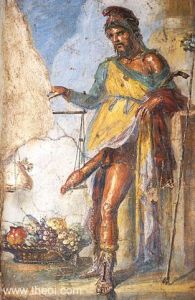
F39.1Priapos

Notas habemus quisque corporis formas:
Phoebus comosus, Hercules lacertosus;
trahit figuram virginis tener Bacchus,
Minerva flavo lumine est, Venus paeto;
frontes caprinos Arcades vides Faunos;
habet decentes nuntius deum plantas;
tutela Lemni dispares movet gressus;
intonsa semper Aesculapio barba est;
nemo est feroci pectorosior Marte.
quod si quis inter haec locus mihi restat,
deus Priapo mentulatior non est!
(Priapea 36)

We all show special notes of bodily shape:
Long-haired is Phoebus, arm-strong Hercules,
And tender Bacchus owneth virginal form;
Pallas hath grey-blue eyes, Venus a cast;
Th’ Arcadian Fauns thou seest bloody-browed
And the Gods’ Messenger shows proper feet;
The Guard of Lemnos moves unequal steps;
Ever untrimmed is Aesculapius’ beard;
None hath a broader breast than bully Mars;
But, an Priapus’ rank ‘mid these remain,
There be no better-membered deity.
(tr. Leonard C. Smithers & Richard Burton)

Natalis

Natalis Iuno, sanctos cape turis acervos,
quos tibi dat tenera docta puella manu.
tota tibi est hodie, tibi se laetissima compsit,
staret ut ante tuos conspicienda focos.
illa quidem ornandi causas tibi, diva, relegat;
est tamen, occulte cui placuisse velit.
at tu, sancta, fave, neu quis divellat amantes,
sed iuveni quaeso mutua vincla para.
sic bene compones: ullae non ille puellae
servire aut cuiquam dignior illa viro.
nec possit cupidos vigilans deprendere custos
fallendique vias mille ministret Amor.
(Corpus Tibullianum 3.12)

Juno, birth-spirit, accept the sacred heaps of incense
that the learned girl’s gentle hand offers you.
She’s bathed for you, today, dressed herself so gladly,
to stand before your altar, visible to all.
She ascribes the cause to you, goddess, it’s true:
yet there’s one she secretly desires to please.
Then be gracious, sacred one, let no one separate
the lovers, but, I beg you, forge the same fetters for the boy.
You’ll do well to join them: there’s no girl he
might more fittingly serve, and no man her.
And may no wakeful guard surprise their passion,
and Love provide a thousand pathways of deceit.
(tr. Tony Kline)


Cruciatus

Fortitudinis quaedam praecepta sunt ac paene leges, quae effeminari virum vetant in dolore. quamobrem turpe putandum est, non dico dolere (nam id quidem est interdum necesse), sed ‘saxum illud Lemnium’ clamore Philocteteo ‘funestare’,

quod eiulatu, questu, gemitu, fremitibus
resonando mutum flebiles voces refert.

huic Epicurus praecentet, si potest, cui

e viperino morsu venae viscerum
veneno imbutae taetros cruciatus cient!

sic Epicurus: ‘Philocteta, si gravis dolor, brevis.’ at iam decimum annum in spelunca iacet.
(Cicero, De Finibus Bonorum et Malorum 2.94)

Courage has its precepts and its rules, rules of constraining force, that forbid a man to show womanish weakness in pain. Hence it must be considered a disgrace, I do not say to feel pain (that is sometimes inevitable), but that ‘rock of Lemnos to outrage’* with the cries of a Philoctetes,

Till the dumb stones utter a voice of weeping,
Echoing his wails and plaints, his sighs and groanings.

Let Epicurus soothe with his spells, if he can, the man whose

Veins and vitals, from the viper’s fang
Envenom’d, throb with pangs of anguish dire.

Thus Epicurus: ‘Philoctetes! If pain is severe, it is short.’ Oh, but he has been languishing in his cave these ten years past.

* Quoted probably from the Philoctetes of Attius.

(tr. Harris Rackham, with his note)

Aduritur

DSCF8765 - 2008-10-07 at 16-55-12

Vestis non tota Amazonum corpori obducitur; nam laeva pars ad pectus est nuda, cetera deinde velantur. nec tamen sinus vestis, quem nodo colligunt, infra genua descendit. Altera papilla intacta servatur qua muliebris sexus liberos alant; aduritur dextera, ut arcus facilius intendant et tela vibrent.
(Quintus Curius, Historiae Alexandri Magni 6.28)

The clothing of the Amazons does not wholly cover the body; for the left side is nude as far as the breast, then the other parts of the body are veiled. However, the fold of the robe, which they gather in a knot, does not reach below the knee. One nipple is left untouched, and with it they nourish their female children*; the right is seared, in order that they may more easily stretch their bows and hurl their spears.

* The males were given to the fathers to rear.

(tr. John Carew Rolfe, with his note)

Differendum

Itaque cum simul proposita sint homini bona et mala, considerare unumquemque secum decet, quanto satius sit, perpetuis bonis mala brevia pensare, quam pro brevibus et caducis bonis mala perpetua sustinere. nam sicut in hoc saeculo, cum est propositum cum hoste certamen, prius laborandum est, ut sis postmodum in otio; esuriendum, sitiendum, aestus, frigora perferenda, humi quiescendum, vigilandum, periclitandum est ut, salvis pignoribus et domo et re familiari, et omnibus pacis ad victoriae bonis perfrui possis: sin autem praesens otium malueris quam laborem, malum tibi maximum facias necesse est; praeoccupabit enim adversarius non resistentem; vastabuntur agri, diripietur domus, in praedam uxor ac liberi venient, et tu ipse interficiere aut capiere: quae omnia ne accidant, praesens commodum differendum est, ut maius longiusque pariatur.
(Lactantius, Divinae Institutiones 6.4)

Since, therefore, good and evil things are set before man at the same time, it is befitting that every one should consider with himself how much better it is to compensate evils of short duration by perpetual goods, than to endure perpetual evils for short and perishable goods. For as, in this life, when a contest with an enemy is set before you, you must first labour that you may afterwards enjoy repose, you must suffer hunger and thirst, you must endure heat and cold, you must rest on the ground, must watch and undergo dangers, that your children, and house, and property being preserved, you may be able to enjoy all the blessings of peace and victory; but if you should choose present ease in preference to labour, you must do yourself the greatest injury: for the enemy will surprise you offering no resistance, your lands will be laid waste, your house plundered, your wife and children become a prey, you yourself will be slain or taken prisoner; to prevent the occurrence of these things, present advantage must be put aside, that a greater and more lasting advantage may be gained. (tr. William Fletcher)

Kappeson

1.594-FindingVulcanLemnos-ps-fw

Ὣς ἄρ’ ἔφη, καὶ ἀναΐξας δέπας ἀπφικύπελλον
μητρὶ φίλῃ ἐν χειρὶ τίθει, καί μιν προσέειπε·
“τέτλαθι, μῆτερ ἐμή, καὶ ἀνάσχεο κηδομένη περ,
μή σε φίλην περ ἐοῦσαν ἐν ὀφθαλμοῖσιν ἴδωμαι
θεινομένην, τότε δ’ οὔ τι δυνήσομαι ἀχνύμενός περ
χραισμεῖν· ἀργαλέος γὰρ Ὀλύμπιος ἀντιφέρεσθαι.
ἤδη γὰρ με καὶ ἄλλοτ’ ἀλεξέμεναι μεμαῶτα
ῥῖψε ποδὸς τεταγὼν ἀπὸ βηλοῦ θεσπεσίοιο,
πᾶν δ’ ἦμαρ φερόμην, ἅμα δ’ ἠελίῳ καταδύντι
κάππεσον ἐν Λήμνῳ, ὀλίγος δ’ ἔτι θυμὸς ἐνῆεν·
ἔνθα με Σίντιες ἄνδρες ἄφαρ κομίσαντο πεσόντα.”
(Homer, Il. 1.584-594)

Pleading, springing up with a two-handled cup,
he* reached it toward his loving mother’s hands
with his own winning words: “Patience, mother!
Grieved as you are, bear up, or dear as you are,
I have to see you beaten right before my eyes.
I would be shattered – what could I do to save you?
It’s hard to fight the Olympian strength for strength.
You remember the last time I rushed to your defense?
He seized my foot, he hurled me off the tremendous threshold
and all day long I dropped, I was dead weight and then,
when the sun went down, down I plunged on Lemnos,
little breath left in me. But the mortals there
soon nursed a fallen immortal back to life.”

* Hephaestus.

(tr. Robert Fagles)

Murinēs

castle

αὐτὰρ ἔπειτα
κλίτεα Παλλήναια Καναστραίην ὑπὲρ ἄκρην,
ἤνυσαν ἐννύχιοι πνοιῇ ἀνέμοιο θέοντες.
ἦρι δὲ νισσομένοισιν Ἄθω ἀνέτελλε κολώνη
Θρηικίη, ἣ τόσσον ἀπόπροθι Λῆμνον ἐοῦσαν,
ὅσσον ἐς ἔνδιόν κεν ἐύστολος ὁλκὰς ἀνύσσαι,
ἀκροτάτῃ κορυφῇ σκιάει καὶ ἐσάχρι Μυρίνης.
τοῖσιν δ᾽ αὐτῆμαρ μὲν ἄεν καὶ ἐπι κνέφας οὖρος
πάγχυ μάλ᾽ ἀκραής, τετάνυστο δὲ λαίφεα νηός.
αὐτὰρ ἅμ᾽ ἠελίοιο βολαῖς ἀνέμοιο λιπόντος
εἰρεσίῃ κραναὴν Σιντηίδα Λῆμνον ἵκοντο.
(Apollonius of Rhodes, Argonautica 1.598-608)

But then, running all night with the blowing wind, they passed the cliffs of Pallene beyond the headland of Canastra. At dawn, as they fared on, the Thracian mountain of Athos rose before them, which with its highest peak casts a shadow over Lemnos even as far as Myrine, although the island lies as far away as a well-equipped merchant ship could travel from dawn to midday. That whole day until dark a very strong wind was blowing for them, and the ship’s sails were stretched taut. But when the wind died as the sun’s rays disappeared, it was by oar that they reached rocky Lemnos, the Sintian island. (tr. William H. Race)

Astachuōn

KASTAR_ANO_POLH

Θεσσαλονίκη πόλις ἐστὶ μεγίστη καὶ πολυάνθρωπος, εἰς μὲν τὸ Μακεδόνων ἔθνος τελοῦσα, ἡγουμένη δὲ καὶ Θετταλίας καὶ Ἀχαΐας, καὶ μέντοι καὶ ἄλλων παμπόλλων ἐθνῶν, ὅσα τῶν Ἰλλυριῶν τὸν ὕπαρχον ἡγούμενον ἔχει. ἐν ταύτῃ στάσεως γενομένης τινὸς κατελεύσθησάν τε καὶ κατεσύρησαν τῶν ἀρχόντων τινές. ὁ δὲ βασιλεὺς ἐξαφθεὶς ὑπὸ τῶν ἀγγελθέντων οὐκ ἤνεγκε τοῦ θυμοῦ τὴν ὁρμὴν, οὐδὲ τῷ χαλινῷ τοῦ λογισμοῦ τὴν τούτου ῥύμην ἐκώλυσεν, ἀλλὰ τούτῳ τὴν ψῆφον ἐξενεγκεῖν τῆς τιμωρίας ἐπέτρεψε. ταύτην δὲ τὴν ἐξουσίαν ἐκεῖνος λαβὼν, οἷα δὴ αὐτόνομός τε καὶ τύραννος, τὸν δεσμὸν ἀπορρήξας, καἱ τοῦ λογισμοῦ διαφυγὼν τὸν ζυγὸν, ἄδικα ξίφη κατὰ πάντων ἐγύμνωσε, καὶ τοὺς ἀθώους μετὰ τῶν ὑπευθύνων κατέκτεινεν. ἑπτὰ γὰρ, ὥς φασιν, ἀνῃρέθησαν χιλιάδες, οὐ κρίσεως ἡγησαμένης καὶ τῶν τὰ δεινὰ ἐκεῖνα τετολμηκότων κατακριθέντων, ἀλλ’ ὡς ἐν ἀμήτῳ πάντων ὁμοῦ δίκην ἀσταχύων κατατμηθέντων.
(Theodoret of Cyrrhus, Eccl. Hist. 5.17)

Thessalonica is a large and very populous city, belonging to Macedonia, but the capital of Thessaly and Achaia, as well as of many other provinces which are governed by the prefect of Illyricum. Here arose a great sedition, and several of the magistrates were stoned and violently treated. The emperor was fired with anger when he heard the news, and unable to endure the rush of his passion, did not even check its onset by the curb of reason, but allowed his rage to be the minister of his vengeance. When the imperial passion had received its authority, as though itself an independent prince, it broke the bonds and yoke of reason, unsheathed swords of injustice right and left without distinction, and slew innocent and guilty together. No trial preceded the sentence. No condemnation was passed on the perpetrators of the crimes. Multitudes were mowed down like ears of grain in harvest-tide. It is said that seven thousand perished. (tr. Blomfield Jackson)

Husai

A_very_wet_road_-_geograph.org.uk_-_337091

Σιληνὸς μέντοι ὁ Χῖος κατὰ τὴν ἱστορίαν ἐν δευτέρῳ βιβλίῳ τῶν αὐτῶν μυθικῶν δασύνει παρὰ τὴν ὁδὸν, λέγων ὡς Ἀντικλείας ὁδευούσης παρὰ τὸ Νήριτον, ὗσεν ὁ Ζεύς. τὴν δὲ ὑπὸ ἀγωνίας ἐκεῖ πεσοῦσαν τεκεῖν. καὶ τὸ γεννηθὲν κληθῆναι Ὀδυσσέα παρὰ τὸ ἐν τῇ ὁδῷ ὗσαι.
(Eustathius, Commentarii ad Homeri Odysseam 19.407 (t. II p. 209 l. 46ss.))

Silenus of Chios, however, according to the information found in the second book of his Mythica, rudely links the name Odysseus to hodos (road), claiming that when Antikleia was travelling to Mt. Neriton, it started to rain. She, falling down exhausted, gave birth then and there. The newborn child was called Odysseus because it had rained (husai) on the road (hodos). (tr. David Bauwens)

Intemperantes

Sed quia voluptatum fecimus mentionem, docet Aristoteles a quibus voluptatibus sit cavendum. quinque enim sunt hominum sensus, quos Graeci αἰσθήσεις appellant, per quos voluptas animo aut corpori quaeri videtur, tactus gustus odoratus visus auditus. ex his omnibus voluptas quae immodice capitur ea turpis atque improba est. sed enim quae nimia ex gustu atque tactu est, ea igitur gemina voluptas, sicut sapientes viri censuerunt, omnium rerum foedissima est eosque maxime qui sese duabus istis voluptatibus dediderunt gravissimi vitii vocabulis Graeci appellaverunt vel ἀκρατεῖς vel ἀκολάστους, nos eos vel incontinentes dicimus vel intemperantes. istas autem voluptates duas, gustus atque tactus, id est cibi et veneris, solas hominibus communes videmus esse cum beluis, et idcirco in pecudum ferorumque animalium numero habetur quisquis est his ferarum voluptatibus occupatus; ceterae ex tribus aliis sensibus proficiscentes hominum tantum propriae sunt.
(Macrobius, Sat. 8.10-12)

But since the topic of pleasure has come up, Aristotle teaches us which pleasures we have to guard against. Human beings have five senses, which the Greeks call aisthêseis, and these – touch, taste, smell, slight, hearing – are the pathways by which the body ad mind seek pleasure. Pleasure derived immoderately from all these senses is base and wicked, but excessive pleasure derived from taste and touch – a compound pleasure, as wise men have judged it – is the most disgusting of all: to those, especially, who surrendered to these pleasures the Greeks applied the terms for the most serious of vices, calling them akratês or akolastoi, or as we say, “incontinent” or “uncontrolled.” We understand that the two pleasures of taste and touch – that is, food and sex – are the only ones that human beings share with the beasts, and that’s why anyone wholly in the grip of these pleasure is counted among the animals of the fields and the wilds; all other pleasures, which derive from the three remaining senses, are peculiar to human beings. (tr. Robert A. Kaster)