Omeichein

De-replica-van-Manneke-Pis-vlakbij-de-Grote-Markt-in-Brussel-cc-e1438853110609

Μηδ’ ἄντ’ ἠελίου τετραμμένος ὀρθὸς ὀμείχειν·
αὐτὰρ ἐπεί κε δύῃ, μεμνημένος, ἔς τ’ ἀνιόντα,
μηδ’ ἀπογυμνωθείς· μακάρων τοι νύκτες ἔασιν·
μήτ’ ἐν ὁδῷ μήτ’ ἐκτὸς ὁδοῦ προβάδην οὐρήσεις·
ἑζόμενος δ’ ὅ γε θεῖος ἀνήρ, πεπνυμένα εἰδώς,
ἠ’ ὅ γε πρὸς τοῖχον πελάσας εὐερκέος αὐλῆς.
μηδ’ αἰδοῖα γονῇ πεπαλαγμένος ἔνδοθι οἴκου
ἱστίῃ ἐπελαδὸν παραφαινέμεν, ἀλλ’ ἀλέασθαι.
μηδ’ ἀπὸ δυσφήμοιο τάφου ἀπονοστήσαντα
σπερμαίνειν γενεήν, ἀλλ’ ἀθανάτων ἀπὸ δαιτός.
μηδέ ποτ’ ἐν προχοῇς ποταμῶν ἅλαδε προρεόντων
μηδ’ ἐπὶ κρηνάων οὐρεῖν, μάλα δ’ ἐξαλέασθαι,
μηδ’ ἐναποψύψειν· τὸ γὰρ οὔ τοι λώϊόν ἐστιν.
(Hesiod, Erga kai Hēmerai 727-759)

And do not urinate standing up facing the sun; but be mindful to do so after it sets, and before it rises, but even so do not completely bare yourself; for the nights belong to the blessed ones. And do not urinate while you are walking, on the road or off the road: it is crouching that the god-fearing man, who knows wisdom, does it, or after he has approached towards the wall of a well-fenced courtyard. And inside the house do not reveal your genitals besmirched with intercourse near the hearth, but avoid this. And do not sow offspring when you come home from an ill-spoken funeral, but from a dinner of the immortals. And do not ever urinate into the streams of rivers that flow down towards the sea nor onto fountains – avoid this entirely – and do not defecate into them: for that is not better. (tr. Glenn W. Most)

Apokruptousi

Arrows blotting out the sun-2

Λακεδαιμονίων δὲ καὶ Θεσπιέων τοιούτων γενομένων ὅμως λέγεται ἀνὴρ ἄριστος γενέσθαι Σπαρτιήτης Διηνέκης· τὸν τόδε φασὶ εἰπεῖν τὸ ἔπος πρὶν ἢ συμμεῖξαί σφεας τοῖσι Μήδοισι, πυθόμενον πρός τευ τῶν Τρηχινίων ὡς ἐπεὰν οἱ βάρβαροι ἀπίωσι τὰ τοξεύματα, τὸν ἥλιον ὑπὸ τοῦ πλήθεος τῶν ὀϊστῶν ἀποκρύπτουσι· τοσοῦτο πλῆθος αὐτῶν εἶναι· τὸν δὲ οὐκ ἐκπλαγέντα τούτοισι εἰπεῖν, ἐν ἀλογίῃ ποιεύμενον τὸ τῶν Μήδων πλῆθος, ὡς πάντα σφι ἀγαθὰ ὁ Τρηχίνιος ξεῖνος ἀγγέλλοι, εἰ ἀποκρυπτόντων τῶν Μήδων τὸν ἥλιον ὑπὸ σκιῇ ἔσοιτο πρὸς αὐτοὺς ἡ μάχη καὶ οὐκ ἐν ἡλίῳ.
(Herodotus, Hist. 7.226)

Such were the proofs of valour given by the Lacedemonians and Thespians; yet the Spartan Dienekes is said to have proved himself the best man of all, the same who, as they report, uttered this saying before they engaged battle with the Medes:—being informed by one of the men of Trachis that when the Barbarians discharged their arrows they obscured the light of the sun by the multitude of the arrows, so great was the number of their host. He was not dismayed by this, but making small account of the number of the Medes, he said that their guest from Trachis brought them very good news, for if the Medes obscured the light of the sun, the battle against them would be in the shade and not in the sun. (tr. George Campbell Macaulay, revised by Donald Lateiner)

Caedes

562962_339202616134537_1304525767_n

Proxima forte hosti erat cohors Paeligna, cuius praefectus Vibius Accaus arreptum vexillum trans vallum hostium traiecit. exsecratus inde seque et cohortem, si eius vexilli hostes potiti essent, princeps ipse per fossam vallumque in castra irrupit. iamque intra vallum Paeligni pugnabant, cum altera parte, Valerio Flacco tribuno militum tertiae legionis exprobrante Romanis ignaviam qui sociis captorum castrorum concederent decus, T. Pedanius princeps primus centurio, cum signifero signum ademisset, “iam hoc signum et hic centurio” inquit “intra vallum hostium erit; sequantur qui capi signum ab hoste prohibituri sunt.” manipulares sui primum transcendentem fossam, dein legio tota secuta est. iam et consul, ad conspectum transgredientium vallum mutato consilio ab revocando ad incitandos hortandosque versus milites, ostendere in quanto discrimine ac periculo fortissima cohors sociorum et civium legio esset. itaque pro se quisque omnes per aequa atque iniqua loca, cum undique tela conicerentur armaque et corpora hostes obicerent, pervadunt irrumpuntque; multi volnerati etiam quos vires et sanguis desereret, ut intra vallum hostium caderent nitebantur. capta itaque momento temporis velut in plano sita nec permunita castra. caedes inde, non iam pugna erat omnibus intra vallum permixtis.
(Livy 25.14.4-10)

Nearest to the enemy happened to be a Paelignian cohort, whose prefect Vibius Accaus seized the banner and threw it over the enemy’s earthwork. Then, with a curse upon himself and the cohort if the enemy should get possession of that banner, he was himself the first to dash over the trench and wall into the camp. And already the Paelignians were fighting inside the wall, when from the other side of the camp, while Valerius Flaccus, tribune of the soldiers of the third legion, was reproaching the Romans for their cowardice in yielding to allies the honour of capturing the camp, Titus Pedanius, first centurion of the principes, took a standard away from the standard-bearer and said “This standard and this centurion will in a moment be inside the enemy’s wall. Let those follow who are to prevent the standard from being captured by the enemy.” First the men of his own maniple followed him as he crossed the trench, then the whole legion. And now the consul at the sight of men crossing the wall changed his plan, turned from recalling his soldiers to arousing and encouraging them, and pointed out to them in what a critical and perilous situation were the bravest cohort of the allies and a legion of their fellow-citizens. And so, each doing his best, over ground favourable and unfavourable, while javelins were being hurled from every side and the enemy were interposing weapons and their bodies, they made their way and burst in. Many wounded men, even those whose strength and blood were ebbing, strove to fall inside the enemy’s wall. And so in a moment’s time the camp was captured, just as if pitched on level ground and not strongly fortified. Then came slaughter, no longer mere battle, since everything inside the wall was in confusion. (tr. Frank Gardner Moore)

Divisos

Carlo Crivelli, Sant'Agostino (misschien!) e San Girolamo, 149x
Carlo Crivelli, Sant’Agostino (?) e San Girolamo

Quaeso igitur et te* iterum atque iterum deprecor, ut ignoscas disputatiunculae meae et, quod modum meum egressus sum, tibi imputes, qui coegisti, ut rescriberem, et mihi cum Stesichoro oculos abstulisti. nec me putes magistrum esse mendacii, qui sequor Christum dicentem ‘ego sum via et vita et veritas’ [John 14:6], nec potest fieri, ut veritatis cultor mendacio colla submittam, neque mihi imperitorum plebeculam concites, qui te venerantur ut episcopum et in ecclesia declamantem sacerdotii honore suscipiunt, me autem aetatis ultimae et paene decrepitum ac monasterii et ruris secreta sectantem parvi pendunt, et quaeras tibi, quos doceas sive reprehendas. ad nos enim tantis maris atque terrarum at te divisos spatiis vix vocis tuae sonus pervenit et, si forsitan litteras scripseris, ante eas Italia ac Roma suscipiet, quam ad me, cui mittendae sunt, deferantur.

* The addressee is Augustine.

(Jerome, Ep. 112.18)

I ask you, therefore, and with all urgency press the request, that you forgive me this humble attempt at a discussion of the matter; and wherein I have transgressed, lay the blame upon yourself who compelled me to write in reply, and who made me out to be as blind as Stesichorus. And do not bring the reproach of teaching the practice of lying upon me who am a follower of Christ, who said, I am the Way, the Truth, and the Life. It is impossible for me, who am a worshipper of the Truth, to bow under the yoke of falsehood. Moreover, refrain from stirring up against me the unlearned crowd who esteem you as their bishop, and regard with the respect due the priestly office the orations which you deliver in the church, but who esteem lightly an old decrepit man like me, courting the retirement of a monastery far from the busy haunts of men; and seek others who may be more fitly instructed or corrected by you. For the sound of your voice can scarcely reach me, who am so far separated from you by sea and land. And if you happen to write me a letter, Italy and Rome are sure to be acquainted with its contents long before it is brought to me, to whom alone it ought to be sent. (tr. John George Cunningham)

Calores

Medea-Sandys
Anthony Frederick Augustus Sandys, Medea (1868)

“Audi, cara soror, patiens me nostra loquentem
arcana et miserae potius succurre sorori!
excrucior, nostris et se novus ossibus ardor
implicat; ardentes carpit mihi flamma medullas,
nec soleo tales poenas talesve calores
ferre. quis hic nostram tantum premit advena mentem!
qua forma, qua virtute est, quo praeditus ille
eloquio! quibus ortis avis! quis splendor ab eius
ore fluit! non divinus decor ille videtur?
non facies digna illa deo, non coniuge dignus
regina Iunone? Iovine simillimus ille?
at certe ille mihi miros incussit amores,
et volui, fateor namque, his obsistere; sed me
concitat ardentem vis maior et undique cogit.
iam mihi dulce nihil possim sperare sine illo,
non requiem, non ullam ausim sperare salutem!
decrevi – et mentem ne quaere refellere nostram –
actutum, soror, Haemonio succurrere regi.
illum ego monstra – bonus quid enim peccavit Iaso? –
artibus infabricata meis superare docebo.
non adeo crudele mihi ingeniumve protervum est,
ut per me Aesonides viridi exstinguatur in aevo!
ille, ubi me certo sociam stabilique ligarit
conubio, patrias secum traducet in oras.
ipsa equidem durum –  sic stat sententia – patrem,
has etiam sedes et regna paterna relinquam;
sed te, oro, huic accinge, soror dilecta, labori:
vade virumque ad me interea, dum nigra silet nox,
duc tempusque aptum furare: ego foedera secum
percutiam firmaque sibi me lege dicabo.”
(Maffeo Vegio, Vellus Aureum 3.126-155)

“Give ear, devoted sister, and allow me to voice my secret. Lend help, I beg you, to your lovesick sister! I am tortured, and a new flame entwines itself amid my bones. The fire grasps at my burning marrow. I am not accustomed to endure such suffering, such hell-fire. Who is this outsider who has so enslaved my mind! With what presence, what nobility, what eloquence is he endowed! From what ancestry he is sprung! What brilliance pours from his features! Does not his grace appear god-like? Are not his features worthy of a god, is het not worthy of queen Juno as wife? Is het not most like Jupiter? He has inspired in me for sure a love to marvel at, and – I admit it to you – it was my desire to stand firm against it. But a mightier force stirs me afire, and drives me this way and that. Already I am incapable of expecting anything sweet without him nor would I dare to hope for any peace of mind, any salvation. I have made my decision – don’t attempt to reverse my thinking – forthwith, sister mine, to lend help to the Haemonian king. I myself will be his teacher – for of what malfeasance is good Jason guilty? – to overcome the monsters wrought by my arts. My nature is neither so cruel nor so fierce as to be the means of annihilating Jason in the prime of youth! When he has bound me as his partner in the sure, enduring alliance of matrimony, he will carry me with him to his paternal shores. I myself – and my decision remains unshaken – will leave behind our hard-hearted father, along with this dwelling and the kingdom of our forefathers. But, I pray you, beloved sister, gird yourself for this effort. Go now and, in night’s dark silence, grasping in stealth the appropriate moment, lead the man to me. I will enter into compact with him and proclaim myself his in the firmness of law.” (tr. Michael C.J. Putnam)

Prospoioumenē

Brian_Blessed_and_Siân_Phillips_as_Augustus_and_Livia

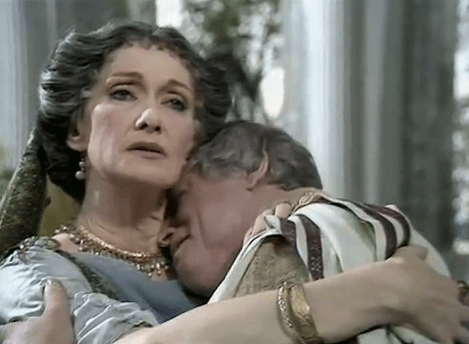
Καὶ αὐτῆς ἄλλα τε καλῶς εἰρημένα ἀποφθέγματα φέρεται, καὶ ὅτι γυμνούς ποτε ἄνδρας ἀπαντήσαντας αὐτῇ καὶ μέλλοντας διὰ τοῦτο θανατωθήσεσθαι ἔσωσεν, εἰποῦσα ὅτι οὐδὲν ἀνδριάντων ταῖς σωφρονούσαις οἱ τοιοῦτοι διαφέρουσι. πυθομένου τέ τινος αὐτῆς πῶς καὶ τί δρῶσα οὕτω τοῦ Αὐγούστου κατεκράτησεν, ἀπεκρίνατο ὅτι αὐτή τε ἀκριβῶς σωφρονοῦσα, καὶ πάντα τὰ δοκοῦντα αὐτῷ ἡδέως ποιοῦσα, καὶ μήτε ἄλλο τι τῶν ἐκείνου πολυπραγμονοῦσα, καὶ τὰ ἀφροδίσια αὐτοῦ ἀθύρματα μήτε ἀκούειν μήτε αἰσθάνεσθαι προσποιουμένη. τοιαύτη μὲν ἡ Λιουία ἐγένετο…
(Cassius Dio, Hist. 58.2.5)

Among the many excellent utterances of hers that are reported are the following. Once, when some naked men met her and were to be put to death in consequence, she saved their lives by saying that to chaste women such men are no whit different from statues. When someone asked her how and by what course of action she had obtained such a commanding influence over Augustus, she answered that it was by being scrupulously chaste herself, doing gladly whatever pleased him, not meddling with any of his affairs, and, in particular, by pretending neither to hear of nor to notice the favourites that were the object of his passion. Such was the character of Livia. (tr. Earnest Cary)

Strages

140918131138-leicester-skeletons-1-horizontal-large-gallery

Qua dextra sceptrum, qua fuerit ligo,
qua falx et ensis: forfice quod caput
rasum, coronatumve gemmis,
unde sciam? iacet incubantum

confusa strages. non roseus color
sublucet ulli, non cutis extima.
ut flante Cauro tota vernis
silva comis viduata moeret.

discrimen hoc quod cernimus unicum
est esse nullum. cuius enim genae
pinguntur ostro? quae polito
frons ebori nivibusque certat?

quis crine vertex, quae violis comae
ornantur? Eheu! non oculi micant
fulgore nativo; nec usquam
Flamma domi. Latebras amoris

scrutata serpens Idalios cavo
exhausit igneis. Vah specus horrida,
truncaeque nares: vah ruina!
oris hiat lacerata sepes,

gingiva linguae stirpitus erutae.
praedator hortum vermis edentulum
vastare repit. Vah palati
a colubris iugulata radix!

(Jacobus Balde, Carm. 2.39.57-80)

In which right hand was there a hoe? A sceptre,
a scythe, a sword? Which head was shorn, or crowned
with jewels? How could I know?
All are a jumbled heap

of mingled bones. Here no one glows or blushes;
no one has skin; as when a whole forest, swept
by a Northeast wind, grieves
widowed of its spring leaves.

The one distinction we discern amongst them
is that there is none. Which one’s cheeks had rouge?
Which forehead vied with polished
ivory? Or fresh snow?

Which head had tresses? Whose hair was entwined
with violets? Here no eyes flash from birth
with lightning; in this house
the hearth is cold. Snakes searching

love’s hiding-places drained dry Cupid’s ardors.
Faugh! fearful cavern! Those truncated nostrils!
What ruin. Faugh! This mouth
gapes with its hedges torn,

no gums, a tongue that’s torn out by its roots.
The maggot creeps: to rob this toothless garden.
The root of the palate – faugh!
is choked and swarms with snakes.

(tr. Karl Maurer)


Spurcitiis

heloise_et_dabelard
Jean Vignaud, Abélard et Héloïse surpris par Fulbert

Nosti quantis turpitudinibus immoderata mea libido corpora nostra addixerat, ut nulla honestatis vel Dei reverentia in ipsis etiam diebus Dominicae passionis, vel quantarumcunque solemnitatum ad huius luti volutabro me revocaret. set et te nolentem et prout poteras reluctantem et dissuadentem, quae natura infirmior eras, saepius minis ac flagellis ad consensum trahebam. tanto enim tibi concupiscentiae ardore copulatus eram, ut miseras illas et obscenessimas voluptates, quas etiam nominare confundimur, tam Deo quam mihi ipsi praeponerem: nec tam aliter consulere posse divina videretur clementia, nisi has mihi voluptates sine spe ulla omnino interdiceret. unde iustissime et clementissime licet cum summa tui avunculi proditione ut in multis crescerem, parte illa corporis sum minutus, in quam libidinis regnum erat, et tota huius concupiscentiae causa consistebat, ut iuste illud plecteretur membrum, quod in nobis commiserat totum, et expiaret patiendo quod deliquerat oblectando, et ab his me spurcitiis, quibus me totum quasi luto immerseram, tam mente quam corpore circumcideret; et tanto sacris etiam altaribus idoniorem efficeret, quanto me nulla hinc amplius carnalium contagio pollutionum revocarent.
(Peter Abelard, Epist. 5, PL 178, 206C-207A)

You know the depths of shame to which my unbridled lust had consigned our bodies, until no reverence for decency or for God even during the days of Our Lord’s Passion, or of the greater sacraments could keep me from wallowing in this mire. Even when you were unwilling, resisted to the utmost of your power and tried to dissuade me, as yours was the weaker nature I often forced you to consent with threats and blows. So intense were the fires of lust which bound me to you that I set those wretched, obscene pleasures, which we blush even to name, above God as above myself; nor would it seem that divine mercy could have taken action except by forbidding me these pleasures altogether, without future hope. And so it was wholly just and merciful, although by means of the supreme treachery of your uncle, for me to be reduced in that part of my body which was the seat of lust and sole reason for those desires, so that I could increase in many ways; in order that this member should justly be punished for all its wrongdoing in us, expiate in suffering the sins committed for its amusement and cut me off from the slough of filth in which I had been wholly immersed in mind as in body. Only thus could I become more fit to approach the holy altars, now that no contagion of carnal impurity would ever again call me from them. (tr. Betty Radice)

Kakophōnotatōn

06505-shipwreck_turner

Part 3 of 3. Part 1 is here. Part 2 is here.

βιαζόμενον δέ τινα πρὸς ἐναντίον ῥεῦμα ποταμοῦ μετὰ τῶν ὅπλων καὶ τὰ μὲν ἀντέχοντα, τὰ δ’ ὑποφερόμενον εἰσάγων ἀνακοπάς τε ποιήσει συλλαβῶν καὶ ἀναβολὰς χρόνων καὶ ἀντιστηριγμοὺς γραμμάτων

δεινὸν δ’ ἀμφ’ Ἀχιλῆα κυκώμενον ἵστατο κῦμα,
ὤθει δ’ ἐν σάκεϊ πίπτων ῥόος, οὐδὲ πόδεσσιν
εἶχε στηρίξασθαι. [Il. 21.240ss.]

ἀραττομένων δὲ περὶ πέτρας ἀνθρώπων ψόφον τε καὶ μόρον οἰκτρὸν ἐπιδεικνύμενος ἐπὶ τῶν ἀηδεστάτων τε καὶ κακοφωνοτάτων χρονιεῖ γραμμάτων οὐδαμῇ λεαίνων τὴν κατασκευὴν οὐδὲ ἡδύνων·

σύν τε δύω μάρψας ὥστε σκύλακας προτὶ γαίῃ
κόπτ’· ἐκ δ’ ἐγκέφαλος χαμάδις ῥέε, δεῦε δὲ γαῖαν. [Od. 9.289s.]

πολὺ ἂν ἔργον εἴη λέγειν, εἰ πάντων παραδείγματα βουλοίμην φέρειν ὧν ἄν τις ἀπαιτήσειε κατὰ τὸν τόπον τόνδε· ὥστε ἀρκεσθεὶς τοῖς εἰρημένοις ἐπὶ τὰ ἑξῆς μεταβήσομαι.

(Dionysius of Halicarnassus, Peri Suntheseōs Onomatōn 16.99-100)

And when he depicts a warrior in full armour forcing his way forward against the contrary current of a river, now holding his own, now being carried off his feet, he will introduce clashings of syllables, delays in the rhythm, and letters which hold up the flow:

Around Achilles swirled a terrible tempestuous wave:
Its current dashed against his shield and swept away his feet
From their firm stance.

When men are being dashed against rocks, and he is portraying the noise and their pitiable fate, he will dwell on the most unpleasant and ill-sounding letters, nowhere attempting to make the arrangement smooth or attractive:

A pair of them he snatched and dashed, like puppies on the ground.
Their brains flowed freely on the floor and incarnadined the rocks

It would be a long task if I should set myself to produce examples of all the usages that might be required to illustrate this subject. I shall therefore content myself with what has been said and proceed to the next topic.

(tr. Stephen Usher)

Dusekphorōtata

800px-odysseus_and_nausicaa

Part 2 of 3. Part 1 is here. Part 3 is here.

ὅταν δ’ οἰκτρὰν ἢ φοβερὰν ἢ ἀγέρωχον ὄψιν εἰσάγῃ, τῶν τε φωνηέντων οὐ τὰ κράτιστα θήσει ἀλλὰ <τὰ δυσηχέστατα, καὶ> τῶν ψοφοειδῶν ἢ ἀφώνων τὰ δυσεκφορώτατα λήψεται καὶ καταπυκνώσει τούτοις τὰς συλλαβάς, οἷά ἐστι ταυτί

σμερδαλέος δ’ αὐτῇσι φάνη κεκακωμένος ἅλμῃ. [Od. 6.137]

τῇ δ’ ἐπὶ μὲν Γοργῲ βλοσυρῶπις ἐστεφάνωτο
δεινὸν δερκομένη, περὶ δὲ Δεῖμός τε Φόβος τε. [Il. 11.36s.]

ποταμῶν δέ γε σύρρυσιν εἰς χωρίον ἓν καὶ πάταγον ὑδάτων ἀναμισγομένων ἐκμιμήσασθαι τῇ λέξει βουλόμενος οὐκ ἐργάσεται λείας συλλαβὰς ἀλλ’ ἰσχυρὰς καὶ ἀντιτύπους

ὡς δ’ ὅτε χείμαρροι ποταμοὶ κατ’ ὄρεσφι ῥέοντες
ἐς μισγάγκειαν συμβάλλετον ὄβριμον ὕδωρ. [Il. 4.452s.]

(Dionysius of Halicarnassus, Peri Suntheseōs Onomatōn 16.98-99)

But when he is introducing a scene that is pitiable, frightening or august, he will not employ the finest of the vowels, but will take <the most unpleasant-sounding and> those of the fricatives and the voiceless consonants that are the most difficult to pronounce and crowd his syllables with these, as in these lines:

He burst on them, a fearsome sight, all uglified with brine.

A Gorgon’s head of baleful mien embossed the centre orb
With Fear and Panic ranged around her terrifying glare.

When he wishes to represent in words the flowing together of rivers into one place and the noisy splash of mingling torrents, he will not render this with smooth syllables, but with strong and resounding ones:

E’en as the winter-swollen rivers rush from hillsides steep,
They hurl their torrents wild into the watersmeet below.

(tr. Stephen Usher)