Mēnutēs

thediplomat_2015-05-06_13-29-20-386x578

Μάλιστα δὲ καὶ πρὸ τῶν πάντων ἐλεύθερος ἔστω τὴν γνώμην καὶ μήτε φοβείσθω μηδένα μήτε ἐλπιζέτω μηδέν, ἐπεὶ ὅμοιος ἔσται τοῖς φαύλοις δικασταῖς πρὸς χάριν ἢ πρὸς ἀπέχθειαν ἐπὶ μισθῷ δικάζουσιν. ἀλλὰ μὴ μελέτω αὐτῷ μήτε Φίλιππος ἐκκεκομμένος τὸν ὀφθαλμὸν ὑπὸ Ἀστέρος τοῦ Ἀμφιπολίτου τοῦ τοξότου ἐν Ὀλύνθῳ, ἀλλὰ τοιοῦτος οἷος ἦν δειχθήσεται· μήτ’ εἰ Ἀλέξανδρος ἀνιάσεται ἐπὶ τῇ Κλείτου σφαγῇ ὠμῶς ἐν τῷ συμποσίῳ γενομένῃ, εἰ σαφῶς ἀναγράφοιτο· οὐδὲ Κλέων αὐτὸν φοβήσει μέγα ἐν τῇ ἐκκλησίᾳ δυνάμενος καὶ κατέχων τὸ βῆμα, ὡς μὴ εἰπεῖν ὅτι ὀλέθριος καὶ μανικὸς ἄνθρωπος οὗτος ἦν· οὐδὲ ἡ σύμπασα πόλις τῶν Ἀθηναίων, ἢν τὰ ἐν Σικελίᾳ κακὰ ἱστορῇ καὶ τὴν Δημοσθένους λῆψιν καὶ τὴν Νικίου τελευτὴν καὶ ὡς ἐδίψων καὶ οἷον τὸ ὕδωρ ἔπινον καὶ ὡς ἐφονεύοντο πίνοντες οἱ πολλοί. ἡγήσεται γὰρ — ὅπερ δικαιότατον — ὑπ’ οὐδενὸς τῶν νοῦν ἐχόντων αὐτὸς ἕξειν τὴν αἰτίαν ἢν τὰ δυστυχῶς ἢ ἀνοήτως γεγενημένα ὡς ἐπράχθη διηγῆται· οὐ γὰρ ποιητὴς αὐτῶν, ἀλλὰ μηνυτὴς ἦν. ὥστε κἂν καταναυμαχῶνται τότε, οὐκ ἐκεῖνος ὁ καταδύων ἐστί, κἂν φεύγωσιν οὐκ ἐκεῖνος ὁ διώκων, ἐκτὸς εἰ μή, εὔξασθαι δέον, παρέλιπεν. ἐπεί τοί γε εἰ σιωπήσας αὐτὰ ἢ πρὸς τοὐναντίον εἰπὼν ἐπανορθώσασθαι ἐδύνατο, ῥᾷστον ἦν ἑνὶ καλάμῳ λεπτῷ τὸν Θουκυδίδην ἀνατρέψαι μὲν τὸ ἐν ταῖς Ἐπιπολαῖς παρατείχισμα, καταδῦσαι δὲ τὴν Ἑρμοκράτους τριήρη καὶ τὸν κατάρατον Γύλιππον διαπεῖραι μεταξὺ ἀποτειχίζοντα καὶ ἀποταφρεύοντα τὰς ὁδούς καὶ τέλος Συρακουσίους μὲν ἐς τὰς λιθοτομίας ἐμβαλεῖν, τοὺς δὲ Ἀθηναίους περιπλεῖν Σικελίαν καὶ Ἰταλίαν μετὰ τῶν πρώτων τοῦ Ἀλκιβιάδου ἐλπίδων. ἀλλ᾽, οἶμαι, τὰ μὲν πραχθέντα οὐδὲ Κλωθὼ ἂν ἔτι ἀνακλώσειεν οὐδὲ Ἄτροπος μετατρέψειε.
(Lucian, Pōs Dei Historian Sungraphein 38)

Above all and before everything else, let his* mind be free, let him fear no one and expect nothing, or else he will be like a bad judge who sells his verdict to curry favour or gratify hatred. He must not be concerned that Philip has had his eye put out by Aster of Amphipolis, the archer at Olynthus — he must show him exactly as he was. Nor must he mind if Alexander is going to be angry when he gives a clear account of the cruel murder of Clitus at the banquet. Neither will Cleon with his great power in the assembly and his mastery of the platform frighten him from saying that he was murderous and lunatic: nor even the entire city of the Athenians if he records the disaster of Sicily, the capture of Demosthenes, and the death of Nicias, the thirst of the troops, the sort of water they drank, and how most of them were slain as they drank it. For he will think quite rightly that no man of sense will blame him if he gives an account of unlucky or stupid actions — he has not been responsible for them, he has merely told the tale. So that if they are ever defeated in a sea-fight it is not he who sank them and if they run away it is not he who drives them on, unless he neglected to say a prayer when he ought. Surely if by ignoring them or reversing them he could set them right, it would have been very easy for Thucydides with one insubstantial pen to overturn the counter-wall at Epipolae, and sink the trireme of Hermocrates, to transfix that cursed man Gylippus in the act of blocking the roads with walls and ditches, and finally to throw the Syracusans into the stone-quarries while the Athenians sailed round Sicily and Italy as Alcibiades had first hoped. No, when what is done is done I fancy that even Clotho could not unspin their destiny or Atropus change their course.

* sc. the historian’s.

(tr. Austin Morris Harmon)

Koinōnein

tumblr_nq6zuq1Yb31toti4zo1_1280

[ΚΟΡΥΦΑΙΑ. ΠΡΑΞΑΓΟΡΑ. ΓΕΙΤΩΝ. ΒΛΕΠΥΡΟΣ]

[ΚΟΡ.] Ἀλλ’ οὐ μέλλειν, ἀλλ’ ἅπτεσθαι καὶ δὴ χρὴ τῆς διανοίας,
ὡς τὸ ταχύνειν χαρίτων μετέχει πλεῖστον παρὰ τοῖσι θεαταῖς.
[ΠΡΑΞ.] καὶ μὴν ὅτι μὲν χρηστὰ διδάξω πιστεύω: τοὺς δὲ θεατάς,
εἰ καινοτομεῖν ἐθελήσουσιν καὶ μὴ τοῖς ἠθάσι λίαν
τοῖς τ’ ἀρχαίοις ἐνδιατρίβειν, τοῦτ᾽ ἔσθ᾽ ὃ μάλιστα δέδοικα.
[ΓΕΙΤ.] περὶ μὲν τοίνυν τοῦ καινοτομεῖν μὴ δείσῃς· τοῦτο γὰρ ἡμῖν
δρᾶν ἀντ’ ἄλλης ἀρχῆς ἐστιν, τῶν δ’ ἀρχαίων ἀμελῆσαι.
[ΠΡΑΞ.] μή νυν πρότερον μηδεὶς ὑμῶν ἀντείπῃ μηδ᾽ ὑποκρούσῃ,
πρὶν ἐπίστασθαι τὴν ἐπίνοιαν καὶ τοῦ φράζοντος ἀκοῦσαι.
κοινωνεῖν γὰρ πάντας φήσω χρῆναι πάντων μετέχοντας
κἀκ ταὐτοῦ ζῆν, καὶ μὴ τὸν μὲν πλουτεῖν, τὸν δ’ ἄθλιον εἶναι,
μηδὲ γεωργεῖν τὸν μὲν πολλήν, τῷ δ᾽ εἶναι μηδὲ ταφῆναι,
μηδ’ ἀνδραπόδοις τὸν μὲν χρῆσθαι πολλοῖς, τὸν δ’ οὐδ’ ἀκολούθῳ·
ἀλλ’ ἕνα ποιῶ κοινὸν πᾶσιν βίοτον καὶ τοῦτον ὅμοιον.
[ΒΛΕΠ.] πῶς οὖν ἔσται κοινὸς ἅπασιν;
[ΠΡΑΞ.] κατέδει πέλεθον πρότερός μου.
[ΒΛΕΠ.] καὶ τῶν πελέθων κοινωνοῦμεν;
[ΠΡΑΞ.] μὰ Δί’, ἀλλ᾽ ἔφθης μ’ ὑποκρούσας.
τοῦτο γὰρ ἤμελλον ἐγὼ λέξειν· τὴν γῆν πρώτιστα ποιήσω
κοινὴν πάντων καὶ τἀργύριον καὶ τἄλλ’ ὁπόσ’ ἐστὶν ἑκάστῳ.
εἶτ’ ἀπὸ τούτων κοινῶν ὄντων ἡμεῖς βοσκήσομεν ὑμᾶς
ταμιευόμεναι καὶ φειδόμεναι καὶ τὴν γνώμην προσέχουσαι.
(Aristophanes, Eccl. 581-600)

[CHORUS LEADER. PRAXAGORA. NEIGHBOR. BLEPYRUS]

[CHOR.] No more delay! Here and now you must put your idea in play: what spectators most appreciate is speed.
[PRAX.] Well, I’m sure my proposals are worthwhile, but I’m awfully worried about the spectators: are they ready to quarry a new vein and not stick with what’s hoary and conventional?
[NEIGH.] Don’t worry about quarrying new veins: for us, indifference to precedent takes precedence over any other principle of government.
[PRAX.] Then let no one object or interrupt until you’ve heard the speaker out and understand the plan. Very well: I propose that everyone should own everything in common, and draw an equal living. No more rich man here, poor man there, or a man with a big farm and a man without land enough for his own grave, or a man with may slaves and a man without even an attendant. No, I will establish one and the same standard of life for everyone.
[BLEP.] How will it be the same for everyone?
[PRAX.] If we were eating dung you’d want the first bite!
[BLEP.] We’ll be sharing the dung too?
[PRAX.] God no, I mean you cut me off by interrupting; I was just about to explain that point. My first act will be to communize all the land, money, and other property that’s now individually owned. We women will manage this common fund with thrift and good judgment, and take good care of you.
(tr. Jeffrey Henderson)

Lutikos

s-l300

Καὶ γὰρ εἰκὸς τοὺς θεοὺς τὰ πολλὰ δι’ αἰνιγμάτων λέγειν, ἐπειδὴ καὶ σοφώτεροι ὄντες ἡμῶν αὐτῶν οὐδὲν ἡμᾶς ἀβασανίστως βούλονται λαμβάνειν. οἷον ἔδοξέ τις λέγειν αὐτῷ τὸν Πᾶνα ‘ἡ γυνή σοι φάρμακον δώσει διὰ τοῦ δεῖνος ὄντος γνωρίμου καὶ συνήθους’. τούτου ἡ γυνὴ φάρμακον μὲν οὐκ ἔδωκεν, ἐμοιχεύθη δὲ ὑπ’ αὐτοῦ ἐκείνου δι’ οὗ ἐλέγετο φάρμακον δώσειν· καὶ γὰρ ἡ μοιχεία καὶ φαρμακεία λάθρᾳ γίνονται καὶ ἀμφότεραι ἐπιβουλαὶ λέγονται, καὶ οὔτε ἡ μοιχευομένη οὔτε ἡ φάρμακον παρέχουσα φιλεῖ τὸν ἄνδρα. καὶ ἐπὶ τούτοις οὐκ εἰς μακρὰν ἡ γυνὴ ἀπηλλάγη αὐτοῦ· πάντων μὲν γὰρ ὁ θάνατός ἐστι λυτικός, τὸ δὲ φάρμακον τὸν αὐτὸν τῷ θανάτῳ λόγον ἔχει.
(Artemidorus, Oneirocritica 4.71)

For in fact it is fitting that the gods should speak many things through riddles, since in fact they, being wiser than us, do not want us to receive anything without due examination. For example, a certain person imagined that Pan said to him: ‘Your wife will administer poison to you by means of a certain so-and-so who is an acquaintace and familiar to you.’ The wife of this man did not poison him, but had an affair with that man through whom it was said that she would administer the poison. For in fact adultery and poisoning both arise through stealth and both are said to be plots, and the adulteress and the woman administering poison both do not love thei rhusband. And, in addition to these things, not long afterwards his wife received a divorce. For death releases all things, and poison has the same logic as death. (tr. Daniel E. Harris-McCoy)

Pugnus

Hag2

Vidi nuper – nomina taceo, ne saturam putes – nobilissimam mulierum Romanarum in basilica beati Petri semiviris antecedentibus propria manu, quo religiosior putaretur, singulos nummos dispertire pauperibus. interea – ut usu nosse perfacile est – anus quaedam annis pannisque obsita praecurrit, ut alterum nummum acciperet; ad quam cum ordine pervenisset, pugnus porrigitur pro denario et tanti criminis reus sanguis effunditur.
(Jerome, Ep. 22.32)

Just lately I saw the greatest lady in Rome – I will not give her name, for this is not a satire – standing in the church of the blessed Peter with her band of eunuchs in front. She was giving money to the poor with her own hand to increase her reputation for sanctity; and she gave them each a penny! At that moment – as you might easily know by experience – an old woman, full of years and rags, ran in front of the line to get a second coin; but when her turn came she got, not a penny, but the lady’s fist in her face, and for her dreadful offence she had to pay with her blood. (tr. Frederick Adam Wright)

Tiro

roman-soldier-icon-1

Sequitur, ut, utrum de agris an de urbibus utilior tiro sit, requiramus. de qua parte numquam credo potuisse dubitari aptiorem armis rusticam plebem, quae sub divo et in labore nutritur, solis patiens, umbrae neglegens, balnearum nescia, deliciarum ignara, simplicis animi, parvo contenta, duratis ad omnem laborum tolerantiam membris, cui gestare ferrum, fossam ducere, onus ferre consuetudo de rure est. interdum tamen necessitas exigit etiam urbanos ad arma compelli, qui ubi nomen dedere militiae, primum laborare, decurrere, portare pondus et solem pulveremque ferre condiscant, parco victu utantur et rustico, interdum sub divo interdum sub papilionibus commorentur. tunc demum ad usum erudiantur armorum, et, si longior expeditio emergit, in agrariis plurimum detinendi sunt proculque habendi a civitatis illecebris, ut eo modo et corporibus eorum robur accedat et animis.
(Vegetius, De Re Militari 1.3)

We shall next examine whether the city or the country produces the best and most capable soldiers. No one, I imagine, can doubt that the peasants are the most fit to carry arms for they from their infancy have been exposed to all kinds of weather and have been brought up to the hardest labor. They are able to endure the greatest heat of the sun, are unacquainted with the use of baths, and are strangers to the other luxuries of life. They are simple, content with little, inured to all kinds of fatigue, and prepared in some measure for a military life by their continual employment in their countrywork, in handling the spade, digging trenches and carrying burdens. In cases of necessity, however, they are sometimes obliged to make levies in the cities. And these men, as soon as enlisted, should be taught to work on entrenchments, to march in ranks, to carry heavy burdens, and to bear the sun and dust. Their meals should be coarse and moderate; they should be accustomed to lie sometimes in the open air and sometimes in tents. After this, they should be instructed in the use of their arms. And if any long expedition is planned, they should be encamped as far as possible from the temptations of the city. By these precautions their minds, as well as their bodies, will properly be prepared for the service. (tr. John Clarke)

Genitalia


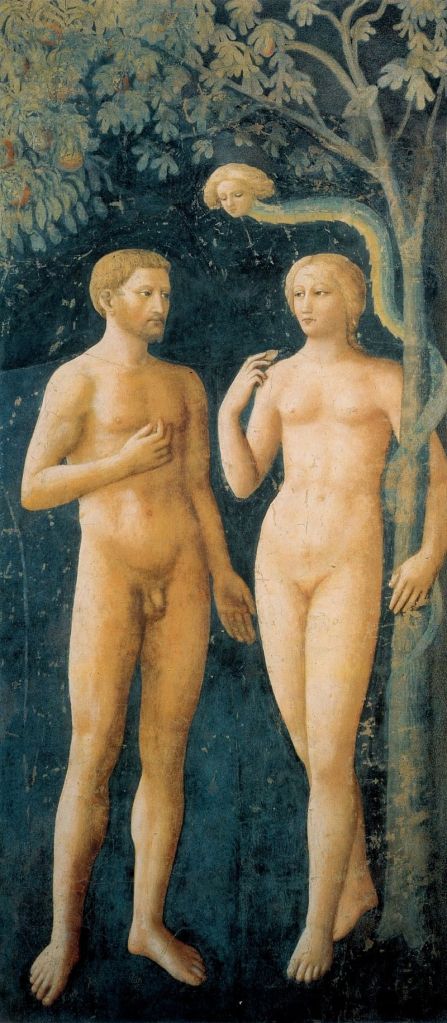
Masolino,_adamo_ed_eva
Masolino da Panicale, Tentazione di Adamo ed Eva

Et cur, inquies, creata sunt genitalia, et sic a conditore sapientissimo fabricati sumus, ut mutuum nostri patiamur ardorem, et gestiamus in naturalem copulam? periclitamur responsionis verecundia, et quasi inter duos scopulos, et quasdam necessitatis et pudicitiae συμπληγάδας, hinc atque inde, vel pudoris, vel causae naufragium sustinemus. si ad proposita respondeamus, pudore suffundimur. si pudor impetrarit silentium, quasi de loco videbimur cedere, et adversario feriendi occasionem dare. melius est tamen clausis, quod dicitur, oculis Andabatarum more pugnare, quam directa spicula, clypeo non repellere veritatis. poteram quidem dicere: “quomodo posterior pars corporis et meatus per quem alvi stercora egeruntur relegatus est ab oculis, et quasi post tergum positus, ita et hic qui sub ventre est, ad digerendos humores et potus, quibus venae corporis irrigantur, a Deo conditus est.” sed quoniam ipsa organa et genitalium fabrica, et nostra feminarumque discretio, et receptacula vulvae ad suscipiendos et coalendos fetus condita, sexus differentiam praedicant, hoc breviter respondebo: numquam ergo cessemus a libidine, ne frustra huiuscemodi membra portemus. cur enim maritus se abstineat ab uxore? cur casta vidua perseveret, si ad hoc tantum nati sumus, ut pecudum more vivamus? aut quid mihi nocebit, si cum uxore mea alius concubuerit? quomodo enim dentium officium est mandere, et in alvum ea quae sunt mansa transmittere, et non habet crimen qui coniugi meae panem dederit: ita si genitalium hoc est officium, ut semper fruantur natura sua, meam lassitudinem alterius vires superent: et uxoris, ut ita dixerim, ardentissimam gulam fortuita libido restinguat.
(Jerome, Adversus Justinianum 1.36)

Why then, you will say, were the organs of generation created, and why were we so fashioned by the all-wise creator, that we burn for one another, and long for natural intercourse? To reply is to endanger our modesty: we are, as it were, between two rocks, the Symplegades of necessity and virtue, on either side; and must make shipwreck of either our sense of shame, or of the cause we defend: If we reply to your suggestions, shame covers our face. If shame secures silence, in a manner we seem to desert our post, and to leave the ground clear to the raging foe. Yet it is better, as the story goes, to shut our eyes and fight like the blindfold gladiators, than not to repel with the shield of truth the darts aimed at us. I can indeed say: “Our hinder parts which are banished from sight, and the lower portions of the abdomen, which perform the functions of nature, are the Creator’s work.” But inasmuch as the physical conformation of the organs of generation testifies to difference of sex, I shall briefly reply: Are we never then to forego lust, for fear that we may have members of this kind for nothing? Why then should a husband keep himself from his wife? Why should a widow persevere in chastity, if we were only born to live like beasts? Or what harm does it do me if another man lies with my wife? For as the teeth were made for chewing, and the food masticated passes into the stomach, and a man is not blamed for giving my wife bread: similarly if it was intended that the organs of generation should always be performing their office, when my vigour is spent let another take my place, and, if I may so speak, let my wife quench her burning lust where she can. (tr. William Henry Fremantle, George Lewis and/or William Gibson Martley)

Corrumpunt

kallig13
http://marikakk.blogspot.com

V(ixit) an(nos) LII
d(is) M(anibus) Ti(beri) Claudi Secundi
hic secum habet omnia
balnea vina Venus
corrumpunt corpora
nostra set vitam faciunt b(alnea) v(ina) V(enus)
karo contubernal(i) fec(it)
Merope Caes(aris) et sibi
et suis p(osterisque) e(orum)
(CIL VI.15258)

He lived 52 years. To the spirits of the departed Tiberius Claudius Secundus. Here he has everything with him. Baths, wine and Venus [i.e. sex or love] corrupt our bodies, but they make life – baths, wine and Venus. Merope, freedwoman of Caesar made this for her dear companion, herself and their family and their descendants. (tr. Valerie Hope)


Plutonia

f37bd37ea1b49daf16ff5d2ed7c5174c

Pallida mors aequo pulsat pede pauperum tabernas
regumque turres. o beate Sesti,
vitae summa brevis spem nos vetat incohare longam.
iam te premet nox fabulaeque Manes
et domus exilis Plutonia; quo simul mearis,
nec regna vini sortiere talis,
nec tenerum Lycidan mirabere, quo calet iuventus
nunc omnis et mox virgines tepebunt.
(Horace, Carm. 1.4.13-20)

Pale Death knocks with impartial foot on the poor man’s cottage and the rich man’s castle. Sestius, well-off as you are, the brief span of life forbids us to embark on far-reaching hopes. Soon night will close round you, and the storied Ghosts and the meagre house of Pluto. Once you reach there, you will not throw dice to decide who directs the party, nor will you gaze in admiration at the boyish Lycidas, who now makes all the young men burn with passion and before long will kindle the desires of the girls. (tr. Niall Rudd)

Enorchoi

beaver

Ὁ κάστωρ ἀμφίβιόν ἐστι ζῷον, καὶ μεθ’ ἡμέραν μὲν ἐν τοῖς ποταμοῖς καταδὺς διαιτᾶται, νύκτωρ δὲ ἐπὶ τῆς γῆς ἀλᾶται, οἷς ἂν περιτύχῃ τούτοις τρεφόμενος. οὐκοῦν ἐπίσταται τὴν αἰτίαν δι’ ἣν ἐπ’ αὐτὸν οἱ θηραταὶ σὺν προθυμίᾳ τε καὶ ὁρμῇ τῇ πάσῃ χωροῦσι, καὶ ἐπικύψας καὶ δακὼν ἀπέκοψε τοὺς ἑαυτοῦ ὄρχεις, καὶ προσέρριψεν αὐτοῖς, ὡς ἀνὴρ φρόνιμος λῃσταῖς μὲν περιπεσών, καταθεὶς δὲ ὅσα ἐπήγετο ὑπὲρ τῆς ἑαυτοῦ σωτηρίας, λύτρα δήπου ταῦτα ἀλλαττόμενος. ἐὰν δὲ ᾖ πρότερον ἐκτεμὼν καὶ σωθεὶς εἶτα πάλιν διώκηται, ὃ δὲ ἀναστήσας ἑαυτὸν καὶ ἐπιδείξας ὅτι τῆς αὐτῶν σπουδῆς οὐκ ἔχει τὴν ὑπόθεσιν, τοῦ περαιτέρω καμάτου παρέλυσε τοὺς θηρατάς· ἧττον γάρ τοι τῶν κρεῶν ἐκείνοις φροντίς ἐστι. πολλάκις δὲ καὶ ἔνορχοι ὄντες, ὡς ὅτι πορρωτάτω ἀποσπάσαντες τῷ δρόμῳ, εἶτα ὑποστείλαντες τὸ σπουδαζόμενον μέρος, πάνυ σοφῶς καὶ πανούργως ἐξηπάτησαν, ὡς οὐκ ἔχοντες ἃ κρύψαντες εἶχον.
(Aelian, Nat. Anim. 6.34)

The Beaver is an amphibious creature: by day it lives hidden in rivers, but at night it roams the land, feeding itself with anything that it can find. Now it understands the reason why hunters come after it with such eagerness and impetuosity, and it puts down its head and with its teeth cuts off its testicles and throws them in their path, as a prudent man who, falling into the hands of robbers, sacrifices all that he is carrying, to save his life, and forfeits his possessions by way of ransom. If however it has already saved its life by self-castration and is again pursued, then it stands up and reveals that it offers no ground for their eager pursuit, and releases the hunters from all further exertions, for they esteem its flesh less. Often however Beavers with testicles intact, after escaping as far away as possible, have drawn in the coveted part, and with great skill and ingenuity tricked their pursuers, pretending that they no longer possessed what they were keeping in concealment. (tr. Alwyn Faber Scholfield)

Logismōi

90a8800a29ed9932d1d4d8c0ad7cd2ac

Ἡμεῖς δὲ οὐδ’ ἐπὶ ἀδύνατον ἀμύνεσθαι οὕτω πόλιν ἐρχόμεθα, ἀλλὰ τοῖς πᾶσιν ἄριστα παρεσκευασμένην, ὥστε χρὴ καὶ πάνυ ἐλπίζειν διὰ μάχης ἰέναι αὐτούς, εἰ μὴ καὶ νῦν ὥρμηνται ἐν ᾧ οὔπω πάρεσμεν, ἀλλ’ ὅταν ἐν τῇ γῇ ὁρῶσιν ἡμᾶς δῃοῦντάς τε καὶ τἀκείνων φθείροντας. πᾶσι γὰρ ἐν τοῖς ὄμμασι καὶ ἐν τῷ παραυτίκα ὁρᾶν πάσχοντάς τι ἄηθες ὀργὴ προσπίπτει· καὶ οἱ λογισμῷ ἐλάχιστα χρώμενοι θυμῷ πλεῖστα ἐς ἔργον καθίστανται. Ἀθηναίους δὲ καὶ πλέον τι τῶν ἄλλων εἰκὸς τοῦτο δρᾶσαι, οἳ ἄρχειν τε τῶν
ἄλλων ἀξιοῦσι καὶ ἐπιόντες τὴν τῶν πέλας δῃοῦν μᾶλλον ἢ τὴν αὑτῶν ὁρᾶν. ὡς οὖν ἐπὶ τοσαύτην πόλιν στρατεύοντες καὶ μεγίστην δόξαν οἰσόμενοι τοῖς τε προγόνοις καὶ ἡμῖν
αὐτοῖς ἐπ’ ἀμφότερα ἐκ τῶν ἀποβαινόντων, ἕπεσθ’ ὅπῃ ἄν τις ἡγῆται, κόσμον καὶ φυλακὴν περὶ παντὸς ποιούμενοι καὶ τὰ παραγγελλόμενα ὀξέως δεχόμενοι· κάλλιστον γὰρ τόδε καὶ ἀσφαλέστατον, πολλοὺς ὄντας ἑνὶ κόσμῳ χρωμένους φαίνεσθαι.
(Thucydides, Hist. 2.11.6-9)

The city we are coming against is far from incapable of defending itself. It is supremely equipped in every way, so we must have every expectation that they will engage us in battle. Even if they are not already deployed pending our arrival, they will surely deploy when they see us in their territory, ravaging their land and destroying their property. Anger enters all men when they have in front of their own eyes the immediate sight of damage they have never seen before: and when reason retreats passion advances as the determinant of action. This is more likely to happen with the Athenians than with any others, since they presume the right to empire and expect to invade and ravage others’ territory rather than see it done to their own. Remember, then, that we are fighting a great city; and remember that on the result depends, for good or ill, the ultimate reputation we shall bring on our ancestors and ourselves. So follow your leaders; make discipline and security your absolute priorities; and be quick to respond to orders. Best and safest is when a large army is seen as a single disciplined body. (tr. Martin Hammond)