Allēlophagiai

2053280470_37cd669b47

Τίς οὖν ἡ τοῦ πολέμου τοῦ ἀκηρύκτου ἐν ζῴοις καὶ ἐν ἀνθρώποις ἀνάγκη; ἢ ἀλληλοφαγίαι μὲν ἀναγκαῖαι, ἀμοιβαὶ ζῴων οὖσαι οὐ δυναμένων, οὐδ’ εἴ τις μὴ κτιννύοι αὐτά, οὕτω μένειν εἰς ἀεί. εἰ δὲ ἐν ᾧ χρόνῳ δεῖ ἀπελθεῖν οὕτως ἀπελθεῖν ἔδει, ὡς ἄλλοις γενέσθαι χρείαν παρ’ αὐτῶν, τί φθονεῖν ἔδει; τί δ’ εἰ βρωθέντα ἄλλα ἐφύετο; οἷον εἰ ἐπὶ σκηνῆς τῶν ὑποκριτῶν ὁ πεφονευμένος ἀλλαξάμενος τὸ σχῆμα ἀναλαβὼν πάλιν εἰσίοι ἄλλου πρόσωπον. ἀλλὰ τέθνηκεν ἀληθῶς οὗτος. εἰ οὖν καὶ τὸ ἀποθανεῖν ἀλλαγή ἐστι σώματος, ὥσπερ ἐσθῆτος ἐκεῖ, ἢ καί τισιν ἀποθέσεις σώματος, ὥσπερ ἐκεῖ ἔξοδος ἐκ τῆς σκηνῆς παντελὴς τότε, εἰσύστερον πάλιν ἥξοντος ἐναγωνίσασθαι, τί ἂν δεινὸν εἴη ἡ τοιαύτη τῶν ζῴων εἰς ἄλληλα μεταβολὴ πολὺ βελτίων οὖσα τοῦ μηδὲ τὴν ἀρχὴν αὐτὰ γενέσθαι; ἐκείνως μὲν γὰρ ἐρημία ζωῆς καὶ τῆς ἐν ἄλλῳ οὔσης ἀδυναμία· νῦν δὲ πολλὴ οὖσα ἐν τῷ παντὶ ζωὴ πάντα ποιεῖ καὶ ποικίλλει ἐν τῷ ζῆν καὶ οὐκ ἀνέχεται μὴ ποιοῦσα ἀεὶ καλὰ καὶ εὐειδῆ ζῶντα παίγνια. ἀνθρώπων δὲ ἐπ’ ἀλλήλους ὅπλα θνητῶν ὄντων ἐν τάξει εὐσχήμονι μαχομένων, οἷα ἐν πυρρίχαις παίζοντες ἐργάζονται, δηλοῦσι τάς τε ἀνθρωπίνας σπουδὰς ἁπάσας παιδιὰς οὔσας τούς τε θανάτους μηνύουσιν οὐδὲν δεινὸν εἶναι, ἀποθνῄσκειν δ’ ἐν πολέμοις καὶ ἐν μάχαις ὀλίγον προλαβόντας τοῦ γινομένου ἐν γήρᾳ θᾶττον ἀπιόντας καὶ πάλιν ἰόντας. εἰ δ’ ἀφαιροῖντο ζῶντες χρημάτων, γινώσκοιεν ἂν μηδὲ πρότερον αὐτῶν εἶναι καὶ τοῖς ἁρπάζουσιν αὐτοῖς γελοίαν εἶναι τὴν κτῆσιν ἀφαιρουμένων αὐτοὺς ἄλλων· ἐπεὶ καὶ τοῖς μὴ ἀφαιρεθεῖσι χεῖρον γίνεσθαι τῆς ἀφαιρέσεως τὴν κτῆσιν. ὥσπερ δ’ ἐπὶ τῶν θεάτρων ταῖς σκηναῖς, οὕτω χρὴ καὶ τοὺς φόνους θεᾶσθαι καὶ πάντας θανάτους καὶ πόλεων ἁλώσεις καὶ ἁρπαγάς, μεταθέσεις πάντα καὶ μετασχηματίσεις καὶ θρήνων καὶ οἰμωγῶν ὑποκρίσεις. καὶ γὰρ ἐνταῦθα ἐπὶ τῶν ἐν τῷ βίῳ ἑκάστων οὐχ ἡ ἔνδον ψυχή, ἀλλ’ ἡ ἔξω ἀνθρώπου σκιὰ καὶ οἰμώζει καὶ ὀδύρεται καὶ πάντα ποιεῖ ἐν σκηνῇ τῇ ὅλῃ γῇ πολλαχοῦ σκηνὰς ποιησαμένων. τοιαῦτα γὰρ ἔργα ἀνθρώπου τὰ κάτω καὶ τὰ ἔξω μόνα ζῆν εἰδότος καὶ ἐν δακρύοις καὶ σπουδαίοις ὅτι παίζων ἐστὶν ἠγνοηκότος. μόνῳ γὰρ τῷ σπουδαίῳ σπουδαστέον ἐν σπουδαίοις τοῖς ἔργοις, ὁ δ’ ἄλλος ἄνθρωπος παίγνιον. σπουδάζεται δὲ καὶ τὰ παίγνια τοῖς σπουδάζειν οὐκ εἰδόσι καὶ τοῖς αὐτοῖς οὖσι παιγνίοις. εἰ δέ τις συμπαίζων αὐτοῖς τὰ τοιαῦτα πάθοι, ἴστω παραπεσὼν παίδων παιδιᾷ τὸ περὶ αὐτὸν ἀποθέμενος παίγνιον.
(Plotinus, Enn. 3.2.15)

What, then, is the necessity of the undeclared war among animals and among men? It is necessary that animals should eat each other; these eatings are transformations into each other of animals which could not stay as they are for ever, even if no one killed them. And if, at the time when they had to depart, they had to depart in such a way that they were useful to others, why do we have to make a grievance out of their usefulness? And what does it matter if, when they are eaten, they come alive again as different animals? It is like on the stage, when the actor who has been murdered changes his costume and comes on again in another character. But [in real life, not on the stage,] the man is really dead. If, then, death is a changing of body, like changing of clothes on the stage, or, for some of us, a putting off of body, like in the theatre the final exit, in that performance, of an actor who will on a later occasion come in again to play, what would there be that is terrible in a change of this kind, of living beings into each other? It is far better than if they had never come into existence at all. For that way there would be a barren absence of life and no possibility of a life which exists in something else; but as it is a manifold life exists in something else; but as it is a manifold life exists in the All and makes all things, and in its living embroiders a rich variety and does not rest from ceaselessly making beautiful and shapely living toys. And when men, mortal as they are, direct their weapons against each other, fighting in orderly ranks, doing what they do in sport in their war-dances, their battles show that all human concerns are children’s games, and tell us that deaths are nothing terrible, and that those who die in wars and battles anticipate only a little death which comes in old age – they go away and come back quicker. But if their property is taken away while they are still alive, they may recognise that it was not theirs before either, and that its possession is a mockery to the robbers themselves when others take it away from them; for even to those who do not have it taken away, to have it is worse than being deprived of it. We should be spectators of murders, and all deaths, and takings and sackings of cities, as if they were on the stages of theatres, all changes of scenery and costume and acted wailings and weepings. For really here in the events of our life it is not the soul within but the outside shadow of man which cries and moans and carries on in every sort of way on a stage which is the whole earth where men have in many places set up their stages. Doings like these belong to a man who knows how to live only the lower and external life and is not aware that he is playing in his tears, even when they are serious tears. For only the seriously good part of man is capable of taking serious doing seriously; the rest of man is a toy. But toys, too, are taken seriously by those who do not know how to be serious and are toys themselves. But if anyone joins in their play and suffers their sort of sufferings, he must know that he has tumbled into a children’s game and put off the play-costume in which he was dressed. (tr. Arthur Hilary Armstrong)

Intestatus

204568404007202

Respice nunc alia ac diversa pericula noctis:
quod spatium tectis sublimibus unde cerebrum
testa ferit, quotiens rimosa et curta fenestris
vasa cadant, quanto percussum pondere signent
et laedant silicem. possis ignavus haberi
et subiti casus improvidus, ad cenam si
intestatus eas: adeo tot fata, quot illa
nocte patent vigiles te praetereunte fenestrae.
ergo optes votumque feras miserabile tecum,
ut sint contentae patulas defundere pelves.
(Juvenal, Sat. 3.268-277)

Now consider the various other dangers of the night. What a long way it is from the high roofs for a tile to hit your skull! How often cracked and leaky pots tumble down from the windows! What a smash when they strike the pavement, marking and damaging it! You could be thought careless and unaware of what can suddenly befall if you go out to dinner without having made your will. As you pass by at night, there are precisely as many causes of death as there are open windows watching you. So make a wish and a pathetic prayer as you go that they’ll be content with emptying their shallow basins on you. (tr. Susanna Morton Braund)

Porcum

254705563_a2845d1416_b

Albi, nostrorum sermonum candide iudex,
quid nunc te dicam facere in regione Pedana?
scribere quod Cassi Parmensis opuscula vincat,
an tacitum silvas inter reptare salubres,
curantem quicquid dignum sapiente bonoque est?
non tu corpus eras sine pectore: di tibi formam,
di tibi divitias dederunt artemque fruendi.
Quid voveat dulci nutricula maius alumno,
qui sapere et fari possit quae sentiat et cui
gratia, fama, ualetudo contingat abunde,
et mundus victus non deficiente crumina?
Inter spem curamque, timores inter et iras
omnem crede diem tibi diluxisse supremum:
grata superveniet quae non sperabitur hora.
me pinguem et nitidum bene curata cute vises,
cum ridere voles Epicuri de grege porcum.
(Horace, Ep. 1.4)

Albius, good-natured critic of my ‘Conversations’,
out there in the Pedana what shall I say you’re doing?
Outdoing Cassius of Parma and his little books?
or strolling silently around those healthy woods,
concerned with what befits a man who’s wise and good?
No, you were never body without mind. The gods
gave you looks, wealth and skill to make the best of them.
What better could a little nursemaid pray for,
whose charge had sense, could speak his mind, who had
good name, good friends, good health in plenty too,
and lived with style and with a purse that’s deep enough?
Amid anxiety and hope, anger and fear,
think of each day that dawns as if it were your last.
Each unexpected hour will be a gift of joy.
I shall be plump, kempt, glossy when you visit
to laugh at one from Epicurus’ herd: a pig.
(tr. Keith Maclennan)

Detegantur

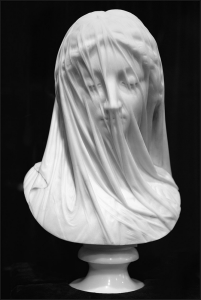
Giovanni Strazza, La vergine velata, 185x
Giovanni Strazza, La vergine velata

Ambiunt virgines hominum adversus virgines dei, nuda plane fronte temerarie in audaciam excitatae, et virgines videntur, quae aliquid a viris petere possunt, nedum tale factum, ut scilicet aemulae earum, tanto magis liberae quanto Christi solius ancillae, dedantur illis! ‘scandalizamur’, inquiunt, ‘quia aliter aliae incedunt’, et malunt scandalizari quam provocari. Scandalum, nisi fallor, non bonae rei, sed malae exemplum est, aedificans ad delictum; bonae res neminem scandalizant nisi malam mentem. si bonum est modestia, verecundia, fastidium gloriae, soli Deo captans placere, agnoscant malum suum, quae de tali bono scandalizantur. quid enim? si incontinentes dicant se a continentibus scandalizari, et continentia revocanda est? et ne multinubi scandalizentur, monogamia recusanda est? cur non magis hae querantur scandalo sibi esse petulantiam, impudentiam ostentaticiae virginitatis? propter huiusmodi igitur capita nundinaticia trahantur virgines sanctae in ecclesiam, erubescentes, quod cognoscantur in medio, paventes, quod detegantur accersitae quasi ad stuprum? non minus enim et hoc pati nolunt. omnis publicatio virginis bonae stupri passio est. et tamen vim carnis pati minus est, quia de officio naturae venit; sed cum spiritus ipse violatur in virgine sublato velamine, didicit amittere, quod tuebatur. o sacrilegae manus, quae dicatum deo habitum detrahere potuerunt!
(Tertullian, De Virginibus Velandis 3.3-8)

In contrast with the virgins of God, the virgins of this world go around with foreheads distinctly uncovered, having been roused to a rash audacity. They are considered virgins who are able to ask anything from men, much less the following example, in order that their rivals (with so much more freedom as servants of Christ alone) certainly are surrendered to them. ‘We are scandalized,’ the [virgins without veils] say, ‘because the others go about differently [than we do],’ and they choose to be scandalized rather than challenged. A scandal, unless I am mistaken, is not an example of a good situation but of a harmful one, creating an offence. Good situations scandalize nobody, except [those with] an evil mind. If restraint, reserve, aversion to the spotlight, striving to please God alone is good, let them who are scandalized by such goodness realize their own evil. So what if those lacking self-control say that they are scandalized by those with self-control! Should self-control be revoked? Lest the polygamists be scandalized, must monogamy be objected to also? Why do these [virgins with self-control] not complain more that the petulance and shamelessness of ostentatious virginity is an offence to themselves? Therefore, on account of the availability of heads of this kind, must pure virgins be dragged into the church, being ashamed because they are recognized in public, trembling because they are uncovered, summoned as if to their defilement? For they are no less willing to suffer even this. Every confiscation [of the veil] of a virtuous virgin is the suffering of defilement, and yet to suffer physical violence is less [terrible] because it comes from a natural bodily function. But when the spirit itself is violated in a virgin by her veil having been taken, she learns to cope with the loss of what she was guarding. O sacrilegious hands that have been able to remove the appearance that was dedicated to God! (tr. Geoffrey D. Dunn)


Exstingui

childdeath_sarco2

Quid fratres, gratasque nurus, castasque sorores,
et quos blanda tibi coniunxit gratia lecti,
iam referam? comitemque tori, dulcesque propinquos,
et quae prima tibi quondam dedit ubera nutrix,
et prima excepit gremio, carosque parentes,
iam raptos laetosque alibi, iam tristia rerum
evectos? nam posse ipsas cum corpore mentes
exstingui, res nulla docet. furor impius egit
mortales diversa sequi vestigia vero
brutorumque animis torporem affingere nostris.
ah tibi ne tam foeda, puer, persuaserit autor
imbellis, quamquam et patrias praescribat Athenas
et multam referat Romano e carmine laudem.
heu fuge crudeles scopulos et naufraga saxa.
quippe etenim, si corpus humo cum cedere iussum est,
iam nusquam est pars haec ingens qua vivimus una
omniaque in terris gerimus, iacet illicet omnis
et spes et ratio virtutum, et nomen inane
relligio cultusque Dei, quem tota vetustas
amplexa est, vitaeque olim promissa voluptas
venturae laetusque ardor, qui pectora famae
admonet instantemque docet contemnere mortem.
(Daniel Heinsius, De Contemptu Mortis 2.279-300)

Why should I mention your brothers, your charming daughters-in-law, your chaste sisters, all those who are bound to you by sweet family ties? Your spouse, your beloved relatives, the nurse who first suckled you and took you on her lap, your dear parents, already taken from you and happy elsewhere, having long escaped the sadness of things? For nothing suggests that the mind can be extinguished together with the body. A godless frenzy has driven mortal man to follow a path that diverges from the truth, and to ascribe the torpor of brute beasts to his own soul. Ah, don’t let that weak author* convince you of such awful things, boy, even if he claims that Athens is his native city and he is highly praised in a Roman poem! Ah, avoid those cruel cliffs and ship-smashing rocks. Because if, when the body has to be committed to the ground, that great part by the sole grace of which we live and do everything on earth is no longer anywhere to be found, all hope, all reason for virtue is instantly lost, and religion and the worship of God, which were embraced by all of Antiquity, are but idle words, as are the joy of a life to come once promised to us and the happy fervour which stirs the heart to praiseworthy deeds and teaches it to despise its impending death.

* Epicurus

(tr. David Bauwens)

Emprepetai

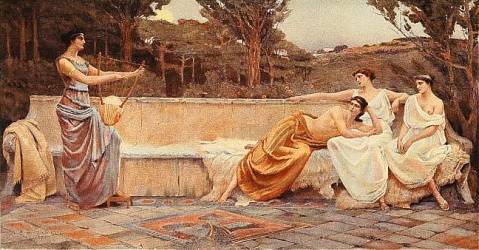
Amanda_Brewster_Sewell,_Sappho,_1891
Amanda Brewster Sewell, Sappho (1891)

] Σαρδ  ̣[  ̣  ̣]
πόλ]λακι τυίδε̣ [ν]ων ἔχοισα
ὠσπ  ̣[  ̣  ̣  ̣]  ̣ ώομεν,  ̣[  ̣  ̣  ̣]  ̣  ̣χ[  ̣  ̣]-
σε θέαι σ’ ἰκέλαν ἀρι-
γνώται, σᾶι δὲ μάλιστ’ ἔχαιρε μόλπαι̣·
νῦν δὲ Λύδαισιν ἐμπρέπεται γυναί-
κεσσιν ὤς ποτ’ ἀελίω
δύντος ἀ βροδοδάκτυλος σελάννα
πάντα περρέχοισ’ ἄστρα· φάος δ’ ἐπί-
σχει θάλασσαν ἐπ’ ἀλμύραν
ἴσως καὶ πολυανθέμοις ἀρούραις·
ἀ δ’ ἐέρσα κάλα κέχυται, τεθά-
λαισι δὲ βρόδα κἄπαλ’ ἄν-
θρυσκα καὶ μελίλωτος ἀνθεμώδης.
πόλλα δὲ ζαφοίταισ’, ἀγάνας ἐπι-
μνάσθεισ’ Ἄτθιδος ἰμέρῳ
λέπταν ποι φρένα κ[ᾶ]ρ[ι σᾶι] βόρηται·
(Sappho fr. 96.1-17)

. . . Sardis . . . often turning her thoughts in this direction . . . (she honoured) you as being like a goddess for all to see and took most delight in your song. Now she stands out among Lydian women like the rosy-fingered moon after sunset, surpassing all the stars, and its light spreads alike over the salt sea and the flowery fields; the dew is shed in beauty, and roses bloom and tender chervil and flowerly melilot. Often as she goes to and fro she remembers gentle Atthis and doubtless her tender heart is consumed because of your fate. (tr. David A. Campbell)


Tabesco

diosa-madre-de-la-fertilidad

Multis huiusmodi maeroribus fortuna me per omnem vitam meam exercuit. nam ut alia mea acerba omittam, quinque amisi liberos miserrima quidem condicione temporum meorum, nam quinque omnes unumquemque semper unicum amisi, has orbitatis vices perpessus, ut numquam mihi nisi orbato filius nasceretur. ita semper sine ullo solacio residuo liberos amisi, cum recenti luctu procreavi. verum illos ego luctus toleravi fortius, quibus egomet ipse solus cruciabar. namque meus animus meomet dolori obnixus, oppositus quasi solitario certamine, unus uni par pari resistebat. at non iam ego uni vel soli obsto, dolor enim e dolore acri multiplicatur et cumulum luctuum meorum diutius ferre nequeo; Victorini mei lacrimis tabesco, conliquesco. saepe etiam expostulo cum deis immortalibus et fata iurgio compello.
(Fronto, De Nepote Amisso 2.1-2)

With many sorrows of this kind has Fortune afflicted me all my life long. For, not to mention my other calamities, I have lost five children under the most distressing circumstances possible to myself. For I lost all five separately, in every case an only child, suffering this series of bereavements in such a way that I never had a child born to me except while bereaved of another. So I always lost children without any left to console me and with my grief fresh upon me I begat others.But I bore with more fortitude those woes by which I myself alone was racked. For my mind, struggling with my own grief, matched as in a single combat man to man, equal with equal, made a stout resistance. But no longer do I withstand a single or solitary opponent, for grief upon bitter grief is multiplied and I can no longer bear the consummation of my woes, but as my Victorinus weeps, I waste away, I melt away along with him. Often I even find fault with the immortal Gods and upbraid the Fates with reproaches. (tr. Charles Reginald Haines)

Hat tip to Jeroen Wijnendaele.

Stupes

bc3b8079129624700799d96871b9ef53

Part 3 of 3. Part 1 is here. Part 2 is here.

‘Tu autem tam laboriosus es, ut post te non respicias! in alio peduclum vides, in te ricinum non vides. tibi soli ridiclei videmur; ecce magister tuus, homo maior natus: placemus illi. tu lacticulosus, nec “mu” nec “ma” argutas, vasus fictilis, immo lorus in aqua: lentior, non melior. tu beatior es: bis prande, bis cena. ego fidem meam malo quam thesauros. ad summam, quisquam me bis poposcit? annis quadraginta servivi; nemo tamen scit utrum servus essem an liber. et puer capillatus in hanc coloniam veni; adhuc basilica non erat facta. dedi tamen operam ut domino satis facerem, homini maiesto et dignitosso, cuius pluris erat unguis quam tu totus es. et habebam in domo qui mihi pedem opponerent hac illac; tamen — genio illius gratias! — enatavi. haec sunt vera athla; nam in ingenuum nasci tam facile est quam “accede istoc”. quid nunc stupes tamquam hircus in ervilia?’
(Petronius, Sat. 57.8-10)

‘But you now, you’re such a busybody you don’t look behind you. You see a louse on somebody else, but not the fleas on your own back. You’re the only one who finds us funny. Look at the professor now – he’s an older man than you and we get along with him. But you’re still wet from your mother’s milk and not up to your ABC yet. Just a crackpot – you’re like a piece of wash-leather in soak, softer but no better! You’re grander than us – well, have two dinners and two suppers! I’d rather have my good name than any amount of money. When all’s said and done, who’s ever asked me for money twice? For forty years I slaved but nobody ever knew if I was a slave or a free man. I came to this colony when I was a lad with long hair – the town hall hadn’t been built then. But I worked hard to please my master – there was a real gentleman, with more in his little finger-nail than there is in your whole body. And I had people in the house who tried to trip me up one way or another, but still – thanks be to his guardian spirit! – I kept my head above water. These are the prizes in life: being born free is as easy as all get-out. Now what are you gawping at, like a goat in a vetch-field?’ (tr. John Patrick Sullivan)


Erubescam

satyriconwtf1

Part 2 of 3. Part 1 is here. Part 3 is here.

‘Ridet! quid habet quod rideat? numquid pater fetum emit lamna? eques Romanus es? et ego regis filius. “quare ergo servivisti?” quia ipse me dedi in servitutem et malui civis Romanus esse quam tributarius. et nunc spero me sic vivere, ut nemini iocus sim. homo inter homines sum, capite aperto ambulo; assem aerarium nemini debeo; constitutum habui nunquam; nemo mihi in foro dixit: “redde quod debes”. glebulas emi, lamellulas paravi; viginti ventres pasco et canem; contubernalem meam redemi, ne qui in capillis illius manus tergeret; mille denarios pro capite solvi; sevir gratis factus sum; spero, sic moriar, ut mortuus non erubescam.’
(Petronius, Sat. 57.4-7)

‘Look at him laughing! What’s he got to laugh at? Did his father pay cash for him? You’re a Roman knight, are you? Well, my father was a king. “Why are you only a freedman?” did you say? Because I put myself into slavery. I wanted to be a Roman citizen, not a subject with taxes to pay. And today, I hope no one can laugh at the way I live. I’m a man among men, and I walk with my head up. I don’t owe anybody a penny – there’s never been a court-order out for me. No one’s said “Pay up” to me in the street. I’ve bought a bit of land and some tiny pieces of plate. I’ve twenty bellies to feed, as well as a dog. I bought my old woman’s freedom so nobody could wipe his dirty hands on her hair. Four thousand I paid for myself. I was elected to the Augustan College and it cost me nothing. I hope when I die I won’t have to blush in my coffin.’ (tr. John Patrick Sullivan)

Circumminxero

images-6

Part 1 of 3. Part 2 is here. Part 3 is here.

Ceterum Ascyltos, intemperantis licentiae, cum omnia sublatis manibus eluderet et usque ad lacrimas rideret, unus ex conlibertis Trimalchionis excanduit, is ipse qui supra me discumbebat, et: ‘quid rides,’ inquit, ‘berbex? an tibi non placent lautitiae domini mei? tu enim beatior es et convivare melius soles. ita tutelam huius loci habeam propitiam, ut ego si secundum illum discumberem, iam illi balatum clusissem. bellum pomum, qui rideatur alios; larifuga nescio quis, nocturnus, qui non valet lotium suum. ad summam, si circumminxero illum, nesciet qua fugiat. non mehercules soleo cito fervere, sed in molle carne vermes nascuntur.’
(Petronius, Sat. 57.1-3)

Ascyltus, with his usual lack of restraint, found everything extremely funny, lifting up his hands and laughing till the tears came. Eventually one of Trimalchio’s freedman friends flared up at him. ‘You with the sheep’s eyes,’ he said, ‘what’s so funny? Isn’t our host elegant enough for you? You’re better off, I suppose, and used to a bigger dinner. Holy guardian here preserve me! If I was sitting by him, I’d stop his bleating! A fine pippin he is to be laughing at other people! Some fly-by-night from god knows where – not worth his own piss. In fact, if I pissed round him, he wouldn’t know where to turn. By god, it takes a lot to make me boil, but if you’re too soft, worms like this only come to the top.’ (tr. John Patrick Sullivan)