
Manus

Extremity-upper-hand

Quam vero aptas quamque multarum artium ministras manus natura homini dedit. digitorum enim contractio facilis facilisque porrectio propter molles commissuras et artus nullo in motu laborat. itaque ad pingendum, ad fingendum, ad scalpendum, ad nervorum eliciendos sonos, ad tibiarum apta manus est admotione digitorum. atque haec oblectationis, illa necessitatis, cultus dico agrorum exstructionesque tectorum, tegumenta corporum vel texta vel suta omnemque fabricam aeris et ferri; ex quo intellegitur ad inventa animo percepta sensibus adhibitis opificum manibus omnia nos consecutos, ut tecti, ut vestiti, ut salvi esse possemus, urbes, muros, domicilia, delubra haberemus.
(Cicero, De Natura Deorum 2.150)

Then what clever servants for a great variety of arts are the hands which nature has bestowed on man! The flexibility of the joints enables the fingers to close and open with equal ease, and to perform every motion without difficulty. Thus by the manipulation of the fingers the hand is enabled to paint, to model, to carve, and to draw forth the notes of the lyre and of the flute. And beside these arts of recreation there are those of utility, I mean agriculture and building, the weaving and stitching of garments, and the various modes of working bronze and iron; hence we realize that it was by applying the hand of the artificer to the discoveries of thought and observations of the senses that all our conveniences were attained, and we were enabled to have shelter, clothing and protection, and possessed cities, fortifications, houses and temples. (tr. Harris Rackham)


Phrontis

hippocleides

Ὡς δὲ ἡ κυρίη ἐγένετο τῶν ἡμερέων τῆς τε κατακλίσιος τοῦ γάμου καὶ ἐκφάσιος αὐτοῦ Κλεισθένεος τὸν κρίνοι ἐκ πάντων, θύσας βοῦς ἑκατὸν ὁ Κλεισθένης εὐώχεε αὐτούς τε τοὺς μνηστῆρας καὶ Σικυωνίους πάντας. ὡς δὲ ἀπὸ δείπνου ἐγίνοντο, οἱ μνηστῆρες ἔριν εἶχον ἀμφί τε μουσικῇ καὶ τῷ λεγομένῳ ἐς τὸ μέσον. προϊούσης δὲ τῆς πόσιος κατέχων πολλὸν τοὺς ἄλλους ὁ Ἱπποκλείδης ἐκέλευσέ οἱ τὸν αὐλητὴν αὐλῆσαι ἐμμελείην, πειθομένου δὲ τοῦ αὐλητέω ὀρχήσατο. καί κως ἑωυτῷ μὲν ἀρεστῶς ὀρχέετο, ὁ Κλεισθένης δὲ ὁρέων ὅλον τὸ πρῆγμα ὑπώπτευε. μετὰ δὲ ἐπισχὼν ὁ Ἱπποκλείδης χρόνον ἐκέλευσε τινὰ τράπεζαν ἐσενεῖκαι, ἐσελθούσης δὲ τῆς τραπέζης πρῶτα μὲν ἐπ᾽ αὐτῆς ὀρχήσατο Λακωνικὰ σχημάτια, μετὰ δὲ ἄλλα Ἀττικά, τὸ τρίτον δὲ τὴν κεφαλὴν ἐρείσας ἐπὶ τὴν τράπεζαν τοῖσι σκέλεσι ἐχειρονόμησε. Κλεισθένης δὲ τὰ μὲν πρῶτα καὶ τὰ δεύτερα ὀρχεομένου, ἀποστυγέων γαμβρὸν ἄν οἱ ἔτι γενέσθαι Ἱπποκλείδεα διὰ τήν τε ὄρχησιν καὶ τὴν ἀναιδείην, κατεῖχε ἑωυτόν, οὐ βουλόμενος ἐκραγῆναι ἐς αὐτόν· ὡς δὲ εἶδε τοῖσι σκέλεσι χειρονομήσαντα, οὐκέτι κατέχειν δυνάμενος εἶπε “ὦ παῖ Τισάνδρου, ἀπορχήσαό γε μὲν τὸν γάμον.” ὁ δὲ Ἱπποκλείδης ὑπολαβὼν εἶπε “οὐ φροντὶς Ἱπποκλείδῃ.” ἀπὸ τούτου μὲν τοῦτο ὀνομάζεται.
(Herodotus, Hist. 6.129)

On the day appointed for the marriage ceremony—the day when Cleisthenes had promised he would make known which one of the suitors he preferred—he sacrificed a hundred cattle and held a feast not just for the suitors themselves, but for the whole city of Sicyon. After the meal, the suitors competed with one another at singing and at public speaking. As the drinking progressed, Hippoclides had a clear lead over the others, but then he told the pipe-player to strike up a tune, and when the musician did so he began to dance. Now, although Hippoclides liked his own dancing a lot, Cleisthenes was beginning to look on the whole business askance. After a while, Hippoclides stopped momentarily and asked for a table to be brought in. When the table arrived there, he first danced a Laconian dance on it, then some Attic figures, and finally stood on his head on the table and waggled his feet around. Hippoclides’ uninhibited dancing of the first and second sets of figures had already put Cleisthenes off having him as a son-in-law, but he kept silent because he did not want to scold him. When he saw him waggling his legs around, however, he could no longer restrain himself. ‘Son of Tisander,’ he said, ‘you have danced away your marriage.’ The young man replied, ‘Hippoclides doesn’t care!’—and that is how the proverb arose. (tr. Robin Waterfield)

Terpōlē

Couple in bed

Ἐν δ’ ἥβῃ πάρα μὲν ξὺν ὁμήλικι πάννυχον εὕδειν,
ἱμερτῶν ἔργων ἐξ ἔρον ἱέμενον·
ἔστι δὲ κωμάζοντα μετ’ αὐλητῆρος ἀείδειν·
τούτων οὐδὲν †τι† ἄλλ’ ἐπιτερπνότερον
ἀνδράσιν ἠδὲ γυναιξί. τί μοι πλοῦτός τε καὶ αἰδώς;
τερπωλὴ νικᾷ πάντα σὺν εὐφροσύνῃ.
(Theognis, Eleg. 1063-1068)

In youth you are free to sleep all night with an agemate and satisfy your craving for lovemaking; you may carouse and sing with a piper. No other pleasure compares with these for men and women. What are wealth and respect to me? Pleasure combined with good cheer surpasses everything. (tr. Douglas E. Gerber)

Haesura

tunic_t

Quis fuit, horrendos primus qui protulit enses?
quam ferus et vere ferreus ille fuit!
tum caedes hominum generi, tum proelia nata,
tum brevior dirae mortis aperta via est.
an nihil ille miser meruit, nos ad mala nostra
vertimus, in saevas quod dedit ille feras?
divitis hoc vitium est auri, nec bella fuerunt,
faginus adstabat cum scyphus ante dapes.
non arces, non vallus erat, somnumque petebat
securus sparsas dux gregis inter oves.
tunc mihi vita foret, Valgi, nec tristia nossem
arma nec audissem corde micante tubam;
nunc ad bella trahor, et iam quis forsitan hostis
haesura in nostro tela gerit latere.
(Tibullus 1.10.1-14)

Who was he, who first forged the fearful sword?
How iron-willed and truly made of iron he was!
Then slaughter was created, war was born to men.
Then a quicker road was opened to dread death.
But perhaps it’s not the wretch’s fault we turn to evil
what he gave us to use on savage beasts?
That’s the curse of rich gold: there were no wars
when the beech-wood cup stood beside men’s plates.
There were no fortresses or fences, and the flock’s leader
sought sleep securely among the diverse sheep.
I might have lived then, Valgius, and not known
sad arms, or heard the trumpet with beating heart.
Now I’m dragged to war, and perhaps some enemy
already carries the spear that will pierce my side.
(tr. Tony Kline)

Munuscula

William Strutt, Peace
William Strutt, Peace

At tibi prima, puer, nullo munuscula cultu
errantes hederas passim cum baccare tellus
mixtaque ridenti colocasia fundet acantho.
ipsae lacte domum referent distenta capellae
ubera nec magnos metuent armenta leones;
ipsa tibi blandos fundent cunabula flores.
occidet et serpens et fallax herba veneni
occidet; Assyrium vulgo nascetur amomum.
at simul heroum laudes et facta parentis
iam legere et quae sit poteris cognoscere virtus,
molli paulatim flavescet campus arista
incultisque rubens pendebit sentibus uva
et durae quercus sudabunt roscida mella.
pauca tamen suberunt priscae vestigia fraudis,
quae temptare Thetin ratibus, quae cingere muris
oppida, quae iubeant telluri infindere sulcos.
alter erit tum Tiphys et altera quae vehat Argo
delectos heroas; erunt etiam altera bella
atque iterum ad Troiam magnus mittetur Achilles.
(Vergil, Ecl. 4.18-36)

For you, little child, spontaneously, as first gifts,
the earth will lavish creeping ivy and foxglove,
everywhere, and Egyptian lilies with smiling acanthus.
Goats will come home by themselves with udders full
of milk, nor will the oxen fear the lion’s might.
Your very cradle will flower with buds to caress you.
The serpent will die as well as poison’s treacherous plant,
and everywhere Assyrian balsam will come to bloom.
And when you have learned to read the praises of heroes and deeds
of your own father and know what manhood is, the plain,
little by little, will grow gold with waving grain,
and grapes will redden on the untended vine of the thorn,
and the hard oaks distill honey-dew from their barks.
Still, slight traces of our old iniquity
will make us tempt the sea in ships, fortify
our towns with walls, cut furrows in our soil.
There will be another Tiphys, another Argo’s
chosen crew, and there will be other wars,
and mighty Achilles will be dispatched once more to Troy.
(tr. Barbara Hughes Fowler)

Thronon

250px-Naderi_throne
The Naderi throne of Iran (ca. 1800 AD)

Ἐνταῦθα δὴ κατά τε τοῦ Τισσαφέρνους ἔλεγον ἃ πεποιηκὼς εἴη, αὐτοῦ τε Κύρου ἐδέοντο ὡς προθυμοτάτου πρὸς τὸν πόλεμον γενέσθαι.Κῦρος δὲ τόν τε πατέρα ἔφη ταῦτα ἐπεσταλκέναι καὶ αὐτὸς οὐκ ἄλλ᾽ ἐγνωκέναι, ἀλλὰ πάντα ποιήσειν· ἔχων δὲ ἥκειν τάλαντα πεντακόσια· ἐὰν δὲ ταῦτα ἐπιλίπῃ, τοῖς ἰδίοις χρήσεσθαι ἔφη, ἃ ὁ πατὴρ αὐτῷ ἔδωκεν· ἐὰν δὲ καὶ ταῦτα, καὶ τὸν θρόνον κατακόψειν ἐφ᾽ οὗ ἐκάθητο, ὄντα ἀργυροῦν καὶ χρυσοῦν. οἱ δὲ ταῦτά τε ἐπῄνουν καὶ ἐκέλευον αὐτὸν τάξαι τῷ ναύτῃ δραχμὴν Ἀττικήν, διδάσκοντες ὅτι, ἂν οὗτος ὁ μισθὸς γένηται, οἱ τῶν Ἀθηναίων ναῦται ἀπολείψουσι τὰς ναῦς, καὶ μείω χρήματα ἀναλώσει. ὁ δὲ καλῶς μὲν ἔφη αὐτοὺς λέγειν, οὐ δυνατὸν δ᾽ εἶναι παρ᾽ ἃ βασιλεὺς ἐπέστειλεν αὐτῷ ἄλλα ποιεῖν. εἶναι δὲ καὶ τὰς συνθήκας οὕτως ἐχούσας, τριάκοντα μνᾶς ἑκάστῃ νηὶ τοῦ μηνὸς διδόναι, ὁπόσας ἂν βούλωνται τρέφειν Λακεδαιμόνιοι. ὁ δὲ Λύσανδρος τότε μὲν ἐσιώπησε· μετὰ δὲ τὸ δεῖπνον, ἐπεὶ αὐτῷ προπιὼν ὁ Κῦρος ἤρετο τί ἂν μάλιστα χαρίζοιτο ποιῶν, εἶπεν ὅτι Εἰ πρὸς τὸν μισθὸν ἑκάστῳ ναύτῃ ὀβολὸν προσθείης. ἐκ δὲ τούτου τέτταρες ὀβολοὶ ἦν ὁ μισθός, πρότερον δὲ τριώβολον.
(Xenophon, Hell. 1.5.2-7)

Then and there they told Cyrus of the deeds of which Tissaphernes had been guilty, and begged him to show the utmost zeal in the war. Cyrus replied that this was what his father had instructed him to do, and that he had no other intention himself, but would do everything possible; he had brought with him, he said, five hundred talents; if this amount should prove insufficient, he would use his own money, which his father had given him; and if this too should prove inadequate, he would go so far as to break up the throne whereon he sat, which was of silver and gold. The ambassadors thanked him, and urged him to make the wage of each sailor an Attic drachma a day, explaining that if this were made the rate, the sailors of the Athenian fleet would desert their ships, and hence he would spend less money. He replied that their plan was a good one, but that it was not possible for him to act contrary to the King’s instructions; besides, the original compact ran in this way, that the King should give thirty minae per month to each ship, whatever number of ships the Lacedaemonians might wish to maintain. Lysander accordingly dropped the matter for the moment; but after dinner, when Cyrus drank his health and asked him by what act he could gratify him most, Lysander replied: “By adding an obol to the pay of each sailor.” And from this time forth the wage was four obols, whereas it had previously been three. (tr. Carleton L. Brownson)

Paedagogis

figure028

De pueris inter quos educabitur ille huic spei destinatus, idem quod de nutricibus dictum sit. de paedagogis hoc amplius, ut aut sint eruditi plane, quam primam esse curam velim, aut se non esse eruditos sciant. nihil est peius iis, qui paulum aliquid ultra primas litteras progressi falsam sibi scientiae persuasionem induerunt. nam et cedere praecipiendi partibus indignantur et velut iure quodam potestatis, quo fere hoc hominum genus intumescit, imperiosi atque interim saevientes stultitiam suam perdocent.
(Quintilian, Inst. Or. 1.1.8)

As regards the boys in whose company our budding orator is to be brought up, I would repeat what I have said about nurses. As regards his paedagogi*, I would urge that they should have had a thorough education, or if they have not, that they should be aware of the fact. There are none worse than those, who as soon as they have progressed beyond a knowledge of the alphabet delude themselves into the belief that they are the possessors of real knowledge. For they disdain to stoop to the drudgery of teaching, and conceiving that they have acquired a certain title to authority—a frequent source of vanity in such persons—become imperious or even brutal in instilling a thorough dose of their own folly.

* There is no translation for paedagogus, the slave-tutor. “Tutor,” “guardian,” “governor,” and similar terms are all misleading. He had the general supervision of the boy, escorted him to school and elsewhere, and saw that lie did not get into mischief, but did not, as a rule, direct his studies.

(tr. Harold Edgeworth Butler, with his note)

Hupokorizesthai

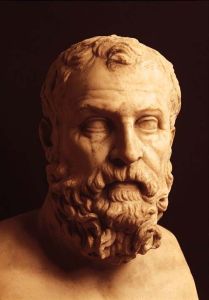
Busto di Solone (640 a.C ca-560 a.C ca), marmo

Ἃ δ’ οὖν οἱ νεώτεροι τοὺς Ἀθηναίους λέγουσι τὰς τῶν πραγμάτων δυσχερείας ὀνόμασι χρηστοῖς καὶ φιλανθρώποις ἐπικαλύπτοντας ἀστείως ὑποκορίζεσθαι, τὰς μὲν πόρνας ἑταίρας, τοὺς δὲ φόρους συντάξεις, φυλακὰς δὲ τὰς φρουρὰς τῶν πόλεων, οἴκημα δὲ τὸ δεσμωτήριον καλοῦντας, πρώτου Σόλωνος ἦν, ὡς ἔοικε, σόφισμα τὴν τῶν χρεῶν ἀποκοπὴν σεισάχθειαν ὀνομάσαντος.
(Plutarch, Bios Solōnos 15.2-3)

Now later writers observe that the ancient Athenians used to cover up the ugliness of things with auspicious and kindly terms, giving them polite and endearing names. Thus they called harlots “companions,” taxes “contributions,” the garrison of a city its “guard,” and the prison a “chamber.” But Solon was the first, it would seem, to use this device, when he called his cancelling of debts a “disburdenment.” (tr. Bernadotte Perrin)

Excidium

Bayeux tapestry

Mars deus o belli, gladiis qui sceptra coerces,
corpora qui iuvenum sanguinolenta placent
et cruor effusus permulta cede virorum,
quis tibi tunc animus, quanta cupido mali,
cum medius saevas acies miscere iubebas!
quo pocius nullum te iuvat excidium
ex quo Pompeium superavit Iulius armis,
et Romana sibi moenia subripuit,
compulit atque metu Nili transire per amnem,
nulla reor caedes tam tibi grata fuit.
nec iuvenile decus nec te reverenda senectus,
nec peditum vilis et miseranda manus,
flectere nec valuit te nobilitudo parentum,
quin ageres quicquid mens tua torva cupit.
caecatos miseros radiantia trudis in arma,
et veluti ludum cogis adire necem.
quid moror in verbis cum iam furor exstat in armis?
exple velle tuum, Mars, age mortis opus!
(Guy of Amiens, Carmen de Hastingae Proelio 345-362)

O Mars, god of war, who punishes kingdoms with swords and rejoices in the bloody corpses of the young and men’s gore spilled in mass slaughter: how great then was your ardour, how strong your thirst for evil, when, standing in the midst, you ordered the savage ranks to join battle! No carnage delighted you more since Julius Caesar overcame Pompey in war, deprived him of Rome and compelled him in fear to cross the river Nile. No bloodshed, I think, gave you greater joy. Neither the beauty of youth, nor the reverence due to old age, nor the mean and pitiful throng of infantry, nor nobility of birth could deflect you from doing whatever your savage mind desired. You forced those deluded wretches into shining mail and sent them to death as though to a game. But why do I toy with words when already Fury appears in arms? Do what you will, O Mars. Do the work of death! (tr. Frank Barlow)

Chleuēn

parmigianino detail
Parmigianino, Circoncisione di Gesù (detail)

This is part 1 of 3. Part 2 is here. Part 3 is here.

Τὰ μὲν γένη τῶν ἐν εἴδει νόμων, οἱ προσαγορευόμενοι δέκα λόγοι, διὰ τῆς προτέρας ἠκρίβωνται συντάξεως, τὰ δ’ ἐν μέρει διατάγματα κατὰ τὴν τῆς γραφῆς ἀκολουθίαν νῦν ἐπισκεπτέον. ἄρξομαι δ’ ἀπὸ τοῦ γελωμένου παρὰ τοῖς πολλοῖς. γελᾶται δὲ ἡ τῶν γεννητικῶν περιτομή. πρᾶγμα σπουδαζόμενον οὐ μετρίως καὶ παρ’ ἑτέροις ἔθνεσι καὶ μάλιστα τῷ Αἰγυπτιακῷ, ὃ καὶ πολυανθρωπότατον καὶ ἀρχαιότατον καὶ φιλοσοφώτατον εἶναι δοκεῖ. παρὸ καὶ προσῆκον ἦν παιδικὴν χλεύην μεθεμένους φρονιμώτερον καὶ σεμνότερον ἀναζητῆσαι τὰς αἰτίας, ὧν χάριν ἐκράτησε τὸ ἔθος, καὶ μὴ προεξαναστάντας καταγινώσκειν μεγάλων ἐθνῶν εὐχέρειαν, λογιζομένους, ὡς εἰκός, τοσαύτας μυριάδας καθ’ ἑκάστην γενεὰν ἀποτέμνεσθαι, μετὰ χαλεπῶν ἀλγηδόνων ἀκρωτηριαζούσας τά τε ἑαυτῶν καὶ τῶν οἰκειοτάτων σώματα, πολλὰ δ’ εἶναι τὰ προτρέποντα τὴν εἰσήγησιν τῶν παλαιῶν διατηρεῖν καὶ ἐπιτελεῖν, τὰ δ’ ἀνωτάτω τέτταρα· (…)
(Philo, Peri tōn en merei diatagmatōn 1.1-3)

The Ten Words, as they are called, the main heads under which are summarized the Special Laws, have been explained in detail in the preceding treatise. We have now, as the sequence of our dissertation requires, to examine the particular ordinances. I will begin with that which is an object of ridicule among many people. Now the practice which is thus ridiculed, namely the circumcision of the genital organs, is very zealously observed by many other nations, particularly by the Egyptians, a race regarded as pre-eminent for its populousness, its antiquity and its attachment to philosophy. And therefore it would be well for the detractors to desist from childish mockery and inquire in a wiser and more serious spirit into the causes to which the persistence of this custom is due, instead of dismissing the matter prematurely and impugning the good sense of great nations. Such persons might naturally reflect that all these thousands in every generation undergo the operation and suffer severe pains in mutilating the bodies of themselves and their nearest and dearest, and that there are many circumstances which urge the retention and performance of a custom introduced by the men of old. The principal reasons are four in number. (tr. Francis Henry Colson)