Villam

02Roemervilla_Bad-Neuahr_02

Pater familias ubi ad villam venit, ubi larem familiarem salutavit, fundum eodem die, si potest, circumeat; si non eodem die, at postridie. ubi cognovit, quo modo fundus cultus siet operaque quae facta infectaque sient, postridie eius diei vilicum vocet, roget, quid operis siet factum, quid restet, satisne temperi opera sient confecta, possitne quae reliqua sient conficere, et quid factum vini, frumenti aliarumque rerum omnium. ubi ea cognovit, rationem inire oportet operarum, dierum. si ei opus non apparet, dicit vilicus sedulo se fecisse, servos non valuisse, tempestates malas fuisse, servos aufugisse, opus publicum effecisse, ubi eas aliasque causas multas dixit, ad rationem operum operarumque vilicum revoca. cum tempestates pluviae fuerint, quae opera per imbrem fieri potuerint, dolia lavari, picari, villam purgari, frumentum transferri, stercus foras efferri, sterquilinum fieri, semen purgari, funes sarciri, novos fieri; centones, cuculiones familiam oportuisse sibi sarcire. per ferias potuisse fossas veteres tergeri, viam publicam muniri, vepres recidi, hortum fodiri, pratum purgari, virgas vinciri, spinas runcari, expinsi far, munditias fieri.
(Cato Maior, Agr. 2.1-4)

When the master arrives at the farmstead, after paying his respects to the god of the household, let him go over the whole farm, if possible, on the same day; if not, at least on the next. When he has learned the condition of the farm, what work has been accomplished and what remains to be done, let him call in his overseer the next day and inquire of him what part of the work has been completed, what has been left undone; whether what has been finished was done betimes, and whether it is possible to complete the rest; and what was the yield of wine, grain, and all other products. Having gone into this, he should make a calculation of the labourers and the time consumed. If the amount of work does not seem satisfactory, the overseer claims that he has done his best, but that the slaves have not been well, the weather has been bad, slaves have run away, he has had public work to do; when he has given these and many other excuses, call the overseer back to your estimate of the work done and the hands employed. If it has been a rainy season, remind him of the work that could have been done on rainy days: scrubbing and pitching wine vats, cleaning the farmstead, shifting grain, hauling out manure, making a manure pit, cleaning seed, mending old harness and making new; and that the hands ought to have mended their smocks and hoods. Remind him, also, that on feast days old ditches might have been cleaned, road work done, brambles cut, the garden spaded, a meadow cleared, faggots bundled, thorns rooted out, spelt ground, and general cleaning done. (tr. William Davis Hooper, revised by Harrison Boyd Ash)
Tranquilla

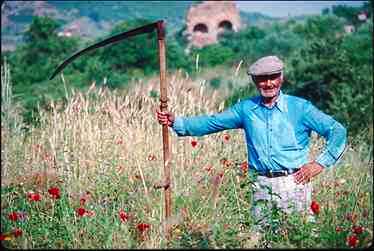
farmer

Felix ille animi divisque simillimus ipsis,
quem non mendaci resplendens gloria fuco
sollicitat, non fastosi mala gaudia luxus,
sed tacitos sinit ire dies et paupere cultu
exigit innocuae tranquilla silentia vitae,
urbe procul, voti exiguus; sortemque benignus
ipse suam fovet ac modico contentus acervo
non spes corde avidas, non curam pascit inanem;
securus quo sceptra cadant, cui dira minentur
astra et sanguinei iubar exitiale cometae.
non illum fragilis favor indocilisque potenti
plebs servare fidem, evectum popularibus auris,
casuro imponit solio, nec ducit hiantem
huc illuc vanos ostentans purpura fasces.
non mentem pavet ipse suam nec conscius omnes
exhorret strepitus nec edaci pectora culpa
carpitur occulte; non opportunus iniqui
iudicio vulgi aut celsa conspectus in arce
degeneri patet invidiae; non ipse vicissim
obliquo livore macet fetusque veneno
aestuat atque aliena oculis bona limat acutis.
(Angelus Politianus, Rusticus 17-37)

Happy in spirit and comparable to the gods themselves is the man who is not attracted by the lure of glory with its false splendors or by the evil pleasures of haughty luxury, but allows the days to go by quietly and in his modest way of life spends his days in the silent tranquility of a blameless life, far from the city, with few desires. He accepts his lot resignedly and is happy with his modest possessions; he does not nurture avid hopes or empty cares in his heart; he is unconcerned with the fall of kingdoms or with those who are threatened by dreadful signs in the skies and the fatal glare of a blood-red comet. Not carried away by the uncertain breezes of popular favor, he will not be placed upon a throne, destined to fall, by the common herd, who have not learned to keep faith with the powerful, nor does he allow himself to be dragged hither and yon, his mouth agape, by the purple garb which promises empty symbols of power. He is not frightened at his own thoughts, nor does his guilty conscience make him terrified at every sound, nor does gnawing guilt eat secretly away at his heart. He is not subject to the judgment of the prejudiced crowd nor is he, descried in his lofty citadel, exposed to ignoble jealousy. He in turn is not consumed by malicious envy nor does he seethe, swollen with envy’s venom, nor does he detract from another’s blessings with sharp-eyed looks. (tr. Charles Fantazzi)

Prosestalmenon

penis_1

Καί τινι φίλῳ προελομένῳ παρὰ τὸ πρόσθεν ἔθος ἀποσχέσθαι τελέως ἀφροδισίων εἰς ὄγκον ἐπεδίδω τὸ αἰδοῖον ἐμφυσώμενον, ὡς ἀναγκασθῆναι ἀνακοινώσασθαί μοι περὶ τοῦ συμπτώματος. ἔφη γὰρ θαυμάζειν, ὅπως τῶδε μὲν τῷ ἀθλητῇ ῥυσσὸν καὶ προσεσταλμένον ἐστὶ τὸ αἰδοῖον ἐκ τῆς εὐταξίας, ἑαυτῷ δ’ ἀφ’ οὗ τοῦτ’ ἐνεστήσατο, τοὐναντίον συμβαίνει. τότε μὲν οὖν αὐτῷ συνεβούλευσα τὸ ἠθροισμένον ἐκκρῖναι σπέρμα, τοῦ λοιποῦ δὲ καὶ θεαμάτων καὶ διηγήσεως καὶ μνήμης ἐπεγείρειν δυναμένης εἰς ἀφροδίσια παντάπασιν εἴργειν ἑαυτόν. ὅσοι δ’ εὐθὺς ἐξ ἀρχῆς ἢ ἀθλοῦντες ἢ φωνασκοῦντες ἄπειροι τῶν ἀφροδισίων διετέλεσαν, εἴρξαντες παντάπασιν ἑαυτοὺς ἁπάσης ἐννοίας τε καὶ φαντασίας τοιαύτης, ἰσχνὰ καὶ ῥυσσὰ τοῖς τῶν γερόντων ὁμοίως αὐτοῖς γίνεται τὰ αἰδοῖα. πρὸς γὰρ τοῖς ἄλλοις κᾀκεῖνο συμβαίνει τοῖς ἐν νέοτητι κατὰ τὸν πρῶτον χρόνον ἀφροδισίοις πολλοῖς χρησαμένοις, εὐρυνομένων τῶν ἐν τούτοις τοῖς τόποις ἀγγείων, εὔρουν τε γίγνεσθαι πρὸς αὐτὸ τὸ αἷμα καὶ τὴν ὀρεκτικὴν δύναμιν τῶν ἀφροδισίων αὐξάνεσθαι, κατὰ τὸν κοινὸν λόγον ἁπασῶν τῶν δυνάμεων, ὃν καὶ Πλάτων ἔγραψε, τὴν μὲν ἡσυχίαν ἐκλύειν λέγων, τὴν δ’ ἐν τοῖς οἰκείοις ἔργοις διατριβὴν αὐξάνειν τὴν ῥώμην. οὕτως μὲν οὖν καὶ οἱ τιτθοὶ ταῖς μὲν μηδέποτε κυησάσαις προσεσταλμένοι διαμένουσι, ταῖς δὲ μετὰ τὸ κυῆσαι θηλαζούσαις παιδία μέγιστοι γίγνονται, καὶ διαμένουσί γε γάλα παρέχοντες, ἄχρις ἂν θηλάζωσιν, παυομέναις δὲ τοῦ θηλάζειν τὰ παιδία καὶ ἡ τοῦ γάλακτος ἐν τοῖς τιτθοῖς γένεσις οὐ μετὰ πολὺ παύεται.
(Galenus, De Locis Affectis 8.450-452K)

A friend of mine who decided, contrary to his previous habit, to abstain completely from sex, saw his penis grow and swell to such an extent that he was forced to consult me on the matter. He said he was surprised that athletes had a shriveled, contracted member because of their temperance, whereas he, since he had adopted this regime, experienced the opposite. So I advised him to ejaculate the accumulated sperm, and from then on to avoid any spectacles, stories or memories whatsoever that might cause his arousal. With those who have been strangers to sexual pleasure from the start, be they athletes or singers, and who steer clear of all thoughts and phantasies of that kind, the penis grows thin and shriveled, similar to the genitals of old men; because, apart from other consequences, what happens to those who from the earliest days of their youth have had lots of sex, is that the blood vessels in those regions are extended, the blood flows more easily to the penis, and the desire for intercourse accumulates in force. The same thing happens to all faculties, as Plato too proclaimed when he wrote that rest weakens the body’s strength, while the exercise of its proper functions increases it. That’s why the chest of women who have never given birth remains flat and flaccid, whereas women who, having delivered, suckle their children, develop very large breasts which continue to provide milk for as long as they breastfeed, and stop producing it very soon after this period is concluded. (tr. David Bauwens)

Cinis

Vesuvius in Eruption, with a View over the Islands in the Bay of Naples c.1776-80 by Joseph Wright of Derby 1734-1797
Joseph Wright of Derby, Vesuvius in Eruption

Iam navibus cinis incidebat, quo propius accederent, calidior et densior, iam pumices etiam nigrique et ambusti et fracti igne lapides, iam vadum subitum ruinaque montis litora obstantia. Cunctatus paulum, an retro flecteret, mox gubernatori, ut ita faceret, monenti ‘fortes’ inquit ‘fortuna iuvat: Pomponianum pete.’ Stabiis erat, diremptus sinu medio (nam sensim circumactis curvatisque litoribus mare infunditur); ibi, quamquam nondum periculo appropinquante, conspicuo tamen et, cum cresceret, proximo, sarcinas contulerat in naves, certus fugae, si contrarius ventus resedisset; quo tunc avunculus meus secundissimo invectus complectitur trepidantem, consolatur, hortatur, utque timorem eius sua securitate leniret, deferri in balineum iubet; lotus accubat, cenat aut hilaris aut, quod aeque magnum, similis hilari.
(Pliny Minor, Ep. 6.16.5-8)

Ashes were already falling, hotter and thicker as the ships drew near, followed by bits of pumice and blackened stones, charred and cracked by the flames: then suddenly they were in shallow water, and the shore was blocked by the debris from the mountain. For a moment my uncle wondered whether to turn back, but when the helmsman advised this he refused, telling him that Fortune stood by the courageous and they must make for Pomponianus at Stabiae. He was cut off there by the breadth of the bay (for the shore gradually curves round a basin filled by the sea) so that he was not as yet in danger, though it was clear that this would come nearer as it spread. Pomponianus had therefore already put his belongings on board ship, intending to escape if the contrary wind fell. This wind was of course full in my uncle’s favour, and he was able to bring his ship in. He embraced his terrified friend, cheered and encouraged him, and thinking he could calm his fears by showing his own composure, gave orders that he was to be carried to the bathroom. After his bath he lay down and dined; he was quite cheerful, or at any rate he pretended he was, which was no less courageous. (tr. Betty Radice)

Aretēs

Κάλλος μὲν γὰρ ἢ χρόνος ἀνήλωσεν ἢ νόσος ἐμάρανε· πλοῦτος δὲ κακίας μᾶλλον ἢ καλοκαγαθίας ὑπηρέτης ἐστίν, ἐξουσίαν μὲν τῇ ῥᾳθυμίᾳ παρασκευάζων, ἐπὶ δὲ τὰς ἡδονὰς τοὺς νέους παρακαλῶν· ῥώμη δὲ μετὰ μὲν φρονήσεως ὠφέλησεν, ἄνευ δὲ ταύτης πλείω τοὺς ἔχοντας ἔβλαψε, καὶ τὰ μὲν σώματα τῶν ἀσκούντων ἐκόσμησε, ταῖς δὲ τῆς ψυχῆς ἐπιμελείαις ἐπεσκότησεν. ἡ δὲ τῆς ἀρετῆς κτῆσις, οἷς ἂν ἀκιβδήλως ταῖς διανοίαις συναυξηθῇ, μόνη μὲν συγγηράσκει, πλούτου δὲ κρείττων, χρησιμωτέρα δὲ εὐγενείας ἐστί, τὰ μὲν τοῖς ἄλλοις ἀδύνατα δυνατὰ καθιστᾶσα, τὰ δὲ τῷ πλήθει φοβερὰ θαρσαλέως ὑπομένουσα, καὶ τὸν μὲν ὄκνον ψόγον, τὸν δὲ πόνον ἔπαινον ἡγουμένη.
(Isocrates 1.6-7)

For beauty is spent by time or withered by disease; wealth ministers to vice rather than to nobility of soul, affording means for indolent living and luring the young to pleasure; strength, in company with wisdom, is, indeed, an advantage, but without wisdom it harms more than it helps its possessors, and while it sets off the bodies of those who cultivate it, yet it obscures the care of the soul. But virtue, when it grows up with us in our hearts without alloy, is the one possession which abides with us in old age; it is better than riches and more serviceable than high birth; it makes possible what is for others impossible; it supports with fortitude that which is fearful to the multitude; and it considers sloth a disgrace and toil an honor. (tr. George Norlin)

Uvescit

flagon-in-use-full

O noctes cenaeque deum, quibus ipse meique
ante Larem proprium vescor vernasque procaces
pasco libatis dapibus. prout cuique libido est,
siccat inaequales calices conviva solutus
legibus insanis, seu quis capit acria fortis
pocula, seu modicis uvescit laetius. ergo
sermo oritur, non de villis domibusve alienis,
nec male necne Lepos saltet, sed, quod magis ad nos
pertinet et nescire malum est, agitamus: utrumne
divitiis homines an sint virtute beati,
quidve ad amicitias, usus rectumne, trahat nos
et quae sit natura boni summumque quid eius.
(Horace, Serm. 2.6.65-76)

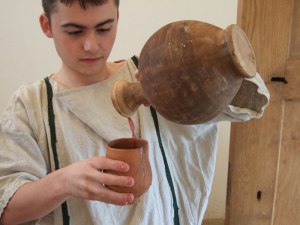
O heavenly night-time dinners, when I and my friends
Eat beside my own Lar, and feed jostling servants
On left-over offerings. Each guest drinks as he wishes
Large glasses or small, free from foolish rules, whether
He downs the strong stuff, nobly, or wets his whistle
In more carefree style. And so the conversation starts.
Not about other men’’s houses in town, their country
Villas, or whether Lepos dances well or not: no,
We talk about things one should know, that matter more:
Whether it’s wealth or character makes men happier:
Whether self-interest or virtue make men friends:
And the nature of the good, and its highest form.
(tr. Tony Kline)

Obdormivit

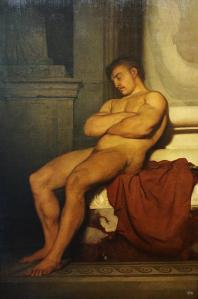
Ernest Hebert, Sleeping Slave

Si fornicarius servus coloni ad fornacem obdormisset et villa fuerit exusta, Neratius scribit ex locato conventum praestare debere, si neglegens in eligendis ministeriis fuit: ceterum si alius ignem subiecerit fornaci, alius neglegenter custodierit, an tenebitur qui subiecerit? nam qui custodit, nihil fecit, qui recte ignem subiecit, non peccavit: quid ergo est? puto utilem competere actionem tam in eum qui ad fornacem obdormivit quam in eum qui neglegenter custodit, nec quisquam dixerit in eo qui obdormivit rem eum humanam et naturalem passum, cum deberet vel ignem extinguere vel ita munire, ne evagetur.
(Ulpian, Dig. 9.2.27.9)

Where a tenant has a slave whose duty it is to look after a furnace, but the man goes to sleep at the fireside and the house is burnt down, Neratius tells us that, if an action is brought against the tenant on his lease, he is bound to make it good, if he was negligent in the selection of men to do the work; if, however, one man lit the fire in the furnace, and another was negligent in attending to it, will the man who lit the fire be liable? The fact is that the one who had to attend to the fire did nothing at all, and the one who lit the fire in the proper way did nothing wrong. What is the upshot? I should say there is an utilis actio both against the man who went to sleep beside the furnace and the man who was negligent in looking after the fire; and no one ought to say, in the case of the man going to sleep, that he was overtaken by a natural human weakness, as his duty was either to put the fire out or else to guard it in some way that would prevent it from spreading. (tr. Charles Henry Monro)

Meteōroleschai

Alexios_I_Komnenos

This is part 2 of 2. Part 1 is here.

Οὐ μὴν διὰ τοῦτο αὐχμός τις ἦν ἀστρολόγων τὸ τηνικάδε, ἀλλὰ καὶ ὁ εἰρημένος Σὴθ κατ’ ἐκεῖνο καιροῦ ἐξήνθησε, καὶ ὁ Αἰγύπτιος ἐκεῖνος Ἀλεξανδρεὺς πολὺς ἦν τὰ τῆς ἀστρολογίας ἐμφαίνων ὄργια. ὃς καὶ παρὰ πολλῶν ἐρωτώμενος ἀκριβέστατα προεμαντεύετο· ἐν ἐνίοις δὲ οὐδὲ ἀστρολάβου δεόμενος, ἀλλὰ διά τινος ψηφηφορίας τὰς προρρήσεις ἐπεποίητο. ἦν δ’ ἄρα καὶ τοῦτο μαγικὸν μὲν οὐδαμῶς, ἀλλὰ τέχνη τις Ἀλεξανδρέως λογική. ὁρῶν δὲ ὁ αὐτοκράτωρ τὴν νεότητα συρρέουσαν ἐπ’ αὐτὸν καὶ ὥσπερ τινὰ προφήτην τὸν ἄνδρα λογιζομένην, δὶς καὶ αὐτὸς τοῦτον ἐπηρωτήκει, καὶ τοσαυτάκις καὶ ὁ Ἀλεξανδρεὺς εὐστοχήκει τῆς ἐπερωτήσεως· δειλιάσας δὲ ἵνα μὴ πολλῶν βλάβη γένηται, καὶ πρὸς τὴν ματαιότητα τῆς ἀστρολογίας ἀποκλίνωσιν ἅπαντες, κατὰ τὴν Ῥαιδεστὸν τούτῳ τὰς διατριβὰς ἀφώρισε τῆς πόλεως ἀπελάσας, πολλὴν τὴν περὶ αὐτὸν προμήθειαν ἐνδειξάμενος, ὥστε δαψιλῶς αὐτῷ τὰ πρὸς χρῆσιν ἐκ τῶν βασιλικῶν ταμιείων ἐπιχορηγεῖσθαι. ναὶ μὴν καὶ ὁ διαλεκτικώτατος Ἐλευθέριος, Αἰγύπτιος καὶ οὗτος ἀνήρ, τὰ τῆς ἐπιστήμης ταύτης πρεσβεύων εἰς ἄκρον ἤλαυνεν εὐφυΐας, μηδενὶ μηδαμῶς τῶν πρωτείων παραχωρῶν. ἐν ὑστέροις δὲ καὶ ὁ καλούμενος Κατανάγκης Ἀθήνηθεν εἰς τὴν μεγαλόπολιν καταλαβὼν, τὰ πρωτεῖα τῶν πρὸ αὐτοῦ φιλονεικῶν φέρειν, ἐπερωτηθεὶς παρά τινων περὶ τοῦ αὐτοκράτορος, πότε τεθνήξοιτο, καὶ τὸν θάνατον αὐτοῦ προκαταγγείλας, ὡς ᾤετο, ἐψεύσθη τοῦ στοχασμοῦ. συνέβη δὲ τηνικαῦτα τὸν θῆρα λέοντα ἐν τοῖς βασιλείοις διαιτώμενον ἐπὶ τέσσαρσιν ἡμέραις πυρέξαντα τὴν ψυχὴν ἐξερεύξασθαι· εἰς ὃ τοῖς πολλοῖς ἔδοξεν ἡ τοῦ Κατανάγκη πρόρρησις τελευτῆσαι. καιροῦ δὲ παρερρυηκότος ἱκανοῦ, αὖθις τὸν τοῦ αὐτοκράτορος θάνατον προὐμαντεύσατο καὶ διεψεύσθη· ἐτεθνήκει δ’ ὅμως ἡ βασιλὶς Ἄννα καὶ μήτηρ αὐτοῦ κατὰ τὴν ἡμέραν ἐκείνην, ἣν ὁ Κατανάγκης προεῖπεν. ὁ δὲ βασιλεύς, ἐπεὶ περὶ αὐτοῦ πολλάκις προμαντευσάμενος τοσαυτάκις διήμαρτε, τῆς πόλεως τοῦτον μεταστῆσαι οὐκ ἤθελεν αὐτέλεγκτον γενόμενον, ἅμα δὲ καὶ ἵνα μὴ δι’ ἐμπάθειαν δόξῃ τοῦτον ἐκεῖθεν ἀπελαύνειν. ἀλλ’ ἡμεῖς γε ἐντεῦθεν πάλιν ὅθεν ἐξεληλύθειμεν ἀναστρέψωμεν, ἵνα μὴ δοκοίημεν μετεωρολέσχαι τινὲς καὶ ἐξ ἀστρολογίας ὀνόμασι τὸ σῶμα τῆς ἱστορίας καταζοφοῦντες.
(Anna Comnena, Alex. 6.7.4-6)

Yet in spite of this there was no dearth of astrologers at that time, for the Seth I have mentioned flourished then, and there was also a famous Egyptian, Alexandreus, who was a strong exponent of the mysteries of astrology. He was consulted by many and used to give most accurate forecasts in many cases, not even using the astrolabe, but made his prophecies by a certain casting of dice. There was nothing magical about that either, it was an art practised by the Alexandrians (or by Alexandreus). When the Emperor saw how the young people flocked to him and regarded the man as a species of prophet, he himself consulted him twice and each time Alexandreus gave very correct answers. But the Emperor was afraid that harm might come to many from it and that all, would be led away to the vain pursuit of astrology, so he banished him from the capital, assigned Raedestus as his dwelling-place and showed great consideration for him, and his means of living were amply supplied from the imperial treasury. Nay more, the great dialectician, Eleutherius, also an Egyptian by birth, cultivated this art too and carried it to such perfection that he yielded the palm to no one. Later again, a man called Catanances from Athens came to the capital, anxious to carry off the first prize among astrologers and when questioned by some about the date of the Emperor’s death, he foretold it as he thought, but was proved wrong in his prognostication. It happened, however, that the lion which was kept in the palace died that day, after four days’ fever, so the vulgar considered that the prophecy of Catanances had been accomplished. After some considerable time he again foretold the date of the Emperor’s death and was mistaken; yet the Emperor’s mother, the Empress Anna, died on the very day Catanances had foretold. Because Catanances had made repeated mistakes in his predictions about him, the Emperor did not like to banish him as he was self-convicted, and also it might seem that he banished him in anger. But now let us return to the point in our history where we abandoned it, otherwise we shall be thought to be star gazers, obscuring the main theme of our history with the names of astrologers. (tr. Elizabeth Dawes)

Astrologias


bce9432579d67afed6bb7589eddea3da--zodiac-wheel-byzantine-mosaics

This is part 1 of 2. Part 2 is here.

Τὴν δὲ τοῦ Ῥομπέρτου τελευτὴν μαθηματικός τις Σὴθ καλούμενος μεγάλα ἐπ’ ἀστρολογίᾳ αὐχῶν, μετὰ τὴν εἰς τὸ Ἰλλυρικὸν αὐτοῦ διαπεραίωσιν προειρήκει διὰ χρησμοῦ, ὃν ἐν χάρτῃ ἐκθέμενος καὶ σφραγίσας, τισὶ τῶν τοῦ βασιλέως οἰκειοτάτων ἐνεχείρισε, παραγγείλας κατέχειν αὐτὸν μέχρι τινός. εἶτα τοῦ Ῥομπέρτου τετελευτηκότος, ἐξ ἐπιταγῆς αὐτοῦ λύουσι τὸν χάρτην. εἶχε δὲ ὁ χρησμὸς οὕτως· “μέγας ἐχθρὸς ἐξ ἑσπέρας πολλὰ κυκήσας ἄφνω πεσεῖται.” ἐθαύμασαν μὲν οὖν πάντες τὴν τοῦ ἀνδρὸς ἐπιστήμην· ἦν γὰρ ἐπὶ ταύτῃ τῇ σοφίᾳ εἰς ἄκρον ἐληλακώς. καὶ ἵνα τι βραχὺ παραδράμωμεν, τοῦ λόγου τῆς ἱστορίας μικρὸν ἀποστάντες, οὕτως ἔχει τὰ κατὰ τοὺς χρησμούς. νεώτερον μὲν τὸ ἐφεύρεμα, καὶ οὐκ οἶδε ταύτην τὴν ἐπιστήμην ὁ πάλαι χρόνος. οὔτε γὰρ ἐπ’ Εὐδόξου τοῦ ἀστρονομικωτάτου ἡ τῶν χρησμῶν μέθοδος ἦν, οὔτε ὁ Πλάτων τὴν σύνεσιν ταύτην ᾔδει, ἀλλ’ οὐδὲ Μανέθων ὁ ἀποτελεσματικὸς περὶ ταύτης ἠκρίβωκεν. ἀλλὰ λῆψις ἦν ἐκείνοις ὡροσκόπου, ἐν οἷς προὐμαντεύοντο, καὶ πῆξις τῶν κέντρων καὶ τοῦ ὅλου διαθέματος ἐπιτήρησις καὶ ὁπόσα ἄλλα ὁ τὴν μέθοδον ταύτην εὑρηκὼς τοῖς ἐς ὕστερον παρέδωκεν, ἅπερ ξυνετὰ τοῖς περὶ τὰ τοιαῦτα ματαιάζουσιν. ἡμεῖς δὲ ἐκεῖθέν ποτε ὀλίγον τι τῆς ἐπιστήμης ταύτης ἡψάμεθα, οὐχ ἵνα τι τοιοῦτον διαπραξαίμεθα (μὴ γένοιτο), ἀλλ’ ἵνα τῆς ματαιολογίας ταύτης ἀκριβέστερον καταγνόντες, καὶ τῶν περὶ αὐτὴν ἠσχολημένων καταγινώσκοιμεν. ταῦτα δὲ γράφω οὐκ ἐπιδείξεως ἕνεκα, ἀλλ’ ἵνα ἐνδειξαίμην ὅτι ἐπὶ τοῦ αὐτοκράτορος τούτου πολλαὶ τῶν ἐπιστημῶν εἰς ἐπίδοσιν ἐληλύθεισαν, τιμῶντος τοὺς φιλοσόφους καὶ φιλοσοφίαν αὐτήν, εἰ καὶ πρὸς τὸ μάθημα τοῦτο τῆς ἀστρολογίας δυσχεραίνων πως κατεφαίνετο, οἶμαι, διότι τοὺς πολλοὺς τῶν ἀκεραιοτέρων ἀφίστασθαι ἀνέπειθε τῶν ἄνωθεν ἐλπίδων καὶ κεχηνέναι τοῖς ἀστράσιν. αὕτη αἰτία γέγονε πόλεμον ἔχειν τὸν αὐτοκράτορα πρὸς τὸ μάθημα τῆς ἀστρολογίας.
(Anna Comnena, Alex. 6.7.4-5)

A certain mathematician named Seth who boasted much of his knowledge of astrology had forecast Robert’s fate by an oracle, after his crossing to Illyria, written this forecast on a paper, sealed it and entrusted it to some of the Duke’s intimates, bidding them keep it till a certain time. After Robert’s death they opened it by the astrologer’s order and the prophecy was as follows: “A great enemy from the west shall fall suddenly after having stirred up great confusion.” This caused everybody to marvel at the man’s knowledge; and in truth he had delved very deeply into this branch of science, and if I may be allowed to make a short break in the course of my history, the following are the facts about astrological prophecies. The discovery is fairly recent, and the science of it was not known to the ancients. For this method of divination did not exist in the time of Eudoxus, the greatest of all astronomers, neither did Plato have any knowledge of it, and even the astrologer, Manetho, had not brought it to perfection. Now these (astrologers) observe the hour of the birth of the persons about whom they intend to prophesy, and fix the cardinal points and carefully note the disposition of all the stars, in short they do everything that the inventor of this science bequeathed to posterity and which those who trouble about such trifles understand. We, also, at one time dabbled a little in this science, not in order to cast horoscopes (God forbid!), but by gaining a more accurate idea of this vain study to be able to pass judgment upon its devotees. I do not mention this for the sake of boasting, but to prove that during my father’s reign many of the sciences made great progress, as he honoured both philosophers and philosophy itself, but towards this teaching of astrology he showed some hostility, I believe because it tended to make people of a guileless nature reject their faith in God and gape at the stars. This was the cause of the Emperor’s waging war against the teaching of astrology. (tr. Elizabeth Dawes)

Pertaesumst

roman-carriage

Si possent homines, proinde ac sentire videntur
pondus inesse animo quod se gravitate fatiget,
e quibus id fiat causis quoque noscere et unde
tanta mali tamquam moles in pectore constet,
haud ita vitam agerent, ut nunc plerumque videmus
quid sibi quisque velit nescire et quaerere semper
commutare locum, quasi onus deponere possit.
exit saepe foras magnis ex aedibus ille,
esse domi quem pertaesumst, subitoque revertit,
quippe foris nilo melius qui sentiat esse.
currit agens mannos ad villam praecipitanter,
auxilium tectis quasi ferre ardentibus instans;
oscitat extemplo, tetigit cum limina villae,
aut abit in somnum gravis atque oblivia quaerit,
aut etiam properans urbem petit atque revisit.
hoc se quisque modo fugit, at quem scilicet, ut fit,
effugere haud potis est, ingratis haeret et odit,
propterea morbi quia causam non tenet aeger;
quam bene si videat, iam rebus quisque relictis
naturam primum studeat cognoscere rerum,
temporis aeterni quoniam, non unius horae,
ambigitur status, in quo sit mortalibus omnis
aetas, post mortem quae restat cumque, manenda.
(Lucretius, De Rerum Natura 3.1053-1075)

If men, who clearly sense the weight that rests
upon their souls and drags them weary down,
could also know what causes this, and whence
this pain that lies like lead upon their hearts,
they would not live as commonly now we see them,
not knowing what they want, in endless quest
of change, as if by this to slough their burden.
Day after day, the great man leaves his palace,
bored sick with home, yet comes right back again
because he finds no better world outside.
He drives his nags top-speed out to his villa,
as if it were burning, and he to put out the fire;
he’s yawning before his foot has passed the door;
in weary search for oblivion, he sleeps,
or turns and gallops away to town again.
Thus each man runs from himself—the self, of course,
he can’t escape but must hold close; he hates it
because, being sick, he can’t know why he’s sick.
If he could see this clear, he’d drop all else
and plunge into learning the nature of the world,
for through eternity, not one hour, extends
the state we’re questioning in which all men,
once they have died, must be, time without end.
(tr. Frank O. Copley)