
Stipendium

121353127

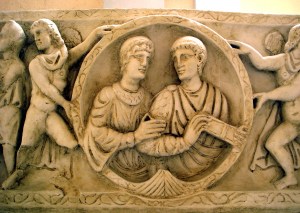
Pulchra itaque copula seniorum atque adolescentium. alii testimonio, alii solatio sunt: alii magisterio, alii delectationi. omitto quod Abrahae adhaesit Loth adolescentulus etiam proficiscenti; ne forte hoc propinquitatis magis fuisse existimetur, et necessariae potius quam voluntariae adiunctionis. quid Eliam atque Elisaeum loquamur? licet non expresse Elisaeum iuvenem Scriptura significaverit, advertimus tamen et colligimus iuniorem fuisse. in Actibus Apostolorum Barnabas Marcum assumpsit, Paulus Silam, Paulus Timotheum, Paulus Titum. sed illis superioribus videmus divisa officia, ut seniores consilio praevalerent, iuniores ministerio. plerumque etiam virtutibus pares, dispares aetatibus, sui delectantur copula, sicut delectabantur Petrus et Ioannes. nam adolescentem legimus in Evangelio Ioannem et sua voce, licet meritis et sapientia nulli fuerit seniorum secundus, erat enim in eo senectus venerabilis morum et cana prudentia. vita enim immaculata bonae senectutis stipendium est.
(Ambrose, De Officiis Ministrorum 2.100-101)

Beautiful, therefore, is the union between old and young. The one to give witness, the other to give comfort; the one to give guidance, the other to give pleasure. I pass by Lot, who when young clung to Abraham, as he was setting out. For some perhaps might say this arose rather owing to their relationship than from any voluntary action on his part. And what are we to say of Elijah and Elisha? Though Scripture has not in so many words stated that Elisha was a young man, yet we gather from it that he was the younger. In the Acts of the Apostles, Barnabas took Mark with him, and Paul took Silas and Timothy and Titus. We see also that duties were divided amongst them according to their superiority in anything. The elders took the lead in giving counsel, the younger in showing activity. Often, too, those who were alike in virtue but unlike in years were greatly rejoiced at their union, as Peter and John were. We read in the Gospel that John was a young man, even in his own words, though he was behind none of the elders in merits and wisdom. For in him there was a venerable ripeness of character and the prudence of the hoarhead. An unspotted life is the due of a good old age. (tr. Henry de Romestin)

Flere

images-7

…quis miratur flere hominem? hinc infantia incipit, in hanc necessitatem plerumque Fortuna deducit. quis enim est dies qui non triste aliquid et flebile nobis minetur? si nullam aliam rationem lacrimarum haberemus, conspectus tamen hominum et ratio mortalitatis poterat elicere fletus. hae amicitiae, hae propinquitates, hi congressus, haec studia laudesque intra breve temporis momentum occident atque labentur. quotus quisque transit dies quo non funus aspiciamus?
(Pseudo-Quintilian, Decl. 316.8-9)

…meanwhile, who wonders that a human being weeps? Infancy starts from that, Fortune mostly leads into this compulsion. For what day but threatens us with something sad and lamentable? If we had no other reason for tears, the survey of mankind and the consideration of mortality could elicit weeping. These friendships, these family bonds, these gatherings, these studies and achievements will die and slip away in a brief moment of time. How few days pass in which we do not see a funeral? (tr. David Roy Shackleton Bailey)

Sphendoplokos

001Bratislava_Kral_Svatopluk1

Ἰστέον, ὅτι ὁ Μοραβίας ἄρχων, ὁ Σφενδοπλόκος, ἀνδρεῖος καὶ φοβερὸς εἰς τὰ πλησιάζοντα αὐτῷ ἔθνη γέγονεν. ἔσχε δὲ ὁ αὐτὸς Σφενδοπλόκος τρεῖς υἱούς, καὶ τελευτῶν διεῖλεν εἰς τρία μέρη τὴν ἑαυτοῦ χώραν, καὶ τοῖς τρισὶν υἱοῖς αὐτοῦ ἀνὰ μιᾶς μερίδος κατέλιπεν, τὸν πρῶτον καταλείψας ἄρχοντα μέγαν, τοὺς δὲ ἑτέρους δύο τοῦ εἶναι ὑπὸ τὸν λόγον τοῦ πρώτου υἱοῦ. παρῄνεσεν δὲ αὐτοὺς τοῦ μὴ εἰς διάστασιν καὶ κατ’ ἀλλήλων γενέσθαι, παράδειγμα αὐτοῖς τοιοῦτον ὑποδείξας· ῥάβδους γὰρ τρεῖς ἐνεγκὼν καὶ συνδήσας, δέδωκεν τῷ πρώτῳ υἱῷ τοῦ ταύτας κλάσαι, τοῦ δὲ μὴ ἰσχύσαντος, πάλιν δέδωκεν τῷ δευτέρῳ, ὡσαύτως καὶ τῷ τρίτῳ, καὶ εἶθ’ οὕτως διαιρῶν τὰς τρεῖς ῥάβδους δέδωκεν τοῖς τρισὶ πρὸς μίαν· οἱ δὲ λαβόντες καὶ κελευσθέντες ταύτας κλάσαι, εὐθέως αὐτὰς κατέκλασαν. καὶ διὰ τοιούτου ὑποδείγματος παρῄνεσεν αὐτοὺς εἰπών, ὡς ὅτι· “εἰ μὲν διαμένετε ἐν ὁμοψυχίᾳ καὶ ἀγάπῃ ἀδιαίρετοι, ἀκαταγώνιστοι παρὰ τῶν ἐναντίων καὶ ἀνάλωτοι γενήσεσθε· εἰ δὲ ἐν ὑμῖν γένηται ἔρις καὶ φιλονικία, καὶ διαχωρισθῆτε εἰς τρεῖς ἀρχάς, μὴ ὑποκείμενοι τῷ πρώτῳ ἀδελφῷ, καὶ ὑπ’ ἀλλήλων ἀφανισθήσεσθε, καὶ ὑπὸ τῶν πλησιαζόντων ὑμῖν ἐχθρῶν παντελῶς ἐξολοθρευθήσεσθε.”
(Constantine Porphyrogenitus, De Administrando Imperio 41)

The prince of Moravia, Sphendoplokos, was valiant and terrible to the nations that were his neighbors. This same Sphendoplokos had three sons, and when he was dying he divided his country into three parts and left a share apiece to his three sons, leaving the eldest to be great prince and the other two to be under the command of the eldest son. He exhorted them not to fall out with one another, giving them this example by way of illustration: he brought three wands and bound them together and gave them to the first son to break them, and when he was not strong enough, handed them on to the second, and in like manner to the third, and then separated the three wands and gave one each to the three of them; when they had taken them and were bidden to break them, they broke them through at once. By means of this illustration he exhorted them and said: “If you remain undivided in concord and love, you shall be unconquered by your adversaries and invincible; but if strife and rivalry come among you and you divide yourselves into three governments, not subject to the eldest brother, you shall be both destroyed by one another and brought to utter ruin by the enemies who are your neighbors.” (tr. Romilly James Heald Jenkins)


Carbone

630-01492287

Filius Aesopi detractam ex aure Metellae,
scilicet ut deciens solidum absorberet, aceto
diluit insignem bacam: qui sanior ac si
illud idem in rapidum flumen iaceretve cloacam?
Quinti progenies Arri, par nobile fratrum
nequitia et nugis pravorum et amore gemellum
luscinias soliti inpenso prandere coëmptas,
quorsum abeant? sani ut creta, an carbone notati?
(Horace, Serm. 2.3.239-246)

Aesopus’’ son took a splendid pearl from Metella’’s
Ear-lobe, and dissolved it in vinegar, clearly
Intending to swallow a million straight: was that
Saner than hurling it into the flood, or the sewer?
Quintus Arrius’’ sons, equally famous brothers,
Twins in waste and wickedness, loving depravity,
Used to eat highly-priced nightingales for lunch:
How should we list them? With chalk, sane, or with charcoal?”
(tr. Tony Kline)

Philōn

socrates1

Ἤκουσα δέ ποτε αὐτοῦ καὶ περὶ φίλων διαλεγομένου, ἐξ ὧν ἔμοιγε ἐδόκει μάλιστ’ ἄν τις ὠφελεῖσθαι πρὸς φίλων κτῆσίν τε καὶ χρείαν. τοῦτο μὲν γὰρ δὴ πολλῶν ἔφη ἀκούειν, ὡς πάντων κτημάτων κράτιστον ἂν εἴη φίλος σαφὴς καὶ ἀγαθός· ἐπιμελομένους δὲ παντὸς μᾶλλον ὁρᾶν ἔφη τοὺς πολλοὺς ἢ φίλων κτήσεως. καὶ γὰρ οἰκίας καὶ ἀγροὺς καὶ ἀνδράποδα καὶ βοσκήματα καὶ σκεύη κτωμένους τε ἐπιμελῶς ὁρᾶν ἔφη καὶ τὰ ὄντα σῴζειν πειρωμένους, φίλον δέ, ὃ μέγιστον ἀγαθὸν εἶναί φασιν, ὁρᾶν ἔφη τοὺς πολλοὺς οὔτε ὅπως κτήσωνται φροντίζοντας οὔτε ὅπως οἱ ὄντες αὐτοῖς σῴζωνται. ἀλλὰ καὶ καμνόντων φίλων τε καὶ οἰκετῶν ὁρᾶν τινας ἔφη τοῖς μὲν οἰκέταις καὶ ἰατροὺς εἰσάγοντας καὶ τἆλλα τὰ πρὸς ὑγίειαν ἐπιμελῶς παρασκευάζοντας, τῶν δὲ φίλων ὀλιγωροῦντας, ἀποθανόντων τε ἀμφοτέρων ἐπὶ μὲν τοῖς οἰκέταις ἀχθομένους τε καὶ ζημίαν ἡγουμένους, ἐπὶ δὲ τοῖς φίλοις οὐδὲν οἰομένους ἐλαττοῦσθαι, καὶ τῶν μὲν ἄλλων κτημάτων οὐδὲν ἐῶντας ἀθεράπευτον οὐδ᾽ ἀνεπίσκεπτον, τῶν δὲ φίλων ἐπιμελείας δεομένων ἀμελοῦντας. ἔτι δὲ πρὸς τούτοις ὁρᾶν ἔφη τοὺς πολλοὺς τῶν μὲν ἄλλων κτημάτων καὶ πάνυ πολλῶν αὐτοῖς ὄντων, τὸ πλῆθος εἰδότας, τῶν δὲ φίλων, ὀλίγων ὄντων οὐ μόνον τὸ πλῆθος ἀγνοοῦντας, ἀλλὰ καὶ τοῖς πυνθανομένοις τοῦτο καταλέγειν ἐγχειρήσαντας οὓς ἐν τοῖς φίλοις ἔθεσαν, πάλιν τούτους ἀνατίθεσθαι· τοσοῦτον αὐτοὺς τῶν φίλων φροντίζειν.
(Xenophon, Mem. 4.1-4)

Again, I once heard a conversation of his* about friendship that I thought likely to be of great help in acquiring and making use of friends. For he said that he often heard it stated that of all possessions the most precious is a good and sincere friend. “And yet,” he said, “there is no transaction most men are so careless about as the acquisition of friends. For I find that they are careful about getting houses and lands and slaves and cattle and furniture, and anxious to keep what they have; but though they claim that a friend is the greatest blessing, I find that most men take no thought how to get new friends or how to keep their old ones. Indeed, if one of their friends and one of their servants get sick at the same time, I find that some call in the doctor to attend the servant and are careful to provide everything that may contribute to his recovery, whereas they pay no attention to the friend. In the event that both die, they are annoyed at losing the servant and consider it a loss, but don’t feel that the death of the friend matters in the least. And though none of their other possessions is uncared for and unconsidered, they neglect their friends’ need of attention. And besides all this, I find that most men know the number of their other possessions, however great it may be, yet cannot tell the number of their friends, few as they are, and if asked to try to make a list they will insert names and presently remove them. So much for the thought they give to their friends!

* i.e. Socrates’.

(tr. Edgar Cardew Marchant & Otis Johnson Todd, revised by Jeffrey Henderson)

Amicitia

roman_friendship

Cumque plurimas et maximas commoditates amicitia contineat, tum illa nimirum praestat omnibus, quod bonam spem praelucet in posterum nec debilitari animos aut cadere patitur. verum enim amicum qui intuetur, tamquam exemplar aliquod intuetur sui. quocirca et absentes adsunt et egentes abundant et imbecilli valent et, quod difficilius dictu est, mortui vivunt; tantus eos honos, memoria, desiderium prosequitur amicorum. ex quo illorum beata mors videtur, horum vita laudabilis. quod si exemeris ex rerum natura benevolentiae coniunctionem, nec domus ulla nec urbs stare poterit, ne agri quidem cultus permanebit. id si minus intellegitur, quanta vis amicitiae concordiaeque sit, ex dissensionibus atque ex discordiis percipi potest. quae enim domus tam stabilis, quae tam firma civitas est, quae non odiis et discidiis funditus possit everti? ex quo quantum boni sit in amicitia iudicari potest.
(Cicero, De Amicitia 23)

Moreover, while friendship comprises the greatest number and variety of beneficent offices, it certainly has this special prerogative, that it lights up a good hope for the time to come, and thus preserves the minds that it sustains from imbecility or prostration in misfortune. For he, indeed, who looks into the face of a friend beholds, as it were, a copy of himself. Thus the absent are present, and the poor are rich, and the weak are strong, and–what seems stranger still–the dead are alive, such is the honor, the enduring remembrance, the longing love, with which the dying are followed by the living; so that the death of the dying seems happy, the life of the living full of praise. But if from the condition of human life you were to exclude all kindly union, no house, no city, could stand, nor, indeed, could the tillage of the field survive. If it is not perfectly understood what virtue there is in friendship and concord, it may be learned from dissension and discord. For what house is so stable, what state so firm, that it cannot be utterly overturned by hatred and strife? Hence it may be ascertained how much good there is in friendship. (tr. Andrew P. Peabody)

Rota

Wheel-of-Fortune1-253x300

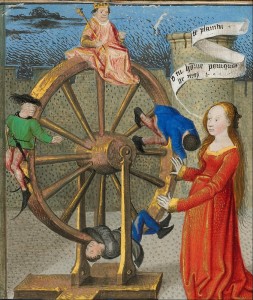
Care venis subito, subito quoque, care, recedis:
audio, non video, video tamen intus et intus
amplector fugientem et corpore, non pietate.
certus enim ut fueram, semper eroque foveri
corde tuo me, corde meo te. nec mihi tempus
suadeat ullum aliud, tibi nec persuadeat ullum.
visere si poteris, sat erit, si videro gratum.
sin alias, rescribe aliquid, tua tristia novi
atque dolens recolo. dolor est possessio mundi,
quaeque serena putas, magis haec in nubila tristes
et tenebras fugiunt; volucri qui pendet in orbe,
nunc scandit, nunc descendit, rota sic trahit orbem.
(Walahfrid Strabo, Ad Liutgerum Clericum)

TO THE CLERIC LIUDGER

My dear, you come suddenly, and suddenly too you leave;
I hear, I do not see. Yet I do see inwardly, and inwardly
I embrace you even as you flee from me – in body but not in faithfulness.
For just as I have been sure, so am I now, and so will I always be
That I am cherished in your heart, and you in mine. May passing time
Never persuade me or you of anything else.
If you can visit me, it will be enough to see my dear one.
But at other times, write me, write me anything; I have known your sorrows
And reflect on them with grief; grief is the world’s province.
The things you consider bright and happy flee all the faster into clouds
And sad shadows. Like a bird that hovers above the world,
Now climbing, now falling, so is the wheel of the world in its turning.
(tr. unknown)

Aphairoumenōn

RP-P-OB-52.044

Καταλέγοντι δ’ αὐτῷ τὸν στρατὸν ἐς τὰς ἀποικίας καὶ τὴν γῆν ἐπινέμοντι δυσεργὲς ἦν. οἵ τε γὰρ στρατιῶται τὰς πόλεις ᾔτουν, αἳ αὐτοῖς ἀριστίνδην ἦσαν ἐπειλεγμέναι πρὸ τοῦ πολέμου, καὶ αἱ πόλεις ἠξίουν τὴν Ἰταλίαν ἅπασαν ἐπινείμασθαι τὸ ἔργον ἢ ἐν ἀλλήλαις διαλαχεῖν τῆς τε γῆς τὴν τιμὴν τοὺς δωρουμένους ᾔτουν, καὶ ἀργύριον οὐκ ἦν, ἀλλὰ συνιόντες ἀνὰ μέρος ἐς τὴν Ῥώμην οἵ τε νέοι καὶ γέροντες ἢ αἱ γυναῖκες ἅμα τοῖς παιδίοις, ἐς τὴν ἀγορὰν ἢ τὰ ἱερά, ἐθρήνουν, οὐδὲν μὲν ἀδικῆσαι λέγοντες, Ἰταλιῶται δὲ ὄντες ἀνίστασθαι γῆς τε καὶ ἑστίας οἷα δορίληπτοι. ἐφ’ οἷς οἱ Ῥωμαῖοι συνήχθοντο καὶ ἐπεδάκρυον, καὶ μάλιστα, ὅτε ἐνθυμηθεῖεν οὐχ ὑπὲρ τῆς πόλεως, ἀλλ’ ἐπὶ σφίσιν αὐτοῖς καὶ τῇ μεταβολῇ τῆς πολιτείας τόν τε πόλεμον γεγονότα καὶ τὰ ἐπινίκια διδόμενα καὶ τὰς ἀποικίας συνισταμένας τοῦ μηδ’ αὖθις ἀνακῦψαι τὴν δημοκρατίαν, παρῳκισμένων τοῖς ἄρχουσι μισθοφόρων ἑτοίμων, ἐς ὅ τι χρῄζοιεν. ὁ δὲ Καῖσαρ ταῖς πόλεσιν ἐξελογεῖτο τὴν ἀνάγκην, καὶ ἐδόκουν οὐδ’ ὣς ἀρκέσειν. οὐδ’ ἤρκουν, ἀλλὰ ὁ στρατὸς καὶ τοῖς γείτοσιν ἐπέβαινε σὺν ὕβρει, πλέονά τε τῶν διδομένων σφίσι περισπώμενοι καὶ τὸ ἄμεινον ἐκλεγόμενοι. οὐδὲ ἐπιπλήσσοντος αὐτοῖς καὶ δωρουμένου πολλὰ ἄλλα τοῦ Καίσαρος ἐπαύοντο, ἐπεὶ καὶ τῶν ἀρχόντων, ὡς δεομένων σφῶν ἐς τὸ ἐγκρατὲς τῆς ἀρχῆς, κατεφρόνουν. καὶ γὰρ αὐτοῖς ἡ πενταετία παρώδευε, καὶ τὸ ἀσφαλὲς ἡ χρεία συνῆγεν ἀμφοτέροις παρ᾽ ἀλλήλων, τοῖς μὲν ἡγεμόσιν ἐς τὴν ἀρχὴν παρὰ τοῦ στρατοῦ, τῷ στρατῷ δὲ ἐς τὴν ἐπικράτησιν ὧν ἔλαβον, ἡ τῶν δεδωκότων ἀρχὴ παραμένουσα. ὡς γὰρ αὐτῶν οὐ βεβαίως ἐπικρατήσοντες, εἰ μὴ βεβαίως ἄρχοιεν οἱ δόντες, ὑπερεμάχουν ἀπ’ εὐνοίας ἀναγκαίου. πολλὰ δὲ καὶ ἄλλα τοῖς ἀπορουμένοις αὐτῶν ἐδωρεῖτο, δανειζόμενος ἐκ τῶν ἱερῶν, ὁ Καῖσαρ. ὅθεν τὴν γνώμην ὁ στρατὸς ἐς αὐτὸν ἐπέστρεφε, καὶ πλείων ὑπήντα χάρις ὡς γῆν ἅμα καὶ πόλεις καὶ χρήματα καὶ οἰκήματα δωρουμένῳ καὶ καταβοωμένῳ μὲν ἐπιφθόνως ὑπὸ τῶν ἀφαιρουμένων, φέροντι δὲ τὴν ὕβριν ἐς χάριν τοῦ στρατοῦ.
(Appian, Rhōmaïka 17.12-13)

The task of assigning the soldiers to their colonies and dividing the land was one of exceeding difficulty. The soldiers demanded the cities which had been selected for them before the war as prizes for their valor. The cities demanded that the whole of Italy should share the burden, or that the cities should cast lots with the other cities, and that those who gave the land should be paid the value of it; but there was no money. They came to Rome in crowds, young and old, women and children, to the forum and the temples, uttering lamentations, saying that they had done no wrong for which they, Italians, should be driven from their fields and their hearthstones, like people conquered in war. The Romans mourned and wept with them, especially when they reflected that the war had been waged, and the rewards of victory given, not in behalf of the commonwealth, but against themselves and for a change of the form of government; that the colonies were established so that democracy should never again lift its head,— colonies composed of hirelings settled there by the rulers to be in readiness for whatever purpose they might be wanted. Octavius explained to the cities the necessity of the case, but he knew that it would not satisfy them; and it did not. The soldiers encroached upon their neighbors in an insolent manner, seizing more than had been given to them and choosing the best lands; nor did they cease when Octavius rebuked them and made them numerous other presents. They were contemptuous in the knowledge that their rulers needed them to confirm their power, for the five years’ term of the triumvirate was passing away, and army and rulers needed the services of each other for mutual security. The chiefs depended on the soldiers for the continuance of their government, while, for the control of what they had received, the soldiers depended on the permanence of the government of those who had given it. Believing that they could not keep a firm hold unless the givers had a strong government, they fought for them with good-will, necessarily. Octavius made many other gifts to the indigent soldiers, borrowing from the temples for that purpose, for which reason the affections of the army were turned toward him. The greater thanks were bestowed upon him both as the giver of the land, the cities, the money, and the houses, and as the object of denunciation on the part of the despoiled, and as one who bore this contumely for the army’s sake. (tr. Horace White)


Kratēras

dionysus-wine

Τρεῖς γὰρ μόνους κρατῆρας ἐγκεραννύω
τοῖς εὖ φρονοῦσι· τὸν μὲν ὑγιείας ἕνα,
ὃν πρῶτον ἐκπίνουσι, τὸν δὲ δεύτερον
ἔρωτος ἡδονῆς τε, τὸν τρίτον δ’ ὕπνου,
ὃν ἐκπιόντες οἱ σοφοὶ κεκλημένοι
οἴκαδε βαδίζουσ’. ὁ δὲ τέταρτος οὐκέτι
ἡμέτερός ἐστ’, ἀλλ’ ὕβρεος· ὁ δὲ πέμπτος βοῆς·
ἕκτος δὲ κώμων· ἕβδομος δ’ ὑπωπίων·
ὁ δ’ ὄγδοος κλητῆρος· ὁ δ’ ἔνατος χολῆς·
δέκατος δὲ μανίας, ὥστε καὶ βάλλειν ποεῖ·
*     *     *
πολὺς γὰρ εἰς ἓν μικρὸν ἀγγεῖον χυθεὶς
ὑποσκελίζει ῥᾷστα τοὺς πεπωκότας.
(Eubulus, fr. 93)

Because I mix up only three bowls of wine for
sensible people. One is dedicated to good health,
and they drink it first. The second is dedicated
to love and pleasure, and the third to sleep;
wise guests finish it up
and go home. The fourth bowl no longer
belongs to me but to outrage. The fifth belongs to arguments;
the sixth to wandering drunk through the streets; the seventh to black eyes;
the eighth to the bailiff; the ninth to an ugly black humor;
and the tenth to madness extreme enough to make people throw stones.
*     *     *
For a great deal of wine poured into one little jar
easily knocks drunks’ legs out from under them.
(tr. Stuart Douglas Olson)

Agricultura

d77efc1f22ab4b7a51873bf2adf5904b.jpg

Quibus autem artibus aut prudentia maior inest aut non mediocris utilitas quaeritur, ut medicina, ut architectura, ut doctrina rerum honestarum, eae sunt iis, quorum ordini conveniunt, honestae. mercatura autem, si tenuis est, sordida putanda est; sin magna et copiosa, multa undique apportans multisque sine vanitate impertiens, non est admodum vituperanda; atque etiam si satiata quaestu et contenta potius, ut saepe ex alto in portum, ex ipso se portu in agros possessionesque contulit, videtur iure optimo posse laudari. omnium autem rerum, ex quibus aliquid acquiritur, nihil est agricultura melius, nihil uberius, nihil dulcius, nihil homine, nihil libero dignius.
(Cicero, Off. 1.151)

But the professions in which either a higher degree of intelligence is required or from which no small benefit to society is derived—medicine and architecture, for example, and teaching—these are proper for those whose social position they become. Trade, if it is on a small scale, is to be considered vulgar; but if wholesale and on a large scale, importing large quantities from all parts of the world and distributing to many without misrepresentation, it is not to be greatly disparaged. Nay, it even seems to deserve the highest respect, if those who are engaged in it, satiated, or rather, I should say, satisfied with the fortunes they have made, make their way from the port to a country estate, as they have often made it from the sea into port. But of all the occupations by which gain is secured, none is better than agriculture, none more profitable, none more delightful, none more becoming to a freeman. (tr. Walter Miller)