Acherusia

Cerberus2

Cerberus et Furiae iam vero et lucis egestas,
Tartarus horriferos eructans faucibus aestus!
* * *
qui neque sunt usquam nec possunt esse profecto.
sed metus in vita poenarum pro male factis
est insignibus insignis, scelerisque luella,
carcer et horribilis de saxo iactu’ deorsum,
verbera carnifices robur pix lammina taedae;
quae tamen etsi absunt, at mens sibi conscia factis
praemetuens adhibet stimulos torretque flagellis,
nec videt interea qui terminus esse malorum
possit nec quae sit poenarum denique finis,
atque eadem metuit magis haec ne in morte gravescant.
hic Acherusia fit stultorum denique vita.
(Lucretius, De Rerum Natura 3.1011-1023)

Cerberus*, too, the Furies, the Dearth of Light,
Tartarus** retching and vomiting tides of terror
* * *
which nowhere exist, which simply cannot be.
But in life, the fear of penalty for our sins
is great in the greatest: crime and crime’s atonement,
prison, the terrible hurling from the Rock***,
the lash, the hangman, stake, pitch, iron and brand.
And take these away: the heart knows what we’ve done
and plies the goad and lash to make us cowards,
yet never sees where stands the stone that marks
the end of pain, the bounds of punishment,
but fears these may grow heavier still in death.
Hell is right here, the work of foolish men!

* The three-headed dog who guarded the entrance to the underworld. Furies: the goddesses of vengeance, who punish men for their acts of violence. Dearth of Light: the Underworld itself, which is perennially dark and shadowy.
** The Underworld, Hades. After this line, some lines have been lost. They must have embodied a connective clause of some kind,
*** The reference is to the Tarpeian Rock, a cliff at one corner of the Capitoline Hill in Rome, from which convicted traitors were hurled to their death.

(tr. Frank O. Copley, with his notes)

Meligērun

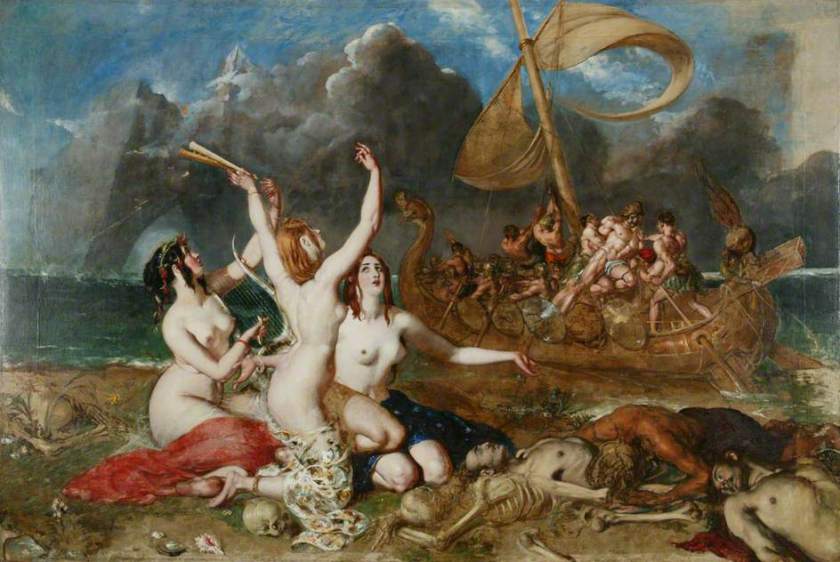
(c) Manchester City Galleries; Supplied by The Public Catalogue Foundation
William Etty, The Sirens and Ulysses (1837)

“Δεῦρ᾽ ἄγ’ ἰών, πολύαιν’ Ὀδυσεῦ, μέγα κῦδος Ἀχαιῶν,
νῆα κατάστησον, ἵνα νωϊτέρην ὄπ’ ἀκούσῃς.
οὐ γάρ πώ τις τῇδε παρήλασε νηῒ μελαίνῃ,
πρίν γ’ ἡμέων μελίγηρυν ἀπὸ στομάτων ὄπ’ ἀκοῦσαι,
ἀλλ’ ὅ γε τερψάμενος νεῖται καὶ πλείονα εἰδώς.
ἴδμεν γάρ τοι πάνθ’ ὅσ’ ἐνὶ Τροίῃ εὐρείῃ
Ἀργεῖοι Τρῶές τε θεῶν ἰότητι μόγησαν,
ἴδμεν δ’, ὅσσα γένηται ἐπὶ χθονὶ πουλυβοτείρῃ.”
(Homer, Od. 12.184-191)

‘Come closer, famous Odysseus—Achaea’s pride and glory—
moor your ship on our coast so you can hear our song!
Never has any sailor passed our shores in his black craft
until he has heard the honeyed voices pouring from our lips,
and once he hears to his heart’s content sails on, a wiser man.
We know all the pains that Achaeans and Trojans once endured
on the spreading plain of Troy when the gods willed it so—
all that comes to pass on the fertile earth, we know it all!’
(tr. Robert Fagles)

Kalamon

and1002

This is part 3 of 3. Part 1 is here. Part 2 is here.

Τοσαῦτα δὲ πεπονθὼς καὶ μυρία ἕτερα ὑποστάς, ὅσα ὁ λόγος παρέδραμεν, ὅμως ἀντεῖχεν ἔτι γενναίως πρὸς τὰς ἐπιφορὰς τῶν δεινῶν ἐρρωμένος ὢν τὸ φρονεῖν. πρὸς δὲ τοὺς ἐπεισχεομένους καὶ βάλλοντας ἐπιστρεφόμενος ἄλλο μὲν οὐδὲν ἐφθέγγετο, εἰ μὴ τὸ “Κύριε ἐλέησον” καὶ “ἵνα τί κάλαμον συντετριμμένον προσεπικλᾶτε;” ἀλλ’ οὐδὲ μετὰ τὴν ἐκ ποδῶν ἀπαιώρησιν οἱ ἀνούστατοι ὄχλοι τοῦ πολυπαθοῦς ἀπέσχοντο Ἀνδρονίκου ἢ φειδὼ τῶν ἐκείνου σαρκῶν ἔλαβον, ἀλλὰ περιελόντες τὸ χιτώνιον κακῶς ἐτίθουν τὰ παιδογόνα μόρια. ἀνόσιος δέ τις καὶ διὰ τοῦ φάρυγγος εἰς τὰ ἔγκατα ἐπίμηκες ξίφος ἔβαψε, τινὲς δὲ τῶν ἐκ τοῦ Λατινικοῦ γένους καὶ κατὰ τῆς ἐξέδρας ἀκινάκην ἀμφοτέραις ἐπήρεισαν καὶ περιστάντες κατέφερον τὰ ξίφη, ὁποῖόν ἐστι τμητικώτερον ἀποπειρώμενοι καὶ τῇ τῆς χειρὸς κομπάζοντες δεξιότητι διὰ τὸ ἀξιόλογον τῆς πληγῆς. καὶ μετὰ τοσαῦτα μογήματα καὶ παθήματα μόλις ἀπέρρηξε τὴν ζωήν, τὴν δεξιὰν χεῖρα μετ’ ὀδύνης ἐκτείνας καὶ περιαγαγὼν οὕτω τῷ στόματι, ὥστε καὶ τοῖς πολλοῖς ἔδοξεν ἐκμυζᾶν τοῦ ἐκ ταύτης ἔτι θερμοῦ ἀποστάζοντος αἵματος διὰ τὸ νεαρὸν τῆς τομῆς.
(Niketas Choniates, Hist. 2, p. 350-351 Van Dieten)

Suffering all these evils and countless others which I have omitted, he held up bravely under the horrors inflicted upon him and remained in possession of his senses. To those who poured forth one after another and struck him, he turned and said no more than “Lord, have mercy,” and “Why do you further bruise the broken reed?” Even after he was suspended by his feet, the foolish masses neither kept their hands off the much-tormented Andronikos, nor did they spare his flesh, but removing his short tunic, they assaulted his genitals. A certain ungodly man dipped his long sword into his entrails by way of the pharynx; certain members of the Latin race raised their swords with both hands above his buttocks, and, standing around him, they brought them down, making trial as to whose cut was deeper and boasting loudly as to the dexterity of their hands which resulted in such a noteworthy wound. After so much suffering, Andronikos broke the thread of life, his right arm extended in agony and brought around to his mouth so that it seemed to many that he was sucking out the still-warm blood dripping from the recent amputation. (tr. Harry J. Magoulias)

Basileus

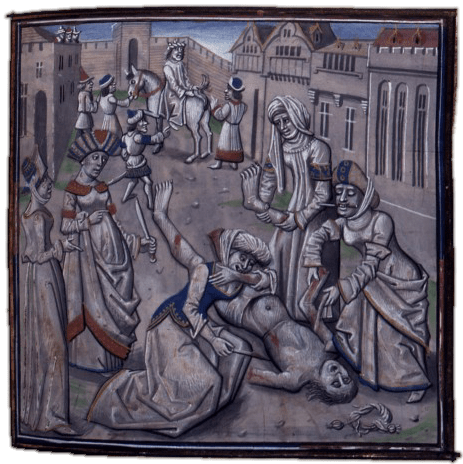
Death_of_andronic_I

This is part 2 of 3. Part 1 is here. Part 3 is here.

Μεθ’ ἡμέρας δέ τινας καὶ τὸν ἕτερον τῶν ὀφθαλμῶν ἐξορύττεται καὶ καθεσθεὶς ἐπὶ καμήλου ψωριώσης διὰ τῆς ἀγορᾶς θριαμβεύεται, κατὰ γεράνδρυον ἄφυλλον ᾠοῦ ψιλότερον ἀκαλυφές τε παντάπασι κρανίον προφαίνων καὶ βραχεῖ ῥακίῳ τὸ σῶμα σκεπόμενος, θέαμα ἐλεεινὸν καὶ πηγὰς ἐθέλον δακρύων ἡμέροις ὄμμασιν. ἀλλ’ οἱ εὐηθέστατοι καὶ ἀπαιδευτότατοι τῆς Κωνσταντίνου οἰκήτορες καὶ τούτων οἱ ἀλλαντοπῶλαι πλέον καὶ βυρσοδέψαι καὶ ὅσοι τοῖς καπηλείοις διημερεύουσι κἀκ τῶν καττυμάτων ἀποζῶσι γλίσχρως καὶ ταῖς ῥαφίσι τὸν ἄρτον στενῶς συλλέγουσι, κατ’ ἔθνεα συναθροισθέντες μυιῶν, αἳ τοὺς γαυλοὺς ἀμφιπεριίπτανται ἔαρος καὶ περιχαίνουσι τὰ πιαλέα κισσύβια, μηδένα λόγον θέμενοι, εἰ βασιλεὺς οὗτος πρὸ τρίτης καὶ βασιλείῳ διαδήματι περιδούμενος καὶ ὡς σωτὴρ ὑμνούμενος ὑπὸ πάντων ἀνευφημούμενός τε καὶ προσκυνούμενος καὶ ὡς φρικώδεσιν ὅρκοις τὴν εἰς αὐτὸν ἐνεπέδωσαν πίστιν καὶ εὔνοιαν, ἀλόγῳ δὲ θυμῷ καὶ παραλογωτέρῳ νοῒ φερόμενοι οὐδέν τι τῶν κακῶν ἐνέλιπον, ὃ μὴ εἰς Ἀνδρόνικον ἀνοσίως εἰργάσαντο. οἱ μὲν γὰρ κατὰ κεφαλῆς κορύναις αὐτὸν ἔπληττον, οἱ δὲ βολβίτοις τὰς ἐκείνου ῥῖνας ἐμόλυνον, ἄλλοι διὰ σπόγγων λύματα γαστέρων βοείων καὶ ἀνθρωπείων τῶν ὄψεων ἐκείνου κατέχεον. ἕτεροι αἰσχρορρημονοῦντες ἐκακολόγουν ἐς μητέρα καὶ τὸν λοιπὸν τῶν τοκέων. ἦσαν οἳ καὶ ὀβελίσκοις ἔπειρον αὐτοῦ τὰς πλευράς. οἱ δ’ ἀναιδέστεροι λιθολευστοῦντες κύνα ὠνόμαζον λυσσητῆρα. μία δέ τις πορνικὴ γυνὴ καὶ ἀκόλαστος κεράμιον θερμοῦ ὕδατος πλῆρες ἁρπασαμένη ἐξ ὀπτανείου τῶν ἐκείνου κατεκένωσε παρειῶν. καὶ οὐδεὶς ἦν, ὃς οὐκ ἦν ἐπ᾿ Ἀνδρονίκῳ κακοποιός. καὶ οὕτως ἀτίμως ἐπὶ τὸ θέατρον ἀπαχθεὶς μετὰ γελοιώδους θριάμβου καὶ τοῦ οἰκτροῦ ἐκείνου καὶ παιζομένου ἐπὶ καμήλου ὑψώματος καὶ ὅπερ ἄνωθεν κατέβη αὐτόχρημα ἐκ ποδῶν ἀναρτᾶται, τινῶν ἀναψάντων ἐκ φελλύρας καλώδιον, κατὰ τοὺς περὶ τὰς ἐπικλινεῖς τὸν τράχηλον ἐκ χαλκοῦ πεποιημένας λύκαινάν τε καὶ ὕαιναν ἱσταμένους δύο στυλίσκους καὶ λίθον ἐπικείμενον ἔχοντας.
(Niketas Choniates, Hist. 2, p. 349-350 Van Dieten)

Several days later, one of his eyes was gouged out, and, seated upon a mangy camel, he was paraded through the agora looking like a leafless and withered old stump, his bare head, balder than an egg, shining before all, his body covered by meager rags; a pitiful sight that evoked tears from sympathetic eyes. But the stupid and ignorant inhabitants of Constantinople, and of these more so the sausage sellers and tanners, as well as those who pass the day in the taverns and eke out a niggardly existence from cobbling and with difficulty earn their bread from sewing, even as tribes of flies are gathered together and swarm around milk pails in the springtime and drink deep from the ivy-wood cups filled to overflowing, gave no thought to the fact that but a few short days earlier this man had been emperor. That he had worn the imperial diadem and had been hailed as savior, acclaimed and adored by all; that they had confirmed their loyalty and devotion to him by the most awful oaths was forgotten. Now, carried away by unreasoning anger and an even greater madness, there was no evil which they did not inflict wickedly on Andronikos. Some struck him on the head with clubs, others befouled his nostrils with cow-dung, and still others, using sponges, poured excretions from the bellies of oxen and men over his eyes. Some, using foul language, reviled his mother and all his forebears. There were those who pierced his ribs with spits. The more shameless among them pelted him with stones and called him a rabid dog. A certain incontinent prostitute, grabbed an earthenware pot filled with hot water and emptied it over his face. There was no one who did not inflict some injury on Andronikos. Thus reviled and degraded, Andronikos was led into the theater in mock triumph sitting on the hump of a camel. When he dismounted, he was straightway suspended by his feet by a cord made of cork oak fastened to the two small columns on which rested a block of stone that stood near the bronze she-wolf and hyena whose necks were bent down. (tr. Harry J. Magoulias)

Paignion

Niketas_Choniates
Niketas Choniates

This is part 1 of 3. Part 2 is here. Part 3 is here.

Εἶχε τοίνυν τοῦτον ἡ τοῦ Ἀνεμᾶ λεγομένη φρουρὰ δυσὶ παχείαις ἁλύσεσι τὸν ὑψιτενῆ βαρούμενον τράχηλον, ὑφ’ ὧν οἱ ἐν δεσμωτηρίοις σιτούμενοι λέοντες μετὰ σιδηρέων κλοιῶν συνέχονται, καὶ πέδαις τοὺς πόδας κακούμενον. ἐμφανισθεὶς δὲ οὕτως ἔχων καὶ παραστὰς Ἰσαακίῳ τῷ βασιλεῖ ὕβρεσι βάλλεται, κατὰ κόρρης ῥαπίζεται, τοὺς γλουτοὺς ἐπικρούεται, τὴν γένυν τίλλεται, τοὺς ὀδόντας ἐκριζοῦται, τὴν κεφαλὴν ψιλοῦται τριχῶν, εἰς κοινὸν ἐκδίδοται παίγνιον πᾶσι τοῖς συνελθοῦσιν, ἐμπαροινεῖται καὶ ὑπὸ γυναικῶν καὶ τύπτεται πυγμαῖς κατὰ στόματος, καὶ τούτων ὁπόσαι μάλιστα ἢ θανάτῳ ὑπ’ Ἀνδρονίκου ἀπεβάλοντο τοὺς συνεύνους ἢ τοὺς ὀφθαλμοὺς ἀπεσβεσμένους ἀπέλαβον. ἔπειτα τὴν δεξιὰν χεῖρα πελέκει ἀποκοπεὶς παραρριπτεῖται αὖθις τῇ αὐτῇ φυλακῇ, ἄσιτος, ἄποτος, ὑπ’ οὐδενὸς μεταλαγχάνων οἱασοῦν κομιδῆς.
(Niketas Choniates, Hist. 2, p. 349 Van Dieten)

He* was confined in the so-called prison of Anemas with two heavy chains weighing down his proud neck, the iron collars used to fetter caged lions, and his feet were painfully shackled. Bound in this fashion he was paraded before Emperor Isaakios. He was slapped in the face, kicked on the buttocks, his beard was torn out, his teeth pulled out, his head shorn of hair; he was made the common sport of all those who gathered; he was even battered by women who struck him in the mouth with their fists, especially by all those whose husbands were put to death or blinded by Andronikos. Afterwards, his right hand cut off by an ax, he was cast again into the same prison without food and drink, tended by no one.

* Andronikos Komnenos.

(tr. Harry J. Magoulias)

Loupa

1024px-Mignard_-_The_Shepherd_Faustulus_Bringing_Romulus_and_Remus_to_His_Wife
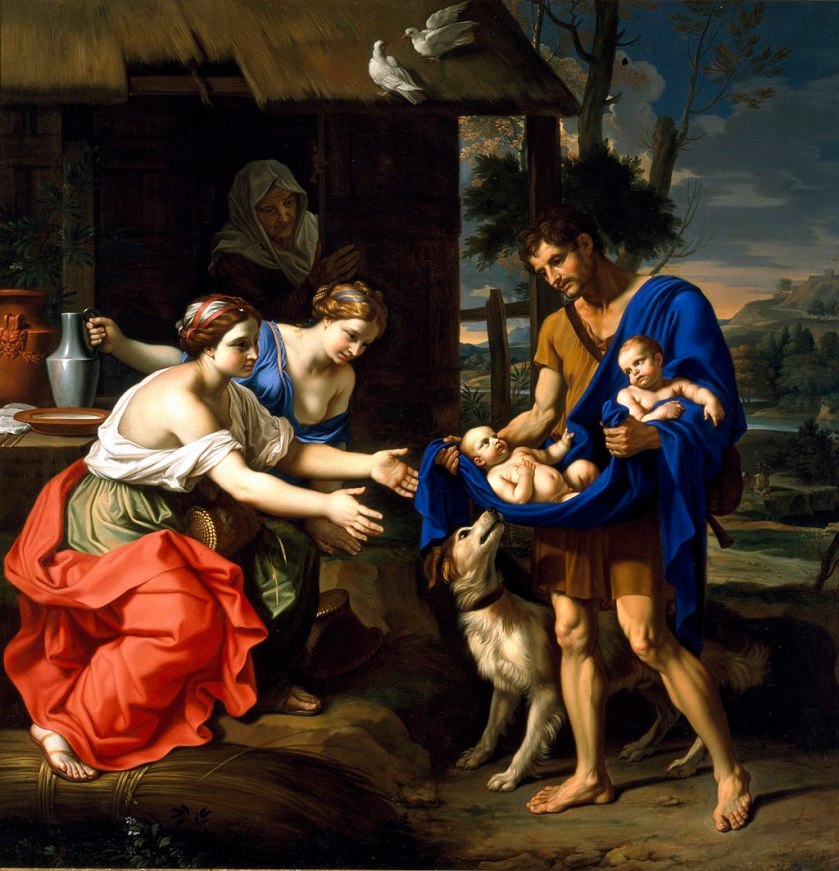
Nicolas Mignard, Le berger Faustulus amenant Romulus et Remus a sa femme (1654)

Τήν τε τιθηνησαμένην τὰ παιδία καὶ μαστοὺς ἐπισχοῦσαν οὐ λύκαιναν εἶναί φασιν, ἀλλ’ ὥσπερ εἰκὸς γυναῖκα τῷ Φαιστύλῳ συνοικοῦσαν Λαυρεντίαν ὄνομα, ᾗ δημοσιευούσῃ ποτὲ τὴν τοῦ σώματος ὥραν οἱ περὶ τὸ Παλλάντιον διατρίβοντες ἐπίκλησιν ἔθεντο τὴν Λούπαν· ἔστι δὲ τοῦτο Ἑλληνικόν τε καὶ ἀρχαῖον ἐπὶ ταῖς μισθαρνούσαις τἀφροδίσια τιθέμενον, αἳ νῦν εὐπρεπεστέρᾳ κλήσει ἑταῖραι προσαγορεύονται. ἀγνοοῦντας δέ τινας αὐτὸ πλάσαι τὸν περὶ τῆς λυκαίνης μῦθον, ἐπειδὴ κατὰ τὴν γλῶτταν, ἣν τὸ Λατίνων ἔθνος φθέγγεται, λούπα καλεῖται τοῦτο τὸ θηρίον.
(Dionysius of Halicarnassus, Rhōmaikē Archaiologia 1.84.4)

They say, moreover, that the one who nursed and suckled them was not a she-wolf, but, as may well be supposed, a woman, the wife of Faustulus, named Laurentia, who, having formerly prostituted her beauty, had received from the people living round the Palatine hill the nickname of Lupa*. This is an ancient Greek226 term applied p291 to women who prostitute themselves for gain; but they are now called by a more respectable name, hetaerae or “companions.” But some who were ignorant of this invented the myth of the she-wolf, this animal being called in the Latin tongue lupa.

Cf. Livy i. 4, 7. lupa is found in various Latin authors in the sense of “prostitute,” and lupanar means “brothel.”
** It would seem as if “Greek” must be an error here for “Latin.” Not even the Greek equivalent of lupa (λύκαινα) is found used in this sense. Hesychius’ gloss, λύπτα (for λύππα?)· ἑταίρα, πόρνη, may well have been taken from some Roman history.

(tr. Earnest Cary, with his notes)

Pullus

9b6c99c4d6cb4da59758d66c6bf40513

This is part 3 of 3. Part 1 is here. Part 2 is here.

Cur taceam quae dicitis? ad quid celem quod proditis? cur abscondo quod facitis? matres vos divulgatis, filium me fateor. gratias ago: filium me genuistis cum Christianum me fecistis, tu per te ipsum, et tu per eundem ipsum: tu per doctrinam a te factam, et tu per doctrinam tibi inspiratam: tu per gratiam a te mihi concessam, et tu per gratiam ab illo acceptam. Paule mater, et te ipse genuit. pone ergo filium tuum mortuum ante pedes Christi matris tuae, quia filius eius est. immo iacta illum in sinum pietatis eius, quia plus ipse mater est. ora ut resuscitet mortuum filium, non tam tuum, quam suum. ora pro filio tuo quia mater es, ut vivificet filium suum, quia mater est. fac, mater animae meae, quod faceret mater carnis meae. utique si speraret, oraret quantum posset, nec cessaret donec impetraret si posset. certe si vis, non potes desperare; et si oras, potes impetrare. insta ergo ut anima mortua, quam tu vivam peperisti, vitae restituatur, nec cesses donec tibi viva reddatur. tu quoque, anima mortua per te ipsam, curre sub alas Iesus matris tuae, et conquerere sub pennis eius dolores tuos. postula ut plagas tuas confoveat, et ut confotis vita redeat. Christe mater, qui congregas sub alas pullos tuos, mortuus hic pullus tuus subiicit se sub alas tuas. nam lenitate tua exterriti confoventur, odore tuo desperantes reformantur. calor tuus mortuos vivificat, attactus tuus peccatores iustificat. agnosce, mater, filium tuum mortuum, vel per signum crucis tuae, vel per vocem confessionis tuae. refove pullum tuum, resuscita mortuum tuum, iustifica peccatorem tuum. exterritus tuus a te consoletur, a se desperans a te confortetur, et in integram et inseparabilem gratiam tuam per te reformetur. a te namque fluit consolatio miserorum, qui sis benedictus in saecula saeculorum. amen.
(Anselm of Canterbury, Oratio 10 ad Sanctum Paulum)

Why should I be silent about what you have said?
Why should I conceal what you have revealed?
Why should I hide what you have done?
You have revealed yourselves as mothers;
I know myself to be a son.
I give thanks that you brought me forth as a son
when you made me a Christian:
you, Lord, by yourself, you, Paul, through him;
you by the doctrine you made,
you by the doctrine breathed into you.
You by the grace you have granted to me,
you by the grace you accepted from him.
Paul, my mother, Christ bore you also;
so place your dead son at the feet of Christ, your mother,
because he also is Christ’s son.
Rather, throw him into the heart of Christ’s goodness,
for Christ is even more his mother.
Pray that he will give life to a dead son,
who is not so much yours as his.
St. Paul, pray for your son, because you are his mother,
that the lord, who is his mother too,
may give life to his son.
Do, mother of my soul,
what the mother of my flesh would do.
At least, if I may hope, I may pray as much as I can;
nor cease until I obtain what I can.
Certainly, if you will, you need not despair;
and if you pray, you are able to obtain.
Ask then, that this dead soul which you brought to life,
may be restored to life,
nor cease until he is given back to you, living.
*
And you, my soul, dead in yourself,
run under the wings of Jesus your mother
and lament your griefs under his feathers.
Ask that your wounds may be healed
and that, comforted, you may live again.
*
Christ, my mother,
you gather your chickens under your wings;
this dead chicken of yours puts himself under those wings.
For by your gentleness the badly frightened are comforted,
by your sweet smell the despairing are revived,
your warmth gives life to the dead,
your touch justifies sinners.
Mother, know again your dead son,
both by the sign of your cross and the voice of his confession.
Warm your chicken, give life to your dead man, justify your sinner.
Let your terrified one be consoled by you;
despairing of himself, let him be comforted by you.
and in your whole and unceasing grace
let him be refashioned by you.
For from you flows consolation for sinners;
to you the blessing for ages and ages. Amen.
(tr. Benedicta Ward)

Gallina

14372_1280x800

This is part 2 of 3. Part 1 is here. Part 3 is here.

Sed et tu, Iesu, bone Domine, nonne et tu mater? annon es mater, qui tamquam gallina congregat sub alas pullos suos? vere, Domine, et tu mater. nam quod alii parturierunt et pepererunt, a te acceperunt. tu prius propter illos, et quos pepererunt, parturiendo mortuus es, et moriendo peperisti. nam nisi parturiisses, mortuus non esses; et nisi mortuus esses, non peperisses. desiderio enim gignendi filios ad vitam, mortem gustasti, et moriens genuisti. tu per te, illi iussi et adiuti a te. tu ut auctor, illi ut ministri. ergo tu, Domine Deus, magis mater. ambo ergo matres. nam etsi patres, tamen et matres. vos enim effecistis, tu per te, tu per illum, ut nati ad mortem renasceremur ad vitam. patres igitur estis per effectum, matres per affectum; patres per auctoritatem, matres per benignitatem; patres per tuitionem, matres per miserationem. ergo et tu mater, et tu mater: etsi quantitate affectus impares; in qualitate tamen non dissimiles. quamvis magnitudine benignitatis non coaequantes; voluntate tamen concordantes: licet plenitudine miserationis non convenientes; intentione tamen non disconvenientes.
(Anselm of Canterbury, Oratio 10 ad Sanctum Paulum)

And you, Jesus, are you not also a mother?
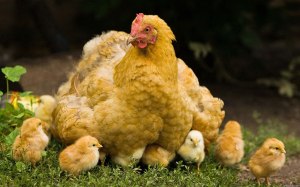
Are you not the mother who, like a hen,
gathers her chickens under her wings?
Truly, Lord, you are a mother;
for both they who are in labour
and they who are brought forth
are accepted by you.
You have died more than they, that they may labour to bear.
It is by your death that they have been born,
for if you had not been in labour,
you could not have borne death;
and if you had not died, you would not have brought forth.
For, longing to bear sons into life,
you tasted of death,
and by dying you begot them.
You did this in your own self,
your servants, by your commands and help.
You as the author, they as the ministers.
So you, Lord God, are the great mother.
*
Then both of you are mothers.
Even if you are fathers, you are also mothers.
For you have brought it about that those born to death
should be reborn to life –
you by your own act, you by his power.
Therefore you are fathers by your effect
and mothers by your affection.
Fathers by your authority, mothers by your kindness.
Fathers by your teaching, mothers by your mercy.
Then you, Lord, are a mother
and you, Paul, are a mother too.
If in quantity of affection you are unequal,
yet in quality you are not unalike.
Though in the greatness of your kindness
you are not co-equal,
yet in will you are of one heart.
Although you have not equal fullness of mercy,
yet in intention you are not unequal.
(tr. Benedicta Ward)

Nutrix

113495011

This is part 1 of 3. Part 2 is here. Part 3 is here.

O Sancte Paule, ubi est illa nominata nutrix fidelium, fovens filios suos? quae est illa affectuosa mater, quae se ubique praedicat filios suos iterum parturire? dulcis nutrix, dulcis mater, quos filios paraturis aut nutris, nisi quos in fide Christi docendo gignis et erudis? aut quis christianus post te doctrina tua non est in fide natus et confirmatus? nam etsi benedicta fides ista ab aliis quoque apostolis nobis nata sit et nutrita: utique magis a te, quia plus omnibus in hoc laborasti et effecisti. cum ergo illi sint nobis matres, tu magis nostra mater.
ergo, Sancte Paule, filius tuus est mortuus iste. mater mortuus iste certe filius tuus est. dulcis mater, recognosce filium tuum ex voce confessionis; recognoscat ille matrem suam ex affectu compassionis. recognosce filium ex confessione christianitatis; recognoscat ille matrem ex dulcedine pietatis. offer, mater, tu quae iterum parturis filios suos, offer, mortuum filium tuum iterum resuscitandum illi, qui morte sua resuscitavit servos tuos. offer, mater, illi qui morte sua indebita revocavit reos suos a morte debita; offer illi filium tuum, ut revocet ei vitam perditam. per baptismum enim eductus a morte, per sterilitatem et pravitatem reductus est in mortem. mater famosi affectus, sentiat filius tuus viscera maternae pietatis. exhibe eum illi qui te resuscitavit, et viventem servavit. ora eum pro filio tuo, quia servus eius est: ora eum pro servo suo, quia filius tuus est.
(Anselm of Canterbury, Oratio 10 ad Sanctum Paulum)

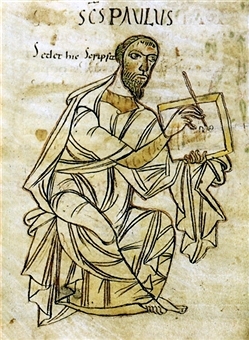
O St Paul, where is he that was called
the nurse of the faithful, caressing his sons?
Who is that affectionate mother who declares everywhere
that she is in labour for her sons?
Sweet nurse, sweet mother,
who are the sons you are in labour with, and nurse,
but those whom by teaching the faith of Christ
you bear and instruct?
Or who is a Christian after your teaching
who is not born into the faith and established in it by you?
And if in that blessed faith we are born
and nursed by other apostles also,
it is most of all by you,
for you have laboured and done more than them all in this;
so if they are our mothers, you are our greatest mother.
*
So then, St Paul, your son is this dead man.
Mother, this dead man is certainly your son.
Dear mother, recognize your son
by the voice of his confession;
he recognizes his mother by her loving compassion.
Recognize your son by his confession of Christianity;
he recognizes his mother by the sweetness of goodness.
O mother, you who again give birth to your sons,
offer your dead son again, to be raised up by him
who by his death gives life to his servants.
O mother, offer your son to him
who by his death, which was not owing,
called back his condemned ones
from the death that was their due;
that he may call back to him the life he has lost.
By baptism he was led out of death;
by barrenness and corruption he is led back into death.
O mother, well known for your love,
your son knows the heart of a mother’s goodness.
Show him to God,
you who have brought him back to life
and cared for him living.
Pray to him for your son, who is his servant;
pray to him for his servant, who is your son.
(tr. Benedicta Ward)

Ēthos

img_0123

Ὅμηρος δὲ ἄλλα τε πολλὰ ἄξιος ἐπαινεῖσθαι καὶ δὴ καὶ ὅτι μόνος τῶν ποιητῶν οὐκ ἀγνοεῖ ὃ δεῖ ποιεῖν αὐτόν. αὐτὸν γὰρ δεῖ τὸν ποιητὴν ἐλάχιστα λέγειν· οὐ γάρ ἐστι κατὰ ταῦτα μιμητής. οἱ μὲν οὖν ἄλλοι αὐτοὶ μὲν δι’ ὅλου ἀγωνίζονται, μιμοῦνται δὲ ὀλίγα καὶ ὀλιγάκις· ὁ δὲ ὀλίγα φροιμιασάμενος εὐθὺς εἰσάγει ἄνδρα ἢ γυναῖκα ἢ ἄλλο τι ἦθος, καὶ οὐδέν’ ἀήθη ἀλλ’ ἔχοντα ἦθος. δεῖ μὲν οὖν ἐν ταῖς τραγῳδίαις ποιεῖν τὸ θαυμαστόν, μᾶλλον δ’ ἐνδέχεται ἐν τῇ ἐποποιίᾳ τὸ ἄλογον, δι’ ὃ συμβαίνει μάλιστα τὸ θαυμαστόν, διὰ τὸ μὴ ὁρᾶν εἰς τὸν πράττοντα· ἐπεὶ τὰ περὶ τὴν Ἕκτορος δίωξιν ἐπὶ σκηνῆς ὄντα γελοῖα ἂν φανείη, οἱ μὲν ἑστῶτες καὶ οὐ διώκοντες, ὁ δὲ ἀνανεύων, ἐν δὲ τοῖς ἔπεσιν λανθάνει. τὸ δὲ θαυμαστὸν ἡδύ· σημεῖον δέ, πάντες γὰρ προστιθέντες ἀπαγγέλλουσιν ὡς χαριζόμενοι.
(Aristotle, Poet. 1460a5-18)

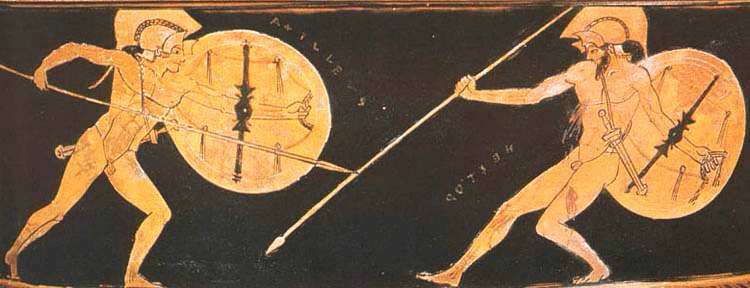
Homer deserves praise for many other qualities, but especially for realising, alone among epic poets, the place of the poet’s own voice. For the poet should say as little as possible in his own voice, as it is not this that makes him a mimetic artist. The others participate in their own voice throughout, and engage in mimesis only briefly and occasionally, whereas Homer, after a brief introduction, at once “brings onto stage” a man, woman, or other figure (all of them rich in character). In tragedy one needs to create a sense of awe, but epic has more scope for the irrational (the chief cause of awe), because we do not actually see the agent. The entire pursuit of Hector, if put on stage, would strike us as ludicrous—with the men standing and refraining from pursuit, and Achilles forbidding them—but in epic this goes unnoticed. Awe is pleasurable: witness the fact that all men exaggerate when relating stories, to give delight. (tr. Stephen Halliwell)