Natus

kamensetzer
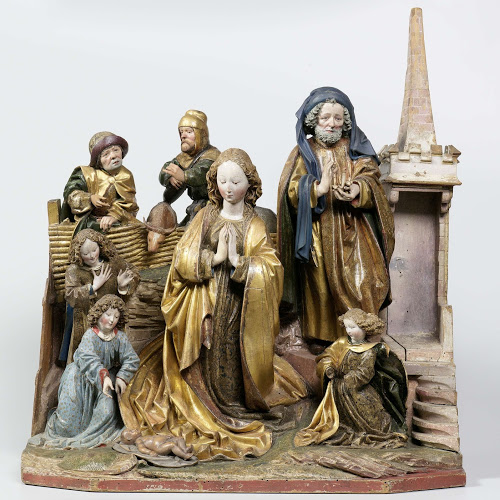
Nativity scene attributed to Hans Kamensetzer, ca. 1470

Salvator noster, dilectissimi, hodie natus est, gaudeamus. neque enim locum fas est ibi esse tristitiae, ubi natalis est vitae; quae consumpto mortalitatis timore, nobis ingerit de promissa aeternitate laetitiam. nemo ab huius alacritatis participatione secernitur, una cunctis laetitiae communis est ratio: quia Dominus noster, peccati mortisque destructor, sicut nullum a reatu liberum reperit, ita liberandis omnibus venit. exsultet sanctus, quia propinquat ad palmam. gaudeat peccator, quia invitatur ad veniam. animetur gentilis, quia vocatur ad vitam. Dei namque Filius secundum plenitudinem temporis, quam divini consilii inscrutabilis altitudo disposuit, reconciliandum auctori suo naturam generis assumpsit humani, ut inventor mortis diabolus, per ipsam quam vicerat vinceretur. in quo conflictu pro nobis inito, magno et mirabili aequitatis iure certatum est: dum omnipotens Dominus cum saevissimo hoste, non in sua maiestate, sed in nostra congreditur humilitate, obiciens ei eandem formam eandemque naturam, mortalitatis quidem nostrae participem, sed peccati totius expertem. alienum quippe ab hac nativitate est, quod de omnibus legitur: “nemo mundus a sorde, nec infans, cuius est unius diei vita super terram” [Job 14.4]. nihil ergo in istam singularem nativitatem de carnis concupiscentia transivit, nihil de peccati lege manavit. virgo regi Davidicae stirpis eligitur, quae sacro gravidanda fetu divinam humanamque prolem prius conciperet mente quam corpore. et ne superni ignara consilii ad inusitatos paveret effectus, quod in ea operandum erat a Spiritu sancto, colloquio discit angelico. nec damnum credit pudoris, Dei genitrix mox futura. cur enim de conceptionis novitate desperet, cui efficientia de Altissimi virtute promittitur? confirmatur credentis fides etiam praeeuntis attestatione miraculi, donaturque Elizabeth inopinata fecunditas; ut qui conceptum dederat sterili, daturus non dubitaretur et virgini.
(Leo I, Serm. 21.1)

Our Saviour, dearly-beloved, was born today: let us be glad. For there is no proper place for sadness, when we keep the birthday of the Life, which destroys the fear of mortality and brings to us the joy of promised eternity. No one is kept from sharing in this happiness. There is for all one common measure of joy, because as our LORD the destroyer of sin and death finds none free from charge, so is He come to free us all. Let the saint exult in that he draws near to victory. Let the sinner be glad in that he is invited to pardon. Let the gentile take courage in that he is called to life. For the Son of GOD in the fulness of time which the inscrutable depth of the Divine counsel has determined, has taken on him the nature of man, thereby to reconcile it to its Author: in order that the inventor of death, the devil, might be conquered through that (nature) which he had conquered. And in this conflict undertaken for us, the fight was fought on great and wondrous principles of fairness; for the Almighty LORD enters the lists with His savage foe not in His own majesty but in our humility, opposing him with the same form and the same nature, which shares indeed our mortality, though it is free from all sin. Truly foreign to this nativity is that which we read of all others, “no one is clean from stain, not even the infant who has lived but one day upon earth.” Nothing therefore of the lust of the flesh has passed into that peerless nativity, nothing of the law of sin has entered. A royal Virgin of the stem of David is chosen, to be impregnated with the sacred seed and to conceive the Divinely-human offspring in mind first and then in body. And lest in ignorance of the heavenly counsel she should tremble at so strange a result, she learns from converse with the angel that what is to be wrought in her is of the Holy Ghost. Nor does she believe it loss of honour that she is soon to be the Mother of God. For why should she be in despair over the novelty of such conception, to whom the power of the most High has promised to effect it. Her implicit faith is confirmed also by the attestation of a precursory miracle, and Elizabeth receives unexpected fertility: in order that there might be no doubt that He who had given conception to the barren, would give it even to a virgin. (tr. Philip Schaff)

Obstetrices

obstetrician

Antiqui obstetrices non habuerunt, unde mulieres verecundia ductae interierant; nam Athenienses caverant ne quis servus aut femina artem medicinam disceret. Hagnodice quaedam puella virgo concupivit medicinam discere; quae cum concupisset, demptis capillis habitu virili se Herophilo cuidam tradidit in disciplinam. quae cum artem didicisset, et feminam laborantem audisset ab inferiore parte, veniebat ad eam. quae cum credere se noluisset, aestimans virum esse, illa tunica sublata ostendit se feminam esse, et ita eas curabat. quod cum vidissent medici se ad feminas non admitti, Hagnodicen accusare coeperunt, quod dicerunt eum glabrum esse et corruptorem earum, et illas simulare imbecillitatem. quod cum Areopagitae consedissent, Hagnodicen damnare coeperunt; quibus Hagnodice tunicam allevavit et se ostendit feminam esse, et validius medici accusare coeperunt, quare tum feminae principes ad iudicium venerunt et dixerunt: “vos coniuges non estis sed hostes, quia quae salutem nobis invenit, eam damnatis.” tunc Athenienses legem emendarunt, ut ingenuae arte medicinam discerent.
(Hyginus, Fab. 274)

The ancients didn’t have obstetricians, and as a result, women because of modesty perished. For the Athenians forbade slaves and women to learn the art of medicine. A certain girl, Hagnodice, a virgin desired to learn medicine, and since she desired it, she cut her hair, and in male attire came to a certain Herophilus for training. When she had learned the art, and had heard that a woman was in labor, she came to her. And when the woman refused to trust herself to her, thinking that she was a man, she removed her garment to show that she was a woman, and in this way she treated women. When the doctors saw that they were not admitted to women, they began to accuse Hagnodice, saying that “he” was a seducer and corruptor of women, and that the women were pretending to be ill. The Areopagites, in session, started to condemn Hagnodice, but Hagnodice removed her garment for them and showed that she was a woman. Then the doctors began to accuse her more vigorously, and as a result the leading women came to the Court and said: “You are not husbands, but enemies, because you condemn her who discovered safety for us.” Then the Athenians amended the law, so that free-born women could learn the art of medicine. (tr. Mary Grant)

Keraunobolon

regen

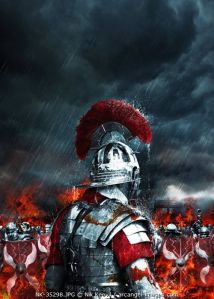
Τάγμα ἦν τῷ Μάρκῳ (καλοῦσι δὲ τὸ τάγμα οἱ Ῥωμαῖοι λεγεῶνα) τῶν ἀπὸ Μελιτηνῆς στρατιωτῶν· εἰσὶ δὲ τὸν Χριστὸν πρεσβεύοντες ἅπαντες. ἐν οὖν τῇ μάχῃ ἐκείνῃ προσιόντα τῷ Μάρκῳ τὸν ἔπαρχον, ἀμηχανοῦντι πρὸς τὴν περίστασιν καὶ δεδιότι περὶ σύμπαντι τῷ στρατῷ, εἰπεῖν λέγεται ὡς οἱ καλούμενοι Χριστιανοὶ οὐκ ἔστιν ὅ τι οὐ δύνανται ταῖς εὐχαῖς, καὶ ὅτι παρὰ σφίσι τάγμα ὅλον τυγχάνει ὂν τούτου τοῦ γένους. τὸν οὖν Μάρκον ἀκούσαντα παρακλήσει χρήσασθαι πρὸς αὐτοὺς ὡς ἂν εὔξωνται τῷ σφετέρῳ θεῷ, εὐξαμένων δὲ αὐτῶν παραχρῆμα ἐπακούσαντα τὸν θεὸν τοὺς μὲν πολεμίους κεραυνῷ βαλεῖν, τοὺς δὲ Ῥωμαίους ὄμβρῳ παραμυθήσασθαι· ἐφ’ οἷς καταπλαγέντα τὸν Μάρκον ἰσχυρῶς τούς τε Χριστιανοὺς κατὰ δόγμα τιμῆσαι καὶ τὴν λεγεῶνα κεραυνοβόλον προσαγορεῦσαι.
(Xiphilinus, Epitome Dionis 71.9.3-5)

Marcus had a division of soldiers (the Romans call a division a legion) from Melitene; and these people are all worshippers of Christ. Now it is stated that in this battle, when Marcus found himself at a loss what to do in the circumstances and feared for his whole army, the prefect approached him and told him that those who are called Christians can accomplish anything whatever by their prayers and that in the army there chanced to a whole division of this sect. Marcus on hearing this appealed to them to pray to their God; and when they had prayed, their God immediately gave ear and smote the enemy with a thunderbolt and comforted the Romans with a shower of rain. Marcus was greatly astonished at this and not only honored the Christians by an official decree but also named the legion the ‘thundering’ legion. (tr. Earnest Cary)

Obsidio

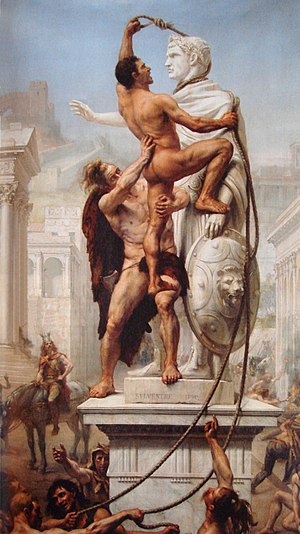
300px-Sack_of_Rome_by_the_Visigoths_on_24_August_410_by_JN_Sylvestre_1890
Joseph-Noël Sylvestre, Le Sac de Rome par les barbares en 410 (1890)

Finitis in Isaiam decem et octo Explanationum voluminibus, ad Ezechiel, quod tibi, et sanctae memoriae matri tuae Paulae, o Virgo Christi Eustochium, saepe pollicitus sum, transire cupiebam, et extremam, ut dicitur, manum operi imponere prophetali: et ecce subito mors mihi Pammachii atque Marcellae, Romanae urbis obsidio, multorumque fratrum et sororum dormitio nuntiata est. atque ita consternatus obstupui, ut nihil aliud diebus ac noctibus nisi de salute omnium cogitarem: meque in captivitate sanctorum putarem esse captivum, nec possem prius ora reserare, nisi aliquid certius discerem, dum inter spem et desperationem sollicitus pendeo, aliorumque malis me crucio. postquam vero clarissimum terrarum omnium lumen exstinctum est, immo Romani imperii truncatum caput, et, ut verius dicam, in una Urbe totus orbis interiit, “obmutui et humiliatus sum, et silui a bonis, et dolor meus renovatus est: concaluit cor meum intra me, et in meditatione mea exarsit ignis” [Ps. 38.4]; nec putavi illam sententiam negligendam: “musica in luctu importuna narratio” [Eccli. 22.6]. verum quia et tu indesinenter hoc flagitas, et magno vulneri cicatrix paulatim obducitur, Scorpiusque inter Enceladum et Porphyrionem Trinacriae humo premitur, et Hydra multorum capitum contra nos aliquando sibilare cessavit; datumque tempus, quo non haereticorum respondere insidiis, sed Scripturarum expositioni incumbere debeamus, aggrediar Ezechiel prophetam…
(Jerome, Comm. in Ezech. prooem. 1-2)

Having completed the eighteen books of the exposition of Isaiah, I was very desirous, Eustochium, Christ’s virgin, to go on to Ezekiel, in accordance with my frequent promises to you and your mother Paula, of saintly memory, and thus, as the saying is, put the finishing touches to the work on the prophets; but alas! intelligence was suddenly brought me of the death of Pammachius and Marcella, the siege of Rome, and the falling asleep of many of my brethren and sisters. I was so stupefied and dismayed that day and night I could think of nothing but the welfare of the community; it seemed as though I was sharing the captivity of the saints, and I could not open my lips until I knew something more definite; and all the while, full of anxiety, I was wavering between hope and despair, and was torturing myself with the misfortunes of other people. But when the bright light of all the world was put out, or, rather, when the Roman Empire was decapitated, and, to speak more correctly, the whole world perished in one city, “I became dumb and humbled myself, and kept silence from good words, but my grief broke out afresh, my heart glowed within me, and while I meditated the fire was kindled;” and I thought I ought not to disregard the saying, “An untimely story is like music in a time of grief.” But seeing that you persist in making this request, and a wound, though deep, heals by degrees; and the scorpion lies beneath the ground with Enceladus and Porphyrion, and the many-headed Hydra has at length ceased to hiss at us; and since opportunity has been given me which I ought to use, not for replying to insidious heretics, but for devoting myself to the exposition of Scripture, I will resume my work upon the prophet Ezekiel. (tr. William Henry Fremantle (?))

Urbi

Rome

Proxime dis consul, tantae qui prospicis urbi,
qua nihil in terris complectitur altius aether,
cuius nec spatium visus nec corda decorem
nec laudem vox ulla capit; quae luce metalli
aemula vicinis fastigia conserit astris;
quae septem scopulis zonas imitatur Olympi;
armorum legumque parens quae fundit in omnes
imperium primique dedit cunabula iuris.
haec est exiguis quae finibus orta tetendit
in geminos axes parvaque a sede profecta
dispersit cum sole manus. haec obvia fatis
innuneras uno gereret cum tempore pugnas,
Hispanas caperet, Siculas obsideret urbes
et Gallum terris prosterneret, aequore Poenum,
numquam succubuit damnis et territa nullo
vulnere post Cannas maior Trebiamque fremebat
et, cum iam premerent flammae murumque feriret
hostis, in extremos aciem mittebat Hiberos
nec stetit Oceano remisque ingressa profundum
vincendos alio quaesivit in orbe Britannos.
haec est in gremium victos quae sola recepit
humanumque genus communi nomine fovit
matris, non dominae ritu, civesque vocavit
quos domuit nexuque pio longinqua revinxit.
huius pacificis debemus moribus omnes,
quod veluti patriis regionibus utitur hospes;
quod sedem mutare licet; quod cernere Thylen
lusus et horrendos quondam penetrare recessus;
quod bibimus passim Rhodanum, potamus Orontem;
quod cuncti gens una sumus.
(Claudian, Cons. Stil. 3.130-159)

Consul, all but peer of the gods, protector of a city greater than any that upon earth
the air encompasseth, whose amplitude no eye can measure, whose beauty no imagination can picture, whose praise no voice can sound, who raises a golden head amid the neighbouring stars and with her seven hills imitates the seven regions of heaven, mother of arms and of law, who extends her sway o’er all the earth and was the earliest cradle of justice, this is the city which, sprung from humble beginnings, has stretched to either pole, and from one small place extended its power so as to be co-terminous with the sun’s light. Open to the blows of fate while at one and the same time she fought a thousand battles, conquered Spain, laid siege to the cities of Sicily, subdued Gaul by land and Carthage by sea, never did she yield to her losses nor show fear at any blow, but rose to greater heights of courage after the disasters of Cannae and Trebia, and, while the enemy’s fire threatened her, and her foe smote upon her walls, sent an army against the furthest Iberians. Nor did Ocean bar her way; launching upon the deep, she sought in another world for Britons to be vanquished. ‘Tis she alone who has received the conquered into her bosom and like a mother, not an empress, protected the human race with a common name, summoning those whom she has defeated to share her citizenship and drawing together distant races with bonds of affection. To her rule of peace we owe it that the world is our home, that we can live where we please, and that to visit Thule and to explore its once dreaded wilds is but a sport; thanks to her all and sundry may drink the waters of the Rhone and quaff Orontes’ stream, thanks to her we are all one people. (tr. Maurice Platnauer)

Diosēmia

tyana
Apollonius of Tyana

Προῄει δὲ ἐπὶ Γόρτυναν πόθῳ τῆς Ἴδης. ἀνελθὼν οὖν καὶ τοῖς θεολογουμένοις ἐντυχὼν ἐπορεύθη καὶ ἐς τὸ ἱερὸν τὸ Λεβηναῖον· ἔστι δὲ Ἀσκληπιοῦ καὶ ὥσπερ ἡ Ἀσία ἐς τὸ Πέργαμον, οὕτως ἐς τὸ ἱερὸν τοῦτο ξυνεφοίτα ἡ Κρήτη, πολλοὶ δὲ καὶ Λιβύων ἐς αὐτὸ περαιοῦνται· καὶ γὰρ τέτραπται πρὸς τὸ Λιβυκὸν πέλαγος κατὰ γοῦν τὴν Φαιστόν, ἔνθα τὴν πολλὴν ἀνείργει θάλατταν ὁ μικρὸς λίθος. Λεβηναῖον δὲ τὸ ἱερὸν ὠνομάσθαι φασίν, ἐπειδὴ ἀκρωτήριον ἐξ αὐτοῦ κατατείνει λέοντι εἰκασμένον, οἷα πολλὰ αἱ ξυντυχίαι τῶν πετρῶν ἀποφαίνουσι, μῦθόν τε ἐπὶ τῷ ἀκρωτηρίῳ ᾄδουσιν, ὡς λέων εἷς οὗτος γένοιτο τῶν ὑποζυγίων ποτὲ τῇ Ῥέᾳ. ἐνταῦθα διαλεγομένου ποτὲ τοῦ Ἀπολλωνίου περὶ μεσημβρίαν, διελέγετο δὲ πολλοῖς ἀνδράσιν, ὑφ’ ὧν τὸ ἱερὸν ἐθεραπεύετο, σεισμὸς ἀθρόως τῇ Κρήτῃ προσέβαλε, βροντὴ δὲ οὐκ ἐκ νεφῶν, ἀλλ’ ἐκ τῆς γῆς ὑπήχησεν, ἡ θάλαττα δὲ ὑπενόστησε στάδια ἴσως ἑπτά. καὶ οἱ μὲν πολλοὶ ἔδεισαν, μὴ τὸ πέλαγος ὑποχωρῆσαν ἐπισπάσηται τὸ ἱερὸν καὶ ἀπενεχθῶσιν, ὁ δὲ Ἀπολλώνιος “θαρσεῖτε”, ἔφη, “ἡ γὰρ θάλαττα γῆν ἔτεκε.” καὶ οἱ μὲν ᾤοντο αὐτὸν τὴν ὁμόνοιαν τῶν στοιχείων λέγειν, καὶ ὅτι μηδὲν ἂν ἡ θάλαττα νεώτερον ἐς τὴν γῆν ἐργάσαιτο, μετὰ δὲ ἡμέρας ὀλίγας ἀφικόμενοί τινες ἐκ τῆς Κυδωνιάτιδος ἤγγειλαν, ὅτι κατὰ τὴν ἡμέραν τε καὶ μεσημβρίαν, ἣν ἐγένετο ἡ διοσημία, νῆσος ἐκ τῆς θαλάττης ἀνεδόθη περὶ τὸν πορθμὸν τὸν διαρρἐοντα Θήραν τε καὶ Κρήτην. ἐάσαντες οὖν λόγων μῆκος ἔλθωμεν καὶ ἐπὶ τὰς ἐν Ῥώμῃ σπουδάς, αἳ ἐγένοντο αὐτῷ μετὰ τὰ ἐν Κρήτῃ.
(Philostratus, Apoll. 4.34)

[He] continued his course to Gortyna because he longed to visit Ida. He accordingly climbed up, and after visiting the sacred sites he passed on to the shrine of Leben. And this is a shrine of Asclepius, and just as the whole of Asia flocks to Pergamum, so the whole of Crete flocked to this shrine; and many Libyans also cross the sea to visit it, for it faces towards the Libyan sea close to Phaestus, where the little rock keeps out a might sea. And they say that this shrine is named that of Leben, because a promontory juts out from it which resembles a lion, for here, as often, a chance arrangement of the rocks suggests an animal form; and they tell a story about this promontory, how it was once one of the lions which were yoked in the chariot of Rhea. Here Apollonius was haranguing on one occasion about midday, and was addressing quite a number of people who were worshipping at the shrine, when an earthquake shook the whole of Crete at once, and a roar of thunder was heard to issue not from the clouds but from the earth, and the sea receded about seven stadia. And most of them were afraid that the sea by receding in this way would drag the temple after it, so that they would be carried away. But Apollonius said: “Be of good courage, for the earth hath borne land and brought it forth.” And they thought that he was alluding to the harmony of the elements, and was urging that the sea would never wreak any violence upon the land; but after a few days some travelers arrived from Cydoniatis and announced that on the very day on which this portent occurred and just at the same hour of midday, an island rose out of the sea in the firth between Thera and Crete. (tr. Frederick Cornwallis Conybeare, slightly adapted)

Polis

aristocrats

Κύρνε, πόλις μὲν ἔθ’ ἥδε πόλις, λαοὶ δὲ δὴ ἄλλοι,
οἳ πρόσθ’ οὔτε δίκας ᾔδεσαν οὔτε νόμους,
ἀλλ’ ἀμφὶ πλευραῖσι δορὰς αἰγῶν κατέτριβον,
ἔξω δ’ ὥστ’ ἔλαφοι τῆσδ’ ἐνεμοντο πόλεος.
καὶ νῦν εἰσ’ ἀγαθοί, Πολυπαΐδη· οἱ δὲ πρὶν ἐσθλοὶ
νῦν δειλοί. τίς κεν ταῦτ’ ἀνεχοιτ’ ἐσορῶν;
ἀλλήλους δ’ ἀπατῶσιν ἐπ’ ἀλλήλοισι γελῶντες,
οὔτε κακῶν γνώμας εἰδότες οὔτ’ ἀγαθῶν.
(Theognis, Eleg. 53-68)

Cyrnus, this city is still a city, but the people are different, people who formerly knew neither justice nor laws, but wore tattered goatskins about their sides and lived outside this city like deer. And now they are noble, Polypaïdes, while those who were noble before are now base. Who can endure the sight of this? They deceive one another and mock one another, knowing neither the distinctive marks of the base nor those of the noble. (tr. Douglas E. Gerber)

Lukaina

598px-Rubens,_Peter_Paul_-_Romulus_and_Remus_-_1614-1616
Peter Paul Rubens, Romulus en Remus, ca. 1615

Περὶ δὲ τῶν ἐκ τῆς Ἰλίας γενομένων Κόιντος μὲν Φάβιος ὁ Πίκτωρ λεγόμενος, ᾧ Λεύκιός τε Κίγκιος καὶ Κάτων Πόρκιος καὶ Πείσων Καλπούρνιος καὶ τῶν ἄλλων συγγραφέων οἱ πλείους ἠκολούθησαν, γέγραφε· ὡς κελεύσαντος Ἀμολίου τὰ βρέφη λαβόντες ἐν σκάφῃ κείμενα τῶν ὑπηρετῶν τινες ἔφερον ἐμβαλοῦντες εἰς τὸν ποταμὸν ἀπέχοντα τῆς πόλεως ἀμφὶ τοὺς ἑκατὸν εἴκοσι σταδίους. ἐπεὶ δὲ ἐγγὺς ἐγένοντο καὶ εἶδον ἔξω τοῦ γνησίου ῥείθρου τὸν Τέβεριν ὑπὸ χειμώνων συνεχῶν ἐκτετραμμένον εἰς τὰ πεδία, καταβάντες ἀπὸ τοῦ Παλλαντίου τῆς κορυφῆς ἐπὶ τὸ προσεχέστατον ὕδωρ, (οὐ γὰρ ἔτι προσωτέρω χωρεῖν οἷοίτε ἦσαν), ἔνθα πρῶτον ἡ τοῦ ποταμοῦ πλήμη τῆς ὑπωρείας ἥπτετο, τίθενται τὴν σκάφην ἐπὶ τοῦ ὕδατος. Ἡ δὲ μέχρι μέν τινος ἐνήχετο, ἔπειτα τοῦ ῥείθρου κατὰ μικρὸν ὑποχωροῦντος ἐκ τῶν περιεσχάτων λίθου προσπταίσει περιτραπεῖσα ἐκβάλλει τὰ βρέφη. τὰ μὲν δὴ κνυζούμενα κατὰ τοῦ τέλματος ἐκυλινδεῖτο, λύκαινα δέ τις ἐπιφανεῖσα νεοτόκος σπαργῶσα τοὺς μαστοὺς ὑπὸ γάλακτος ἀνεδίδου τὰς θηλὰς τοῖς στόμασιν αὐτῶν καὶ τῇ γλώττῃ τὸν πηλόν, ᾧ κατάπλεοι ἦσαν, ἀπελίχμα. ἐν δὲ τούτῳ τυγχάνουσιν οἱ νομεῖς ἐξελαύνοντες τὰς ἀγέλας ἐπὶ νομήν (ἤδη γὰρ ἐμβατὸν ἦν τὸ χωρίον) καί τις αὐτῶν ἰδὼν τὴν λύκαιναν ὡς ἠσπάζετο τὰ βρέφη τέως μὲν ἀχανὴς ἦν ὑπό τε θάμβους καὶ ἀπιστίας τῶν θεωρουμένων· ἔπειτ’ ἀπελθὼν καὶ συλλέξας ὅσους ἐδύνατο πλείστους τῶν ἀγχοῦ νεμόντων (οὐ γὰρ ἐπιστεύετο λέγων) ἄγει τοὖργον αὐτὸ θεασομένους. ὡς δὲ κἀκεῖνοι πλησίον ἐλθόντες ἔμαθον τὴν μὲν ὥσπερ τέκνα περιέπουσαν, τὰ δ’ ὡς μητρὸς ἐξεχόμενα, δαιμόνιόν τι χρῆμα ὁρᾶν ὑπολαβόντες ἐγγυτέρω προσῄεσαν ἀθρόοι δεδιττόμενοι βοῇ τὸ θηρίον. ἡ δὲ λύκαινα οὐ μάλα ἀγριαίνουσα τῶν ἀνθρώπων τῇ προσόδῳ, ἀλλ’ ὡσπερὰν χειροήθης ἀποστᾶσα τῶν βρεφῶν ἠρέμα καὶ κατὰ πολλὴν ἀλογίαν τοῦ ποιμενικοῦ ὁμίλου ἀπῄει.
(Dionysius of Halicarnassus, Rhōmaikē Archaiologia 1.79.4-7)

But concerning the babes born of Ilia, Quintus Fabius, called Pictor, whom Lucius Cincius, Porcius Cato, Calpurnius Piso and most of the other historians have followed, writes thus: By the order of Amulius some of his servants took the babes in an ark and carried them to the river, distant about a hundred and twenty stades from the city, with the intention of throwing them into it. But when they drew near and perceived that the Tiber, swollen by continual rains, had left its natural bed and overflowed the plains, they came down from the top of the Palatine hill to that part of the water that lay nearest (for they could no longer advance any farther) and set down the ark upon the flood where it washed the foot of the hill. The ark floated for some time, and then, as the waters retired by degrees from their extreme limits, it struck against a stone and, overturning, threw out the babes, who lay whimpering and wallowing in the mud. Upon this, a she-wolf that had just whelped appeared and, her udder being distended with milk, gave them her paps to suck and with her tongue licked off the mud with which they were besmeared. In the meantime the herdsmen happened to be driving their flocks forth to pasture (for the place was now become passable) and one of them, seeing the wolf thus fondling the babes, was for some time struck dumb with astonishment and disbelief of what he saw. Then going away and getting together as many as he could of his fellows who kept their herds near at hand (for they would not believe what he said), he led them to see the sight themselves. When these also drew near and saw the wolf caring for the babes as if they had been her young and the babes clinging to her as to their mother, they thought they were beholding a supernatural sight and advanced in a body, shouting to terrify the creature. The wolf, however, far from being provoked at the approach of the men, but as if she had been tame, withdrew gently from the babes and went away, paying little heed to the rabble of shepherds. (tr. Earnest Cary)

Iocos

Malcolm-McDowell-as-Caligula
Malcolm McDowell as Caligula

Inter varios iocos, cum assistens simulacro Iovis Apellen tragoedum consuluisset uter illi maior videretur, cunctantem flagellis discidit collaudans subinde vocem deprecantis quasi etiam in gemitu praedulcem. quotiens uxoris vel amiculae collum exoscularetur, addebat: ‘tam bona cervix simul ac iussero demetur.’ quin et subinde iactabat exquisiturum se vel fidiculis de Caesonia sua, cur eam tanto opere diligeret.
(Suetonius, Cal. 33)

Among his other jokes, he once asked the actor Apelles, when he was next to a statue of Jupiter, which of them was the greater and when Appeles hesitated to answer, he had him flayed with scourges, praising the quality of his voice, as he cried out for mercy, as delightful even when groaning. Whenever he kissed the neck of a wife or a mistress, he would add: ‘This lovely neck would be severed the minute I gave the order.’ Indeed, from time to time he would exlaim that he might even have to use torture on his own Caesonia to find out from her why he loved her so very much. (tr. Catharine Edwards)

Theous

Flickr_-_Lukjonis_-_Moth_Caterpillar_-_Cerura_vinula

This is part 3 of 3. Part 1 is here. Part 2 is here.

Καὶ καθάπερ Ἡράκλειτος λέγεται πρὸς τοὺς ξένους εἰπεῖν τοὺς βουλομένους ἐντυχεῖν αὐτῷ, οἳ ἐπειδὴ προσιόντες εἶδον αὐτὸν θερόμενον πρὸς τῷ ἰπνῷ ἔστησαν (ἐκέλευε γὰρ αὐτοὺς εἰσιέναι θαρροῦντας· εἶναι γὰρ καὶ ἐνταῦθα θεούς), οὕτω καὶ πρὸς τὴν ζήτησιν περὶ ἑκάστου τῶν ζῴων προσιέναι δεῖ μὴ δυσωπούμενον, ὡς ἐν ἅπασιν ὄντος τινὸς φυσικοῦ καὶ καλοῦ.
(Aristotle, Part. An. 645a19-24)

And just as Heraclitus is said to have spoken to the visitors, who were wanting to meet him but stopped as they were approaching when they saw him warming himself at the oven—he kept telling them to come in and not to worry, “fore there are gods here too”—so we should approach the inquiry about each animal without aversion, knowing that in all of them there is something natural and beautiful. (tr. David M. Balme)