Young men do not have as much suffering as is inflicted upon us tender-hearted women. They have friends of their own age to whom they can confidently tell their cares and sorrows, the games they pursue can cheer them, and they stroll the streets and let their eyes wander from one colorful picture to another. We on the contrary are not even allowed to look on the light, but are kept hidden in dark chambers, the prey of our thoughts. (tr. William Roger Paton, revised by Michael A. Tueller)
Proprie quaedam tamen de costa dicenda sunt; quia iuxta viscera est, gravioribusque periculis is locus expositus est. haec quoque igitur interdum sic finditur, ut ne summum quidem os sed interior pars eius, quae rara est, laedatur, interdum sic, ut eam totam is casus perruperit. si tota fracta non est, nec sanguis exspuitur nec febricula sequitur, nec quicquam suppurat, nisi admodum raro, nec dolor magnus est: tactu tamen is locus leniter indolescit. sed abunde est eadem, quae supra scripta sunt, facere, et a media fascea incipere deligare, ne in alterutram partem haec cutem inclinet. ab uno vero et vicensimo die, quo utique os esse debet glutinatum, id agendum cibis uberioribus est, ut corpus quam plenissimum fiat, quo melius os vestiat, quod illo loco tenerum adhuc iniuriae sub tenui cute expositum est. per omne autem tempus curationis vitandus clamor, strictior quoque <vox>, tumultus, ira, motus vehementior corporis, fumus, pulvis, et quicquid vel tussim vel sternumentum movet; ne spiritum quidem magnopere continere expedit. at si tota costa perfracta est, casus asperior est: nam et graves inflammationes et febris et suppuratio et saepe vitae periculum sequitur: et sanguis spuitur.
(Celsus, De Medicina 8.9.1a-b)
There is, however, something special to be said of the rib, because it is near the viscera, and that region is exposed to greater danger. A rib then is sometimes split so as not to injure the upper bone, but only the thin structure on its inner side; sometimes it is completely broken across. If the fracture is incomplete, blood is not expectorated, and fever does not follow, nor is there suppuration except very rarely, nor great pain; nevertheless there is some tenderness to touch, but it is quite enough to do what has been described above, and to begin the bandaging from the middle of the bandage that it may not displace the skin to either side. Then after twenty-one days, by which time the bone ought to have formed a firm union, a fuller diet is to be administered in order to fatten the body as much as possible, so as to cover the bone better, for the bone there whilst still tender is liable to injury owing to the thinness of the skin. But during the whole course of recovery the patient must avoid shouting or even straining the voice, noise, anger, violent bodily movements, smoke, dust, and anything that causes a cough or sneeze; it is not even advisable to hold the breath for long. But if a rib has been broken right across the case is more severe; for grave inflammations follow and fever and suppuration and often danger to life: and blood is expectorated. (tr. Walter George Spencer)
Pompeius paucis post diebus in Thessaliam pervenit contionatusque apud cunctum exercitum suis agit gratias, Scipionis milites cohortatur ut parta iam victoria praedae ac praemiorum velint esse participes. receptisque omnibus in una castra legionibus suum cum Scipione honorem partitur classicumque apud eum cani et alterum illi iubet praetorium tendi. auctis copiis Pompei duobusque magnis exercitibus coniunctis pristina omnium confirmatur opinio, et spes victoriae augetur, adeo ut quicquid intercederet temporis id morari reditum in Italiam videretur, et si quando quid Pompeius tardius aut consideratius faceret, unius esse negotium diei sed illum delectari imperio et consulares praetoriosque servorum habere numero dicerent. iamque inter se palam de praemiis ac de sacerdotiis contendebant in annosque consulatum definiebant, alii domos bonaque eorum qui in castris erant Caesaris petebant.
(Caesar, De Bello Civili 3.82.1-3)
Pompeius reached Thessaly a few days later, and, haranguing his whole army, thanks his own men and exhorts those of Scipio to consent to share the plunder and prizes of war when once the victory is won, and after getting all the legions into one camp, he shares his official dignity with Scipio and gives orders that the bugle should be sounded before him and a second pavilion erected for his headquarters. By this accession to the forces of Pompeius and the joining of two large armies into one, the old confidence of the troops is confirmed and their hope of victory increased, so that the interval that separated them from battle seemed merely a postponement of their return to Italy; and whenever any action of Pompeius showed some degree of slowness and deliberation, they declared it was only a single day’s task, but that he was making the most of his imperial command and treating men of consular and praetorian rank as though they were slaves. Already they openly contended for rewards and priesthoods and apportioned the consulship for successive years, while others clamoured for the houses and property of those who were in Caesar’s camp. (tr. Arthur George Peskett)
Bested in the hand-to-hand fighting, the people climbed to the housetops and rained down upon the praetorians tiles, stones, and clay pots. In this way they inflicted severe injuries upon the soldiers, who, being unfamiliar with the houses, did not dare to climb after them, and, of course, the doors of the shops and houses were barred. The soldiers did, however, set fire to houses that had wooden balconies (and there were many of this type in the city). Because a great number of houses were made chiefly of wood, the fire spread very rapidly and without a break throughout most of the city. Many men who lost their vast and magnificent properties, valuable for the large incomes they produced and for their expensive decorations, were reduced from wealth to poverty. A great many people died in the fire, unable to escape because the exits had been blocked by the flames. All the property of the wealthy was looted when the criminal and worthless elements in the city joined with the soldiers in plundering. And the part of Rome destroyed by fire was greater in extent than the largest intact city in the empire. (tr. Edward C. Echols)
Lusibus et multum nostris cantata libellis,
optima silvarum, formosis densa virectis,
tondebis virides umbras, nec laeta comantes
iactabis molles ramos inflantibus auris
(nec mihi saepe meum resonabit, Battare, carmen),
militis impia cum succidet dextera ferro
formosaeque cadent umbrae, formosior illis
ipsa cades, veteris domini felicia ligna—
nequiquam: nostris potius devota libellis
ignibus aetheriis flagrabis. Iuppiter (ipse
Iuppiter hanc aluit), cinis haec tibi fiat oportet.
Thraecis tum Boreae spirent immania vires,
Eurus agat mixtam fulva caligine nubem,
Africus immineat nimbis minitantibus imbrem.
cum tu, cyaneo resplendens aethere, silva,
. . . . . . . . . . . . . . . . . . . . . . . . . . . . . . . . . . . . . . . . . .
vicinae flammae rapiant ex ordine vites,
pascantur segetes, diffusis ignibus auras
transvolet, arboribus coniungat et ardor aristas.
pertica qua nostros metata est impia agellos,
qua nostri fines olim, cinis omnia fiat.
(Pseudo-Vergil, Dirae 26-46)
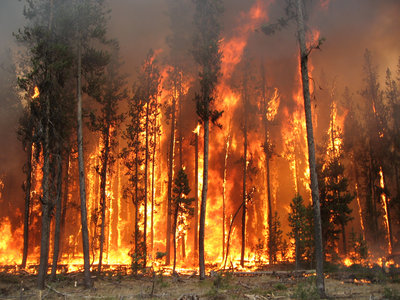
You, best of woods, oft sung in my playful songs and verses, beautiful in your thick foliage, you will shear your green shade; nor will you toss your soft boughs’ joyous foliage to the breezes blowing through them; nor, O Battarus, shall it oft resound for me with my song. When with his axe the soldier’s impious hand shall fell it and the lovely shadows fall, you, more lovely than they, shall fall, the old owner’s happy timber. Yet all for naught! Rather, cursed by my verses, you will burn with heaven’s fires. O Jupiter (it was Jupiter himself who nurtured this wood), this you must turn into ashes!Then let the strength of the Thracian North emit his mighty blasts; let the East drive a cloud with tawny darkness mixed; let the South-West menace with storm clouds threatening rain. When, O wood, ablaze in the dark-blue sky, <you are utterly consumed by fire>, let nearby flames tear the vines out of their regular order, let them feed on the crops, let the breeze, scattering sparks, fly across, and let the fire unite the corn ears with the trees. Where the wicked rod measured our fields, where once were our boundaries, let all be reduced to ash. (tr. Henry Rushton Fairclough, revised by George Patrick Goold)
Cities gleam with radiance and charm, and the whole earth has been beautified like a garden. Smoke rising from plains and fire signals for friend and foe have disappeared, as if a breath had blown them away, beyond land and sea. Every charming spectacle and an infinite number of festal games have been introduced instead. Thus like an ever-burning sacred fire the celebration never ends, but moves around from time to time and people to people, always somewhere, a demonstration justified by the way all men have fared. Thus it is right to pity only those outside your hegemony, if indeed there are any, because they lose such blessings. It is you again who have best proved the general assertion, that Earth is mother of all and common fatherland. Now indeed it is possible for Hellene or non-Hellene, with or without his property, to travel wherever he will, easily, just as if passing from fatherland to fatherland. Neither Cilician Gates nor narrow sandy approaches to Egypt through Arab country, nor inaccessible mountains, nor immense stretches of river, nor inhospitable tribes of barbarians cause terror, but for security it suffices to be a Roman citizen, or rather to be one of those united under your hegemony. Homer said, “Earth common of all,” and you have made it come true. You have measured and recorded the land of the entire civilized world; you have spanned the rivers with all kinds of bridges and hewn highways through the mountains and filled the barren stretches with posting stations; you have accustomed all areas to a settled and orderly way of life. (tr. James H. Oliver)
Roberto Bompiania, Il triclinio (ca. 1887; detail)
Respiciens deinde Habinnam: “quid dicis,” inquit, “amice carissime? aedificas monumentum meum quemadmodum te iussi? valde te rogo, ut secundum pedes statuae meae catellam pingas et coronas et unguenta et Petraitis omnes pugnas, ut mihi contingat tuo beneficio post mortem vivere; praeterea ut sint in fronte pedes centum, in agrum pedes ducenti. omne genus enim poma volo sint circa cineres meos, et vinearum largiter. valde enim falsum est vivo quidem domos cultas esse, non curari eas, ubi diutius nobis habitandum est. et ideo ante omnia adici volo: “hoc monumentum heredem non sequitur”. ceterum erit mihi curae, ut testamento caveam ne mortuus iniuriam accipiam. praeponam enim unum ex libertis sepulcro meo custodiae causa, ne in monumentum meum populus cacatum currat. te rogo, ut naves etiam facias plenis velis euntes, et me in tribunali sedentem praetextatum cum anulis aureis quinque et nummos in publico de sacculo effundentem; scis enim, quod epulum dedi binos denarios. faciatur, si tibi videtur, et triclinia. facies et totum populum sibi suaviter facientem. ad dexteram meam pones statuam Fortunatae meae columbam tenentem; et catellam cingulo alligatam ducat; et cicaronem meum, et amphoras copiosas gypsatas, ne effluant vinum. et urnam licet fractam sculpas, et super eam puerum plorantem. horologium in medio, ut quisquis horas inspiciet, velit nolit, nomen meum legat. inscriptio quoque vide diligenter si haec satis idonea tibi videtur: “C. Pompeius Trimalchio Maecenatianus hic requescit. huic seviratus absenti decretus est. cum posset in omnibus decuriis Romae esse, tamen noluit. pius, fortis, fidelis, ex parvo crevit, sestertium reliquit trecenties, nec unquam philosophum audivit. vale: et tu.” haec ut dixit Trimalchio, flere coepit ubertim. flebat et Fortunata, flebat et Habinnas, tota denique familia, tanquam in funus rogata, lamentatione triclinium implevit. immo iam coeperam etiam ego plorare, cum Trimalchio: “ergo”, inquit, “cum sciamus nos morituros esse, quare non vivamus? sic nos felices videam, coniciamus nos in balneum, meo periculo, non paenitebit. sic calet tanquam furnus.” —”vero, vero,” inquit Habinnas, “de una die duas facere, nihil malo” nudisque consurrexit pedibus et Trimalchionem gaudentem subsequi <coepit>.
(Petronius, Sat. 71.5-72.4)
Then looking at Habinnas, he said: “What have you to say, my dear old friend? Are you building my monument the way I told you? I particularly want you to keep a place at the foot of my statue and put a picture of my pup there, as well as paintings of wreaths, scent-bottles, and all the contests of Petraites, and thanks to you I’ll be able to live on after I’m dead. And another thing! See that it’s a hundred feet facing the road and two hundred back into the field. I want all the various sorts of fruit round my ashes and lots and lots of vines. After all, it’s a big mistake to have nice houses just for when you’re alive and not worry about the one we have to live in for much longer. And that’s why I want this written up before anything else:
‘THIS MONUMENT DOES NOT GO TO THE HEIR’.
But I’ll make sure in my will that I don’t get done down once I’m dead. I’ll put one of my freedmen in charge of my tomb to look after it and not let people run up and shit on my monument. I’d like you to put some ships there too, sailing under full canvas, and me sitting on a high platform in my robes of office, wearing five gold rings and pouring out a bagful of money for the people. You know I gave them all a dinner and two denarii apiece. Let’s have in a banqueting hall as well, if you think it’s a good idea, and show the whole town having a good time. Put up a statue of Fortunata on my right, holding a dove, and have her leading her little dog tied to her belt—and my little lad as well, and big wine-jars tightly sealed up so the wine won’t spill. And perhaps you could carve me a broken one and a boy crying over it. A clock in the middle, so that anybody who looks at the time, like it or not, has got to read my name. As for the inscription now, take a good look and see if this seems suitable enough:
‘HERE SLEEPS
GAIUS POMPEIUS TRIMALCHIO
MAECENATIANUS
ELECTED TO THE AUGUSTAN COLLEGE IN HIS ABSENCE
HE COULD HAVE BEEN ON EVERY BOARD IN ROME
BUT HE REFUSED
GOD-FEARING BRAVE AND TRUE
A SELF-MADE MAN
HE LEFT AN ESTATE OF 30,000,000
AND HE NEVER HEARD A PHILOSOPHER
FAREWELL
AND YOU FARE WELL, TRIMALCHIO'”
As he finished Trimalchio burst into tears. Fortunata was in tears, Habinnas was in tears, in the end the whole household filled the dining-room with their wailing, like people at a funeral. In fact, I’d even begun crying myself, when Trimalchio said: “Well, since we know we’ve got to die, why don’t we live a little. I want to see you enjoying yourselves. Let’s jump into a bath—you won’t be sorry, damn me! It’s as hot as a furnace.” “Hear! Hear!” said Habinnas. “Turning one day into two – nothing I like better.” He got up in his bare feet and began to follow Trimalchio on his merry way. (tr. John Patrick Sullivan)
For when you hear of fire, do not suppose the fire in that world to be like this: for fire in this world burns up and makes away with anything which it takes hold of; but that fire is continually burning those who have once been seized by it, and never ceases: therefore also is it called unquenchable. For those also who have sinned must put on immortality, not for honour, but to have a constant supply of material for that punishment to work upon; and how terrible this is, speech could never depict, but from the experience of little things it is possible to form some slight notion of these great ones. For if you should ever be in a bath which has been heated more than it ought to be, think then, I pray you, on the fire of hell: or again if you are ever inflamed by some severe fever transfer your thoughts to that flame, and then you will be able clearly to discern the difference. For if a bath and a fever so afflict and distress us, what will our condition be when we have fallen into that river of fire which winds in front of the terrible judgment-seat. Then we shall gnash our teeth under the suffering of our labours and intolerable pains: but there will be no one to succour us: yea we shall groan mightily, as the flame is applied more severely to us, but we shall see no one save those who are being punished with us, and great desolation. And how should any one describe the terrors arising to our souls from the darkness? for just as that fire has no consuming power so neither has it any power of giving light: for otherwise there would not be darkness. The dismay produced in us then by this, and the trembling and the great astonishment can be sufficiently realized in that day only. For in that world many and various kinds of torment and torrents of punishment are poured in upon the soul from every side. (tr. W.R.W. Stephens)
This is part 3 of 3. Part 1 is here. Part 2 is here.
“Ceterum homines superbissimi procul errant. maiores eorum omnia quae licebat illis reliquere, divitias, imagines, memoriam sui praeclaram; virtutem non reliquere, neque poterant: ea sola neque datur dono neque accipitur. sordidum me et incultis moribus aiunt, quia parum scite convivium exorno neque histrionem ullum neque pluris preti coquom quam vilicum habeo. quae mihi lubet confiteri, Quirites; nam ex parente meo et ex aliis sanctis viris ita accepi, munditias mulieribus, viris laborem convenire, omnibusque bonis oportere plus gloriae quam divitiarum esse; arma, non supellectilem decori esse. quin ergo, quod iuvat, quod carum aestumant, id semper faciant: ament, potent; ubi adulescentiam habuere, ibi senectutem agant, in conviviis, dediti ventri et turpissumae parti corporis; sudorem, pulverem et alia talia relinquant nobis, quibus illa epulis iucundiora sunt. verum non ita est. nam ubi se flagitiis dedecoravere turpissimi viri, bonorum praemia ereptum eunt. ita iniustissume luxuria et ignavia, pessumae artes, illis qui coluere eas nihil officiunt, rei publicae innoxiae cladi sunt.”
(Sallust, Bell. Iug. 85.38-43)
But these men are filled with arrogance and they are very wrong. Their ancestors left them all that they could leave: wealth, family portraits, the glorious memory of their own actions; they did not leave them virtue, nor could they. That is the only thing that cannot be given or received as a gift. They say I am vulgar and uneducated because I do know how to set an elegant dinner table and I do not have an actor or a cook worth more than my foreman. But I’m pleased to confess that this is true, citizens. For I have learned from my parents and other righteous men that elegance is for women, labour is for men; that good men ought to have more glory than wealth; that armour is the true ornament, not furniture. Well, then, let them always do what they enjoy, what they consider valuable: let them fall in love, get drunk, continue to do in old age what they did as young men—attend banquets, remain dedicated to their belly and the shameful parts of their body. Let them leave to us the sweat and the dust and other such things; to us these things are sweeter than banquets. But, it doesn’t happen like that. For when these most disgraceful men have debased themselves with their own dereliction, they set out to steal the rewards due to good men. And so it is most unjust that these most wicked practices, extravagant wastefulness and cowardly indolence, do no damage to those who adopt
them, but they are the ruin of the innocent Republic. (tr. William W. Batstone)
This is part 2 of 3. Part 1 is here. Part 3 is here.
“Equidem ego non ignoro, si iam mihi respondere velint, abunde illis facundam et compositam orationem fore. sed in maxumo vostro beneficio cum omnibus locis meque vosque maledictis lacerent, non placuit reticere, ne quis modestiam in conscientiam duceret. nam me quidem ex animi mei sententia nulla oratio laedere potest; quippe vera necesse est bene praedicent, falsa vita moresque mei superant. sed quoniam vostra consilia accusantur, qui mihi summum honorem et maxumum negotium imposuistis, etiam atque etiam reputate, num eorum paenitendum sit. non possum fidei causa imagines neque triumphos aut consulatus maiorum meorum ostentare, at, si res postulet, hastas, vexillum, phaleras, alia militaria dona, praeterea cicatrices advorso corpore. hae sunt meae imagines, haec nobilitas, non hereditate relicta, ut illa illis, sed quae ego meis plurumis laboribus et periculis quaesivi. non sunt composita verba mea; parvi id facio. ipsa se virtus satis ostendit; illis artificio opus est, ut turpia facta oratione tegant. neque litteras Graecas didici; parum placebat eas discere, quippe quae ad virtutem doctoribus nihil profuerant. at illa multo optima rei publicae doctus sum: hostem ferire, praesidia agitare, nihil metuere nisi turpem famam, hiemem et aestatem iuxta pati, humi requiescere, eodem tempore inopiam et laborem tolerare. his ego praeceptis milites hortabor; neque illos arte colam, me opulenter, neque gloriam meam, laborem illorum faciam. hoc est utile, hoc civile imperium. namque cum tute per mollitiem agas, exercitum supplicio cogere, id est dominum, non imperatorem esse. haec atque alia talia maiores vostri faciundo seque remque publicam celebravere. quis nobilitas freta, ipsa dissimilis moribus, nos illorum aemulos contemnit et omnis honores non ex merito, sed quasi debitos a vobis repetit.”
(Sallust, Bell. Iug. 85.26-37)
I am fully aware that if they wanted to respond to me now, they would deliver a very eloquent and crafted oration. But on the occasion of the very great kindness you have bestowed, since they cut me and you at every opportunity with insults, I did not want to be silent. I did not want modesty to be construed as a guilty conscience. In fact, it is my heartfelt opinion that no speech can damage me: the truth necessarily speaks well for me; lies are refuted by my life and character. But it is your judgement that is denounced, you who gave me the greatest office and the most important mission, and so you must consider again and again whether your action is to be regretted. I cannot justify your confidence by bringing forth the portraits or triumphs or consulships of my ancestors; but, if circumstances demand, I can bring forth spears, a banner, medallions, other military honours, and in addition the scars on the front of my body. These are my family portraits, my nobility, not an inheritance bequeathed to me, as theirs is, but won by my own many labours and dangers. My words are not well crafted; I care little for that. Manly virtue can present itself well enough; they are the ones who need artifice to hide their shameful deeds with a speech. And I have not learned Greek: I had no desire to learn that which of course was of no help in teaching the teachers virtue. But I have learned those things that are most important to the state: to strike the enemy, to defend a position, to fear nothing but a disgraceful report, to endure alike the cold of winter and the heat of summer, to sleep on the ground, to sustain hunger and hard work at the same time. These are the lessons I urge upon my soldiers. And I am not stingy with them while being lavish with myself; I do not give them the labour and take glory for myself. This is effective, this is civic command. For when you live a soft life of safety, but coerce an army with threats of punishment, that is to be a slave-owner, not a commander. It was by doing these and other similar things that your ancestors glorified themselves and their state. But the aristocrats, relying on that glory, while being themselves of a very different character, hold us in contempt, though we emulate their ancestors. And then they seek from you all the political offices, not because they deserve them, but as if they were entitled to them. (tr. William W. Batstone)






 Crambe Repetita