Malakōtate

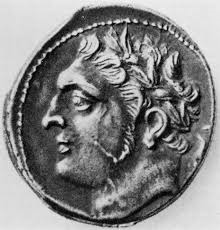
Hasdrubal

Κἀν τούτῳ λαθὼν ὁ Ἀσδρούβας ἔφυγε πρὸς τὸν Σκιπίωνα μετὰ θαλλῶν· καὶ αὐτὸν ὁ Σκιπίων ἐκάθισε πρὸ ποδῶν ἑαυτοῦ, καὶ τοῖς αὐτομόλοις ἐπεδείκνυεν. οἱ δ’ ὡς εἶδον, ᾔτησαν ἡσυχίαν σφίσι γενέσθαι, καὶ γενομένης Ἀσδρούβᾳ μὲν ἐλοιδορήσαντο πολλὰ καὶ ποικίλα, τὸν δὲ νεὼν ἐνέπρησάν τε καὶ κατεκαύθησαν. τὴν δὲ γυναῖκα τοῦ Ἀσδρούβα λέγουσιν, ἀπτομένου τοῦ πυρὸς ἀντικρὺ τοῦ Σκιπίωνος γενομένην, κατακοσμήσασθαί τε ὡς ἐν συμφοραῖς ἐδύνατο, καὶ παραστησαμένην τὰ τέκνα εἰπεῖν ἐς ἐπήκοον τοῦ Σκιπίωνος: “σοὶ μὲν οὐ νέμεσις ἐκ θεῶν, ὦ Ῥωμαῖε· ἐπὶ γὰρ πολεμίαν ἐστράτευσας· Ἀσδρούβαν δὲ τόνδε πατρίδος τε καὶ ἱερῶν καὶ ἐμοῦ καὶ τέκνων προδότην γενόμενον οἵ τε Καρχηδόνος δαίμονες ἀμύναιντο, καὶ σὺ μετὰ τῶν δαιμόνων.” εἶτ’ ἐς τὸν Ἀσδρούβαν ἐπιστρέψασα εἶπεν· “ὦ μιαρὲ καὶ ἄπιστε καὶ μαλακώτατε ἀνδρῶν, ἐμὲ μὲν καὶ τοὺς ἐμοὺς παῖδας τόδε τὸ πῦρ θάψει· σὺ δὲ τίνα κοσμήσεις θρίαμβον ὁ τῆς μεγάλης Καρχηδόνος ἡγεμών; τίνα δ᾽ οὐ δώσεις δίκην τῷδε ᾧ παρακαθέζῃ;” τοσαῦτ’ ὀνειδίσασα κατέσφαξε τοὺς παῖδας, καὶ ἐς τὸ πῦρ αὐτούς τε καὶ ἑαυτὴν ἐπέρριψεν. ὧδε μέν φασι τὴν Ἀσδρούβα γυναῖκα, ὡς αὐτὸν ἐχρῆν Ἀσδρούβαν, εἰποῦσαν ἀποθανεῖν.
(Appian, Rhōmaïka 8.131-132)

Thereupon Hasdrubal secretly presented himself to Scipio, bearing an olive branch. Scipio commanded him to sit at his feet and there showed him to the deserters. When they saw him, they asked silence, and when it was granted, they heaped all manner of reproaches upon Hasdrubal, then set fire to the temple and were consumed in it. It is said that as the fire was lighted the wife of Hasdrubal, in full view of Scipio, arrayed in the best attire possible under such circumstances, and with her children by her side, said in Scipio’s hearing, “For you, Roman, the gods have no cause of indignation, since you exercise the right of war. Upon this Hasdrubal, betrayer of his country and her temples, of me and his children, may the gods of Carthage take vengeance, and you be their instrument.” Then turning to Hasdrubal, “Wretch,” she exclaimed, “traitor, most effeminate of men, this fire will entomb me and my children. Will you, the leader of great Carthage, decorate a Roman triumph? Ah, what punishment will you not receive from him at whose feet you are now sitting.” Having reproached him thus, she slew her children, flung them into the fire, and plunged in after them. Such, they say, was the death of the wife of Hasdrubal, which would have been more becoming to himself. (tr. Horace White)

Falli

Cheating-Spouse

This is part 3 of 3. Part 1 is here. Part 2 is here.

Nil equidem inquiram, nec quae celare parabis
insequar, et falli muneris instar erit.
si tamen in media deprensa tenebere culpa,
et fuerint oculis probra videnda meis,
quae bene visa mihi fuerint, bene visa negato —
concedent verbis lumina nostra tuis.
prona tibi vinci cupientem vincere palma est,
sit modo ‘non feci!’ dicere lingua memor.
cum tibi contingat verbis superare duobus,
etsi non causa, iudice vince tuo!
(Ovid, Am. 3.14.41-50)

For my part I’’ll not enquire, not seek to know what you hide, and treat deception as a gift. But if I catch you in the guilty act, and your shame’’s visible to my eyes, deny I’’ve really seen what I’’ve really seen.– I’’ll accept your words and not my sight. It’’s easy for you to win the palm if I want to be beaten, just remember to say the words: ‘’I didn’’t!’’ While you succeed in winning with those two words, though you’’ve no case, you’’ll conquer the judge too! (tr. Tony Kline)

Lascivia

maxresdefault-2

This is part 2 of 3. Part 1 is here. Part 3 is here.

Est qui nequitiam locus exigat; omnibus illum
deliciis imple, stet procul inde pudor!
hinc simul exieris, lascivia protinus omnis
absit, et in lecto crimina pone tuo.
illic nec tunicam tibi sit posuisse pudori
nec femori impositum sustinuisse femur;
illic purpureis condatur lingua labellis,
inque modos Venerem mille figuret amor;
illic nec voces nec verba iuvantia cessent,
spondaque lasciva mobilitate tremat!
indue cum tunicis metuentem crimina vultum,
et pudor obscenum diffiteatur opus;
da populo, da verba mihi; sine nescius errem,
et liceat stulta credulitate frui!
Cur totiens video mitti recipique tabellas?
cur pressus prior est interiorque torus?
cur plus quam somno turbatos esse capillos
collaque conspicio dentis habere notam?
tantum non oculos crimen deducis ad ipsos;
si dubitas famae parcere, parce mihi!
mens abit et morior quotiens peccasse fateris,
perque meos artus frigida gutta fluit.
tunc amo, tunc odi frustra quod amare necesse est;
tunc ego, sed tecum, mortuus esse velim!
(Ovid, Am. 3.14.17-40)

If there’’s a place demands naughtiness: then fill it with all delights, let shame be far away! Likewise when you leave off, straightaway forget all lasciviousness: leave the sin there, in your bed. There, don’’t let your slip make you over-shy, or not allow your thigh to press against a thigh: there, let my tongue be buried between your rosy lips, and let desire shape a thousand ways to love: there, don’’t let your words and sounds of delight cease, let the naughty bed tremble at your agility! Then, with your dress, put on the face that fears sin, and let shame disown the works of obscenity: Tell me, tell people anything: let me err without knowing, and let me enjoy a fool’’s credulity! Why do I see so many notes received and given? Why are the pillow and the sheet wrinkled? Why do I have to see such obvious love-bites on your neck, and your hair disturbed by more than sleep? You only hide the sin itself from my eyes: If you hesitate to spare your reputation, well spare me! My mind’’s gone, I’’m dying, when you confess your crimes, and the blood runs cold in my whole body. Then I love, and hate, in vain, what I have to love: then I wish, with you, that I was dead! (tr. Tony Kline)

Imitare

William-Adolphe Bouguereau, Idylle, 1851
William-Adolphe Bouguereau, Idylle (1851)

This is part 1 of 3. Part 2 is here. Part 3 is here.

Non ego, ne pecces, cum sis formosa, recuso,
sed ne sit misero scire necesse mihi;
nec te nostra iubet fieri censura pudicam,
sed tamen, ut temptes dissimulare, rogat.
non peccat, quaecumque potest peccasse negare,
solaque famosam culpa professa facit.
quis furor est, quae nocte latent, in luce fateri,
et quae clam facias facta referre palam?
ignoto meretrix corpus iunctura Quiriti
opposita populum summovet ante sera;
tu tua prostitues famae peccata sinistrae
commissi perages indiciumque tui?
sit tibi mens melior, saltemve imitare pudicas,
teque probam, quamvis non eris, esse putem.
quae facis, haec facito; tantum fecisse negato,
nec pudeat coram verba modesta loqui!
(Ovid, Am. 3.14.1-16)

I don’’t say ‘don’’t sin’, since you’’re beautiful, but there’’s no need for me, poor fool, to know: and no censure of mine demands that you’’re chaste, it only asks that you try and conceal it. She didn’’t sin, if she can deny she sinned, only confession makes crimes notorious. What madness to expose, by day, what midnight hides: why make what’’s secret into a well-known fact? Some whore who couples with a nameless citizen moves away from the crowd before it’’s too late. Will you prostitute your sins for worthless fame and talk about what you’’ve done to fuel opinion? Improve your ways: at least pretend you’’re chaste, and I can approve, thinking you what you’’re not. What you do, keep doing it: just deny it, and don’’t be ashamed to speak modestly in public! (tr. Tony Kline)

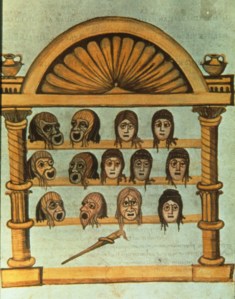
Comoedias

masksonshelves

Sedigitus in libro, quem scripsit de poëtis, quid de his sentiat, qui comoedias fecerunt, et quem praestare ex omnibus ceteris putet ac deinceps, quo quemque in loco et honore ponat, his versibus suis demonstrat:
multos incertos certare hanc rem vidimus,
palmam poëtae comico cui deferant.
eum meo iudicio errorem dissolvam tibi,
ut, contra si quis sentiat, nihil sentiat.
Caecilio palmam Statio do comico.
Plautus secundus facile exsuperat ceteros.
dein Naevius, qui fervet, pretio in tertiost.
si erit, quod quarto detur, dabitur Licinio.
post insequi Licinium facio Atilium.
in sexto consequetur hos Terentius,
Turpilius septimum, Trabea octavum optinet,
nono loco esse facile facio Luscium.
decimum addo causa antiquitatis Ennium.
[Volcacius Sedigitus, fr. 1]
(Aulus Gellius, Noct. Att. 15.24)

In the book he wrote about poets, Sedigitus demonstrates in the following verses what he thinks of those who wrote comedies and whom he believes to suprass all others, and finally to which position of honor he assigns each individual: “we see that many debate this manner, being uncertain to which comic poet they should assign the victory parlm. By my judgment, I will resolve this uncertainty for you, so that, if anyone thinks otherwise, that opinion has no value. I give the victory palm to the comic poet Caecilius Statius. Plautus, in second place, easily surpasses the others. Then Naevius, who is passionate, is in third position. If there is something to give to the one in fourth place, it will be given to Licinius. I have Attilius following Licinius. In sixth place Terence will follow them, Turpilius holds seventh, Trabea eighth position. I easily put Luscius [Lanuvinus] in ninth place. As the tenth poet I add Ennius by virtue of his antiquity.” (tr. Gesine Manuwald)

Huperopsiai

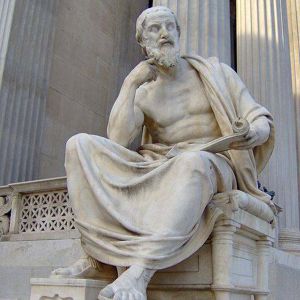
Heródoto

Ὅσα δ’ ἄλλα πρὸς τούτῳ τολμήματα καὶ ῥήματα τῶν Σπαρτιατῶν παραλέλοιπεν*, ἐν τῷ Λεωνίδου βίῳ γραφήσεται. μικρὰ δ’ οὐ χεῖρόν ἐστι καὶ νῦν διελθεῖν. ἀγῶνα μὲν γὰρ ἐπιτάφιον αὐτῶν ἠγωνίσαντο πρὸ τῆς ἐξόδου καὶ τοῦτον ἐθεῶντο πατέρες αὐτῶν καὶ μητέρες· αὐτὸς δ’ ὁ Λεωνίδας πρὸς μὲν τὸν εἰπόντα παντελῶς ὀλίγους ἐξάγειν αὐτὸν ἐπὶ τὴν μάχην “πολλοὺς μὲν” ἔφη “τεθνηξομένους”· πρὸς δὲ τὴν γυναῖκα, πυνθανομένην ἐξιόντος εἴ τι λέγοι, μεταστραφεὶς εἶπεν “ἀγαθοῖς γαμεῖσθαι καὶ ἀγαθὰ τίκτειν.” ἐν δὲ Θερμοπύλαις μετὰ τὴν κύκλωσιν δύο τῶν ἀπὸ γένους ὑπεξελέσθαι βουλόμενος ἐπιστολὴν ἐδίδου τῷ ἑτέρῳ καὶ ἔπεμπεν· ὁ δ’ οὐκ ἐδέξατο φήσας μετ’ ὀργῆς “μαχατάς τοι, οὐκ ἀγγελιαφόρος, εἱπόμαν”· τὸν δ’ ἕτερον ἐκέλευεν εἰπεῖν τι πρὸς τὰ τέλη τῶν Σπαρτιατῶν ὁ δ’ ἀπεκρίνατο τῷ πράγματι, καὶ τὴν ἀσπίδα λαβὼν εἰς τάξιν κατέστη. ταῦτ’ οὐκ ἄν τις ἐπετίμησεν, ἄλλου παραλιπόντος; ὁ δὲ τὴν Ἀμάσιδος ἀποψόφησιν καὶ τὴν τῶν ὄνων τοῦ κλέπτου προσέλασιν καὶ τὴν τῶν ἀσκῶν ἐπίδοσιν καὶ πολλὰ τοιαῦτα συναγαγὼν καὶ διαμνημονεύων, οὐκ ἀμελείᾳ δόξειεν ἂν καὶ ὑπεροψίᾳ προΐεσθαι καλὰ μὲν ἔργα, καλὰς δὲ φωνὰς, ἀλλ’ οὐκ εὐμενὴς ὢν πρὸς ἐνίους, οὐδὲ δίκαιος.

* sc. Ἡρόδοτος

(Plutarch, Peri tēs Hērodotou kakoētheias 32)

What other acts and sayings of the Spartans Herodotus has omitted, we will write in the Life of Leonidas; yet that hinders not but we may here set down also some few. Before Leonidas went forth to that war, the Spartans exhibited to him funeral games, at which the fathers and mothers of those that went along with him were spectators. Leonidas himself, when one said to him, “You lead very few with you to the battle”, answered, “There are many to die there”. When his wife, at his departure, asked him what commands he had for her; he, turning to her, said, “I command you to marry good men, and bring them good children”. After he was enclosed by the enemy at Thermopylae, desiring to save two that were related to him, he gave one of them a letter and sent him away; but he rejected it, saying angrily, “I followed you as a soldier, not as a post”. The other he commanded on a message to the magistrates of Sparta; but he, answering by his act, took his shield, and stood up in his rank. Who would not have blamed another that should have omitted these things? But he who has collected and recorded the fart of Amasis, the coming of the thiefs asses, and the giving of bottles, and many such like things, cannot seem to have omitted these gallant acts and these remarkable sayings by negligence and oversight, but as bearing ill-will and being unjust to some. (tr. William W. Goodwin)

Allegorici

dante-alighieri-860x573

Ad evidentiam itaque dicendorum sciendum est quod istius operis non est simplex sensus, ymo dici potest polysemos, hoc est plurium sensuum; nam primus sensus est qui habetur per litteram, alius est qui habetur per significata per litteram. et primus dicitur litteralis, secundus vero allegoricus, sive moralis, sive anagogicus. qui modus tractandi, ut melius pateat, potest considerari in hiis versibus: “in exitu Israel de Egipto, domus Iacob de populo barbaro, facta est Iudea sanctificatio eius, Israel potestas eius”. nam si ad litteram solam inspiciamus, significatur nobis exitus filiorum Israel de Egipto, tempore Moysis; si ad allegoriam, nobis significatur nostra redemptio facta per Christum; si ad moralem sensum, significatur nobis conversio anime de luctu et miseria peccati ad statum gratie; si ad anagogicum, significatur exitus anime sancte ab huius corruptionis servitute ad eterne glorie libertatem. et quanquam isti sensus mystici variis appellentur nominibus, generaliter omnes dici possunt allegorici, cum sint a litterali sive historiali diversi. Nam allegoria dicitur ab alleon grece, quod in Latinum dicitur alienum sive diversum.
(Dante Alighieri, Epist. 10.7)

For the elucidation, therefore, of what we have to say, it must be understood that the meaning of this work is not of one kind only; rather the work may be described as ‘polysemous’, that is, having several meanings; for the first meaning is that which is conveyed by the letter, and the next is that which is conveyed by what the letter signifies; the former of which is called literal, while the latter is called allegorical, or mystical [or moral, or anagogical]. And for the better illustration of this method of exposition we may apply it to the following verses: “When Israel went out of Egypt, the house of Jacob from a people of strange language; Judah was his sanctuary, and Israel his dominion”. For if we consider the letter alone, the thing signified to us is the going out of the children of Israel from Egypt in the time of Moses; if the allegory, our redemption through Christ is signified; if the moral sense, the conversion of the soul from the sorrow and misery of sin to a state of grace is signified; if the anagogical, the passing of the sanctified soul from the bondage of the corruption of this world to the liberty of everlasting glory is signified. And although these mystical meanings are called by various names, they may one and all in a general sense be termed allegorical, inasmuch as they are different (diversi) from the literal or historical; for the word ‘allegory’ is so called from the Greek alleon, which in Latin is alienum (‘strange’) or diversum (‘different’). (tr. Paget Toynbee)

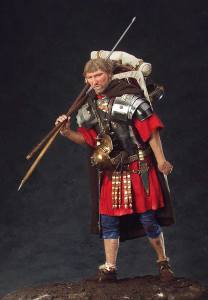
Muli

RomanLegionary_Full

C. Marius recidendorum impedimentorum gratia, quibus maxime exercitus agmen oneratur, vasa et cibaria militis in fasciculos aptata furcis imposuit, sub quibus et habile onus et facilis requies esset; unde et proverbium tractum est “muli Mariani”.
(Frontinus, Strat. 4.1.7)

For the purpose of limiting the number of pack animals, by which the march of the army was especially hampered, Gaius Marius had his soldiers fasten their utensils and food up in bundles and hang these on forked poles, to make the burden easy and to facilitate rest; whence the expression “Marius’s mules.” (tr. Charles E. Bennett)

Suntagma

brand_new_and_second_hand_medical_books_1462728266_6a9f53f5

Οὐχ ὡς τῶν παλαιοτέρων ἐν τοῖς κατὰ τὴν τέχνην τι παραλελοιπότων τήνδε τὴν πραγματείαν ἐποιησάμην, ἀλλὰ συντόμου χάριν διδασκαλίας· τοὐναντίον γὰρ ἐκείνοις μὲν ὀρθῶς τε καὶ ἀνελλιπῶς ἅπαντα πεφιλοπόνηται, οἱ δὲ νεώτεροι πρὸς τῷ μηδὲ τὴν ἀρχὴν ἐπιχειρεῖν ἐντυγχάνειν αὐτοῖς ἔτι μὴν καὶ ἀδολεσχίαν αὐτῶν κατηγοροῦσιν. ὅθεν ἐπὶ τὸ παρὸν ἥκω σύνταγμα τοῖς μέν, ὡς εἰκός, ἔχειν αὐτὸ βουλομένοις ὑπόμνημα γενησόμενον, ἐμοὶ δὲ γυμνάσιον. ἄτοπον γὰρ τοὺς μὲν ῥήτορας τοῖς συντόμοις τε καὶ συνεκδήμοις ὑπ’ αὐτῶν ὀνομαζομένοις χρῆσθαι δικανικοῖς συντάγμασιν, ἐν οἷς ἁπάντων ἐμφέρεται τῶν νόμων τὰ κεφάλαια πρὸς τὸ τῆς χρείας ἕτοιμον, ἡμᾶς δὲ τούτων καταμελεῖν, καίπερ ἐκείνων μὲν οὐ πρὸς ὀλίγον μόνον αλλ’ ἤδη καὶ συχνὸν ὑπερτίθεσθαι χρόνον πρὸς ἐπίσκεψιν δυναμένων, ἡμῶν δὲ μηδαμῶς ἢ πάνυ γε σπανίως τὴν τοιαύτην ἐχόντων ἐξουσίαν· τὰ γάρ τοι τῆς χρείας ἐπὶ τινων νοσημάτων ἀπαραίτητον πολλάκις ἔχει τὴν ἀγνίαν· διόπερ ὀρθῶς Ἱπποκράτης ὀξὺν ἀπεφήνατο τὸν καιρόν. ἐκείνους μὲν γὰρ ἐν μόναις σχεδὸν ταῖς πόλεσι κατεπείγει τῶν πραγμάτων τὸ χρήσιμον, ἔνθα καὶ τῶν βιβλίων ἄφθονός ἐστιν εὐπορία, τοῖς δὲ ἰατροῖς οὐκ ἐν πόλεσι μόνον ἢ ἀγροῖς ἢ καί τισιν ἐρήμοις χωρίοις ἀλλ’ ἤδη καὶ κατὰ θάλατταν πολλάκις ἐν αὐταῖς ναυσὶν ἐξαιφνίδιος νοσημάτων ἀνάγκη προσπίπτει, ἐφ’ ὧν ἡ ἀναβολὴ θάνατον ἢ πάντως γε κίνδυνον ἔσχατον ἀπεργάζεται. πάσας δὲ τὰς ἰατρικὰς μεθόδους ἢ τὴν κατὰ μέρος πᾶσαν ὕλην διὰ μνήμης ἔχειν τῶν χαλεπωτάτων ἢ καὶ παντάπασιν ἀδυνάτων ἐστίν· διόπερ τήνδε τὴν ἐπίτομον ἐκ τῶν ἀρχαίων ἐνεστησάμην συναγωγήν. οὔτε γὰρ ἐμὰ παρεθέμην ἐν αὐτῇ γεννήματα πλὴν ὀλίγων δή τινων, ὅσαπερ ἐν τοῖς τῆς τέχνης ἔργοις εἶδόν τε καὶ ἐπείρασα.
(Paul of Aegina, Comp., prooemium)

It is not because the more ancient writers had omitted anything relative to the Art that I have composed this work, but in order to give a compendious course of instruction; for, on the contrary, everything is handled by them properly, and without any omissions, whereas the moderns have not only in the first place neglected the study of them, but have also blamed them for prolixity. Wherefore, I have undertaken the following Treatise, which, it is like, will serve as a commentary to those who may choose to consult it, whilst it will prove an exercise to me. For it appears strange that lawyers should be possessed of compendious and, as they call them, popular legal synopses, in which are contained the heads of all the laws, to serve for immediate use, whilst we neglect these things, although they have it generally in their power to put off the investigation of any point not only for little but even for a considerable time, whereas we can seldom or very rarely do so; for, in many cases, necessity requires that we act promptly, and hence Hippocrates has properly said, “the season is brief” [Aph. 1.1]. For their business is generally conducted in the midst of cities, where there is an abundant supply of books, whereas physicians have to act not only in cities, in the fields, and in desert places, but also at sea in ships, where such diseases sometimes suddenly break out as, in the event of procrastination, would occasion death, or at least incur the most imminent danger. But to remember all the rules of the healing art, and all the particular substances connected with it, is exceedingly difficult if not altogether impossible. On this account I have compiled this brief collection from the works of the ancients, and have set down little of my own, except a few things which I have seen and tried in the practice of the art. (tr. Francis Adams)

Apriliōi

a47732617463fb27bffd42c9300fdf33

Μηνὶ Ἀπριλίῳ

Τῷ μηνὶ τούτῳ ἁρμόζει ἀπέχεσθαι ῥεφάνους, ἡδύοσμον, κάππαρι, πέπερι, ὤκιμον, θρύμβην καὶ πάντα τὰ δριμέα. ἐν κρέοις ἁρμόζει ἐσθίειν τρυφερὰ καὶ εὔσαρκα, ἄρνας νεμομένας, μὴ γαλακτεροὺς καὶ γαλακτοτρόφους αὐτῶν, καὶ ἐρίφους γαλακτερούς· καὶ ὅσα διὰ προβέων, κριῶν νέων καὶ εὐνούχων ψαχνὰ δίεφθα. ἐκ δὲ τούτων λαμβάνειν καὶ ζωμοὺς μετρίως καρυκευτοὺς διὰ στάχους, κολιάνδρου χλωροῦ καὶ ὀλίγου πεπέρεως καὶ φυλλοσπέρματος κνήκου διὰ τὸ ἔκλυτον ποιεῖν τὴν κοιλίαν. τῶν δὲ τῶν ὑῶν κρεῶν ἀπέχεσθαι δεῖ. ἐκ δὲ τῶν ὀρνέων ἐσθίειν ὄρνιθας καὶ ὀρνιθόπουλα τὰ ἄρρενα καὶ περιστερόπουλα λευκὰ καὶ νήσσας καὶ χῆνας τρυφερὰς καὶ ψαχνὰ δίεφθα· ἐκ τούτων λαμβάνειν καὶ ζωμοὺς μετρίως καὶ γλύκιστα χλία καὶ ὀπτά. γλυκοφαγεῖν καὶ γλυκοποτεῖν. ἐκ δὲ τῶν ἰχθύων λάβρακας, συάκια, χρυσόφια, φάγρους ἐν ζωμῷ ὀλίγῳ καρυκευτῷ· λαπίνας δὲ καὶ χάνους καὶ κόκκυγας καὶ σαύρους καὶ μελανούρους καὶ ἁπλῶς εἰπεῖν ὅσα μαλακόσαρκα καὶ ἔχοντα λέπια ἐσθίειν τηγάνου, ὀλίγα δὲ καρυκεύειν, καὶ μὴ ἀπλήστως. ἐκ δὲ τῶν ὀσπρίων παντοίων ἀπέχεσθαι τῶν ξηρῶν. τὰ δὲ χλωρὰ ἐσθίειν μετὰ τῶν προλεχθέντων κρεῶν. ἐκ δὲ τῶν λαχάνων ἐσθίειν τὸ χρυσολάχανον, τὸ ἄνηθον καὶ τὸ κολίανδρον χλωρὰ καὶ μαρούλι μετρίως ὀξυγαρίζειν ἐν ὄξει σκιλλιτικῷ. ἐσθίειν δὲ καὶ σκόροδα ἑφθὰ σὺν ἐλαίῳ καὶ ἅλατι, καὶ τὸ πράσον ὀλίγον. παντοίων δὲ ξηρῶν ἀπέχεσθαι χρεὼν τῶν ὀπωρῶν. οἴνους δὲ τοὺς εὐωδεστάτους καὶ ἀνισάτους καὶ λευκοὺς χρᾶσθαι. ὁμοίως δὲ καὶ μύρα ὀσφραίνεσθαι ἴα, ῥόδα, κρίνα, χαμαίμηλα καὶ πάντα ἄνθη τὰ εὔοσμα καὶ τῶν ξηρῶν μύρων τὸν μόσχον καὶ ῥοδόσταγμαν. καὶ μετρίως ἀφροδισιάζειν. λουτρὰ δὲ η’ δι’ ὅλου τοῦ μηνός· σμήχεσθαι δὲ διὰ σάπωνος γαλλικοῦ. ψίλωθρον δὲ χρίεσθαι ἅπαξ τοῦ μηνὸς ἄνευ τῆς ἀλόης, μόσχον δὲ ἐκεῖνον ἔχον, κρόκους ᾠῶν τριῶν καὶ ῥόδινον ἔλαιον.
(Hierophilus, Pōs opheilei diaitasthai anthrōpos eph’ hekastōi mēni, Mēni Apriliōi)

April

This month one should avoid radishes, mint, capers, pepper, basil, savory and all bitter flavours. Among meats choose those that are rich and well-fleshed: lambs that are grass-fed, not suckling, but that have been suckled by their mothers, and they may be young males or castrated; suckling kids: lean meat well boiled. With this take gravy moderately spiced with spikenard, green coriander and a little pepper, and the fruit of safflower because it relaxes the bowels. Avoid pork. Among birds, eat hens, male chickens, white pigeons, ducks and geese; lean meat well boiled. With this take gravy moderately [spiced]. Serve sweetened, while still hot. Sweet food and sweet drinks are the rule. Among fish, bass, syakia, daurade, pagre in a little well-spiced sauce; wrasse, perch, gurnard, scad, oblade, and to speak simply all tender-fleshed scaly fish are to be eaten fried, with a little spiced sauce, no excessive quantity. Avoid all dried pulses, but fresh pulses may be eaten with the meats listed above. Among vegetables eat orach, dill and coriander, all green, and lettuce, which requires moderate dressing in squill vinegar*. Also eat boiled garlic cloves with olive oil and salt, and a little leek. Avoid all dried fruits. Drink highly aromatic, anise-flavoured, and white wines. Inhale the scents of violets, roses, lilies, wild chamomile and all aromatic flowers, and among ‘dry’ scents those of musk and attar of roses. Moderate love-making. Eight baths in the course of the month; soap with Gallic soap. Apply a skin lotion once in the month, with no aloes; it should contain musk, three egg yolks and rose oil.

* Squill root (Urginea maritima), now often said to be poisonous, was once important in Byzantine cuisine and medicine.

(tr. Andrew Dalby, with his note)