Placere

fennec-fox-pup-for-sale-wallpaper-2

Si meus aurita gaudet lagalopece Flaccus,
si fruitur tristi Canius Aethiope,
Publius exiguae si flagrat amore catellae,
si Cronius similen cercopithecon amat,
delectat Marium si perniciosus ichneumon,
pica salutatrix si tibi, Lause, placet,
si gelidum collo nectit †Gadilla† draconem,
luscinio tumulum si Telesilla dedit:
blanda Cupidinei cur non amet ora Labyrtae,
qui videt haec dominis monstra placere suis?
(Martial 7.87)

If my Flaccus delights in a long-eared fennec, if Canius enjoys a sombre Ethiop, if Publius is a-fire with love for a tiny lapdog, if Cronius adores a long-tailed monkey that resembles him, if a destructive ichneumon charms Marius, if a magpie that can speak your name pleases you, Lausus, if Glaucilla(?) twines a clammy snake about her neck, if Telesilla gave a tomb to a nightingale, why should not anyone who sees these freaks pleasing their owners not love the face of Cupid’s Labyrtas? (tr. David Roy Shackleton Bailey)

Meretricia

clothing-lingerie-oh-9088xblacksilver_3

Si quis virgines appellasset, si tamen ancillari veste vestitas, minus peccare videtur: multo minus, si meretricia veste feminae, non matrum familiarum vestitae fuissent. si igitur non matronali habitu femina fuerit et quis eam appellavit vel ei comitem abduxit, iniuriarum non tenetur.
(Ulpian, Dig. 47.10.15.15) 

If someone accosts respectable young girls, even though they are in slaves’ clothing, he is understood to commit a lesser offense: a much lesser offense, if the women were dressed as prostitutes and not as respectable women. Therefore, if a woman has not been wearing respectable clothing and someone has accosted her or abducted her compagnion, he is not liable to the action on outrage. (tr. Thomas A.J. McGinn)

Tetherapeusai

site_0491_0011-750-0-20151105103027
Sanctuary of Asclepius at Epidaurus

Ἐπὶ ἱερέως Πο(πλίου) Αἰλ(ίου) Ἀντιόχου.
Μ(ᾶρκος) Ἰούλιος Ἀπελλᾶς Ἰδριεὺς Μυλασεὺς μετεπέμφθην ὑπὸ τοῦ θεοῦ, πολλάκις εἰς νόσους ἐνπίπτων καὶ ἀπεψίαις χρώμενος. κατὰ δὴ τὸν πλοῦν ἐν Αἰγείνῃ ἐκέλευσέν με μὴ πολλὰ ὀργίζεσθαι. ἐπεὶ δὲ ἐγενόμην ἐν τῷ ἱερῷ, ἐκέλευσεν ἐπὶ δύο ἡμέρας συνκαλύψασθαι τὴν κεφαλήν, ἐν αἷς ὄμβροι ἐγένοντο, τυρὸν καὶ ἄρτον προλαβεῖν, σέλεινα μετὰ θρίδακος, αὐτὸν δι’ αὑτοῦ λοῦσθαι, δρόμῳ γυμνάζεσθαι, κιτρίου προλαμβάνειν τὰ ἄκρα, εἰς ὕδωρ ἀποβρέξαι, πρὸς ταῖς ἀκοαῖς ἐν βαλανείῳ προστρίβεσθαι τῷ τοίχῳ, περιπάτῳ χρῆσθαι ὑπερῴῳ, αἰώραις, ἁφῇ πηλώσασθαι, ἀνυπόδητον περιπατεῖν, πρὶν ἐνβῆναι ἐν τῷ βαλανείῳ εἰς τὸ θερμὸν ὕδωρ οἶνον περιχέασθαι, μόνον λούσασθαι καὶ Ἀττικὴν δοῦναι τῷ βαλανεῖ, κοινῇ θῦσαι Ἀσκληπιῷ, Ἠπιόνῃ, Ἐλευσεινίαις, γάλα μετὰ μέλιτος προλαβεῖν· μιᾷ δὲ ἡμέρᾳ πιόντός μου γάλα μόνον, εἶπεν· “μέλι ἔμβαλλε εἰς τὸ γάλα, ἵνα δύνηται διακόπτειν.” ἐπεὶ δὲ ἐδεήθην τοῦ θεοῦ θᾶττόν με ἀπολῦσαι, ᾤμην νάπυϊ καὶ ἁλσὶν κεχρειμένος ὅλος ἐξιέναι κατὰ τὰς ἀκοὰς ἐκ τοῦ ἀβάτου, παιδάριον δὲ ἡγεῖσθαι θυμιατήριον ἔχον ἀτμίζον καὶ τὸν ἱερέα λέγειν· “τεθεράπευσαι, χρὴ δὲ ἀποδιδόναι τὰ ἴατρα.” καὶ ἐποίησα, ἃ εἶδον, καὶ χρείμενος μὲν τοῖς ἁλσὶ καὶ τῶι νάπυϊ ὑγρῶι ἤλγησα, λούμενος δὲ οὐκ ἤλγησα. ταῦτα ἐν ἐννέα ἡμέραις ἀφ’ οὗ ἦλθον. ἥψατο δέ μου καὶ τῆς δεξιᾶς χιρὸς καὶ τοῦ μαστοῦ, τῇ δὲ ἑξῆς ἡμέρᾳ ἐπιθύοντός μου φλὸξ ἀναδραμοῦσα ἐπέφλευσε τὴν χεῖρα, ὡς καὶ φλυκταίνας ἐξανθῆσαι· μετ’ ὀλίγον δὲ ὑγιὴς ἡ χεὶρ ἐγένετο. ἐπιμείναντί μοι ἄνηθον μετ’ ἐλαίου χρήσασθαι πρὸς τὴν κεφαλαλγίαν εἶπεν. οὐ μὴν ἤλγουν τὴν κεφαλήν. συνέβη οὖν φιλολογήσαντί μοι συνπληρωθῆναι· χρησάμενος τῷ ἐλαίῳ ἀπηλάγην τῆς κεφαλαλγίας. ἀναγαργαρίζεσθαι ψυχρῷ πρὸς τὴν σταφυλὴν—καὶ γὰρ περὶ τούτου παρεκάλεσα τὸν θεὸν— τὸ αὐτὸ καὶ πρὸς παρίσθμια. ἐκέλευσεν δὲ καὶ ἀναγράψαι ταῦτα. χάριν εἰδὼς καὶ ὑγιὴς γενόμενος ἀπηλλάγην.
(IG IV².1.126 = SIG 1170)

When P. Aelius Antiochus was priest, I, Marcus Iulius Apellas, from Idrias (a suburb of Mylasa), was summoned by the god, for I was often falling into illnesses and suffering from indigestion. During my journey by boat he told me, in Aegina, not to be so irritable all the time. When I entered the sanctuary, he told me to keep my head covered for two days (it was raining during this time), to eat bread and cheese and celery with lettuce, to bathe without any assistance, to run for exercise, to take lemon rind and soak it in water, to rub myself against the wall in the bath near the “Ears” [i.e., a place where “voices” were heard?], to go for a walk on the “Upper Portico,” to swing on a swing [or: to engage in passive exercise?], to smear myself with mud, to walk barefoot, to pour wine all over myself before climbing into the hot pool in the bathing establishment, to bathe all alone, to give an Attic drachma to the attendant, to offer a joint sacrifice to Asclepius, Epione, and the goddesses of Eleusis, and to drink milk with honey. One day when I drank only milk, the god said: “Put honey in your milk, so it can strike through [or: have the right effect, i.e., act as a laxative].” When I urged the god to heal me more quickly, I had a vision: I was walking out of the sanctuary toward the “Ears,” rubbed with salt and mustard all over, and a little boy holding a smoking censer was leading me, and the priest said to me: “You are cured; now pay the fee.” I did what I had seen [i.e., acted out my vision]. When they rubbed me with salt and liquid mustard, it hurt, but after I had taken a bath, it hurt no longer. All this happened within nine days after my arrival. The god touched my left hand and my breast. On the following day, as I was offering a sacrifice, the flame leapt up and burned my hand so that blisters appeared. Soon afterward my hand healed. I stayed on, and the god told me to use anise with olive oil for my headache. Actually, I had no headache. But after I had done some studying it happened that I suffered from congestion of the brain. Taking olive oil, I got rid of my headache. [I was also told] to gargle with cold water for my swollen uvula—for I had asked the god for help with this problem, too— and the same treatment for the tonsils. The god also told me to write all this down. I left, feeling grateful and restored to health. (tr. Georg Luck)

Apesbeto

553004_orig

Γίνωσκε τοίνυν ὡς ἡ τοῦ Χριστοῦ ἀνίκητος καὶ ἀήττητος ὑπάρχει ἰσχύς τε καὶ δύναμις· πάντως δὲ καὶ αὐτὸς πεπληροφόρησαι ἐξ ὧν σοι χρησμῶν Ὀριβάσιος ὁ ἰατρὸς καὶ κουαίστωρ παρὰ τοῦ ἐν Δελφοῖς Ἀπόλλωνος ἄρτι κεκόμικεν· ἐγὼ δέ σοι καὶ τὸν χρησμόν, κἂν μὴ βούλῃ, ἐπαναγνώσομαι·
εἴπατε τῷ βασιλῆϊ· χαμαὶ πέσε δαίδαλος αὐλά.
οὐκέτι Φοῖβος ἔχει καλύβαν, οὐ μάντιδα δάφναν,
οὐ παγὰν λαλέουσαν. ἀπέσβετο καὶ λάλον ὕδωρ.
(Philostorgius, Hist. Eccl. 7.1c = John of Rhodes, Artemii Passio 35)

Know therefore that the strength and power of Christ is invincible and unconquerable. You yourself are certainly convinced of this from the oracles that the physician and quaestor Oribasius recently brought you from the Apollo in Delphi. But I will repeat the oracle to you, whether you wish to hear it or not. It runs as follows:
Go tell the king the wondrous hall is fallen to the ground.
Now Phoebus has a cell no more, no laurel that foretells,
No talking spring; the water that once spoke is heard no more. (tr. Philip R. Amidon)

Anoige

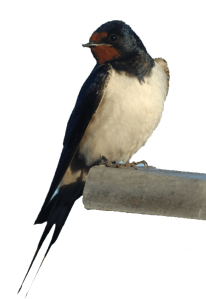
xbarn_swallow.png.pagespeed.ic.I-KEz34aSw

ἦλθ’ ἦλθε χελιδὼν
καλὰς ὥρας ἄγουσα,
καλοὺς ἐνιαυτούς,
ἐπὶ γαστέρα λευκά,
ἐπὶ νῶτα μέλαινα.
παλάθαν σὺ προκύκλει
ἐκ πίονος οἴκου
οἴνου τε δέπαστρον
τυροῦ τε κάνυστρον·
καὶ πύρνα χελιδών
καὶ λεκιθίταν
οὐκ ἀπωθεῖται· πότερ’ ἀπίωμες ἢ λαβώμεθα;
εἰ μέν τι δώσεις· εἰ δὲ μή, οὐκ ἐάσομες·
ἢ τὰν θύραν φέρωμες ἢ τὸ ὑπέρθυρον
ἢ τὰν γυναῖκα τὰν ἔσω καθημέναν·
μικρὰ μέν ἐστι, ῥᾳδίως νιν οἴσομες.
ἂν δὴ τι †φέρῃς τι, μέγα δή τι† φέροις·
ἄνοιγ’ ἄνοιγε τὰν θύραν χελιδόνι·
οὐ γὰρ γέροντές ἐσμεν, ἀλλὰ παιδία.
(Anonymous, PMG 848)

The swallow has come, has come,
bringing fine weather,
the fine time of year,
white on its belly,
black on its back.
You, roll out a fruit-cake
from your well-stocked house
and a cup of wine
and a basket of cheese.
The swallow does not
refuse wheaten bread nor pulse-bread.
Shall we go away or shall we get something?
If you are to give us something; if not, we won’t
leave you alone. We’ll carry off your door or the lintel
of your door or your wife who sits inside;
she is little, we’ll easily carry her.
If you bring something, let’s hope you bring us something
big; open up, open up the door to the swallow;
for we are not old men, but little children.
(tr. Dimitrios Yatromanolakis)

Dos

ImperialBusts

Aiunt quidam, quod et veri simile videtur, Commodum Antoninum, successorem illius ac filium, non esse de eo natum sed de adulterio,ac talem fabellam vulgari sermone contexunt: Faustinam quondam, Pii filiam, Marci uxorem, cum gladiatores transire vidisset, unius ex his amore succensam, cum longa aegritudine laboraret, viro de amore confessam. quod cum ad Chaldaeos Marcus rettulisset, illorum fuisse consilium, ut occiso gladiatore sanguine illius sese Faustina sublavaret atque ita cum viro concumberet. quod cum esset factum, solutum quidem amorem, natum vero Commodum gladiatorem esse, non principem, qui mille prope pugnas publice populo inspectante gladiatorias imperator exhibuit, ut in vita eius docebitur. quod quidem veri simile ex eo habetur quod tam sancti principis filius iis moribus fuit quibus nullus lanista, nullus scaenicus, nullus arenarius, nullus postremo ex omnium dedecorum ac scelerum colluvione concretus. multi autem ferunt Commodum omnino ex adulterio natum, si quidem Faustinam satis constet apud Caietam condiciones sibi et nauticas et gladiatorias elegisse. de qua cum diceretur Antonino Marco, ut eam repudiaret, si non occideret, dixisse fertur “si uxorem dimittimus, reddamus et dotem”. dos autem quid habebatur? imperium, quod ille ab socero volente Hadriano adoptatus acceperat. tantum sane valet boni principis vita sanctitas tranquillitas pietas ut eius famam nullius proximi decoloret invidia. denique Antonino, cum suos mores semper teneret neque alicuius insusurratione mutaretur, non obfuit gladiator filius, uxor infamis; deusque etiam nunc habetur, ut vobis ipsis, sacratissime imperator Diocletiane, et semper visum est et videtur, qui eum inter numina vestra non ut ceteros sed specialiter veneramini ac saepe dicitis, vos vita et clementia tales esse cupere qualis fuit Marcus, etiamsi philosophia nec Plato esse possit, si revertatur in vitam. et quidem haec breviter et congeste.
(Historia Augusta, Vita Marci Aureli Antonini 19)

Some say, and it seems plausible, that Commodus Antoninus, his son and successor, was not begotten by him, but in adultery; they embroider this assertion, moreover, with a story current among the people. On a certain occasion, it was said, Faustina, the daughter of Pius and wife of Marcus, saw some gladiators pass by, and was inflamed for love of one of them; and afterwards, when suffering from a long illness, she confessed the passion to her husband. And when Marcus reported this to the Chaldeans, it was their advice that Faustina should bathe in his blood and thus couch with her husband. 4 When this was done, the passion was indeed allayed, but their son Commodus was born a gladiator, not really a prince; for afterwards as emperor he fought almost a thousand gladiatorial bouts before the eyes of the people, as shall be related in his life. This story is considered plausible, as a matter of fact, for the reason that the son of so virtuous a prince had habits worse than any trainer of gladiators, any play-actor, any fighter in the arena, anything brought into existence from the offscourings of all dishonour and crime. Many writers, however, state that Commodus was really begotten in adultery, since it is generally known that Faustina, while at Caieta, used to choose out lovers from among the sailors and gladiators. When Marcus Antoninus was told about this, that he might divorce, if not kill her, he is reported to have said “If we send our wife away, we must also return her dowry”. And what was her dowry? The Empire, which, after he had been adopted at the wish of Hadrian, he had inherited from his father-in-law Pius. But truly such is the power of the life, the holiness, the serenity, and the righteousness of a good emperor that not even the scorn felt for his kin can sully his own good name. For since Antoninus held ever to his moral code and was moved by no man’s whispered machinations, men thought no less of him because his son was a gladiator, his wife infamous. Even now he is called a god, which ever has seemed and even now seems right to you, most venerable Emperor Diocletian, who worship him among your divinities, not as you worship the others, but as one apart, and who often say that you desire, in life and gentleness, to be such a one as Marcus, even though, as far as philosophy is concerned, Plato himself, were he to return to life, could not be such a philosopher. So much, then, for these matters, told briefly and concisely. (tr. David Magie)

Dēioumenē

Anselm Kiefer, Ikarus - Märkischer Sand, 1981
Anselm Kiefer, Ikarus – Märkischer Sand (1981)

καὶ δὴ στένει Μύρινα καὶ παράκτιοι
ἵππων φριμαγμὸν ᾐόνες δεδεγμέναι,
ὅταν Πελασγὸν ἅλμα λαιψηροῦ ποδὸς
εἰς θῖν’ ἐρείσας λοισθίαν αἴθων λύκος
κρηναῖον ἐξ ἄμμοιο ῥοιβδήσῃ γάνος,
πηγὰς ἀνοίξας τὰς πάλαι κεκρυμμένας.
καὶ δὴ καταίθει γαῖαν ὀρχηστὴς Ἄρης,
στρόμβῳ τὸν αἱματηρὸν ἐξάρχων νόμον.
ἅπασα δὲ χθὼν προὐμμάτων δῃουμένη
κεῖται, πέφρικαν δ’ ὥστε ληΐου γύαι
λόγχαις ἀποστίλβοντες, οἰμωγὴ δέ μοι
ἐν ὠσὶ πύργων ἐξ ἄκρων ἰνδάλλεται,
πρὸς αἰθέρος κυροῦσα νηνέμους ἕδρας,
γόῳ γυναικῶν καὶ καταρραγαῖς πέπλων,
ἄλλην ἐπ᾽ ἄλλῃ συμφορὰν δεδεγμένων.
ἐκεῖνό σ᾽, ὦ τάλαινα καρδία, κακὸν
ἐκεῖνο δάψει πημάτων ὑπέρτατον,
εὖτ’ ἂν λαβράζων περκνὸς αἰχμητὴς χάρων,
πτεροῖσι χέρσον αἰετὸς διαγράφων
ῥαιβῷ τυπωτὴν τόρμαν ἀγκύλῃ βάσει,
κλάζων τ’ ἄμικτον στόματι ῥιγίστην βοήν,
τὸν φίλτατόν σου τῶν ἀγαστόρων τρόφιν
Πτῴου τε πατρός ἁρπάσας μετάρσιον,
ὄνυξι γαμφηλαῖσί θ’ αἱμάσσων δέμας,
ἔγχωρα τίφη καὶ πέδον χραίνῃ φόνῳ,
λευρᾶς βοώτης γατομῶν δι᾽ αὔλακος.
(Lycophron, Alexandra 243-268)

And now Myrina groans and the sea-shores awaiting the snorting of horses, when the fierce wolf shall leap the swift leap of his Pelasgian foot upon the last beach and cause the clear spring to gush from the sand, opening fountains that hitherto were hidden. And now Ares, the dancer, fires the land, with his conch leading the chant of blood. And all the land lies ravaged before my eyes and, as it were fields of corn, bristle the fields of the gleaming spears. And in my ears seems a voice of lamentation from the tower tops reaching to the windless seats of air, with groaning women and rending of robes, awaiting sorrow upon sorrow. That woe, O my poor heart, that woe shall wound thee as a crowning sorrow, when the dusky, sworded, bright-eyed eagle shall rage, with his wings marking out the land—the track traced by bandied crooked steps—and, crying with his mouth his dissonant and chilly cry, shall carry aloft the dearest nursling of all thy brothers, dearest to thee and to his sire the Lord of Ptoön, and, bloodying his body with talon and beak, shall stain with gore the land, both swamp and plain, a ploughman cleaving a smooth furrow in the earth. (tr. Alexander William Mair)

Christianoi

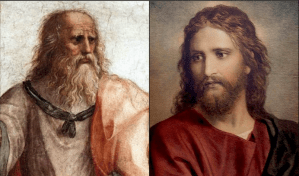
plato-and-jesus

Ἵνα δὲ μή τινες ἀλογισταίνοντες εἰς ἀποτροπὴν τῶν δεδιδαγμένων ὑφ’ ἡμῶν, εἴπωσι πρὸ ἐτῶν ἑκατὸν πεντήκοντα γεγεννῆσθαι τὸν Χριστὸν λέγειν ἡμᾶς ἐπὶ Κυρηνίου δεδιδαχέναι δὲ ἅ φαμεν διδάξαι αὐτὸν ὕστερον χρόνοις ἐπὶ Ποντίου Πιλάτου, καὶ ἐγκαλῶσιν ὡς ἀνευθύνων ὄντων τῶν προγεγενημένων πάντων ἀνθρώπων, φθάσαντες τὴν ἀπορίαν λυσόμεθα. τὸν Χριστὸν πρωτότοκον τοῦ θεοῦ εἶναι ἐδιδάχθημεν καὶ προεμηνύσαμεν λόγον ὄντα οὗ πᾶν γένος ἀνθρώπων μετέσχε. καὶ οἱ μετὰ λόγου βιώσαντες Χριστιανοί εἰσι, κἂν ἄθεοι ἐνομίσθησαν, οἷον ἐν Ἕλλησι μὲν Σωκράτης καὶ Ἡράκλειτος καὶ οἱ ὅμοιοι αὐτοῖς, ἐν βαρβάροις δὲ Ἀβραὰμ καὶ Ἀνανίας καὶ Ἀζαρίας καὶ Μισαὴλ καὶ Ἡλίας καὶ ἄλλοι πολλοί, ὧν τὰς πράξεις ἢ τὰ ὀνόματα καταλέγειν μακρὸν εἶναι ἐπιστάμενοι, τὰ νῦν παραιτούμεθα. ὥστε καὶ οἱ προγενόμενοι ἄνευ λόγου βιώσαντες, ἄχρηστοι καὶ ἐχθροὶ τῷ Χριστῷ ἦσαν καὶ φονεῖς τῶν μετὰ λόγου βιούντων, οἱ δὲ μετὰ λόγου βιώσαντες καὶ βιοῦντες Χριστιανοὶ καὶ ἄφοβοι καὶ ἀτάραχοι ὑπάρχουσι.
(Justin Martyr, 1 Apol. 46.1-4)

But lest, in order to dissuade from our teaching by foolish argument, some should say that we say that Christ was born 150 years ago, in the time of Quirinius, and that he taught the things we say he taught still later under Pontius Pilate, and should object that all the human beings who lived before that time were not accountable, we will anticipate and solve the difficulty. We were taught, and we mentioned before, that Christ is the first-born of God, being the Logos in which the whole race of human beings shared. And those who lived with Logos are Christians, even if they were called atheists, such as among the Greeks, Socrates and Heraclitus and those similar to them, and among the barbarians, Abraham and Ananias and Azarias and Misael and Elijah and many others whose deeds and names, for the present, we forbear to list, thinking it to be tedious. So that even those who were before him, and who lived without Logos, were without value and enemies to Christ and murderers of those who lived with Logos. But those who lived or do live with Logos are Christians and fearless and unconfounded. (tr. Denis Minns & Paul Parvis)

Anastatoi

Oxyrhynchus papyrus 1.119 (Theon)

Θέων Θέωνι τῷ πατρὶ χαίρειν.
καλῶς ἐποίησες· οὐκ ἀπένηχές με μετ’ ἐσοῦ εἰς πόλιν. ἠ οὐ θέλις ἀπενεκκεῖν μετ’ ἐσοῦ εἰς Ἀλεξάνδριαν, οὐ μὴ γράψω σε ἐπιστολὴν οὔτε λαλῶ σε οὔτε ὑιγένω σε εἶτα. ἂν δὲ ἔλθῃς εἰς Ἀλεξάνδριαν, οὐ μὴ λάβω χεῖραν παρὰ σοῦ οὔτε πάλι χαίρω σε λυπόν. ἂμ μὴ θέλῃς ἀπενέκαι με, ταῦτα γείνετε. καὶ ἡ μήτηρ μου εἶπε Ἀρ̣χελάω, ὅτι “ἀναστατοῖ μὲ· ἆρρον αὐτόν.” καλῶς δὲ ἐποίησες· δῶρά μοι ἔπεμψες μεγάλα, ἀράκια. πεπλάνηκαν ἡμῶς ἐκεῖ
τῇ ἡμέρᾳ ιβ’, ὅτι ἔπλευσες. λυπόν, πέμψον εἴς με, παρακαλῶ σε. ἂμ μὴ πέμψῃς, οὐ μὴ φάγω, οὐ μὴ πείνω. ταῦτα.
ἐρῶσθέ σε εὔχομαι.
Τῦβι ιη’.
ἀπόδος Θέωνι ἀπὸ Θεωνᾶτος υἱῶ.
(P. Oxy. 1.119)

Theon to his father Theon, greetings. You did a fine thing. You didn’t take me with you into town. If you don’t want to take me with you to Alexandria, then I won’t write you a letter, and I won’t speak one word to you or wish you good health. And if you go to Alexandria [without me], from now on I won’t take your hand and I won’t greet you. So if you won’t take me along, these things [will] happen. Even my mother said to Archelaus [my brother] “he is driving me mad—take him away.” You did a fine thing. You sent me fine gifts: locust beans! They deceived us there on the twelfth day, when you sailed. Finally, send for me, please, please. If you don’t send for me, I won’t eat and I won’t drink. So there. Farewell, I pray you.
[dated] the 18th of Tybi [ January].
Give [this letter] to Theon, from his son, little Theon.
(tr. Patricia A. Rosenmeyer, except last line, added by David Bauwens)