Dicendo

rmcrasso

Ibi, ut ex pristino sermone relaxarentur animi omnium, solebat Cotta narrare, Crassum sermonem quendam de studio dicendi intulisse. qui cum ita esset exorsus, non sibi cohortandum Sulpicium et Cottam, sed magis utrumque collaudandum videri, quod tantam iam essent facultatem adepti, ut non aequalibus suis solum anteponerentur, sed cum maioribus natu compararentur, “neque vero mihi quicquam” inquit “praestabilius videtur, quam posse dicendo tenere hominum coetus, mentes allicere, voluntates impellere quo velit; unde autem velit, deducere. haec una res in omni libero populo, maximeque in pacatis tranquillisque civitatibus, praecipue semper floruit, semperque dominata est. quid enim est aut tam admirabile, quam ex infinita multitudine hominum exsistere unum, qui id, quod omnibus natura sit datum, vel solus vel cum paucis facere possit? aut tam iucundum cognitu atque auditu, quam sapientibus sententiis gravibusque verbis ornata oratio et polita? aut tam potens tamque magnificum, quam populi motus, iudicum religiones, senatus gravitatem unius oratione converti? quid tam porro regium, tam liberale, tam munificum, quam opem ferre supplicibus, excitare adflictos, dare salutem, liberare periculis, retinere homines in civitate? quid autem tam necessarium, quam tenere semper arma, quibus vel tectus ipse esse possis vel provocare integer vel te ulcisci lacessitus? age vero, ne semper forum, subsellia, rostra curiamque meditere, quid esse potest in otio aut iucundius aut magis proprium humanitatis, quam sermo facetus ac nulla in re rudis? hoc enim uno praestamus vel maxime feris, quod colloquimur inter nos, et quod exprimere dicendo sensa possumus. quam ob rem quis hoc non iure miretur, summeque in eo elaborandum esse arbitretur, ut, quo uno homines maxime bestiis praestent, in hoc hominibus ipsis antecellat? ut vero iam ad illa summa veniamus; quae vis alia potuit aut dispersos homines unum in locum congregare, aut a fera agrestique vita ad hunc humanum cultum civilemque deducere, aut, iam constitutis civitatibus, leges, iudicia, iura describere? ac, ne plura, quae sunt paene innumerabilia, consecter, comprehendam brevi; sic enim statuo, perfecti oratoris moderatione et sapientia non solum ipsius dignitatem, sed et privatorum plurimorum et universae rei publicae salutem maxime contineri. quam ob rem pergite, ut facitis, adulescentes, atque in id studium, in quo estis, incumbite, ut et vobis honori et amicis utilitati et rei publicae emolumento esse possitis.”
(Cicero, De Oratore 1.29-34)

In that place, as Cotta was fond of relating, Crassus introduced a conversation on the pursuit of oratory, with a view to relieving all minds from the discourse of the day before. He began by saying that Sulpicius and Cotta seemed not to need exhortation from him but rather commendation, seeing that thus early they had acquired such skill as not merely to be ranked above their equals in age, but to be comparable with their elders. “Moreover,” he continued, “there is to my mind no more excellent thing than the power, by means of oratory, to get a hold on assemblies of men, win their good will, direct their inclinations wherever the speaker wishes, or divert them from whatever he wishes. In every free nation, and most of all in communities which have attained the enjoyment of peace and tranquillity, this one art has always flourished above the rest and ever reigned supreme. For what is so marvellous as that, out of the innumerable company of mankind, a single being should arise, who either alone or with a few others can make effective a faculty bestowed by nature upon every man? Or what so pleasing to the understanding and the ear as a speech adorned and polished with wise reflections and dignified language ? Or what achievement so mighty and glorious as that the impulses of the crowd, the consciences of the judges, the austerity of the Senate, should suffer transformation through the eloquence of one man? What function again is so kingly, so worthy of the free, so generous, as to bring help to the suppliant, to raise up those that are cast down, to bestow security, to set free from peril, to maintain men in their civil rights ? What too is so indispensable as to have always in your grasp weapons wherewith you can defend yourself, or challenge the wicked man, or when provoked take your revenge?” Nay more (not to have you for ever contemplating public affairs, the bench, the platform, and the Senate-house), what in hours of ease can be a pleasanter thing or one more characteristic of culture, than discourse that is graceful and nowhere uninstructed? For the one point in which we have our very greatest advantage over the brute creation is that we hold converse one with another, and can reproduce our thought in word. Who therefore would not rightly admire this faculty, and deem it his duty to exert himself to the utmost in this field, that by so doing he may surpass men themselves in that particular respect wherein chiefly men are superior to animals? To come, however, at length to the highest achievements of eloquence, what other power could have been strong enough either to gather scattered humanity into one place, or to lead it out of its brutish existence in the wilderness up to our present condition of civilization as men and as citizens, or, after the establishment of social communities, to give shape to laws, tribunals, and civic rights? And not to pursue any further instances—wellnigh countless as they are—I will conclude the whole matter in a few words, for my assertion is this: that the wise control of the complete orator is that which chiefly upholds not only his own dignity, but the safety of countless individuals and of the entire State. Go forward therefore, my young friends, in your present course, and bend your energies to that study which engages you, that so it may be in your power to become a glory to yourselves, a source of service to your friends, and profitable members of the Republic.” (tr. Edward William Sutton)

Nosōdōn

34cc2c733bc2a3e3ae378c98205f6b87--mini-horses-winter-solstice

Καὶ ὅτι μὲν ἄχρι γε αἰσθήσεως τῆς τε ἄλλης ὀργανώσεως τῆς τε κατὰ τὰ αἰσθητήρια καὶ τῆς κατὰ σάρκα ὁμοίως ἡμῖν διάκειται*, πᾶς σχεδὸν συγκεχώρηκεν. καὶ γὰρ οὐ μόνον τῶν κατὰ φύσιν παθῶν τε καὶ κινημάτων τῶν διὰ τούτων ὁμοίως ἡμῖν κεκοινώνηκεν, ἀλλ’ ἤδη καὶ τῶν παρὰ φύσιν καὶ νοσωδῶν ἐν αὐτοῖς θεωρουμένων. οὐκ ἂν δέ τις εὖ φρονῶν διὰ τὸ ἐξηλλαγμένον τῆς ἕξεως τοῦ σώματος ἄδεκτα λογικῆς εἴποι διαθέσεως, ὁρῶν καὶ ἐπ’ ἀνθρώπων πολλὴν τὴν παραλλαγὴν τῆς ἕξεως κατά τε γένη καὶ ἔθνη, καὶ ὅμως λογικοὺς συγχωρῶν πάντας. ὄνος μέν γε κατάρρῳ ἁλίσκεται, κἂν εἰς πνεύμονα αὐτῷ ῥυῇ τὸ νόσημα, ἀποθνῄσκει ὥσπερ ἄνθρωπος· ἵππος δὲ καὶ ἔμπυος γίνεται καὶ φθίνει, ὥσπερ ἄνθρωπος, καὶ τέτανος λαμβάνει ἵππον καὶ ποδάγρα καὶ πυρετὸς καὶ λύσσα, ὁπότε καὶ κατωπιᾶν λέγεται. καὶ ἡ κύουσα ἵππος, ἐπειδὰν ὀσφρήσηται λύχνου ἀπεσβεσμένου, ἀμβλίσκει ὡς ἄνθρωπος. πυρέττει δὲ καὶ βοῦς καὶ μαίνεται, καθάπερ καὶ ὁ κάμηλος. κορώνη δὲ ψωριᾷ καὶ λεπριᾷ, ὥσπερ καὶ κύων· οὗτος μέν γε καὶ ποδαγριᾷ καὶ λυσσᾷ. ὗς δὲ βραγχᾷ, καὶ ἔτι μᾶλλον κύων, καὶ τὸ πάθος ἐν ἀνθρώπῳ ἀπὸ τοῦ κυνὸς κυνάγχη κέκληται. Καὶ ταῦτα μὲν γνώριμα, ἐπεὶ σύννομα ταῦτα ἡμῖν τὰ ζῷα, τῶν δὲ ἄλλων ἐσμὲν ἄπειροι διὰ τὸ ἀσύνηθες. καὶ εὐνουχιζόμενα δὲ μαλακίζεται· οἱ μέν γε ἀλεκτρυόνες οὐδὲ ᾄδουσιν ἔτι, ἀλλὰ τὴν φωνὴν ἐπὶ τὸ θῆλυ μεταβάλλουσιν ὥσπερ ἄνθρωποι, βοός τε κέρατα καὶ φωνὴν οὐκ ἔστι διαγνῶναι τομίου καὶ θήλεος· οἱ δὲ ἔλαφοι οὐκέτι ἀποβάλλουσι τὰ κέρατα, ἀλλὰ συνέχουσιν, ὡς εὐνοῦχοι τὰς τρίχας, μὴ ἔχοντες δὲ οὐ φύουσιν, ὥσπερ οἱ πρὶν πώγωνα φῦσαι ἐκτμηθέντες. οὕτως σχεδὸν ἁπάντων τὰ σώματα ὁμοίως τοῖς ἡμετέροις κατὰ τὰ πάθη.

* sc. τὰ ζῶα

(Porphyrius, Peri Apochēs Empsuchōn 3.7.2-7)

Almost everyone agrees that animals are like us in perception and in organisation generally with regard both to sense-organs and to the flesh. They share like us not only in natural experiences and the movements they cause, but even in unnatural and unhealthy experiences which are observed in them. No sensible person would say that animals are incapable of a rational disposition because they are quite different in their bodily constitution, seeing that in human beings too there is great variation of constitution according to race and people, yet also agreeing that all are rational. Donkeys catch colds, and if the illness descends to the lung, the donkey dies as a human does; horses have abscesses and consumption like humans, get tetanus and gout and fever and rabies, and sometimes ‘cast down their eyes’. A pregnant mare miscarries, like a human being, if she smells a light which has been snuffed. Cattle get fever and go mad, and so do camels. Crows suffer from mange and leprosy, as do dogs; and dogs also suffer from gout and rabies. Pigs become hoarse, dogs even more so, and the illness in humans is called ‘dog-choker’ from dogs. These instances are well-known because these animals live with us, but we lack experience of other animals because we are not familiar with them. Animals also become soft when castrated: cocks cease to crow, and change their voice to the female kind as humans do; the horns and voice of a castrated bull cannot be distinguished from those of the female. Deer no longer shed their antlers, but retain them, as eunuchs do their hair; but if they have no horns they do not grow them, as with men who were castrated before their beard grew. Thus the bodies of almost all animals are like ours as regards illness. (tr. Gillian Clark)

Pharmakotribēs

hamblin-snake-1

Πομπηΐου Ῥούφου Ῥωμαίοις ἀγορανομοῦντος ἐν Παναθηναίοις φαρμακοτρίβης ἀνὴρ καὶ τῶν τοὺς ὄφεις ἐς τὰ θαύματα τρεφόντων, ἑτέρων ὁμοτέχνων παρεστώτων πολλῶν, ἀσπίδα κατὰ τοῦ βραχίονος προσάγει ἐς ἔλεγχον αὐτοῦ τῆς σοφίας καὶ ἐδήχθη. εἶτα τῷ στόματι ἐξεμύζησε τὸ κακόν. ὕδωρ δὲ οὐκ ἐπιρροφήσας, οὐ γὰρ παρῆν, καίτοι παρεσκευασμένον οἱ (ἀνετέτραπτο δὲ ἐξ ἐπιβουλῆς τὸ σκεῦος), οἷα μὴ ἐκκλύσας τὸν ἰὸν μηδὲ ἀπορρυψάμενος, τὸν βίον κατέστρεψε μετὰ ἡμέραν οἶμαι δευτέραν, οὐκ ἀλγῶν οὐδὲ ἕν, τοῦ μέντοι κακοῦ ἡσυχῆ διασήψαντος αὐτοῦ τὰ οὖλα καὶ τὸ στόμα.
(Aelian, Nat. Anim. 9.62)

When Pompeius Rufus was Aedile at the Panathenaea a medicine-man, one of those who keep snakes for show, amid a crowd of his fellow-practitioners applied an asp to his arm in order to demonstrate his skill, and was bitten. Thereupon he sucked out the poison with his mouth. He failed however to swallow some water afterwards, there being none at hand although he had got some ready (the vessel had been upset by an act of treachery), and as he had not washed off the poison and thoroughly rinsed his mouth he passed away after, believe, two days without suffering any pain, though the poison had little by little reduced his gums and his mouth to putrescence. (tr. Alwyn Faber Scholfield)

Antipnei

bigstock-Go-with-the-flow-43808875

Ἀτέκμαρτος ὁ πᾶς βίος οὐδὲν ἔχων πιστὸν πλανᾶται
συντυχίαις· ἐλπὶς δὲ φρένας παραθαρσύνει· τὸ δὲ μέλλον ἀκριβῶς
οἶδεν οὐδεὶς θνατὸς ὅπᾳ φέρεται·
θεὸς δὲ πάντας †ἐν κινδύνοις θνατοὺς† κυβερνᾷ·
ἀντιπνεῖ δὲ πολλάκις εὐτυχίᾳ δεινά τις αὔρα.
(Hermolochus, fr. 1)

Baffling is one’s whole life, without anything certain and led astray by incidents. Hope emboldens one’s heart; but no mortal knows the future clearly and where it is leading to: a god steers all †mortals among dangers†. Often an awful wind blows against good fortune. (tr. Pauline A. LeVen)

Eiulatio

e3bb61fe29595cfb7bbdd209f6361daf

Mala soluta navis exit alite,
ferens olentem Mevium;
ut horridis utrumque verberes latus,
Auster, memento fluctibus;
niger rudentes Eurus inverso mari
fractosque remos differat;
insurgat Aquilo, quantus altis montibus
frangit trementes ilices;
nec sidus atra nocte amicum appareat,
qua tristis Orion cadit;
quietiore nec feratur aequore
quam Graia victorum manus,
cum Pallas usto vertit iram ab Ilio
in impiam Aiacis ratem!
o quantus instat navitis sudor tuis
tibique pallor luteus
et illa non virilis eiulatio
preces et aversum ad Iovem,
Ionius udo cum remugiens sinus
Noto carinam ruperit!
Opima quodsi praeda curvo litore
porrecta mergos iuverit,
libidinosus immolabitur caper
et agna Tempestatibus.
(Horace, Epod. 10)

The ship carrying stinking Mevius has cast off, and sails away under an evil omen. Be sure, South Wind, to buffet it on both sides with rough waves; let the black East Wind churn up the sea, smashing and scattering its ropes and oars; let the North Wind rise as high as when on the lofty mountains it shakes and shatters the holm oaks. Let no friendly star appear on that dark night when grim Orion sets, and may the ship be borne along on no calmer sea than was the band of victorious Greeks when Pallas turned her wrath away fro the smoking ruins of Troy to the impious craft of Ajax. O what sweat awaits your crew, while you yourself will turn a pallid yellow and start to scream in that unmanly way, praying to Jove who has turned his back on you, when the Ionian gulf, bellowing in reply to the drenching wind from the South, breaks the hull apart! If, then, a fat carcase, sprawled on the curving shore, gives pleasure to the gulls, a lecherous goat and a lamb will be slain as a thank offering to the storm gods. (tr. Niall Rudd)

Aestu

roman-warship-3d-model-max-fbx

Erant eiusmodi fere situs oppidorum ut posita in extremis lingulis promunturiisque neque pedibus aditum haberent, cum ex alto se aestus incitavisset, quod accidit semper horarum XII spatio, neque navibus, quod rursus minuente aestu naves in vadis afflictarentur. ita utraque re oppidorum oppugnatio impediebatur. ac si quando magnitudine operis forte superati, extruso mari aggere ac molibus atque his oppidi moenibus adaequatis, suis fortunis desperare coeperant, magno numero navium appulso, cuius rei summam facultatem habebant, omnia sua deportabant seque in proxima oppida recipiebant: ibi se rursus isdem opportunitatibus loci defendebant. haec eo facilius magnam partem aestatis faciebant quod nostrae naves tempestatibus detinebantur summaque erat vasto atque aperto mari, magnis aestibus, raris ac prope nullis portibus difficultas navigandi.
(Caesar, De Bello Gallico 3.12)

The positions of the strongholds were generally of one kind. They were set at the end of tongues and promontories, so as to allow no approach on foot, when the tide had rushed in from the sea—which regularly happens every twelve hours—nor in ships, because when the tide ebbed again the ships would be damaged in shoal water. Both circumstances, therefore, hindered the assault of the strongholds; and, whenever the natives were in fact overcome by huge siege-works—that is to say, when the sea had been set back by a massive mole built up level to the town-walls—and so began to despair of their fortunes, they would bring close in shore a large number of ships, of which they possessed an unlimited supply, and take off all their stuff and retire to the nearest strongholds, there to defend themselves again with the same advantages of position. They pursued these tactics for a great part of the summer the more easily because our own ships were detained by foul weather, and because the difficulty of navigation on a vast and open sea, with strong tides and few—nay, scarcely any—harbours, was extreme. (tr. Henry John Edwards)

Inebriemur

povgwmgj6s

Fili mi, custodi sermones meos, et praecepta mea reconde tibi. fili, serva mandata mea—et vives—et legem meam quasi pupillam oculi tui. liga eam in digitis tuis, scribe illam in tabulis cordis tui. dic sapientiae, “soror mea es,” et prudentiam voca amicam tuam ut custodiat te a muliere extranea, et ab aliena quae verba sua dulcia facit. de fenestra enim domus meae per cancellos prospexi, et video parvulos. considero vecordem iuvenem qui transit per plateas iuxta angulum et propter domus illius graditur in obscuro advesperascente die, in noctis tenebris et caligine. et ecce: mulier occurrit illi ornatu meretricio, praeparata ad capiendas animas, garrula et vaga, quietis impatiens, nec valens in domo consistere pedibus suis, nunc foris, nunc in plateis, nunc iuxta angulos insidians. apprehensumque deosculatur iuvenem et procaci vultu blanditur, dicens, “victimas pro salute vovi; hodie reddidi vota mea. idcirco egressa sum in occursum tuum, desiderans te videre, et repperi. intexui funibus lectum meum; stravi tapetibus pictis ex Aegypto. aspersi cubile meum murra, et aloë, et cinnamomo. veni; inebriemur uberibus, et fruamur cupitis amplexibus donec illucescat dies, non est enim vir in domo sua; abiit via longissima; sacculum pecuniae secum tulit; in die plenae lunae reversurus est domum suam.” irretivit eum multis sermonibus et blanditiis labiorum protraxit illum. statim eam sequitur quasi bos ductus ad victimam, et quasi agnus lasciviens, et ignorans quod ad vincula stultus trahatur donec transfigat sagitta iecur eius velut si avis festinet ad laqueum, et nescit quia de periculo animae illius agitur. nunc ergo, fili mi, audi me, et attende verbis oris mei. ne abstrahatur in viis illius mens tua, neque decipiaris semitis eius, multos enim vulneratos deiecit, et fortissimi quique interfecti sunt ab ea. viae inferi domus eius, penetrantes in interiora mortis.
(Proverbia 7)

My son, keep my words, and lay up my precepts with thee. Son, keep my commandments—and thou shalt live—and my law as the apple of thy eye. Bind it upon thy fingers, write it upon the tables of thy heart. Say to wisdom, “Thou art my sister,” and call prudence thy friend, that she may keep thee from the woman that is not thine, and from the stranger who sweeteneth her words. For I looked out of the window of my house through the lattice, and I see little ones. I behold a foolish young man who passeth through the street by the corner and goeth nigh the way of her house in the dark when it grows late, in the darkness and obscurity of the night. And behold: a woman meeteth him in harlot’s attire prepared to deceive souls; talkative and wandering, not bearing to be quiet, not able to abide still at home, now abroad, now in the streets, now lying in wait near the corners. And catching the young man she kisseth him and with an impudent face flattereth, saying: “I vowed victims for prosperity; this day I have paid my vows. Therefore I am come out to meet thee, desirous to see thee, and I have found thee. I have woven my bed with cords; I have covered it with painted tapestry brought from Egypt. I have perfumed my bed with myrrh, aloes and cinnamon. Come; let us be inebriated with the breasts, and let us enjoy the desired embraces till the day appear, for my husband is not at home; he is gone a very long journey; he took with him a bag of money; he will return home the day of the full moon.” She entangled him with many words and drew him away with the flattery of her lips. Immediately he followeth her as an ox led to be a victim and as a lamb playing the wanton and not knowing that he is drawn like a fool to bonds till the arrow pierce his liver as if a bird should make haste to the snare and knoweth not that his life is in danger. Now, therefore, my son, hear me, and attend to the words of my mouth. Let not thy mind be drawn away in her ways, neither be thou deceived with her paths, for she hath cast down many wounded, and the strongest have been slain by her. Her house is the way to hell, reaching even to the inner chambers of death. (Douay-Rheims Translation)

Filo

3ee7b707494165860d08a2a3d611a975

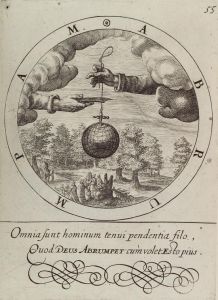
Omnia sunt hominum tenui pendentia filo
et subito casu quae valuere ruunt.
divitis audita est cui non opulentia Croesi?
nempe tamen vitam captus ab hoste tulit.
ille Syracosia modo formidatus in urbe
vix humili duram reppulit arte famem.
quid fuerat Magno maius? Tamen ille rogavit
submissa fugiens voce clientis opem,
cuique viro totus terrarum paruit orbis
[indigus effectus omnibus ipse magis.]
ille Iugurthino clarus Cimbroque triumpho,
quo victrix totiens consule Roma fuit,
in caeno Marius iacuit cannaque palustri
pertulit et tanto multa pudenda viro.
ludit in humanis divina potentia rebus
et certam praesens vix feret hora fidem.
‘litus ad Euxinum’ si quis mihi diceret ‘ibis
et metues arcu ne feriare Getae’,
‘i, bibe’ dixissem ‘purgantes pectora sucos
quicquid et in tota nascitur Anticyra.’
sum tamen haec passus nec, si mortalia possem,
et summi poteram tela cavere dei.
tu quoque fac timeas et quae tibi laeta videntur,
dum loqueris, fieri tristia posse puta.
(Ovid, Ep. ex Pont. 4.3.35-58)

All human affairs hang by a slender thread; chance on a sudden brings to ruin what once was strong. Who has not heard of Croesus’s wealth ? Yet of a truth he was captured and received his life from an enemy. He who but now was dreaded in the city of Syracuse, scarce kept hunger at bay by a lowly calling. What was mightier than Magnus*? Yet in his flight he asked with humble voice a client’s aid. The man whom the whole world obeyed [himself came to feel need more than any]. He who was famed for his triumphs over Jugurtha and the Cimbri, under whom as consul Rome was so often victorious, lay, Marius though he was, in the slime and marsh grass, enduring many things shameful for so great a man. Divine power plays with human affairs, and sure trust can scarce be placed in the present hour. If anybody had said to me, “You shall go to the Euxine shore and you shall fear wounds from a Getic bow,” I would have said, “Go, drink a potion that clears the brain—everything that Anticyra** produces.” Yet have I suffered this. Though I might have guarded against the weapons of mortals, yet I could not protect myself against those of a supreme god. See that you too feel afraid and remember that what seems happiness to you has power, while you speak, to change into sorrow.

* Pompey. After the battle of Pharsalus he fled to Egypt where he was treacherously slain.
** Anticyra produced an abundance of hellebore which was much used as a cure for insanity.

(tr. Arthur Leslie Wheeler, with his notes)

Basilea

cc947675ce0ac0c98617f27425843c35_XL

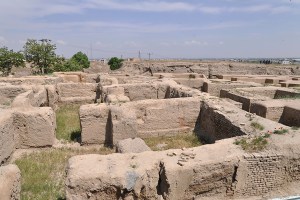
Αὐτίκα δὲ προβαλλομένων ὅντινα στήσονται βασιλέα, ὁ Δηιόκης ἦν πολλὸς ὑπὸ παντὸς ἀνδρὸς καὶ προβαλλόμενος καὶ αἰνεόμενος, ἐς ὃ τοῦτον καταινέουσι βασιλέα σφίσι εἶναι. ὁ δ’ ἐκέλευε αὐτοὺς οἰκία τε ἑωυτῷ ἄξια τῆς βασιληίης οἰκοδομῆσαι καὶ κρατῦναι αὐτὸν δορυφόροισι· ποιεῦσι δὴ ταῦτα οἱ Μῆδοι. οἰκοδομέουσί τε γὰρ αὐτῷ οἰκία μεγάλα τε καὶ ἰσχυρά, ἵνα αὐτὸς ἔφρασε τῆς χώρης, καὶ δορυφόρους αὐτῷ ἐπιτρέπουσι ἐκ πάντων Μήδων καταλέξασθαι. ὁ δὲ ὡς ἔσχε τὴν ἀρχήν, τοὺς Μήδους ἠνάγκασε ἓν πόλισμα ποιήσασθαι καὶ τοῦτο περιστέλλοντας τῶν ἄλλων ἧσσον ἐπιμέλεσθαι. πειθομένων δὲ καὶ ταῦτα τῶν Μήδων οἰκοδομέει τείχεα μεγάλα τε καὶ καρτερὰ ταῦτα τὰ νῦν Ἀγβάτανα κέκληται, ἕτερον ἑτέρῳ κύκλῳ ἐνεστεῶτα. μεμηχάνηται δὲ οὕτω τοῦτο τὸ τεῖχος ὥστε ὁ ἕτερος τοῦ ἑτέρου κύκλος τοῖσι προμαχεῶσι μούνοισι ἐστι ὑψηλότερος. τὸ μέν κού τι καὶ τὸ χωρίον συμμαχέει κολωνὸς ἐὼν ὥστε τοιοῦτο εἶναι, τὸ δὲ καὶ μᾶλλόν τι ἐπετηδεύθη. κύκλων δ’ ἐόντων τῶν συναπάντων ἑπτά, ἐν δὴ τῷ τελευταίῳ τὰ βασιλήια ἔνεστι καὶ οἱ θησαυροί. τὸ δ’ αὐτῶν μέγιστόν ἐστι τεῖχος κατὰ τὸν Ἀθηνέων κύκλον μάλιστά κῃ τὸ μέγαθος. τοῦ μὲν δὴ πρώτου κύκλου οἱ προμαχεῶνες εἰσὶ λευκοί, τοῦ δὲ δευτέρου μέλανες, τρίτου δὲ κύκλου φοινίκεοι, τετάρτου δὲ κυάνεοι, πέμπτου δὲ σανδαράκινοι. οὕτω τῶν πέντε κύκλων οἱ προμαχεῶνες ἠνθισμένοι εἰσὶ φαρμάκοισι· δύο δὲ οἱ τελευταῖοί εἰσὶ ὁ μὲν καταργυρωμένους ὁ δὲ κατακεχρυσωμένους ἔχων τοὺς προμαχεῶνας. ταῦτα μὲν δὴ ὁ Δηιόκης ἑωυτῷ τε ἐτείχεε καὶ περὶ τὰ ἑωυτοῦ οἰκία, τὸν δὲ ἄλλον δῆμον πέριξ ἐκέλευε τὸ τεῖχος οἰκέειν. οἰκοδομηθέντων δὲ πάντων κόσμον τόνδε Δηιόκης πρῶτός ἐστι ὁ καταστησάμενος, μήτε ἐσιέναι παρὰ βασιλέα μηδένα, δι’ ἀγγέλων δὲ πάντα χρᾶσθαι, ὁρᾶσθαι τε βασιλέα ὑπὸ μηδενός, πρός τε τούτοισι ἔτι γελᾶν τε καὶ ἀντίον πτύειν καὶ ἅπασι εἶναι τοῦτό γε αἰσχρόν. ταῦτα δὲ περὶ ἑωυτὸν ἐσέμνυνε τῶνδε εἵνεκεν, ὅκως ἂν μὴ ὁρῶντες οἱ ὁμήλικες, ἐόντες σύντροφοί τε ἐκείνῳ καὶ οἰκίης οὐ φλαυροτέρης οὐδὲ ἐς ἀνδραγαθίην λειπόμενοι, λυπεοίατο καὶ ἐπιβουλεύοιεν, ἀλλ’ ἑτεροῖός σφι δοκέοι εἶναι μὴ ὁρῶσι.
(Herodotus, Hist. 1.98-99)

They were immediately faced with the question of whom to appoint as king. Everyone was full of praise for Deioces and wholeheartedly endorsed his nomination, until at length they agreed that he should be their king. He ordered them to build him a palace fit for a king and to assign him personal guards for his protection, and the Medes did so: they built him a large, secure residence in a part of the country he designated, and they let him pick his personal guards from among the whole Median population. Once power was in his hands, Deioces insisted that the Medes build a single city and maintain this one place, which involved caring less for their other communities. The Medes obeyed him in this too; they built the place which is now known as Ecbatana—a huge, impregnable stronghold consisting of concentric circles of defensive walls. This stronghold is designed so that each successive circle is higher than the one below it just by the height of its bastions. This design is helped, of course, to a certain extent by the fact that the place is on a hill, but it was also deliberately made that way. There are seven circles altogether, and the innermost one contains the royal palace and the treasuries. The largest of the walls is approximately the same size as the wall around Athens. The bastions of the outer five circles have all been painted various colours—first white, then black, red, blue, and orange. But as for the bastions of the last two circles, the first are covered in silver and the second in gold. So Deioces had this stronghold built for himself, surrounding his own residence, but he told the whole population to build their houses outside the stronghold. Once the building programme was completed, Deioces was the first to establish the following rules: no one was to enter “into the king’s presence, but all business was to be conducted through messengers; the king was to be seen by no one; and furthermore absolutely no one was to commit the offence of laughing or spitting in the king’s presence. The reason he instituted this grandiose system of how to behave in relation to himself was to prevent any of his peers seeing him. They had been brought up with him, their lineage was no worse than his, and they were just as brave as he was, so he was worried that if they saw him they might get irritated and conspire against him; on the other hand, if they could not see him, they might think that he had changed. (tr. Robin Waterfield)

Callide

nicomedia_diocletian_iam3.200x0-is-pid11074

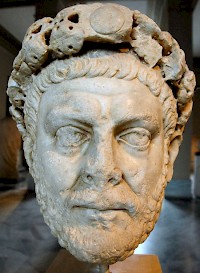
Diocletianus moratus callide fuit, sagax praeterea et admodum subtilis ingenii, et qui severitatem suam aliena invidia vellet explere. diligentissimus tamen et sollertissimus princeps et qui imperio Romano primus regiae consuetudinis formam magis quam Romanae libertatis invexerit adorarique se iussit, cum ante eum cuncti salutarentur. ornamenta gemmarum vestibus calciamentisque indidit. nam prius imperii insigne in chlamyde purpurea tantum erat, reliqua communia. Herculius autem propalam ferus et incivilis ingenii, asperitatem suam etiam vultus horrore significans. hic naturae suae indulgens Diocletiano in omnibus est saevioribus consiliis obsecutus. cum tamen ingravescente aevo parum se idoneum Diocletianus moderando imperio esse sentiret, auctor Herculio fuit, ut in vitam privatam concederent et stationem tuendae rei publicae viridioribus iunioribusque mandarent. cui aegre collega obtemperavit. tamen uterque uno die privato habitu imperii insigne mutavit, Nicomediae Diocletianus, Herculius Mediolani, post triumphum inclitum, quem Romae ex numerosis gentibus egerant, pompa ferculorum inlustri, qua Narsei coniuges sororesque et liberi ante currum ducti sunt. Concesserunt tamen Salonas unus, alter in Lucaniam. Diocletianus privatus in villa, quae haud procul a Salonis est, praeclaro otio consenuit, inusitata virtute usus, ut solus omnium post conditum Romanum imperium ex tanto fastigio sponte ad privatae vitae statum civilitatemque remearet. contigit igitur ei, quod nulli post natos homines, ut cum privatus obisset, inter Divos tamen referretur.
(Eutropius, Brev. 9.26-28)

Diocletian was of a crafty disposition, with much sagacity, and keen penetration. He was willing to gratify his own disposition to cruelty in such a way as to throw the odium upon others; he was however a very active and able prince. He was the first that introduced into the Roman empire a ceremony suited rather to royal usages than to Roman liberty, giving orders that he should be adored, whereas all emperors before him were only saluted. He put ornaments of precious stones on his dress and shoes, when the imperial distinction had previously been only in the purple robe, the rest of the habit being the same as that of other men. But Herculius was undisguisedly cruel, and of a violent temper, and showed his severity of disposition in the sternness of his looks. Gratifying his own inclination, he joined with Diocletian in even the most cruel of his proceedings. But when Diocletian, as age bore heavily upon him, felt himself unable to sustain the government of the empire, he suggested to Herculius that they should both retire into private life, and commit the duty of upholding the state to more vigorous and youthful hands. With this suggestion his colleague reluctantly complied. Both of them, in the same day, exchanged the robe of empire for an ordinary dress, Diocletian at Nicomedia, Herculius at Milan, soon after a magnificent triumph which they celebrated at Rome over several nations, with a noble succession of pictures, and in which the wives, sisters, and children of Narseus were led before their chariots. The one then retired to Salonae, and the other into Lucania. Diocletian lived to an old age in a private station, at a villa which is not far from Salonae, in honourable retirement, exercising extraordinary philosophy, inasmuch as he alone of all men, since the foundation of the Roman empire, voluntarily returned from so high a dignity to the condition of private life, and to an equality with the other citizens. That happened to him, therefore, which had happened to no one since men were created, that, though he died in a private condition, he was enrolled among the gods. (tr. John Selby Watson)