Epimeleiai

grieks koppel

Ἄλλαι δέ τοι, ἔφην ἐγώ, ἴδιαι ἐπιμέλειαι, ὦ γύναι, ἡδεῖαί σοι γίγνονται, ὁπόταν ἀνεπιστήμονα ταλασίας λαβοῦσα ἐπιστήμονα ποιήσῃς καὶ διπλασίου σοι ἀξία γένηται, καὶ ὁπόταν ἀνεπιστήμονα ταμιείας καὶ διακονίας παραλαβοῦσα ἐπιστήμονα καὶ πιστὴν καὶ διακονικὴν ποιησαμένη παντὸς ἀξίαν ἔχῃς, καὶ ὁπόταν τοὺς μὲν σώφρονάς τε καὶ ὠφελίμους τῷ σῷ οἴκῳ ἐξῇ σοι εὖ ποιῆσαι, ἐὰν δέ τις πονηρὸς φαίνηται, ἐξῇ σοι κολάσαι· τὸ δὲ πάντων ἥδιστον, ἐὰν βελτίων ἐμοῦ φανῇς, καὶ ἐμὲ σὸν θεράποντα ποιήσῃ, καὶ μὴ δέῃ σε φοβεῖσθαι μὴ προϊούσης τῆς ἡλικίας ἀτιμοτέρα ἐν τῷ οἴκῳ γένῃ, ἀλλὰ πιστεύῃς ὅτι πρεσβυτέρα γιγνομένη ὅσῳ ἂν καὶ ἐμοὶ κοινωνὸς καὶ παισὶν οἴκου φύλαξ ἀμείνων γίγνῃ, τοσούτῳ καὶ τιμιωτέρα ἐν τῷ οἴκῳ ἔσει. τὰ γὰρ καλά τε κἀγαθά, ἐγὼ ἔφην, οὐ διὰ τὰς ὡραιότητας, ἀλλὰ διὰ τὰς ἀρετὰς εἰς τὸν βίον τοῖς ἀνθρώποις ἐπαύξεται.
(Xenophon, Oec. 7.41-43)

But I assure you, wife, there are other duties particular to you that are pleasant to perform: to teach spinning to a slave who had no knowledge of it when you received her, and to double her value to you: to take in hand a girl who is ignorant of housekeeping and service, and after teaching her and making her trustworthy and serviceable to end up with someone invaluable: to have the power of rewarding the well-behaved and useful members of your household and of punishing anyone who turns out to be bad. But the most pleasant experience of all is to prove yourself better than I am, to make me your servant; and so far from having reason to fear that as you grow older you may be less honored in the household, to feel confident that with advancing years, the better partner you prove to me and the better guardian of the estate for our children, the greater will be the honor paid to you in the household. For it is not because of youthful charms that the sum of things good and beautiful in human life is increased, but through practice of the virtues. (tr. Edgar Cardew Marchant, revised by Jeffrey Henderson)

Infirmus

3795094597_63eaf95718_z

Infirmorum cura ante omnia et super omnia adhibenda est, ut sicut revera Christo ita eis serviatur, quia ipse dixit: “infirmus fui, et visitastis me”, et: “quod fecistis uni de his minimis, mihi fecistis.” sed et ipsi infirmi considerent in honorem Dei sibi serviri, et non superfluitate sua contristent fratres suos servientes sibi; qui tamen patienter portandi sunt, quia de talibus copiosior mercis adquiritur. ergo cura maxima sit abbati, ne aliquam neglegentiam patiantur. quibus fratribus infirmis sit cella super se deputata et servitor timens Deum et diligens ac sollicitus. balnearum usus infirmis quotiens expedit offeratur, sanis autem et maxime iuvenibus tardius concedatur. sed et carnium esus infirmis omnimo debilibus pro reparatione concedatur; at ubi meliorati fuerint, a carnibus more solito omnes abstineant. curam autem maximam habeat abbas ne a cellarariis aut a servitoribus neglegantur infirmi; et ipsum respicit quidquid a discipulis delinquitur. licet ipsa natura humana trahatur ad misericordiam in his aetatibus, senum videlicet et infantum, tamen et regulæ auctoritas eis prospiciat. consideretur semper in eis inbecillitas et ullatenus eis districtio regulæ teneatur in alimentis; sed sit in eis pia consideratio et præveniant horas canonicas.
(Benedict of Nursia, Regula 36-37)

Before and above all things, care must be taken of the sick, that they be served in very truth as Christ is served; because He hath said, “I was sick and you visited Me” (Mt. 25:36). And “As long as you did it to one of these My least brethren, you did it to Me” (Mt. 25:40). But let the sick themselves also consider that they are served for the honor of God, and let them not grieve their brethren who serve them by unnecessary demands. These must, however, be patiently borne with, because from such as these a more bountiful reward is gained. Let the Abbot’s greatest concern, therefore, be that they suffer no neglect. Let a cell be set apart for the sick brethren, and a God-fearing, diligent, and careful attendant be appointed to serve them. Let the use of the bath be offered to the sick as often as it is useful, but let it be granted more rarely to the healthy and especially the young. Thus also let the use of meat be granted to the sick and to the very weak for their recovery. But when they have been restored let them all abstain from meat in the usual manner. But let the Abbot exercise the utmost care that the sick are not neglected by the Cellarer or the attendants, because whatever his disciples do amiss falleth back on him. Although human nature is of itself drawn to feel compassion for these life-periods, namely, old age and childhood, still, let the decree of the Rule make provision also for them. Let their natural weakness be always taken into account and let the strictness of the Rule not be kept with them in respect to food, but let there be a tender regard in their behalf and let them eat before regular hours. (tr. Boniface Verheyen)

Ptōchos

1201_agios_filaretos
Philaret the Merciful

Ὁ δὲ βασιλεὺς παρεῖχεν τοῦ ἁγίου γέροντος χρήματα πολλά, καὶ οἱ μεγιστᾶνες αὐτοῦ, γνόντες τὴν ἐλεημοσύνην αὐτοῦ. ὁ δὲ γέρων ἐρόγευε ταῦτα τοῖς πτωχοῖς ἀδιαλήπτως. οὕτως δὲ ἦν τὸ ἔθος τοῦ γέροντος· ἕνα ποτε νόμισμα ἢ ἀργύριον ἢ νουμὶν οὐκ ἐδύνατο διδόναι πτωχῷ, ἀλλ’ ἐγέμιζε βαλάντιον χρυσίου, καὶ ἄλλο ἀργυρίου καὶ ἕτερον νουμίων, καὶ ἐβάσταζεν αὐτὰ ὁ πρωτοβεστιάριος αὐτοῦ Λύκαστος πιστὸς πάνυ ἐν τῷ κόλπῳ αὐτοῦ, καὶ ἠκολούθει αὐτῷ. ἦσαν δὲ τὸ βαλάντια τῇ ἰδέᾳ ὅμοια καὶ ἰσάριθμα, καὶ ὅτε ἐζήτησεν πτωχός, ἐζήτει τὸ βαλάντιον, τὸ δὲ ποῖον οὐκ ὠνόμαζεν, εἰ μὴ ἐπίστευεν ἐν τῷ θεῷ ὅτι “οἷον κελεύει ὁ θεός, ἐκεῖνό μοι ἔχει ἀπανδοῦναι· αὐτὸς γὰρ γινώσκει πάντων τὰ ἐγκάρδια καὶ ἑκάστου τὴν πενίαν, καὶ καθ’ ὃ ἄν τις χρείαν ἔχει, οὕτως καὶ παρεῖχεν αὐτῷ, ἐξ ἑαυτοῦ ἐπιστάμενος ὁ γέρων ὅτι πολλοὶ καὶ πλούσιοι πτωχεύοντες τοῖς μὲν ἐσθῆτα περιβέβληνται διὰ τὴν ἀρχαίαν εὐγένειαν, τοῖς δὲ βρωμάτων μὴ ἔχοντας ἀπολαῦσαι, ἐνδεεῖς ἑτέρων γίνονται. εἰσὶ δὲ καὶ φαινόμενοι πτωχοὶ ἔχοντες χρήματα ἐν τοῖς ἰδίοις οἴκοις, τὸ δὲ τῆς ἀρχαίας πενίας ἔθος μὴ ἐπιλανθανόμενοι, περιβεβλημένοι ῥάκη ἀπὸ κοπρίας συνηγμένα, προσαίτεις γίνονται συλλέγοντες χρήματα ὅπερ καὶ πλεονεξία τοῦτο ὀνομάζεται καὶ εἰδωλολατρεία· πᾶν γὰρ τὸ περισσὸν τῆς χρείας πλεονεξία καὶ εἰδωλολατρεία λέγεται. οὐκ εἰς πάντας ἀνθρώπους, ἀλλ’ ἕκαστος κατὰ τὸ ἴδιον μέτρον ὃ ἔλαβεν παρὰ τοῦ θεοῦ, τοῦτο καὶ ἀπαιτηθήσεται.” ταῦτα κατὰ νοῦν ἔχων ὁ ἅγιος γέρων ἐν τῇ κρίσει τοῦ θεοῦ ἔβαλε τὴν χεῖρα αὐτοῦ ἐν τῷ βαλαντίῳ κἄν τε τοῦ χρυσίου, κἄν τε τοῦ ἀργυρίου κἄν τε τοῦ χαλκοῦ, οἷον ὁ θεὸς ἐκέλευε, τοῦτο καὶ ἐκράτει· ἔλεγεν δὲ καὶ αὐτὸς μεθ’ ὅρκου  ὅτι· “πολλάκις εἶδον ἄνθρωπον φοροῦντα ἱμάτια καλὰ καὶ ἐχάλασα τὴν χεῖρά μου ἐν τῷ βαλαντίῳ ὡς βουλόμενος κρατῆσαι ἓν καὶ δοῦναι αὐτῷ, ὅτι πάντως κατὰ τὴν στολὴν αὐτοῦ οὔκ ἐστι πτωχός, καὶ μὴ θέλοντός μου ἡπλώθη ἡ χείρ μου καὶ ἀνήνεγκα πολλὰ καὶ ἔδωκα αὐτῷ. ὁμοίως δὲ εἶδον ἕτερον φοροῦντα ῥάκη παλαιὰ καὶ ἥπλωσα τὴν χεῖρά μου δοῦναι αὐτῷ πολλά, καὶ ἀνήνεγκα ὀλίγα.”
(Niketas, Bios Philaretou tou Eleēmonos 6)

The emperor provided the holy old man with much money and so did the great men, since they knew his mercifulness. And the old man constantly distributed it among the poor. He used to do like this: he could never give one gold or silver or copper coin to a beggar but filled one purse with gold, another with silver and a third with copper coins, and his wholly faithful protovestiarios Lykastos carried them in the fold of his garment and followed him. The purses had the same form and contained the same number of coins. When a beggar asked for alms, he asked for the purse but did not mention which one since, believing in God, he was convinced that “the one God wants me to have, he will give me, for He knows the heartfelt wishes of all men and the need of everybody, and He grants according to everyone’s needs, for, old man that I am, I know from my own experience that many rich men who have become impoverished on the one hand remain properly dressed because of their original nobility, on the other are unable to provide themselves with food and therefore become dependent on others. There are also the seeming poor who have money at home but fail to forget the custom of their old poverty and therefore dress themselves in rags gathered from a rubbish heap and become beggars collecting money, which is called covetousness and idolatry, for everything that goes beyond one’s needs is called covetousness and idolatry. This does not refer to all men, but each one will be asked to return what he has received from God according to his own measure.” With this in mind the holy old man, trusting in the judgment of God, put his hand in the purse and picked up what God decided, no matter whether it was of gold or silver or copper. He himself said with an oath, “Often when I saw a man in beautiful garments I let down my hand into the purse intending to take one coin and give him, thinking that, judging from his dress, he was surely not a beggar, and against my will my hand opened and I picked up many and gave him. In the same way, seeing another in old rags, I opened my hand to give him many coins but came up with only a few.” (tr. Lennart Rydén)

Aedificiis

9291228383_ca133b2ae5_b

Cum ad regiones caeli ita ea fuerint disposita, tunc etiam animadvertendum est, quibus rationibus privatis aedificiis propria loca patribus familiarum et quemadmodum communia cum extraneis aedificari debeant. namque ex his quae propria sunt, in ea non est potestas omnibus intro eundi nisi invitatis, quemadmodum sunt cubicula, triclinia, balneae ceteraque, quae easdem habent usus rationes. communia autem sunt, quibus etiam invocati suo iure de populo possunt venire, id est vestibula, cava aedium, peristylia, quaeque eundem habere possunt usum. igitur is, qui communi sunt fortuna, non necessaria magnifica vestibula nec tabulina neque atria, quod in aliis officia praestant ambiundo neque ab aliis ambiuntur. qui autem fructibus rusticis serviunt, in eorum vestibulis stabula, tabernae, in aedibus cryptae, horrea, apothecae ceteraque, quae ad fructus servandos magis quam ad elegantiae decorem possunt esse, ita sunt facienda. Item feneratoribus et publicanis commodiora et speciosiora et ab insidiis tuta, forensibus autem et disertis elegantiora et spatiosiora ad conventos excipiundos, nobilibus vero, qui honores magistratusque gerundo praestare debent officia civibus, faciunda sunt vestibula regalia alta, atria et peristylia amplissima, silvae ambulationesque laxiores ad decorem maiestatis perfectae; praeterea bibliothecas, basilicas non dissimili modo quam publicorum operum magnificentia comparatas, quod in domibus eorum saepius et publica consilia et privata iudicia arbitriaque conficiuntur.
(Vitruvius, Arch. 6.5.1-2)

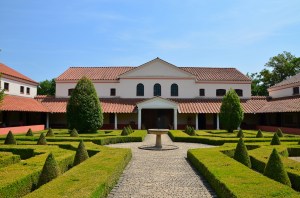
After settling the positions of the rooms with regard to the quarters of the sky, we must next consider the principles on which should be constructed those apartments in private houses which are meant for the householders themselves, and those which are to be shared in common with outsiders. The private rooms are those into which nobody has the right to enter without an invitation, such as bedrooms, dining rooms, bathrooms, and all others used for the like purposes. The common are those which any of the people have a perfect right to enter, even without an invitation: that is, entrance courts, cavaedia, peristyles, and all intended for the like purpose. Hence, men of everyday fortune do not need entrance courts, tablina, or atriums built in grand style, because such men are more apt to discharge their social obligations by going round to others than to have others come to them. Those who do business in country produce must have stalls and shops in their entrance courts, with crypts, granaries, storerooms, and so forth in their houses, constructed more for the purpose of keeping the produce in good condition than for ornamental beauty. For capitalists and farmers of the revenue, somewhat comfortable and showy apartments must be constructed, secure against robbery; for advocates and public speakers, handsomer and more roomy, to accommodate meetings; for men of rank who, from holding offices and magistracies, have social obligations to their fellow-citizens, lofty entrance courts in regal style, and most spacious atriums and peristyles, with plantations and walks of some extent in them, appropriate to their dignity. They need also libraries, picture galleries, and basilicas, finished in a style similar to that of great public buildings, since public councils as well as private law suits and hearings before arbitrators are very often held in the houses of such men. (tr. Morris Hicky Morgan)

Abstinere

woman_childstatue3

Feminae ab omnibus officiis civilibus vel publicis remotae sunt et ideo nec iudices esse possunt nec magistratum gerere nec postulare nec pro alio intervenire nec procuratores exsistere. item impubes omnibus officiis civilibus debet abstinere.
(Ulpian, Dig. 50.17.2)

Women are excluded from all civil and public offices; hence they cannot sit on juries or hold any civic magistracy or bring actions in court or act on someone else’s behalf or act as procurators. In the same way children ought not to hold any public office. (tr. Jane F. Gardner & Thomas Wiedemann)

Fingis

0b6bb0127ab0bcb5c257ae56b1c240a7

Apud L. Mallium, qui optimus pictor Romae habebatur, Servilius Geminus forte cenabat cumque filios eius deformes vidisset, “non similiter,” inquit, “Malli, fingis et pingis.” et Mallius, “in tenebris enim fingo,” inquit, “luce pingo.”
(Macrobius, Sat. 2.2.10)

Servilius Geminus happened to be dining at the home of Lucius Mallius, then considered the best painter in Rome, when he saw Mallius’ two ugly sons: “You don’t make children,” he said, “the way you make pictures.” “That,” said Mallius, “is because I make children in the dark, pictures in the light.” (tr. Robert A. Kaster)

Deridere

Hendrick ter Brugghen, Democritus, 1628
Hendrick ter Brugghen, Democritus (1628)

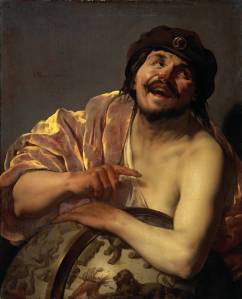
Sed nihil prodest privatae tristitiae causas abiecisse; occupat enim nonnumquam odium generis humani. cum cogitaveris, quam sit rara simplicitas et quam ignota innocentia et vix umquam, nisi eum expedit, fides, et occurrit tot scelerum felicium turba et libidinis lucra damnaque pariter invisa et ambitio usque eo iam se suis non continens terminis, ut per turpitudinem splendeat: agitur animus in noctem et velut eversis virtutibus, quas nec sperare licet nec habere prodest, tenebrae oboriuntur. in hoc itaque flectendi sumus, ut omnia vulgi vitia non invisa nobis sed ridicula videantur et Democritum potius imitemur quam Heraclitum. hic enim, quotiens in publicum processerat, flebat, ille ridebat; huic omnia quae agimus miseriae, illi ineptiae videbantur. elevanda ergo omnia et facili animo ferenda; humanius est deridere vitam quam deplorare.
(Seneca Minor, De Tranquillitate Animi 15.1-2)

But it is useless to cast away the reasons for private sadness; for sometimes loathing for the human race takes possession of us. When you think how rare honesty is and how unknown is innocence, and good faith is scarcely maintained at all unless it is in men’s interest, and such a crowd of successful crimes confronts us, along with the profits and losses of lust, both equally hateful—not to mention ambition so unable to keep within its limits that its shamefulness is glaring—the mind is driven into night, and the darkness rises up as if the virtues had been overthrown, since one cannot hope for them and gains nothing from possessing them. Therefore we must bend so as to make all the vices of the crowd seem not hateful but absurd, and imitate Democritus rather than Heraclitus. For whenever Heraclitus went into public places he wept, whereas Democritus laughed: to Heraclitus all our activities seemed wretched, to Democritus sheer folly. So we must mitigate everything and bear it with an easy mind; it is more humane to make fun of life than to bewail it. (tr. Elaine Fantham)


Skorpios

Nicolas Poussin, Le Temps soustrait la Vérité aux attaques de l'Envie et de la Discorde, 1641
Nicolas Poussin, Le Temps soustrait la Vérité aux attaques de l’Envie et de la Discorde (1641)

Σκοπεῖτε γάρ. εἰσὶν ὁμοῦ δισμύριοι πάντες Ἀθηναῖοι. τούτων ἕκαστος ἕν γέ τι πράττων κατὰ τὴν ἀγορὰν περιέρχεται, ἤτοι νὴ τὸν Ἡρακλέα τῶν κοινῶν ἢ τῶν ἰδίων. ἀλλ’ οὐχ οὗτος οὐδέν, οὐδ’ ἂν ἔχοι δεῖξαι πρὸς ὅτῳ τὸν βίον ἐστὶ τῶν μετρίων ἢ καλῶν. οὐχὶ τῶν πολιτικῶν ἀγαθῶν ἐπ’ οὐδενὶ τῇ ψυχῇ διατρίβει· οὐ τέχνης, οὐ γεωργίας, οὐκ ἄλλης ἐργασίας οὐδεμιᾶς ἐπιμελεῖται· οὐ φιλανθρωπίας, οὐχ ὁμιλίας οὐδεμιᾶς οὐδενὶ κοινωνεῖ· ἀλλὰ πορεύεται διὰ τῆς ἀγορᾶς, ὥσπερ ἔχις ἢ σκορπίος ἠρκὼς τὸ κέντρον, ᾄττων δεῦρο κἀκεῖσε, σκοπῶν τίνι συμφορὰν ἢ βλασφημίαν ἢ κακόν τι προστριψάμενος καὶ καταστήσας εἰς φόβον ἀργύριον εἰσπράξεται. οὐδὲ προσφοιτᾷ πρός τι τούτων τῶν ἐν τῇ πόλει κουρείων ἢ μυροπωλίων ἢ τῶν ἄλλων ἐργαστηρίων οὐδὲ πρὸς ἕν· ἀλλ’ ἄσπειστος, ἀνίδρυτος, ἄμεικτος, οὐ χάριν, οὐ φιλίαν, οὐκ ἄλλ’ οὐδὲν ὧν ἄνθρωπος μέτριος γιγνώσκων· μεθ’ ὧν δ’ οἱ ζωγράφοι τοὺς ἀσεβεῖς ἐν Ἅϊδου γράφουσιν, μετὰ τούτων, μετ’ ἀρᾶς καὶ βλασφημίας καὶ φθόνου καὶ στάσεως καὶ νείκους, περιέρχεται.
(Demosthenes, Or. 25.51-52)

Think about it. There are about twenty thousand Athenians in all. Each of them does some private or public business, by Heracles, as he walks around the Agora. But this man does not do any such business, nor could he point to any moderate or respectable activity he has spent his life pursuing. He does not spend his time thinking about what is good for the state. He practices no skill, neither farming or any other occupation; he shares no kindness, no company with anyone. But he moves through the Agora like a viper or a scorpion with his sting erect, leaping here and there, looking for someone on whom to inflict disaster or slander or some disaster or to extort money by terrifying him. He does not frequent any of the barbershops or perfume shops or any other workshops in the city, not even one. Pitiless, without a fixed residence, antisocial, he knows nothing of gratitude, friendship, or any of the other qualities a decent man knows. Joined by those whom the painters depict in the company of the impious in Hades, he walks around with Curse, Slander, Envy, Discord, and Quarrel. (tr. Edward M. Harris)

Asunkrita

maxresdefault-2

Αἰετὸς ὁ Ζεὺς ἦλθεν ἐπ’ ἀντίθεον Γανυμήδην,
κύκνος ἐπὶ ξανθὴν μητέρα τὴν Ἑλένης.
οὕτως ἀμφότερ’ ἐστὶν ἀσύγκριτα· τῶν δύο δ’ αὐτῶν
ἄλλοις ἄλλο δοκεῖ κρεῖσσον, ἐμοὶ τὰ δύο.
(Anth. Gr. 5.65)

As an eagle Zeus came to godlike Ganymede, and as a swan to the blond mother of Helen*. So there is no comparison between the two passions**: some prefer one of the two and others the other. I like both.

* I.e., Leda.
** I.e., for boys or for women.

(tr. William Roger Paton, revised by Michael A. Tueller; with their notes)