Ptōchoterōn

BizTech-ChurchGiving

Λάκων ἰδὼν ἀγείροντά τινα θεοῖς, οὐδὲν εἶπε φροντίζειν θεῶν πτωχοτέρων ἑαυτοῦ.
(Plutarch, Apophthegmata Lakōnika 235e)

A Spartan, seeing a man taking up a collection for the gods, said that he did not think much of gods who were poorer than himself. (tr. Frank Cole Babbitt)

Mitissime

Guercino, Giove lanciando un fulmine, ca. 1645
Guercino, Giove lanciando un fulmine (ca. 1645)

Forsitan ut quondam Teuthrantia regna tenenti,
sic mihi res eadem vulnus opemque feret,
Musaque, quam movit, motam quoque leniet iram;
exorant magnos carmina saepe deos.
ipse quoque Ausonias Caesar matresque nurusque
carmina turrigerae dicere iussit Opi.
iusserat et Phoebo dici, quo tempore ludos
fecit, quos aetas aspicit una semel.
his precor exemplis tua nunc, mitissime Caesar,
fiat ab ingenio mollior ira meo.
illa quidem iusta est, nec me meruisse negabo—
non adeo nostro fugit ab ore pudor—
sed nisi peccassem, quid tu concedere posses?
materiam veniae sors tibi nostra dedit.
si, quotiens peccant homines, sua fulmina mittat
Iuppiter, exiguo tempore inermis erit;
nunc ubi detonuit strepituque exterruit orbem,
purum discussis aëra reddit aquis.
iure igitur genitorque deum rectorque vocatur,
iure capax mundus nil love maius habet.
tu quoque, cum patriae rector dicare paterque,
utere more dei nomen habentis idem.
(Ovid, Trist. 2.19-40)

Perhaps, like Telephus* who ruled the Teuthrantian land,
the same weapon will both wound and cure me,
and the Muse who stirred the anger also calm it:
song often influences the great gods. Caesar himself
ordered the mothers and daughters of Italy
to chant the hymns to turreted Ops**.
He did the same for Apollo at the Secular Games
those that each age sees only once.
Merciful Caesar, I plead these as my precedents:
let my skill soften your anger.
It’s justified indeed: I don’t deny I deserve it—
shame hasn’t completely fled my cheeks—
But unless I’ve sinned, how can you forgive?
My fate has given you the chance for mercy.
If Jupiter hurled his lightning, every time men sinned,
it wouldn’t be long before he was weapon-less.
When he’s thundered, and scared the world with noise,
he scatters the rain-clouds and clears the air.
So it’s right to call him the father and ruler of the gods,
it’s right the wide world owns nothing greater than Jove.
You also, since you’re called father and ruler of the land,
should follow the ways of the god with the same title.

* King of Teuthrantia in Mysia, son of Hercules and the nymph Auge. He was suckled by a deer on Mount Parthenius. He was wounded and healed by the touch of Achilles’s spear at Troy.
** The goddess of agricultural abundance, goddess of plenty. Identified with Cybele by the Romans, who wore a turreted crown. Ovid may refer to Augustus’s rededication of her temple on the Palatine after it was destroyed by fire and re-built in 3 AD.

(tr. Tony Kline, with some of his notes)

Didou

Gold-silver-1040x643

Ὁ μὲν Ἐπίχαρμος τοὺς θεοὺς εἶναι λέγει
ἀνέμους, ὕδωρ, γῆν, ἥλιον, πῦρ, ἀστέρας·
ἐγὼ δ’ ὑπέλαβον χρησίμους εἶναι θεοὺς
τἀργύριον ἡμῖν καὶ τὸ χρυσίον <μόνους>. [Epicharmus, fr. B 8]
ἱδρυσάμενος τούτους γὰρ εἰς τὴν οἰκίαν
εὖξαι· τί βούλει; πάντα σοι γενήσεται,
ἀγρός, οἰκίαι, θεράποντες, ἀργυρώματα,
φίλοι, δικασταί, μάρτυρες. μόνον δίδου·
αὐτοὺς γὰρ ἕξεις τοὺς θεοὺς ὑπηρέτας.
[Menander, fr. 537]

Epicharmus claims as gods Winds, Water, Earth, Sun, Fire, and Stars, whereas it were my thought that Gold and Silver are for us the useful gods. Just dedicate their shrines within your house and say your prayers. What do you wish for? All things shall be yours: estate and houses, servants, silver-plate, friends, jurymen, and witnesses. Pay! pay! that’s all. For you will have the gods themselves as adjutants. (tr. Francis G. Allinson)

Centesimavit

Decimation_by_William_Hogarth_Beavers_Roman_Military_Punishments_Chapter_4_1725-1
William Hogarth, Decimation

Fuit igitur superbus et sanguinarius et volens militariter imperare, incusans quin etiam superiorum temporum disciplinam ac solum Severum prae ceteris laudans. nam et in crucem milites tulit et servilibus suppliciis semper adfecit et, cum seditiones militares pateretur, milites saepius decimavit, aliquando etiam centesimavit, quod verbum proprium ipsius est, cum se clementem diceret, quando eos centesimaret qui digni essent decimatione atque vicensimatione. longum est eius crudelitates omnes aperire, attamen unam ostendam non magnam, ut ipse credebat, sed omnibus tyrannicis inmanitatibus tristiorem. cum quidam milites ancillam hospitis iam diu pravi pudoris adfectassent, idque per quendam frumentarium ille didicisset, adduci eos iussit interrogavitque utrum esset factum. quod cum constitisset, duos boves mirae magnitudinis vivos subito aperiri iussit atque his singulos milites inseri capitibus, ut secum conloqui possent, exsertis; itaque poena hos adfecit, cum ne adulteris quidem talia apud maiores vel sui temporis essent constituta supplicia.
(Historia Augusta, Vita Opelli Macrini 12.1-5)

Macrinus, then, was arrogant and bloodthirsty and desirous of ruling in military fashion. He found fault even with the discipline of former times and lauded Severus alone above all others. For he even crucified soldiers and always used the punishments meted out to slaves, and when he had to deal with a mutiny among the troops, he usually decimated the soldiers—but sometimes he only centimated them. This last was an expression of his own, for he used to say that he was merciful in putting to death only one in a hundred, whereas they deserved to have one in ten or one in twenty put to death. It would be too long to relate all his acts of brutality, but nevertheless I will describe one, no great one in his belief, yet one which was more distressing than all his tyrannical cruelties. There were some soldiers who had had intercourse with their host’s maid-servant, who for some time had led a life of ill-repute. Learning of their offence through one of his spies, he commanded them to be brought before him and questioned them as to whether it were really true. When their guilt was proved, he gave orders that two oxen of extraordinary size should be cut open rapidly while still alive, and that the soldiers should be thrust one into each, with their heads protruding so that they could talk to each other. In this way he inflicted punishment on them, though neither our ancestors nor the men of his own time ever ordained any such penalty, even for those guilty of adultery. (tr. David Magie)

Astragalous

899a7d47-63e7-4275-a4ab-c91c88d9e552-72_fig.1_epidaurus-avaton
Abaton of the sanctuary of Asclepius at Epidaurus

Εὐφάνης Ἐπιδαύριος παῖς. οὗτος λιθιῶν ἐνεκάθευδε· ἔδοξε δὴ αὐτῷ ὁ θεὸς ἐπιστὰς εἰπεῖν· “τί μοι δωσεῖς, αἴ τύ κα ὑγιῆ ποιήσω;” αὐτὸς δὲ φάμεν “δέκ’ ἀστραγάλους”. τὸν δὲ θεὸν γελάσαντα φάμεν νιν παυσεῖν. ἁμέρας δὲ γενομένας ὑγιὴς ἐξῆλθε.
(Inscriptiones Graecae IV².1.121.VIII)

Euphanes, a boy of Epidauros. Suffering from stone, he slept (in the abaton). It seemed to him the god came to him and said, “What will you give me if I should make you well?” The boy replied, “Ten knucklebones.” The god laughed and said that he would make it stop. When day came, he left well. (tr. Lynn R. LiDonnici, modified by Paraskevi Martzavou)

Eksigēsin

Sep_13_17_pastors_blog

Περὶ τῆς καθ’ Ὅμηρον ἐχεμυθίας διὰ τούτων σαφῶς δείκνυται· λέγει γάρ,
“Θερσῖτ’ ἀκριτόμυθε, λιγύς περ ἐὼν ἀγορητὴς
ἴσχεο, μηδ’ ἔθελ’ οἶος ἐριζέμεναι βασιλῆϊ.” [Homer, Il. 2.246-247, misquoted (βασιλεῦσιν)]
καὶ τοῦ Τηλεμάχου εἰπόντος,
“ἦ μάλα τις θεῶν ἔνδον, οἳ οὐρανὸν εὐρὺν ἔχουσιν,” [Homer, Od. 19.40, misquoted (θεὸς)]
ἐπιλαμβανόμενος ὁ πατὴρ ἔφη,
“σίγα καὶ κατὰ σὸν νόον ἴσχανε μηδ’ ἐρέεινε·
αὕτη τοι δίκη ἐστὶ θεῶν οἳ Ὄλυμπον ἔχουσι.” [Homer, Od. 19.42-43]
τοῦτο ἐκσίγησιν οἱ Πυθαγορικοὶ καλοῦντες οὐδὲν ἀπεκρίνοντο τοῖς περὶ θεῶν ὅ τι τύχοιεν ἰταμῶς καὶ εὐχερῶς ἐρωτῶσι.
(Plutarch, fr. 207)

Homer’s approval of “holding the tongue” is clearly shown by the following lines: he writes,
“Thersites, unconsidered are your words;
Keep quiet, ready speaker though you be,
Nor wish alone to wrangle with the king.”
And when Telemachus said,
“Some god’s within, a dweller in wide heaven,”
his father restrained him with the words,
“Silence! Repress your thought and ask no questions;
The dwellers in Olympus have this right.”
The Pythagoreans called this “firm silence,” and gave no answer to those who, recklessly and without qualms, put indiscriminate questions about the gods. (tr. Francis Henry Sandbach)

Tibulle

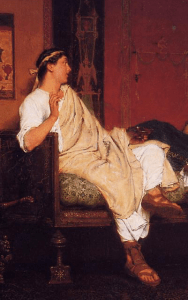
Lawrence Alma-Tadema, Tibullus at Delia's house, 1866 (detail)
Lawrence Alma-Tadema, Tibullus at Delia’s house (1866; detail)

Te quoque Vergilio comitem non aequa, Tibulle,
Mors iuvenem campos misit ad Elysios,
ne foret aut elegis molles qui fleret amores
aut caneret forti regia bella pede.
(Marsus, fr. Courtney)

You too, Tibullus, inequitable death sent as Virgil’s comrade young to the Elysian Fields, lest any live to weep soft loves in elegiacs, or sing of royal wars in vigorous rhythm. (tr. Llewelyn Morgan)

Consulatum

imgID141319385.jpg.gallery

Prasinae factioni ita addictus et deditus, ut cenaret in stabulo assidue et maneret, agitatori Eutycho comisatione quadam in apophoretis vicies sestertium contulit. Incitato equo, cuius causa pridie circenses, ne inquietaretur, viciniae silentium per milites indicere solebat, praeter equile marmoreum et praesaepe eburneum praeterque purpurea tegumenta ac monilia e gemmis domum etiam et familiam et supellectilem dedit, quo lautius nomine eius invitati acciperentur; consulatum quoque traditur destinasse.
(Suetonius, Cal. 55.2-3)

He* was so wildly keen on the Green Faction in the circus, that he used often to take his dinner in the stable and stay overnight there. At one of his parties, he gave the driver Eutychus two million sesterces in going-home presents. As for his horse Incitatus, to prevent whose disturbance he used to send his soldiers, the day before the circus games, to demand silence in the surrounding area, apart from the marble stable, the ebony manger, the purple blankets and the gem-studded collar, he also gave him a house and a household of slaves and furniture, so that guests he invited in his name might be entertained in a more refined manner. It is said, too, that he meant to make him consul.

* Caligula.

(tr. Catharine Edwards)

Consecrandus

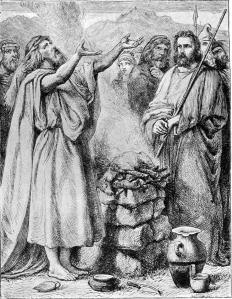
Foster_Bible_Pictures_0073-1_Offering_Up_a_Burnt_Sacrifice_to_God

Nunc de sacrificio ipso pauca dicemus. “ebur” inquit Plato “non castum donum Deo.” [cf. Nomoi 12.956a] quid ergo? picta scilicet ex texta pretiosa? immo vero non castum donum Deo, quidquid corrumpi, quidquid subripi potest. sed sicut hoc vidit, non oportere viventi offerre aliquid, quod sit ex mortuo corpore, cur illud non vidit, non debere incorporali corporale munus offerri? quanto melius et verius Seneca: “vultisne vos” inquit “deum cogitare magnum et placidum, et maiestate leni verendum, amicum et semper in proximo, non immolationibus et sanguine multo colendum—quae enim ex trucidatione immerentium voluptas est?—, sed mente pura, bono honestoque proposito? non templa illi congestis in altitudinem saxis exstruenda sunt: in suo cuique consecrandus est pectore.” [Seneca Minor, fr. 123] vestes igitur et gemmas et cetera quae habentur in pretio si quis putet Deo cara, is plane quid sit Deus nescit: cui putat voluptati esse eas res quas etiam homo si contempserit, iure laudabitur. quid ergo castum, quid Deo dignum, nisi quod ipse in illa divina lege sua poposcit? duo sunt, quae offerri debeant, donum et sacrificium, donum in perpetuum, sacrificium ad tempus. verum apud istos, qui nullo modo rationem divinitatis intellegunt, donum est quidquid auro argentoque fabricatur, item quidquid purpura et serico texitur, sacrificiumque victima et quaecumque in ara cremantur. sed utroque non utitur Deus, quia et ipse incorruptus est et illud totum corruptibile. itaque Deo utrumque incorporale offerendum est, quo utitur. donum est integritas animi, sacrificium laus et hymnus; si enim Deus non videtur, ergo his rebus coli debet quae non videntur. nulla igitur alia religio vera est nisi quae virtute ac iustitia constat.
(Lactantius, Div. Inst. 6.25.1-7)

Let us now say a few words about sacrifice. ‘Ivory,’ says Plato, ‘is not a chaste offering to a god.’ Well? Are paintings and cloth precious then? There is no chaste offering to be made to God out of anything that can be spoilt or stolen. But if Plato could see that nothing should be offered to a living being made of dead matter, why did he not see that no corporeal offering should be made to the incorporeal? Seneca put it much better, and more truly: ‘Do you people want to think of god as great, peaceful, reverend in an easy majesty, as a friend and always close by, not someone to worship with sacrificial beasts and quantities of blood—what pleasure is there in the slaughter of the undeserving?—but with a pure heart and a good and honest determination? He needs no temples built with stone piled high; each man must keep him sacred in his heart.’ Anyone thinking that God values clothes and jewels and the other stuff treated as precious clearly does not know what God is; he thinks God finds pleasure in things that a mere man would rightly be praised for disdaining. There is no chaste offering and none worthy of God except what he has required in his famous holy commandment. There are two things which are due as offerings, gifts and sacrifices: a gift is for ever and a sacrifice is for the while. For those people who have no notion of the nature of divinity, a gift is anything made of gold and silver or anything woven of purple and silk, and a sacrifice is a victim and anything burnt upon an altar. But God has use for neither, because he himself is uncorrupt and all that stuff is corruptible. God must therefore be offered the pair of incorruptibles: that pair he can use. Integrity of soul is the gift, and praise and hymns are the sacrifice. Since God is not visible, he must be worshipped with things invisible. The only true religion is the one founded on virtue and justice. (tr. Anthony Bowen & Peter Garnsey)

 

Paidopoieisthai

images-9

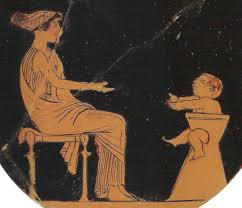
Τίνας οὖν, ἔφη, ὑπὸ τίνων εὕροιμεν ἂν μείζω εὐηργετημένους ἢ παῖδας ὑπὸ γονέων; οὓς οἱ γονεῖς ἐκ μὲν οὐκ ὄντων ἐποίησαν εἶναι, τοσαῦτα δὲ καλὰ ἰδεῖν καὶ τοσούτων ἀγαθῶν μετασχεῖν, ὅσα οἱ θεοὶ παρέχουσι τοῖς ἀνθρώποις· ἃ δὴ καὶ οὕτως ἡμῖν δοκεῖ παντὸς ἄξια εἶναι ὥστε πάντες τὸ καταλιπεῖν αὐτὰ πάντων μάλιστα φεύγομεν, καὶ αἱ πόλεις ἐπὶ τοῖς μεγίστοις ἀδικήμασι ζημίαν θάνατον πεποιήκασιν ὡς οὐκ ἂν μείζονος κακοῦ φόβῳ τὴν ἀδικίαν παύσαντες. καὶ μὴν οὐ τῶν γε ἀφροδισίων ἕνεκα παιδοποιεῖσθαι τοὺς ἀνθρώπους ὑπολαμβάνεις, ἐπεὶ τούτου γε τῶν ἀπολυσόντων μεσταὶ μὲν αἱ ὁδοί, μεστὰ δὲ τὰ οἰκήματα. φανεροὶ δ’ ἐσμὲν καὶ σκοπούμενοι ἐξ ὁποίων ἂν γυναικῶν βέλτιστα ἡμῖν τέκνα γένοιτο· αἷς συνελθόντες τεκνοποιούμεθα. καὶ ὁ μέν γε ἀνὴρ τήν τε συντεκνοποιήσουσαν ἑαυτῷ τρέφει καὶ τοῖς μέλλουσιν ἔσεσθαι παισὶ προπαρασκευάζει πάντα, ὅσα ἂν οἴηται συνοίσειν αὐτοῖς πρὸς τὸν βίον, καὶ ταῦτα ὡς ἂν δύνηται πλεῖστα· ἡ δὲ γυνὴ ὑποδεξαμένη τε φέρει τὸ φορτίον τοῦτο, βαρυνομένη τε καὶ κινδυνεύουσα περὶ τοῦ βίου καὶ μεταδιδοῦσα τῆς τροφῆς, ᾗ καὶ αὐτὴ τρέφεται, καὶ σὺν πολλῷ πόνῳ διενεγκοῦσα καὶ τεκοῦσα τρέφει τε καὶ ἐπιμελεῖται, οὔτε προπεπονθυῖα οὐδὲν ἀγαθὸν οὔτε γιγνῶσκον τὸ βρέφος ὑφ’ ὅτου εὖ πάσχει, οὐδὲ σημαίνειν δυνάμενον ὅτου δεῖται, ἀλλ’ αὐτὴ στοχαζομένη τά τε συμφέροντα καὶ τὰ κεχαρισμένα πειρᾶται ἐκπληροῦν, καὶ τρέφει πολὺν χρόνον καὶ ἡμέρας καὶ νυκτὸς ὑπομένουσα πονεῖν, οὐκ εἰδυῖα εἴ τινα τούτων χάριν ἀπολήψεται.
(Xenophon, Mem. 2.2.3-5)

Now what deeper obligation can we find than that of children to their parents? To their parents children owe their existence and their portion of all fair sights and all blessings that the gods bestow on humanity—gifts we prize so highly that all will sacrifice anything rather than lose them; and the reason why governments have made death the penalty for the greatest crimes is that the fear of it is the strongest deterrent against crime. Of course you don’t suppose that lust provokes men to beget children, when the streets and the brothels are full of means to satisfy that? We obviously select for wives the women who will bear us the best children, and then marry them to raise a family. The man supports the woman who is to share with him the duty of parentage and provides for the expected children whatever he thinks will contribute to their benefit in life, and accumulates as much of it as he can. The woman conceives and bears her burden in travail, risking her life, and giving of her own food; and, with much labor, having endured to the end and brought forth her child, she rears and cares for it, although she has not received any good thing, and the baby neither recognizes its benefactress nor can make its wants known to her: still she guesses what is good for it and what it likes, and seeks to supply these things, and rears it for a long season, enduring toil day and night, nothing knowing what return she will get. (tr. Edgar Cardew Marchant, revised by Jeffrey Henderson)