Letale

zwaard aambeeld

Sed iam serpentum maior concordia. parcit
cognatis maculis similis fera. quando leoni
fortior eripuit vitam leo? quo nemore umquam
expiravit aper maioris dentibus apri?
Indica tigris agit rabida cum tigride pacem
perpetuam, saevis inter se convenit ursis.
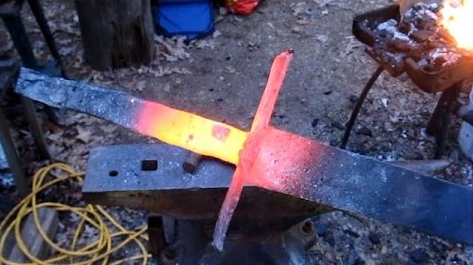
ast homini ferrum letale incude nefanda
produxisse parum est, cum rastra et sarcula tantum
assueti coquere et marris ac vomere lassi
nescierint primi gladios extendere fabri.
aspicimus populos quorum non sufficit irae
occidisse aliquem, sed pectora, bracchia, vultum
crediderint genus esse cibi. quid diceret ergo
vel quo non fugeret, si nunc haec monstra videret
Pythagoras, cunctis animalibus abstinuit qui
tamquam homine et ventri indulsit non omne legumen?
(Juvenal, Sat. 15.159-174)

But these days, there is more harmony among snakes. The wild beast with similar spots spares its relatives. Have you ever heard of a stronger lion robbing another lion of life? Or of a forest where a boar breathed its last under the tusks of a greater boar? The Indian tigress lives with frenzied tigress in everlasting peace. Savage bears agree among themselves. But for human beings it is not enough to have beaten out lethal steel on the wicked anvil, although the first blacksmiths spent their time and effort on forging rakes and hoes and mattocks and ploughshares only. They didn’t know how to produce swords. We are looking at people whose anger is not satisfied by killing someone but who think his torso, arms, and face are a kind of food. What, then, would Pythagoras say? Wouldn’t he run off, anywhere, if he now saw these horrors? Pythagoras was the one who abstained from eating all living things as if they were human and who didn’t treat his belly to every kind of bean. (tr. Susanna Morton Braund)

Peiratērion

best-pirate-movies-01

Θήρων γάρ τις ἦν, πανοῦργος ἄνθρωπος, ἐξ ἀδικίας πλέων τὴν θάλασσαν καὶ λῃστὰς ἔχων ὑφορμοῦντας τοῖς λιμέσιν ὀνόματι πορθμείου, πειρατήριον συγκροτῶν. οὗτος τῇ ἐκκομιδῇ παρατυχὼν ἐπωφθάλμισε τῷ χρυσῷ καὶ νύκτωρ κατακλινεὶς οὐκ ἐκοιμᾶτο λέγων πρὸς ἑαυτὸν “ἀλλὰ ἐγὼ κινδυνεύω μαχόμενος τῇ θαλάσσῃ καὶ τοὺς ζῶντας ἀποκτείνων ἕνεκα λημμάτων μικρῶν, ἐξὸν πλουτῆσαι παρὰ μιᾶς νεκρᾶς; ἀνερρίφθω κύβος· οὐκ ἀφήσω τὸ κέρδος. τίνας δ’ οὖν ἐπὶ τὴν πρᾶξιν στρατολογήσω; σκέψαι, Θήρων, τίς ἐπιτήδειος ὧν οἶδας. Ζηνοφάνης ὁ Θούριος; συνετὸς μὲν ἀλλὰ δειλός. Μένων ὁ Μεσσήνιος; τολμηρὸς μὲν ἀλλὰ προδότης.” ἐπεξιὼν δὲ τῷ λογισμῷ καθέκαστον ὥσπερ ἀργυρογνώμων, πολλοὺς ἀποδοκιμάσας, ὅμως ἔδοξέ τινας ἐπιτηδείους. ἕωθεν οὖν διατρέχων εἰς τὸν λιμένα, ἕκαστον αὐτῶν ἀνεζήτει. εὗρε δὲ ἐνίους μὲν ἐν πορνείοις, οὓς δ’ ἐν καπηλείοις, οἰκεῖον στρατὸν τοιούτῳ στρατηγῷ. φήσας οὖν ἔχειν τι διαλεχθῆναι πρὸς αὐτοὺς ἀναγκαῖον, κατόπιν τοῦ λιμένος ἀπήγαγε καὶ τούτων ἤρξατο τῶν λόγων· “ἐγὼ θησαυρὸν εὑρὼν ὑμᾶς κοινωνοὺς εἱλόμην ἐξ ἁπάντων· οὐ γάρ ἐστιν ἑνὸς τὸ κέρδος, οὐδὲ πόνου πολλοῦ δεόμενον, ἀλλὰ μία νὺξ δύναται ποιῆσαι πάντας ἡμᾶς πλουσίους. οὐκ ἄπειροι δ’ ἐσμὲν τοιούτων ἐπιτηδευμάτων, ἃ παρὰ μὲν τοῖς ἀνοήτοις ἀνθρώποις ἔχει διαβολήν, ὠφέλειαν δὲ τοῖς φρονίμοις δίδωσι.” συνῆκαν εὐθὺς ὅτι λῃστείαν ἢ τυμβωρυχίων ἢ ἱεροσυλίαν καταγγέλλει, καὶ “παῦσαι” ἔφασαν “ἀναπείθων τοὺς πεπεισμένους ἤδη καὶ μόνον μήνυε τὴν πρᾶξιν, καὶ τὸν καιρὸν μὴ παραπολλύωμεν.” ὁ δὲ Θήρων ἔνθεν ἑλὼν “ἑωράκατε” φησὶ “τὸν χρυσὸν καὶ ἄργυρον τῆς νεκρᾶς. οὗτος ἡμῶν τῶν ζώντων δικαιότερον γένοιτ’ ἄν. δοκεῖ δή μοι νυκτὸς ἀνοῖξαι τὸν τάφον, εἶτα ἐνθεμένους τῷ κέλητι, πλεύσαντας ὅποι ποτ’ ἂν φέρῃ τὸ πνεῦμα διαπωλῆσαι τὸν φόρτον ἐπὶ ξένης.” ἤρεσε. “νῦν μὲν οὖν” φησὶ “τρέπεσθε ἐπὶ τὰς συνήθεις διατριβάς· βαθείας δὲ ἑσπέρας ἕκαστος ἐπὶ τὸν κέλητα κατίτω κομίζων οἰκοδομικὸν ὄργανον.”
(Chariton, Callirhoe 1.7)

There was a cunning rogue named Theron who followed a life of crime upon the sea. He associated with freebooters whose craft rode at anchor in the harbors ostensibly for ferrying: but Theron led them as a pirate crew. Chancing to be presesnt at the funeral he ogled the gold and when he had gone to bed that night, he could not sleep. “Am I to risk my life,” he said to himself, “in fighting the sea and murdering the living for paltry gains when I can become rich from one dead girl? Let the die be cast! I will not miss this chance of profit. But whom shall I recruit for the operation? Think carefully, Theron. Who of those you know is fit for the job? Zenophanes of Thurii? He is intelligent, but cowardly. Menon of Messene? He is brave, but untrustworthy.” In his mind he examined each one, like a money-changer testing coins, and rejected many; but some he considered suitable. At dawn he ran down to the harbor and sought them all out. Some he found in the brothels and some in the taverns, a suitable army for such a general. Saying that he had something important to tell them, he took them behind the harbor and began with these words: “I have found a treasure, and I have singled you out from all to share it with me. There is too mch here for one man, yet not much effort is involved: a single night’s work can make us all rich. We have experience in this line of business, which draws condemnation from the foolish but brings profit to the sensible.” They realized at once that he was proposing some piracy or tomb-breaking or temple-robbing and said, “Stop trying to persuade us: we are already persuaded. Just tell us what the job is; let us not miss the chance.” Taking up from this point Theron said, “You saw the dead girl’s gold and silver. It should more properly belong to us, the living. I plan to open up the tomb at night, then load the cutter, sail wherever the wind takes us, and sell our cargo overseas.” They agreed. “For now,” said he, “return to normal business. When it gets dark each of you come to the cutter with a builder’s tool.” (tr. George Patrick Goold)


Procheira

three-fingers

Τρία ταῦτα δεῖ πρόχειρα ἔχειν· ἐπὶ μὲν ὧν ποιεῖς, μήτε εἰκῇ μήτε ἄλλως ἢ ὡς ἂν ἡ Δίκη αὐτὴ ἐνήργησεν· ἐπὶ δὲ τῶν ἔξωθεν συμβαινόντων, ὅτι ἤτοι κατ ἐπιτυχίαν ἢ κατὰ πρόνοιαν· οὔτε δὲ τῇ ἐπιτυχίᾳ μεμπτέον οὔτε τῇ προνοίᾳ ἐγκλητέον. δεύτερον τό· ὁποῖον ἕκαστον ἀπὸ σπέρματος μέχρι ψυχώσεως καὶ ἀπὸ ψυχώσεως μέχρι τοῦ τὴν ψυχὴν ἀποδοῦναι καὶ ἐξ οἵων ἡ σύγκρισις καὶ εἰς οἷα ἡ λύσις. τρίτον εἰ ἄφνω μετέωρος ἐξαρθεὶς κατασκέψαιο τὰ ἀνθρώπεια καὶ τὴν πολυτροπίαν κατανοήσαις, ὅτι καταφρονήσεις συνιδὼν ἅμα καὶ ὅσον τὸ περιοικοῦν ἐναερίων καὶ ἐναιθερίων· καὶ ὅτι, ὁσάκις ἂν ἐξαρθῇς, ταὐτὰ ὄψῃ· τὸ ὁμοειδές, τὸ ὀλιγοχρόνιον· ἐπὶ τούτοις ὁ τῦφος.
(Marcus Aurelius, Ta eis heauton 12.24)

Three thoughts  to keep at hand. First, in your own actions, nothing aimless or other than Justice herself would have done; in external happenings either chance or providence is at work, and one should not blame chance or dict providence. Second: the nature of each of us from conception to the first breath of soul, and from that first breath to the surrender of our soul; what elements form our constitution and will be the result of our dissolution. Third: that if you were suddenly lifted up to a great height and could look down on human activity and see all its variety, you would despise it because your view would take in also the great surrounding host of spirits who populate the air and the sky; and that however many times you were lifted up, you would see the same things – monotony and transience. Such are the objects of our conceit. (tr. Martin Hammond)


Eleeina

Mr._T

Ποῖα δ’ ἐλεεινὰ καὶ τίνας ἐλεοῦσι, καὶ πῶς αὐτοὶ ἔχοντες, λέγωμεν. ἔστω δὴ ἔλεος λύπη τις ἐπὶ φαινομένῳ κακῷ φθαρτικῷ ἢ λυπηρῷ τοῦ ἀναξίου τυγχάνειν, ὃ κἂν αὐτὸς προσδοκήσειεν ἂν παθεῖν ἢ τῶν αὑτοῦ τινα, καὶ τοῦτο ὅταν πλησίον φαίνηται· δῆλον γὰρ ὅτι ἀνάγκη τὸν μέλλοντα ἐλεήσειν ὑπάρχειν τοιοῦτον οἷον οἴεσθαι παθεῖν ἄν τι κακὸν ἢ αὐτὸν ἢ τῶν αὑτοῦ τινα, καὶ τοιοῦτο κακὸν οἷον εἴρηται ἐν τῷ ὅρῳ ἢ ὅμοιον ἢ παραπλήσιον· διὸ οὔτε οἱ παντελῶς ἀπολωλότες ἐλεοῦσιν (οὐδὲν γὰρ ἂν ἔτι παθεῖν οἴονται· πεπόνθασι γάρ), οὔτε οἱ ὑπερευδαιμονεῖν οἰόμενοι, ἀλλ’ ὑβρίζουσιν· εἰ γὰρ ἅπαντα οἴονται ὑπάρχειν τἀγαθά, δῆλον ὅτι καὶ τὸ μὴ ἐνδέχεσθαι παθεῖν μηδὲν κακόν· καὶ γὰρ τοῦτο τῶν ἀγαθῶν. εἰσὶ δὲ τοιοῦτοι οἷοι νομίζειν παθεῖν ἄν, οἵ τε πεπονθότες ἤδη καὶ διαπεφευγότες, καὶ οἱ πρεσβύτεροι καὶ διὰ τὸ φρονεῖν καὶ δι’ ἐμπειρίαν, καὶ οἱ ἀσθενεῖς, καὶ οἱ δειλότεροι μᾶλλον, καὶ οἱ πεπαιδευμένοι· εὐλόγιστοι γάρ. καὶ οἷς ὑπάρχουσι γονεῖς ἢ τέκνα ἢ γυναῖκες· αὐτοῦ τε γὰρ ταῦτα, καὶ οἷα παθεῖν τὰ εἰρημένα. καὶ οἱ μήτε ἐν ἀνδρείας πάθει ὄντες, οἷον ἐν ὀργῇ ἢ θάρρει (ἀλόγιστα γὰρ τοῦ ἐσομένου ταῦτα), μήτε ἐν ὑβριστικῇ διαθέσει (καὶ γὰρ οὗτοι ἀλόγιστοι τοῦ πείσεσθαί τι), ἀλλ’ οἱ μεταξὺ τούτων, μήτ’ αὖ φοβούμενοι σφόδρα· οὐ γὰρ ἐλεοῦσιν οἱ ἐκπεπληγμένοι, διὰ τὸ εἶναι πρὸς τῷ οἰκείῳ πάθει. κἂν οἴωνταί τινας εἶναι τῶν ἐπιεικῶν· ὁ γὰρ μηδένα οἰόμενος πάντας οἰήσεται ἀξίους εἶναι κακοῦ. καὶ ὅλως δὴ ὅταν ἔχῃ οὕτως ὥστ’ ἀναμνησθῆναι τοιαῦτα συμβεβηκότα ἢ αὑτῷ ἤ ‹τῳ› τῶν αὑτοῦ, ἢ ἐλπίσαι γενέσθαι αὑτῷ ἤ τῳ τῶν αὑτοῦ.
(Aristotle, Rhet. 2.8.1385b-1386a)

Let us say what sort of things are pitiable and whom people pity and in what state of mind. Let pity be [defined as] a certain pain at an apparently destructive or painful event happening to one who does not deserve it and which a person might expect himself or one of his own to suffer, and this when it seems close at hand; for it is clear that a person who is going to feel pity necessarily thinks that some evil is actually present of the sort that he or one of his own might suffer and that this evil is of the sort mentioned in the definition or like it or about equal to it. Therefore, those who are utterly ruined do not feel pity (they think there is nothing left for them to suffer; for they have suffered) nor [do] those thinking themselves enormously happy; they demonstrate insolent pride [hybris] instead. (If they think all good things are actually present, clearly they also think it is not possible to experience any evil; for this [impossibility of suffering] is one if the good things.) The kind of people who think they might suffer are those who have suffered in the past and escaped and older people because of their practical wisdom and experience and the weak and those who are cowardly and those who have been educated; for they are discerning. Also those that have parents or children or wives; for these are their “own” and subject to the sufferings that have been mentioned. And those who are not in a courageous emotional state, for example not in a state of anger or confidence (these feelings do not take account of the future) nor in one of violent insolence (these people, too, take no account of suffering anything) nor, conversely, in a state of extreme fear (those who are scared out of their wits do not feel pity because so taken up with their own suffering) but [only] those who are in between these states. And [people feel pity] if they think certain individuals are among the good people of the world; for one who thinks no good person exists will think all worthy of suffering. And on the whole, [a person feels pity] when his state of mind is such that he remembers things like this happening to himself or his own or expects them to happen to himself or his own. (tr. George A. Kennedy)

Cheilē

1392602127903

Ὡς δὲ ἐγέννησε Θέτις ἐκ Πηλέως βρέφος, ἀθάνατον θέλουσα ποιῆσαι τοῦτο, κρύφα Πηλέως εἰς τὸ πῦρ ἐγκρύβουσα τῆς νυκτὸς ἔφθειρεν ὃ ἦν αὐτῷ θνητὸν πατρῷον, μεθ’ ἡμέραν δὲ ἔχριεν ἀμβροσίᾳ. Πηλεὺς δὲ ἐπιτηρήσας καὶ σπαίροντα τὸν παῖδα ἰδὼν ἐπὶ τοῦ πυρὸς ἐβόησε· καὶ Θέτις κωλυθεῖσα τὴν προαίρεσιν τελειῶσαι, νήπιον τὸν παῖδα ἀπολιποῦσα πρὸς Νηρηίδας ᾤχετο. κομίζει δὲ τὸν παῖδα πρὸς Χείρωνα Πηλεύς. ὁ δὲ λαβὼν αὐτὸν ἔτρεφε σπλάγχνοις λεόντων καὶ συῶν ἀγρίων καὶ ἄρκτων μυελοῖς, καὶ ὠνόμασεν Ἀχιλλέα (πρότερον δὲ ἦν ὄνομα αὐτῷ Λιγύρων) ὅτι τὰ χείλη μαστοῖς οὐ προσήνεγκε.
(Apollodorus, Bibl. 3.13.6)

When Thetis had got a babe by Peleus, she wished to make it immortal, and unknown to Peleus she used to hide it in the fire by night in order to destroy the mortal element which the child inherited from its father, but by day she anointed him with ambrosia. But Peleus watched her, and, seeing the child writhing on the fire, he cried out; and Thetis, thus prevented from accomplishing her purpose, forsook her infant son and departed to the Nereids. Peleus brought the child to Chiron, who received him and fed him on the inwards of lions and wild swine and the marrows of bears, and named him Achilles, because he had not put his lips to the breast; but before that time his name was Ligyron. (tr. James George Frazer)

Inordinatum

God-creation

Qui vero non astrorum constitutionem, sicuti est cum quidque concipitur vel nascitur vel inchoatur, sed omnium conexionem seriemque causarum, qua fit omne quod fit, fati nomine appellant: non multum cum eis de verbi controversia laborandum atque certandum est, quando quidem ipsum causarum ordinem et quandam conexionem Dei summi tribuunt voluntati et potestati, qui optime et veracissime creditur et cuncta scire antequam fiant et nihil inordinatum relinquere; a quo sunt omnes potestates, quamvis ab illo non sint omnium voluntates. ipsam itaque praecipue Dei summi voluntatem, cuius potestas insuperabiliter per cuncta porrigitur, eos appellare fatum sic probatur. Annaei Senecae sunt, nisi fallor, hi versus:
“duc, summe pater altique dominator poli,
quocumque placuit, nulla parendi mora est.
adsum impiger: fac nolle, comitabor gemens
malusque patiar, facere quod licuit bono.
ducunt volentem fata, nolentem trahunt.”
nempe evidentissime hoc ultimo versu ea fata appellavit, quam supra dixerat summi patris voluntatem; cui paratum se oboedire dicit, ut volens ducatur, ne nolens trahatur; quoniam scilicet “ducunt volentem fata, nolentem trahunt.”
illi quoque versus Homerici huic sententiae suffragantur, quos Cicero in Latinum vertit:
“tales sunt hominum mentes, quali pater ipse
Iuppiter auctiferas lustravit lumine terras.”
nec in hac quaestione auctoritatem haberet poetica sententia, sed quoniam Stoicos dicit vim fati asserentes istos ex Homero versus solere usurpare, non de illius poetae, sed de istorum philosophorum opinione tractatur, cum per istos versus, quos disputationi adhibent quam de fato habent, quid sentiant esse fatum apertissime declaratur, quoniam Iovem appellant, quem summum deum putant, a quo conexionem dicunt pendere fatorum.
(Augustine, Civ. Dei 5.8)

But, as to those who call by the name of fate, not the disposition of the stars as it may exist when any creature is conceived, or born, or commences its existence, but the whole connection and train of causes which makes everything become what it does become, there is no need that I should labor and strive with them in a merely verbal controversy, since they attribute the so-called order and connection of causes to the will and power of God most high, who is most rightly and most truly believed to know all things before they come to pass, and to leave nothing unordained; from whom are all powers, although the wills of all are not from Him. Now, that it is chiefly the will of God most high, whose power extends itself irresistibly through all things which they call fate, is proved by the following verses, of which, if I mistake not, Annæus Seneca is the author:—
“Father supreme, You ruler of the lofty heavens,
Lead me where’er it is Your pleasure; I will give
A prompt obedience, making no delay,
Lo! Here I am. Promptly I come to do Your sovereign will;
If your command shall thwart my inclination, I will still
Follow You groaning, and the work assigned,
With all the suffering of a mind repugnant,
Will perform, being evil; which, had I been good,
I should have undertaken and performed, though hard,
With virtuous cheerfulness.
The Fates do lead the man that follows willing;
But the man that is unwilling, him they drag.”
Most evidently, in this last verse, he calls that fate which he had before called the will of the Father supreme, whom, he says, he is ready to obey that he may be led, being willing, not dragged, being unwilling, since the Fates do lead the man that follows willing, “but the man that is unwilling, him they drag”. The following Homeric lines, which Cicero translates into Latin, also favor this opinion:—
“Such are the minds of men, as is the light
Which Father Jove himself does pour
Illustrious o’er the fruitful earth.”
Not that Cicero wishes that a poetical sentiment should have any weight in a question like this; for when he says that the Stoics, when asserting the power of fate, were in the habit of using these verses from Homer*, he is not treating concerning the opinion of that poet, but concerning that of those philosophers, since by these verses, which they quote in connection with the controversy which they hold about fate, is most distinctly manifested what it is which they reckon fate, since they call by the name of Jupiter him whom they reckon the supreme god, from whom, they say, hangs the whole chain of fates. (tr. Marcus Dods)

* Cf. Homer, Od. 18.136-137:
τοῖος γὰρ νόος ἐστὶν ἐπιχθονίων ἀνθρώπων
οἷον ἐπ’ ἦμαρ ἄγησι πατὴρ ἀνδρῶν τε θεῶν τε.

…for the spirit of men upon the earth is just such as the day which the father of gods and men brings upon them. (tr. Augustus Taber Murray, revised by George E. Dimock)

See also this post.

Disconvenit

8fb8fb112c421bdf96d2c2830a8d2d90

Si curatus inaequali tonsore capillos
occurri, rides; si forte subucula pexae
trita subest tunicae, vel si toga dissidet impar,
rides: quid, mea cum pugnat sententia secum,
quod petiit spernit, repetit quod nuper omisit,
aestuat et vitae disconvenit ordine toto,
diruit, aedificat, mutat quadrata rotundis?
insanire putas sollemnia me neque rides
nec medici credis nec curatoris egere
a praetore dati, rerum tutela mearum
cum sis et prave sectum stomacheris ob unguem
de te pendentis, te respicientis amici.
ad summam: sapiens uno minor est Iove, dives,
liber, honoratus, pulcher, rex denique regum,
praecipue sanus, nisi cum pituita molesta est.
(Horace, Ep. 1.1.94-108)

If some ham-fisted barber has cropped my hair and I
Meet you, you laugh: if I happen to wear a tired shirt
Under my tunic, or my toga sits poorly, all
Awry, you laugh: yet if my judgement contends
With itself, spurns what it craved, seeks what it just put down,
Wavers, inconsistently, in all of life’’s affairs,
Razing, re-building, and altering round to square:
You consider my madness normal, don’’t laugh at all,
Don’’t think I need the doctor, or a legal guardian
The praetor appoints, given you, in charge of all
My affairs, are annoyed by a badly-trimmed nail
Of this friend who looks to you, hangs on your every word.
In sum: the wise man is second only to Jove,
Rich, free, handsome, honoured, truly a king of kings,
Sane, above all, sound, unless he’’s a cold in the head!
(tr. Tony Kline)

Sententiae

77487fa3-e81c-4582-a637-d211291a60a3_rw_1920

Publilius mimos scriptitavit. dignus habitus est qui subpar Laberio iudicaretur. C. autem Caesarem ita Laberii maledicentia et adrogantia offendebat, ut acceptiores sibi esse Publili quam Laberii mimos praedicaret. huius Publili sententiae feruntur pleraeque lepidae et ad communem sermonum usum commendatissimae, ex quibus sunt istae singulis versibus circumscriptae, quas libitum hercle est adscribere:
malum est consilium quod mutari non potest.
beneficium dando accepit, qui digno dedit.
feras, non culpes, quod vitari non potest.
cui plus licet, quam par est, plus vult, quam licet.
comes facundus in via pro vehiculo est.
frugalitas miseria est rumoris boni.
heredis fletus sub persona risus est.
furor fit laesa saepius patientia.
improbe Neptunum accusat, qui iterum naufragium facit.
ita amicum habeas pesse ut facile fieri hunc inimicum putes.
veterem ferendo iniuriam invites novam.
numquam periclum sine periclo vincitur.
nimium altercando veritas amittitur.
pars benefici est, quod petitur si belle neges.
(Aulus Gellius, Noct. Att. 17.14)

Publilius wrote mimes. He was thought worthy of being rated about equal to Laberius. But the scurrility and the arrogance of Laberius so offended Gaius Caesar, that he declared that he was better pleased with the mimes of Publilius than with those of Laberius. Many sayings of this Publilius are current, which are neat and well adapted to the use of ordinary conversation. Among these are the following, consisting of a single line each, which I have indeed taken pleasure in quoting*:
Bad is the plan which cannot bear a change.
He gains by giving who has given to worth.
Endure and don’t deplore what can’t be helped.**
Who’s given too much, will want more than’s allowed.***
A witty comrade at your side,
To walk’s as easy as to ride.
Frugality is misery in disguise.
Heirs’ tears are laughter underneath a mask.
Patience too oft provoked is turned to rage.
He wrongly Neptune blames, who suffers shipwreck twice.
Regard a friend as one who may be foe.
By bearing old wrongs new ones you provoke.
With danger ever danger’s overcome.
‘Mid too much wrangling truth is often lost.
Who courteously declines, grants half your suit.

* Meyer, vv. 362, 55, 176, 106, 104, 193, 221, 178, 264, 245, 645, 383, 416, 469. In one instance it has seemed necessary to use two lines in the English version.
** Cf. “What can’t be cured must be endured.”
*** Cf. “Give an inch, he’ll take an ell.”

(tr. John C. Rolfe, with his notes)

Lamprotēs

oratoria

Μετὰ τὸν περὶ σεμνότητός τε καὶ τραχύτητος λόγον ἔτι τε σφοδρότητος ἀναγκαῖον εἰπεῖν περὶ λαμπρότητος. τῶν γὰρ ποιουσῶν τὸ μέγεθός τε καὶ τὸ ἀξίωμα τῷ λόγῳ ἰδεῶν ἐν τοῖς μάλιστά ἐστιν ἡ λαμπρότης. τά τε ἄλλα γὰρ ἀναγκαία ἡ ἰδέα τῷ ἀξιωματικῷ λόγῳ καὶ ὅτι δεῖ τῷ σεμνῷ τε καὶ τραχεῖ καὶ σφοδρῷ προσεἰναί τι πάντως καὶ φαιδρότητος, ἵνα μὴ πάντῃ αὐστηρὸς ᾖ· φαιδρότητος δὲ οὐ τῆς ἐν ὡραισμῷ, ἣ δὴ γλυκύτητός τε καὶ ἀφελείας ἐστίν, οὐδὲ τῆς κατʼ ἐπιμέλειαν συνθήκης κάλλος ἐχούσης τι—καίπερ γὰρ ὄν κομμωτικὸν τὸ τοιοῦτο καὶ πλεονάζον παρὰ τῷ ῥήτορι ὅμως λεπτόν ἐστι καὶ οὐκ ἔχει δίαρμα οὐδὲ μέγεθος—, οὔκουν ταύτης δεῖ τῆς φαιδρότητος τῷ μεγέθει ὡς καθʼ αὐτό, ἀλλὰ τῆς ἀξιωματικῆς· ταύτην δὲ ποιεῖ ἡ λαμπρότης, περὶ ἧς ῥητέον. περὶ γὰρ τοῦ ἐναντίου εἴδους τῇ λαμπρότητι κἀν τῷ περὶ σφοδρότητος εἰρήκαμεν, ὅτι ἐστὶ τὸ κομματικὸν καὶ διαλεκτικὸν καὶ ὄντως ἀγωνιστικὸν εἶδος τοῦ λόγου καὶ ὅλως τὸ γοργόν. γίνεται τοίνυν λόγος λαμπρὸς κατὰ ἔννοιαν μέν, ὅταν πεποίθησιν ἔχῃ τινὰ ὁ λέγων, ἐφ’ οἷς ἄν λέγῃ, ἢ διὰ τὸ ἔνδοξα εἶναι ἢ διὰ τὸ καλῶς πεπρᾶχθαι αὐτῷ ἢ διὰ τὸ χαίρειν τοῖς λεγομένοις τούς ἀκούοντας ἢ καὶ διὰ πάντα ταῦτα· ὅλως τε ἐπὶ τοῖς διαπρεπέσι τῶν ἔργων καὶ ἐφ’ οἷς ἔστι λαμπρύνεσθαι ὡς ἀληθῶς, ὅπερ φησὶν Ἡρόδοτος ἐλλάμψασθαι, ἐπὶ τούτοις ἐστὶ καὶ ἡ λαμπρότης· γίνεται τοίνυν λόγος λαμπρὸς κατὰ ἔννοιαν μέν, ὅταν πεποίθησιν ἔχῃ τινὰ ὁ λέγων, ἐφ’ οἷς ἄν λέγῃ, ἢ διὰ τὸ ἔνδοξα εἶναι ἢ διὰ τὸ καλῶς πεπρᾶχθαι αὐτῷ ἢ διὰ τὸ χαίρειν τοῖς λεγομένοις τούς ἀκούοντας ἢ καὶ διὰ πάντα ταῦτα· ὅλως τε ἐπὶ τοῖς διαπρεπέσι τῶν ἔργων καὶ ἐφ’ οἷς ἔστι λαμπρύνεσθαι ὡς ἀληθῶς, ὅπερ φησὶν Ἡρόδοτος ἐλλάμψασθαι, ἐπὶ τούτοις ἐστὶ καὶ ἡ λαμπρότης· οἶον “οὐ λίθοις ἐτείχισα τὴν πόλιν οὐδὲ πλίνθοις ἐγώ, οὐδ’ ἐπὶ τούτοις μέγιστον τῶν ἐμαυτοῦ φρονῶ· ἀλλ’ ἐὰν βούλῃ τὸν ἐμὸν τειχισμόν” καὶ τὰ ἑξῆς, καὶ πάλιν “αὕτη τῶν περὶ Θήβας ἐγένετο πραγμάτων ἀρχὴ καὶ κατάστασις πρώτη, τὰ πρὸ τούτων εἰς ἔχθραν καὶ μῖσος καὶ ἀπιστίαν τῶν πόλεων ὑπηγμένων ὑπὸ τούτων. τοῦτο τὸ ψήφισμα τὸν τότε περιστάντα τῇ πόλει κίνδυνον παρελθεῖν ἐποίησεν ὥσπερ νέφος”, καὶ πάλιν “ταῦτα ἐποίουν οἱ ὑμέτεροι πρόγονοι, ταῦθ’ ὑμῶν οἱ πρεσβύτεροι, οἲ Λακεδαιμονίους καὶ τὰ ἐξῆς, καὶ πάλιν “ὑμεῖς τοίνυν, ὦ Ἀθηναῖοι, Λακεδαιμονίων γῆς καὶ θαλάττης ἀρχόντων καὶ τὰ κύκλῳ τῆς Ἀττικῆς κατεχόντων ἁρμοσταῖς καὶ φρουραῖς, Εὔβοιαν, Τάναγραν, τὴν Βοιωτίαν ἅπασαν” καὶ τὰ ἑξῆς μέχρι τοῦ “ἐξήλθετε εἰς Ἁλίαρτον”. πολλὰ δὲ καὶ τοῦ τοιούτου παραδείγματα ἐν τῶ Περὶ τοῦ στεφάνου διὰ τὸ φύσει ἀξιωματικὸν τοῦ λόγου καὶ λαμπρόν. Ἀλλʼ ἔννοιαι μὲν αὗται καὶ αἰ τοιαῦται λαμπραί.
(Hermogenes, Peri Ideōn 1.9)

Having treated Solemnity, Asperity, and Vehemence, we must now discuss Brilliance. Of those types that produce Grandeur and dignity Brilliance is especially important. This type is necessary in a dignified speech for several reasons, but especially because a speech that is solemn and harsh and vehement also needs an element of luster, so that it will not be overly severe. I do not mean by this the kind of luster that is produced by adornment. That is characteristic of Sweetness and Simplicity. Nor am I talking about the kind that produces a beautiful effect through the care taken with the arrangement of words in the sentences. The latter kind of style is decorative and is often found in Demosthenes. It is nevertheless slight and does not produce elevation and Grandeur. To make the passage really elevated, therefore, you do not need the kinds of luster just discussed, but the kind that is truly dignified. That is Brilliance, which I will discuss now. We have already mentioned the kind of style that is the opposite of Brilliance in the discussion of Vehemence, where we said that it is conversational and argumentative, composed of short phrases, and generally quick-paced. Therefore, a passage is brilliant with reference to the thought when the speaker has some confidence in what he is saying, either because what he is saying is generally approved or because he has acted honorably or because his audience is pleased with what he is saying or for all these reasons. In general Brilliance is inherent in those acts that are remarkable and in which one can gain luster, or, as Herodotus says (1.80), in which one can “shine.” This is the case in the following passages from Demosthenes’ speech On the Crown: “I did not fortify the city with stones and with bricks, nor do I consider that the greatest of my achievements reside in such things. But if you want to see the fortifications that I build you will find weapons and cities” etc. (299) or “This was the beginning of our dealings with Thebes and the first negotiation, since before this these men had reduced our attitude toward the Thebans to hostility and hatred and distrust. This decree caused the danger surrounding the city to disappear like a cloud” (188) or “Your ancestors did this, the elders among you did it when they saved the Spartans,” etc. (98) or “You, therefore, Athenians, when the Spartans ruled by land and sea and were holding with governors and garrisons all the frontiers of Attica, as well as Euboea, Tanagra, and all Boeotia,” etc. up to “you set out to Haliartus” (96). And there are many examples of such a style in the speech On the Crown because it is by nature dignified and brilliant. These thoughts, then, and those like them are characteristic of Brilliance. (tr. Cecil W. Wooten III)

Immensum

Eye-Of-The-Cosmos-Taken-From-The-Hubble-Telescope

This is part 3 of 3. Part 1 is here. Part 2 is here.

Huic in tanta fidem petimus, quam saepe volucres
accipiunt trepidaeque suo sub pectore fibrae.
an minus est sacris rationem ducere signis
quam pecudum mortes aviumque attendere cantus?
atque ideo faciem caeli non invidet orbi
ipse deus vultusque suos corpusque recludit
volvendo semper seque ipsum inculcat et offert,
ut bene cognosci possit doceatque videntis,
qualis eat, cogatque suas attendere leges.
ipse vocat nostros animos ad sidera mundus
nec patitur, quia non condit, sua iura latere.
quis putet esse nefas nosci, quod cernere fas est?
nec contemne tuas quasi parvo in pectore vires:
quod valet, immensum est. sic auri pondera parvi
exsuperant pretio numerosos aeris acervos;
sic adamas, punctum lapidis, pretiosior auro est;
parvula sic totum pervisit pupula caelum,
quoque vident oculi minimum est, cum maxima cernant;
sic animi sedes tenui sub corde locata
per totum angusto regnat de limite corpus.
materiae ne quaere modum, sed perspice vires,
quas ratio, non pondus, habet: ratio omnia vincit.
ne dubites homini divinos credere visus,
iam facit ipse deos mittitque ad sidera numen,
maius et Augusto crescet sub principe caelum.
(Manilius, Astr. 4.911-935)

I ask for heaven a faith as great as that so oft accorded birds and entrails that quiver beneath their native breast. Is it then a meaner thing to derive reason from the sacred stars than to heed sacrifice of beast and cry of bird? God grudges not the earth the sight of heaven but reveals his face and form by ceaseless revolution, offering, nay impressing, himself upon us to the end that he can be truly known, can teach his nature to those who have eyes to see, and can compel them to mark his laws. Of itself the firmament summons our minds to the stars, and in not concealing its ordinances shows that it would have them known. Who then would deem it wrong to understand what it is right for us to see? Scorn not your powers as if proportionate to the smallness of the mind: its power has no bounds. Thus a small amount of gold exceeds in value countless heaps of brass; thus the diamond, a stone no bigger than a dot, is more precious than gold; thus the tiny pupil of the eye takes in the whole of heaven, and eyes owe their vision to that which is so very small, whilst what they behold is so very large; thus the seat of the mind, though set within the puny heart, exercises from its constricted abode dominion over the whole body. Seek not to measure the material, but consider rather the power which reason has and mere substance not: reason is what triumphs over all. Be not slow to credit man with vision of the divine, for man himself is now creating gods and raising godhead to the stars, and beneath the dominion of Augustus will heaven grow mightier yet. (tr. George Patrick Goold)