
Korēthron

Broom-water-buckets

“Ὁπότε γὰρ ἐν Αἰγύπτῳ διῆγον ἔτι νέος ὤν, ὑπὸ τοῦ πατρὸς ἐπὶ παιδείας προφάσει ἀποσταλείς, ἐπεθύμησα εἰς Κοπτὸν ἀναπλεύσας ἐκεῖθεν ἐπὶ τὸν Μέμνονα ἐλθὼν ἀκοῦσαι τὸ θαυμαστὸν ἐκεῖνο ἠχοῦντα πρὸς ἀνίσχοντα τὸν ἥλιον. ἐκείνου μὲν οὖν ἤκουσα οὐ κατὰ τὸ κοινὸν τοῖς πολλοῖς ἄσημόν τινα φωνήν, ἀλλά μοι καὶ ἔχρησεν ὁ Μέμνων αὐτὸς ἀνοίξας γε τὸ στόμα ἐν ἔπεσιν ἑπτά, καὶ εἴ γε μὴ περιττὸν ἦν, αὐτὰ ἂν ὑμῖν εἶπον τὰ ἔπη. κατὰ δὲ τὸν ἀνάπλουν ἔτυχεν ἡμῖν συμπλέων Μεμφίτης ἀνὴρ τῶν ἱερῶν γραμματέων, θαυμάσιος τὴν σοφίαν καὶ τὴν παιδείαν πᾶσαν εἰδὼς τὴν Αἰγύπτιον ἐλέγετο δὲ τρία καὶ εἴκοσιν ἔτη ἐν τοῖς ἀδύτοις ὑπόγειος ᾠκηκέναι μαγεύειν παιδευόμενος ὑπὸ τῆς Ἴσιδος.”—”Παγκράτην,” ἔφη ὁ Ἀρίγνωτος, “λέγεις ἐμὸν διδάσκαλον, ἄνδρα ἱερόν, ἐξυρημένον, ἐν ὀθονίοις, ἀεὶ νοήμονα, οὐ καθαρῶς ἑλληνίζοντα, ἐπιμήκη, σιμόν, πρόχειλον, ὑπόλεπτον τὰ σκέλη.”—”αὐτόν,” ἦ δ’ ὅς, “ἐκεῖνον τὸν Παγκράτην καὶ τὰ μὲν πρῶτα ἠγνόουν ὅστις ἦν, ἐπεὶ δὲ ἑώρων αὐτὸν εἴ ποτε ὁρμίσαιμεν τὸ πλοῖον ἄλλα τε πολλὰ τεράστια ἐργαζόμενον, καὶ δὴ καὶ ἐπὶ κροκοδείλων ὀχούμενον καὶ συννέοντα τοῖς θηρίοις, τὰ δὲ ὑποπτήσσοντα καὶ σαίνοντα ταῖς οὐραῖς, ἔγνων ἱερόν τινα ἄνθρωπον ὄντα, κατὰ μικρὸν δὲ φιλοφρονούμενος ἔλαθον ἑταῖρος αὐτῷ καὶ συνήθης γενόμενος, ὥστε πάντων ἐκοινώνει μοι τῶν ἀπορρήτων. καὶ τέλος πείθει με τούς μὲν οἰκέτας ἅπαντας ἐν τῇ Μέμφιδι καταλιπεῖν, αὐτὸν δὲ μόνον ἀκολουθεῖν μετ’ αὐτοῦ, μὴ γὰρ ἀπορήσειν ἡμᾶς τῶν διακονησομένων· καὶ τὸ μετὰ τοῦτο οὕτω διήγομεν. ἐπειδὴ δὲ ἔλθοιμεν εἴς τι καταγώγιον, λαβὼν ἂν ὁ ἀνὴρ ἢ τὸν μοχλὸν τῆς θύρας ἢ τὸ κόρηθρον ἢ καὶ τὸ ὕπερον περιβαλὼν ἱματίοις ἐπειπών τινα ἐπῳδὴν ἐποίει βαδίζειν, τοῖς ἄλλοις ἅπασιν ἄνθρωπον εἶναι δοκοῦντα. τὸ δὲ ἀπιὸν ὕδωρ τε ἐμπίπλη καὶ ὠψώνει καὶ ἐσκεύαζεν καὶ πάντα δεξιῶς ὑπηρέτει καὶ διηκονεῖτο ἡμῖν εἶτα ἐπειδὴ ἅλις ἔχοι τῆς διακονίας, αὖθις κόρηθρον τὸ κόρηθρον ἢ ὕπερον τὸ ὕπερον ἄλλην ἐπῳδὴν ἐπειπὼν ἐποίει ἄν. τοῦτο ἐγὼ πάνυ ἐσπουδακὼς οὐκ εἶχον ὅπως ἐκμάθοιμι παρ᾽ αὐτοῦ ἐβάσκαινε γάρ καίτοι πρὸς τὰ ἄλλα προγειρότατος ὤν. μιᾷ δέ ποτε ἡμέρᾳ λαθὼν ἐπήκουσα τῆς ἐπῳδῆς, ἦν δὲ τρισύλλαβος σχεδόν, ἐν σκοτεινῷ ὑποστάς. καὶ ὁ μὲν ᾤχετο εἰς τὴν αγορὰν ἐντειλάμενος τῷ ὑπέρῳ ἃ ἔδει ποιεῖν. ἐγὼ δὲ εἰς τὴν ὑστεραίαν ἐκείνου τι κατὰ τὴν ἀγορὰν πραγματευομένου λαβὼν τὸ ὕπερον σχηματίσας ὁμοίως, ἐπειπὼν τὰς συλλαβάς, ἐκέλευσα ὑδροφορεῖν. ἐπεὶ δὲ ἐμπλησάμενον τὸν ἀμφορέα ἐκόμισε, “πέπαυσο,” ἔφην, “καὶ μηκέτι ὑδροφόρει, ἀλλ’ ἴσθι αὖθις ὕπερον·” τὸ δὲ οὐκέτι μοι πείθεσθαι ἤθελεν, ἀλλ’ ὑδροφόρει ἀεί, ἄχρι δὴ ἐνέπλησεν ἡμῖν ὕδατος τὴν οἰκίαν ἐπαντλοῦν. ἐγὼ δὲ ἀμηχανῶν τῷ πράγματι—ἐδεδίειν γὰρ μὴ ὁ Παγκράτης ἐπανελθὼν ἀγανακτήσῃ, ὅπερ καὶ ἐγένετο—ἀξίνην λαβὼν διακόπτω τὸ ὕπερον εἰς δύο μέρη· τὰ δέ, ἑκάτερον τὸ μέρος, ἀμφορέας λαβόντα ὑδροφόρει καὶ ἀνθ’ ἑνὸς δύο μοι ἐγεγένηντο οἱ διάκονοι. ἐν τούτῳ καὶ ὁ Παγκράτης ἐφίσταται καὶ συνεὶς τὸ γενόμενον ἐκεῖνα μὲν αὖθις ἐποίησε ξύλα, ὥσπερ ἦν πρὸ τῆς ἐπῳδῆς, αὐτὸς δὲ ἀπολιπών με λαθὼν οὐκ ὅποι ἀφανὴς ᾤχετο ἀπιών.”
(Lucian, Philopseudes 33-36)

‘When I was living in Egypt as a young man, where my father had sent me for my education, I was eager to sail up to Koptos, and go from there to the statue of Memnon and hear it make that marvellous sound to greet the rising sun. Well, I did hear a voice, but not the usual meaningless one that most people hear: Memnon actually opened his mouth and gave me an oracle in seven verses; and if it wasn’t adding superfluous detail I would recite the actual lines. But on the voyage up one of our fellow-passengers happened to be a man from Memphis, one of the temple scribes, remarkably learned, and knowledgeable about the whole culture of the Egyptians. He was said to have lived for twenty-three years underground in their shrines, learning magic arts from Isis.’ ‘You’re referring to Pancrates,* my own teacher,’ said Arignotus, ‘a holy man, always close-shaven, intelligent, not fluent in Greek, tall, snub-nosed, with prominent lips and rather thin legs.’ ‘That’s Pancrates himself,’ he replied. ‘At first I didn’t know who he was, but when I saw him performing numerous marvels whenever we came to anchor, especially riding on crocodiles and swimming along with the beasts, as they fawned on him and wagged their tails, I realized that he was a holy man, and gradually through friendly intercourse I found myself becoming his comrade and intimate, so that he shared all his esoteric knowledge with me. Eventually he persuaded me to leave behind all my servants in Memphis and to go along with him alone, as we would not lack attendants to serve us, and so we proceeded thereafter. And whenever we came to a lodging-place, he would take the bar of the door or a broom or even the pestle, dress it in clothes, utter a spell and make it walk, looking to everyone else like a man. Then it would go off, draw water, buy food, prepare meals, and in everything serve and wait on us dexterously. Then, when Pancrates was finished with its ministrations, he would once more make the broom a broom or the pestle a pestle by uttering another spell on it. I was very eager to learn how to do this from him, but I couldn’t, because he kept it to himself, though he was most obliging in everything else. But one day I secretly overheard the spell––it consisted of only three syllables––by standing in a dark corner near to him. Then he went away to the market-square, having given the pestle its orders. So on the next day, while he was doing some business in the square, I took the pestle, dressed it in the usual way, uttered the syllables, and ordered it to bring some water. When it had filled the jar and brought it, I said, “Stop: no more water. Be a pestle once more.” But it now refused to obey me, and went on bringing water, until it filled our house with a flood of water. The situation caused me to panic, for I was afraid that Pancrates would return and be angry (which indeed happened), and I seized an axe and chopped the pestle in two. But each half took a jar and brought in water, so that I now had two servants instead of one. Meanwhile, Pancrates arrived back, and sizing up the situation made them wood again, as they were before the spell; then he himself deserted me when I wasn’t looking, and vanished, I know not where.’ (tr. Charles Desmond Nuttall Costa)

Alektruonas

Wikia-Visualization-Add-7

καὶ ἡμῖν συνέβαινεν ἀναστρέφουσιν ἀπὸ τοῦ Φερρεφαττίου καὶ περιπατοῦσιν πάλιν κατ’ αὐτό πως τὸ Λεωκόριον εἶναι, καὶ τούτοις περιτυγχάνομεν. ὡς δ’ ἀνεμείχθημεν, εἷς μὲν αὐτῶν, ἀγνώς τις, Φανοστράτῳ προσπίπτει καὶ κατεῖχεν ἐκεῖνον, Κόνων δ’ οὑτοσὶ καὶ ὁ υἱὸς αὐτοῦ καὶ ὁ Ἀνδρομένους υἱὸς ἐμοὶ προσπεσόντες τὸ μὲν πρῶτον ἐξέδυσαν, εἶθ’ ὑποσκελίσαντες καὶ ῥάξαντες εἰς τὸν βόρβορον οὕτω διέθηκαν ἐναλλόμενοι καὶ παίοντες, ὥστε τὸ μὲν χεῖλος διακόψαι, τοὺς δ’ ὀφθαλμοὺς συγκλεῖσαι· οὕτω δὲ κακῶς ἔχοντα κατέλιπον, ὥστε μήτ’ ἀναστῆναι μήτε φθέγξασθαι δύνασθαι. κείμενος δ’ αὐτῶν ἤκουον πολλὰ καὶ δεινὰ λεγόντων. καὶ τὰ μὲν ἄλλα καὶ βλασφημίαν ἔχει τινὰ καὶ λέγειν ὀκνήσαιμ’ ἂν ἐν ὑμῖν ἔνια, ὃ δὲ τῆς ὕβρεώς ἐστι τῆς τούτου σημεῖον καὶ τεκμήριον τοῦ πᾶν τὸ πρᾶγμ’ ὑπὸ τούτου γεγενῆσθαι, τοῦθ’ ὑμῖν ἐρῶ· ᾖδε γὰρ τοὺς ἀλεκτρυόνας μιμούμενος τοὺς νενικηκότας, οἱ δὲ κροτεῖν τοῖς ἀγκῶσιν αὐτὸν ἠξίουν ἀντὶ πτερύγων τὰς πλευράς. καὶ μετὰ ταῦτ’ ἐγὼ μὲν ἀπεκομίσθην ὑπὸ τῶν παρατυχόντων γυμνός, οὗτοι δ’ ᾤχοντο θοἰμάτιον λαβόντες μου. ὡς δ’ ἐπὶ τὴν θύραν ἦλθον, κραυγὴ καὶ βοὴ τῆς μητρὸς καὶ τῶν θεραπαινίδων ἦν, καὶ μόγις ποτ’ εἰς βαλανεῖον ἐνεγκόντες με καὶ περιπλύναντες ἔδειξαν τοῖς ἰατροῖς. ὡς οὖν ταῦτ᾽ ἀληθῆ λέγω, τούτων ὑμῖν τοὺς μάρτυρας παρέξομαι.
(Demosthenes, Or. 54.8-9)

It happened that we encountered these men as we were turning away from the temple of Persephone and were walking back, just about at the Leocorion. In the mêlée, one of them, a man I didn’t know, rushed Phanostratus and pinned him down, and Conon here and his son and the son of Andromenes fell on me. First they pulled off my cloak, then tripped me and threw me down in the mud, jumped on me and hit me so hard they split my lip and made my eyes swell shut. They left me in such a state that I could not get up or speak. And as I lay there, I heard them saying many shocking things. Generally it was filthy stuff, and I hesitate to repeat some of it before you, but I will tell you something that is evidence of Conon’s insolence and indicates that the whole business came about at his instigation. You see, he sang out, imitating victorious fighting cocks, and his cronies urged him to flap his elbows against his sides, like wings. Afterward, passersby took me home, naked, and these men went off with my cloak. When I got to my door, my mother and the serving women cried and shrieked and only with difficulty got me into a bath, washed me off all around, and showed me to the doctors. I will present witnesses of these events to show that I am telling the truth. (tr. Victor Bers)

Villa

cute-farm-hero

Baiana nostri villa, Basse, Faustini
non otiosis ordinata myrtetis
viduaque platano tonsilique buxeto
ingrata lati spatia detinet eampi,
sed rure vero barbaroque laetatur.
hic farta premitur angulo Ceres omni
et multa fragrat testa senibus autumnis;
hic post Novembres imminente iam bruma
seras putator horridus refert uvas.
truces in alta valle mugiunt tauri
vitulusque inermi fronte prurit in pugnam.
vagatur omnis turba sordidae chortis,
argutus anser gemmeique pavones
nomenque debet quae rubentibus pinnis
et picta perdix Numidicaeque guttatae
et impiorum phasiana Colchorum;
Rhodias superbi feminas premunt galli;
sonantque turres plausibus columbarum,
gemit hinc palumbus, inde cereus turtur.
avidi secuntur vilicae sinum porci
matremque plenam mollis agnus expectat.
cingunt serenum laetei focum vernae
et larga festos lucet ad lares silva.
non segnis albo pallet otio copo,
nec perdit oleum lubricus palaestrita,
sed tendit avidis rete subdolum turdis
tremulave captum linea trahit piscem
aut impeditam cassibus refert dammam.
exercet hilares facilis hortus urbanos,
et paedagogo non iubente lascivi
parere gaudent vilico capillati,
et delicatus opere fruitur eunuchus.
nec venit inanis rusticus salutator:
fert ille ceris cana cum suis mella
metamque lactis Sassinate de silva;
somniculosos ille porrigit glires,
hic vagientem matris hispidae fetum,
alius coactos non amare capones.
et dona matrum vimine offerunt texto
grandes proborum virgines colonorum.
facto vocatur laetus opere vicinus;
nec avara servat crastinas dapes mensa,
vescuntur omnes ebrioque non novit
satur minister invidere convivae.
at tu sub urbe possides famem mundam
et turre ab alta prospicis meras laurus,
furem Priapo non timente securus;
et vinitorem farre pascis urbano
pictamque portas otiosus ad villam
holus, ova, pullos, poma, caseum, mustum.
rus hoc vocari debet, an domus longe?
(Martial, Ep. 3.58)

Our friend Faustinus’ Baian villa, Bassus, does not hold down unprofitable expanses of broad acreage laid out in idle myrtle plantations, unwed planes, and clipped boxwood, but rejoices in the true, rough countryside. Corn is tightly crammed in every corner and many a wine jar is fragrant with ancient vintages. Here, when Novembers are past and winter soon to come, the rugged pruner brings home the tardy grapes. Fierce bulls bellow in the deep valley and the calf with his harmless brow itches for combat. All the crew of the dirty poultry yard wander around, the cackling goose and the spangled peacocks, the bird that owes its name to its ruddy plumage, the painted partridge, the speckled guinea fowl, and the pheasant of the wicked Colchians. Proud cockerels press their Rhodian wives and the cotes are loud with the flappings of doves. Here moans the wood pigeon, there the waxen-hued turtle. The greedy pigs follow the apron of the bailiff’s wife and the soft lamb waits for his well-filled dam. The infant children of the farm ring a bright hearth and on holidays wood in plenty flames before its gods. There’s no lazy taverner, whey-faced from pallid ease, nor does the slippery wrestling-coach waste oil, no, he spreads a sly net for greedy thrushes or draws in a captured fish with quivering line or brings home a doe caught in the toils. The bounteous kitchen garden gives the cheerful town slaves exercise; the frolicsome long-haired youths, with no supervisor to give them orders, are happy to obey the bailiff, and the pampered eunuch works with a will. Nor does the country caller come empty-handed. He brings pale honey with its comb and a cone of milk from the woods of Sassina; one proffers drowsy dormice, another the bleating offspring of a hairy dam, a third capons, forced to be loveless. Strapping daughters of honest tenant farmers present their mothers’ gifts in wicker baskets. When work is done, a happy neighbor is asked over. Nor does a greedy table keep back victuals for tomorrow; there is food for all, and the sated servant never envies the tipsy diner. But you have a property near Rome, all elegance and starvation. From a high tower you look out over nothing hut laurel hushes, and your mind is at ease, for your Priapus fears no thief. You feed your vineyard workers with town flour and in time of leisure transport vegetables, eggs, chickens, apples, cheese, must to your painted villa. Should this be called a place in the country or a townhouse out of town? (tr. David Roy Shackleton-Bailey)

Phugoi

whats-bubble-girl-running-from-19878-1252774844-2

Tοὺς δὲ μέτα τριτάτην Ἑλένην τέκε θαῦμα βροτοῖσι·
τήν ποτε καλλίκομος Νέμεσις φιλότητι μιγεῖσα
Ζηνὶ θεῶν βασιλῆϊ τέκε κρατερῆς ὑπ’ ἀνάγκης·
φεῦγε γὰρ οὐδ’ ἔθελεν μιχθήμεναι ἐν φιλότητι
πατρὶ Διὶ Κρονίωνι· ἐτείρετο γὰρ φρένας αἰδοῖ
καὶ νεμέσει· κατὰ γῆν δὲ καὶ ἀτρύγετον μέλαν ὕδωρ
φεῦγε, Ζεὺς δ’ ἐδίωκε—λαβεῖν δ’ ἐλιλαίετο θυμῷ—
ἄλλοτε μὲν κατὰ κῦμα πολυφλοίσβοιο θαλάσσης
ἰχθύϊ εἰδομένην πόντον πολὺν ἐξοροθύνων,
ἄλλοτ’ ἀν’ Ὠκεανὸν ποταμὸν καὶ πείρατα γαίης,
ἄλλοτ’ ἀν’ ἤπειρον πολυβώλακα· γίγνετο δ’ αἰνὰ
θηρί’, ὅσ’ ἤπειρος πολλὰ τρέφει, ὄφρα φύγοι νιν.
(Cypria fr. 10)

Third after them he begat Helen, a wonder to mortals,
whom beautiful-haired Nemesis having mingled in love
with Zeus, king of the gods, once bore under harsh necessity.
For she fled and was not willing to mingle in love
with father Zeus, son of Cronus. Her mind was oppressed by shame
and reproach. Along the earth and the barren black water
she fled, but Zeus pursued—he was eager in his heart to take her—
at times over the swell of the much-crashing sea
she in the likeness of a fish, he disturbing the great sea,
at another time as far as the stream of Ocean and the limits of the earth,
at another time along the much-fertile land. But she became dire
beasts, as many as the earth nourishes, in order to escape him.
(tr. Benjamin Sammons)

Lena

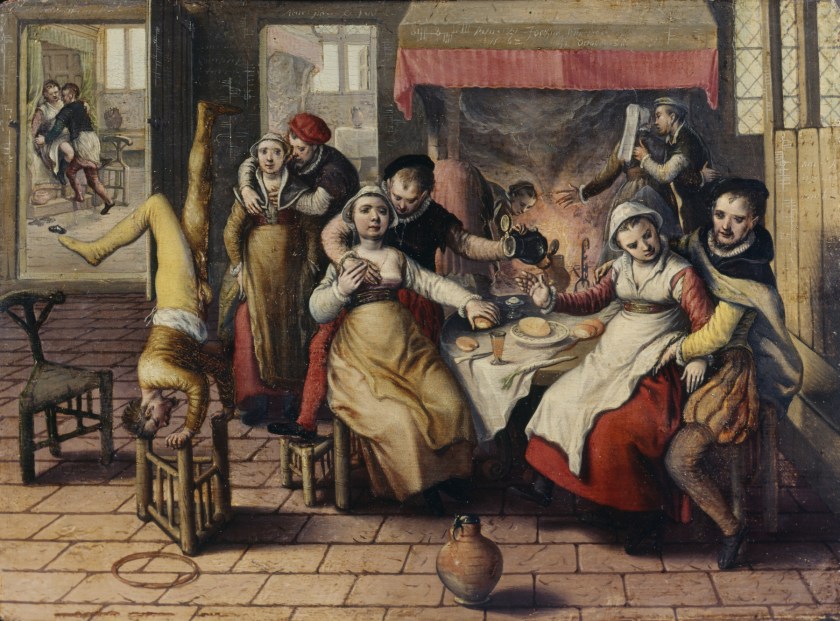
Joachim Beuckelaer, Bordeel, 1562
Joachim Beuckelaer, Bordeel (1562)

Abi, vorax anus, tuis cum blandulis
istis susurris; cognita est mihi satis
superque vestra (serius licet) fides.
non sum ille ego in quem impune vobis ludere
fas iugiter sit feminis rapacibus.
ut ut piget me tam diu fallaciis
vestris retentum, dum miser dari reor
dulces mihi fructus amoris unice,
quos comperi post, cum pudore maxumo,
illi datos, et illi et illi, et omnibus
ementibus pernicioso munere
adulterarum coitus foedissimos!
viden ut audax me rogat, tamquam inscium
eius probrosi criminis? recede, abi,
abi, impudica, abi, scelesta et impia,
impura lena, venditrix libidinum,
meorum amorum prostitutrix lurida.
ut ira suadet unguibus nocentia
proscindere ora! ut gliscit impetus ferox
inferre canis crinibus truces manus!
impunis anne abibit haec venefica?
iam iam cupidini morem geram meo,
et torva lumina eruam isti primulum,
linguam deinde demetam dicaculam,
quae me misellum effecit, et pessumdedit,
et perdidit, nullumque prorsus reddidit.
quid me, sodales, detinetis pessumi?
dimittite; est certum obsequi iustissimo
meo furori; debitas poenas luat
mihi scelesta. an huic, rogo, favebitis,
fortasse nescii quam inexpiabile
scelus patretis hanc iuvantes impiam,
quam saepe nocte repperi obscurissima
sacros cadaverum eruentem pulveres,
diroque carmine evocantem pallidas
umbras ab Orci tristibus silentiis?
haec noxio infantes tenellos fascino
interficit. discedite, ut poenas luat.
at si meae vos nil preces iustae movent,
in pessimam crucem recedat pessima;
non usque habebit vos paratos subsides.
(Ludovico Ariosto, Carm. 1.21)

Enough, you insatiable old crow! Enough with those wheedling whispers of yours! I know your honesty well enough, too well, though it’s too late. I’m not the kind of man that a greedy woman like you is free to dupe again and again and get away with it. How it disgusts me that for so long I was held in thrall by your tricks, all the while thinking in my misery that the sweet enjoyments of a love were being given to me alone, when, as I later found out with the greatest shame, they were given to this guy and that and another, to everybody who buys vile intercourse with adulterous women at a ruinous price! Do you see what nerve she has to ask me, as if I were unaware of her disgraceful behavior? Get out of my sight. Go. Go, you slut. Go, you infamy and desecration, slag, pander, peddler of lusts, sallow prostitutor of my love. How anger urges me to rend your guilty face with my nails! How a wild impulse swells in me to lay violent hands on your pasty white hair! Or will this witch get away unpunished? At this moment I’m on the verge of following my instinct; first, I’ll rip out those cruel eyes of hers, then I’ll cut off the smart-talking tongue that has made me miserable, has ruined me, destroyed me, has made me an utter wreck. Why do you hold me back, disloyal friends? Let me go. I’m determined to give vent to my justified rage. Let the infamous woman pay the penalty owed to me. Or will you, I ask, support her, ignorant perhaps of what an unpardonable crime you commit by helping this desecrator? Often I have found her in darkest night digging up the sacred dust of dead bodies and, with fearful incantations, summoning pale shades from the gloomy silence of Orcus. This woman kills tender little infants with her evil spells. Leave me so that she may pay the penalty. But if my just prayers don’t move you at all, may the damnable woman drop into the deepest damnation. She will not have you at the ready to help her all the time. (tr. Dennis Looney & D. Mark Possanza)

Caelitus

nativity-scene-4a-1-644x429

O parve vice Bethlehem
quam tacitus iaces!
super somnum stellae tuum
volvuntur silentes.
sed noctis in tenebris
aeterna lux splendet.
iam temporum spes omnium
curaque in te manet.
nam Christus ex Maria
natus, et in caelo
sunt congressi nunc angeli
amore cum pio.
o stellae matutinae,
cantate caelitus!
Deo laudes sint insignes,
et pax hominibus.
quam tacite, quam tacite,
mirum datur donum.
sic dat Deus mortalibus
ex caelo gaudium.
cum venit, non auditur,
sed in mundi culpis,
ubi animae volunt bonae,
intrat Christus nobis.
o sancte puer Bethlehem,
oramus: venias!
fac animos nobis castos
puras fac et vitas.
nunc angelos audimus
qui iubilant laeti.
cum omnibus o mansurus
Emmanuel, veni!
(Phillips Brooks, O parve vice Bethlehem, tr. Arthur Harold Weston)

O little town of Bethlehem,
how still we see thee lie!
Above thy deep and dreamless sleep
the silent stars go by.
Yet in thy dark streets shineth
the everlasting Light;
The hopes and fears of all the years
are met in thee to-night.

O morning stars, together
proclaim the holy birth!
And praises sing to God the King,
and peace to men on earth.
For Christ is born of Mary
and gathered all above,
while mortals sleep the Angels keep
their watch of wondering love.

How silently, how silently,
the wondrous gift is given;
so God imparts to human hearts
the blessings of His Heaven.
No ear may hear His coming,
but in this world of sin,
where meek souls will receive Him still,
the dear Christ enters in.

Where children pure and happy
pray to the blessed Child,
where misery cries out to Thee,
son of the Mother mild;
where Charity stands watching
and Faith holds wide the door,
the dark night wakes, the glory breaks,
and Christmas comes once more.

O holy Child of Bethlehem,
descend to us, we pray!
Cast out our sin and enter in,
be born in us to-day.
We hear the Christmas angels,
the great glad tidings tell;
O come to us, abide with us,
our Lord Emmanuel!

(Phillips Brooks’ original)

Stasiōdeis

GettyImages-639175446-5907aaac5f9b586470fa6bf1
Poppaea (15th-c. manuscript illustration)

Μετ’ εἰκοστὸν δὲ καὶ ἕκτον ἐνιαυτὸν εἰς Ῥώμην μοι συνέπεσεν ἀναβῆναι διὰ τὴν λεχθησομένην αἰτίαν· καθ’ ὃν χρόνον Φῆλιξ τῆς Ἰουδαίας ἐπετρόπευεν ἱερεῖς τινας συνήθεις ἐμοὶ καλοὺς κἀγαθοὺς διὰ μικρὰν καὶ τὴν τυχοῦσαν αἰτίαν δήσας εἰς τὴν Ῥώμην ἔπεμψε λόγον ὑφέξοντας τῷ Καίσαρι. οἷς ἐγὼ πόρον εὑρέσθαι βουλόμενος σωτηρίας, μάλιστα δὲ πυθόμενος ὅτι καίπερ ἐν κακοῖς ὄντες οὐκ ἐπελάθοντο τῆς εἰς τὸ θεῖον εὐσεβείας, διατρέφοιντο δὲ σύκοις καὶ καρύοις, ἀφικόμην εἰς τὴν Ῥώμην πολλὰ κινδυνεύσας κατὰ θάλασσαν. βαπτισθέντος γὰρ ἡμῶν τοῦ πλοίου κατὰ μέσον τὸν Ἀδρίαν περὶ ἑξακοσίους τὸν ἀριθμὸν ὄντες δι’ ὅλης τῆς νυκτὸς ἐνηξάμεθα, καὶ περὶ ἀρχομένην ἡμέραν ἐπιφανέντος ἡμῖν κατὰ θεοῦ πρόνοιαν Κυρηναϊκοῦ πλοίου φθάσαντες τοὺς ἄλλους ἐγώ τε καί τινες ἕτεροι περὶ ὀγδοήκοντα σύμπαντες ἀνελήφθημεν εἰς τὸ πλοῖον. διασωθεὶς δ’ εἰς τὴν Δικαιάρχειαν, ἣν Ποτιόλους Ἰταλοὶ καλοῦσιν, διὰ φιλίας ἀφικόμην Ἁλιτύρῳ, μιμολόγος δ’ ἦν οὗτος μάλιστα τῷ Νέρωνι καταθύμιος Ἰουδαῖος τὸ γένος, καὶ δι’ αὐτοῦ Ποππαίᾳ τῇ τοῦ Καίσαρος γυναικὶ γνωσθεὶς προνοῶ ὡς τάχιστα παρακαλέσας αὐτὴν τοὺς ἱερεῖς λυθῆναι. μεγάλων δὲ δωρεῶν πρὸς τῇ εὐεργεσίᾳ ταύτῃ τυχὼν παρὰ τῆς Ποππαίας ὑπέστρεφον ἐπὶ τὴν οἰκείαν. καταλαμβάνω δ’ ἤδη νεωτερισμῶν ἀρχὰς καὶ πολλοὺς ἐπὶ τῇ Ῥωμαίων ἀποστάσει μέγα φρονοῦντας. καταστέλλειν οὖν ἐπειρώμην τοὺς στασιώδεις καὶ μετανοεῖν ἔπειθον ποιησαμένους πρὸ ὀφθαλμῶν πρὸς οὓς πολεμήσουσιν, ὅτι Ῥωμαίων οὐ κατ’ ἐμπειρίαν μόνον πολεμικήν, ἀλλὰ καὶ κατ’ εὐτυχίαν ἐλαττοῦνται· καὶ μὴ προπετῶς καὶ παντάπασιν ἀνοήτως πατρίσι καὶ γενεαῖς καὶ σφίσιν αὐτοῖς τὸν περὶ τῶν ἐσχάτων κακῶν κίνδυνον ἐπάγειν. ταῦτα δ’ ἔλεγον καὶ λιπαρῶς ἐνεκείμην ἀποτρέπων, δυστυχέστατον ἡμῖν τοῦ πολέμου τὸ τέλος γενήσεσθαι προορώμενος. οὐ μὴν ἔπεισα· πολὺ γὰρ ἡ τῶν ἀπονοηθέντων ἐπεκράτησεν μανία.
(Josephus, Vita 13-19)

After my twenty-sixth year, indeed, it fell to me to go up to Rome for the reason that will be described. At the time when Felix was administering Judea, he had certain priests, close associates of mine and gentlemen, bound and sent to Rome on a minor and incidental charge, to submit an account to Caesar. Wanting to find some means of rescue for these men, especially when I discovered that even in wretched circumstances they had not abandoned piety toward the deity but were subsisting on figs and nuts, I reached Rome after having faced many dangers at sea. For when our ship was flooded in the middle of the Adriatic, we—being about 600 in number—had to swim through the entire night. And when by the provision of God a Cyrenian ship appeared before us around daybreak, I and some others—about eighty altogether—overtook the rest and were taken on board. After we had come safely to Dicaearcheia, which the Italians call Puteoli, through a friendship I met Aliturus: this man was a mime-actor, especially dear to Nero’s thoughts and a Judean by ancestry. Through him I became known to Poppea, the wife of Caesar, and then very quickly arranged things, appealing to her to free the priests. Having succeeded, with enormous gifts from Poppea in addition to this benefit, I returned home. Now I was surprised already to find the beginnings of revolutions, with many [people] grandly contemplating defection from the Romans. So I tried to restrain the insurgents and charged them to think again. They should first place before their eyes those against whom they would make war—for not only with respect to war-related expertise but also with respect to good fortune were they disadvantaged in relation to the Romans—and they should not, rashly and quite foolishly, bring upon their native places, their families, and indeed themselves the risk of ultimate ruin. I said these things and was persistently engaged in dissuasive pleading, predicting that the outcome of the war would be utterly disastrous for us. I was not convincing, to be sure, because the frenzy of the desperadoes prevailed. (tr. Steve Mason)

Philomela

pg-8-nightingale-rex

Vox, philomela, tua cantus edicere cogit,
inde tui laudem rustica lingua canit.
vox, philomela, tua citheras in carmine vincit
et superas miris musica flabra modis.
vox, philomela, tua curarum semina pellit,
recreat et blandis anxia corda sonis.
florea rura colis, herboso caespite gaudes,
frondibus arboreis pignera parva foves.
cantibus ecce tuis recrepant arbusta canoris,
consonat ipsa suis frondea silva comis.
iudice me cygnus et garrula cedat hirundo,
cedat et illustri psittacus ore tibi.
nulla tuos umquam cantus imitabitur ales,
murmure namque tuo dulcia mella fluunt.
dic ergo tremulos lingua vibrante susurros
et suavi liquidum gutture pange melos.
porrige dulcisonas attentis auribus escas;
nolo tacere velis, nolo tacere velis.
gloria summa tibi, laus et benedictio, Christe,
qui praestas famulis haec bona grata tuis.
(Eugenius of Toledo, Philomela)

Your voice, my nightingale, makes everyone a singer:
so people in the country sing your praise.
Your voice is an instrument finer than a zither;
more hauntingly than wind-music it plays.

Your voice, my nightingale, uproots the seeds of sorrow;
its silken tones can soothe a troubled mood.
Your home is among flowers, you love a grassy meadow;
in leafy trees you tend your infant brood.

Hear how your melodies re-echo in the thicket:
even the rustling branches harmonize.
The swan, the twittering swallow, the gaudy-headed parrot
can never hope to match you in my eyes.

No bird can imitate the sweetness of your singing;
there’s honey in your fluent rippling note.
Speak with your vibrant tongue, then, in soft shivery warbling,
pouring the liquid sounds from your smooth throat.

Feed our expectant ears with your song’s delicious flavour;
never be silent, never silent, please!
Glory and blessing and praise to Christ our Saviour
who grants his servants pleasures such as these!

(tr. Fleur Adcock)

Ekchuten

images-10

Ἔνθα δὴ ἔργον καλὸν εἴπερ τι ἄλλο τῶν Ἀλεξάνδρου οὐκ ἔδοξέ μοι ἀφανίσαι, ἢ ἐν τῇδε τῇ χώρᾳ πραχθὲν ἢ ἔτι ἔμπροσθεν ἐν Παραπαμισάδαις, ὡς μετεξέτεροι ἀνέγραψαν. ἰέναι μὲν τὴν στρατιὰν διὰ ψάμμου τε καὶ τοῦ καύματος ἤδη ἐπιφλέγοντος, ὅτι πρὸς ὕδωρ ἐχρῆν ἐξανύσαι· τὸ δὲ ἦν πρόσθεν τῆς ὁδοῦ· καὶ αὐτόν τε Ἀλέξανδρον δίψει κατεχόμενον μόλις μὲν καὶ χαλεπῶς, πεζὸν δὲ ὅμως ἡγεῖσθαι· ὣς δὲ καὶ τοὺς ἄλλους στρατιώτας, οἷάπερ φιλεῖ ἐν τῷ τοιῷδε, κουφοτέρως φέρειν τοὺς πόνους ἐν ἰσότητι τῆς ταλαιπωρήσεως. ἐν δὲ τούτῳ τῶν ψιλῶν τινας κατὰ ζήτησιν ὕδατος ἀποτραπέντας ἀπὸ τῆς στρατιᾶς εὑρεῖν ὕδωρ συλλελεγμένον ἔν τινι χαράδρᾳ οὐ βαθείᾳ, ὀλίγην καὶ φαύλην πίδακα· καὶ τοῦτο οὐ χαλεπῶς συλλέξαντας σπουδῇ ἰέναι παρ’ Ἀλέξανδρον, ὡς μέγα δή τι ἀγαθὸν φέροντας· ὡς δὲ ἐπέλαζον ἤδη, ἐμβαλόντας ἐς κράνος τὸ ὕδωρ προσενεγκεῖν τῷ βασιλεῖ. τὸν δὲ λαβεῖν μὲν καὶ ἐπαινέσαι τοὺς κομίσαντας, λαβόντα δὲ ἐν ὄψει πάντων ἐκχέαι· καὶ ἐπὶ τῷδε τῷ ἔργῳ ἐς τοσόνδε ἐπιρρωσθῆναι τὴν στρατιὰν ξύμπασαν ὥστε εἰκάσαι ἄν τινα πότον γενέσθαι πᾶσιν ἐκεῖνο τὸ ὕδωρ τὸ πρὸς Ἀλεξάνδρου ἐκχυθέν. τοῦτο ἐγώ, εἴπερ τι ἄλλο, τὸ ἔργον εἰς καρτερίαν τε καὶ ἅμα στρατηγίαν ἐπαινῶ Ἀλεξάνδρου.
(Arrian, Anabasis Alexandrou 6.26.1-3)

At this point I have not thought well to leave unrecorded the noblest achievement of Alexander, whether it took place in this country or among the Parapamisadae at an earlier date, as others have narrated. The army was marching through land and while the heat was already burning, since they were obliged to reach water at the end of the march; and this was some distance ahead. Alexander himself was much distressed by thirst, and with much difficulty, but still as best he could, led the way on foot; so that the rest of the troops should (as usually happens in such a case) bear their toils more easily, when all are sharing the distress alike. Meanwhile some of the light-armed troops had turned aside from the rest of the line to look for water, and had found some, just a little water collected in a shallow river-bed, a poor and wretched water-hole; they gathered up this water with difficulty and hurried to Alexander as if they were bringing him some great boon; but when they drew near, they brought the water, which they had poured into a helmet, to the King. He received it, and thanked those who had brought it; and taking it poured it out in the sight of all the troops; and at this action the whole army was so much heartened that you would have said that each and every man had drunk that water which Alexander thus poured out. This deed of Alexander’s above all I commend most warmly as a proof both of his endurance and his excellence as a general. (tr. Peter Astbury Brunt)

Census

Pile of golden coins isolated on white

Heu misera in nimios hominum petulantia census!
caecus inutilium quo ruit ardor opum,
auri dira fames et non expleta libido
ferali pretio vendat ut omne nefas!
sic latebras Eriphyla viri patefecit, ubi aurum
accepit, turpis materiam sceleris;
sic quondam Acrisiae in gremium per claustra puellae
corruptore auro fluxit adulterium.
o quam mendose votum insaturabile habendi
imbuit infami pectora nostra malo!
quamlibet immenso dives vigil incubet auro,
aestuat augendae dira cupido rei.
heu mala paupertas numquam locupletis avari!
dum struere immodice quod tenet optat, eget.
quis metus hic legum quaeve est reverentia veri,
crescenti nummo si mage cura subest?
cognatorum animas promptum est patrumque cruorem
fundier: affectus vincit avara fames.
divitis est, semper fragiles male quaerere gazas:
nulla huic in lucro cura pudoris erit.
istud templorum damno excidioque requirit;
hoc caelo iubeas ut petat: inde petet.
mirum ni pulchras artes Romana iuventus
discat et egregio sudet in eloquio,
ut post iurisonae famosa stipendia linguae
barbaricae ingeniis anteferantur opes.
at qui sunt, quos propter honestum rumpere foedus
audeat illicite pallida avaritia?
Romani sermonis egent, ridendaque verba
frangit ad horrificos turbida lingua sonos.
sed tamen ex cultu appetitur spes grata nepotum?
saltem istud nostri forsan honoris habent?
ambusti torris species, exesaque saeclo
amblant ut priscis corpora de tumulis!
perplexi crines, frons improba, tempora pressa,
exstantes malae deficiente gena,
simataeque iacent pando sinuamine nares,
territat os nudum caesaque labra tument.
defossum in ventrem propulso pondere tergum
frangitur et vacuo crure tument genua.
decolor in malis species, hoc turpius illud,
quod cutis obscure pallet in invidiam.
(Sulpicius Lupercus Servasius Junior, De Cupiditate)

Alas for the wretched craving after excessive incomes! What is the end on which the blind passion for useless wealth rushes, so that the cursed hunger for gold and greed unsatisfied may barter any enormity for a recompense fraught with destruction? Thus it was that Eriphyla betrayed her husband’s hiding-place when she received the gold that was the cause of her foul crime: thus it was that long ago through prison-bars there rained in corrupting gold an adulterous stream on the lap of Acrisius’ daughter. How culpably the unquenchable longing for possession stains our hearts with scandalous wickedness! However boundless the gold o’er which Dives broods wakefully, within there seethes the accursed lust for adding to his wealth. Alas for the baleful poverty of the miser who is never rich! His desire for a limitless heap of what he holds makes him a beggar. What fear is here of laws, what respect for what is fair, if ‘neath his growing bullion-heap there lurk still more the pains of greed? Taking the lives of kinsmen, shedding a father’s blood comes readily to his mind: miserly hunger masters feeling. An evil quest after frail treasures is ever the rich man’s way: in the matter of gain he will have no qualms of shame. Such gain it is he pursues, though it mean loss or destruction to temples: bid him seek this in heaven and from heaven he will fetch it. It is not unlikely that the young men of Rome learn fine accomplishments and sweat at distinguished rhetoric only in order that, after the glorious campaigns of an eloquent lawyer’s tongue, they may prize barbaric wealth above talent. Yet who are those (glib pleaders) thanks to whom pale avarice ventures on the forbidden crime of breaking an honourable compact ? They are beggared of Latin style, and their confused jargon minces ridiculous words to an accompaniment of shocking sounds. Yet does their dress prompt the younger generation to indulge pleasing hopes (of legacies)? Have they mayhap such a share at least of our Roman dignity? No, theirs is the appearance of a burnt-out firebrand: they walk like skeletons gnawed by time from ancient graves! Their hair is tangled, forehead impudent, temples thin, jaws protruding while their cheeks are sunken, and their flattened nostrils rest on a tip-tilted curve: the toothless mouth is a terror and the chapped lips are swollen. Forced down by the impetus of weight, back sinks to belly; and the knees swell on a shrunken leg. Sallow is the look of their jaws, and it is an uglier feature that the skin wears a mysterious pallor suggestive of envy. (tr. John Wight Duff & Arnold M. Duff)