Tandem

fotolia_57047196

Tandem venit amor, qualem texisse pudori
quam nudasse alicui sit mihi fama magis.
exorata meis illum Cytherea Camenis
attulit in nostrum deposuitque sinum.
exsolvit promissa Venus: mea gaudia narret,
dicetur si quis non habuisse sua.
non ego signatis quicquam mandare tabellis,
ne legat id nemo quam meus ante, velim,
sed peccasse iuvat, vultus componere famae
taedet: cum digno digna fuisse ferar.
(Sulpicia, Corpus Tibullianum 3.13)

At last love has come; and such a love it is that the rumor of having concealed it would shame me more than baring all. Entreated by my Muses’ prayers, Cythera’s mistress has brought and placed him in my lap. Venus has fulfilled her promises. Let my joys be told by all of whom it can be said that they have missed their own. I would not choose to entrust my messages to tablets under seal, that none might read them before my lover. Instead my sin delights me, and I am loath to compose a mask for rumor. Let me be said to have been worthy of my worthy beloved. (tr. Alison Keith)

Excoluisse

300047000474

Hoc iacet in tumulo raptus puerilibus annis
Pantagathus, domini cura dolorque sui,
vix tangente vagos ferro resecare capillos
doctus et hirsutas excoluisse genas.
sis licet, ut debes, tellus, placata levisque,
artificis levior non potes esse manu.
(Martial, Ep. 6.52)

In this tomb lies Pantagathus, snatched away in his boyhood years, his master’ s care and grief, skilled to cut straying locks and shave hairy cheeks with steel that barely touched them. Though you be kind and light, earth, as you should be, you cannot be light er than the artist’s hand. (tr. David Roy Shackleton Bailey)

Limoi

eat-grass-istock-630x419

Οἱ συνεχῶς ἐτῶν οὐκ ὀλίγων ἐφεξῆς γενόμενοι λιμοὶ κατὰ πολλὰ τῶν Ῥωμαίοις ὑπακουόντων ἐθνῶν ἐναργῶς ἐπεδείξαντο τοῖς γε μὴ παντάπασιν ἀνοήτοις, ἡλίκην ἔχει κακοχυμία δύναμιν εἰς νόσων γένεσιν. οἱ μὲν γὰρ τὰς πόλεις οἰκοῦντες, ὥσπερ ἦν ἔθος αὐτοῖς παρασκευάζεσθαι κατὰ τὸ θέρος εὐθέως σῖτον αὐτάρκη πρὸς ὅλον τὸν ἐφεξῆς ἐνιαυτὸν, ἐκ τῶν ἀγρῶν πάντα τὸν πυρὸν αἴροντες ἅμα ταῖς κριθαῖς τε καὶ τοῖς κυάμοις καὶ φακοῖς, ἀπέλιπον τοῖς ἀγροίκοις τοὺς ἄλλους Δημητρίους καρποὺς, οὕς ὀνομάζουσιν ὄσπριά τε καὶ χέδροπα, μετὰ τοῦ καὶ τούτων αὐτῶν οὐκ ὀλίγα κομίζειν εἰς ἄστυ. τὰ γοῦν ὑπολειφθέντα διὰ τοῦ χειμῶνος ἐκδαπανῶντες οἱ κατὰ τὴν χώραν ἄνθρωποι τροφαῖς κακοχύμοις ἠναγκάζοντο χρῆσθαι δι’ ὅλου τοῦ ἦρος, ἐσθίοντες ἀκρέμονάς τε καὶ βλάστας δένδρων καὶ θάμνων, καὶ βολβοὺς, καὶ ῥίζας κακοχύμων φυτῶν, ἐμφορούμενοι δὲ καὶ τῶν ἀγρίων ὀνομαζομένων λαχάνων, ὅτου τις ἔτυχεν εὐπορήσας, ἀφειδῶς ἄχρι κόρου, καθάπερ καὶ πόας χλωρὰς ὅλας ἕψοντες ἤσθιον, ὧν πρότερον οὐδ’ ἄχρι πείρας ἐγεύσαντο πώποτε. παρῆν οὖν ὁρᾶν ἐνίους μὲν αὐτῶν ἐν τοῖς ἐσχάτοις τοῦ ἦρος, ἅπαντας δ’ ὀλίγου δεῖν ἐν ἀρχῇ τοῦ θέρους ἁλισκομένους ἕλκεσι παμπόλλοις κατὰ τὸ δέρμα συνισταμένοις, οὐ τὴν αὐτὴν ἰδέαν ἅπασιν ἴσχουσι· τὰ μὲν γὰρ αὐτῶν ἦν ἐρυσιπελατώδη, τὰ δὲ φλεγμονώδη, τὰ δ’ ἑρπυστικὰ, τὰ δὲ λειχηνώδη, καὶ ψωρώδη, καὶ λεπρώδη. τούτων μὲν ὅσα πρᾳότατα, διὰ τοῦ δέρματος ἐξανθήσαντα τὴν κακοχυμίαν ἐκ τῶν σπλάγχνων τε καὶ τοῦ βάθους ἐκένωσεν· ἐνίοις δέ τισιν ἀνθρακώδη τε καὶ φαγεδαινικὰ γενόμενα μετὰ τῶν πυρετῶν, ἀπέκτεινε πολλοὺς ἐν χρόνῳ μακρῷ μόλις ὀλιγίστων σωθέντων. ἄνευ δὲ τῶν κατὰ τὸ δέρμα παθημάτων πυρετοὶ πάμπολλοι ἐγένοντο, διαχωρήσεις γαστρὸς ἐπιφέροντες δυσώδεις καὶ δακνώδεις, εἰς τεινεσμοὺς καὶ δυσεντερίας τελευτώσας, οὖρά τε δριμέα, καὶ αὐτὰ δυσώδη, τὴν κύστιν ἐνίων ἑλκώσαντα. τινὲς δ’ αὐτῶν ἐκρίθησαν ἱδρῶσι, καὶ τούτοις δυσώδεσιν, ἢ ἀποστήμασι σηπεδονώδεσιν. οἷς δ’ οὐδὲν τούτων ἐγένετο, πάντες ἀπέθανον ἢ μετὰ φανερᾶς φλεγμονῆς ἑνός γέ τινος τῶν σπλάγχνων, ἢ διὰ τὸ μέγεθός τε καὶ τὴν κακοήθειαν τῶν πυρετῶν. ὀλιγίστων δὲ φλέβα τεμεῖν ἐν ἀρχῇ τῆς νόσου τολμησάντων ἐνίων ἰατρῶν, (ἐδεδίεσαν γὰρ εἰκότως χρῆσθαι τῷ βοηθήματι διὰ τὸ προκαταλελῦσθαι τὴν δύναμιν,) οὐδενὸς εἶδον αἷμα χρηστὸν ἐκκριθὲν, ὁποῖον ἐκ τῶν ὑγιεινῶν σωμάτων ὁρᾶται κενούμενον, ἀλλ’ ἤτοι πυρρότερον, ἢ μελάντερον, ἢ ὀῤῥωδέστερον, ἢ δριμὺ καὶ δάκνον αὐτὴν τὴν διαιρεθεῖσαν φλέβα κατὰ τὴν ἐκροὴν, ὡς δυσεπούλωτον γενέσθαι τὸ ἕλκος. ἐνίοις δὲ καὶ συμπτώματα μετὰ τῶν πυρετῶν, καὶ μάλιστα τοῖς ἀποθανοῦσιν, ἐγένοντο βλάβην τῆς διανοίας ἐπιφέροντα σὺν ἀγρυπνίαις καὶ καταφοραῖς. οὐδὲν δὲ θαυμαστὸν, ἐναντίοις ἁλῶναι νοσήμασί τε καὶ συμπτώμασι τοὺς τότε νοσήσαντας, αὐτούς τε διαφέροντας ἀλλήλοις οὐ ταῖς φύσεσι μόνον ἢ ταῖς ἡλικίαις, ἀλλὰ καὶ ταῖς ἔμπροσθεν διαίταις, ἐναντίαν τε δύναμιν ἐχούσας ἐδηδοκότας ἐν τῷ λιμῷ τροφάς. ἤσθιον μὲν γὰρ ἅπαντες ὧν ηὐπόρουν· ἀνομοίου δὲ τῆς εὐπορίας οὔσης, ἔνιοι μὲν ὀξεῖς, ἢ δριμεῖς, ἢ ἁλυκοὺς, ἢ πικροὺς ἔχοντα χυμοὺς ἐδέσματα προσηνέγκαντο, τινὲς δ’ αὐστηροὺς, ἢ στρυφνοὺς, ἢ ψύχοντας σαφῶς, ἢ ὑγροὺς ἱκανῶς, ἢ γλίσχρους, ἢ φαρμακώδεις. οἶδα γοῦν ἐνίους μὲν αὐτίκα διὰ μυκήτων ἐδωδὴν ἀποθανόντας, ἐνίους δὲ διὰ κωνείων, ἢ ναρθήκων, ὀλίγους δ’ ἐξ αὐτῶν μόγις διασωθέντας.
(Galen, De rebus boni malique suci 6.749-752K = C.M.G. 5.4.2.389-391)

The famines that occurred continuously, many years in a row, in many peoples subject to the Romans have shown to those who aren’t completely without understanding what great power bad juices have in the generation of diseases. Now the inhabitants of the cities have the habit of providing for themselves, right after summer, sufficient grain for the entire following year, taking all wheat from the fields, along with the barley, beans and lentils, and leaving for the country people the other fruits of Demeter, the ones we call pulses and legumes, after having taken a sizable portion to town from those as well. So, having exhausted what remained during the winter, the people in the country were forced to use unwholesome foods throughout springtime, eating twigs and shoots of trees and bushes, and bulbs, and roots of indigestible plants. They also filled themselves with so-called wild herbs, whichever ones there happened to be large quantities of, and they used them freely and to satiety, as they also cooked and ate all sorts of green grasses that previously they had never so much as tasted even to try. As a result one could see some of these people by the end of spring, and virtually all of them at the beginning of summer, victim to numerous ulcers that formed on the skin; and they did not all have the same look, for some were similar to erysipelas, others to phlegmon, others to herpes, and yet others to lichen, scabies or lepra. The most benign ones, when breaking through the skin, purged the bad juices from the entrails and from deep within the body; but in others these turned into anthrax and gangreen, accompanied by fevers, and they killed many, only a very few being narrowly saved, and only after a long time. As for those whose skin was not affected, they too were gripped by numerous fevers, inflicting malodorous, pungent evacuations of the bowels, ending in tenesmus and dysentery, and acrid urination, also malodorous, and causing ulcerations of the bladder in some. For some the sickness took the form of sweats, these too malodorous, or putrid abscesses. As to those who had none of these things, they all died either due to noticeable inflammation of some organ or other, or because of the intensity and virulence of the fevers. In those very rare cases where a doctor had dared to open a vein in the early stages of the illness (a remedy which they were afraid to use, with reason, given the weakened condition of the patients), they never saw good blood being secreted, such as can be seen flowing from healthy bodies, but either yellowish blood, or blackish, or whey-like, or acidic and corroding the incised vein itself when flowing out, making it hard for the wound to scar over. In some, especially in those who were dying, the fevers were accompanied by symptoms that involved loss of the mental faculties along with insomnia and lethargy. And we shouldn’t be surprised that the people who were sick in those days fell prey to different diseases and conflicting symptoms, as they differed from each other not only in constitution and age, but also by their previous diets, since during the famine they had eaten food with contrasting properties. For everyone ate that which he had in abundance; but since this abundance varied, the juices of the food that some fed on were acrid, sour, salty, or bitter, while those of others’ were dry, or astringent, or had a clear cooling effect, or were too liquid, or viscous, or medicinal. I know for instance that some died straight away from eating mushrooms, others from hemlock or wild fennel, and just a few of them only barely recovered. (tr. David Bauwens)
Scythicam

michael_iii
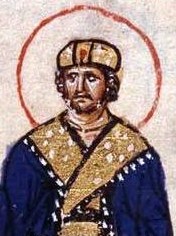
Emperor Michael III

In tantam vero furoris abundantiam prorupistis, ut linguae Latinae iniuriam irrogaretis, hanc in epistola vestra barbaram et Scythicam appellantes ad iniuriam eius, qui fecit eam; omnis enim operis derogatio ad opificis redundat iniuriam. o furorem, qui nec linguae novit parcere, quam Deus fecit, et quae inter ceteras in nomine Domini hortante apostolo confitetur, quia ‘dominus noster Iesus Christus in gloria est Dei patris’ et quae cum Hebrea atque Graeca in titulo Domini a reliquis discreta insignem principatum tenens omnibus nationibus praedicat Iesum Nazarenum regem Iudaeorum. quem titulum multi Iudaeorum corrumpere voluerunt, sicut vos nunc huius celeberrimae linguae temptatis insigne destruere, sed minime potuerunt; scriptum quippe divinitus in libro psalmorum fuerat: ne corrumpas tituli inscriptionem! vel quia Christiani sunt, quorum linguam barbaram vel Scythicam appellatis, gloriam vestram quare non pudeat, obstupescimus. cum enim barbari omnes et Scythae ut insensata animalia vivant, Deum verum nesciant, ligna autem et lapides adorent, in eo ipso, quo verum Deum colit lingua Latina, quantum barbaram vel Scythicam linguam antecedat, agnoscitur. iam vero, si ideo linguam Latinam barbaram dicitis, quoniam illam non intelligitis, vos considerate, quia ridiculum est vol appellare Romanorum imperatores et tamen linguam non nosse Romanam. ad extremum autem, si iam saepe nominatam linguam ideo barbaram nuncupatis, quoniam a translatoribus in Graecam dictionem mutata barbarismos generat, non linguae Latinae, sed culpa est, ut opinamur, interpretum, qui quando necesse est non sensum e sensu, sed violenter verbum edere conantur e verbo. ecce enim in principio epistolae vestrae imperatorem vos nuncupastis Romanorum et tamen Romanam linguam barbaram appellare non veremini. ecce cotidie, immo vero in praecipuis festivitatibus inter Graecam linguam veluti quiddam pretiosum hanc, quam barbaram et Scythicam linguam appellatis, miscentes, quasi minus decori vestro facitis, si hac etiam non bene ac ex toto intellecta in vestris obsequiis ac officiis non utamini. quiescite igitur vos nuncupare Romanorum imperatores, quoniam secundum vestram sententiam barbari sunt, quorum vos imperatores esse asseritis.
(Nicholas I, Ep. 88 MGH = 86 PG, ad Michaelem III imperatorem)

You were driven into such an overwhelming frenzy, that you insulted the Latin language calling it in your letter barbaric and Skythian, which is an insult to him who created this language, because every denigration of a work entails also an insult to its author. Oh, what fury, which has not even spared the language which was created by God; †a language which, along with other ones, professes in the name of the lord, as the apostle admonished, ‘that Jesus Christ is lord, to the glory of God the father’ [Phil. 2:11]! This is the language that, together with Hebrew and Greek, was placed in an exalted position on the sign on the cross of our lord (these three languages, and none other!), proclaiming to all peoples: ‘Jesus the Nazarene, king of the Jews’ [John 19:20]! Many Jews wanted to destroy this sign, just like you are now trying to destroy the renown of this our distinguished language; but they did not succeed, because it was already written by God in the book of Psalms. So do not destroy the language of the sign!† We are dismayed that your majesty is not ashamed: for it is the language of Christian peoples which you call barbaric and Skythian. Is it not well known that all barbarians and Skythians live like ignorant animals, that they do not know the true God, but worship trees and stones? Fromthis, of course, one can see how much the latin language, which worships the true God, surpasses the barbarian and Skythian language. Furthermore, if you call the Latin language barbaric, because you do not understand Latin, you should be careful: is it not ridiculous to call yourself emperor of the Romans when you do not know the language of the Romans? And finally, you call the language under discussion barbaric for the simple reason that by translating Latin into Greek certain barbarisms were generated. This, though, we believe, is not the fault of the Latin language but the fault of interpreters, who tried to force words out of words rather than, as is necessary, to produce meaning out of meaning. In fact, in the beginning of your letter you call yourself ’emperor of the Romans’, but you are not afraid to call the Roman language barbaric! In truth, every day, especially on the occasion of major ceremonies, you set into the Greek language as if it were a precious jewel exactly what you call a barbarian and Skythian language! And you do so as if you would diminish your majesty if you were to refrain from using Latin words in your retinue and offices—even though these words are not used properly or perfectly understood. So, abandon the title ’emperor of the Romans’, because according to your own opinion they are barbarians whose emperor you claim to be! (tr. Marie Theres Fögen; except the passage between †† added by David Bauwens)

Mortiferam

157525721-612x612

Quam consuetudinem Massiliensium non in Gallia ortam, sed ex Graecia translatam inde existimo, quod illam etiam in insula Cea servari animadverti, quo tempore Asiam cum Sex. Pompeio petens Iulidem oppidum intravi: forte enim evenit ut tunc summae dignitatis ibi femina, sed ultimae iam senectutis, reddita ratione civibus cur excedere vita deberet, veneno consumere se destinarit mortemque suam Pompei praesentia clariorem fieri magni aestimaret. nec preces eius vir ille, ut omnibus virtutibus, ita humanitatis quoque laude instructissimus, aspernari sustinuit. venit itaque ad eam facundissimoque sermone, qui ore eius quasi e beato quodam eloquentiae fonte manabat, ab incepto consilio diu nequicquam revocare conatus ad ultimum propositum exequi passus est. quae nonagesimum annum transgressa cum summa et animi et corporis sinceritate lectulo, quantum dinoscere erat, cotidiana consuetudine cultius strato recubans et innixa cubito ‘tibi quidem’ inquit, ‘Sex. Pompei, dii magis quos relinquo quam quos peto gratias referant, quod nec hortator vitae meae nec mortis spectator esse fastidisti. ceterum ipsa hilarem fortunae vultum semper experta, ne aviditate lucis tristem intueri cogar, reliquias spiritus mei prospero fine, duas filias et septem nepotum gregem superstitem relictura permuto’. cohortata deinde ad concordiam suos distributo eis patrimonio et cultu suo sacrisque domesticis maiori filiae traditis poculum, in quo venenum temperatum erat, constanti dextera arripuit. tum defusis Mercurio delibamentis et invocato numine eius, ut se placido itinere in meliorem sedis infernae deduceret partem, cupido haustu mortiferam traxit potionem ac sermone significans quasnam subinde partes corporis sui rigor occuparet, cum iam visceribus eum et cordi imminere esset elocuta, filiarum manus ad supremum opprimendorum oculorum officium advocavit. nostros autem, tametsi novo spectaculo obstupefacti erant, suffusos tamen lacrimis dimisit.
(Valerius Maximus, Facta et Dicta Memorabilia 2.6.8)

I believe this usage of the Massilians did not originate in Gaul but was borrowed from Greece because I saw it also observed in the island of Cea when I entered the town of Iulis on my way to Asia with Sex. Pompeius. For it so happened on that occasion that a lady of the highest rank there but in extreme old age, after explaining to her fellow citizens why she ought to depart from life, determined to put an end to herself by poison and set much store on having her death gain celebrity by the presence of Pompeius. Nor could that gentleman reject her plea, excellently endowed as he was with the virtue of good nature as with all other noble qualities. So he visited her and in fluent speech, which flowed from his lips as from some copious fountain of eloquence, tried at length but in vain to turn her back from her design. Finally he let her carry out her intention. Having passed her ninetieth year in the soundest health of mind and body, she lay on her bed, which was spread, as far as might be perceived, more elegantly than every day, and resting on her elbow she spoke: “Sex. Pompeius, may the gods whom I am leaving rather than those to whom I am going repay you because you have not disdained to urge me to live nor yet to be witness of my death. As for me, I have always seen Fortune’s smiling face. Rather than be forced through greed of living to see her frown, I am exchanging what remains of my breath for a happy end, leaving two daughters and a flock of seven grandchildren to survive me.” Then, having urged her family to live in harmony, she distributed her estate among them, and having consigned her own observance and the domestic rites to her elder daughter, she took the cup in which the poison had been mixed in a firm grasp. After pouring libations to Mercury and invoking his divine power, that he conduct her on a calm journey to the happier part of the underworld, she eagerly drained the fatal potion. She indicated in words the parts of her body which numbness seized one by one, and when she told us that it was about to reach her vitals and heart, she summoned her daughters’ hands to the last office, to close her eyes. As for us Romans, she dismissed us, stunned by so extraordinary a spectacle but bathed in tears. (tr. David Roy Shackleton Bailey)

Koresthēti

romeyn de hooghe, portret van julianus apostata, 1701

Στρατεύσας γὰρ ἐπὶ Πέρσας ἐδελεάσθη ὑπὸ τῶν αὐτομόλων ἐμπρῆσαι τὰς ναῦς· εἶτα δι’ ἐρημίας καὶ ἀνωμάλων χωρίων τὴν πορείαν ποιούμενος ἐφ’ ἱκανόν, πάντων ἀπολελοιπότων τῶν τε χρειωδῶν καὶ τῶν ἀναγκαίων, καὶ πολλὰ ταλαιπωρησάντων τῶν μετ’ αὐτοῦ, ἐπειδὴ καιρὸς τοῦ πολέμου καὶ μάχης ἀφίκετο, τραπεὶς εἰς φυγὴν τιτρώσκεται δόρατι, καὶ τοῦ αἵματος διὰ τῶν ῥινῶν φερομένου λαβὼν αὐτὸ ταῖς χερσὶ καὶ εἰς τὸν ἀέρα λικμήσας ἔφη· “νενίκηκας, Χριστέ· κορέσθητι, Ναζωραῖε·” καὶ οὕτως ἀπέρριψε τὴν δολίαν αὐτοῦ ψυχήν.
(Symeon Metaphrastes(?), Chron. 90.3)

For when he* had campaigned against Persia, he was enticed by deserters to burn the ships. Then, after he had marched a sufficient distance through desert and rugged areas, when all the supplies and necessities had been expended, and when those with him had suffered much, when opportunity for war and battle arrived, having turned to flight, he was wounded by a lance, and, after he had taken in his hands the blood coming from his nostrils and scattered it to the air, he said, “You have conquered, Christ. Sate yourself, Nazarene,” and thus did he cast forth his deceitful spirit.

* The emperor Julian.

(tr. Thomas N. Banchich & Eugene N. Lane)

Perirrupos

carry-on-backpacks-top-2x1-lowres1024-92

Κράτης Ἀσκώνδου Θηβαῖος. καὶ οὗτος τῶν ἐλλογίμων τοῦ κυνὸς μαθητῶν. Ἱππόβοτος δέ φησιν οὐ Διογένους αὐτὸν μαθητὴν γεγονέναι, ἀλλὰ Βρύσωνος τοῦ Ἀχαιοῦ. τούτου Παίγνια φέρεται τάδε·
“Πήρη τις πόλις ἐστὶ μέσῳ ἐνὶ οἴνοπι τύφῳ
καλὴ καὶ πίειρα, περίρρυπος, οὐδὲν ἔχουσα,
εἰς ἣν οὔτε τις εἰσπλεῖ ἀνὴρ μωρὸς παράσιτος,
οὔτε λίχνος πόρνης ἐπαγαλλόμενος πυγῇσιν·
ἀλλὰ θύμον καὶ σκόρδα φέρει καὶ σῦκα καὶ ἄρτους.
ἐξ ὧν οὐ πολεμοῦσι πρὸς ἀλλήλους περὶ τούτων,
οὐχ ὅπλα κέκτηνται περὶ κέρματος, οὐ περὶ δόξης.” [Crates, fr. 4]
(Diogenes Laertius, Bioi kai Gnōmai 6.85)

Crates, son of Ascondas, was a Theban. He too was one of the Cynic’s* distinguished students. Hippobotus, however, says that Crates was not a student of Diogenes, but of Bryson the Achaean. These playful verses are attributed to Crates:
There is a city, Pera**, in the middle of a wine-dark mist,
Lovely and fertile, rich in dirt, possessing nothing,
Into which sails neither stupid parasite,
Nor glutton exulting in the buttocks of a harlot;
Instead it bears thyme and garlic and figs and loaves,
For the sake of which men do not fight each other,
Nor take up arms for fame or fortune.

* Meaning Diogenes of Sinope, discussed at 6.20-81.
** Crates’ imaginary city is named after the knapsack often carried by Cynics as a sign of their disdain for the material goods. The paradisical description that follows is written in Homeric meter and style.

(tr. Pamela Mensch, with her notes)

Exoikizomai

2f2e67e3-6d50-41ca-a63d-7c06eb2b8a46_d

Καὶ ἐὰν μὲν ἐκποιῇ πενητεύουσι <δεῖ> μένειν ἐν τῷ βίῳ, εἰ δὲ μή, ῥᾳδίως ἀπαλλάττεσθαι ὥσπερ ἐκ πανηγύρεως. καθάπερ καὶ ἐξ οἰκίας, φησὶν ὁ Βίων, ἐξοικιζόμεθα, ὅταν τὸ ἐνοίκιον ὁ μισθώσας οὐ κομιζόμενος τὴν θύραν ἀφέλῃ, τὸν κέραμον ἀφέλῃ, τὸ φρέαρ ἐγκλείσῃ, οὕτω, φησί, καὶ ἐκ τοῦ σωματίου ἐξοικίζομαι,  ὅταν ἡ μισθώσασα φύσις τοὺς ὀφθαλμοὺς ἀφαιρῆται τὰ ὦτα τὰς χεῖρας τοὺς πόδας· οὐχ ὑπομένω, ἀλλ’ ὥσπερ ἐκ συμποσίου ἀπαλλάττομαι οὐθὲν δυσχεραίνων, οὕτω καὶ ἐκ τοῦ βίου, ὅταν ὥρα ᾖ, “ἔμβα πορθμίδος ἔρυμα.”
(Teles, Peri Autarkeias p. 15-16 Hense)

And if it is possible, the poor should remain in life, but otherwise they should depart readily, as if from a festival. “Just as we are ejected from our house,” says Bion, “when the landlord, because he has not received his rent, takes away the door, takes away the pottery, stops up the well, in the same way,” he says, “am I being ejected from this poor body when Nature, the landlady, takes away my eyes, my ears, my hands, my feet. I am not remaining, but as if leaving a banquet and not at all displeased, so also I leave life; when the hour comes, ‘step on board the ship.'” (tr. Edward N. O’Neil)


Ēlenchthē

antoon van dyck, de heilige ambrosius verhindert keizer theodosius de kathedraal van milaan te betreden, 1619-20
Anthony van Dyck, Saint Ambrose barring Theodosius from Milan Cathedral (1619-20)

Τοῦ δὲ Γρατιανοῦ τελευτήσαντος κατελείφθη βασιλεὺς αὐτοκράτωρ τῶν ἑσπερίων ὁ νέος Οὐαλεντινιανός, μήπω δὲ πρόσηβος γεγονώς. ὃς ὑποφθαρεὶς παρὰ τῆς μητρὸς Ἰουστίνης ἀρειανιζούσης τῷ τῶν ἀρειανῶν συνέθετο δόγματι καὶ τοῖς ὀρθοδόξοις ἀντέκειτο. ἐπαναστάντος οὖν αὐτῶ τοῦ Μαξίμου καὶ τυραννίδι ἐπιχειρήσαντος καὶ ἐν μάχαις ὑπερτερήσαντος, ἔγραψε πρὸς τὸν βασιλέα Θεοδόσιον τὰ συμβάντα, συμμαχίαν αἰτούμενος. κἀκεῖνος μὴ δεῖν θαυμάζειν ἀντέγραψεν εἰ ὁ δοῦλος ὑπερτερεῖ δεσπότου κατεξαναστὰς τοῦ τὸν οἰκεῖον ἀθετοῦντος δεσπότην καὶ κτίσμα καὶ δοῦλον καλοῦντος τὸν κτίστην, καὶ τῷ πατρὶ ὁμοούσιον καὶ ὁμότιμον. ἀπελθὼν δὲ εἰς συμμαχίαν αὐτοῦ τόν τε Μάξιμον συλλαβὼν ἀνεῖλε καὶ τὸν στρατηγὸν Ἀνδραγάθιον, ὃς ἐδολοφόνησε τὸν Γρατιανόν. εἶτ’ αὖθις Εὐγένιος ἐπανέστη κατὰ τοῦ νέου Οὐαλεντινιανοῦ καὶ τυραννίδι ἐπέθετο. φοβηθεὶς οὖν Οὐαλεντινιανὸς ἀγχόνῃ τοῦ βίου ἑαυτὸν ὑπεξήγαγε. καὶ μαθὼν τὴν Εὐγενίου τυραννίδα Θεοδόσιος ἐξεστράτευσε κατ’ αὐτοῦ. καὶ εἰς Θεσσαλονίκην ἐλθὼν μετὰ τοῦ στρατεύματος, ἐκεῖνος μὲν ὑβρίσθη ὑπὸ τῶν Θεσσαλονικέων, ὁ δὲ ἔπαρχος ἐφονεύθη, στασιάσαντος τοῦ δήμου δι’ αἰτίας τινάς. τότε μὲν οὖν ἐπὶ τῇ τοῦ λαοῦ κινήσει ἔδοξεν ἀνεξικακῆσαι ὁ βασιλεύς· μετὰ δὲ ταῦτα ἱππικὸν ἀγῶνα ἐκήρυξε, καὶ τοῦ λαοῦ ἀθροισθέντος ἐπὶ τὸ θέατρον περιέστησεν αὐτοῖς τὰ στρατεύματα, καὶ κατετόξευσαν τὸν δῆμον καὶ κατηκόντισαν, ὥστε θανεῖν ἐξ αὐτῶν ἄχρι τῶν πεντεκαίδεκα χιλιάδων. καὶ οὕτως ἐκπλήσας ὁ Θεοδόσιος τὸν θυμόν, ἐκεῖθεν ἀπάρας εἰς τὴν πόλιν τῶν Μεδιολάνων ἀφίκετο. ὅπου καὶ ἠλέγχθη παρὰ τοῦ μεγάλου Ἀμβροσίου καὶ εἰσελθεῖν εἰς τὴν ἐκκλησίαν οὐ συγκεχώρητο. καὶ οὐ πρότερον ἐφῆκεν αὐτῷ τὴν εἰς τὸ θεῖον θέμενος εἴσοδον, εἰ μὴ νόμον ἔθετο τὰς ψήφους τὰς φονικὰς μὴ πρότερον ἐκβιβάζεσθαι, πρὶν ἂν παρέλθοιεν μετὰ τὴν ψῆφον ἡμέραι τριάκοντα. τοῦτο δ’ ἐποίησε διὰ τὸ τοῦ βασιλέως ὀξύρροπον εἰς θυμόν, ἔνα διὰ τῶν τριάκοντα ἡμερῶν τοῦ θυμοῦ καταστορεννυμένου ἀπαθῶς ἐπισκέπτηται τἀς ψήφους καὶ τὰς μὲν ἐννόμους κυροῖ, τῶν δὲ δι’ ὀργὴν ἴσως ἐψηφισμένων ἀργίαν καταψηφίζηται. τῷ δὲ τυράννῳ Εὐγενίῳ συμμίξας ἐν ταῖς Γαλλίαις ὁ Θεοδόσιος νικᾷ αὐτὸν καὶ συλλαμβάνει καὶ ἀναιρεῖ.
(Joannes Zonaras, Epit. Hist. 13.18)

After Gratian had died, there remained as sovereign emperor of the West the young Valentinian, who was not yet an adolescent. Because his Arianizing mother Justina had corrupted him, he was in agreement with the dogma of the Arians and opposed the orthodox. Therefore, after Maximus had rebelled against him and made an attempt at usurpation, and had prevailed in battles, he, seeking a military alliance, wrote the sovereign Theodosius what had happened. The latter wrote back to him that there was no need for amazement if a slave rebelled and prevailed over a master when the latter was denying his own Master, calling the Creator a creation, a slave, and the same substance and same rank as the Father. After he had departed to assist him, he captured and killed Maximus and the general Andragathius, who had deceitfully murdered Gratian. Then, in turn, Eugenius rebelled against the young Valentinian and made an attempt at usurpation. Therefore, Valentinian, seized with fear, betook himself from life by hanging. Learning of Eugenius’ usurpation, Theodosius marched out against him. After he had reached Thessalonica with his army, he was insulted by the Thessalonicans and the prefect was murdered, the populace having rioted as a result of certain grievances. Now the sovereign then seemed to exhibit forbearance toward the populace’s action. But subsequently he announced an equestrian contest and, when the populace had gathered in the theater, the army surrounded them and with arrows and javelins shot the populace down, with the result that of them almost 15,000 died. After he had sated his anger in this fashion, Theodosius departed and went to the city of Mediolanum. There he was censured by Ambrose the Great and not allowed to enter the church. He did not permit him entrance to the divine precinct unless he enacted a law that capital sentences not be enforced until thirty days should elapse after the sentence. This he did on account of the sovereign’s predisposition toward anger, in order that, his anger being spread through the thirty days, he re-examine his sentences dispassionately and confirm the lawful but annul those that had perhaps been promulgated through rage. After he had engaged the usurper Eugenius in battle in Gaul, Theodosius defeated, captured, and killed him. (tr. Thomas N. Banchich & Eugene N. Lane)

Elementa

AA379227: Archaeology

This is part 3 of 3. Part 1 is here. Part 2 is here.

‘Nunc docet ingentes saltu me iungere fossas,
nunc caput aërii scandentem prendere montis,
quo fugitur per plana gradu, simulacraque pugnae
excipere immissos curvato umbone molares
ardentesque intrare casas peditemque volantes
sistere quadriiugos. memini, rapidissimus ibat
imbribus assiduis pastus nivibusque solutis
Sperchios vivasque trabes et saxa ferebat,
cum me ille immissum, qua saevior impetus undae,
stare iubet contra tumidosque repellere fluctus,
quos vix ipse gradu totiens obstante tulisset.
stabam equidem, sed me referebat concitus amnis
et latae caligo fugae; ferus ille minari
desuper incumbens verbisque urgere pudorem.
nec nisi iussus abi: sic me sublimis agebat
gloria, nec duri tanto sub teste labores.
nam procul Oebalios in nubila condere discos
et liquidam nodare palen et spargere caestus,
ludus erat requiesque mihi; nec maior in istis
sudor, Apollineo quam fila sonantia plectro
cum quaterem priscosque virum mirarer honores.
quin etiam sucos atque auxiliantia morbis
gramina, quo nimius staret medicamine sanguis,
quid faciat somnos, quid hiantia vulnera claudat,
quae ferro cohibenda lues, quae cederet herbis,
edocuit monitusque sacrae sub pectore fixit
iustitiae, qua Peliacis dare iura verenda
gentibus atque suos solitus pacare biformes.
hactenus annorum, comites, elementa meorum
et memini et meminisse iuvat: scit cetera mater.’
(Statius, Ach. 138-167)

‘Anon he teaches me to span great ditches in a jump, to climb and grasp an airy mountain peak as if racing over the level; in mock battle to receive flying boulders on my curving shield boss, to enter burning huts and stop hurtling chariots on foot. I remember when Sperchios was flowing his fastest, fed on continual rains and melted snow, carrying live trees and rocks; Chiron would tell me to get in where the torrent’s current was fiercest and stand against it, repelling the swollen waves that he himself would hardly have withstood with so many feet. I stood, but the angry river and the mist of his broad rush took me back. He bore down on me with savage threats and scolded to shame me. I did not leave till ordered, so high glory urged me, and before so mighty a witness labours were light. For to hide Oebalian quoits far up in the sky and knot holds in the slippery wrestling match and scatter boxing gloves were my play and relaxation, and toil therein no greater than when I plucked the sounding strings with Apollo’s quill and marvelled at the glories of the men of old. He even taught me of juices and grasses to aid in sickness, of medicine to stanch fast-flowing blood, what brings sleep, what closes gaping wounds, what plague should be checked by steel, what yields to herbs; and he fixed in my mind the precepts of sacred justice, whereby he used to give laws for Pelion’s tribes to reverence and pacify his own twiforms. So far, comrades, I remember the training of my early years and joy in the memory. My mother knows the rest.’ (tr. David Roy Shackleton-Bailey)