
“Ψυχάριον εἶ βαστάζον νεκρόν,” [Epictetus, fr. 26] ὡς Ἐπίκτητος ἔλεγεν.
(Marcus Aurelius, Ta eis heauton 3.4.1)
You are a little soul carrying around a corpse, as Epictetus used to say. (tr. Christopher Gill)

“Ψυχάριον εἶ βαστάζον νεκρόν,” [Epictetus, fr. 26] ὡς Ἐπίκτητος ἔλεγεν.
(Marcus Aurelius, Ta eis heauton 3.4.1)
You are a little soul carrying around a corpse, as Epictetus used to say. (tr. Christopher Gill)

Quandiu stat Colisaeus, stat et Roma;
quando cadet Colisaeus, cadet et Roma.
quando cadet Roma, cadet et mundus.
(Pseudo-Bede, Excerptiones patrum &c., PL 94.543)
As long as the Colisaeus stands, so Rome stands.
When the Colisaeus falls, Rome falls too.
When Rome falls, the world falls too.
(tr. Brian Schmisek)‘While stands the Coliseum, Rome shall stand;
When falls the Coliseum, Rome shall fall;
And when Rome falls—the World.’
(tr. George Gordon ‘Lord’ Byron, Childe Harold’s Pilgrimage 4.145)

Tristes nunc populi, Christe redemptor,
pacem suppliciter cerne rogantes,
threnos et gemitus, cerne dolorem,
maestis auxilium desuper affer.
dire namque fremens, en, furor atrox
gentis finitimae arva minatur
saeve barbarico murmure nostra
vastari, perminens ut lupus agnum.
defensor quis erit, ni prius ipse
succurras miserans, auctor Olympi?
humano generi crimina parcas,
affectos venia dones amare.
Abram praesidio perculit olim
reges quinque tuo, conditor aevi,
haud multis pueris nempe parentem
prostratis reducens hostibus atris.
Moyses gelidi aequora ponti
confidens populum torrida carpens
deduxit, refluens undaque hostem
extemplo rapiens occulit omnem.
trecentisque viris Amalecitas
deiecit Gedeon iussus adire,
oppressum populum vindice ferro
liberavit ope fretus opima.
haec tu, cunctipotens, omnia solus,
in cuius manibus sunt universa,
in te nostra salus, gloria in te,
occidis iterum vivificasque.
maior quippe tua gratia, Iesu,
quam sit flagitii copia nostri,
contritos nec enim maestaque corda,
clemens, vel humiles spernere nosti.
salva ergo tua morte redemptos,
salva suppliciter pacta petentes,
disrumpe frameas, spicula frange,
confringe clipeos bella volentum.
iam caelum gemitus scandat amarus,
iam nubes penetret vox lacrimarum
vatum, contritio plebis anhela;
salvator placidus, iam miserere.
(Anonymous, Tempore belli hymnus in supplicatione)
Christ Redeemer, Your people are sorrowful,
see how they in supplication beg for peace,
hear their groans and lamentations, mark their anguish,
bring succour to the afflicted from on high.For, lo, raging fearfully the cruel fury
of the neighboring people threatens to destroy
our fields, savagely, with barbarian roar,
like the wolf that slays the lamb.Who will be our protector, Lord of Olympus,
if You don’t come to our aid first in Your pity?
Forgive the human race its transgressions,
grant Your love to those You touch with Your grace.With Your assistance Abraham once smote
five kings, o creator of the universe,
overthrowing the malicious foe and
returning to but few children their father.Moses, relying on You, led his people
through the dried up waters of the frigid sea,
and the waves, flowing back, forthwith
dragged off and covered every enemy.Gideon too, ordered to attack the Amalekites
with three hundred men, defeated them
with his vengeful sword and freed his oppressed people,
relying on Your ample support.All this You did alone, omnipotent one,
You who hold the universe in Your hands.
In You lies our salvation, in You our glory,
whether you kill us or bring us back to life.For Your grace, Jesus, is greater
than the multitude of our sins:
merciful one, You know not how to scorn
the remorseful, the despairing or the humble.So save those whom by Your death You have redeemed,
save those who beg You to keep Your promises,
shatter the spears, crush the arrowheads,
and break the shields of those who lust for war.Let our bitter plaint ascend to heaven,
let the tearful voice of the prophets and
the breathless repentance of your people penetrate
the clouds; peaceful saviour, have pity on us!(tr. David Bauwens)

Quid faciat laetas segetes, quo sidere terram
vertere, Maecenas, ulmisque adiungere vites
conveniat, quae cura boum, qui cultus habendo
sit pecori, apibus quanta experientia parcis,
hinc canere incipiam. vos, o clarissima mundi
lumina, labentem caelo quae ducitis annum;
Liber et alma Ceres, vestro si munere tellus
Chaoniam pingui glandem mutavit arista,
poculaque inventis Acheloia miscuit uvis;
et vos, agrestum praesentia numina, Fauni
(ferte simul Faunique pedem Dryadesque puellae:
munera vestra cano); tuque o, cui prima frementem
fudit equum magno tellus percussa tridenti,
Neptune; et cultor nemorum, cui pinguia Ceae
ter centum nivei tondent dumeta iuvenci;
ipse nemus linquens patrium saltusque Lycaei
Pan, ovium custos, tua si tibi Maenala curae,
adsis, o Tegeaee, favens, oleaeque Minerva
inventrix, uncique puer monstrator aratri,
et teneram ab radice ferens, Silvane, cupressum:
dique deaeque omnes, studium quibus arva tueri,
quique novas alitis non ullo semine fruges
quique satis largum caelo demittitis imbrem.
(Vergil, Georg. 1.1-23)
What makes the crops joyous, beneath what star, Maecenas, it is well to turn the soil, and wed vines to elms, what tending the cattle need, what care the herd in breeding, what skill the thrifty bees—hence shall I begin my song. O most radiant lights of the firmament, that guide through heaven the gliding year, O Liber and bounteous Ceres, if by your grace Earth changed Chaonia’s acorn for the rich corn ear, and blended draughts of Achelous with the new-found grapes, and you Fauns, the rustics’ ever present gods (come trip it, Fauns, and Dryad maids withal!), ’tis of your bounties I sing. And Neptune, for whom Earth, smitten by your mighty trident, first sent forth the neighing steed; you, too, spirit of the groves, for whom thrice a hundred snowy steers crop Cea’s rich thickets; you too, Pan, guardian of the sheep, leaving your native woods and glades of Lycaeus, as you love your own Maenalus, come of your grace, Tegean lord! Come, Minerva, inventress of the olive; you, too, youth, who showed to man the crooked plough; and you, Silvanus, with a young uprooted cypress in your hand; and gods and goddesses all, whose love guards our fields—both you who nurse the young fruits, springing up unsown, and you who on the seedlings send down from heaven plenteous rain! (tr. Henry Rushton Fairclough, revised by George Patrick Goold)
Quod autem dicit ‘studium quibus arva tueri’, nomina haec numinum in indigitamentis inveniuntur, id est, in libris pontificalibus, qui et nomina deorum et rationem ipsorum numinum continent, quae etiam Varro dicit. nam, ut supra diximus, nomina numinibus ex officiis constat imposita, verbi causa, ut ab occatione, deus Occator dicatur, a sarritione, deus Sarritor, a stercoratione Sterculinus, a satione Sator. Fabius Pictor hos deos enumerat, quos invocat Flamen sacrum Cereale faciens Telluri et Cereri: Vervactorem, Reparatorem, Inporcitorem, Insitorem, Obaratorem, Occatorem, Sarritorem, Subruncinatorem, Messorem, Convectorem, Conditorem, Promitorem.
(Servius, Comm. in Verg. Georg. 1.21)
As to the words ‘whose love guards our fields’, the names of these deities can be found in invocation formulas, that is to say, in the books of the priests thatcontain both the names of the gods and the aspects of their divinity, as Varro too says. For, as we have said earlier, it is quite obvious that names have been given to divine spirits in accordance with the function of the spirit. For example, Occator was so named after the word occatio, harrowing; Sarritor, after sarritio, hoeing; Sterculinus, after stercoratio, spreading manure; Sator, after satio, sowing. Fabius Pictor lists the following as deities whom the flamen of Ceres invokes when sacrificing to Mother Earth and Ceres: Vervactor (ploughing fallow), Reparator (replough), Imporcitor (make furrows), Insitor (sow), Obarator (plough up), Occator, Sarritor, Subruncinator (clear weeds), Messor (harvest), Convector (carry), Conditor (store) and Promitor (bring forth). (tr. Matthew Dillon & Linda Garland; first few lines tr. David Bauwens)

Καθόλου δὲ ὅπερ ἐν νηῒ μὲν κυβερνήτης, ἐν ἅρματι δὲ ἡνίοχος, ἐν χορῶι δὲ κορυφαῖος, ἐν πόλει δὲ νομοθέτης, ἐν στρατοπέδῳ δὲ ἡγεμών, τοῦτο θεὸς ἐν κόσμῳ, πλὴν καθ’ ὅσον τοῖς μὲν καματηρὸν τὸ ἄρχειν πολυκίνητόν τε καὶ πολυμέριμνον, τῷ δὲ ἄλυπον ἄπονόν τε καὶ πάσης κεχωρισμένον σωματικῆς ἀσθενείας· ἐν ἀκινήτῳ γὰρ ἱδρυμένος πάντα κινεῖ καὶ περιάγει, ὅπου βούλεται καὶ ὅπως, ἐν διαφόροις ἰδέαις τε καὶ φύσεσιν, ὥσπερ ἀμέλει καὶ ὁ τῆς πόλεως νόμος ἀκίνητος ὢν ἐν ταῖς τῶν χρωμένων ψυχαῖς πάντα οἰκονομεῖ τὰ κατὰ τὴν πολιτείαν· ἐφεπόμενοι γὰρ αὐτῷ δηλονότι ἐξίασιν ἄρχοντες μὲν ἐπὶ τὰ ἀρχεῖα, θεσμοθέται δὲ εἰς τὰ οἰκεῖα δικαστήρια, βουλευταὶ δὲ καὶ ἐκκλησιασταὶ εἰς συνέδρια τὰ προσήκοντα, καὶ ὁ μέν τις εἰς τὸ πρυτανεῖον βαδίζει σιτησόμενος, ὁ δὲ πρὸς τοὺς δικαστὰς ἀπολογησόμενος, ὁ δὲ εἰς τὸ δεσμωτήριον ἀποθανούμενος. γίνονται δὲ καὶ δημοθοινίαι νόμιμοι καὶ πανηγύρεις ἐνιαύσιοι θεῶν τε θυσίαι καὶ ἡρώων θεραπεῖαι καὶ χοαὶ κεκμηκότων· ἄλλα δὲ ἄλλως ἐνεργούμενα κατὰ μίαν πρόσταξιν ἢ νόμιμον ἐξουσίαν σώζει τὸ τοῦ ποιήσαντος ὄντως ὅτι
πόλις δ’ ὁμοῦ μὲν θυμιαμάτων γέμει,
ὁμοῦ δὲ παιάνων τε καὶ στεναγμάτων, [Sophocles, Oed. Tyr. 4-5]
οὕτως ὑποληπτέον καὶ ἐπὶ τῆς μείζονος πόλεως, λέγω δὲ τοῦ κόσμου· νόμος γὰρ ἡμῖν ἰσοκλινὴς ὁ θεός, οὐδεμίαν ἐπιδεχόμενος διόρθωσιν ἢ μετάθεσιν, κρείττων δέ, οἶμαι, καὶ βεβαιότερος τῶν ἐν ταῖς κύρβεσιν ἀναγεγραμμένων.
(Pseudo-Aristotle, Peri Kosmou 400b7-31)
To sum up the matter, as is the steersman in the ship, the charioteer in the chariot, the leader in the chorus, law in the city, the general in the army, even so is God in the Universe; save that to them their rule is full of weariness and disturbance and care, while to him it is without toil or labour and free from all bodily weakness. For, enthroned amid the immutable, he moves and revolves all things, where and how he will, in different forms and natures; just as the law of a city, fixed and immutable in the minds of those who are under it, orders all the life of the state. For in obedience to it, it is plain, the magistrates go forth to their duties, the judges to their several courts of justice, the councillors and members of the assembly to their appointed places of meeting, and one man proceeds to his meals in the prytaneum, another to make his defence before the jury, and another to die in prison. So too the customary public feasts and yearly festivals take place, and sacrifices to the gods and worship of heroes and libations in honour of the dead. The various activities of the citizens in obedience to one ordinance or lawful authority are well expressed in the words of the poet,
And all the town is full of incense smoke,
And full of cries for aid and loud laments.
So must we suppose to be the case with that greater city, the universe. For God is to us a law, impartial, admitting not of correction or change, and better, methinks, and surer than those which are engraved upon tablets. (tr. Edward Seymour Forster)

Θηβαίων τοίνυν διὰ τοῦτο ἐκπεφευγότων ἐπὶ τὰς Ἀθήνας ἐχώρει, ῥᾷστα τὴν πόλιν οἰόμενος ἑλεῖν διὰ τὸ μέγεθος παρὰ τῶν ἔνδον φυλαχθῆναι οὐ δυναμένην, καὶ προσἐτι τοῦ Πειραιῶς ἐχομένου σπάνει τῶν ἐπιτηδείων μετ’ οὐ πολὺ τοὺς πολιορκουμένους ἐνδώσειν. ἀλλ’ ὁ μὲν Ἀλλάριχος ἐν ταύταις ἦν ταῖς ἐλπίσιν, ἔμελλε δὲ ἡ τῆς πόλεως ἀρχαιότης καὶ ἐν οὕτω δυσσεβέσι καιροῖς θείαν τινὰ πρόνοιαν ὑπὲρ ἑαυτῆς ἐπισπᾶσθαι καὶ μένειν ἀπόρθητος. ἄξιον δὲ μηδὲ τὴν αἰτίαν δι’ ἣν ἡ πόλις περιεσώθη, θεοπρεπῆ τινὰ οὖσαν καὶ εἰς εὐσέβειαν τοὺς ἀκούοντας ἐπικαλουμένην , σιωπῇ διελθεῖν. ἐπιὼν Ἀλλάριχος πανστρατιᾷ τῇ πόλει τὸ μὲν τεῖχος ἑώρα περινοστοῦσαν τὴν πρόμαχον Ἀθηνᾶν, ὡς ἔστιν αὐτὴν ὁρᾶν ἐν τοῖς ἀγάλμασιν , ὡπλισμένην καὶ οἷον τοῖς ἐπιοῦσιν ἀνθίστασθαι μέλλουσαν, τοῖς δὲ τείχεσι προεστῶτα τὸν Ἀχιλλέα τὸν ἥρω τοιοῦτον οἷον αὐτὸν τοῖς Τρωσίν ἔδειξεν Ὅμηρος, ὅτε κατ’ ὀργὴν τῷ θανάτῳ τοῦ Πατρόκλου τιμωρῶν ἐπολέμει.
(Zosimus, Historia Nova 5.5.8-5.6.1)
The Thebans thus escaped and he went on to Athens, expecting that he would easily take that city because it was too vast to be defended by its inhabitants, and also that the besieged would soon surrender because, moreover, the Piraeus was short of provisions. These were Alaric’s hopes, but this ancient city won some divine protection for itself despite contemporary impiety and thus escaped destruction. And I should not pass over in silence the reason for the city’s miraculous preservation, because it will excite piety in all who hear of it. When Alaric and his whole army came to the city, he saw the tutelary goddess Athena walking about the wall, looking just like her statue, armed and ready to resist attack, while leading their forces he saw the hero Achilles, just as Homer described him at Troy when in his wrath he fought to avenge the death of Patroclus. (tr. Ronald T. Ridley)

Marius Priscus accusantibus Afris quibus pro consule praefuit, omissa defensione iudices petiit. ego et Cornelius Tacitus, adesse provincialibus iussi, existimavimus fidei nostrae convenire notum senatui facere excessisse Priscum immanitate et saevitia crimina quibus dari iudices possent, cum ob innocentes condemnandos, interficiendos etiam, pecunias accepisset. respondit Fronto Catius deprecatusque est, ne quid ultra repetundarum legem quaereretur, omniaque actionis suae vela vir movendarum lacrimarum peritissimus quodam velut vento miserationis implevit. magna contentio, magni utrimque clamores aliis cognitionem senatus lege conclusam, aliis liberam solutamque dicentibus, quantumque admisisset reus, tantum vindicandum. novissime consul designatus Iulius Ferox, vir rectus et sanctus, Mario quidem iudices interim censuit dandos, evocandos autem quibus diceretur innocentium poenas vendidisse. quae sententia non praevaluit modo, sed omnino post tantas dissensiones fuit sola frequens, adnotatumque experimentis, quod favor et misericordia acres et vehementes primos impetus habent, paulatim consilio et ratione quasi restincta considunt. unde evenit ut, quod multi clamore permixto tuentur, nemo tacentibus ceteris dicere velit; patescit enim, cum separaris a turba, contemplatio rerum quae turba teguntur.
(Pliny Minor, Ep. 2.11.2-7)
Marius Priscus was indicted by the Africans whom he governed as proconsul. He pleaded guilty, and asked for assessors to be appointed. Cornelius Tacitus and I, who had been bidden to represent the provincials, believed that it was in keeping with the trust reposed in us to inform the Senate that Priscus by his monstrous savagery had overstepped any charges for which assessors could be appointed, for he had received money for the condemnation and even the execution of innocent persons. Catius Fronto in reply pleaded that no investigation should be made beyond the law covering extortion. He is a man with the greatest expertise at extracting tears, and he filled all the sails of his speech with the breeze, as it were, of compassion. There was considerable dispute, with considerable shouting on both sides, some maintaining that the Senate’s judicial inquiry was limited by legal principle, and others claiming that its discretion was free and unfettered, and that the punishment should be measured by the guilt of the defendant. In the end Julius Ferox, the consul-designate, who is a man of uprightness and probity, proposed that in the meantime assessors should indeed be appointed for Marius, but that the persons to whom he was alleged to have sold the punishment of innocent men should be summoned. This proposal was not merely carried, but after those major disagreements it was absolutely the only one which won support. Such outcomes demonstrate that benevolence and pity exercise an initial impact which is penetrating and considerable, but that gradually mature thought and reason stifle them and cause them to subside. The result is that a position maintained by many in mingled shouting finds no one willing to defend it when the rest are silent, the reason being that assessment of factors cloaked by turmoil becomes clear once you detach it from that turmoil. (tr. Patrick Gerard Walsh)
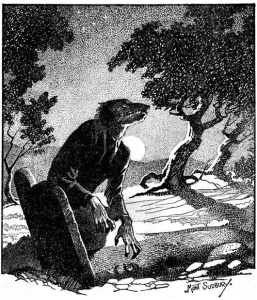
‘Cum adhuc servirem, habitabamus in vico angusto; nunc Gavillae domus est. ibi, quomodo dii volunt, amare coepi uxorem Terentii coponis: noveratis Melissam Tarentinam, pulcherrimum bacciballum. sed ego non mehercules corporaliter aut propter res venerias curavi, sed magis quod benemoria fuit. si quid ab illa petii, nunquam mihi negatum; fecit assem, semissem habui; quicquid habui in illius sinum demandavi, nec unquam fefellitus sum. huius contubernalis ad villam supremum diem obiit. itaque per scutum per ocream egi aginavi, quemadmodum ad illam pervenirem: nam, ut aiunt, in angustiis amici apparent. forte dominus Capuae exierat ad scruta scita expedienda. nactus ego occasionem persuadeo hospitem nostrum ut mecum ad quintum miliarium veniat. erat autem miles, fortis tanquam Orcus. apoculamus nos circa gallicinia; luna lucebat tanquam meridie. venimus inter monimenta: homo meus coepit ad stelas facere; sedeo ego cantabundus et stelas numero. deinde ut respexi ad comitem, ille exuit se et omnia vestimenta secundum viam posuit. mihi anima in naso esse; stabam tanquam mortuus. at ille circumminxit vestimenta sua, et subito lupus factus est. nolite me iocari putare; ut mentiar, nullius patrimonium tanti facio. sed, quod coeperam dicere, postquam lupus factus est, ululare coepit et in silvas fugit. ego primitus nesciebam ubi essem; deinde accessi, ut vestimenta eius tollerem: illa autem lapidea facta sunt. qui mori timore nisi ego? gladium tamen strinxi et—matavitatau!—umbras cecidi, donec ad villam amicae meae pervenirem. in larvam intravi, paene animam ebullivi, sudor mihi per bifurcum volabat, oculi mortui; vix unquam refectus sum. Melissa mea mirari coepit, quod tam sero ambularem, et, “si ante,” inquit, “venisses, saltem nobis adiutasses; lupus enim villam intravit et omnia pecora tanquam lanius sanguinem illis misit. nec tamen derisit, etiam si fugit; servus enim noster lancea collum eius traiecit.” haec ut audivi, operire oculos amplius non potui, sed luce clara nostri domum fugi tanquam copo compilatus; et postquam veni in illum locum, in quo lapidea vestimenta erant facta, nihil inveni nisi sanguinem. ut vero domum veni, iacebat miles meus in lecto tanquam bovis, et collum illius medicus curabat. intellexi illum versipellem esse, nec postea cum illo panem gustare potui, non si me occidisses. viderint quid de hoc alii exopinissent; ego si mentior, genios vestros iratos habeam.’
(Petronius, Sat. 61-62)
‘When I was still a slave, we were living down a narrow street – Gavilla owns the house now – and there as heaven would have it, I fell in love with the wife of Terentius the innkeeper. You all used to know Melissa from Tarentum, an absolute peach to look at. But honest to god, it wasn’t her body or just sex that made me care for her, it was more because she had such a nice nature. If I asked her for anything, it was never refused. If I had a penny or halfpenny, I gave it to her to look after and she never let me down. One day her husband died out at the villa. So I did my best by hook or by crook to get to her. After all, you know, a friend in need is a friend indeed. Luckily the master had gone off to Capua to look after some odds and ends. I seized my chance and I talked a guest of ours into walking with me as far as the fifth milestone. He was a soldier as it happened, and as brave as hell. About cock-crow we shag off, and the moon was shining like noontime. We get to where the tombs are and my chap starts making for the grave-stones, while I, singing away, keep going and start counting the stars. Then just as I looked back at my mate, he stripped off and laid all his clothes by the side of the road. My heart was in my mouth, I stood there like a corpse. Anyway, he pissed a ring round his clothes and suddenly turned into a wolf. Don’t think I’m joking, I wouldn’t tell a lie about this for a fortune. However, as I began to say, after he turned into a wolf, he started howling and rushed off into the woods. At first I didn’t know where I was, then I went up to collect his clothes – but they’d turned to stone. If ever a man was dead with fright, it was me. But I pulled out my sword, and I fairly slaughtered the early morning shadows till I arrived at my girl’s villa. I got into the house and I practically gasped my last, the sweat was pouring down my crotch, my eyes were blank and staring—I could hardly get over it. It came as a surprise to my poor Melissa to find I’d walked over so late. “If you’d come a bit earlier,” she said, “at least you could’ve helped us. A wolf got into the grounds and tore into all the livestock—it was like a bloody shambles. But he didn’t have the last laugh, even though he got away. Our slave here put a spear right through his neck.” I couldn’t close my eyes again after I heard this. But when it was broad daylight I rushed off home like the innkeeper after the robbery. And when I came to the spot where his clothes had turned to stone, I found nothing but bloodstains. However, when I got home, my soldier friend was lying in bed like a great ox with the doctor seeing to his neck. I realized he was a werewolf and afterwards I couldn’t have taken a bite of bread in his company, not if you killed me for it. If some people think differently about this, that’s up to them. But me—if I’m telling a lie may all your guardian spirits damn me!’ (tr. John Patrick Sullivan)
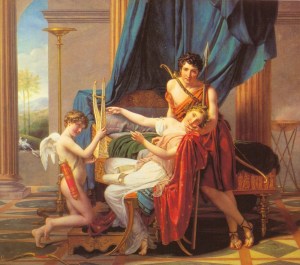
Tu mihi cura, Phaon; te somnia nostra reducunt—
somnia formoso candidiora die.
illic te invenio, quamvis regionibus absis;
sed non longa satis gaudia somnus habet.
saepe tuos nostra cervice onerare lacertos,
saepe tuae videor supposuisse meos;
oscula cognosco, quae tu committere lingua
aptaque consueras accipere, apta dare.
blandior interdum verisque simillima verba
eloquor et vigilant sensibus ora meis.
ulteriora pudet narrare, sed omnia fiunt,
et iuvat, et siccae non licet esse mihi.
(Ovid, Her. 15.123-134)
You, Phaon, are my care; you, my dreams bring back to me—dreams brighter than the beauteous day. In them I find you, though in space you are far away; but not long enough are the joys that slumber gives. Often I seem with the burden of my neck to press your arms, often to place beneath your neck my arms. I recognise the kisses – close caresses of the tongue – which you were wont to take and wont to give. At times I talk sweet nothings, and utter words that seem almost the waking truth, and my lips keep vigil for my senses. Further I blush to tell, but all takes place; I feel the delight, and it is impossible for me to stay dry. (tr. Grant Showerman, revised by G.P. Goold and again by Thea S. Thorsen)

Ὁ δὲ Κλαύδιος τοῖς ὑπὸ τῆς Ἀγριππίνης δρωμένοις, ὧν γε καὶ ᾐσθάνετο ἤδη, ἀχθόμενος, καὶ τὸν υἱὸν αὐτοῦ τὸν Βρεττανικὸν ἐπιζητῶν, ἐξ ὀφθαλμῶν αὐτῷ ἐπίτηδες ὑπ’ἐκείνης τὰ πολλὰ γιγνόμενον, Νέρωνι, οἷα τῷ ἑαυτῆς παιδὶ ἐκ τοῦ προτέρον ἀνδρὸς αὐτῆς Δομιτίου, πάντα τρόπον περιποιουμένης τὸ κράτος, καὶ ὁπότε ἐντύχοι φιλοφρόνως συγγινόμενος, οὐκ ἤνεγκε τὸ γιγνόμενον, ἀλλ’ἐκείνην τε καταλῦσαι καὶ τὸν υἱὸν ἐς τοὺς ἐφήβους ἐσαγαγεῖν καὶ διάδοχον τῆς ἀρχῆς ἀποδεῖξαι παρεσκευάζετο. μαθοῦσα δὲ ταῦτα ἡ Ἀγριππῖνα ἐφοβήθη, καὶ αὐτὸν προκαταλαβεῖν φαρμάκῳ πρίν τι τοιοῦτον πραχθῆναι ἐσπούδασεν. ὡς δὲ ἐκεῖνος οὐδὲν ὑπό τε τοῦ οἴνου, ὃν πολὺν ἀεί ποτε ἔπινε, καὶ ὑπὸ τῆς ἄλλης διαίτῃς, ᾗ πάντες ἐπίπαν πρὸς φυλακήν σφων οἱ αὐτοκράτορες χρῶνται, κακοῦσθαι ἠδύνατο, Λουκοῦστάν τινα φαρμακίδα περιβόητον ἐπ’ αὐτῷ τούτῳ νέον ἑαλωκυῖαν μετεπέμψατο, καὶ φάρμακόν τι ἄφυκτον προκατασκευάσασα δι’ αὐτῆς ἔς τινα τῶν καλουμένων μυκήτων ἐνέβαλε. καὶ αὐτὴ μὲν ἐκ τῶν ἄλλων ἤσθιεν, ἐκεῖνον δὲ ἐκ τοῦ τὸ φάρμακον ἔχοντος (καὶ γὰρ μέγιστος καὶ κάλλιστος ἦν) φαγεῖν ἐποίησε. καὶ ὁ μὲν οὕτως ἐπιβουλευθεὶς ἐκ μὲν τοῦ συμποσίου ὡς καὶ ὑπερκορὴς μέθης σφόδρα ὢν ἐξεκομίσθη, ὅπερ που καὶ ἄλλοτε πολλάκις ἐγεγόνει, κατεργασθεὶς δὲ τῷ φαρμάκῳ διά τε τῆς νυκτὸς οὐδὲν οὔτ’εἰπεῖν οὔτ’ἀκοῦσαι δυνηθεὶς μετήλλαξε, τῇ τρίτῃ καὶ δεκάτῃ τοῦ Ὀκτωβρίου, ζήσας ἑξήκοντα καὶ τρία ἔτη καὶ μῆνας δύο καὶ ἡμέρας τρεῖς καὶ δέκα, αὐταρχήσας δὲ ἔτη τρία καὶ δέκα καὶ μῆνας ὀκτὼ καὶ ἡμέρας εἴκοσι.
(Cassius Dio, Hist. 61.34.1-3)
Claudius was angered by Agrippina’s actions, of which he was now becoming aware, and sought for his son Britannicus, who had purposely been kept out of his sight by her most of the time (for she was doing everything she could to secure the throne for Nero, inasmuch as he was her own son by her former husband Domitius); and he displayed his affection whenever he met the boy. He would not endure her behaviour, but was preparing to put an end to her power, to cause his son to assume the toga virilis, and to declare him heir to the throne. Agrippina, learning of this, became alarmed and made haste to forestall anything of the sort by poisoning Claudius. But since, owing to the great quantity of wine he was forever drinking and his general habits of life, such as all emperors as a rule adopt for their protection, he could not easily be harmed, she sent for a famous dealer in poisons, a woman named Lucusta, who had recently been convicted on this very charge; and preparing with her aid a poison whose effect was sure, she put it in one of the vegetables called mushrooms. Then she herself ate of the others, but made her husband eat of the one which contained the poison; for it was the
largest and finest of them. And so the victim of the plot was carried from the banquet apparently quite overcome by strong drink, a thing that had happened many times before; but during the night the poison took effect and he passed away, without having been able to say or hear a word. It was the thirteenth of October, and he had lived sixty-three years, two months, and thirteen days, having been emperor thirteen years, eight months and twenty days. (tr. Earnest Cary)
 Crambe Repetita