Chleuazomenos

7b10b3149390b4bb4e3a58f0b289faf2

Ὅθεν ὕστερον ἐν ταῖς ἐλευθερίοις καὶ ἀστείαις λεγομέναις διατριβαῖς ὑπὸ τῶν πεπαιδεῦσθαι δοκούντων χλευαζόμενος ἠναγκάζετο φορτικώτερον ἀμύνεσθαι, λέγων, ὅτι λύραν μὲν ἁρμόσασθαι καὶ μεταχειρίσασθαι ψαλτήριον οὐκ ἐπίσταται, πόλιν δὲ μικρὰν καὶ ἄδοξον παραλαβὼν ἔνδοξον καὶ μεγάλην ἀπεργάσασθαι.
(Plutarch, Bios Themistokleous 2.3)

Thus it came about that, in after life, at entertainments of a so-called liberal and polite nature, when he* was taunted by men of reputed culture, he was forced to defend himself rather rudely, saying that tuning the lyre and handling the harp were no accomplishments of his, but rather taking in hand a city that was small and inglorious and making it glorious and great.

* Themistocles

(tr. Bernadotte Perrin)

Perata

skulls-and-bones

Οὐχ ὁρᾷς εἰς ἀμφότερα τῆς ζωῆς τοῦ ἀνθρώπου τὰ πέρατα, καὶ ὅπως ἄρχεται καὶ εἰς ὅτι λήγει; ἀλλὰ γαυριᾷς τῇ νεότητι, καὶ πρὸς τὸ ἄνθος τῆς ἡλικίας βλέπεις, καὶ ἐγκαλλωπίζῃ τῇ ὥρᾳ, ὅτι σοι ὑπερσφριγῶσιν αἱ χεῖρες πρὸς κίνησιν, καὶ κοῦφοι πρὸς τὸ ἅλμα οἱ πόδες, καὶ περισοβεῖ ταῖς αὔραις ὁ βόστρυχος, καὶ τὴν παρειὰν ὑπογράφει ὁ ἴουλος, καὶ ὅτι σοι ἡ ἐσθὴς τῇ βαφῇ τῆς πορφύρας ὑπερανθίζεται, καὶ πεποίκιλταί σοι τὰ ἐκ σηρῶν ὑφάσματα, πολέμοις ἢ θήραις, ἤ τισιν ἱστορίαις πεποικιλμένα, ἢ τάχα καὶ πρὸς τὰ πέδιλα βλέπεις ἐπιμελῶς ἐν τῷ μέλανι στίλβοντα, καὶ περιέργως ταῖς ἀπὸ τῶν ῥαφίδων γραμμαῖς ἐπιτέρποντα; πρὸς ταῦτα βλέπεις, πρὸς δὲ σεαυτὸν οὐχ ὁρᾷς; δείξω σοι ὥσπερ ἐν κατόπτρῳ, τίς εἶ καὶ οἷος εἶ. οὐκ εἶδες ἐν πολυανδρίῳ τὰ τῆς φύσεως ἡμῶν μυστήρια; οὐκ εἶδες τὴν ἐπάλληλον τῶν ὀστέων σωρείαν; κρανία σαρκῶν γεγυμνωμένα, φόβερόν τι καὶ εἰδεχθὲς ἐν διακένοις δεδορκότα τοῖς ὄμμασιν; εἶδες στόματα σεσηρότα, καὶ τὰ λοιπὰ τῶν μελῶν πρὸς τὸ συμβὰν πεφορημένα; εἰ ἐκεῖνα εἶδες, σεαυτὸν ἐν ἐκείνοις τεθέασαι. ποῦ τοῦ παρόντος ἄνθους τὰ σύμβολα; ποῦ ἡ εὔχροια τῆς παρειᾶς; ποῦ τὸ ἐπὶ τοῦ χείλους ἄνθος; ποῦ τὸ βλοσυρὸν ἐν τοῖς ὄμμασι κάλλος τῇ περιβολῇ τῶν ὀφρύων ὑπολαμπόμενον; ποῦ ἡ εὐθεῖα ῥὶς, ἡ τῷ κάλλει τῶν παρειῶν μεσιτεύουσα; ποῦ αἱ ἐπαυχένιοι κόμαι; ποῦ οἱ περικροτάφιοι βόστρυχοι; ποῦ αἱ τοξαζόμεναι χεῖρες; οἱ ἱππαζόμενοι πόδες; ἡ πορφύρα; ἡ βύσσος; ἡ χλανίς; ἡ ζώνη; τὰ πέδιλα; ὁ ἵππος; ὁ δρόμος; τὸ φρύαγμα; πάντα, δι’ ὧν σοι νῦν ὁ τῦφος αὔξεται; ποῦ ταῦτα ἐν ἐκείνοις, εἰπὲ, ὑπὲρ ὧν νῦν ἐπαίρῃ καὶ μεγαλοφρονεῖς; ποῖον οὕτως ἀνυπόστατον ὄναρ; ποῖα τοιαῦτα ἐξ ὕπνου φαντάσματα; τίς οὕτως ἀδρανὴς σκιὰ τὴν ἁφὴν ὑποφεύγουσα, ὡς τὸ τῆς νεότητος ὄναρ ὁμοῦ τε φαινόμενον καὶ εὐθὺς παριπτάμενον;
(Gregory of Nyssa, De Beatitudinibus 1.5-6)

Do you not see at each end the limits of human life, how it begins and where it ends? Yet you glory in your youth, you look to the blossom of your fresh years, and you boast of your full bloom, because your hands are strong for lifting, your feet agile for jumping, your curls blow about in the wind, the first beard lines your cheek, and because your clothes grow bright with purple dye, and your dresses of silk are embroidered, with embroidery of wars or hunts or legends. Yes, perhaps you look even to your shoes, carefully polished with blacking and smart with extravagantly stitched lines, yet do you not look at yourself? I will shew you your reflection, who you are and what you are. Have you not seen in the burial ground the mysteries of our existence? Have you not seen the heap of bones piled on each other, skulls stripped of flesh, staring fearsome and horrible from empty eye-sockets? Have you seen the grinning mouths and the rest of the limbs lying casually about? If you have seen those things, then in them you have observed yourself. Where are the signs of your present flowering? Where is the colour on your cheek? Where is the bloom on your lips? Where are the lovely eye-lashes pointed up by the curve of the eyebrows? Where is the straight nose fixed between the beautiful cheeks? Where is the hair upon the neck? Where the curls round the temples? Where are the archer’s arms, the rider’s legs, the purple, the linen, the fine wool, the girdle, the shoes, the horse, the race, the snorting, all that now goes to swell your pride? Where among the bones, tell me, are the things over which you are now conceited and arrogant? What dream is so insubstantial? What fantasies from sleep are like these? What faint shadow so escapes our grasp as the dream of youth, no sooner appearing than instantly flown? (tr. Stuart George Hall)

Pōne

sisyphus

Πῶνε [καὶ μέθυ’ ὦ] Μελάνιππ’ ἄμ’ ἔμοι. τί [φαῖς
†ὄταμε[. . . .]διννάεντ’† Ἀχέροντα μέγ[αν πόρον
ζάβαι[ς ἀ]ελίω κόθαρον φάος [ἄψερον
ὄψεσθ’; ἀλλ’ ἄγι μὴ μεγάλων ἐπ[ιβάλλεο·
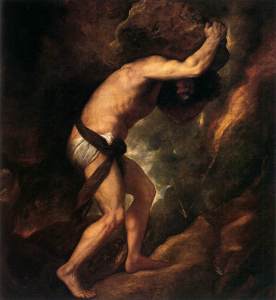
καὶ γὰρ Σίσυφος Αἰολίδαις βασίλευς [ἔφα
ἀνδρῶν πλεῖστα νοησάμενος [θανάτω κρέτην·
ἀλλὰ καὶ πολύιδρις ἔων ὐπὰ κᾶρι [δὶς
διννάεντ’ Ἀχέροντ’ ἐπέραισε, μ[
αὔτῳ μόχθον ἔχην Κρονίδαις βα[σίλευς κάτω
μελαίνας χθόνος· ἀλλ’ ἄγι μὴ τά[δ’ ἐπέλπεο·
θᾶς] τ’ ἀβάσομεν αἴ ποτα κἄλλοτα . [
. . . ]ην ὄττινα τῶνδε πάθην τά[χα δῷ θέος.
(Alcaeus fr. 38A.1-12)

Drink and get drunk, Melanippus, with me. Why do you suppose that when you have crossed the great river of eddying (?) Acheron you will see again the sun’s pure light? Come, do not aim at great things: why, king Sisyphus*, son of Aeolus, wisest of men, supposed that he (was master of Death?); but despite his cunning he crossed eddying Acheron twice at fate’s command, and king Zeus, son of Cronus, devised a toil for him to have under the black earth. Come, do not hope for these things; now if ever, while we are young, it is fit to endure whatever of these things God may give us to suffer.

* Sisyphus told his wife to omit his funeral rites and was allowed to return from the underworld to take her to task. Once back, he stayed until he died of old age. When he reached Hades for the second time, he was condemned to push a boulder to the top of a hill from which it always rolled down again.

(tr. David A. Campbell, with his note)

Eudokimoiēs

Μηδέποτε μηδὲν αἰσχρὸν ποιήσας ἔλπιζε λήσειν· καὶ γὰρ ἂν τοὺς ἄλλους λάθῃς, σεαυτῷ συνειδήσεις.
τοὺς μὲν θεοὺς φοβοῦ, τοὺς δὲ γονεῖς τίμα, τοὺς δὲ φίλους αἰσχύνου, τοῖς δὲ νόμοις πείθου.
τὰς ἡδονὰς θήρευε τὰς μετὰ δόξης· τέρψις γὰρ σὺν τῷ καλῷ μὲν ἄριστον, ἄνευ δὲ τούτου κάκιστον.
εὐλαβοῦ τὰς διαβολάς, κἂν ψευδεῖς ὦσιν· οἱ γὰρ πολλοὶ τὴν μὲν ἀλήθειαν ἀγνοοῦσι, πρὸς δὲ τὴν δόξαν ἀποβλέπουσιν. ἅπαντα δόκει ποιεῖν ὡς μηδένα λήσων· καὶ γὰρ ἂν παραυτίκα κρύψῃς, ὕστερον ὀφθήσει. μάλιστα δ᾽ ἂν εὐδοκιμοίης, εἰ φαίνοιο ταῦτα μὴ πράττων, ἃ τοῖς ἄλλοις ἂν πράττουσιν ἐπιτιμῴης.
(Isocrates, Or. 1.16-17)

Never hope to conceal any shameful thing which you have done; for even if you do conceal it from others, your own heart will know.
Fear the gods, honor your parents, respect your friends, obey the laws.
Pursue the enjoyments which are of good repute; for pleasure attended by honor is the best thing in the world, but pleasure without honor is the worst.
Guard yourself against accusations, even if they are false; for the multitude are ignorant of the truth and look only to reputation. In all things resolve to act as though the whole world would see what you do; for even if you conceal your deeds for the moment, later you will be found out. But most of all will you have the respect of men, if you are seen to avoid doing things which you would blame others for doing. (tr. George Norlin)

Fidelis

parchmentwriting-how-to-improve-your-writing-skills-660x330

Quae ab condita urbe Roma ad captam eandem Romani sub regibus primum, consulibus deinde ac dictatoribus decemuirisque ac tribunis consularibus gessere, foris bella, domi seditiones, quinque libris exposui, res cum vetustate nimia obscuras velut quae magno ex intervallo loci vix cernuntur, tum quid rarae per eadem tempora litterae fuere, una custodia fidelis memoriae rerum gestarum, et quod, etiam si quae in commentariis pontificum aliisque publicis privatisque erant monumentis, incensa urbe pleraeque interiere. Clariora deinceps certioraque ab secunda origine velut ab stirpibus laetius feraciusque renatae urbis gesta domi militiaeque exponentur.
(Livy 6.1.1-3)

The history of the Romans from the founding of the City of Rome to the capture of the same – at first under kings and afterwards under consuls and dictators, decemvirs and consular tribunes – their foreign wars and their domestic dissensions, I have set forth in five books, dealing with matters which are obscure not only by reason of their great antiquity – like far-off objects which can hardly be descried – but also because in those days there was but slight and scanty use of writing, the sole trustworthy guardian of the memory of past events, and because even such records as existed in the commentaries of the pontiffs and in other public and private documents, nearly all perished in the conflagration of the City. From this point onwards a clearer and more definite account shall be given of the City’s civil and military history, when, beginning for a second time, it sprang up, as it were from the old roots, with a more luxuriant and fruitful growth. (tr. Benjamin Oliver Foster)

Hoioi

ΣΩΚΡΑΤΗΣ. Ἀλλὰ τί ἡμῖν, ὦ μακάριε Κρίτων, οὕτω τῆς τῶν πολλῶν δόξης μέλει; οἱ γὰρ ἐπιεικέστατοι, ὧν μᾶλλον ἄξιον φροντίζειν, ἡγήσονται αὐτὰ οὕτω πεπρᾶχθαι, ὥσπερ ἂν πραχθῇ.
ΚΡΙΤΩΝ. ἀλλ’ ὁρᾷς δή, ὅτι ἀνάγκη, ὦ Σώκρατες, καὶ τῆς τῶν πολλῶν δόξης μέλειν. αὐτὰ δὲ δῆλα τὰ παρόντα νυνί, ὅτι οἷοί τ’ εἰσὶν οἱ πολλοὶ οὐ τὰ σμικρότατα τῶν κακῶν ἐξεργάζεσθαι, ἀλλὰ τὰ μέγιστα σχεδόν, ἐάν τις ἐν αὐτοῖς διαβεβλημένος ᾖ.
ΣΩΚΡΑΤΗΣ. εἰ γὰρ ὤφελον, ὦ Κρίτων, οἷοί τ’ εἶναι οἱ πολλοὶ τὰ μέγιστα κακὰ ἐργάζεσθαι, ἵνα οἷοί τ’ ἦσαν καὶ τὰ μέγιστα ἀγαθά, καὶ καλῶς ἂν εἶχεν· νῦν δὲ οὐδέτερα οἷοί τε· οὔτε γὰρ φρόνιμον οὔτε ἄφρονα δυνατοὶ ποιῆσαι, ποιοῦσι δὲ τοῦτο ὅ τι ἂν τύχωσι.
(Plato, Crito 44 c-d)

SOCRATES. But, my dear Crito, why do we care so much for what most people think? For the most reasonable men, whose opinion is more worth considering, will think that things were done as they really will be done.
CRITO. But you see it is necessary, Socrates, to care for the opinion of the public, for this very trouble we are in now shows that the public is able to accomplish not by any means the least, but almost the greatest of evils, if one has a bad reputation with it.
SOCRATES. I only wish, Crito, the people could accomplish the greatest evils, that they might be able to accomplish also the greatest good things. Then all would be well. But now they can do neither of the two; for they are not able to make a man wise or foolish, but they do whatever occurs to them. (tr. Harold North Fowler)

Ainōs

1ec61d798f5b3823ab109b4dc4887446

[ΧΟΡ.]

Γᾶ δ’ αἰάζει τὰν ἐς τις ἐγγαίαν
ἥβαν Ξέρξᾳ κταμέναν, Ἅιδου
σάκτορι Περσᾶν· ἀγδαβάται γὰρ
πολλοὶ φῶτες, χώρας ἄνθος,
τοξοδάμαντες, πάνυ ταρφύς τις
μυριὰς ἀνδρῶν, ἐξέφθινται.
αἰαῖ αἰαῖ κεδνᾶς ἀλκᾶς·
Ἀσία δὲ χθών, βασιλεῦ γαίας,
αἰνῶς αἰνῶς ἐπὶ γόνυ κέκλιται.

(Aeschylus, Pers. 922-930)

The land laments its native youth
killed by Xerxes, who crammed Hades
with Persians: many men
who were marched away, the flower of the land,
slayers with the bow, thronging
myriads of men, have perished and gone.
Aiai, aiai, for our brave defenders!
King of our country, the land of Asia
is terribly, terribly down on her knees!
(tr. Alan H. Sommerstein)

Hesperios

Ἑσπέριος κεῖνός γε τελεῖ τά κεν ἦρι νοήσῃ·
ἑσπέριος τὰ μέγιστα, τὰ μείονα δ’, εὖτε νοήσῃ.
οἱ δὲ τὰ μὲν πλειῶνι, τὰ δ’ οὐχ ἑνί, τῶν δ’ ἀπὸ πάμπαν
αὐτὸς ἄνην ἐκόλουσας, ἐνέκλασσας δὲ μενοινήν.
(Callimachus, Hymn to Zeus 87-90)

At evening he accomplishes what he thinks of in the morning; at evening the greatest things, the lesser, immediately he thinks of them. Others accomplish some things in a year, other things not in one; of others you yourself cut short their accomplishment and thwart their desire. (tr. Susan A. Stephens)

Ingeniosissimus

chicken

Fuit praeterea idem ingeniosissimus, cuius ostendendi acuminis scilicet pauca libet ponere: nam cum taurum ingentem in arenam misisset, exissetque ad eum feriendum venator neque productum decies potuisset occidere, coronam venatori misit, mussantibusque cunctis, quid rei esset quod homo ineptissimus coronaretur, ille per curionem dici iussit: ‘taurum totiens non ferire difficile est’. idem, cum quidam gemmas vitreas pro veris vendidisset eius uxori, atque illa re prodita vindicari vellet, subripi quasi ad leonem venditorem iussit, deinde e cavea caponem emitti, mirantibusque cunctis rem tam ridiculam per curionem dici iussit: ‘imposturam fecit et passus est’. deinde negotiatorem dimisit.
(Historia Augusta, Gall. 12.5)

Gallienus, furthermore, was exceedingly clever, and I wish to relate a few actions of his in order to show his wit. Once, when a huge bull was led into the arena, and a huntsman came forth to fight him but was unable to slay the bull though it was brought out ten times, he sent the huntsman a garland, and when all the crowd wondered what it might mean that so foolish a fellow should be crowned with a garland, he bade a herald announce: “It is a difficult thing to miss a bull so many times.” On another occasion, when a certain man sold his wife glass jewels instead of real, and she, discovering the fraud, wished the man to be punished, he ordered the seller to be haled off, as though to a lion, and then had them let out from the cage a capon, and when all were amazed at so absurd a proceeding, he bade the herald proclaim: “He practised deceit and then had it practised on him.” Then he let the dealer go home. (tr. David Magie)

Severius

screen-shot-2016-02-02-at-3-23-31-pm

Nos adhuc iter per Graeciam summa cum admiratione fecimus, nec mehercule habeo, quod adhuc quem accusem meorum. videntur mihi nosse nostram causam et condicionem profectionis suae; plane serviunt existimationi meae. quod superest, si verum illud est, ‘οἵαπερ ἡ δέσποινα…’, certe permanebunt; nihil enim a me fieri ita videbunt, ut sibi sit delinquendi locus. sin id parum profuerit, fiet aliquid a nobis severius.
(Cicero, Ep. ad Att. 104(=5.11).5)

So far my journey through Greece has been the admiration of the country, and I must say that I have no complaint to make so far of any of my party. I think they know my position and the understanding on which they come. They are really jealous for my good name. As for the future, if there is anything in the old saying ‘like master…’, they will certainly keep it up, for they will see nothing in my behaviour to give them any pretext for delinquency. Should that not answer however, I am prepared for sterner measures. (tr. David Roy Shackleton Bailey)