Sumplekomenos

wrestler

Παρελθὼν δὲ ὁ ἱερεὺς (ἦν δὲ εἰπεῖν οὐκ ἀδύνατος, μάλιστα δὲ τὴν Ἀριστοφάνους ἐζηλωκὼς κωμῳδίαν) ἤρξατο αὐτὸς λέγειν, πάνυ ἀστείως καὶ κωμῳδικῶς εἰς πορνείαν αὐτοῦ καθαπτόμενος “παρὰ τὴν θεὸν” λέγων “λοιδορεῖσθαι μὲν οὕτως ἀκόσμως τοῖς εὖ βεβιωκόσι στόματος ἐστὶν οὐ καθαροῦ. οὗτος δὲ οὐκ ἐνταῦθα μόνον ἀλλὰ καὶ πανταχοῦ τὴν γλῶτταν μεστὴν ὕβρεως ἔχει. καίτοιγε νέος ὢν συνεγίνετο πολλοῖς αἰδοίοις ἀνδράσι καὶ τὴν ὥραν ἅπασαν εἰς τοῦτο δεδαπάνηκε. σεμνότητα δ’ ἔδρακε καὶ σωφροσύνην ὑπεκρίνατο, παιδείας προσποιούμενος ἐρᾶν καὶ τοῖς εἰς ταύτην αὐτῷ χρωμένοις πάντα ὑποκύπτων καὶ ὑποκατακλινόμενος ἀεί. καταλιπὼν γὰρ τὴν πατρῴαν οἰκίαν, ὀλίγον ἑαυτῷ μισθωσάμενος στενωπεῖον, εἶχεν ἐνταῦθα τὸ οἴκημα, ὁμηρίζων μὲν τὰ πολλά, πάντας δὲ τοὺς χρησίμους πρὸς ἅπερ ἤθελε προσεταιριζόμενος. καὶ οὕτω μὲν ἀσκεῖν τὴν ψυχὴν ἐνομίζετο· ἦν δ’ ἄρα τοῦτο κακουργίας ὑπόκρισις. ἔπειτα κἀν τοῖς γυμνασίοις ἑωρῶμεν πῶς τὸ σῶμα ὑπηλείφετο καὶ πῶς πλέκτρον περιέβαινε καὶ τοὺς μὲν νεανίσκους, οἷς προσεπάλαιε, πρὸς τοὺς ἀνδρειοτέρους μάλιστα συμπλεκόμενος· οὕτως αὑτοῦ κέχρηται καὶ τῷ σώματι. ταῦτα μὲν οὖν ὡραῖος ὤν· ἐπεὶ δὲ εἰς ἄνδρας ἧκε, πάντα ἀπεκάλυψεν, ἃ τότε ἀπέκρυπτε. καὶ τοῦ μὲν ἄλλου σώματος ἔξωρος γενόμενος ἠμέλησε, μόνην δὲ τὴν γλῶτταν εἰς ἀσέλγειαν ἀκονᾷ καὶ τῷ στόματι χρῆται πρὸς ἀναισχυντίαν, ὑβρίζων πάντας, ἐπὶ τῶν προσώπων φέρων τὴν ἀναίδειαν, ὃς οὐκ ᾐδέσθη τὸν ὑφ’ ὑμῶν ἱερωσύνῃ τετιμημένον οὕτως ἀπαιδεύτως βλασφημῶν ὑμῶν ἐναντίον. ἀλλ’ εἰ μὲν ἀλλῇ που βεβιωκὼς ἔτυχον, καὶ μὴ παρ’ ὑμῖν, ἔδει μοι λόγων περὶ ἐμαυτοῦ καὶ τῶν ἐμοὶ βεβιωμένων…”
(Achilles Tatius, Leukippē & Kleitophōn 8.9.1-6)

The priest stepped forward. He was by no means an incompetent speaker, an emulator in particular of Aristophanic comedy. He began to speak in the urbane style of comedy, attacking the sexual integrity of Thersandros. “To insult the goddess by such an uncontrolled harangue against her clean-living servants is the work of an impure mouth. Not only here but everywhere he goes, this man’s tongue is coated with rank insolence. As a youth he was on intimate terms with many well-endowed men, spending his youthful beauty all on them. His looks exuded piety; he acted the role of chastity, pretending a very hot desire to be cultivated. When he found men who would exercise him to this end, he would kneel at their feet and bend over double to please them. He left his father’s house and rented a little bedroom where he set up shop, specializing in the old Greek lays (Homer, I mean), and was receptive to all who might serve him and give him what he wanted. He was supposed to be developing his mind, but this was just a cover for a dissolute life. In the gymnasiums we couldn’t help but notice how he oiled his body, that special way he shinnied on the pole, and how in wrestling with the boys he always clung more tightly to the ones who were more manly. So much for his physical activities. This went on while his youthful beauty lasted. When he became a man, he exposed everything that he had concealed before. He neglected the rest of his body, which was worn out anyway, and concentrated on the tongue, whetting it for disgusting activities, and used his mouth in shameless ways, insulting everyone, parading his shamelessness on his very face. This man was not ashamed to slander in your presence (and so inelegantly at that!) a man whom you have honored with the priesthood. If I had lived in some other land and not with you, I would have to defend myself and my ways of life. But since you know that my behavior is very far removed from his blasphemies, let me speak to you instead about the specific accusations.” (tr. Bryan P. Reardon)


Cibaria

Dog-Food

This is part 3 of 3. Part 1 is here. Part 2 is here.

Cibaria fere eadem sunt utrique generi praebenda. nam si tam laxa rura sunt, ut sustineant pecorum greges, omnis sine discrimine hordeacea farina cum sero commode pascit. sin autem surculo consitus ager sine pascuo est, farreo vel triticeo pane satiandi sunt, admixto tamen liquore coctae fabae, sed tepido, nam fervens rabiem creat. huic quadripedi neque feminae neque mari nisi post annum permittenda venus est, quae si teneris conceditur, carpit et corpus et vires animosque degenerat. primus effetae partus amovendus est, quoniam tiruncula nec recte nutrit et educatio totius habitus aufert incrementum. mares iuveniliter usque in annos decem progenerant, post id tempus ineundis feminis non videntur habiles, quoniam seniorum pigra suboles existit. feminae concipiunt usque in annos novem nec sunt utiles post decimum. catulos sex mensibus primis, dum corroborentur, emitti non oportet nisi ad matrem lusus ac lasciviae causa. postea catenis per diem continendi et noctibus solvendi, nec umquam eos, quorum generosam volumus indolem conservare, patiemur alienae nutricis uberibus educari, quoniam semper et lac et spiritus maternus longe magis ingenii atque incrementa corporis auget. quod si et feta lacte deficitur, caprinum maxime conveniet praeberi catulis, dum fiant mensum quattuor. nominibus autem non longissimis appellandi sunt, quo celerius quisque vocatus exaudiat, nec tamen brevioribus quam quae duabus syllabis enuntiantur, sicuti Graecum est Σκύλαξ, Latinum Ferox, Graecum Λάκων, Latinum Celer; vel femina, ut sunt Graeca Σπουδή, Ἀλκή, Ῥώμη; Latina Lupa, Cerva, Tigris. catulorum caudas post diem quadragensimum, quam sint editi, sic castrare conveniet. nervus est, qui per articulos spinae prorepit usque ad ultimam partem caudae; is mordicus conprehensus et aliquatenus eductus abrumpitur, quo facto neque in longitudinem cauda foedum capit incrementum, et, ut plurimi pastores adfirmant, rabies arcetur, letifer morbus huic generi.
(Columella, De Re Rustica 7.12.10-14)

Practically the same food should be given to both types of dog. If the farm is extensive enough to support herds of cattle, barley-flour with whey is a suitable food for all dogs without distinction; but if the land is closely planted with young shoots and affords no pasture, they must be given their fill of bread made from emmer or wheaten flour, mixed, however, with the liquid of boiled beans, which must be lukewarm, for, if it is boiling, it causes madness. Neither dogs nor bitches must be allowed to have sexual intercourse until they are a year old; for if they are allowed to do so when they are quite young, it enfeebles their bodies and their strength, and causes them to degenerate mentally. The first puppies which a bitch produces must be taken from her, because at the first attempt she does not nourish them properly and the rearing of them hinders her general bodily growth. Dogs procreate vigorously up to ten years of age, but beyond that they do not seem suitable for covering bitches, for the offspring of an elderly dog turns out to be slow and lazy. Bitches conceive up to nine years of age, but are not serviceable after the tenth year. Puppies should not be allowed to run loose during the first six months, until they are grown strong, except to join their mother in sport and play; later they should be kept on the chain during the day and let loose at night. We should never allow those whose noble qualities we wish to preserve, to be brought up at the dugs of any strange bitch, since its mother’s milk and spirit always does much more to foster the growth of their minds and bodies. But if a bitch which has a litter is deficient in milk, it will be best to provide goats’ milk for the puppies until they are four months old. Dogs should be called by names which are not very long, so that each may obey more quickly when he is called, but they should not have shorter names than those which are pronounced in two syllables,” such as the Greek Σκύλαξ (puppy) and the Latin Ferox (savage), the Greek Λάκων (Spartan) and the Latin Celer (speedy) or, for a bitch, the Greek Σπουδή (zeal), Ἀλκή (Valour), Ῥώμη (strength) or the Latin Lupa (she-wolf), Cerva (hind) and Tigris (tigress). It will be found best to cut the tails of puppies forty days after birth in the following manner: there is a nerve, which passes along through the joints of the spine down to the extremity of the tail; this is taken between the teeth and drawn out a little way and then broken. As a result, the tail never grows to an ugly length and (so many shepherds declare) rabies, a disease which is fatal to this animal, is prevented. (tr. Edward S. Forster & Edward H. Heffner)

Mores

1a8228c74832f3b8190cd992b206a969

This is part 2 of 3. Part 1 is here. Part 3 is here.

Mores autem neque mitissimi nec rursus truces atque crudeles, quod illi furem quoque adulantur, hi etiam domesticos invadunt. satis est severos esse nec blandos, ut non numquam etiam conservos iratius intuantur, semper excandescant in exteros. maxime autem debent in custodia vigilantes conspici nec erronei, sed adsidui et circumspecti magis quam temerarii. nam illi, nisi quod certum conpererunt, non indicant, hi vano strepitu et falsa suspicione concitantur. haec idcirco memoranda credidi, quia non natura tantum, sed etiam disciplina mores facit, ut et, cum emendi potestas fuerit, eius modi probemus et, cum educabimus domi natos, talibus institutis formemus. nec multum refert, an villatici corporibus graves et parum veloces sint; plus enim comminus et in gradu quam eminus et in spatioso cursu facere debent. nam semper circa septa et intra aedificium consistunt, immo ne longius quidem recedere debent satisque pulchre funguntur officio, si et advenientem sagaciter odorantur et latratu conterrent nec patiuntur propius accedere vel constantius adpropinquantem violenter invadunt. primum est enim non adtemptari, secundum est lacessitum fortiter et perseveranter vindicari. atque haec de domesticis custodibus, illa de pastoralibus. pecuarius canis neque tam strigosus aut pernix debet esse, quam qui dammas cervosque et velocissima sectantur animalia, nec tam obesus aut gravis quam villae horreique custos; sed et robustus nihilo minus et aliquatenus promptus ac strenuus, quoniam et ad rixam pugnamque nec minus ad cursum conparatur, cum et lupi repellere insidias et raptorem ferum consequi fugientem praedamque excutere atque auferre debeat. quare status eius longior productiorque ad hos casus magis habilis est quam brevis aut etiam quadratus, quoniam, ut dixi, non numquam necessitas exigit celeritate bestiam consectandi. ceteri artus similes membris villatici canis aeque probantur.
(Columella, De Re Rustica 7.12.5-9)

In character they should neither be very mild nor, on the other hand, savage and cruel; if they are mild, they fawn on everyone, including the thief; if they are fierce they attack even the people of the house. It is enough that they should be stern but not fawning, so that they sometimes look even upon their companions in servitude with a somewhat wrathful eye, while they always blaze with anger against strangers. Above all they should be seen to be vigilant in their watch and not given to wandering, but diligent and cautious rather than rash; for the cautious do not give the alarm unless they have discovered something for certain, whereas the rash are aroused by any vain noise and groundless suspicion. I have thought it necessary to mention these points, because it is not nature alone but education as well which forms character, so that, when there is an opportunity of buying a dog, we may choose one with these qualities and that when we are going to train dogs which have been born at home, we may bring them up on such principles as these. It does not matter much if farm-yard dogs are heavily built and lack speed, since they have to function rather at close quarters and where they are posted than at a distance and over a wide area; for they should always remain round the enclosures and within the buildings, indeed they ought never go out farther from home and can perfectly well carry out their duties by cleverly scenting out anyone who approaches and frightening him by barking and not allowing him to come any nearer, or, if he insists on approaching, they violently attack him. Their first duty is not to allow themselves to be attacked, their second duty to defend themselves with courage and pertinacity if they are provoked. So much for the dogs which guard the house; our next subject is sheep-dogs. A dog which is to guard cattle ought not to be as lean and swift of foot as one which pursues deer and stags and the swiftest animals, nor so fat and heavily built as the dog which guards the farm and granary, but he must, nevertheless, be strong and to a certain extent prompt to act and vigorous, since the purpose for which he is acquired is to pick quarrels and to fight and also to move quickly, since he has to repel the stealthy lurking of the wolf and to follow the wild beast as he escapes with his prey and make him drop it and to bring it back again. Therefore a dog of a rather long, slim build is better able to deal with these emergencies than one which is short or even squarely built, since, as I have said, sometimes the necessity of pursuing a wild beast with speed demands this. The other joints in sheep-dogs if they resemble the limbs of farm-yard dogs meet with equal approval. (tr. Edward S. Forster & Edward H. Heffner)

Custos

n4dqbgxktsf11

This is part 1 of 3. Part 2 is here. Part 3 is here.

Nunc ut exordio priore sum pollicitus, de mutis custodibus loquar, quamquam falso canis dicitur mutus custos. nam quis hominum clarius aut tanta vociferatione bestiam vel furem praedicat quam iste latratu, quis famulus amantior domini, quis fidelior comes, quis custos incorruptior, quis excubitor inveniri potest vigilantior, quis denique ultor aut vindex constantior? quare vel in primis hoc animal mercari tuerique debet agricola, quod et villam et fructus familiamque et pecora custodit. eius autem parandi tuendique triplex ratio est. namque unum genus adversus hominum insidias eligitur et id villam quaeque iuncta sunt villae custodit, at alterum propellendis iniuriis hominum ac ferarum et id observat domi stabulum, foris pecora pascentia; tertium venandi gratia conparatur idque non solum nihil agricolam iuvat, sed et avocat desidemque ab opere suo reddit. de villatico igitur et pastorali dicendum est, nam venaticus nihil pertinet ad nostram professionem. villae custos eligendus est amplissimi corporis, vasti latratus canorique, prius ut auditu maleficum, deinde etiam conspectu terreat et tamen non numquam nec visus quidem horribili fremitu suo fuget insidiantem. sit autem coloris unius, isque magis eligitur albus in pastorali, niger in villatico, nam varius in neutro est laudabilis. pastor album probat, quoniam est ferae dissimilis, magnoque opus interdum discrimine est in propulsandis lupis sub obscuro mane vel etiam crepusculo, ne pro bestia canem feriat. villaticus, qui hominum maleficiis opponitur, sive luce clara fur advenit, terribilior niger conspicitur, sive noctu, ne conspiciatur quidem propter umbrae similitudinem, quam ob rem tectus tenebris canis tutiorem adcessum habet ad insidiantem. probatur quadratus potius quam longus aut brevis, capite tam magno, ut corporis videatur pars maxima, deiectis et propendentibus auribus, nigris vel glaucis oculis acri lumine radiantibus, amplo villosoque pectore, latis armis, cruribus crassis et hirtis, cauda brevi, vestigiorum articulis et unguibus amplissimis, qui Graece δράκες appellantur. hic erit villatici status praecipue laudandus.
(Columella, De Re Rustica 7.12.1-4)

Now, as I promised in the earlier part of my treatise, I will speak of the dumb guardians of the flocks, though it is wrong to speak of the dog as a dumb guardian ; for what human being more clearly or so vociferously gives warning of the presence of a wild beast or of a thief as does the dog by its barking? What servant is more attached to his master than is a dog? What companion more faithful? What guardian more incorruptible ? What more wakeful night-watchman can be found? Lastly, what more steadfast avenger or defender ? To buy and keep a dog ought, therefore, to be among the first things which a farmer does, because it is the guardian of the farm, its produce, the household and the cattle. There are three different reasons for procuring and keeping a dog. One type of dog is chosen to oppose the plots of human beings and watches over the farm and all its appurtenances; a second kind for repelling the attacks of men and wild beasts and keeping an eye at home on the stables and abroad on the flocks as they feed; the third kind is acquired for the purposes of the chase, and not only does not help the farmer but actually lures him away from his work and makes him lazy about it. We must, therefore, speak of the farm-yard dog and the sheep-dog; for the sporting hound has nothing to do with the art which we profess. As guardian of the farm a dog should be chosen which is of ample bulk with a loud and sonorous bark in order that it may terrify the malefactor, first because he hears it and then because he sees it; indeed, sometimes without being even seen it puts to flight the crafty plotter merely by the terror which its growling inspires. It should be the same colour all over, white being the colour which should rather be chosen for a sheep-dog and black for a farm-yard dog; for a dog of varied colouring is not to be recommended for either purpose. The shepherd prefers a white dog because it is unlike a wild beast, and sometimes a plain means of distinction is required in the dogs when one is driving off wolves in the obscurity of early morning or even at dusk, lest one strike a dog instead of a wild beast. The farmyard dog, which is pitted against the wicked wiles of men, if the thief approaches in the clear light of day, has a more alarming appearance if it is black, whereas at night it is not even seen because it resembles the shadow and so, under the cover of darkness, the dog can approach the crafty thief in greater security. A squarely built dog is preferred to one which is long or short, and it should have a head so large as to appear to form the largest part of it; it should have ears which droop and hang down, eyes black or grey, sparkling with rays of bright light, a broad and shaggy chest, wide shoulders, thick, rough legs and a short tail; the joints of its feet and its claws, which the Greeks call drakes, should be very large. Such are the points which will meet with most approval in all farm-yard dogs. (tr. Edward S. Forster & Edward H. Heffner)

Intemperantia

Bust_Domitian_Musei_Capitolini_MC1156

Anno ab urbe condita DCCCXXX Domitianus Titi frater, ab Augusto nonus, fratri successit in regnum. qui per annos XV ad hoc paulatim per omnes scelerum gradus crevit, ut confirmatissimam toto orbe Christi Ecclesiam datis ubique crudelissimae persecutionis edictis convellere auderet. is in tantam superbiam prolapsus fuit, ut dominum sese ac deum vocari scribi colique iusserit. nobilissimos e senatu invidiae simul ac praedae causa alios palam interfecit, alios in exilium trusit ibique trucidari imperavit. libidinis intemperantia quidquid cogitari potest, fecit. plurimas urbis aedes destructis populi Romani rebus extruxit. bellum adversum Germanos et Dacos per legatos gessit pari reipublicae pernicie, cum et in urbe ipse senatum populumque laniaret et foris male circumactum exercitum adsidua hostes caede conficerent. nam quanta fuerint Diurpanei Dacorum regis cum Fusco duce proelia quantaeque Romanorum clades, longo textu evolverem, nisi Cornelius Tacitus, qui hanc historiam diligentissime contexuit, de reticendo interfectorum numero et Sallustium Crispum et alios auctores quamplurimos sanxisse et se ipsum idem potissimum elegisse dixisset. Domitianus tamen pravissima elatus iactantia, sub nomine superatorum hostium de extinctis legionibus triumphavit. idemque efferatus superbia, qua se deum coli vellet, persecutionem in Christianos agi secundus a Nerone imperavit. quo tempore etiam beatissimus Iohannes apostolus in Patmum insulam relegatus fuit. inter Iudaeos quoque acerbitate tormentorum et cruentissimae quaestionis exquiri genus David atque interfici praeceptum est, dum prophetis sanctis et invidetur et creditur, quasi adhuc futurus esset ex semine David, qui regnum possit adipisci. continuo tamen Domitianus crudeliter in Palatio a suis interfectus est: cuius cadaver populari sandapila per vespillones exportatum atque ignominiosissime sepultum est.
(Orosius, Hist. adv. Pag. 7.10)

830 years after the foundation of the City, Titus’s brother, Domitian, succeeded his brother as the eighth ruler of the kingdom after Augustus. For fifteen years his cruelty, which gradually scaled every level of crime, finally reached the stage where he dared to uproot the Christian church, which was now firmly established throughout the world, issuing edicts everywhere that enjoined the cruellest persecution. He fell into such a state of pride that he commanded that he be called, be described, and be worshipped as men’s master and their god. He killed the noblest in the Senate out of both envy and at the same time greed. Some he murdered openly, others he thrust into exile, giving commands that they be cut down there. His intemperate lust drove him to perpetrate whatever acts he had been able to imagine. He built many public buildings in the City, funding them from his destruction of the Roman people’s wealth. The war he waged through his lieutenants against the Germans and Dacians was equally damaging to the state. For while he ripped apart the Senate and people in the City, abroad his enemies continually slaughtered his badly led armies. I would have described at great length the great battles fought by the Dacians’ king, Diurpanus, against the Roman commander Fuscus and the extent of the disasters that befell Rome, had not Cornelius Tacitus, who recorded these events with the uttermost care, stated that Sallustius Crispus and a vast number of other writers had decided not to speak about the numbers killed and that he himself had decided that this was the best policy. Domitian, however, full of the most disgusting conceit, held a triumph for killing his own legionaries, on the pretext that it was for defeating his enemies. Driven wild by the pride that made him wish to be worshipped as a god, he was the first emperor after Nero to command that Christians be persecuted. At this time too the blessed apostle John was exiled to the island of Patmos.  It was also decreed that among the Jews the race of David be sought out by harsh torture and bloody inquisitions, and killed. He did this because he hated, but believed the holy prophets, thinking that someone who would be able to take his kingdom might still come from the seed of David. However, straight after this, Domitian was cruelly murdered by his servants in the Palace. His body was carried out in a pauper’s coffin by the public pall‑bearers and given an ignominious burial. (tr. Andrew T. Fear)

Elabitur

547277ca75c271141378831

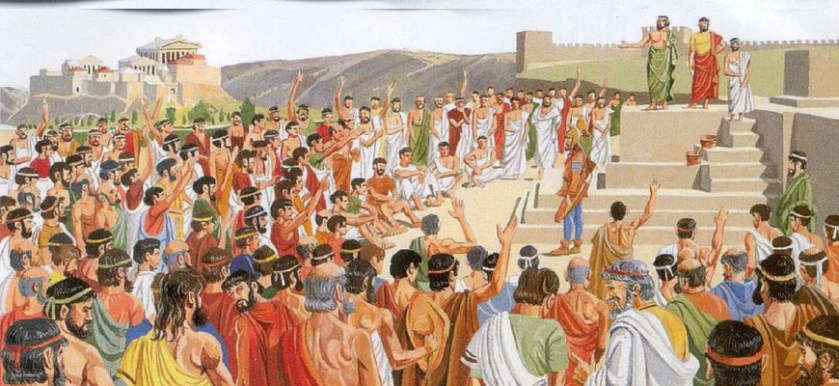
O morem praeclarum disciplinamque quam a maioribus accepimus, si quidem teneremus! sed nescio quo pacto iam de manibus elabitur. nullam enim illi nostri sapientissimi et sanctissimi viri vim contionis esse voluerunt; quae scisceret plebes aut quae populus iuberet, submota contione, distributis partibus, tributim et centuriatim discriptis ordinibus, classibus, aetatibus, auditis auctoribus, re multos dies promulgata et cognita iuberi vetarique voluerunt. Graecorum autem totae res publicae sedentis contionis temeritate administrantur. itaque ut hanc Graeciam quae iam diu suis consiliis perculsa et adflicta est omittam, illa vetus quae quondam opibus, imperio, gloria floruit hoc uno malo concidit, libertate immoderata ac licentia contionum. cum in theatro imperiti homines rerum omnium rudes ignarique consederant, tum bella inutilia suscipiebant, tum seditiosos homines rei publicae praeficiebant, tum optime meritos civis e civitate eiciebant.
(Cicero, Pro Flacco 15-16)

Oh, if only we could maintain the fine tradition and discipline that we have inherited from our ancestors! But somehow it is now slipping out of our hands. Those wisest and most upright of our men did not want power to lie in the public meetings. As for what the commons might approve or the people might order, when the meeting had been dismissed and the people distributed in their divisions by centuries and tribes into ranks, classes and age groups, when the proposers of the measure had been heard, when its text had been published well in advance and understood, then they wished the people to give their orders or their prohibitions. In Greece, on the other hand, all public business is conducted by the irresponsibility of a public meeting sitting down. And so – to pass over the modern Greece which has long since been struck down and laid low in its councils – that Greece of ancient times, once so flourishing in its wealth, dominion and glory, fell through this single evil, the excessive liberty and licence of its meetings. When untried men, totally inexperienced and ignorant, had taken their seats in the theatre, then they would decide on harmful wars put troublemakers in charge of public affairs and expel from the city the citizens who had served it best. (tr. Coll MacDonald)

Rhigēsen

3d14fbd52f9cf0fde43a57cbc871c92e

Ὡς δ’ ὅτε τίς τ’ ἐλέφαντα γυνὴ φοίνικι μιήνῃ
Μῃονὶς ἠὲ Κάειρα παρήϊον ἔμμεναι ἵππων·
κεῖται δ’ ἐν θαλάμῳ, πολέες τέ μιν ἠρήσαντο
ἱππῆες φορέειν· βασιλῆϊ δὲ κεῖται ἄγαλμα,
ἀμφότερον κόσμός θ’ ἵππῳ ἐλατῆρί τε κῦδος·
τοῖοί τοι, Μενέλαε, μιάνθην αἵματι μηροὶ
εὐφυέες κνῆμαί τε ἰδὲ σφυρὰ κάλ’ ὑπένερθε.
ῥίγησεν δ’ ἄρ’ ἔπειτα ἄναξ ἀνδρῶν Ἀγαμέμνων
ὡς εἶδεν μέλαν αἷμα καταρρέον ἐξ ὠτειλῆς·
ῥίγησεν δὲ καὶ αὐτὸς ἀρηΐφιλος Μενέλαος.
ὡς δὲ ἴδεν νεῦρόν τε καὶ ὄγκους ἐκτὸς ἐόντας
ἄψορρόν οἱ θυμὸς ἐνὶ στήθεσσιν ἀγέρθη.
τοῖς δὲ βαρὺ στενάχων μετέφη κρείων Ἀγαμέμνων
χειρὸς ἔχων Μενέλαον, ἐπεστενάχοντο δ’ ἑταῖροι·
“φίλε κασίγνητε, θάνατόν νύ τοι ὅρκι’ ἔταμνον,
οἶον προστήσας πρὸ Ἀχαιῶν Τρωσὶ μάχεσθαι,
ὥς σ’ ἔβαλον Τρῶες, κατὰ δ’ ὅρκια πιστὰ πάτησαν.
οὐ μέν πως ἅλιον πέλει ὅρκιον αἷμά τε ἀρνῶν
σπονδαί τ’ ἄκρητοι καὶ δεξιαὶ ᾗς ἐπέπιθμεν.
εἴ περ γάρ τε καὶ αὐτίκ’ Ὀλύμπιος οὐκ ἐτέλεσσεν,
ἔκ τε καὶ ὀψὲ τελεῖ, σύν τε μεγάλῳ ἀπέτισαν
σὺν σφῇσιν κεφαλῇσι γυναιξί τε καὶ τεκέεσσιν.
εὖ γὰρ ἐγὼ τόδε οἶδα κατὰ φρένα καὶ κατὰ θυμόν·
ἔσσεται ἦμαρ ὅτ’ ἄν ποτ’ ὀλώλῃ Ἴλιος ἱρὴ
καὶ Πρίαμος καὶ λαὸς ἐϋμμελίω Πριάμοιο,
Ζεὺς δέ σφι Κρονίδης ὑψίζυγος αἰθέρι ναίων
αὐτὸς ἐπισσείῃσιν ἐρεμνὴν αἰγίδα πᾶσι
τῆσδ’ ἀπάτης κοτέων· τὰ μὲν ἔσσεται οὐκ ἀτέλεστα·
ἀλλά μοι αἰνὸν ἄχος σέθεν ἔσσεται, ὦ Μενέλαε,
αἴ κε θάνῃς καὶ πότμον ἀναπλήσῃς βιότοιο.
καί κεν ἐλέγχιστος πολυδίψιον Ἄργος ἱκοίμην·
αὐτίκα γὰρ μνήσονται Ἀχαιοὶ πατρίδος αἴης·
κὰδ δέ κεν εὐχωλὴν Πριάμῳ καὶ Τρωσὶ λίποιμεν
Ἀργείην Ἑλένην· σέο δ’ ὀστέα πύσει ἄρουρα
κειμένου ἐν Τροίῃ ἀτελευτήτῳ ἐπὶ ἔργῳ.
καί κέ τις ὧδ’ ἐρέει Τρώων ὑπερηνορεόντων
τύμβῳ ἐπιθρῴσκων Μενελάου κυδαλίμοιο·
‘αἴθ’ οὕτως ἐπὶ πᾶσι χόλον τελέσει’ Ἀγαμέμνων,
ὡς καὶ νῦν ἅλιον στρατὸν ἤγαγεν ἐνθάδ’ Ἀχαιῶν,
καὶ δὴ ἔβη οἶκόνδε φίλην ἐς πατρίδα γαῖαν
σὺν κεινῇσιν νηυσὶ λιπὼν ἀγαθὸν Μενέλαον.’
ὥς ποτέ τις ἐρέει· τότε μοι χάνοι εὐρεῖα χθών.”
(Homer, Il. 4.141-182)

As when a woman of Maeonia or Caria stains ivory with
crimson dye, to be a cheek piece for horses—
it lies unused in a storeroom, and many horsemen pray that they
may bear it, but it lies away to delight the king,
both an ornament for the horse and an honor for the rider—
in such fashion, Menelaos, were your thighs stained with blood,
and your muscular calves down to your fine ankles.
Then Agamemnon lord of men shuddered
when he saw dark blood flowing down from the wound,
and Menelaos beloved by Ares shuddered too,
but when he saw the binding thread and arrow barb were outside,
his spirit was rallied again back in his breast.
But groaning deeply lord Agamemnon spoke among their comrades,
holding Menelaos by the hand, and they groaned in response:
“Beloved brother, the oath I cut was your death,
when I put you forward before the Achaeans to fight alone with the Trojans,
seeing now that the Trojans have struck you, and trampled underfoot the sacred treaty.
Yet in no way is our oath in vain, and the blood of lambs,
and the unmixed libations and pledges of hand that we trusted.
For even if the Olympian does not accomplish this at once,
he will accomplish it in full, though late, and they will pay greatly
with their heads and their women and their children.
For I know this well in my mind and in my heart;
there will some time be a day when holy Ilion is destroyed,
and Priam and the people of Priam of the fine ash-spear—
Zeus, son of Cronus, who sits on high, dwelling near heaven,
himself will brandish at them all his storm-black aegis,
in rage for this deception. These things will not pass unaccomplished;
but my grief will be bitter for your sake, O Menelaos,
if you should die and fulfill your life’s destiny,
and I return disgraced to the parched land of Argos.
Immediately the Achaeans would turn their thoughts to their fatherland,
and we would leave as trophy for Priam and the Trojans
Helen of Argos; a field would rot your bones
as you lay in Troy on an unaccomplished mission.
And thus will some Trojan speak in his overweening manhood, as he leaps onto the tomb of glorious Menelaos:
‘Would that Agamemnon brought his anger to completion in this way against all his enemies,
as he once led an army of Achaeans here to no purpose,
and then went home to his beloved fatherland
with his empty ships, leaving behind brave Menelaos.’
Thus in time to come a man will speak; then let the broad earth gape beneath me.”
(tr. Caroline Alexander)

Pistorum

11-01-03/53

Post quinquenni tempus emensum unus prior e patronis pistorum otio et quiete donetur, ita ut ei qui sequitur officinam cum animalibus servis molis fundis dotalibus, pistrinorum postremo omnem enthecam tradat adque consignet.
(Codex Theodosianus 14.3.7)

After a period of five years has passed, the chief patron of the guild of pistores should be given rest and leisure, so long as he hands over and assigns to his successor the shop with its animals, slaves, mills, and the farms belonging to the endowment—in short all the equipent of bread making. (tr. Christopher Francese)

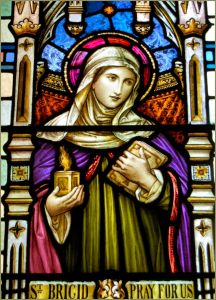
Amictus

9fc821d519501c4a5a2bfbeb6c1dea3e

Quodam forte die caelo dum turbidus imber,
dum subito gelidi glomerantur ab aethere nimbi
nubibus et largos dum fundit Aquarius amnes,
carpsit iter medii properans per pascua campi
intravitque domum madida cum veste puella,
quam veteres Brigitam dudum dixere parentes.
interea sacre motat dum tegmina vestis
humida nec mediis posset suspendere tectis.
venit ab exigua lapsus tum forte fenestra
luciflui radius vibranti lumine solis,
lustravitque domum sacraque in veste refulsit.
tunc unus numero mixti sine nomine vulgi
egregiam tali delusit fraude puellam,
nam teretes radios ceu fortia robora monstrat
et trabibus suasit tremulis expandere vestem.
ille dolos versat, pure sed pectore virgo
credidit et radiis vestem vibrantibus aptans
expandit medio stillantia pallia tecto,
aereque in vacuo divino numine fulta
pendebat radiis, visu mirabile, vestis,
nec rutilos solis radios pendentia rumpunt
pallia, dum toto stillarent humida limbo,
sed valido madidus ceu fune pependit amictus.
obstupuere omnes famamque spargere certant,
virginis extollunt nomen Christumque fatentur,
non solum minimis vestem qui fulsit atomis
cunctam sed proprio sustentat numine molem,
principio totum patris qui viribus orbem
condidit ex nihilo, semper cui sidera parent,
qui virtus aeterna dei, qui dextera patris,
creditur, ingenito genitum de lumine lumen.
haec pauca ex multis discant me vate legentes,
eximio Christi gessit quae munera virgo.
cetera nunc aliis post me scribenda relinquo.
(Colman ‘nepos Cracavist’, De sancta Brigida)

One day, when a rain-storm happened to be raging in the heavens,
the chill thunder-clouds were suddenly banking together in the sky,
and as the waters poured down in heavy torrents from on high,
a girl hurriedly made her way through the pastures
in the middle of the fields and entered her home, her dress dripping:
Brigid was the name that her old parents had given her long ago.
While she was changing the holy dress she had been wearing and found
herself unable to hang the damp garment in the middle of the room,
there happened to fall from the tiny window a beam
sparkling with the light of the radiant sun,
which crossed the room and shone on her holy dress.
Then someone among an assorted group of unknown people
tried to trick that excellent girl with this ruse,
for, pointing to the smooth rays as if they were strong wood,
he persuaded her to hang her garment upon their trembling beams.
Trickery was his motive, but the pure-hearted maiden
believed him and, arranging her dress on the sparkling rays,
she spread the dripping robe in the middle of the room
and in the empty air, supported by God’s power,
it stood suspended rom the rays, a wondrous sight to see,
for the hanging robe did not break the shining shafts of sunlight,
while it stood wet and dripping along all its fringe
but remained suspended there, damp, as if attached to a strong rope.
Everyone was amazed and eagerly bandied the story about,
extolling the maiden’s name and calling on Christ,
who not only supported a garment on the tiniest motes,
but sustains the whole world by His divine might,
who in the beginning by His Father’s power created the world
who is God’s eternal strength, who is believed to be the right hand
of the Father, light begotten of unbegotten light.
Readers, learn from your poet this small selection of the many deeds
which that maiden performed through Christ’s excellent grace.
I now leave it to others to write down the rest after me.
(tr. Peter Godman)