Piger

Siesta_blogheader

sed tu, dum nimio possessa Hyperione flagrat
torva Cleonaei iuba sideris, exue curis
pectus et assiduo temet furare labori.
et sontes operit pharetras arcumque retendit
Parthus, et Eleis auriga laboribus actos
Alpheo permulcet equos, et nostra fatescit
laxaturque chelys: vires instigat alitque
tempestiva quies; maior post otia virtus.
talis cantata Briseide venit Achilles
acrior et positis erupit in Hectora plectris.
te quoque flammabit tacite repetita parumper
desidia et solitos novus exsultabis in actus.
certe iam Latiae non miscent iurgia leges,
et pacem piger annus habet, messesque reversae
dimisere forum, nec iam tibi turba reorum
vestibulo querulique rogant exire clientes.
cessat centeni moderatrix iudicis hasta,
qua tibi sublimi iam nunc celeberrima fama
eminet et iuvenis facundia praeterit annos.
felix curarum, cui non Heliconia cordi
serta nec imbelles Parnasi e vertice laurus,
sed viget ingenium et magnos accinctus in usus
fert animus quascumque vices. nos otia vitae
solamur cantu ventosaque gaudia famae
quaerimus. en egomet somnum et geniale secutus
litus ubi Ausonio se condidit hospita portu
Parthenope, tenues ignavo pollice chordas
pulso Maroneique sedens in margine templi
sumo animum et magni tumulis accanto magistri.
(Statius, Silv. 4.4.27-55)

But while the grim mane of Cleonae’s star* blazes in the grip of too powerful Hyperion, strip your breast of its cares and steal yourself from ceaseless work. The Parthian covers his guilty quiver and unstrings his bow, the charioteer bathes his horses in Alpheus, hard-driven in the labors of Elis; my lyre too grows weary, its strings relax. Timely rest stimulates and fosters strength, energy is greater after ease. So came Achilles the fiercer after he had sung of Briseis; putting by his quill, out he burst against Hector. You also shall idleness silently inflame, sought again for a little while, and you shall leap up fresh to your wonted activities. Sure it is that Latium’s laws now cease their wrangling, the lazy season enjoys peace and returning harvests have discharged the Forum. Defendants no longer throng your anteroom nor querulous clients ask you to come out. Idle stands the Spear** that rules the Hundred Judges, whereby your eloquence is already borne far and wide conspicuous on the wings of Fame, outstripping your youthful years. Happy in your avocations, you care not for Helicon’s garlands or peaceable laurels from Parnassus’ peak; vigorous your wit, girt up for great employments your mind shoulders whatever betides, while I solace a leisured life with song and seek the fickle joys of fame. Look! Pursuing sleep and the genial shore where stranger Parthenope*** found refuge in Ausonian haven, I idly strike the slender strings; sitting on the verge of Maro’s shrine****, I take heart and sing at the tomb of the great master.

* The lion killed by Hercules at Cleonae became the constellation Leo.
** Sales of enemy or confiscated property were conducted sub hasta. Why the symbolic spear also served as emblem for the civil court of a hundred is uncertain, like many other things about this institution.
*** One of the three Sirens, who flung themselves into the sea after failing to entice Ulysses. One legend had it that she was washed ashore in the Bay of Naples and somehow founded the city.

(tr. David Roy Shackleton Bailey, with his notes)

Apodus

thermen_1_www_heerlen_nl

Βούλομαι δέ σοί τι διελθεῖν ἐν καταγωγῇ ποτε γεγονός. ἀπεῖπε μὲν διδοὺς ἄρχων χάριτας, ὧν τὰς ὑστάτας ἐν βαλανείῳ, εἷς δέ τις ἀτυχῶν μέν, τυχεῖν δὲ ἐπιθυμῶν ἀποδύντος ἀποδὺς τὸ βιβλίον εἰσενεγκὼν καὶ μέλαν καὶ κάλαμον διὰ γέλωτος οὐκ ἄπρακτος ἀπῆλθεν, ἀλλ’ ἐκφέρων ἅμα ἱδρῶτι γράμματα.
(Libanius, Or. 52.7)

I would like to tell you what happened once in a governor’s headquarters. After granting his last favours at the bath, the governor refused to give more. One man, who had failed to receive any but wished to obtain one from the governor when he was stripped, stripped off his own clothes and amidst general laughter brought his document, together with ink and pen, and did not leave without success, carrying away his subscription along with his sweat. (tr. Raffaella Cribiore)

Diosdoton

mushroom

Ὄλβιος ὅστις ἰδὼν κεῖν’ εἶσ’ ὑπὸ χθόν’·
οἶδε μὲν βίου τελευτάν,
οἶδεν δὲ διόσδοτον ἀρχάν
(Pindar, fr. 137)

Blessed is he who sees them* and goes beneath the earth;
he knows the end of life
and knows its Zeus-given beginning.

* the Eleusinian mysteries.

(tr. William H. Race)

Insulsa

litter

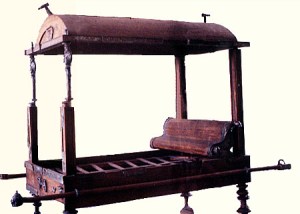
Varus me meus ad suos amores
visum duxerat e foro otiosum,
scortillum, ut mihi tum repente visum est,
non sane illepidum neque invenustum.
huc ut venimus, incidere nobis
sermones varii, in quibus, quid esset
iam Bithynia, quo modo se haberet,
et quonam mihi profuisset aere.
respondi id quod erat, nihil neque ipsis
nec praetoribus esse nec cohorti,
cur quisquam caput unctius referret,
praesertim quibus esset irrumator
praetor, nec faceret pili cohortem.
‘at certe tamen,’ inquiunt ‘quod illic
natum dicitur esse, comparasti
ad lecticam homines.’ ego, ut puellae
unum me facerem beatiorem,
‘non’ inquam ‘mihi tam fuit maligne
ut, provincia quod mala incidisset,
non possem octo homines parare rectos.’
at mi nullus erat nec hic neque illic
fractum qui veteris pedem grabati
in collo sibi collocare posset.
hic illa, ut decuit cinaediorem,
‘quaeso’ inquit ‘mihi, mi Catulle, paulum
istos commoda: nam volo ad Serapim
deferri.’ ‘mane’ inquii puellae,
‘istud quod modo dixeram me habere,
fugit me ratio: meus sodalis—
Cinna est Gaius—is sibi paravit.
verum, utrum illius an mei, quid ad me?
utor tam bene quam mihi pararim.
sed tu insulsa male et molesta vivis,
per quam non licet esse neglegentem.’
(Catullus 10)

My friend Varus saw me lounging in the Forum,
dragged me off with him to meet his girlfriend.
“Little scrubber” was my first impression—
not unsmart, though, not entirely witless.
When we got there, conversation turned to
every kind of subject, and among them
how were things in Bithynia, what was happening,
had my posting brought me in a windfall?
I replied with the truth: not even praetors,
much less aides, could find even the slightest
hope of deals that would fatten their resources—
not least when said praetor was a fuckface
and didn’t give a shit for his poor staffers.
“Well, at least,” they said, “you must have picked up
some of what we hear’s their major export—
litter-bearers?” Anxious to impress his
girlfriend, make her suppose I was a fat-cat,
“Sure,” said I, “though I got a lousy province,
life wasn’t all that bad for me—I somehow
found myself eight able-bodied porters.”
(Truth was, neither here nor there so much as
one spent shag did I own, the kind who’d barely
manage to heft an ancient broken bed-leg.)
At this—predictable bitch—she said, “Catullus,
darling, please, please, lend me them—I only
need them a little while, I want a ride to
Serapis’s temple.” “Whoa,” I told her, “what I
claimed just now that I had, I really hadn’t,
my mind was slipping, actually it’s my colleague
Cinna, first name Gaius, bought them—though why
should I care who it is that they belong to?
I still use them just as though I owned them.
Not but what you’re a bore, a walking pest,
who won’t let pass even slight exaggerations.”
(tr. Peter Green)

Catella

douglas

Portavi lacrimis madidus te, nostra catella,
quod feci lustris laetior ante tribus.
ergo mihi, Patrice, iam non dabis oscula mille
nec poteris collo grata cubare meo.
tristis marmorea posui te sede merentem
et iunxi semper Manibus ipse meis,
moribus argutis hominem simulare paratam;
perdidimus quales, hei mihi, delicias!
tu dulcis, Patrice, nostras attingere mensas
consueras, gremio poscere blanda cibos,
lambere tu calicem lingua rapiente solebas
quem tibi saepe meae sustinuere manus,
accipere et lassum cauda gaudente frequenter . . .
(CIL X.659)

Bedewed with tears I have carried you, our little dog, as in happier circumstances I did fifteen years ago. So now, Patrice, you will no longer give me a thousand kisses, nor will you be able to lie affectionately round my neck. You were a good dog, and in sorrow I have placed you in a marble tomb, and I have united you forever to myself when I die. You readily matched a human with your clever ways; alas, what a pet we have lost! You, sweet Patrice, were in the habit of joining us at table and fawningly asking for food in our lap, you were accustomed to lick with your gready tongue the cup which my hands often held for you and regularly to welcome your tired master with wagging tail . . . (tr. Edward Courtney)

Lectitat

Aleksandr Deyneka, Girl with book, 1934
Aleksandr Deyneka, Girl with book (1934)

Cum sis pietatis exemplum, fratremque optimum et amantissimum tui pari caritate dilexeris, filiamque eius ut tuam diligas, nec tantum amitae ei affectum verum etiam patris amissi repraesentes, non dubito maximo tibi gaudio fore cum cognoveris dignam patre dignam te dignam avo evadere. summum est acumen, summa frugalitas; amat me, quod castitatis indicium est. accedit his studium litterarum, quod ex mei caritate concepit. meos libellos habet, lectitat, ediscit etiam. qua illa sollicitudine cum videor acturus, quanto cum egi gaudio afficitur! disponit qui nuntient sibi quem assensum, quos clamores excitarim, quem eventum iudicii tulerim. eadem, si quando recito, in proximo discreta velo sedet, laudesque nostras avidissimis auribus excipit. versus quidem meos cantat etiam formatque cithara non artifice aliquo docente, sed amore qui magister est optimus. his ex causis in spem certissimam adducor, perpetuam nobis maioremque in dies futuram esse concordiam. non enim aetatem meam aut corpus, quae paulatim occidunt ac senescunt, sed gloriam diligit. nec aliud decet tuis manibus educatam, tuis praeceptis institutam, quae nihil in contubernio tuo viderit, nisi sanctum honestumque, quae denique amare me ex tua praedicatione consueverit. nam cum matrem meam parentis loco vererere, me a pueritia statim formare laudare, talemque qualis nunc uxori meae videor, ominari solebas. certatim ergo tibi gratias agimus, ego quod illam mihi, illa quod me sibi dederis, quasi invicem elegeris. vale.
(Pliny Minor, Ep. 4.19)

You are a model of family devotion, and you loved your splendid brother, matching his deep regard for you with equal affection. You love his daughter as if she were your own, and to her you re-enact the fondness not only of an aunt, but also that of the father she has lost. For these reasons I have no doubt that you will be highly delighted to know that she is turning out worthy of her father, of you, and of her grandfather. She is highly intelligent, and exceedingly thrifty. Her love for me is the index of her chastity. These qualities are enhanced by her enthusiasm for literature, which her love for me has fostered. She possesses and repeatedly reads and even memorizes my books. What concern she shows when I am due to speak in court! And what delight, once the speech is finished! She posts individuals to report to her the assent and the applause which I have received, and the outcome which I have imposed on the judge. Whenever I am giving a recitation, she sits close by, concealed by a curtain, and listens most avidly to the praises heaped on me. She also sings my verses and adapts them to the lyre, with no schooling from a music-master, but with affection, which is the best possible teacher. For these reasons I entertain the most sanguine hope that we will enjoy enduring harmony which will grow day by day. It is not my time of life or my body which she loves, for these gradually decay with age, but my fame. No other attitude befits one reared by your hands and trained by your instructions, for in her association with you she has set eyes only on what is pure and honourable, and finally she has grown to love me as the outcome of your recommendation. For out of your respect for my mother, whom you revered as a parent, you fashioned and encouraged me from my earliest boyhood, and you were wont to prophesy that I would become the sort of person I appear to be in my wife’s eyes. So we vie in giving you thanks–– I because you have given her to me, and she because you have given me to her. It is as though you chose us for each other! Farewell. (tr. Patrick Gerard Walsh)

Clades

nature-wallpaper-snow-wallpaper-1024x768

Saecula dampnavit rursum polluta creator,
pura tamen bonitas usa tenore suo est:
noxia non subito zizania messuit ense;
horribiles longum praefremuere minae.
praenorunt miseri, non excusare sinuntur.
indicium mundi machina trina dedit:
transsumpsere suas elementa ac tempora leges,
deseruitque prior non loca pauca situs.
aestive transivit hyemps, hyemaliter aestas;
intorsit tonitrus, fulminat udus Ilas.
Mulciber hibernus combussit templa domosque;
severunt hyemem Carchinus atque Leo.
instar parmarum cristallos Saxo iacentes
repperit in campis obstupuitque suis;
extimuit glaciem, qui tutus staret in enses,
concutiente novo fortia corda metu.
duruit in terram mare, terra liquatur in aequor;
piscibus accessit campus, harena satis.
evasit discrimen aquae pro navibus utens
nantibus in fluctu plurima turba casis.
prodigium refero, quod Fresia tota fatetur,
consolidatque agri sessor agerque fidem.
demolitus agrum cum possessore domoque
protulit externi pontus in arva viri,
publica litigium tandem censura diremit:
incola, cuius humum nemo videbat, abit,
quique superficiem fundi vellusque superne
vendicat, hic liber iudice plebe sedet.
(hoc in iudicio non sensit Fresia rectum:
qui dominus fundi, legitime esset agri.)
excussit templis ingentia tigna trabesque
et longinqua tulit ventus in arva furens.
fugit inextincta populus sua tecta favilla,
et repsit gemina vix ope tutus homo;
vix applosa solo tenuerunt corpora fortes,
horruit ingenti turbine terra tremens.
nocte sub hiberna Phoebi radiantior ore
cernitur arctoum flamma cremare polum.
noctibus innumeri bello concurrere soles,
sanguineus limphas horrificasse rubor.
bis latuit taeter Titan, causamque latendi
non soror aut nubes terreave umbra dabat.
omnia dixerunt clades elementa futuras,
nec tetigit tantus pectora dura pavor.
(Nivardus(?), Ysengrimus 7.615-658)

The creator has once again condemned the polluted times, and yet his unsullied goodness has held to its usual course; he has not cut down the harmful tares with a hastily wielded blade. Terrible warnings have for a long time been rumbling a prelude, and the wretches have had advance knowledge; they are not allowed an excuse. The threefold structure of the world has furnished a sign: the elements and the seasons have transposed their natural laws, and many features of the landscape have shifted their original position. Winter has become summery and summer wintry; the watery Hylas hurls down thunder and lightning. Vulcan has burned down houses and churches in winter; Cancer and Leo have produced cold. The Saxon has found hailstones the size of shields lying in his fields, and been terror-struck. The one who would have stood confidently in the face of swords is terrified by ice, and a new fear shakes brave hearts. The sea has solidified into land, the land is dissolved into sea; the field has given way to fish, and the beach to crops. Great numbers of people escaped the peril of the water by using houses, swimming in the flood, as boats. I’m recounting a marvel which all Friesland speaks of, and whose truthfulness is confirmed by both the land and its possessor. When the sea destroyed the land and carried its possessor and his home into the fields of another, a public judgment finally put an end to the dispute. The farmer whose land was no longer visible withdrew, and the one who claimed the building on the land, and its upper accouterments, remained in free possession, in the judgment of the people. (Friesland didn’t understand what’s right in this judgment; whoever is owner of the land, should legitimately be owner of its produce.) A furious wind tore down huge rafters and timbers from churches and swept them into distant fields. The people fled their homes with the fire still burning, and men tottered along, hardly preserved by having the strength of two; the strongest could hardly sustain their bodies, stricken to the earth, when the trembling earth shuddered with the mighty hurricane. In the winter’s night, a flame brighter than the face of the sun was seen scorching in the northern sky. At night, numberless suns clashed together in battle, and a bloodred color disfigured the waters. The hideous sun twice disappeared from view, without the moon or clouds or the earth’s shadow giving cause for his disappearance. All the elements proclaimed the destruction to come, and yet obdurate hearts were not touched by this great fear. (tr. Jill Mann)

Katasteiboisi

aHR0cDovL3d3dy5wZXRlcm55c3Nlbi5jb20vbmwvbWVkaWEvY2F0YWxvZy9wcm9kdWN0L2gveS9oeWFjaW50aHVzX3B1cnBsZV92b2ljZV9yLmpwZw==

Οἴαν τὰν ὐάκινθον ἐν ὤρεσι ποίμενες ἄνδρες
πόσσι καταστείβοισι, χάμαι δέ τε πόρφυρον ἄνθος . . .

like the hyacinth in the mountains that shepherd men
with their feet trample down on the ground the purple flower
(tr. Katherine Wasdin)

Infantes


424012010170425_Vigeland_543816367
Gustav Vigeland

Sub Augusto dehinc Octaviano, Armenii cum Parthis commixti per Claudium Caesarem, nepotem Augusti, ocius superantur. Armenii siquidem utilius rati Romanorum amicitiis reconciliari et proprias sedes incolere, quam cum Parthis coniuncti et sedes perdere et Romanos infestos habere. sic quoque, dum in partibus orientalium Romanus laborat exercitus, occiduae plagae infestae sunt. Norici, in Alpibus Noricis habitantes, credebant quasi in rupes et nives bellum non posset ascendere: sed mox omnes illius cardinis populos—Breunos, Teutonios, Ucennos atque Vindelicos—per eundem Claudium Caesarem Romanus vicit exercitus. quae tamen fuerit Alpinarum gentium feritas, facile est vel per mulieres ostendere quae, deficientibus telis, infantes suos afflictos humi in ora militum adversa miserunt.
(Jordanes, Rom. 240-241)

Subsequently, under Augustus Octavian, the Armenians, mixed together with Parthians, were quickly vanquished through Claudius Cæsar, the grandson of Augustus. So the Armenians thought it more beneficial to become reconciled to the friendship of the Romans and to inhabit their own territory rather than, allied with the Parthians, both to lose their territory and have the Romans their enemies. While the Roman army was thus heavily engaged in eastern regions, the western areas were likewise under stress. The Noricans living in the Norican Alps believed as though war could not climb up to their rocks and snows; but soon the Roman army, through the same Claudius Cæsar, defeated all the tribes of that region: the Breuni, Teutoni, Ucenni and Vindelici. Still, it is easy to show what the level of animalism of the Alpine peoples was even by their women who, lacking weapons, smashed their own young children on the ground and flung them at the faces of the soldiers. (tr. Brian T. Regan)

Aidoia

6a00e55417fcfd883401538f3effbc970b-800wi

Στάσεως δ’ ἐμπεσούσης τῇ τῶν Ἱεροσολυμιτῶν πόλει Κουμανοῦ τὰ κατὰ τὴν Ἰουδαίαν πράγματα διοικοῦντος ἐφθάρησαν ὑπὸ ταύτης πολλοὶ τῶν Ἰουδαίων. καὶ πρότερον ἀφηγήσομαι τὴν αἰτίαν, δι’ ἣν ταῦτα συνέβη· τῆς πάσχα προσαγορευομένης ἑορτῆς ἐνστάσης, καθ’ ἣν ἔθος ἐστὶν ἡμῖν ἄζυμα προσφέρεσθαι, πολλοῦ καὶ πανταχόθεν πλήθους συναχθέντος ἐπὶ τὴν ἑορτὴν δείσας ὁ Κουμανός, μὴ νεώτερόν τι παρὰ τούτων προσπέσῃ, κελεύει τῶν στρατιωτῶν μίαν τάξιν ἀναλαβοῦσαν τὰ ὅπλα ἐπὶ τῶν τοῦ ἱεροῦ στοῶν ἑστάναι καταστελοῦντας τὸν νεωτερισμόν, εἰ ἄρα τις γένοιτο. τοῦτο δὲ καὶ οἱ πρὸ αὐτοῦ τῆς Ἰουδαίας ἐπιτροπεύσαντες ἐν ταῖς ἑορταῖς ἔπραττον. τετάρτῃ δὲ ἡμέρᾳ τῆς ἑορτῆς στρατιώτης τις ἀνακαλύψας ἐπεδείκνυε τῷ πλήθει τὰ αἰδοῖα, καὶ πρὸς τοῦτο θεασαμένων ὀργὴ καὶ θυμὸς ἦν οὐχ ἑαυτοὺς ὑβρίσθαι λεγόντων, ἀλλὰ τὸν θεὸν ἠσεβῆσθαι· τινὲς δὲ τῶν θρασυτέρων τὸν Κουμανὸν ἐβλασφήμουν ὑπ’ αὐτοῦ τὸν στρατιώτην καθεῖσθαι λέγοντες. Κουμανὸς δ’ ἀκούσας καὶ αὐτὸς οὐ μετρίως ἐρεθίζεται πρὸς τὰς βλασφημίας, παρῄνει μέντοι παύσασθαι νεωτέρων ἐπιθυμοῦντας πραγμάτων μηδὲ στάσεις ἐξάπτειν ἐν ἑορτῇ. μὴ πείθων δέ, μᾶλλον γὰρ ἐπέκειντο βλασφημοῦντες, κελεύει τὸ στράτευμα πᾶν τὰς πανοπλίας ἀναλαβὸν ἥκειν εἰς τὴν Ἀντωνίαν, φρούριον δ’ ἦν τοῦτο, καθάπερ καὶ πρότερον εἴπομεν, ἐπικείμενον τῷ ἱερῷ. παραγενομένους δὲ τοὺς στρατιώτας θεασάμενον τὸ πλῆθος καὶ φοβηθὲν φεύγειν ὥρμησεν, τῶν δ’ ἐξόδων στενῶν οὐσῶν διώκεσθαι νομίζοντες ὑπὸ τῶν πολεμίων καὶ συνωθούμενοι κατὰ τὴν φυγὴν πολλοὺς ἀλλήλοις ἐν τοῖς στενοῖς θλιβόμενοι διέφθειρον. δύο γοῦν μυριάδες ἐξηριθμήθησαν τῶν κατὰ τὴν στάσιν ἐκείνην φθαρέντων. πένθος δ’ ἦν τὸ λοιπὸν ἀντὶ τῆς ἑορτῆς, καὶ πάντες ἐκλαθόμενοι τῶν εὐχῶν καὶ τῶν θυσιῶν ἐπὶ θρήνους καὶ κλαυθμοὺς ἐτράποντο. τοιαῦτα μὲν ἑνὸς ἀσέλγεια στρατιώτου παθήματα γενέσθαι παρεσκεύασεν.
(Josephus, Ant. Iud. 20.105-112)

While Cumanus was in charge of Jewish affairs, a great riot took place in the city of Jerusalem, in which many Jews died. I shall first explain how this arose. When the feast we call the Passover was near, when it is our custom to use unleavened bread, a large crowd gathered from all parts to the festival, and Cumanus was afraid that a revolt might occur, so he stationed one regiment of the army, fully armed, at the temple porticoes, to curb any signs of rebellion, that might arise. This was what the former procurators of Judea did at such festivals. But on the fourth day of the feast, a soldier exposed himself and flaunted his genitals at the people, which filled the onlookers with fury and rage and they shouted that this impious action was an insult not just to them, but to God himself. Some of them blasphemed Cumanus and said that the soldier had just done his bidding. When Cumanus heard this, he was enraged by the blasphemies on him, but urged them to give up such seditious behaviour and not to start a riot at the festival. As he could not get them to be quiet and they went on insulting him, he ordered the whole army to come in their armour to Antonia, which as we have said, was a fortress overlooking the temple. When the people saw the soldiers there, they were frightened and quickly fled, but as the exits were narrow and they thought the enemy was following them, they crowded together in their flight and many were pressed to death in those narrow passages. No fewer than twenty thousand died in this riot, so that instead of a festival, they had a day of mourning, and they all forgot their prayers and sacrifices and turned to lamenting and tears. The obscene action of one individual soldier brought this terrible disaster upon them. (tr. Patrick Rogers)