Osculum

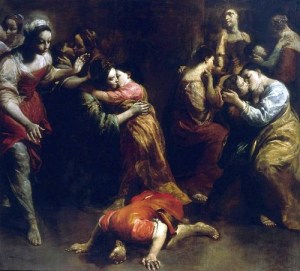
Giuseppe Crespi - Brutus Kissing the Earth (1725)
Giuseppe Crespi, Brutus Kissing the Earth (1725)

Quo in genere acuminis in primis Iunius Brutus referendus est: nam cum a rege Tarquinio, avunculo suo, omnem nobilitatis indolem excerpi, interque ceteros etiam fratrem suum, quod vegetioris ingenii erat, interfectum animadverteret, obtunsi se cordis esse simulavit, eaque fallacia maximas virtutes suas texit. profectus etiam Delphos cum Tarquinii filiis, quos is ad Apollinem Pythium muneribus et sacrificiis honorandum miserat, aurum deo nomine doni clam cavato baculo inclusum tulit, quia timebat ne sibi caeleste numen aperta liberalitate venerari tutum non esset. peractis deinde mandatis patris, Apollinem iuvenes consuluerunt quisnam ex ipsis Romae regnaturus videretur. at is penes eum summam urbis nostrae potestatem futuram respondit qui ante omnes matri osculum dedisset. tum Brutus, perinde atque casu prolapsus, de industria se abiecit, terramque, communem omnium matrem existimans, osculatus est. quod tam vafre Telluri impressum osculum urbi libertatem, Bruto primum in fastis locum tribuit.
(Valerius Maximus, Facta et Dicta Memorabilia 7.3.2)

In this sort of sharpness Junius Brutus deserves particular mention. He noticed that his uncle king Tarquin was picking out all men of promise among the nobility and that among others his own brother had been put to death because of his lively intelligence. He therefore pretended to be dull of intellect and veiled his great abilities by that deception. Leaving too for Delphi with Tarquin’s sons, whom the king had sent to honour Pythian Apollo with gifts and sacrifices, he took some gold for the god as a gift secretly hidden in a hollow stick, fearing that it would not be safe for him to venerate the heavenly deity with an open donation. After attending to their father’s commissions, the young men consulted Apollo as to which among them seemed likely to be king in Rome. The god replied that supreme power in our city would lie with him who was the first to give his mother a kiss. Then Brutus purposely threw himself on the ground as though by an accidental stumble and kissed it, reckoning it to be the common mother of all kings. That kiss so craftily impressed on Earth gave freedom to the city and the first place in the Fasti to Brutus. (tr. D.R. Shackleton Bailey)

Akairos

Ὁ δὲ ἄκαιρος τοιοῦτός τις, οἷος ἀσχολουμένῳ προσελθὼν ἀνακοινοῦσθαι. καὶ πρὸς τὴν αὑτοῦ ἐρωμένην κωμάζειν πυρέττουσαν. καὶ δίκην ὠφληκότα ἐγγύης προσελθὼν κελεῦσαι αὑτὸν ἀναδέξασθαι. καὶ μαρτυρήσων παρεῖναι τοῦ πράγματος ἤδη κεκριμένου. καὶ κεκλημένος εἰς γάμους τοῦ γυναικείου γένους κατηγορεῖν. καὶ ἐκ μακρᾶς ὁδοῦ ἥκοντα ἄρτι παρακαλεῖν εἰς περίπατον.
(Theophrastus, Char. 12.1-7)

The man with bad timing is the sort who goes up to someone who is busy and asks his advice. He sings love songs to his girlfriend when she has a fever. He goes up to a man who has just had to forfeit a security deposit in court and asks him to stand bail for him. He shows up to give testimony after the case has already been decided. If he’s a guest at a wedding, he launches into a tirade against women. When a man has just returned from a long journey, he invites him to go for a walk. (tr. Jeffrey Rusten)

Sua

scylla & minos
Scylla falls in love with Minos.

Cum vero faciem dempto nudaverat aere
purpureusque albi stratis insignia pictis
terga premebat equi spumantiaque ora regebat,
vix sua, vix sanae virgo Niseia compos
mentis erat: felix iaculum, quod tangeret ille,
quaeque manu premeret, felicia frena vocabat.
impetus est illi, liceat modo, ferre per agmen
virgineos hostile gradus, est impetus illi
turribus e summis in Cnosia mittere corpus
castra vel aeratas hosti recludere portas,
vel siquid Minos aliud velit.
(Ovid, Met. 8.32-42)


But when unhelmed he showed his face, when clad in purple he bestrode his milk-white steed gorgeous with broidered trappings, and managed the foaming bit, then was Nisus’ daughter hardly her own, hardly mistress of a sane mind. Happy the javelin which he touched and happy the reins which he held in his hand, she thought. She longed, were it but allowed, to speed her maiden steps through the foemen’s line; she longed to leap down from her lofty tower into the Cretan camp, to open the city’s bronze-bound gates to the enemy, to do any other thing which Minos might desire. (tr. Frank Justus Miller, revised by G.P. Goold)

Magistram

terence4

[LACHES. SOSTRATA]

LACH.    Pro deum atque hominum fidem, quod hoc genus est, quae haec est coniuratio!
utin omnes mulieres eadem aeque studeant nolintque omnia
neque declinatam quicquam ab aliarum ingenio ullam reperias!
itaque adeo uno animo omnes socrus oderunt nurus.
viris esse advorsas aeque studiumst, similis pertinaciast,
in eodemque omnes mihi videntur ludo doctae ad malitiam. et
ei ludo, si ullus est, magistram hanc esse satis certo scio.
(Terence, Hecyra 198-204)

LACH.  In the name of gods and men, what a breed they are, what a gang of conspirators! All women have identical likes and dislikes about everything! You can’t find a single one whose character differs in any respect from the others! In particular, all mothers-in-law with one accord hate their daughters-in-law; and they’re all just as keen to oppose their husbands and just as determined. I reckon that they’ve all been schooled to wickedness in the same school, and I’m quite sure that, if there is such a school, (pointing to Sostrata) she’s the headmistress. (tr. John Barsby)

Turbo

turbo

His ubi nequiquam dictis experta Latinum
contra stare videt, penitusque in viscera lapsum
serpentis furiale malum totamque pererrat,
tum vero infelix, ingentibus excita monstris,
immensam sine more furit lymphata per urbem.
ceu quondam torto volitans sub verbere turbo,
quem pueri magno in gyro vacua atria circum
intenti ludo exercent (ille actus habena
curvatis fertur spatiis; stupet inscia supra
impubesque manus, mirata volubile buxum;
dant animos plagae), non cursu segnior illo
per medias urbes agitur populosque ferocis.
quin etiam in silvas, simulato numine Bacchi,
maius adorta nefas maioremque orsa furorem,
evolat et natam frondosis montibus abdit,
quo thalamum eripiat Teucris taedasque moretur,
euhoe Bacche fremens, solum te virgine dignum
vociferans; etenim mollis tibi sumere thyrsos,
te lustrare choro, sacrum tibi pascere crinem.
(Vergil, Aen. 7.373-391)

When she sees Latinus steeling himself against her,
when the serpent’s crazing venom has sunk into her flesh,
the fever raging through her entire body, then indeed
the unlucky queen, whipped insane by ghastly horrors,
raves in her frenzy all throughout the city.
Wild as a top, spinning under a twisted whip
when boys, obsessed with their play, drive it round
an empty court, the whip spinning it round in bigger rings
and the boys hovering over it, spellbound, wonderstruck –
the boxwood whirling, whip-strokes lashing it into life –
swift as a top Amata whirls through the midst of cities,
people fierce in arms. She even darts into forests,
feigning she’s in the grip of Bacchus’ power,
daring a greater outrage, rising to greater fury,
hiding her daughter deep in the mountains’ leafy woods
to rob the Trojans of marriage, delay the marriage torch.
“Bacchus, hail!” she shouts. “You alone,” she cries,
“you deserve the virgin! For you, I say, she lifts
the thyrsus twined with ivy, dancing in your honor,
letting her hair grow long, your sacred locks!”
(tr. Robert Fagles)

Tōthasmon

Ὅλως μὲν οὖν αἰσχρολογίαν ἐκ τῆς πόλεως, ὥσπερ ἄλλο τι, δεῖ τὸν νομοθέτην ἐξορίζειν (ἐκ τοῦ γὰρ εὐχερῶς λέγειν ὁτιοῦν τῶν αἰσχρῶν γίνεται καὶ τὸ ποιεῖν σύνεγγυς), μάλιστα μὲν οὖν ἐκ τῶν νέων, ὅπως μήτε λέγωσι μήτε ἀκούωσι μηδὲν τοιοῦτον· ἐὰν δέ τις φαίνηταί τι λέγων ἢ πράττων τῶν ἀπηγορευμένων, τὸν ἐλεύθερον μὲν μήπω δὲ κατακλίσεως ἠξιωμένον ἐν τοῖς συσσιτίοις ἀτιμίαις κολάζειν καὶ πληγαῖς, τὸν δὲ πρεσβύτερον τῆς ἡλικίας ταύτης ἀτιμίαις ἀνελευθέροις ἀνδραποδωδίας χάριν. ἐπεὶ δὲ τὸ λέγειν τι τῶν τοιούτων ἐξορίζομεν, φανερὸν ὅτι καὶ τὸ θεωρεῖν ἢ γραφὰς ἢ λόγους ἀσχήμονας. ἐπιμελὲς μὲν οὖν ἔστω τοῖς ἄρχουσι μηθὲν μήτε ἄγαλμα μήτε γραφήν εἶναι τοιούτων πράξεων μίμησιν, εἰ μὴ παρὰ τισι θεοῖς τοιούτοις οἷς καὶ τὸν τωθασμὸν ἀποδίδωσιν ὁ νόμος.
(Aristotle, Poet. 1336b 7-8)

The lawgiver ought therefore to banish indecent talk, as much as anything else, out of the state altogether (for light talk about anything disgraceful soon passes into action) – so most of all from among the young, so that they may not say nor hear anything of the sort; and anybody found saying or doing any of the things prohibited, if he is of free station but not yet promoted to reclining at the public meals, must be punished with marks of dishonour and with beating, and an older offender must be punished with marks of dishonour degrading to a free man, because of his slavish behaviour. And since we banish any talk of this kind, clearly we must also banish the seeing of either pictures or representations that are indecent. The officials must therefore be careful that there may be no sculpture or painting that represents indecent actions, except in the temples of a certain class of gods to whom the law allows even scurrility. (tr. Harris Rackham)

Enaliōn

Seafood-5

“Ὀρθῶς,” ἔφη, “λέγεις,” ὁ Λαμπρίας, “ἀλλ᾽ ἔτι τῷ λόγῳ προσφιλοσοφήσωμεν. ὁ γὰρ ἐμὸς πάππος εἰώθει λέγειν ἑκάστοτε τοὺς Ἰουδαίους ἐπισκώπτων, ὅτι τὸ δικαιότατον κρέας οὐκ ἐσθίουσιν· ἡμεῖς δὲ φήσομεν δικαιότατον ὄψον εἶναι τὸ ἐκ θαλάττης. πρὸς μὲν γὰρ ταυτὶ τὰ χερσαῖα κἂν ἄλλο μηδὲν ἡμῖν ᾖ δίκαιον, ἀλλὰ τρέφεταί γε τοῖς αὐτοῖς καὶ λαμβάνει τὸν αὐτὸν ἀέρα, καὶ λουτρὰ καὶ ποτὸν αὐτοῖς ἅπερ ἡμῖν ἔστιν· ᾗ καὶ σφάττοντες ἐδυσωποῦντο φωνὴν ἀφιέντα γοερὰν καὶ τὰ πλεῖστα πεποιημένοι συνήθη καὶ σύντροφα ταῖς διαίταις. τὸ δὲ τῶν ἐναλίων γένος ἔκφυλον ὅλως καὶ ἄποικον ἡμῶν, ὥσπερ ἐν ἄλλῳ τινὶ κόσμῳ γεγονότων καὶ ζώντων, οὔτ’ ὄψις οὔτε φωνή τις οὔθ’ ὑπουργία παραιτεῖται τῆς προσφορᾶς (οὐδὲν γὰρ αὐτοῖς ἔχει χρήσασθαι ζῷον, ὃ μηδ’ ὅλως ζῇ παρ᾽ ἡμῖν), οὐδὲ δεῖ τινος ἐπ᾽ αὐτὰ στοργῆς, ἀλλ᾽ ὥσπερ Ἅιδης αὐτοῖς ἐστιν οὗτος ὁ παρ’ ἡμῖν τόπος· ἐλθόντα γὰρ εἰς αὐτὸν εὐθέως τέθνηκεν.”
(Plutarch, Sumposiaka 669d-e)

“You are right,” said Lamprias, “but let us add a little to our speculations. My grandfather used to say on every occasion, in derision of the Jews, that what they abstained from was precisely the most legitimate meat. But we shall say that of all delicacies the most legitimate kind is that from the sea. As far as the land animals whose meat is here before us are concerned, we must admit at least this if nothing else, that they consume the same food and breathe the same air as we do, and drink and bathe in water no different from ours. This has in times past made men ashamed when they butchered them in spite of their pitiful cries and in spite of having made companions of most of them and shared their store of food with them. Sea animals, on the other hand, are a species entirely alien and remote from us, as if they had sprung up and were living in some different world. Neither look nor voice nor service rendered pleads with us not to eat them, for no animal can employ these pleas that has no life at all among us; nor need we feel any affection for them. Our world is equivalent to Hades for them, since to come here is instant death.” (tr. Paul A. Clement & Herbert B. Hoffleit)

Conitere

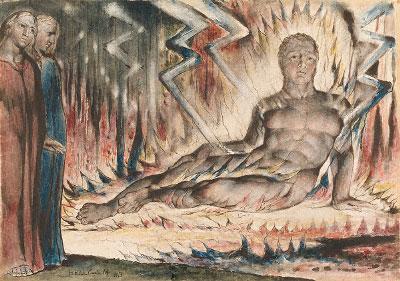
William Blake - Capaneus the Blasphemer
William Blake, Capaneus the Blasphemer

Non tamen haec turbant pacem Iovis. ecce quierant
iurgia, cum mediis Capaneus auditus in astris:
‘Nullane pro trepidis,’ clamabat, ‘numina Thebis
statis? ubi infandae segnes telluris alumni,
Bacchus et Alcides? piget instigare minores:
tu potius venias (quis enim concurrere nobis
dignior?); en cineres Semelaeaque busta tenentur!
nunc age, nunc totis in me conitere flammis,
Iuppiter! an pavidas tonitru turbare puellas
fortior et soceri turres exscindere Cadmi?’
(Statius, Theb. 10.897-906)

Yet all this does not disturb Jove’s peace. Behold, the wrangling had subsided, when Capaneus is heard in mid heaven: ‘Do none of you deities,’ he roars, ‘take stand for trembling Thebes? Where are the sluggish nurslings of the accursed land, Bacchus and Alcides? It irks me to urge inferiors; come you rather, for who is worthier to meet me? See, Semele’s ashes and tomb are mine. Come now, strive against me with all your flames, Jupiter! Or are you braver at alarming timid girls with your thunder and razing the towers of your bride’s father Cadmus?’ (tr. D.R. Shackleton Bailey)

Thrēskeuomen

Passio Sanctorum Scillitanorum

Σατουρνῖνος ὁ ἀνθύπατος ἔφη· Ἀλλὰ καὶ ἡμεῖς θρησκεύομεν, καὶ ἁπλῆ ἡ καθ’ ἡμᾶς θρησκεία καθέστηκεν· καὶ δὴ ὀμνύομεν κατὰ τῆς συμπεφυκυίας εὐδαιμονίας τοῦ δεσπότου ἡμῶν βασιλέως καὶ ὑπὲρ τῆς αὐτοῦ σωτηρίας ἱκετεύομεν· ὃ καὶ ὑμᾶς ὡσαύτως χρῆ ποιεῖν.
ὁ δὲ ἅγιος Σπερᾶτος εἶπεν· Ἐὰν γαληνιώσας μοι τὰς σὰς ἀκοὰς παράσχοις, ἐρῶ τὸ τῆς ἀληθοῦς ἁπλότητος μυστήριον.
Σατουρνῖνος ὁ ἀνθύπατος ἔφη· Ἐναρξαμένου σου πονηρὰ λέγειν κατὰ τῶν ἡμετέρων ἱερέων τὰς ἀκοάς μου οὐ προσθήσω· ἀλλ’ ὀμόσατε μᾶλλον κατὰ τῆς εὐδαιμονίας τοῦ δεσπότου ἡμῶν αὐτοκράτορος.
ὁ ἅγιος Σπερᾶτος λέγει· Ἐγὼ τὴν βασιλείαν τοῦ νῦν αἰῶνος οὐ γινώσκω· αἰνῶ δὲ καὶ λατρεύω τῷ ἐμῷ θεῷ, ὃν οὐδεὶς τῶν ἀνθρώπων τεθέαται· οὐδὲ γὰρ οἷόντε τούτοις τοῖς αἰσθητοῖς ὄμμασι. κλοπὴν οὐ πεποίηκα· ἀλλ’ εἴ τι καὶ πράσσω, τὸ τέλος ἀποτίνυμι, ὅτι ἐπιγινώσκω τὸν κύριον ἡμῶν καὶ βασιλέα τῶν βασιλέων καὶ δεσπότην πάντων τῶν ἐθνῶν.
Σατουρνῖνος ὁ ἀνθύπατος ἔφη πρὸς τοὺς λοιπούς· Ἀπόστητε ἀπὸ τῆς ἀποδειχθείσης ταύτης πιθανότητος.
ὁ ἅγιος Σπερᾶτος ἔφη· Ἐκείνη ἐστὶν ἐπισφαλὴς πιθανότης, τὸ ἀνδροφονίαν κατεργάζεσθαι ἢ ψευδομαρτυρίαν κατασκευάζειν.
Σατουρνῖνος ὁ ἀνθύπατος εἶπεν· Μὴ βουληθῆτε τῆς τοσαύτης μανίας καὶ παραφροσύνης γενέσθαι ἢ δειχθῆναι συμμέτοχοι.
ὁ δὲ ἅγιος Κιττῖνος ὑπολαβὼν ἀπεκρίνατο· Ἡμεῖς οὐκ ἔχομεν ἕτερον ὃν φοβηθῶμεν, εἰ μὴ κύριον τὸν θεὸν ἡμῶν τὸν ἐν τοῖς οὐρανοῖς κατοικοῦντα.
ἡ δὲ ἁγία Δονᾶτα ἔφη· Τὴν μὲν τιμὴν τῷ Καίσαρι ὡς Καίσαρι, τὸν φόβον δὲ τῷ θεῷ ἡμῶν ἀποδίδομεν.
ἡ δὲ ἁγία Ἑστία λέγει· Ἐγὼ χριστιανὴ καθίσταμαι.
ἔτι δὲ ἡ ἁγία Σεκοῦνδα ἔφη· Ὅπερ εἰμί, καὶ διαμεῖναι πορεύομαι.
(Μαρτύριον τοῦ ἁγίου καὶ καλλινίκου μάρτυρος Σπεράτου 3-9)

Saturninus proconsul dixit: “Et nos religiosi sumus, et simplex est religio nostra, et iuramus per genium domni nostri imperatoris, et pro salute eius supplicamus, quod et vos quoque facere debetis.”
Speratus dixit: “Si tranquillas praebueris aures tuas, dico mysterium simplicitatis.”
Saturninus dixit: “Initianti tibi mala de sacris nostris aures non praebebo; sed potius iura per genium domini nostri imperatoris.”
Speratus dixit: “Ego imperium huius seculi non cognosco; sed magis illi Deo servio, quem nemo hominum vidit nec videre his oculis potest. furtum non feci, sed si quid emero teloneum reddo; quia cognosco dominum meum, regem regum et imperatorem omnium gentium.”
Saturninus proconsul dixit ceteris: “Desinite huius esse persuasionis.”
Speratus dixit: “Mala est persuasio homicidium facere, falsum testimonium dicere.”
Saturninus proconsul dixit: “Nolite huius dementiae esse participes.”
Cittinus dixit: “Nos non habemus alium quem timeamus, nisi Dominum Deum nostrum qui est in caelis.”
Donata dixit: “Honorem Caesari quasi Caesari; timorem autem Deo.”
Vestia dixit: “Christiana sum.”
Secunda dixit: “Quod sum, ipsud volo esse.”
(Passio Sanctorum Scillitanorum 3-9)

From: J.A. Robinson, The Passion of S. Perpetua [Texts and Studies 1.2, appendix], Cambridge, 1891.

Saturninus the governor said: “We too are religious and our religion is simple: we swear by the birth spirit of our lord the emperor and offer sacrifice for his health, which you must do as well.”
Speratus said: “If you are prepared to listen to me, I will tell you a mystery of simplicity.”
Saturninus said: “If you’re going to tell bad things about our sacred rituals, I will not listen to you. Rather, swear by the birth spirit of our lord the emperor.”
Speratus said: “I do not acknowledge the authority of this world, but I rather serve that God whom no one has seen or can see with these eyes. I have never been guilty of theft, but whenever I buy, I pay the tax, because I acknowledge my lord, the king of kings and ruler of all peoples.”
Saturninus the governor said to the others: “Stop being of this persuasion!”
Speratus said: “Bad is the persuasion to commit murder, to bear false testimony.”
Saturninus the governor said: “Stop being part of this madness!”
Cittinus said: “We have no other to fear but the Lord our God, who is in heaven.”
Donata said: “Honor to Caesar in his capacity as Caesar, but fear to God.”
Vestia said: “I am a Christian.”
Secunda said: “What I am is exactly what I want to be.”
(tr. J. Armitage Robinson)

Distant

Crede mihi, distant mores a carmine nostro –
vita verecunda est, Musa iocosa mea –
magnaque pars mendax operum est et ficta meorum;
plus sibi permisit compositore suo.
(Ovid, Tristia 2.353-356)

I assure you, my character differs from my verse (my life is moral, my muse is gay), and most of my work, unreal and fictitious, has allowed itself more licence than its author has had. (tr. Arthur Leslie Wheeler)