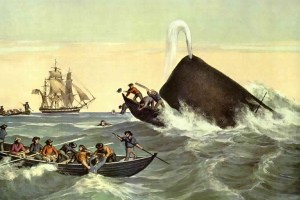
Ἔοικε δὲ ἀρχὴ κακῶν μειζόνων γίνεσθαι πολλάκις ἡ πρὸς τὸ βέλτιον μεταβολή· καὶ γὰρ ἡμεῖς δύο μόνας ἡμέρας ἐν εὐδίᾳ πλεύσαντες, τῆς τρίτης ὑποφαινούσης πρὸς ἀνίσχοντα τὸν ἥλιον ἄφνω ὁρῶμεν θηρία καὶ κήτη πολλὰ μὲν καὶ ἄλλα, ἓν δὲ μέγιστον ἁπάντων ὅσον σταδίων χιλίων καὶ πεντακοσίων τὸ μέγεθος· ἐπῄει δὲ κεχηνὸς καὶ πρὸ πολλοῦ ταράττον τὴν θάλατταν ἀφρῷ τε περικλυζόμενον καὶ τοὺς ὀδόντας ἐκφαῖνον πολὺ τῶν παρ’ ἡμῖν φαλλῶν ὑψηλοτέρους, ὀξεῖς δὲ πάντας ὥσπερ σκόλοπας καὶ λευκοὺς ὥσπερ ἐλεφαντίνους. ἡμεῖς μὲν οὖν τὸ ὕστατον ἀλλήλους προσειπόντες καὶ περιβαλόντες ἐμένομεν· τὸ δὲ ἤδη παρῆν καὶ ἀναρροφῆσαν ἡμᾶς αὐτῇ νηῒ κατέπιεν. οὐ μέντοι ἔφθη συναράξαι τοῖς ὀδοῦσιν, ἀλλὰ διὰ τῶν ἀραιωμάτων ἡ ναῦς ἐς τὸ ἔσω διεξέπεσεν.
(Lucian, Alēthē Diēgēmata 1.30)
It would seem, however, that a change for the better often proves a prelude to greater ills. We had sailed just two days in fair weather and the third day was breaking when toward sunrise we suddenly saw a number of sea-monsters, whales. One among them, the largest of all, was fully one hundred and fifty miles long. He came at us with open mouth, dashing up the sea far in advance, foam-washed, showing teeth much larger than the emblems of Dionysus in our country, and all sharp as calthrops and white as ivory. We said good-bye to one another, embraced, and waited. He was there in an instant, and with a gulp swallowed us down, ship and all. He just missed crushing us with his teeth, but the boat slipped through the gaps between them into the interior. (tr. Austin Morris Harmon)
 Crambe Repetita