Furiosius

1-2

Si quis eum servum, patinam qui tollere iussus
semesos pisces tepidumque ligurrierit ius,
in cruce suffigat, Labeone insanior inter
sanos dicatur. quanto hoc furiosius atque
maius peccatum est: paulum deliquit amicus,
quod nisi concedas, habeare insuavis: acerbus
odisti et fugis ut Rusonem debitor aeris,
qui nisi, cum tristes misero venere Kalendae,
mercedem aut nummos unde unde extricat, amaras
porrecto iugulo historias captivus ut audit.
(Horace, Serm. 1.3.80-89)

If a man were to nail his slave to a cross for eating
Left-over fish and cold sauce from the dish he’’d been told
To remove, sane men would call him madder than Labeo.
Well how much greater and more insane a fault is this:
When your friend has committed some slight offence,
That you’’d be thought ungracious not to have pardoned,
You hate him savagely, and shun him as Ruso is shunned
By his debtor. When the unhappy Kalends come, if he can’’t,
Poor wretch, rustle up principal or interest from somewhere,
He has to expose his throat, and listen to those sad Histories!
(tr. Tony Kline)

Octavius Ruso acerbus faenerator fuisse traditur, idem scriptor historiarum, ad quas audiendas significat solitum fuisse cogere debitores suos, quibus scilicet talia audire poena gravissima erat. hoc enim significat ‘porrecto iugulo’.
(Porphyrius, Comm. in Hor. Serm. 1.3.86)

Octavius Ruso is said to have been a rigid moneylender and also a writer of histories. Horace means that he used to force his debtors to listen to these histories – and for them this was no doubt a very cruel punishment. That is what he means by ‘to expose his throat’. (tr. David Bauwens)

Comites

6a00d83451e86969e2015437f17077970c

Cur me querelis exanimas tuis?
nec dis amicum est nec mihi te prius
obire, Maecenas, mearum
grande decus columenque rerum.

a! te meae si partem animae rapit
maturior vis, quid moror altera,
nec carus aeque nec superstes
integer? ille dies utramque

ducet ruinam. non ego perfidum
dixi sacramentum: ibimus, ibimus,
utcumque praecedes, supremum
carpere iter comites parati.

(Horace, Carm. 2.17.1-12)

Why do you worry me to death with your grumbling? It is not the gods’ will or mine that you should die first, Maecenas, you who are the greatest glory and keystone of my existence. If some force snatches away you, who are part of my soul, before me, ah, what do I care for the other part, no longer equally loved, and, though surviving, no longer a whole person? That day will drag both of us down to death. I have sworn a solemn oath and will not break it: we will go, yes, we will go, whenever you take the lead; we are ready to set out on the final journey as comrades together. (tr. Niall Rudd)

Uvescit

flagon-in-use-full

O noctes cenaeque deum, quibus ipse meique
ante Larem proprium vescor vernasque procaces
pasco libatis dapibus. prout cuique libido est,
siccat inaequales calices conviva solutus
legibus insanis, seu quis capit acria fortis
pocula, seu modicis uvescit laetius. ergo
sermo oritur, non de villis domibusve alienis,
nec male necne Lepos saltet, sed, quod magis ad nos
pertinet et nescire malum est, agitamus: utrumne
divitiis homines an sint virtute beati,
quidve ad amicitias, usus rectumne, trahat nos
et quae sit natura boni summumque quid eius.
(Horace, Serm. 2.6.65-76)

O heavenly night-time dinners, when I and my friends
Eat beside my own Lar, and feed jostling servants
On left-over offerings. Each guest drinks as he wishes
Large glasses or small, free from foolish rules, whether
He downs the strong stuff, nobly, or wets his whistle
In more carefree style. And so the conversation starts.
Not about other men’’s houses in town, their country
Villas, or whether Lepos dances well or not: no,
We talk about things one should know, that matter more:
Whether it’s wealth or character makes men happier:
Whether self-interest or virtue make men friends:
And the nature of the good, and its highest form.
(tr. Tony Kline)

Porcum

254705563_a2845d1416_b

Albi, nostrorum sermonum candide iudex,
quid nunc te dicam facere in regione Pedana?
scribere quod Cassi Parmensis opuscula vincat,
an tacitum silvas inter reptare salubres,
curantem quicquid dignum sapiente bonoque est?
non tu corpus eras sine pectore: di tibi formam,
di tibi divitias dederunt artemque fruendi.
Quid voveat dulci nutricula maius alumno,
qui sapere et fari possit quae sentiat et cui
gratia, fama, ualetudo contingat abunde,
et mundus victus non deficiente crumina?
Inter spem curamque, timores inter et iras
omnem crede diem tibi diluxisse supremum:
grata superveniet quae non sperabitur hora.
me pinguem et nitidum bene curata cute vises,
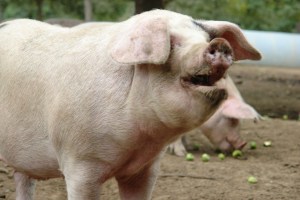
cum ridere voles Epicuri de grege porcum.
(Horace, Ep. 1.4)

Albius, good-natured critic of my ‘Conversations’,
out there in the Pedana what shall I say you’re doing?
Outdoing Cassius of Parma and his little books?
or strolling silently around those healthy woods,
concerned with what befits a man who’s wise and good?
No, you were never body without mind. The gods
gave you looks, wealth and skill to make the best of them.
What better could a little nursemaid pray for,
whose charge had sense, could speak his mind, who had
good name, good friends, good health in plenty too,
and lived with style and with a purse that’s deep enough?
Amid anxiety and hope, anger and fear,
think of each day that dawns as if it were your last.
Each unexpected hour will be a gift of joy.
I shall be plump, kempt, glossy when you visit
to laugh at one from Epicurus’ herd: a pig.
(tr. Keith Maclennan)

Plutonia

f37bd37ea1b49daf16ff5d2ed7c5174c

Pallida mors aequo pulsat pede pauperum tabernas
regumque turres. o beate Sesti,
vitae summa brevis spem nos vetat incohare longam.
iam te premet nox fabulaeque Manes
et domus exilis Plutonia; quo simul mearis,
nec regna vini sortiere talis,
nec tenerum Lycidan mirabere, quo calet iuventus
nunc omnis et mox virgines tepebunt.
(Horace, Carm. 1.4.13-20)

Pale Death knocks with impartial foot on the poor man’s cottage and the rich man’s castle. Sestius, well-off as you are, the brief span of life forbids us to embark on far-reaching hopes. Soon night will close round you, and the storied Ghosts and the meagre house of Pluto. Once you reach there, you will not throw dice to decide who directs the party, nor will you gaze in admiration at the boyish Lycidas, who now makes all the young men burn with passion and before long will kindle the desires of the girls. (tr. Niall Rudd)

Peregrinum

the-beggar_2403272

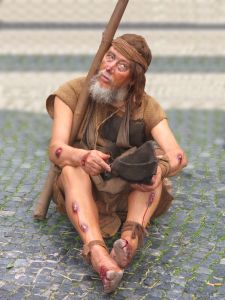
Brundisium comes aut Surrentum ductus amoenum
qui queritur salebras et acerbum frigus et imbres
aut cistam effractam et subducta viatica plorat,
nota refert meretricis acumina, saepe catellam,
saepe periscelidem raptam sibi flentis, uti mox
nulla fides damnis verisque doloribus adsit.
nec semel irrisus triviis attollere curat
fracto crure planum. licet illi plurima manet
lacrima, per sanctum iuratus dicat Osirim
‘credite, non ludo; crudeles, tollite claudum’,
‘quaere peregrinum’ vicinia rauca reclamat.
(Horace, Ep. 1.17.52-62)

When a companion travelling to Brundisium
Or sweet Surrentum moans about the ruts, the bitter
Cold, the rain, his trunk broken open, his money gone,
It’’s like a girl’’s cute tricks, always weeping to herself
About a stolen chain, or an anklet, so later
Her genuine losses and grief won’t be believed.
He who’’s been fooled before won’’t bother to help
That joker, with a broken leg, at the crossroads,
Who in floods of tears swears by sacred Osiris:
‘’It’’s no jest, believe me: don’’t be cruel, help the lame!’ ’
‘‘Go ask a stranger,’’ the raucous neighbours shout.
(tr. Tony Kline)

Olim

197

Sperat infestis, metuit secundis
alteram sortem bene praeparatum
pectus. informes hiemes reducit
Iuppiter, idem

submovet. non, si male nunc, et olim
sic erit: quondam cithara tacentem
suscitat Musam neque semper arcum
tendit Apollo.

rebus angustis animosus atque
fortis appare; sapienter idem
contrahes vento nimium secundo
turgida vela.

(Horace, Carm. 2.10.13-24)

In adversity the well-prepared mind hopes for the opposite situation, is on guard against it in prosperity. Jupiter brings round the ugly winters; he also removes them. If things are bad now, they will not always be so: at times Apollo wakens the slumbering Muse with his lyre; he does not always keep his bow taut. In dire straits show yourself spirited and brave; you will also be wise to shorten your sail when it swells before too favourable a breeze. (tr. Niall Rudd)

Triumphe

octavian-triumph-2

Concines laetosque dies et Urbis
publicum ludum super impetrato
fortis Augusti reditu forumque
litibus orbum.

tum meae, si quid loquar audiendum,
vocis accedet bona pars, et, “o Sol
pulcher! o laudande!” canam, recepto
Caesare felix.

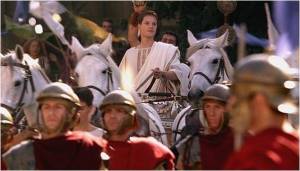
tuque dum procedis, “io Triumphe!”
non semel dicemus, “io Triumphe!”
civitas omnis, dabimusque divis
tura benignis.

(Horace, Carm. 4.2.41-52)

You will celebrate the days of joy, the capital’s public holiday, and the Forum bereft of lawsuits in honour of the valiant Augustus’ return which has been granted to our prayers. Then, if I have anything to say that is worth hearing, I shall join in to the best of my ability, singing “O glorious day, o worthy of all praise!” in my joy at Caesars’ return. And while you take the lead, we shall cry more than once “Io Triumphe!” The whole city will cry “Io Triumphe” and we shall offer incense to the kindly gods. (tr. Niall Rudd)

Cave

molossian_hound_british_museum
The Jennings Dog

Quid immerentis hospites vexas canis
ignavus adversum lupos?
quin huc inanis, si potes, vertis minas,
et me remorsurum petis?
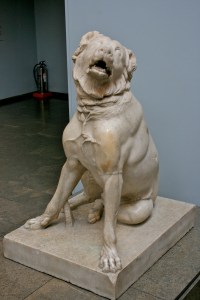
nam qualis aut Molossus aut fulvus Lacon,
amica vis pastoribus,
agam per altas aure sublata nives,
quaecumque praecedet fera:
tu cum timenda voce complesti nemus,
proiectum odoraris cibum.
cave, cave: namque in malos asperrimus
parata tollo cornua,
qualis Lycambae spretus infido gener
aut acer hostis Bupalo.
an si quis atro dente me petiverit,
inultus ut flebo puer?

(Horace, Epod. 6)

How dare you go for unoffending guests, you who are a cowardly cur when confronted with wolves? Why not turn your empty threats in this direction, if you have the guts, and attack someone who will bite back? Like a Molossian or tawny Spartan, the shepherd’s sturdy friend, I shall prick up my ears and hunt down through the deep snow any animal that runs away from me, whereas you fill the woods with ferocious barking and then sniff at food thrown at your feet. Take care now, take care! For I am utterly ruthless against villains, and now toss my horns in readiness, like the son-in-law rejected by the treacherous Lycambes*, or the fierce enemy of Bupalus**. Well, if someone attacks me with the tooth of malice, am I expected to weep like a child, without retaliating?

* Archilochus. Lycambes promised his daughter, Neobule, to Archilochus and then reneged, whereupon he was hounded to death by the poet’s invective.
** Bupalus was a Greek sculptor who antagonised the iambic writer Hipponax (late 6th cent. B.C.).

(tr. Niall Rudd, with his notes)


Pollux

Non est meum, si mugiat Africis
malus procellis, ad miseras preces
decurrere et votis pacisci
ne Cypriae Tyriaeque merces

addant avaro divitias mari.
tunc me biremis praesidio scaphae
tutum per Aegaeos tumultus
aura feret geminusque Pollux.

(Horace, Carm. 3.29.57-64)

It is not my way, if the mast creaks in an African gale, to resort to piteous prayers, and, by making promises, to strike a bargain that will save my Cyprian and Tyrian goods from increasing the wealth of the greedy sea. In that situation, the breeze along with Pollux and his twin will carry me serenely though the Aegean’s storm in my two-oared dinghy. (tr. Niall Rudd)