Tuphloteron

Tiresias

Ἐγὼ δέ, οὗπερ ἀφίγμην ἕνεκα, τῷ Τειρεσίᾳ προσελθὼν ἱκέτευον αὐτὸν τὰ πάντα διηγησάμενος εἰπεῖν πρός με ποῖόν τινα ἡγεῖται τὸν ἄριστον βίον. ὁ δὲ γελάσας — ἔστι δὲ τυφλόν τι γερόντιον καὶ ὠχρὸν καὶ λεπτόφωνον — “ὦ τέκνον,” φησί, “τήν μὲν αἰτίαν οἶδά σοι τῆς ἀπορίας ὅτι παρὰ τῶν σοφῶν ἐγένετο οὐ ταὐτὰ γιγνωσκόντων ἑαυτοῖς· ἀτὰρ οὐ θέμις λέγειν πρὸς σέ· ἀπείρηται γὰρ ὑπὸ τοῦ Ῥαδαμάνθυος.” “μηδαμῶς,” ἔφην, “ὦ πατέριον, ἀλλ’ εἰπὲ καὶ μὴ περιίδῃς με σοῦ τυφλότερον περιιόντα ἐν τῷ βίῳ.” ὁ δὲ δή με ἀπαγαγὼν καὶ πολὺ τῶν ἄλλων ἀποσπάσας ἤρεμα προσκύψας πρὸς τὸ οὖς φησίν, “ὁ τῶν ἰδιωτῶν ἄριστος βίος, καὶ σωφρονέστερος παυσάμενος τοῦ μετεωρολογεῖν καὶ τέλη καὶ ἀρχὰς ἐπισκοπεῖν καὶ καταπτύσας τῶν σοφῶν τούτων συλλογισμῶν καὶ τὰ τοιαῦτα λῆρον ἡγησάμενος τοῦτο μόνον ἐξ ἅπαντος θηράσῃ, ὅπως τὸ παρὸν εὖ θέμενος παραδράμῃς γελῶν τὰ πολλὰ καὶ περὶ μηδὲν ἐσπουδακώς.”
(Lucian, Menippos 21)

For my part, I did what I came to do. Going to Teiresias, I told him the whole story and besought him to tell me what sort of life he considered the best. He laughed (he is a blind little old gentleman, pale, with a piping voice) and said: “My son, I know the reason for your perplexity; it came from the wise men, who are not consistent with themselves. But it is not permissible to tell you, for Rhadamanthus has forbidden it.” “Don’t say that, gaffer,’ said I. “Tell me, and don’t allow me to go about in life blinder than you are.” So he took me aside, and after he had led me a good way apart from the others, he bent his head slightly toward my ear and said: “The life of the common sort is best, and you will act more wisely if you stop speculating about heavenly bodies and discussing final causes and first causes, spit your scorn at those clever syllogisms, and counting all that sort of thing nonsense, make it always your sole object to put the present to good use and to hasten on your way, laughing a great deal and taking nothing seriously.” (tr. Austin Morris Harmon)

Theōthēnai

Poimandres

“Εὖ με πάντα,” ἔφην, “ὡς ἐβουλόμην, ἐδίδαξας, ὦ νοῦς. ἔτι δέ μοι εἰπὲ <περὶ> τῆς ἀνόδου τῆς γινομένης.”
πρὸς ταῦτα ὁ Ποιμάνδρης εἷπε, Πρῶτον μὲν ἐν τῇ ἀναλύσει τοῦ σώματος τοῦ ὑλικοῦ παραδίδωσιν αὐτὸ τὸ σῶμα εἰς ἀλλοίωσιν, καὶ τὸ εἶδος ὃ εἶχες, ἀφανὲς γίνεται. καὶ τὸ ἦθος τῷ δαίμονι ἀνενέργητον παραδίδωσι, καὶ αἱ αἰσθήσεις τοῦ σώματος εἰς τὰς ἑαυτῶν πηγὰς ἐπανέρχονται μέρη γινόμεναι, καὶ πάλιν συνιστάμεναι εἰς τὰς ἐνεργείας. καὶ ὁ θυμὸς καὶ ἡ ἐπιθυμία εἰς τὴν ἄλογον φύσιν χωρεῖ. καὶ οὕτως ὁρμᾷ λοιπὸν ἄνω διὰ τῆς ἁρμονίας, καὶ τῇ πρώτῃ ζώνῃ δίδωσι τὴν αὐξητικὴν ἐνέργειαν καὶ τὴν μειωτικήν, καὶ τῇ δευτέρᾳ τὴν μηχανὴν τῶν κακῶν, καὶ τὸν δόλον ἀνενέργητον, καὶ τῇ τρίτῃ τὴν ἐπιθυμητικὴν ἀπάτην ἀνενέργητον, καὶ τῇ τετάρτῃ τὴν ἀρχοντικὴν ὑπεριφανίαν ἀπλεονέκτητον, καὶ τῇ πέμπτῃ τὸ θράσος τὸ ἀνόσιον καὶ τῆς τόλμης τὴν προπέτειαν, καὶ τῇ ἕκτῃ τὰς ἀφορμὰς τὰς κακὰς τοῦ πλούτου ἀνενεργήτους, καὶ τῇ ἑβδόμῃ ζώνῃ τὸ ἐνεδρεῦον ψεῦδος. καὶ τότε γυμνωθεὶς ἀπὸ τῶν τῆς ἁρμονίας ἐνεργημάτων γίνεται ἐπὶ τὴν ὀγδοατικὴν φύσιν τὴν ἰδίαν δύναμιν ἔχων, καὶ ὑμνεῖ σὺν τοῖς οὖσι τὸν πατέρα. συγχαίρουσι δὲ οἱ παρόντες τῇ τούτου παρουσίᾳ, καὶ ὁμοιωθεὶς τοῖς συνοῦσιν ἀκούει καί τῶν δυνάμεων ὑπὲρ τὴν ὀγδοατικὴν φύσιν οὐσῶν φωνῇ τινι ἡδείᾳ ὑμνουσῶν τὸν θεόν. καὶ τότε τάξει ἀνέρχονται πρὸς τὸν πατέρα, καὶ αὐτοὶ εἰς δυνάμεις ἑαυτοὺς παραδιδόασι, καὶ δυνάμεις γενόμενοι ἐν θεῷ γίνονται. τοῦτό ἐστι τὸ ἀγαθὸν τέλος τοῖς γνῶσιν ἐσχηκόσι, θεωθῆναι. λοιπόν, τί μέλλεις; οὐχ ὡς πάντα παραλαβὼν καθοδηγὸς γίνῃ τοῖς ἀξίοις, ὅπως τὸ γένος τῆς ἀνθρωπότητος διὰ σοῦ ὑπὸ θεοῦ σωθῇ;”
(Corpus Hermeticum 1.24-26)

“You have taught me all things well, o mind, just as I wanted. But tell me again (about) the way up; tell me how it happens.”
To this Poimandres said: “First, in releasing the material body you give the body itself over to alteration, and the form that you used to have vanishes. To the demon you give over your temperament, now inactive. The body’s senses rise up and flow back to their particular sources, becoming separate parts and mingling again with the energies. And feeling and longing go on toward irrational nature. Thence the human being rushes up through the cosmic framework, at the first zone surrendering the energy of increase and decrease; at the second evil machination, a device now inactive; at the third the illusion of longing, now inactive; at the fourth the ruler’s arrogance, now freed of excess; at the fifth unholy presumption and daring recklessness; at the sixth the evil impulses that come from wealth, now inactive; and at the seventh zone the deceit that lies in ambush. And then, stripped of the effects of the cosmic framework, the human enters the region of the ogdoad; he has his own proper power, and along with the blessed he hymns the father. Those present there rejoice together in his presence, and, having become like his companions, he also hears certain powers that exist beyond the ogdoadic region and hymn god with sweet voice. They rise up to the father in order and surrender themselves to the powers, and, having become powers, they enter into god. This is the final good for those who have received knowledge: to be made god. Why do you still delay? Having learned all this, should you not become guideto the worthy so that through you the human race might be saved by god?” (tr. Brian P. Copenhaver)

Meditandum

Roman politics

Haec veniebant mihi in mentem de duabus illis commentationibus matutinis, quod tibi cotidie ad Forum descendenti meditandum esse dixeram: “novus sum, consulatum peto.” tertium restat: “Roma est,” civitas ex nationum conventu constituta, in qua multae insidiae, multa fallacia, multa in omni genere vitia versantur, multorum arrogantia, multorum contumacia, multorum malevolentia, multorum superbia, multorum odium ac molestia perferenda est. video esse magni consili atque artis in tot hominum cuiusque modi vitiis tantisque versantem vitare offensionem, vitare fabulam, vitare insidias, esse unum hominem accommodatum ad tantam morum ac sermonum ac voluntatum varietatem.
(Quintus Tullius Cicero, Commentariolum Petitionis 54)

All these things have occurred to me regarding the first two of the morning meditations I suggested as you go down to the Forum: “I am an outsider. I want to be a consul.” Now let me turn briefly to the third: “This is Rome.” Our city is a cesspool of humanity, a place of deceit, plots, and vice of every imaginable kind. Anywhere you turn you will see arrogance, stubbornness, malevolence, pride, and hatred. Amid such a swirl of evil, it takes a remarkable man with sound judgment and great skill to avoid stumbling, gossip, and betrayal. How many men could maintain their integrity while adapting themselves to various ways of behaving, speaking, and feeling? (tr. Philip Freeman)

Fugis

Batalla de Gaugamela (M.A.N. Inv.1980-60-1) 02

Aeger in adversis animus sapientis, et aegre
consulit ipse sibi cum duro tempore primis
diffidit rebus et spes languescit inermis.
nam quid agat Darius? quo se regat ordine demens?
cui nec tuta fuga est, nec si velit ipse morari,
inveniet socios. nam de tot milibus ante
quos sibi crediderat, bello vix mille supersunt
qui stent pro patria. pudor et reverentia famae
ne fugiant prohibent, contra timor anxius urget.
dumque vacillanti stupefactus pectore nutat,
dum dubitat rapiatne fugam vitamne perosus
se sinat ipse capi, Persae velut agmine facto
mandant terga fugae rapiuntque per arva relicto
rege gradum. laxis tunc demum invitus habenis
nactus equum Darius rorantia caede suorum
retrogrado fugit arva gradu. quo tendis inertem,
rex periture, fugam? nescis, heu perdite, nescis
quem fugias! hostes incurris dum fugis hostem.
incidis in Scyllam cupiens vitare Charybdim.
Bessus, Narbazanes, rerum pars magna tuarum,
quos inter proceres humili de plebe locasti,
non veriti temerare fidem capitisque verendi
perdere canitiem, spreto moderamine iuris,
proh pudor, in domini coniurant fata clientes.
(Walter of Châtillon, Alexandreis 5.283-306)

Adversity left faint the wise man’s spirit;
faint counsel could he offer to himself,
while hope languished defenseless, and remorse
for earlier undertakings now consumed him.
Which way should Darius turn? Amidst his madness
how should he rule himself, when flight’s not safe,
nor may he find companions, if he tarries?
Of many thousands whom he’d earlier trusted,
scarcely a thousand had survived the war
to shield their country. Shame and reputation
forbade his flight, yet trepidation urged it.
But while his wavering breast still trembled, dumbstruck,
while yet he half resolved to take his flight,
or else, in hatred of his life, to welcome
his captor’s chains, the Persians turned their backs
almost as one, as though still in formation,
and rushed across the fields, leaving their king.
Unwillingly, at last he loosed the reins
upon the horse he’d seized, and so retreated
through lands bedewed with slaughter of his men.
Doomed king, where will your aimless flight direct you?
You know not, lost man, whom you flee, you know not,
but run to meet your foe while foe you flee.
You fall to Scylla while you shun Charybdis.
Bessus, Narbazanes, your wealth’s great sharers,
feel no dread breaking fealty, though you raised
them both to princely rank from lowly station;
but spurning all the governance of law,
in their lord’s death—great shame!—these slaves conspire.
(tr. David Townsend)

Aphektea

Lysistrata

[ΛΥΣΙΣΤΡΑΤΗ. ΚΑΛΟΝΙΚΗ. ΜΥΡΡΙΝΗ. ΓΥΝΗ Α’]

[ΛΥΣ.] Λέγοιμ’ ἄν· οὐ δεῖ γὰρ κεκρύφθαι τὸν λόγον.
ἡμῖν γὰρ, ὦ γυναῖκες, εἴπερ μέλλομεν
ἀναγκάσειν τοὺς ἄνδρας εἰρήνην ἄγειν,
ἀφεκτέ’ ἐστὶ—
[ΚΑΛ.] τοῦ; φράσον.
[ΛΥΣ.] ποιήσετ’ οὖν;
[ΚΑΛ.] ποιήσομεν, κἂν ἀποθανεῖν ἡμᾶς δέῃ.
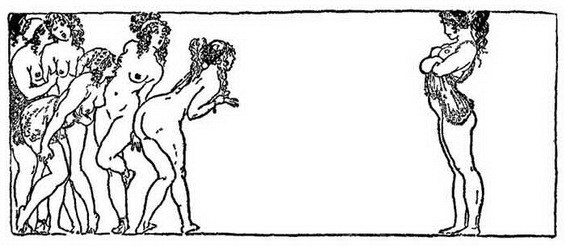
[ΛΥΣ.] ἀφεκτέα τοίνυν ἐστὶν ἡμῖν τοῦ πέους.
τί μοι μεταστρέφεσθε; ποῖ βαδίζετε;
αὗται, τί μοιμυᾶτε κἀνανεύετε;
τί χρὼς τέτραπται; τί δάκρυον κατείβεται;
ποιήσετ’ ἢ οὐ ποιήσετ’; ἢ τί μέλλετε;
[ΚΑΛ.] οὐκ ἂν ποιήσαιμ’, ἀλλ’ ὁ πόλεμος ἑρπέτω.
[ΜΥΡ.] μὰ Δί’ οὐδ’ ἐγὼ γάρ, ἀλλ’ ὁ πόλεμος ἑρπέτω.
[ΛΥΣ.] ταυτὶ σὺ λέγεις, ὦ ψῆττα; καὶ μὴν ἄρτι γε
ἔφησθα σαυτῆς κἂν παρατεμεῖν θἤμισυ.
[ΚΑΛ.] ἄλλ’, ἄλλ’ ὅ τι βούλει: κἄν με χρῇ διὰ τοῦ πυρὸς
ἐθέλω βαδίζειν· τοῦτο μᾶλλον τοῦ πέους·
οὐδὲν γὰρ οἷον, ὦ φίλη Λυσιστράτη.
[ΚΑΛ.] τί δαὶ σύ;
[ΓΥΝ. Α’] κἀγὼ βούλομαι διὰ τοῦ πυρός.
[ΛΥΣ.] ὦ παγκατάπυγον θἠμέτερον ἅπαν γένος!
(Aristophanes, Lys. 119-137)

[LYSISTRATA. CALONICE. MYRRHINE. ATHENIAN WIFE]

[LYS.] Here goes, then; no need to beat around the bush. Ladies, if we’re going to force the men to make peace, we’re going to have to give up—
[CAL.] Give up what? Tell us.
[LYS.] You’ll do it, then?
[CAL.] We’ll do it, even if it means our death!
[LYS.] All right. We’re going to have to give up—the prick. Why are you turning away from me? Where are you going? Why are you all pursing your lips and shaking your heads? What means your altered color and tearful droppings? Will you do it or not? What are you waiting for?
[CAL.] Count me out; let the war drag on.
[MYR.] Me too, by Zeus; let the war drag on.
[LYS.] This from you, Ms. Flounder? Weren’t you saying just a moment ago that you’d cut yourself in half?
[CAL.] Anything else you want, anything at all! I’m even ready to walk through fire; rather that than the prick. There’s nothing like it, my dear Lysistrata.
[LYS.] And what about you?
[ATH.] I’m ready to walk through fire too.
[LYS.] Oh what a low and horny race are we!
(tr. Jeffrey Henderson)

Sustentaculum

sword

Palladius autem, Britani quondam comitis ac Caesariae filius, comitatum in urbe Gabalitana, Sigiberto rege impertiente, promeruit, sed orta intentio inter ipsum Partheniumque episcopum, valde populum collidebat. nam plerumque conviciis ac diversis oppropriis ac criminibus obruebat episcopum, pervadens res ecclesiae spoliansque homines eius. unde factum est, ut, hac intentione crescente, cum ad praesentiam iam dicti principes properassent et diversa sibi invicem obiectarent, mollem episcopum, effeminatum Palladius vocitaret: “ubi sunt mariti tui, cum quibus stuprose ac turpiter vivis?” sed haec in sacerdote verba prolata divina confestim ultio subsequens abolevit. nam anno sequenti semotus a comitatu Palladius Arvernum regressus est; Romanus vero comitatum ambivit. factum est autem, ut quadam die in urbe Arverna uterque coniungeretur, et altercantibus inter se pro hac actione comitatus, audivit Palladius se a Sigiberto rege debere interfici; sed falsa haec et maxime a Romano emissa deprehensa sunt. tunc ille timore perterritus, ita in angustiam gravem redactus est, ut minaretur se propria dextera perimere; cumque a matre vel a cognato suo Firmino intente attenderetur, ne perficeret quod mente amara conceperat, per intervalla horarum elapsus a matris aspectu ingressusque cubiculum, accepto spatio solitudinis, evaginato gladium, cornuaque ensis pedibus calcans, acumen ad pectus erexit, impressusque desuper gladius ab una ingressus mamilla in spatulam dorsi regressus est; erectusque iterum, similiter in alia mamilla perfossus, cecidit et mortuus est. quod non sine diaboli opere perfectum scelus mirati sumus; nam prima eum plaga interficere potuit, si non diabolus sustentaculum praebuisset, quo haec nefanda perageret. currit mater exanimis, et supra filii corpusculum orbata collabitur, atque omnis familia voces planctus emittit. verumtamen ad monasterium Chrononensem delatus sepulturae mandatur, sed non iuxta Christianorum cadavera positus, sed nec missarum sollemnia meruit; quod non ob aliam causam nisi ob iniuriam episcopi haec ei evenisse probatur.
(Gregory of Tours, Hist. Franc. 4.39)

Palladius, son of Count Britanus, who had died, and of his wife Caesaria, inherited the office of count in Javols, with the permission of King Sigibert. A quarrel ensued between him and Bishop Parthenius, which caused consternation among the inhabitants. Palladius heaped obloquy upon the Bishop, abusing him and accusing him of all sorts of crimes. He seized the property of the church and robbed those who served in it. This quarrel became worse and worse. In the end they both rushed off to the King’s court and brought various charges against each other. Palladius accused the Bishop of being a weak, effeminate man. ‘Where are your darling boys,’ cried he, ‘with whom you live in shame and debauchery?’ The vengeance of God soon brought to an end these attacks upon the Bishop. The following year Palladius lost his countship and returned to Clermont-Ferrand. Romanus did all he could to be made count in his place. It happened one day that the two met in Clermont. A dispute began on the subject of the countship and Palladius was informed that King Sigibert wanted to have him killed. This was untrue, for it was a rumour being put about by Romanus. Palladius was so terrified and reduced to such straits that he threatened to kill himself with his own hands. He was watched closely by his mother and by his brother-in-law Firminus, to prevent him carrying out what he had planned in the bitterness of his soul. After a while he escaped from his mother’s vigilance and went to his bedroom. There he took advantage of being alone, unsheathed his sword and, holding the hilt firm with his feet, pointed the blade towards his chest. He leant forward on the sword, which pierced his chest and came out at the back through one shoulder-blade. He then held the sword a second time, pierced his chest on the other side, and fell to the ground dead. I find it hard to believe that this horrible deed could have been achieved without the help of the Devil: for the first wound was enough to kill him, unless the Devil came to his assistance to give him strength to carry his terrible plan through to the end. His mother rushed in, beside herself with grief, and fell in a faint on the body of the son whom she had lost, while the whole family bewailed his fate. He was carried to the monastery of Cournon and buried there. His body was not placed among the Christian dead and no Mass was sung for him. It is clear that this fate befell him only because he had wronged his Bishop. (tr. Lewis Thorpe)

Sōtēria

Cybele &amp; Attis
Cybele and her son Attis

Aliud etiam symbolum proferimus, ut contaminatae cogitationis scelera revelentur. cuius totus ordo dicendus est, ut aput omnes constet divinae dispositionis legem perversa diaboli esse imitatione corruptam. nocte quadam simulacrum in lectica supinum ponitur, et per numeros digestis fletibus plangitur. deinde cum se ficta lamentatione satiaverint, lumen infertur. tunc a sacerdote omnium qui flebant fauces unguentur, quibus perunctis sacerdos hoc lento murmure susurrat:
θαρρεῖτε, μύσται, τοῦ θεοῦ σεσωσμένου·
ἔσται γάρ ἡμῖν ἐκ πόνων σωτηρία.
quid miseros hortaris <ut> gaudeant? quid deceptos homines laetari compellis? quam illis spem, quam salutem funesta persuasione promittis? quid illos falsa pollicitatione sollicitas? dei tui mors nota est, vita non paret, nec de resurrectione eius divinum aliquando respondit oraculum, nec hominibus se post mortem ut sibi crederetur ostendit. nulla huius operis documenta praemisit, nec se hoc facturum esse praecedentibus monstravit exemplis. idolum sepelis, idolum plangis, idolum de sepultura proferis, et miser cum haec feceris gaudes. tu deum tuum liberas, tu iacentia lapidis membra componis, tu insensibile corrigis saxum. tibi agat gratias deus tuus, te paribus remuneret donis, te sui velit esse participem. sic moriaris ut moritur, sic vivas ut vixit. nam quod olore perunguentur fauces, quis non facinus istud dispecta vanitate contemnat? habet ergo diabolus christos suos, et quia ipse antichristus est ad infamiam nominis sui miseros homines scelerata societate perducit. unguentum hoc reserva mortuis, reserva morituris, ut quos laqueis tuis ceperis, eos venenato unguento oblitos lugubri ac funesto semper mergas exitio.
(Firmicus Maternus, De Errore Profanarum Religionum 22)

We adduce also another symbol, in order to lay bare the crimes of polluted thought. It is needful to give a complete and systematic account of it, so that all may be led to agree that the law of the divine dispensation has been corrupted by the devil’s crooked imitation. On a certain night, a statue is laid flat on its back on a bier, where it is bemoaned in cadenced plaints. Then when the worshippers have had their fill of feigned lamentation, a light is brought in. Next a priest anoints the throats of all who are mourning, and once that is done he whispers in a low murmur: “Rejoice, O mystai, our god appears as saved! And we shall find salvation, springing from our woes.” Why do you exhort unfortunate wretches to rejoice? Why do you drive deluded dupes to exult? What hope, what salvation do you promise them, convincing them to their own ruination? Why do you woo them with a false promise? The death of your god is known, but his life is not apparent, nor has a divine prophecy ever issued a statement about his resurrection, nor has he manifested himself to men after his death to cause himself to be believed. He provided no advance tokens of his action, nor did he show by prefiguring symbolic acts that he would do this. You bury an idol, you lament an idol, you bring forth from its sepulchre an idol, and having done this, unfortunate wretch, you rejoice. You rescue your god, you put together the stony limbs that lie there, you set in position an insensible stone. Your god should thank you, should pay you with equivalent gifts, should be willing to make you his partner. So you should die as he dies, and you should live as he lives. Now as for the throat being anointed with scented stuff, who would not despise the folly of this business and hold it in scorn? Therefore the devil has his anointed ones (“Christs”), and because he himself is Antichrist, he reduces unfortunate wretches into an unholy alliance with the infamy of his own name. Save this ointment for the dead, save it for the dying, that you may besmear with the poisonous stuff those whom you have entrapped with your snares, and plunge them forever in a sorrowful and deadly doom. (tr. Clarence A. Forbes)

Tonsor

haircut

Quid? illos otiosos vocas, quibus apud tonsorem multae horae transmittuntur, dum decerpitur, si quid proxima nocte succrevit, dum de singulis capillis in consilium itur, dum aut disiecta coma restituitur aut deficiens hinc atque illinc in frontem compellitur? quomodo irascuntur, si tonsor paulo neglegentior fuit, tamquam virum tonderet? quomodo excandescunt, si quid ex iuba sua decisum est, si quid extra ordinem iacuit, nisi omnia in anulos suos reciderunt? quis est istorum qui non malit rem publicam turbari quam comam suam? qui non sollicitior sit de capitis sui decore quam de salute? qui non comptior esse malit quam honestior? hos tu otiosos vocas inter pectinem speculumque occupatos?
(Seneca, De Brevitate Vitae 12.3)

Tell me, do you call those people leisured who spend many hours at the barber’s while any overnight growth is trimmed away, solemn consultation is taken over each separate hair, and disheveled locks are rearranged or thinning hair is combed forward from both sides to cover the forehead? How angry they get if the barber has been a little too careless, as if he were cutting a real man’s hair! How they flare up if anything is wrongly cut off their precious mane, if a hair lies out of place, or if everything doesn’t fall back into its proper ringlets! Which of those people wouldn’t rather have their country thrown into disarray than their hair? Who isn’t more concerned about keeping his head neat rather than safe? Who wouldn’t rather be well groomed than well respected? You call leisured these people who are kept busy between the comb and the mirror? (tr. John W. Basore)

Axioktēta

10-facts-ancient-celts-warriors_3

Θραϊκῶν δὲ τῶν πάντων οὐδένες πλείους εἰσὶ τῶν ἀνθρώπων ὅτι μὴ Κελτοὶ πρὸς ἄλλο ἔθνος ἓν ἀντεξετάζοντι, καὶ διὰ τοῦτο οὐδεὶς πω πρότερος Θρᾶϊκας Ῥωμαίων κατεστρέψατο ἀθρόους· Ῥωμαίοις δὲ Θράϊκη τε πᾶσά ἐστιν ὑποχείριος, καὶ Κελτῶν ὅσον μὲν ἀχρεῖον νομίζουσι διά τε ὑπερβάλλον ψῦχος καὶ γῆς φαυλότητα, ἑκουσίως παρῶπταί σφισι, τὰ δὲ ἀξιόκτητα ἔχουσι καὶ τούτων.
(Pausanias 1.9.5)

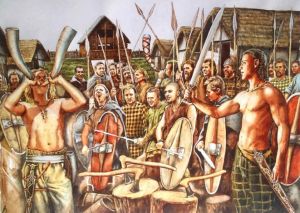
If you measure one nation against another no people among mankind are as numerous as all the Thracians, except for the Celts; this is why no one before the Romans ever subdued the whole of Thrace. But all Thrace is in the hands of Rome. Part of the Celtic country Rome considers useless because of extreme cold and poverty of soil, and deliberately overlooks it, but what the Celts had worth having belongs to Rome. (tr. Peter Levi)

Xenia

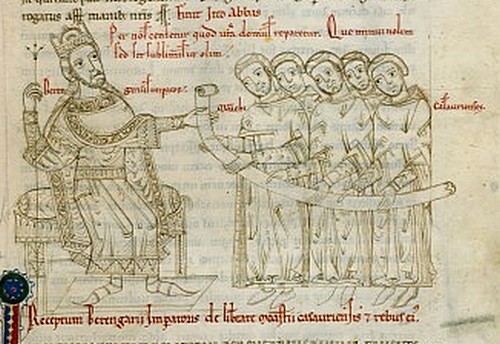
Berengar I
Berengar I of Italy (ca. 845-924)

“Non hederam sperare vales laurumve, libelle,
quae largita suis tempora prisca viris.
contulit haec magno labyrinthea fabula Homero
Aeneisque tibi, docte poeta Maro.
atria tunc divum resonabant carmine vatum:
respuet en musam quaeque proseucha tuam;
Pierio flagrabat eis sed munere sanguis:
prosequitur gressum nulla Thalia tuum.
hinc metuo rapidas ex te nigrescere flammas,
auribus ut nitidis vilia verba dabis.”
“quid vanis totiens agitas haec tempora dictis,
carmina quae profers si igne voranda times?
desine; nunc etenim nullus tua carmina curat:
haec faciunt urbi, haec quoque rure viri.
quid tibi praeterea duros tolerasse labores
profuit ac longas accelerasse vias?
endromidos te cura magis victusque fatigat:
hinc fugito nugas, quas memorare paras.”
“irrita saepe mihi cumulas quae murmura, codex,
non poterunt votis addere claustra meis.
seria cuncta cadant, opto, et labor omnis abesto,
dum capiti summo xenia parva dabo.
nonne vides, tacitis abeant ut saecla triumphis,
quos agitat toto orbe colendus homo?
tu licet exustus vacuas solvaris in auras,
pars melior summi scribet amore viri.
supplice sed voto Christum rogitemus ovantes,
quo faveat coeptis patris ab arce meis.
haud moveor plausu populi vel munere circi:
sat mihi pauca viri ponere facta pii.
Christe, poli convexa pio qui numine torques,
da, queat ut famulus farier apta tuus!”
(Gesta Berengarii, prologus)

“Little book of mine, you shouldn’t hope for the ivy and laurels which times of old bestowed upon great men. The labyrinthine Odyssey conferred these gifts on the great Homer, and the Aeneid on you, learned poet Vergil. In those days the emperors’ halls resounded with the songs of poets, but nowadays every shack rejects your verse. The poets’ blood back then was on fire with the inspiration of the muses; today no Thalia follows in your footsteps. I fear therefore that you will soon feed the ravenous flames if you offer your shoddy verse to sophisticated ears.”
“Why do you continue to assail these times with pointless words if you worry that the poems you offer will be devoured by the fire? Stop it; the fact is that nobody now cares for your verse. These days poems are written in the city and in the country. Besides, what good has it done you to suffer those hardships and to hurry down those long roads? Worrying about warm clothing and food exhausts you more, so begone with this rubbish you prepare to relate.”
“This idle prattle you often heap upon me, book of mine, will not be able put my desires in chains. May all serious matters fall aside, that is my wish, and away with all hard work: I shall give small gifts to the supreme chief. Don’t you see how with time all the victories of this illustrious sovereign, who should be praised all over the world, are forgotten? Even if you are burned and dissolved into thin air, more gifted writers will set to work because of their love for this sublime man. But let us address Christ in suppliant prayer and beseech him to favour my undertaking from his father’s castle on high. I am not moved by the people’s applause or the circus’s prize; just to recount a few deeds of this devout leader is enough for me. Christ, you who move the celestial spheres with a pious gesture, grant that your servant may speak worthily of these matters! (tr. David Bauwens)