Epenthei

toys-roman-chariot-carved-wood-2_orig

Ἐπεὶ δὲ Ἡρῴδης ὁ πάνυ ἐπένθει τὸν Πολυδεύκη πρὸ ὥρας ἀποθανόντα καὶ ἠξίου ὄχημα ζεύγνυσθαι αὐτῷ καὶ ἵππους παρίστασθαι ὡς ἀναβησομένῳ καὶ δεῖπνον παρασκευάζεσθαι, προσελθών, “παρὰ Πολυδεύκους,” ἔφη, “κομίζω σοὶ τινα ἐπιστολήν.” ἡσθέντος δὲ ἐκείνου καὶ οἰηθέντος ὅτι κατὰ τὸ κοινὸν καὶ αὐτὸς τοῖς ἄλλοις συντρέχει τῷ πάθει αὐτοῦ, καὶ εἰπόντος, “τί οὖν, ὦ Δημῶναξ, Πολυδεύκης ἀξιοῖ;” “αἰτιᾶταί σε,” ἔφη, “ὅτι μὴ ἤδη πρὸς αὐτὸν ἄπει.”
(Lucian, Demonax 24)

When Herodes the superlative was mourning Polydeukes and wanted a chariot made and horses put to it just as if the boy were going for a drive, and dinner regularly served for him, Demonax went to him and said: “I am bringing you a message from Polydeukes.” Herodes was pleased and thought that Demonax, like everyone else, was falling in with his humour; so he said: “Well, what does Polydeukes want, Demonax?” “He finds fault with you,” he said, “for not going to join him at once!” (tr. Austin Morris Harmon)

Turificari

dsdc

This is part 3 of 3. Part 1 is here. Part 2 is here.

Nec mora, post haec flammarum globis alta astrorum sidera rutilantibus, qui bello affusi prolixo diei spatio legitimo certamine desudaverant, ut conspexerunt, agnoscunt se proditos fore, moxque istorum acie hinc redeuntium a tergo opperiuntur. quibus versa facie dum resistere vellent, inter medias acies fiunt simul ammixti, gravisque contra istos pugnae iactura decurrit. at ubi concito gradu illis insequentibus, et istis contraire nitentibus, telluris locum aliquanto spatio planiorem obtendunt, quem ex detruncatis ibi corporibus hactenus incolae vocant. omnium tela contra istos vertuntur: et concurrentibus cunctis, iam fessis artubus, non amplius resistere possunt. ruunt inter carnificum ictus. et quamvis ex ethnicis plurimi sint prostrati, tamen ex istis pauci superstites remanserunt. sed melius fuit occisis gladio, quam in captivitate ductis. denique peracta caede, cum in unum convenissent, servorum indicio fodientes hinc atque illinc, universum, ecclesiae thesaurum reppererunt, quem illorum pavore servi Dei iam pridem absconderant: et illum sibi in praedam dividentes, cuncta vastaverunt, plurima fregerunt, frumentum et legumina in fluvium, qui secus effluit, disperserunt. et cum iam quasi post laborem et triumphum exultantes discumberent, bibebat ille nefandissimus Saugdan in sacris calicibus, et cum turibulis aureis sibi turificari iubebat. facta est haec caedes beatorum pro Christo monachorum decimo die mensis Octobris, feria tertia, qua secunda lux Lucine rotam ducebat, ab aedificatione vero ipsius monasterii iam iverat annus centesimus sexagesimus quintus.
(John the Monk, Chronicon Vulturnense 1.364-365 Federici)

Immediately after this, sheets of scarlet flame rose up on high toward the stars in heaven. When those who had rushed into battle and labored for a whole day in a fair fight saw this, they realized that they had been betrayed, and soon they were attacked from behind by the men of this troop returning [from the church]. While the defenders wished to resist those who were in their rear, they were trapped between the two [enemy] forces, and the fortunes of battle turned against them. As the enemy pursued them violently, and they strove to fight back, they reached a stretch of ground that was for some way more level, which the inhabitants still today call “the place of headless bodies.” The weapons of all were turned against them, and everybody ran, though their limbs were weary, for they could make no further resistance. They fled amid the blows of the executioners, and although many were laid low by the foreigners, a few of them remained alive. But it was better to be killed by the sword than to be led into captivity. Finally, bringing the slaughter to an end, the enemy gathered together, and guided by the serfs dug hither and thither; and they discovered all the church’s treasures, which the servants of God had hidden through fear of them the day before. They divided the booty among themselves, destroyed everything around, broke many things, and cast the grain and vegetables into the river that flowed nearby. As they relaxed after their labors and rejoiced in their triumph, the most wicked Sawdan drank from the holy chalices, and ordered incense to be wafted on himself from the golden thuribles. This slaughter of the blessed monks for Christ’s sake took place on Tuesday 10 October, at the second hour, when one hundred and sixty-five years had elapsed from the building of the monastery. (tr. Graham Loud)

Combuserunt

seanconnery

This is part 2 of 3. Part 1 is here.

In locum igitur iuxta pontem, qui Marmoreus dicitur, pariter convenerunt, captantes iter, quo ad monasterium pervenirent. illis ergo ex una parte, et istis ex altera consistentibus, validior pugna inter utrosque coepit, dum adversae partis hostes invalidi redderentur. etenim non erat illis leve transitum habere per istos. lapidibus quippe vel quibuslibet armis ad manum inventis, pellebant procul tyrannos, condensa silva et artae rupes nostrorum sublevare lacertos.
non gelidus sanguis oppletos strinxerat thoros
nam valida pugna diem abbreviant ultra
quam hiis necesse, vel illis fuerat ferre.
vibrantur enses, iaciuntur spicula, vectes,
et duris dumis haerebant spolia furis.
quid diu moror referre crimina dira,
plebeia manus quae gessit fronte iniqua?
quidam enim ex servis sacri monasterii, videntes se immenso certamine fatigari, et quia, divina gratia protegente, nulla dabatur facultas hostibus transeundi, magisque tyrannorum acies acrius prosternebantur, dominos suos deserentes, clam se subduxerunt; illisque in acie derelictis, Saracenorum regem adierunt, et libertatem cum vita ab eo postulantes, maioris lucri victoriaeque potioris eventum se ferre posse dixerunt. mox ille gavisus, servorum animos donis aureis et mortiferis suasionibus oblectans, incitat explere promissa. sponsione ergo accepta, et inito foedere, mali malorum duces effecti, dominis illorum nescientibus, verso itinere pars maxima pugnatorum, subito ex adverso super sacrum monasterium irruerunt, eumque undique circumdantes ignibus combuserunt, sanctos etiam seniores, quos ibidem invenerunt, gladiis necaverunt. exstat igitur sanctorum sanguis monachorum pro Christo effusus, evidentia indicia hodieque demonstrans, illitis vel aspersis eiusdem ecclesiae parietum ac pavimentorum saxis ac lapidibus.
(John the Monk, Chronicon Vulturnense 1.363-364 Federici)

Thus they mustered at a spot near the Marble Bridge,* blocking the road that led to the monastery. They stood on one side [of the river] and their opponents on the other, and a fierce battle began between them. The enemy were left helpless on the opposite bank, for it was no easy matter to cross to the near side. Seizing stones and other sorts of weapons, they drove the tyrants some way back, while the dense woods and the walls assisted the courage of our men.
No icy blood constrained their powerful muscles
For they cut the day short by fierce fighting.
That makes it hard for both our men and the enemy to endure.
Swords are brandished, javelins and darts are thrown,
And the plunder of the thief sticks fast in the sharp thorns.
Why do I spend such a long time relating the dreadful crimes
That the hand of the vulgar has carried out with evil intent?
However, some of the serfs of the holy monastery, exhausted by this great battle, and seeing that through the protection of Divine grace no opportunity had been given for the enemy to cross [the river], but rather that the battle line of the enemy was being fiercely struck down, deserted their lords. They secretly sloped away, abandoning their lords in the midst of the fight. They went to the king of the Saracens, begging their lives and freedom from him, and saying that they could bring him a favorable otucome and the great rewards of victory. He immediately rejoiced, seducing the minds of the serfs with golden gifts and deadly promises. These promises were accepted and an agreement was made; and without the knowledge of their lords, these evil men acted as guides to the [other] evildoers. Going by a back route, a large party of warriors suddenly rushed into the monastery from the other side, and set light to it, setting fires on every side. They also put all the elders whom they found there to the sword. Thus the blood of these holy monks was shed for Christ. The marks [of this] are clear and can be seen today, having been smeared or sprinkled on the wall of the church, on the flagstones of the floor and on the stones.

* A bridge crossing the river Volturno, very near the complex of monastery buildings.

(tr. Graham Loud, with his note)

Profana

1200px-San_Vincenzo_al_Volturno
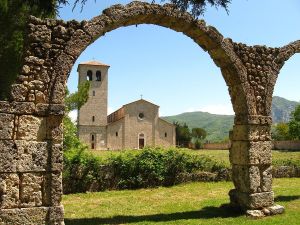
Abbazia di San Vincenzo al Volturno

This is part 1 of 3.

Cum nefanda gens Agarenorum ceteras terrarum partes depraedantes, incendentes ac subvertentes consumerent, tandem profana turba impiorum, cuius manus sunt contra omnes, necdum humano sanguine satiata, omnibus bestiis atrociores, ad pretiosi Martyris Vincentii sacrum coenobium furibunda procedit. moris tunc erat monachorum utriusque cenobii Beatissimi Vincentii, et Sanctissimi Benedicti caritatis gratia se invicem sedule visitare. cum igitur die quadam ad praedictum coenobium fratres quidam monasterii Casinensis de more abissent, et de suo ad invicem ordine loquerentur, repente illuc Saugdan saevissimus cum suis satellitibus supervenit. cuius monachi rumore comperto, qui advenerant ad castellum ipsius monasterii proximum, maturato cursu, nimis licet pavidi, incolumes tamen aufugerunt. quod ubi a Dei servis auditum est in monasterio, ilico omnem ecclesiae thesaurum absconderunt. ipsi vero non timore territi, sed constantes atque intrepidi, invicem se cohortantes, paucis tantum relictis senioribus aetate et vita venerabilibus ad ecclesiae munimina, reliqui omnes cum subiectis sibi famulis in obviam procedunt venientibus ethnicis.
(John the Monk, Chronicon Vulturnense 1.362-363 Federici)

When the evil race of the Agarenes* had wasted other parts of these lands through plunder, fire, and destruction, at length this profane crowd of unbelievers, whose hands are against all, than whom no beast is more fierce, and who were not yet satiated with human blood, turned their fury against the monastery of the holy martyr Vincenzo. It was then the custom for the monks of both the monasteries of the most blessed Vincenzo and the most blessed Benedict through the grace of charity to visit each other regularly. When therefore some brothers of the monastery of Cassino were going one day to the aforesaid monastery, as was customary, and speaking to one another about their observance, suddenly the most savage Sawdan and his minions appeared. The monks heard a rumor of this, and went with the utmost haste to the castellum close to the monastery; although they were greatly afraid, they were able to flee in safety. When the servants of God in the monastery heard this news, they hid all the treasures of the church in that very spot. They themselves were not stupefied by fear, but constant and intrepid, and encouraging each other. They left a few of the elders, venerable in age and way of life, to take shelter in the church, while the remainder, with the servants subject to them, went to meet the arrival of the foreigners.

* A biblical name for Arabs—”the descendants of Hagar.”
** Sawdan had been the emir of Bari during the period when this port was in Muslim hands, 843-70. He was probably dead by 881, so the chronicler was in error. His name was included since he was known to be the leading figure in the attacks on southern Italy at this period.

(tr. Graham Loud, with his notes)

Gemini

duana twins 14mar13

Mercator quidam fuit Syracusis senex,
ei sunt nati filii gemini duo,
ita forma simili pueri, ut mater sua
non internosse posset quae mammam dabat,
neque adeo mater ipsa quae illos pepererat—
ut quidem ille dixit mihi, qui pueros viderat:
ego illos non vidi, ne quis vostrum censeat.
postquam iam pueri septuennes sunt, pater
oneravit navim magnam multis mercibus;
imponit geminum alterum in navim pater,
Tarentum avexit secum ad mercatum simul,
illum reliquit alterum apud matrem domi.
Tarenti ludi forte erant quom illuc venit.
mortales multi, ut ad ludos, convenerant:
puer aberravit inter homines a patre.
Epidamniensis quidam ibi mercator fuit,
is puerum tollit avehitque Epidamnum eum.
pater eius autem postquam puerum perdidit,
animum despondit eaque is aegritudine
paucis diebus post Tarenti emortuost.
postquam Syracusas de ea re rediit nuntius
ad avom puerorum, puerum surruptum alterum
patremque pueri ess’ Tarenti emortuom,
immutat nomen avos huic gemino alteri;
ita illum dilexit qui surruptust alterum:
illius nomen indit illi qui domi est,
Menaechmo, idem quod alteri nomen fuit;
et ipsus eodem est avos vocatus nomine;
propterea illius nomen memini facilius,
quia illum clamore vidi flagitarier.
(Plautus, Menaechmi 17-46)

There was a certain old merchant in Syracuse. Two twin sons were born to him, boys of such similar looks that their wet nurse who gave them the breast could not tell them apart, nor for that matter the mother herself who’d given birth to them—at least someone who’d seen the boys told me so. haven’t seen them, in case any of you supposes that I did. When the boys were now seven years old, their father loaded a large ship with much freight. The father put one twin onto the ship and took him with him to Tarentum to the market. He left the other one at home with his mother. In Tarentum there was by chance a festival when he arrived. Many people had gathered, as they do at festivals. The boy strayed from his father among the crowd. There was a certain merchant from Epidamnus there. He picked the boy up and carried him off to Epidamnus. But aftter his father lost the boy, he despaired and because of his grief for him died a few days later in Tarentum. After the news about this came back to Syracuse to the grandfather of the boys, that the one boy had been kidnapped and that the boy’s father had died in Tarentum, the grandfather changed the name of this other twin; so much did he love that other one who was snatched. He gave his name to the one who was at home, Menaechmus, the same name the other one had. And the grandfather himself was called by the same name. I remember his name more easily for the simple reason that I saw him being dunned loudly. (tr. Wolfgang De Melo)

Eloquium

1_6f614c06fc5b4bd84529f5e9294c4a40
Homeri opera

Utque parens rerum fontes et flumina magnae
suggerit Oceanus terrae, sic omnis ab istis
docta per ora virum decurrit gratia chartis;
hinc fusa innumeris felix opulentia saeclis
ditavit mentes, tacitoque infloruit aevo.
omnia ab his et in his sunt omnia, sive beati
te decor eloquii seu rerum pondera tangunt.
nam quae tam varium Memphitis stamen harundo
separat, aut quae sic Babylonos texta potentis
sollicita pinguntur acu, quae tanta colorum
gloria, cum pinnis zephyri rorantibus adsunt!
quantus honor vocum, quam multis dives abundat
floribus, et claris augescit lingua figuris!
sive libet tenui versum deducere filo,
seu medium confine tenet, seu robore toto
fortior assurgit; seu vena paupere fertur
aridius, celeri seu se brevis incitat alveo,
gurgite seu pleno densisque opulentior undat
vorticibus, sive humentes laeto ubere ripas
daedala germinibus variat: maiore nec umquam
sermo potens meminit se maiestate loquentem.
quod si facta virum victuris condere chartis.
flectere si mavis orando et fingere mentes,
hunc optato ducem. Non causas doctius alter
personamque locumque modosque et tempus et arma
remque ipsam expediat, dum nunc iactantior exit
nunc contorta ruit nunc se facundia profert
simplicior, varia nunc floret imagine rerum:
dulcius eloquium nulli nec apertior umquam
vis fandi fuit aut quae mentibus acrior instet;
indole quemque sua pingit, sua cuique decenter
attribuit verba et mores unumque tenorem
semper amat, meminitque sui; scit et unde moveri
et quo sit prodire tenus fusumque gubernat
arte opus, et mediis prima ac postrema revincit.
nunc teneras vocat ad lacrimas, nunc igneus iram
suscitat; interdum retrahit, probat, arguit, urget;
nunc nova suspendunt avidas miracula mentes,
feta bonis, ipsum utiliter celantia verum.
(Angelus Politianus, Ambra 476-514)

And as Ocean, the parent of the elements, supplies the springs and rivers of the great earth, so from these pages every grace flowed down through the learned mouths of men; from them a fecund opulence, diffused through countless ages, has enriched minds and flowered in the silent course of history. All things derive from them and in them are all things, whether you are touched by the beauty of his rich eloquence or the gravity of the subject. For what a vari-colored warp the weaver’s reed separates at Memphis, what fabrics are embroidered by the painstaking needle of mighty Babylon, what a great riot of colors along with the zephyrs, their wings dripping with dew, are present in him! What beauty of words, what rich abundance of colors and what elegant figures adorn his style! Whether he wishes to spin his verse with a slender thread or holds to a middle style or rises more forcefully with full strength; whether he is borne along more unadorned with thinner vein, or more compressed, rushes forward in swift course, or ripples more sumptuously at full flood and in swirling eddies, or whether with Daedalian artistry and rich abundance he variegates the moist banks with flowering buds, powerful Eloquence never remembers speaking with greater majesty. But if you prefer to record the mighty feats of heroes in immortal pages or to direct and mould men’s minds by your oratory, choose him as your gide. No other can expound more learnedly the causes, the personalities, the place and the circumstances, the time, the arms and the action itself, while at one time his eloquence bursts forth more exultantly, now it rushes along with twists and turns, now it moves forward more simply, now richly ornamented, it bursts into flower with a multiplicity of images. No one possessed a sweeter eloquence; to none was ever given a more lucid power of expression; none could touch the spirit more poignantly; he depicts each one according to his true character, he attributes words and conduct proper to each, he loves to maintain an even tenor, true to himself, and he knows both from whence to begin the narrative and how far to proceed, and he controls the wide scope of his work artistically and binds the middle together with the beginning and the end. Now he incites to tender tears, now with passion he rouses to anger; at different times he holds back, approves, rebukes, urges forward; now unheard of marvels, abounding with good things hold avid minds in suspense, usefully concealing the inner truth. (tr. Charles Fantazzi)

Coniunctio

3f8c45ecaa18df39d0ca71dde4b4012e

Gradus autem plures sunt societatis hominum. ut enim ab illa infinita discedatur, proprior est eiusdem gentis, nationis, linguae, qua maxime homines coniunguntur. Interius etiam est eiusdem esse civitatis; multa enim sunt civibus inter se communia, forum, fana, porticus, viae, leges, iura, iudicia, suffragia, consuetudines praeterea et familiaritates multisque cum multis res rationesque contractae. artior vero colligatio est societatis propinquorum; ab illa enim inmensa societate humani generis in exiguum angustumque concluditur. nam cum sit hoc natura commune animantium, ut habeant libidinem procreandi, prima societas in ipso coniugio est, proxima in liberis, deinde una domus, communia omnia; id autem est principium urbis et quasi seminarium rei publicae. sequuntur fratrum coniunctiones, post consobrinorum sobrinorumque, qui cum una domo iam capi non possint, in alias domos tamquam in colonias exeunt. sequuntur conubia et affinitates ex quibus etiam plures propinqui; quae propagatio et suboles origo est rerum publicarum. Sanguinis autem coniunctio et benivolentia devincit homines et caritate. magnum est enim eadem habere monumenta maiorum, eisdem uti sacris, sepulcra habere communia.
(Cicero, De Officiis 1.53-55)

There are indeed several degrees of fellowship among men. To move from the one that is unlimited, next there is a closer one of the same race, tribe and tongue, through which men are bound strongly to one another. More intimate still is that of the same city, as citizens have many things that are shared with one another: the forum, temples, porticoes and roads, laws and legal rights, law-courts and political elections; and besides these acquaintances and companionship, and those business and commercial transactions that many of them make with many others. A tie narrower still is that of the fellowship between relations: moving from that vast fellowship of the human race we end up with a confined and limited one. For since it is by nature common to all animals that they have a drive to procreate, the first fellowship exists within marriage itself, and the next with one’s children. Then, there is the one house in which everything is shared. Indeed that is the principle of a city and the seed-bed, as it were, of a political community. Next there follow bonds between brothers, and then between first cousins and second cousins, who cannot be contained in one house and go out to other houses, as if to colonies. Finally there follow marriages and those connections of marriage from which even more relations arise. In such propagation and increase political communities have their origin. Moreover, the bonding of blood holds men together by goodwill and by love; for it is a great thing to have the same ancestral memorials, to practise the same religious rites, and to share common ancestral tombs. (tr. Miriam Tamara Griffin & E. Margaret Atkins)

Fortuna

untitled

O Fortuna,
velut luna
statu variabilis,
semper crescis
aut decrescis,
vita detestabilis.
nunc obdurans
et tunc curans
ludo mentis aciem,
egestatem,
potestatem,
dissolvis ut glaciem.

sors immanis
et inanis,
rota tu volubilis,
status malus,
vana salus
semper dissolubilis.
obumbrata
et velata
michi quoque niteris;
nunc per ludum
dorsum nudum
fero tui sceleris.

sors salutis
et virtutis
mihi nunc contraria.
est affectus
et defectus
semper in angaria.
hac in hora
sine mora
corde pulsum tangite;
quod per sortem
sternit fortem
mecum omnes plangite.

(Carmina Burana 17)

Oh, Fortune,
like the moon
that is constantly changing,
you are always waxing
or waning,
despicable for your changeful nature.
for your amusement you now harden,
now soften
the keen edge of your intentions,
melting poverty
or power
like ice.

Fortune, you are monstrous
and vacuous,
you are a revolving wheel,
an unsure foothold,
a treacherous refuge,
always ready to melt away.
Shadowy
and veiled,
you exercise your power on me too;
my back is now bare
from gambling
thanks to your villainy.

My fortunate position
of safety and strength
has now been turned upside down.
Success
or failure
are now always dependent on my service to another.
Now
without delay,
strum the lutes!
Join with me, all of you, in lamenting
that Fortune has arbitrarily brought
a strong man down.

(tr. David A. Traill)

Adsis

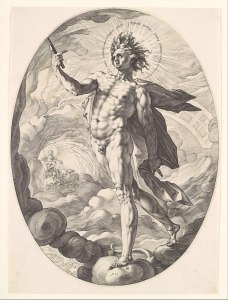
Hendrick Goltzius, Apollo (2)
Hendrick Goltzius, Apollo

Phoebe parens, seu te Lyciae Pataraea nivosis
exercent dumeta iugis, seu rore pudico
Castaliae flavos amor est tibi mergere crines,
seu Troiam Thymbraeus habes, ubi fama volentem
ingratis Phrygios umeris subiisse molares,
seu iuvat Aegaeum feriens Latonius umbra
Cynthus et assiduam pelago non quaerere Delon:
tela tibi longeque feros lentandus in hostes
arcus et aetherii dono cessere parentis
aeternum florere genas; tu doctus iniquas
Parcarum praenosse manus fatumque quod ultra est
et summo placitura Iovi, quis letifer annus,
bella quibus populis, quae mutent sceptra cometae;
tu Phryga submittis citharae, tu matris honori
terrigenam Tityon Stygiis extendis harenis;
te viridis Python Thebanaque mater ovantem
horruit in pharetris, ultrix tibi torva Megaera
ieiunum Phlegyan subter cava saxa iacentem
aeterno premit accubitu dapibusque profanis
instimulat, sed mixta famem fastidia vincunt:
adsis o memor hospitii, Iunoniaque arva
dexter ames, seu te roseum Titana vocari
gentis Achaemeniae ritu, seu praestat Osirim
frugiferum, seu Persei sub rupibus antri
indignata sequi torquentem cornua Mithram.
(Statius, Theb. 1.696-720)

Phoebus, Parent—whether Patara’s* thickets keep You
busy on Lycia’s snowy slopes; or it’s Your desire to
rinse Your golden curls in Castalia’s pure spring water;
or, as Thymbra’s Lord, You dwell in Troy where, they say,
You bore on Your shoulders, unthanked, blocks of Phrygian stone;
or whether You favor Leto’s Cynthus, which casts its shadow
across the Aegean, or Delos, anchored, adrift no more—
Yours the barbs and bow dealing death from afar to fierce
foes, on You did celestial parents bestow a face
ever in bloom and the skill to know in advance the Spinners’
uneven handiwork and the fate that lies beyond,
and what Jove Most High intends, which year death will strike,
which nations will go to war, which scepters comets will change;
You made the Phrygian kneel to Your lyre; for Your mother’s
honor, stretched earth-born Tityos out on Stygian sands;
green Python—the Theban mother too—shook to see You
vaunting Your archer’s success; to avenge You, grim Megaera
keeps famished Phlegyas*** pinned deep under cavernous rock,
forever at table and tortured with banquet dishes defiled
so his hunger’s first mixed with, then killed by disgust**:—
be near us, remember we made You welcome, bless Juno’s
land and be kind, whether it’s right to invoke You as ‘rose-red
Titan,’ in Achaemenian litany, or as ‘Osiris,
Lord of Harvest,’ or – thinking how, deep in Persean rock-caves,
He wrangles headstrong bulls—should we invoke You as ‘Mithras’?

* Patara: principal city of Lycia and site of a famous oracle of Apollo, as are the following four sites.
** 709-715: A list of some of the god’s more prominent exploits; the Phrygian: Marysas; Your mother: Leto; the Theban mother: Niobê.
*** Phlegyas, father of Ixion, here receives punishments usually assigned to others, namely to Tantalus and Phineus, whose banquet was defiled by monstrous bird-women known as Harpies.

(tr. Jane Wilson Joyce, with her notes)

Fatiscunt

Somnium Scipionis
Somnium Scipionis

Omnia nata quidem pereunt et adulta fatiscunt;
nec manet in rebus quicquam mortalibus; unde
vir etenim sperare potest populusve quod alma
Roma nequit? facili labuntur saecula passu:
tempora diffugiunt; ad mortem curritis; umbra,
umbra estis pulvisque levis vel in aethere fumus
exiguus, quem ventus agat. quo sanguine parta
gloria? quo tanti mundo fugiente labores?
stare quidem vultis, sed enim rapidissima caeli
vos fuga praecipitat. cernis quam parva pudendi
imperii pateant circum confinia nostri?
haec tamen heu quanto nobis extenta labore!
nunc quoque quam multo vobis servanda periclo!
finge quod esse potest, et erit, nisi Fata benigni
paenitet incepti: totius sola sit orbis
Roma caput, terris dominetur sola subactis.
quid tamen hic magnum? tanto quid nomine dignum
invenis? angustis arctatus finibus orbis
insula parva situ est, curvis quam flexibus ambit
Oceanus, viden ut parvus cognomine magno?
nec tamen hanc totam incolitis. nam multa paludes,
multa tenent silvae; pars rupibus hispida torpet,
parsque riget glacie; pars squalet inusta calore,
serpentumque domos calidis tegit aestus harenis.
utque simul totum videas, huc lumina volve.
verticibus caeli adversos atque alta tenentes
cernis stare polos, subiectaque cuncta duobus
perpetuo durata gelu? Prohibetur ab illa
stirps hominum regione procul; nil nascitur illic
quod victum praestare queat. qua semita solis
latior, obliquusque vagis it circulus astris,
ignibus arva rubent, mediusque exaestuat ingens
pontus et ardorem male caeli temperat humor
subditus.
(Petrarch, Africa 2.344-377)

Everything that has been born dies and grows weak when aged. Nothing in mortal affairs is lasting. How can a man and his people hope for what mother Rome cannot? The centuries will slip by with little suffering. Ages will pass. You will hasten to your death. You are a shade, light ash or a bit of smoke, which even the wind may move. For what purpose is glory gained by blood? To what purpose are great labors in a fleeting world? Though you wish to stay, heaven’s swiftest flights cast you down. Do you see how close our shameful empire’s boundaries extend? With what great labor we stretched them! Now with how much danger must you likewise guard these things! Do what can be done, and it will be accomplished, unless these fruitful undertakings displease the Fates. Let Rome alone be the head of the entire world. Let her alone be mistress of conquered lands. Is it still a great thing? Do you find it worthy of such a name? The world is an island wedged in a small space by narrow boundaries, which winding Ocean embraces in his ambit. Do you not see how small it is, though great of name? Nor do you inhabit it all. For the marshes hold many, as do the forests. The rougher part is weighed down by crags, and another is stiffened by ice. The scorched part is burned by heat. Fire covers the homes of serpents with searing sands. Turn your eyes this way so that you may see the whole thing at once. Do you see that each pole that stands at heaven’s peaks supporting the heights has been made subject to and hardened by everlasting ice? The race of men has been forbidden from that far-off land. Nothing grows there that can sustain life. There the path of the sun is wider, its slanting circle goes among the wandering stars, the fields redden with fire, the great middle sea boils, and its subterranean liquid cools heaven’s fire poorly. (tr. Erik Z.D. Ellis)