Laniata

29820002907354823

Quibus ergo vos laudibus praedicem, fortissimi fratres? robur pectoris vestri et perseverantiam fidei quo praeconio vocis exornem? tolerastis usque ad consummationem gloriae durissimam quaestionem, nec cessistis suppliciis, sed vobis potius supplicia cesserunt. finem doloribus quem tormenta non dabant coronae dederunt. laniena gravior ad hoc diu perseveravit, non ut stantem fidem deiceret, sed ut homines Dei ad Dominum velocius mitteret. vidit admirans praesentium multitudo caeleste certamen Dei et spiritale, proelium Christi, stetisse servos eius voce libera, mente incorrupta, virtute divina, telis quidem saecularibus nudos, sed armis fidei credentis armatos. steterunt torti torquentibus fortiores et pulsantes ac laniantes ungulas pulsata ac laniata membra vicerunt. inexpugnabilem fidem superare non potuit saeviens diu plaga repetita, quamvis rupta compage viscerum torquerentur in servis Dei iam non membra sed vulnera. fluebat sanguis qui incendium persecutionis extingueret, qui flammas et ignes gehennae glorioso cruore sopiret. o quale illud fuit spectaculum Domini, quam sublime, quam magnum, quam Dei oculis sacramento ac devotione militis eius acceptum, sicut scriptum est in Psalmis Spiritu Sancto loquente ad nos pariter et monente: ‘pretiosa est in conspectu Dei mors iustorum eius’ [cf. Ps. 115.6]. pretiosa mors haec est quae emit immortalitatem pretio sui sanguinis, quae accipit coronam de consummatione virtutis.
(Cyprian, Epist. 10.2)

With what praises then should I commend you, most valiant Brethren? With what laudation of the voice should I extol the strength of your heart and the perseverance of your faith? You have endured, even to the consummation of glory, the hardest questioning; you have not yielded to torments, but rather the torments have yielded to you. An end of sorrows which torments did not give, crowns have given. The butcher’s stall has persisted for a time for this, not to cast down your abiding faith, but to send men of God more quickly to the Lord. The multitude of those present, admiring the celestial and spiritual combat of God, the battle of Christ, saw that His servants stood with a free voice, an incorruptible mind, a divinely inspired valor, stripped, indeed, of worldly weapons, but, believing, armed with the arms of faith. The tortured stood braver than the torturers; and battered and wounded limbs conquered hammering and tearing nails. Long repeated cruel flogging was not able to overcome an unconquerable faith although, with the structure of their internal organs ruptured, no longer members, but wounds, of the servants of God were tortured. Blood which might extinguish the conflagration of persecution, which might quiet the flames and fires of hell with glorious gore, was flowing. Oh, what was that spectacle of the Lord, how sublime, how exalted, how acceptable to the eyes of God in the solemn pledge and devotion of His army, as it is written in the Psalms when the Holy Spirit speaks to us likewise and warns: ‘Precious in the sight of God is the death of His faithful ones’! This death which has bought immortality at the price of its blood, which has received the crown from the consummation of its valor, is precious. (tr. Rose Bernard Donna)

Kallos

C7mXQuMX0AAGALL

Γνοίη δ’ ἄν τις κἀκεῖθεν ὅσον διαφέρει τῶν ὄντων*, ἐξ ὧν αὐτοὶ διατιθέμεθα πρὸς ἕκαστον αὐτῶν. τῶν μὲν γὰρ ἄλλων ὧν ἂν ἐν χρείᾳ γενώμεθα, τυχεῖν μόνον βουλόμεθα, περαιτέρω δὲ περὶ αὐτῶν οὐδὲν τῇ ψυχῇ προσπεπόνθαμεν· τῶν δὲ καλῶν ἔρως ἡμῖν ἐγγίγνεται, τοσούτῳ μείζω τοῦ βούλεσθαι ῥώμην ἔχων ὅσῳ περ καὶ τὸ πρᾶγμα κρεῖττόν ἐστιν. καὶ τοῖς μὲν κατὰ σύνεσιν ἢ κατ᾽ ἄλλο τι προέχουσιν φθονοῦμεν, ἢν μὴ τῷ ποιεῖν ἡμᾶς εὖ καθ’ ἑκάστην τὴν ἡμέραν προσαγάγωνται καὶ στέργειν σφᾶς αὐτοὺς ἀναγκάσωσιν· τοῖς δὲ καλοῖς εὐθὺς ἰδόντες εὖνοι γιγνόμεθα καὶ μόνους αὐτοὺς ὥσπερ τοὺς θεοὺς οὐκ ἀπαγορεύομεν θεραπεύοντες, ἀλλ’ ἥδιον δουλεύομεν τοῖς τοιούτοις ἢ τῶν ἄλλων ἄρχομεν, πλείω χάριν ἔχοντες τοῖς πολλὰ προστάττουσιν ἢ τοῖς μηδὲν ἐπαγγέλλουσιν. καὶ τοὺς μὲν ὑπ᾽ ἄλλῃ τινὶ δυνάμει γιγνομένους λοιδοροῦμεν καὶ κόλακας ἀποκαλοῦμεν, τοὺς δὲ τῷ κάλλει λατρεύοντας φιλοκάλους καὶ φιλοπόνους εἶναι νομίζομεν. τοσαύτῃ δ’ εὐσεβείᾳ καὶ προνοίᾳ χρώμεθα περὶ τὴν ἰδέαν τὴν τοιαύτην ὥστε καὶ τῶν ἐχόντων τὸ κάλλος τοὺς μὲν μισθαρνήσαντας καὶ κακῶς βουλευσαμένους περὶ τῆς αὑτῶν ἡλικίας μᾶλλον ἀτιμάζομεν ἢ τοὺς εἰς τὰ τῶν ἄλλων σώματ’ ἐξαμαρτόντας· ὅσοι δ’ ἂν τὴν αὑτῶν ὥραν διαφυλάξωσιν ἄβατον τοῖς πονηροῖς ὥσπερ ἱερὸν ποιήσαντες, τούτους εἰς τὸν ἐπίλοιπον χρόνον ὁμοίως τιμῶμεν ὥσπερ τοὺς ὅλην τὴν πόλιν ἀγαθόν τι ποιήσαντας. καὶ τὶ δεῖ τὰς ἀνθρωπίνας δόξας λέγοντα διατρίβειν; ἀλλὰ Ζεὺς ὁ κρατῶν πάντων ἐν μὲν τοῖς ἄλλοις τὴν αὑτοῦ δύναμιν ἐνδείκνυται, πρὸς δὲ τὸ κάλλος ταπεινὸς γιγνόμενος ἀξιοῖ πλησιάζειν. Ἀμφιτρύωνι μὲν γὰρ εἰκασθεὶς ὡς Ἀλκμήνην ἦλθε, χρυσὸς δὲ ῥυεὶς Δανάῃ συνεγένετο, κύκνος δὲ γενόμενος εἰς τοὺς Νεμέσεως κόλπους κατέφυγε, τούτῳ δὲ πάλιν ὁμοιωθεὶς Λήδαν ἐνύμφευσεν· ἀεὶ δὲ μετὰ τέχνης ἀλλ’ οὐ μετὰ βίας θηρώμενος φαίνεται τὴν φύσιν τὴν τοιαύτην. τοσούτῳ δὲ μᾶλλον προτετίμηται τὸ κάλλος παρ’ ἐκείνοις ἢ παρ’ ἡμῖν ὥστε καὶ ταῖς γυναιξὶ ταῖς αὑτῶν ὑπὸ τούτου κρατουμέναις συγγνώμην ἔχουσι, καὶ πολλὰς ἄν τις ἐπιδείξειε τῶν ἀθανάτων, αἳ θνητοῦ κάλλους ἡττήθησαν, ὧν οὐδεμία λαθεῖν τὸ γεγενημένον ὡς αἰσχύνην ἔχον ἐζήτησεν, ἀλλ’ ὡς καλῶν ὄντων τῶν πεπραγμένων ὑμνεῖσθαι μᾶλλον ἢ σιωπᾶσθαι περὶ αὐτῶν ἠβουλήθησαν. μέγιστον δὲ τῶν εἰρημένων τεκμήριον. πλείους γὰρ ἂν εὕροιμεν διὰ τὸ κάλλος ἀθανάτους γεγενημένους ἢ διὰ τὰς ἄλλας ἀρετὰς ἁπάσας.

sc. τὸ κάλλος

(Isocrates, Or. 10.55-60)

One may also understand how much beauty excels over other things in the world from our attitudes toward each of them. We wish to obtain other things only if we need them, but spiritually we experience no further concern over them. A longing for beautiful things, however, is innate in us, and it has a strength greater than our other wishes, just as its object is stronger. We distrust those who are foremost in intelligence or anything else, unless they win us over by treating us well every day and compelling us to like them. But we have goodwill toward beautiful people as soon as we see them, and we serve only them without fail, as if they were gods. We enslave ourselves to such people with more pleasure than we rule others, and we have more gratitude to them, even when they impose many tasks on us, than to those who demand nothing. We criticize those who come under any other power and denounce them as flatterers, but we think that those who serve beauty are idealistic and industrious. We feel such reverence and concern for this sort of quality that we disenfranchise those with beauty who have prostituted it and abused their own youth more than those who wrong the bodies of others. Those who guard their youth undefiled by base men, as if it were a temple, we honor for the rest of time as if they had done something good for the entire city. Why spend my time discussing human opinions? Zeus, the most powerful of all, has displayed his power in other things, but he thinks it right to become humble as he approaches beauty. He took the form of Amphitryon when he came to Alcmene. He joined Danaë as a golden shower. He became a swan when he fled into the bosom of Nemesis and again likened himself to one when he wed Leda. Clearly he always pursues this quality of nature with craft, not with violence. Beauty is so much more preferred among the gods than among us that they even pardon their wives when they are overcome by it. One might point out many immortal wives who have been overcome by a mortal’s beauty. None has sought to have the event pass unnoticed, as if it were something shameful. They have wanted what they did to be exalted in song as something noble, rather than concealed by silence. The greatest evidence of what I have been saying is that we would find that more mortals have become immortal because of their beauty than because of all other qualities (aretai).


And we may learn how superior beauty is to all other things by observing how we ourselves are affected by each of them severally. For in regard to the other things which we need, we only wish to possess them and our heart’s desire is set on nothing further than this; for beautiful things, however, we have an inborn passion whose strength of desire corresponds to the superiority of the thing sought. And while we are jealous of those who excel us in intelligence or in anything else, unless they win us over by daily benefactions and compel us to be fond of them, yet at first sight we become welldisposed toward those who possess beauty, and to these alone as to the gods we do not fail in our homage; on the contrary, we submit more willingly to be the slaves of such than to rule all others, and we are more grateful to them when they impose many tasks upon us than to those who demand nothing at all. We revile those who fall under the power of anything other than beauty and call them flatterers, but those who are subservient to beauty we regard as lovers of beauty and lovers of service. So strong are our feelings of reverence and solicitude for such a quality, that we hold in greater dishonour those of its possessors who have trafficked in it and ill-used their own youth than those who do violence to the persons of others ; whereas those who guard their youthful beauty as a holy shrine, inaccessible to the base, are honoured by us for all time equally with those who have benefited the city as a whole. But why need I waste time in citing the opinions of men? Nay, Zeus, lord of all, reveals his power in all else, but deigns to approach beauty in humble guise. For in the likeness of Amphitryon he came to Alcmena, and as a shower of gold he united with Danae, and in the guise of a swan he took refuge in the bosom of Nemesis, and again in this form he espoused Leda; ever with artifice manifestly, and not with violence, does he pursue beauty in women. And so much greater honour is paid to beauty among the gods than among us that they pardon their own wives when they are vanquished by it; and one could cite many instances of goddesses who succumbed to mortal beauty, and no one of these sought to keep the fact concealed as if it involved disgrace; on the contrary, they desired their adventures to be celebrated in song as glorious deeds rather than to be hushed in silence. The greatest proof of my statements is this: we shall find that more mortals have been made immortal because of their beauty than for all other excellences.

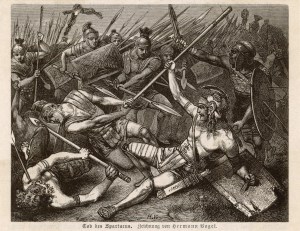
Gladiatores

Hermann Vogel, Tod des Spartacus, 1882
Hermann Vogel, Der Tod des Spartacus (1882)

Enimvero et servilium armorum dedecus feras; nam etsi per fortunam in omnia obnoxii, tamen quasi secundum hominum genus sunt et in bona libertatis nostrae adoptantur: bellum Spartaco duce concitatum quo nomine appellem nescio; quippe cum servi militaverint, gladiatores imperaverint, illi infimae sortis homines, hi pessumae auxere ludibriis calamitatem Romanam. Spartacus, Crixus, Oenomaus effracto Lentuli ludo cum triginta aut amplius eiusdem fortunae viris erupere Capua; servisque ad vexillum vocatis cum statim decem milia amplius coissent, homines modo effugisse contenti, iam et vindicari volebant. prima sedes velut rabidis beluis mons Vesuvius placuit. ibi cum obsiderentur a Clodio Glabro, per fauces cavi montis vitineis delapsi vinculis ad imas eius descendere radices et exitu inviso nihil tale opinantis ducis subito impetu castra rapuerunt; inde alia castra, Vareniana, deinceps Thorani; totamque pervagantur Campaniam. nec villarum atque vicorum vastatione contenti Nolam atque Nuceriam, Thurios atque Metapontum terribili strage populantur. affluentibus in diem copiis cum iam esset iustus exercitus, e viminibus pecudumque tegumentis inconditos sibi clipeos et ferro ergastulorum recocto gladios ac tela fecerunt. ac ne quod decus iusto deesset exercitui, domitis obviis etiam gregibus paratur equitatus, captaque de praetoribus insignia et fasces ad ducem detulere. nec abnuit ille de stipendiario Thrace miles, de milite desertor, inde latro, deinde in honorem virium gladiator. quin defunctorum quoque proelio ducum funera imperatoriis celebravit exsequiis, captivosque circa rogum iussit armis depugnare, quasi plane expiaturus omne praeteritum dedecus, si de gladiatore munerarius fuisset. inde iam consulares quoque aggressus in Appenino Lentuli exercitum cecidit, apud Mutinam Publi Crassi castra delevit. quibus elatus victoriis de invadenda urbe Romana—quod satis est turpitudini nostrae—deliberavit. tandem enim totis imperii viribus contra myrmillonem consurgitur pudoremque Romanum Licinius Crassus asseruit; a quo pulsi fugatique—pudet dicere—hostes in extrema Italiae refugerunt. ibi circa Brittium angulum clusi, cum fugam in Siciliam pararent neque navigia suppeterent, ratesque ex trabibus et dolia conexa virgultis rapidissimo freto frustra experirentur, tamen eruptione facta dignam viris obiere mortem et, quod sub gladiatore duce oportuit, sine missione pugnatum est. Spartacus ipse in primo agmine fortissime dimicans quasi imperator occisus est.
(Florus, Epit. 2.8)

One can tolerate, indeed, even the disgrace of a war against slaves; for although, by force of circumstances, they are liable to any kind of treatment, yet they form as it were a class (though an inferior class) of human beings and can be admitted to the blessings of liberty which we enjoy. But I know not what name to give to the war which was stirred up at the instigation of Spartacus; for the common soldiers being slaves and their leaders being gladiators—the former men of the humblest, the latter men of the worst, class—added insult to the injury which they inflicted upon Rome. Spartacus, Crixus and Oenomaus, breaking out of the gladiatorial school of Lentulus with thirty or rather more men of the same occupation, escaped from Capua. When, by summoning the slaves to their standard, they had quickly collected more than 10,000 adherents, these men, who had been originally content merely to have escaped, soon began to wish to take their revenge also. The first position which attracted them (a suitable one for such ravening monsters) was Mt. Vesuvius. Being besieged here by Clodius Glabrus, they slid by means of ropes made of vine-twigs through a passage in the hollow of the mountain down into its very depths, and issuing forth by a hidden exit, seized the camp of the general by a sudden attack which he never expected. They then attacked other camps, that of Varenius and afterwards that of Thoranus; and they ranged over the whole of Campania. Not content with the plundering of country houses and villages, they laid waste Nola, Nuceria, Thurii and Metapontumb with terrible destruction. Becoming a regular army by the daily arrival of fresh forces, they made themselves rude shields of wicker-work and the skins of animals, and swords and other weapons by melting down the iron in the slave-prisons. That nothing might be lacking which was proper to a regular army, cavalry was procured by breaking in herds of horses which they encountered, and his men brought to their leader the insignia and fasces captured from the praetors, nor were they refused by the man who, from being a Thracian mercenary, had become a soldier, and from a soldier a deserter, then a highwayman, and finally, thanks to his strength, a gladiator. He also celebrated the obsequies of his officers who had fallen in battle with funerals like those of Roman generals, and ordered his captives to fight at their pyres, just as though he wished to wipe out all his past dishonour by having become, instead of a gladiator, a giver of gladiatorial shows. Next, actually attacking generals of consular rank, he inflicted defeat on the army of Lentulus in the Apennines and destroyed the camp of Publius Cassius at Mutina. Elated by these victories he entertained the project—in itself a sufficient disgrace to us—of attacking the city of Rome. At last a combined effort was made, supported by all the resources of the empire, against this gladiator, and Licinius Crassus vindicated the honour of Rome. Routed and put to flight by him, our enemies—I am ashamed to give them this title—took refuge in the furthest extremities of Italy. Here, being cut off in the angle of Bruttium and preparing to escape to Sicily, but being unable to obtain ships, they tried to launch rafts of beams and casks bound together with withies on the swift waters of the straits. Failing in this attempt, they finally made a sally and met a death worthy of men, fighting to the death as became those who were commanded by a gladiator. Spartacus himself fell, as became a general, fighting most bravely in the front rank. (tr. Edward Seymour Forster)

Inculta

autun
Autun

Nam quid ego de ceteris civitatis illius regionibus loquar, quibus illacrimasse te ipse confessus es? vidisti enim non, ut per agros aliarum urbium, omnia fere culta aperta florentia, vias faciles, navigera flumina ipsas oppidorum portas adluentia, sed statim ab eo flexu, e quo retrorsum via ducit in Belgicam, vasta omnia, inculta squalentia muta tenebrosa, etiam militares vias ita confragosas et alternis montibus arduas atque praecipites, ut vix semiplena carpenta, interdum vacua transmittant. ex quo saepe accidit ut obsequia nostra tarda sint, cum paucarum frugum nobis difficilior sit evectio quam ceteris plurimarum. quo magis, imperator, pietati tuae gratias agimus, qui cum scires internum regionum nostrarum habitum atque adspectum tam foedum tamque asperum, tamen illo deflectere et urbem illam sola opis tuae exspectatione viventem inlustrare dignatus es. boni principis est libenter suos videre felices, sed melioris invisere etiam laborantes. di immortales! quisnam ille tum nobis illuxit dies (iam enim ad praedicanda remedia numinis tui ordine suo pervenit oratio), cum tu, quod primum nobis signum salutis fuit, portas istius urbis intrasti!—quae te habitu illo in sinum reducto et procurrentibus utrimque turribus amplexu quodam videbantur accipere.
(Panegyrici Latini 5.7)

For why should I speak about the other districts belonging to that community, over which you yourself confessed to have shed tears? For you did not see, as throughout the territory of other cities, almost everything cultivated, cleared and flowering, with easy roads and navigable rivers washing the very gates of the towns, but right from that turnoff from which the road leads back to Belgica you saw everything devastated, uncultivated, neglected, silent and gloomy, and even the military roads so rough and steep and precipitous, with such a succession of mountains, that half-full wagons, and sometimes even empty ones, may scarcely travel along them. As a result, it often happens that our obligations are discharged late, since the transport of a small harvest is more difficult for us than that of a bountiful one is for others. For this reason, we are the more disposed to give thanks to your piety, O Emperor*, who, although you knew that the internal condition and appearance of our region was so vile and so rough, nonetheless were good enough to turn aside to it, and bring light to that city which lived solely in anticipation of your help. It is the mark of a good ruler that he is happy to see his subjects  prosperous, but of a better one that he visits them even when they are suffering. Immortal gods! What a day then shone upon us (for now my speech has reached in its course the celebration of your divinity’s assistance), when you entered the gates of this city**, which was the first sign of salvation for us. And the gates, drawn back in the likeness of a curve, with towers projecting on either side, seemed to receive you in a kind of embrace.

* Constantine.
** Autun.

(tr. Charles E.V. Nixon and Barbara Saylor Rodgers)

Asambalos

getty_rf_photo_of_mans_feet

Ἔθυε τῷ Ποσειδῶνι ὁ Πελίης, καὶ προεῖπε πᾶσι παρεῖναι· οἱ δὲ ἤϊσαν οἵ τε ἄλλοι πολῖται καὶ ὁ ’Ιήσων. ἔτυχε δὲ ἀροτρεύων ἐγγὺς τοῦ Ἀναύρου ποταμοῦ, ἀσάμβαλος δὲ διέβαινε τὸν ποταμόν, διαβὰς δὲ τὸν μὲν δεξιὸν ὑποδεῖται πόδα· τὸν δὲ ἀριστερὸν ἐπιλήθεται, καὶ ἔρχεται οὕτως ἐπὶ δεῖπνον. ἰδὼν δὲ ὁ Πελίης συμβάλλει τὸ μαντήϊον, καὶ τότε μὲν ἡσύχασε, τῇ δ’ ὑστεραίῃ μεταπεμψάμενος αὐτὸν ἤρετο ὅ τι <ἄν> ποιοίη εἰ αὐτῷ χρησθείη ὑπό του τῶν πολιτῶν ἀποθανεῖν· ὁ δὲ Ἰήσων, πέμψαι ἂν εἰς Αἶαν αὐτὸν ἐπὶ τὸ κῶας τὸ χρυσόμαλλον, ἄξοντα ἂν ἀπὸ Αἰήτεω. ταῦτα δὲ τῷ Ἰήσονι Ἥρη ἐς νόον βάλλει, ὡς ἔλθοι ἡ Μήδεια τῷ Πελίῃ κακόν.
(Pherecydes of Athens, fr. 105)

Pelias was sacrificing to Poseidon, and summoned all to attend. Among the citizens who came was Jason. He happened to be ploughing near the river Anauros, which he crossed without his sandals on; once across he tied on the right one, but forgot the left, and thus he came to the feast. Pelias saw him and understood the oracle. For the time being he kept quiet, but the next day he sent for him and asked what he would do if he had an oracle saying that one of the citizens would kill him; Jason replied that he would send him to fetch the golden fleece from Aietes. Hera put this in Jason’s mind so that Medea’s arrival would spell doom for Pelias. (tr. Robert Louis Fowler)

Sicas

71ejfVgJ9RL._SL1000_

This is part 3 of 3. Part 1 is here. Part 2 is here.

Quid ego nunc tibi de Africa, quid de testium dictis scribam? nota sunt, et ea tu saepius legito; sed tamen hoc mihi non praetermittendum videtur, quod primum ex eo iudicio tam egens discessit quam quidam iudices eius ante illud iudicium fuerunt, deinde tam invidiosus ut aliud in eum iudicium cottidie flagitetur. hic se sic habet ut magis timeant, etiam si quierit, quam ut contemnant, si quid commoverit. quanto melior tibi fortuna petitionis data est quam nuper homini novo, C. Coelio! ille cum duobus hominibus ita nobilissimis petebat ut tamen in iis omnia pluris essent quam ipsa nobilitas, summa ingenia, summus pudor, plurima beneficia, summa ratio ac diligentia petendi; ac tamen eorum alterum Coelius, cum multo inferior esset genere, superior nulla re paene, superavit. qua re tibi, si facies ea quae natura et studia quibus semper usus es largiuntur, quae temporis tui ratio desiderat, quae potes, quae debes, non erit difficile certamen cum iis competitoribus qui nequaquam sunt tam genere insignes quam vitiis nobiles; quis enim reperiri potest tam improbus civis qui velit uno suffragio duas in rem publicam sicas destringere?
(Quintus Tullius Cicero, Commentariolum Petitionis 10-12)

Need I write now to you of Africa and the statements of the witness? All that is well known; read it yourself, again and again. Yet this, I think, I should not leave out—that he came out of that trial as impoverished as some of his jury were before that trial, and so hated that there are daily clamours for another prosecution against him. His condition is such that, so far from fearing him even if he is doing nothing, I should despise him if he makes trouble. How much better luck has fallen to you in your canvass than to C. Coelius, another “new man,” a while ago! He stood against two men of the highest nobility, yet whose nobility was the least of their assets—great intelligence, high conscience, many claims to gratitude, great judgement and perseverance in electioneering; yet Coelius, though much inferior in birth and superior in almost nothing, defeated one of them. So for you, if you do what you are well endowed for doing by nature and by the studies which you have always practised—what the occasion demands, what you can and should do—it wil not be a hard contest with these competitors who are by no means as eminent in birth as they are notable in vice. Can there be a citizen so vile as to want to unsheathe, with one vote, two daggers against the State? (tr. David Roy Shackleton Bailey)

Nequitia

250px-Catilina2-Maccari_affresco

This is part 2 of 3. Part 1 is here. Part 3 is here.

Alter vero, di boni! quo splendore est? primum nobilitate eadem. num maiore? non. sed virtute. quam ob rem? quod Antonius umbram suam metuit, hic ne leges quidem, natus in patris egestate, educatus in sororiis stupris, corroboratus in caede civium, cuius primus ad rem publicam aditus in equitibus Romanis occidendis fuit (nam illis quos meminimus Gallis, qui tum Titiniorum ac Nanneiorum ac Tanusiorum capita demetebant, Sulla unum Catilinam praefecerat); in quibus ille hominem optimum, Q. Caucilium, sororis suae virum, equitem Romanum, nullarum partium, cum semper natura tum etiam aetate quietum, suis manibus occidit. quid ego nunc dicam petere eum tecum consulatum qui hominem carissimum populo Romano, M. Marium, inspectante populo Romano vitibus per totam urbem ceciderit, ad bustum egerit, ibi omni cruciatu lacerarit, vix vivo et spiranti collum gladio sua dextera secuerit, cum sinistra capillum eius a vertice teneret, caput sua manu tulerit, cum inter digitos eius rivi sanguinis fluerent; qui postea cum histrionibus et cum gladiatoribus ita vixit ut alteros libidinis, alteros facinoris adiutores haberet; qui nullum in locum tam sanctum ac tam religiosum accessit in quo non, etiam si in aliis culpa non esset, tamen ex sua nequitia dedecoris suspicionem relinqueret; qui ex curia Curios et Annios, ab atriis Sapalas et Carvilios, ex equestri ordine Pompilios et Vettios sibi amicissimos comparavit; qui tantum habet audaciae, tantum nequitiae, tantum denique in libidine artis et efficacitatis, ut prope in parentum gremiis praetextatos liberos constuprarit?
(Quintus Tullius Cicero, Commentariolum Petitionis 9-10)

As to the other, good heavens! What is his claim to glory? First, he has the same noble birth. Any greater nobility? No. But he has greater manliness. Why? Only because Antonius is afraid of his own shadow, whereas Catiline does not even fear the law. Born in his father’s beggary, bred in debauchery with his sister, grown up in civil slaughter, his first entry into public life was a massacre of Roman Knights (for Sulla had put Catiline in sole charge of those Gauls we remember, who kept mowing off the heads of Titinius and Nanneius and Tanusius and all). Among them he killed with his own hands his sister’s husband, the excellent Quintus Caucilius, a Roman Knight, neutral in politics, a man always inoffensive by nature and by that time also through advancing age. Need I go on? He to be running for the consulship with you—he who scourged Marcus Marius, the Roman People’s darling, all around the town before the Roman People’s eyes, drove him to the tomb, mangled him there with every torture, and with a sword in his right hand, holding his head of hair in his left, severed the man’s neck as he barely lived and breathed and carried the head in his hand, while rills of blood owed between his fingers! And then he lived with actors and gladiators as his accomplices, the former in lust, the latter in crime—he who could not enter any place so sacred and holy that he did not leave it under suspicion of being polluted by his mere wickedness, even if other people were guiltless; who got as his closest friends from the Senate House men like Curius and Annius, from the auctioneers’ halls men like Sapala and Carvilius, from the Order of Knights men like Pompilius and Vettius; who has such impudence, such wickedness, and besides such skill and efficiency in his lust that he has raped children in smocks practically at their parents’ knees. (tr. David Roy Shackleton Bailey)

Navo

jamespurefoy
James Purefoy as Mark Anthony in Rome

This is part 1 of 3. Part 2 is here. Part 3 is here.

Ac multum etiam novitatem tuam adiuvat quod eius modi nobiles tecum petunt ut nemo sit qui audeat dicere plus illis nobilitatem quam tibi virtutem prodesse oportere. nam P. Galbam et L. Cassium summo loco natos quis est qui petere consulatum putet? vides igitur amplissimis ex familiis homines, quod sine nervis sint, tibi pares non esse. at Antonius et Catilina molesti sunt. immo homini navo, industrio, innocenti, diserto, gratioso apud eos qui res iudicant, optandi competitores ambo a pueritia sicarii, ambo libidinosi, ambo egentes. eorum alterius bona proscripta vidimus, vocem denique audivimus iurantis se Romae iudicio aequo cum homine Graeco certare non posse, ex senatu eiectum scimus optimorum censorum existimatione, in praetura competitorem habuimus amico Sabidio et Panthera, cum ad tabulam quos poneret non haberet (quo iam in magistratu amicam quam domi palam haberet de machinis emit); in petitione autem consulatus caupones omnes compilare per turpissimam legationem maluit quam adesse et populo Romano supplicare.
(Quintus Tullius Cicero, Commentariolum Petitionis 7-8)

Another great help for your status as a “new man” is that your noble competitors are persons of whom nobody would venture to say that they should get more from their rank than you from your moral excellence. Who would think that Publius Galba and Lucius Cassius, high-born as they are, are candidates for the consulship? So you see that men of the greatest families are not equal to you, because they lack vigour. Or are Antonius and Catiline supposed to be the trouble? On the contrary, two assassins from boyhood, both libertines, both paupers, are just the competitors to be prayed for by a man of energy, industry, and blameless life, an eloquent speaker, with influence among those who judge in the law courts. Of those two, we have seen the one sold up by legal process; we have heard him declare on oath that he cannot compete in fair trial in Rome against a Greek; we know he was expelled from the Senate by the decision of admirable censors. He was a fellow candidate of ours for the praetorship, when Sabidius and Panthera were his only friends, when he had no slaves left to auction off (already in office he bought from the stands in the slave market a girl friend to keep openly at home). In consular candidature, rather than present himself to solicit the votes of the Roman people, he preferred a most wicked mission abroad, where he plundered all the innkeepers. (tr. David Roy Shackleton Bailey)

Devotum

photo-2

‘Impia Trinacriae sterilescant gaudia vobis
nec fecunda, senis nostri felicia rura,
semina parturiant segetes, non pascua colles,
non arbusta novas fruges, non pampinus uvas,
ipsae non silvae frondes, non flumina montes.’
rursus et hoc iterum repetamus, Battare, carmen:
‘effetas Cereris sulcis condatis avenas,
pallida flavescant aestu sitientia prata,
immatura cadant ramis pendentia mala,
desint et silvis frondes et fontibus umor,
nec desit nostris devotum carmen avenis.
haec Veneris vario florentia serta decore,
purpureo campos quae pingunt verna colore
(hinc aurae dulces, hinc suavis spiritus agri),
mutent pestiferos aestus et taetra venena;
dulcia non oculis, non auribus ulla ferantur.’
(Pseudo-Vergil, Dirae 1-24)

“Unholy and unblest, may Trinacria’s joys become barren for you and your fellows, and may the fruitful seeds in our old master’s rich lands give birth to no corn crops, the hills to no pastures, the trees to no fresh fruits, the vines to no grapes, the very woods to no leafage, the mountains to no streams!” Again and yet again, O Battarus, let us repeat this song: “Outworn be the oats of Ceres that ye bury in the furrows; pale and wan may the meadows become, parched with the heat; unripened may the drooping apples fall from the boughs! Let leaves fail the woods, let water fail the streams, but let not the song that curses fail my reeds! May these flowery garlands of Venus, with their varied beauties, which in springtime paint the fields with brilliant hues (depart, ye breezes sweet; depart, ye fragrant odours of the field!)—may they change to blasting heats and loathsome poisons; may nothing sweet to eyes or ears be wafted!” (tr. Henry Rushton Fairclough, revised by George Patrick Goold)

Fulgit

GettyImages-605383007-5728164c3df78ced1f3a2015

Fulgit item, nubes ignis cum semina multa
excussere suo concursu, ceu lapidem si
percutiat lapis aut ferrum; nam tum quoque lumen
exsilit et claras scintillas dissipat ignis.
sed tonitrum fit uti post auribus accipiamus,
fulgere quam cernant oculi, quia semper ad aures
tardius adveniunt quam visum quae moveant res.
id licet hinc etiam cognoscere: caedere si quem
ancipiti videas ferro procul arboris auctum,
ante fit ut cernas ictum quam plaga per aures
det sonitum; sic fulgorem quoque cernimus ante
quam tonitrum accipimus, pariter qui mittitur igni
e simili causa, concursu natus eodem.
(Lucretius, De Rerum Natura 6.160-172)

It lightens also, when clouds by their collision have struck out many seeds of fire; as if stone or steel should strike stone, for then also a light leaps forth scattering abroad bright sparks of fire. But the reason why we hear the thunder after the eyes see the lightning is that things always take longer to reach the ears than to produce vision. The truth of this you may understand from another experience: if you should see someone at a distance cutting down a well-grown tree with a double-headed axe, you see the stroke before its thud sounds in your ears; so also we see lightning before we hear the thunder, which is produced at the same time and by the same cause as the fire and born of the same collision. (tr. William Henry Denham Rouse, revised by Martin F. Smith)