Mussitare

507934-90a2e32a8f11505426966b09cba0659a

Tempore quo primis auspiciis in mundanum fulgorem surgeret victura dum erunt homines Roma, ut augeretur sublimibus incrementis, foedere pacis aeternae Virtus convenit atque Fortuna plerumque dissidentes, quarum si altera defuisset, ad perfectam non venerat summitatem. eius populus ab incunabulis primis ad usque pueritiae tempus extremum, quod annis circumcluditur fere trecentis, circummurana pertulit bella, deinde aetatem ingressus adultam post multiplices bellorum aerumnas Alpes transcendit et fretum, in iuvenem erectus et virum ex omni plaga quam orbis ambit immensus, reportavit laureas et triumphos, iamque vergens in senium et nomine solo aliquotiens vincens ad tranquilliora vitae discessit. ideo urbs venerabilis post superbas efferatarum gentium cervices oppressas latasque leges fundamenta libertatis et retinacula sempiterna velut frugi parens et prudens et dives Caesaribus tamquam liberis suis regenda patrimonii iura permisit. et olim licet otiosae sint tribus pacataeque centuriae et nulla suffragiorum certamina set Pompiliani redierit securitas temporis, per omnes tamen quotquot sunt partes terrarum, ut domina suscipitur et regina et ubique patrum reverenda cum auctoritate canities populique Romani nomen circumspectum et verecundum. sed laeditur hic coetuum magnificus splendor levitate paucorum incondita, ubi nati sunt non reputantium, sed tamquam indulta licentia vitiis ad errores lapsorum ac lasciviam. ut enim Simonides lyricus docet, beate perfecta ratione victuro ante alia patriam esse convenit gloriosam. ex his quidam aeternitati se commendari posse per statuas aestimantes eas ardenter adfectant quasi plus praemii de figmentis aereis sensu carentibus adepturi, quam ex conscientia honeste recteque factorum, easque auro curant imbratteari, quod Acilio Glabrioni delatum est primo, cum consiliis armisque regem superasset Antiochum. quam autem sit pulchrum exigua haec spernentem et minima ad ascensus verae gloriae tendere longos et arduos, ut memorat vates Ascraeus, Censorius Cato monstravit. Qui interrogatus quam ob rem inter multos ipse statuam non haberet, “malo” inquit “ambigere bonos quam ob rem id non meruerim, quam (quod est gravius) cur impetraverim mussitare.”
(Ammianus Marcellinus, Res Gestae 14.6.3-8)

At the time when Rome first began to rise into a position of world-wide splendour, destined to live so long as men shall exist, in order that she might grow to a towering stature, Virtue and Fortune, ordinarily at variance, formed a pact of eternal peace; for if either one of them had failed her, Rome had not come to complete supremacy. Her people, from the very cradle to the end of their childhood, a period of about three hundred years, carried on wars about her walls. Then, entering upon adult life, after many toilsome wars, they crossed the Alps and the sea. Grown to youth and manhood, from every region which the vast globe includes, they brought back laurels and triumphs. And now, declining into old age, and often owing victory to its name alone, it has come to a quieter period of life. Thus the venerable city, after humbling the proud necks of savage nations, and making laws, the everlasting foundations and moorings of liberty, like a thrifty parent, wise and wealthy, has entrusted the management of her inheritance to the Caesars, as to her children. And although for some time the tribes have been inactive and the centuries at peace, and there are no contests for votes but the tranquillity of Numa’s time has returned, yet throughout all regions and parts of the earth she is accepted as mistress and queen; everywhere the white hair of the senators and their authority are revered and the name of the Roman people is respected and honoured. But this magnificence and splendour of the assemblies is marred by the rude worthlessness of a few, who do not consider where they were born, but, as if licence were granted to vice, descend to sin and wantonness. For as the lyric poet Simonides tells us, one who is going to live happy and in accord with perfect reason ought above all else to have a glorious fatherland. Some of these men eagerly strive for statues, thinking that by them they can be made immortal, as if they would gain a greater reward from senseless brazen images than from the consciousness of honourable and virtuous conduct. And they take pains to have them overlaid with gold, a fashion first introduced by Acilius Glabrio, after his skill and his arms had overcome King Antiochus. But how noble it is, scorning these slight and trivial honours, to aim to tread the long and steep ascent to true glory, as the bard of Ascra expresses it, is made clear by Cato the Censor. For when he was asked why he alone among many did not have a statue, he replied: “I would rather that good men should wonder why I did not deserve one than (which is much worse) should mutter ‘Why was he given one?'” (tr. John C. Rolfe)

Sunchōrēsin

images-9
Edict of Serdica

Καὶ δὴ τοσούτοις παλαίων κακοῖς συναίσθησιν τῶν κατὰ τῶν θεοσεβῶν αὐτῷ τετολμημένων ἴσχει, συναγαγὼν δ̓ οὖν εἰς ἑαυτὸν τὴν διάνοιαν, πρῶτα μὲν ἀνθομολογεῖται τῷ τῶν ὅλων θεῷ, εἶτα τοὺς ἀμφ̓ αὐτὸν ἀνακαλέσας, μηδὲν ὑπερθεμένους τὸν κατὰ Χριστιανῶν ἀποπαῦσαι διωγμὸν νόμῳ τε καὶ δόγματι βασιλικῷ τὰς ἐκκλησίας αὐτῶν οἰκοδομεῖν ἐπισπέρχειν καὶ τὰ συνήθη διαπράττεσθαι, εὐχὰς ὑπὲρ τοῦ βασιλείου ποιουμένους, προστάττει. αὐτίκα γοῦν ἔργου τῷ λόγῳ παρηκολουθηκότος, ἥπλωτο κατὰ πόλεις βασιλικὰ διατάγματα, τὴν παλινῳδίαν τῶν καθ̓ ἡμᾶς τοῦτον περιέχοντα τὸν τρόπον: “αὐτοκράτωρ Καῖσαρ Γαλέριος Οὐαλέριος Μαξιμιανὸς ἀνίκητος Σεβαστός, ἀρχιερεὺς μέγιστος, Γερμανικὸς μέγιστος, Αἰγυπτιακὸς μέγιστος, Θηβαϊκὸς μέγιστος, Σαρματικὸς μέγιστος πεντάκις, Περσῶν μέγιστος δίς, Κάρπων μέγιστος ἑξάκις, Ἀρμενίων μέγιστος, Μήδων μέγιστος, Ἀδιαβηνῶν μέγιστος, δημαρχικῆς ἐξουσίας τὸ εἰκοστόν, αὐτοκράτωρ τὸ ἐννεακαιδέκατον, ὕπατος τὸ ὄγδοον, πατὴρ πατρίδος, ἀνθύπατος· καὶ αὐτοκράτωρ Καῖσαρ Φλαύιος Οὐαλέριος Κωνσταντῖνος εὐσεβὴς εὐτυχὴς ἀνίκητος Σεβαστός, ἀρχιερεὺς μέγιστος, δημαρχικῆς ἐξουσίας, αὐτοκράτωρ τὸ πέμπτον, ὕπατος, πατὴρ πατρίδος, ἀνθύπατος. [καὶ αὐτοκράτωρ Καῖσαρ Οὐαλέριος Λικιννιανὸς Λικίννιος εὐσεβὴς εὐτυχὴς ἀνίκητος Σεβαστός, ἀρχιερεὺς μέγιστος, δημαρχικῆς ἐξουσίας τὸ τέταρτον, αὐτοκράτωρ τὸ τρίτον, ὕπατος, πατὴρ πατρίδος, ἀνθύπατος, ἐπαρχιώταις ἰδίοις χαίρειν.] μεταξὺ τῶν λοιπῶν, ἅπερ ὑπὲρ τοῦ χρησίμου καὶ λυσιτελοῦς τοῖς δημοσίοις διατυπούμεθα, ἡμεῖς μὲν βεβουλήμεθα πρότερον κατὰ τοὺς ἀρχαίους νόμους καὶ τὴν δημοσίαν ἐπιστήμην τὴν τῶν Ῥωμαίων ἅπαντα ἐπανορθώσασθαι καὶ τούτου πρόνοιαν ποιήσασθαι ἵνα καὶ οἱ Χριστιανοί, οἵτινες τῶν γονέων τῶν ἑαυτῶν καταλελοίπασιν τὴν αἵρεσιν, εἰς ἀγαθὴν πρόθεσιν ἐπανέλθοιεν· ἐπείπερ τινὶ λογισμῷ τοσαύτη αὐτοὺς πλεονεξία κατεσχήκει καὶ ἄνοια κατειλήφει ὡς μὴ ἕπεσθαι τοῖς ὑπὸ τῶν πάλαι καταδειχθεῖσιν, ἅπερ ἴσως πρότερον καὶ οἱ γονεῖς αὐτῶν ᾖσαν καταστήσαντες, ἀλλὰ κατὰ τὴν αὐτῶν πρόθεσιν καὶ ὡς ἕκαστος ἐβούλετο, οὕτως ἑαυτοῖς καὶ νόμους ποιῆσαι καὶ τούτους παραφυλάσσειν καὶ ἐν διαφόροις διάφορα πλήθη συνάγειν. τοιγαροῦν τοιούτου ὑφ’ ἡμῶν προστάγματος παρακολουθήσαντος ὥστε ἐπὶ τὰ ὑπὸ τῶν ἀρχαίων κατασταθέντα ἑαυτοὺς μεταστήσαιεν, πλεῖστοι μὲν κινδύνῳ ὑποβληθέντες, πλεῖστοι δὲ ταραχθέντες παντοίους θανάτους ὑπέφερον· καὶ ἐπειδὴ τῶν πολλῶν τῇ αὐτῇ ἀπονοίᾳ διαμενόντων ἑωρῶμεν μήτε τοῖς θεοῖς τοῖς ἐπουρανίοις τὴν ὀφειλομένην θρῃσκείαν προσάγειν αὐτοὺς μήτε τῷ τῶν Χριστιανῶν προσέχειν, ἀφορῶντες εἰς τὴν ἡμετέραν φιλανθρωπίαν καὶ τὴν διηνεκῆ συνήθειαν δἰ ἧς εἰώθαμεν ἅπασιν ἀνθρώποις συγγνώμην ἀπονέμειν, προθυμότατα καὶ ἐν τούτῳ τὴν συγχώρησιν τὴν ἡμετέραν ἐπεκτεῖναι δεῖν ἐνομίσαμεν, ἵνα αὖθις ὦσιν Χριστιανοὶ καὶ τοὺς οἴκους ἐν οἷς συνήγοντο, συνθῶσιν οὕτως ὥστε μηδὲν ὑπεναντίον τῆς ἐπιστήμης αὐτοὺς πράττειν. δι’ ἑτέρας δὲ ἐπιστολῆς τοῖς δικασταῖς δηλώσομεν τί αὐτοὺς παραφυλάξασθαι δεήσει· ὅθεν κατὰ ταύτην τὴν συγχώρησιν τὴν ἡμετέραν ὀφείλουσιν τὸν ἑαυτῶν θεὸν ἱκετεύειν περὶ τῆς σωτηρίας τῆς ἡμετέρας καὶ τῶν δημοσίων καὶ τῆς ἑαυτῶν, ἵνα κατὰ πάντα τρόπον καὶ τὰ δημόσια παρασχεθῇ ὑγιῆ καὶ ἀμέριμνοι ζῆν ἐν τῇ ἑαυτῶν ἑστίᾳ δυνηθῶσι. ταῦτα κατὰ τὴν Ῥωμαίων φωνήν, ἐπὶ τὴν Ἑλλάδα γλῶτταν κατὰ τὸ δυνατὸν μεταληφθέντα, τοῦτον εἶχεν τὸν τρόπον. τί δὴ οὖν ἐπὶ τούτοις γίνεται, ἐπιθεωρῆσαι καιρός.
(Eusebius, Hist. Eccl. 8.17)

Αnd wrestling with such terrible misfortunes he was conscience-stricken for the cruel deeds he had perpetrated agninst the godly. Collecting, therefore, his thoughts, he first openly confessed to the God οf the universe; then he called those around him, and commanded them without delay to cause the persecution against Christians to cease, and by an imperial law and decree to urge them to build their churches and to perform their accustomed rites, offering prayers on the Εmperor’s behalf. Action immediately followed his word, and imperial ordinances were promulgated in each city, containing the recantation οf the [persecution edicts] of οur time, after this manner: “The Emperor Caesar Galerius Valerius Maximianus Invictus Augustus, Pontifex Maximus, Germanicus Maximus, Aegyptiacus Maximus, Thebaicus Maximus, Sarmaticus Maximus five times, Persicus Maximus twice, Carpicus Maximus six times, Armeniacus Maximus, Medicus Maximus, Adiabenicus Maximus, holding the Tribunician Power for the twentieth time, Emperor for the nineteenth time*, Consul for the eighth, Father of his country, Proconsul:* . . . Αnd the Emperor Caesar Flavius Valerius Constantinus Pius Felix Invictus Augustus, Pontifex Maximus, holding the Tribunician Power, Εmperοr for the fifth time, Consul, Father οf his country, Proconsul: [And the Εmperor Caesar Valerius Licinianus Licinius Pius Felix Invictus Augustus, Pontifex Maximus, holding the Tribunician Ρower for the fourth time, Emperor for the third time, Consul, Father of his country, Proconsul: to the people of their provinces, greeting.] Among the other measures that we frame for the use and profit of the state, it had been our own wish formerly that all things should be set to rights in accordance with the ancient laws and public order of the Romans; and to make provision for this, namely, that the Christians also, such as had abandoned the persuasion of their own ancestors, should return to a sound mind; seeing that through some reasoning they had been possessed of such self-will and seized with such folly that, instead of following the institutions of the ancients, which perchance their own forefathers had formerly established, they made for themselves, and were observing, laws merely in accordance with their own disposition and as each one wished, and were assembing various multitudes in divers places: Therefore when a command of ours soon followed to the intent that they should betake themselves to the institutions of the ancients, very many indeed were subjected to peril, while very many were harassed and endured all kinds of death; Αnd since the majority held to the same folly, and we perceived that they were neither paying the worship due to the gods of heaven nor honouring the god of the Christians; having regard to our clemency and the invariable custom by which we are wont to accord pardon to all men, we thought it right in this case also to extend most willingly our indulgence: That Christians may exist again and build the houses in which they used to assemble, always provided that they do nothing contrary to order. In another letter we shall indicate to the judges how they should proceed. Wherefore, in accordance with this our indulgence, they will be bound to beseech their οwn god for our welfare, and that of the state, and their own; that in every way both the well being of the state may be secured, and they may be enabled to live free from care in their own homes.”
Such is the character of this edict in the Latin tongue, translated into Greek as well as may be. Now it is time to consider carefully what happened subsequently.

* Lactantius states that the edict was issued in the names of all four emperos (cf. also 16.1), so that Maximin’s names and titles, here omitted, must have appeared in the original where the lacuna is indicated. Similarly, some MSS. omit the reference to Licinius, which is here placed in brackets. Both Maximin and Licinius persecuted the Christians subsequently, and this fact may have led to the omission of their names.

(tr. J.E.L. Oulton, with one of his notes)


Asporon


Juan Antonio Ribera, Cincinato abandona el arado para dictar leyes a Roma, ca. 1806
Juan Antonio Ribera, Cincinato abandona el arado para dictar leyes a Roma (ca. 1806)

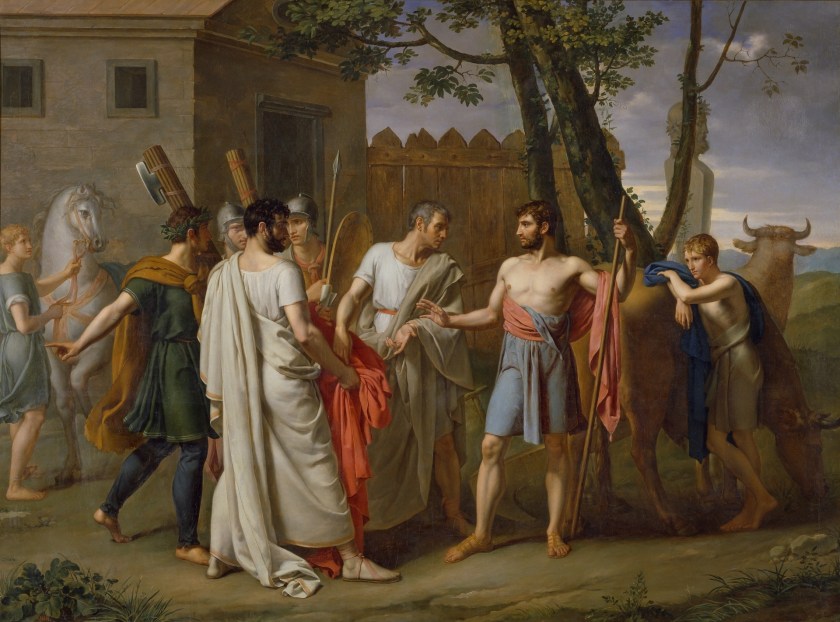
Καὶ ἐπειδὴ ὁ τῶν ἀρχαιρεσίων ἐνέστη χρόνος, καὶ ὁ κῆρυξ τὴν πρώτην τάξιν ἐκάλεσεν, εἰσελθόντες εἰς τὸν ἀποδειχθέντα τόπον οἵ τ’ ὀκτωκαίδεκα λόχοι τῶν ἱππέων καὶ οἱ τῶν πεζῶν ὀγδοήκοντα τῶν τὸ μέγιστον τίμημα ἐχόντων Λεύκιον Κοίντιον Κικιννᾶτον ἀποδεικνύουσιν ὕπατον, οὗ τὸν υἱὸν Καίσωνα Κοίντιον εἰς ἀγῶνα θανάτου καταστήσαντες οἱ δήμαρχοι τὴν πόλιν ἠνάγκασαν ἐκλιπεῖν· καὶ οὐδεμιᾶς ἔτι κληθείσης ἐπὶ τὴν ψηφοφορίαν τάξεως (τρισὶ γὰρ ἦσαν λόχοις πλείους οἱ διενέγκαντες τὴν ψῆφον λόχοι τῶν ὑπολειπομένων) ὁ μὲν δῆμος ἀπῄει συμφορὰν βαρεῖαν ἡγούμενος, ὅτι μισῶν αὐτοὺς ἀνὴρ ἐξουσίας ὑπατικῆς ἔσται κύριος, ἡ βουλὴ δὲ ἔπεμπε τοὺς παραληψομένους τὸν ὕπατον καὶ ἄξοντας ἐπὶ τὴν ἀρχήν. ἔτυχε δὲ τηνικαῦτα ὁ Κοίντιος ἄρουράν τινα ὑπεργαζόμενος εἰς σποράν, αὐτὸς ἀκολουθῶν τοῖς σχίζουσι τὴν νειὸν βοιδίοις ἀχίτων, περιζωμάτιον ἔχων καὶ ἐπὶ τῇ κεφαλῇ πῖλον. ἰδὼν δὲ πλῆθος ἀνθρώπων εἰς τὸ χωρίον εἰσιόντων τό τε ἄροτρον ἐπέσχε καὶ πολὺν ἠπόρει χρόνον, οἵτινές τε εἶεν καὶ τίνος δεόμενοι πρὸς αὐτὸν ἥκοιεν· ἔπειτα προσδραμόντος τινὸς καὶ κελεύσαντος κοσμιώτερον ἑαυτὸν ποιῆσαι παρελθὼν εἰς τὴν καλύβη καὶ ἀμφιεσάμενος προῆλθεν. οἱ δ’ ἐπὶ τὴν παράληψιν αὐτοῦ παρόντες ἠσπάσαντό τε ἅπαντες οὐκ ἐκ τοῦ ὀνόματος, ἀλλ’ ὕπατον καὶ τὴν περιπόρφυρον ἐσθῆτα περιέθεσαν τούς τε πελέκεις καὶ τἆλλα παράσημα τῆς ἀρχῆς παραστήσαντες ἀκολουθεῖν εἰς τὴν πόλιν ἠξίουν. κἀκεῖνος μικρὸν ἐπισχὼν καὶ δακρύσας τοσοῦτον εἶπεν· “ἄσπορον ἄρα μοι τὸ χωρίον ἔσται τοῦτον τὸν ἐνιαυτόν, καὶ κινδυνεύσομεν οὐχ ἕξειν, πόθεν διατραφῶμεν.” ἔπειτ’ ἀσπασάμενος τὴν γυναῖκα καὶ τῶν ἔνδον ἐπιμελεῖσθαι παραγγείλας ᾤχετο εἰς τὴν πόλιν. ταῦτα δὲ οὐχ ἑτέρου τινὸς χάριν εἰπεῖν προήχθην, ἀλλ’ ἵνα φανερὸν γένηται πᾶσιν, οἷοι τότε ἦσαν οἱ τῆς Ῥωμαίων πόλεως προεστηκότες, ὡς αὐτουργοὶ καὶ σώφρονες καὶ πενίαν δικαίαν οὐ βαρυνόμενοι καὶ βασιλικὰς οὐ διώκοντες ἐξουσίας, ἀλλὰ καὶ διδομένας ἀναινόμενοι· φανήσονται γὰρ οὐδὲ κατὰ μικρὸν ἐοικότες ἐκείνοις οἱ νῦν, ἀλλὰ τἀναντία πάντα ἐπιτηδεύοντες, πλὴν πάνυ ὀλίγων, δι’ οὓς ἕστηκεν ἔτι τὸ τῆς πόλεως ἀξίωμα καὶ τὸ σώζειν τὴν πρὸς ἐκείνους τοὺς ἄνδρας ὁμοιότητα. ἀλλὰ περὶ μὲν τούτων ἅλις.
(Dionysius of Halicarnassus, Rhōmaikē Archaiologia 10.17.3-6)

And when the day appointed for the election had come and the herald had called the first class, the eighteen centuries of knights together with the eighty centuries of foot, consisting of the wealthiest citizens, entering the appointed place, chose as consul L. Quinctius Cincinnatus, whose son Caeso Quinctius the tribunes had brought to trial for his life and compelled to leave the city. And no other class being called to vote—for the centuries which had voted were three more in be than the remaining centuries—the populace departed, regarding it as a grievous misfortune that a man who hated them was to be possessed of the consular power. Meanwhile the senate sent men to invite the consul and to conduct him to the city to assume his magistracy. It chanced that Quinctius was just then plowing a piece of land for sowing, he himself following the gaunt oxen that were breaking up the fallow; he had no tunic on, wore a small loin-cloth and had a cap upon his head. Upon seeing a crowd of people come into the field he stopped his plough and for a long time was at a loss to know who they were or what they wanted of him; then, when some one ran up to him and bade him make himself more presentable, he went into the cottage and after putting on his clothes came out to them. Thereupon the men who were sent to escort him all greeted him, not by his name, but as consul; and clothing him with the purple-bordered robe and placing before him the axes and the other insignia of his magistracy, they asked him to follow them to the city. And he, pausing for a moment and shedding tears, said only this: “So my field will go unsown this year, and we shall be indicate danger of having not enough to live on.” Then he kissed his wife, and charging her to take care of things at home, went to the city. I am led to relate these particulars for no other reason than to let all the world see what kind of men the leaders of Rome were at that time, that they worked with their own hands, led frugal lives, did not chafe under honorable poverty, and, far from aiming at positions of royal power, actually refused them when offered. For it will be seen that the Romans of to‑day do not bear the least resemblance to them, but follow the very opposite practices in everything—with the exception of a very few by whom the dignity of the commonwealth is still maintained and a resemblance to those men preserved. But enough on this subject. (tr. Earnest Cary)

Mille

1370_1

This is part 3 of 3. Part 1 is here. Part 2 is here.

Quid fluitat cibus et gula potibus undat et escis?
pasta cibis cibus es caro, vermibus, atque putrescis.
est tua cernere pallida funere membra vel ora
funere pallida, sensibus algida, seque minora.
flava vel aurea, quam per eburnea colla rotabas,
caesaries iacet, et cor et os tacet, unde tonabas.
lumina visibus auris et auribus, os caret ore,
nasus odoribus et cor amoribus, ossa calore.
ad mala pes citus ac oculus situs in muliere
collaque lactea, brachia cerea computruere.
cerea brachia tam specialia quam speciosa,
membraque lubrica continet unica parvaque fossa.
candidus antea dens, labra flammea, flos faciei
et gena lucida sunt modo putrida, pars saniei.
nunc ubi pocula, nunc ubi fercula, fercula mille?
flos ubi primulus et rubicundulus est color ille?
vox ubi fractior, illecebrosior est ubi risus,
sermoque lubricus atque phreneticus in probra visus?
nunc ubi baltheus, annulus aureus, aurea vitta?
patria nomina nunc ubi culmina sunt proavita?
rege caro sata vermibus est data factaque vermis;
regibus edita rebus et obsita, nunc es inermis.
corpus amabile nunc es inutile corpus, et atrum;
morte resolveris atque cadaveris es simulacrum.
terrea gloria nunc quasi lilia, cras quasi ventus:
pulchra fugit modo tempore postmodo morte iuventus.
splendida pectora, splendida corpora corpus habentur,
utque senilia sic iuvenilia busta videntur.
mox puer interit ut rosa deperit edita vere,
a valido vigor, eripitur nitor a muliere.
lyncea lumina mentis acumina si quis haberet,
fellea dulcia pulchraque turpia, credo, videret;
corpora candida, pectora vivida, membra venusta
ossaque regia sint modo qualia, consule, busta.
vociferantia seque minantia busta loquuntur:
“primus et ultimus, altus et infimus, hic capiuntur.”
(Bernard of Cluny, De Contemptu Mundi 1.795-830)

Why is there such a stream of food, and why does the throat overflow with drinks and meals? O flesh stuffed with food, you are food for worms, and you rot. We see your limbs pallid in death or your face pallid in death, cold to the touch, less than themselves. Your yellow golden hair which you whirled about your ivory neck lies motionless; your heart is still, and your mouth which roared is now silent. Your eyes are deprived of seeing, your ears of hearing, your mouth of speech, your nose is deprived of scents, your heart of desires, your bones of warmth. Your foot swift to evil and your eye set on a woman, your milk-white neck and waxen arms have putrefied. A single, small ditch contains your waxen arms, so special, so splendid, and your wanton limbs. Your teeth once white, your flame-red lips, the former bloom of your face and clear cheeks are now rotten, part of corruption. Where are your cups now, where are your dishes now, your thousand dishes? Where is that first bloom and that ruddy hue? Where is your softened voice, where is your enticing smile, your wanton speech and frantic glances toward lewd acts? Where is your golden belt now, your golden ring, your golden chaplet? Where are your ancient names now, your ancestral honors? Your flesh sired by kings is given to worms and becomes a worm. O flesh born of kings and covered with possessions, now you are defenseless. O lovely body, now you are useless and black. You are dissolved in death, and you are the shadow of a corpse.
Earthly glory is like lilies now, but tomorrow like the wind. Fair youth now flies away because of time, but later because of death. Noble hearts and noble bodies become a corpse, and tombs of the young are seen just as tombs of the old. A child dies soon, just as a rose put forth in spring perishes, vigor is snatched away from a healthy man, beauty from a woman. If anyone might have the eyes of a lynx and keenness of mind, he would see, I believe, that sweet things are full of gall and handsome things are ugly. Take counsel: let beautiful bodies, lively hearts, comely limbs and regal bones be now just as tombs. The resounding tombs, the menacing tombs say, “Here are held the first and the last, the high and the low.” (tr. Ronald E. Pepin)

Caro

image-2

This is part 2 of 3. Part 1 is here. Part 3 is here.

Quid caro labilis aut quid inutilis est homo? coenum.
quid, rogo, carnea gloria? glarea. quid rosa? foenum.
carnea gloria carnis et omnia, carne vigente,
sunt quasi stantia, deficientia deficiente.
cur homo nascitur aut puer editur? ut moriatur.
exit in aëra, sustinet aspera, migrat, humatur.
glarea labilis, aura volatilis est homo natus.
mane stat aggere, nec mora, vespere fertur humatus.
qui modo flos fuit, in spacio ruit unius horae.
mox rapitur, licet ingenio micet atque decore.
fit cinis infimus, ille probissimus et preciosus,
irreparabilis, irrevocabilis, officiosus.
gleba reconditur atque recluditur hospite tumba.
laus stat imaginis umbraque nominis, immo nec umbra.
vir subit Aethera, si bene; Tartara, si male gessit.
corpus humi iacet, ars perit, os tacet, aura recessit.
fex fit, homo fuit, hunc et amans spuit, horret amatus,
nosseque denegat, instat ut obtegat ocius artus,
instat ut efferat, et flet et imperat et parat urnam,
nec triduum gemit; heu! lacrimam premit ungue diurnam.
mox feretrum vehit aut feretrum praeit aut subit orans;
denique planctibus exequialibus it quasi plorans.
flens it, ovans redit; ut tumulo dedit ossa, recessit;
cessit amor pius, ut manus illius afflua cessit.
occidit, occidit hic ubi perdidit aes et amicum
qui sibi riserat; aeris amans erat, o cor iniquum!
ille probissimus, ille potissimus, ille vir, ille,
ille quid est, precor, illius et decor? urna favillae.
pulcher, amabilis, irreparabilis, unicus, aptus
instar aquae fluit, e medio fugit illico raptus.
occidit ut pecus et decor et decus omne repente,
et calor et color alget, abit dolor inde iuventae.
cur morulas paro? cara iacens caro, fex es, humaris,
esse quod es sinis; in cineres cinis extenuaris.
(Bernard of Cluny, De Contemptu Mundi 1.7161-794)

What is perishing flesh or what is useless man? Dirt. What, I ask, is the glory of the flesh? Sand. What is the rose? Dried grass. The glory of flesh and all things of flesh abide, as it were, when the flesh thrives, and they cease when the flesh ceases. Why is a man born or a child brought forth? That he might die. He goes out into the air, he bears his troubles, he departs, he is buried. As perishing sand, as a fleeting breeze has man been born. In the morning he stands on a hill—no delay—in the evening he is brought to be buried. He who was just now a blossom has fallen in the space of one hour. Although he shines with wit and beauty, he is soon snatched away. That most upright and worthy man becomes the lowest ash, that irreplaceable man cannot be called back, that dutiful man. He is buried in the earth and enclosed in a strange tomb. Praise of his statue remains, and the shadow of his name, but it is not even a shadow.
If a man has lived well, he enters heaven, but if badly, he goes to Hell. His body lies on the ground, his skill perishes, his mouth is silent, his breath has departed. He was a man, but now he becomes dregs, and his beloved friend rejects him and trembles at him, denies having known him, insists on covering his limbs quickly, insists on burying him; he weeps, he orders an urn and prepares it. He does not even mourn for three days. Alas, he presses out one day’s tears with his finger. Soon he carries the bier, or he precedes the bier, or he follows it praying. At last he goes, as if crying, to the funeral lamentations. He goes weeping, but he returns rejoicing. As soon as he gave the bones to the grave, he left. His pious love ceased as soon as that man’s copious hand ceased. Love died, it died when he lost the money and the friend who had smiled on him. He was a friend of the money, O unjust heart! That most upright man, that most powerful man, that manly man, what is that man and his glory, I ask? An urn of ashes. The handsome, loveable, irreplaceable, singular, talented man vanished like water; he fled, snatched instantly from our midst. All his beauty and honor died suddenly, as the cattle; his warmth and hue grow cold, then the anguish of youth departs. Why do I delay? Dear flesh lying dead, you are dregs, you are being buried, you cease to be what you are. O ash, you are reduced to ashes! (tr. Ronald E. Pepin)

Spuatur

maggotpile_lrg.preview

This is part 1 of 3. Part 2 is here. Part 3 is here.

Terrea gloria, terrea copia plena favillae.
gloria corruit et status aruit illius ille.
audiat auribus interioribus, audiat orbis.
orbis ut orbita vertitur incita turbine mortis;
praeterit et perit et nebulam gerit orbis amoenum.
tollitur ocius ipse vel ipsius omne serenum.
orbis honor levis est, atomus brevis, et breve festum;
nil dat amabile, nil amat utile, ridet honestum.
hosteque pectoris hosteque corporis intus et extra,
horruit aridus, aruit horridus et sua festa.
orbis amor perit atque suos terit orbis amantes,
et sua gaudia, gaudia tristia vera putantes.
evigilabimus an remanebimus in lue mundi,
quem patet ignibus, alluvionibus, hoste retundi?
quid vaga, quid rea corda colunt ea quae nihil extant,
quae breve plaudere, non breve plangere, post breve praestant?
cur caro proximus ignis et intimus hostis amatur?
carnis amor perit; est rosa, fex erit; ergo spuatur.
o caro candida, post breve foetida plenaque fecis,
flos modo, mox fimus, et fimus infimus, unde tumescis?
o caro carnea iam, modo glarea, postmodo vermis;
nunc homo, cras humus, istud enim sumus. unde superbis?
o caro debilis, o cito labilis, o male mollis,
quid petis ardua, quid tibi cornua ferrea tollis?
quid tibi crapula milleque fercula milleque pastus?
res lue proflua vivaque mortua, cur tibi fastus?
unde superbia? fex tua gloria; morte remissa.
fex tua prandia, fex tua gaudia, fex es et ipsa.
quid tibi balnea vestis et aurea? quid tibi venter?
culta licet caro, semper eris caro, nec caro semper.
post hominem cinis es, caro desinis esse, putrescis.
vis tibi quantula sit docet urnula massaque fecis.
o caro lactea, nunc rosa, postea sarcina vilis,
flos tibi corruet et rosa defluet haec iuvenilis.
quae modo florida, cras erit horrida plus loquor, horror,
horror amantibus horror et hostibus, omnibus horror.
cras eris horrida, cras eris arida, vilis, amara,
tu modo candida, tu modo florida, tu caro cara.
tristia replico, defluet illico forma decoris,
illico defluet, illico corruet, hic nitor oris.
plurima quid sequor? illa caro, decor ille peribit,
haec Venus, hic calor, ars ea seu valor ibit, obibit.
(Bernard of Cluny, De Contemptu Mundi 1.719-760)

Earthly glory, earthly abundance is full of ashes. Glory fails and the condition of abundance is dried up. Let the world hear, let it hear with its inner ears. The world is turned as a wheel moved by the wind of death. The world’s charm is mist: it passes away and vanishes. The world’s esteem is fickle, its moment is brief, its feast is short. The world bestows nothing loveable, it loves nothing useful, it ridicules integrity. Because of the enemy of the heart inside and the enemy of the body outside, the withered world shudders, the shuddering world and its feasts have withered. Love of the world perishes, and the world wears down its own friends, those who think that its joys, its mournful joys, are true joys. Shall we be watchful, or shall we remain in the mire of a world which is clearly weakened by fires, floods and foes? Why do our fickle hearts cherish things that are nothing, things which our guilty hearts briefly rejoice about, but do not briefly grieve about a short time later? Why is the flesh, our nearest fire and inmost enemy, loved? Love of the flesh perishes. It is a rose, but it will be dregs. Thus, let it be spat out.
O beautiful flesh, after a short time stinking and full of filth, now a flower but soon dung, the lowest dung, why are you puffed up? O flesh, you are flesh now, soon dirt, hereafter worms; you are a man now, tomorrow earth, for that we are. Why are you proud? O weak flesh, O flesh swiftly-perishing, O flesh wickedly soft, why do you seek high places, why take iron horns for yourself? What is this drunkenness of yours, these thousand dishes and thousand foods? O thing flowing with decay, thing living and dead, why are you arrogant? Where does your pride come from? Your glory is dregs, it is removed by death. Your meals are dregs, your joys are dregs, and you yourself are dregs. What are these baths of yours, this golden attire, this belly? Although your flesh is adorned, you will always be flesh—not even always flesh. After being a man, you are ashes, you cease to be flesh, you decay. A small urn and a lump of clay show how little strength you have. O milky flesh, now a rose, hereafter a filthy burden, your blossom will fall and this youthful rose will droop. Flesh blooming now tomrorrow will be terrifying—I say more—it will be a terror, a terror to friends, a terror to foes, a terror to all. Tomorrow you will be terrifying, tomorrow you will be withered, filthy and offensive, you flesh now shining, you flesh now blooming, you dear flesh. I repeat sad things—the shape of beauty will soon droop, soon this splendor of face will droop, soon it will fall. Why do I pursue more? That flesh, that beauty will vanish, this passion, this warmth will depart, this skill or this strength will die. (tr. Ronald E. Pepin)

Lousthai

Bathing-beauties-baby-Small

Ὁ δὲ τρόπος ὁ τοῦ λουτροῦ καὶ τῆς τρίψεως τοιοῦτός ἐστιν. δεῖ πρῶτον οἰκημάτιον ἐκλέγειν συμμέτρως θερμὸν καὶ τὴν αὐγὴν ἀποκλίνειν. καθίσασαν δὲ τὴν μαῖαν καὶ ἐπὶ τῶν μηρῶν καὶ ἐπὶ τῶν γονάτων ἁπλώσασαν ὠμόλινον 〈ἢ〉 ῥάκος, ἔπειτα κατακλίνειν τὸ βρέφος καὶ ἀποσπαργανώσασαν ἀλείφειν ἐλαίῳ χλιαρῷ· εἶτα κατέχουσαν τῇ εὐωνύμῳ χειρὶ τὸν δεξιὸν βραχίονα ὑπὸ τὴν μασχάλην, ὥστε τὸ στῆθος αὐτοῦ τῷ πήχει προσαναπαύεσθαι παρεγκεκλιμένου ποσῶς ἐπὶ τὸ δεξιὸν πλευρόν, καταντλεῖν διὰ τῆς δεξιᾶς χειρὸς ὕδωρ θερμόν τε καὶ εὔκρατον ὡς πρὸς τὴν τοῦ βρέφους εὐαρέστησιν· τὸ γὰρ ὡς πρὸς ἡμᾶς εὔκρατον ζεστότερον ἀκμὴν τῷ νηπίῳ διὰ τὴν ὑπερβάλλουσαν τρυφερίαν τοῦ σώματος. παρεπιχέειν δέ τινα κατὰ λόγον ἁρμόσει ὕδωρ θερμόν, ἐπεὶ ψύχεται τὸ πρῶτον, καὶ καταντλεῖν μέχρις ἂν εὐανθὲς γένηται τὸ σῶμα καὶ ὁμαλῶς θερμόν. εἶτα στρέφειν τὸ βρέφος καὶ ὑπτιωθέντος αὐτοῦ προσαπολούειν καὶ ἀποκαθαίρειν τὰ μηρία καὶ τὴν ἕδραν καὶ τὰ περὶ τὸν τράχηλον καὶ τὰ περὶ τὰς μασχάλας, ῥύπος γὰρ αὐτοῖς περιφύεται, κἄπειτα λοιπὸν εἰς καθαρὸν ὕδωρ ὴ ἔλαιον ἀποβαπτομένῳ τῷ λιχανῷ τὰ ἐγκείμενα τῷ στόματι σίελα κομίζεσθαι καὶ ἡσυχῆ γλῶττάν τε καὶ οὖλα καὶ χαλινὰ διαψηλαφᾶν, κούφως δὲ θλίβειν τὸ ἦτρον εἰς ὑπόμνησιν ἀπουρήσεως. μετὰ δέ τινας ἡμέρας καὶ διὰ γαλακτώδους ὕδατος μετὰ τὸ θερμὸν ἐθίζειν αὐτὸ λοῦσθαι, χάριν τῆς πρὸς τὴν ψυχρολουσίαν συνηθείας, ὑφ’ ἧς δυσπερί ψυκτον φυλαχθήσεται.
(Soranus, Gunaikeia 2.31(100))

The method of bathing and massage is as follows: One must first select a small room which is moderately warm, and must exclude bright light. After the midwife has sat down and spread a linen towel <or> a piece of cloth over her lap and knees, she should then lay the newborn down and, having taken off the swaddling clothes, anoint it with lukewarm olive oil. Next, with her left hand she should hold its right arm under the armpit, so that its breast rest upon her forearm while it is a little inclined toward the right side; and with her right hand she should pour warm water, well-tempered to the pleasure of the newborn. For water that is well-tempered for us is yet too hot for the child because of the extraordinary delicacy of its body. And it will be proper in proportion to add some warm water when the first becomes cool and to pour water over the body till it becomes flushed and evenly warm. Then she must turn the newborn and while it is on its back she should furthermore wash and cleanse its thighs, buttocks, the parts around the neck and armpits (for the dirt clings to them)·. Then, finally, with her forefinger dipped into pure water or olive oil, she should remove the saliva which is in the mouth, should handle gently the tongue, the gums, and the corners· of the mouth and should press lightly the lower abdomen to provoke urination. But after some days the newborn should become accustomed to being washed with tepid water after the warm water, with a view to the practice of cold bathing, which will keep it f rmn becoming easily chilled. (tr. Owsei Temkin)

Dēmoboros

Pierre-Narcisse Guérin, De strijd tussen Achilles en Agamemnon
Pierre-Narcisse Guérin, La colère d’Achille contre Agamemnon

Πηλεΐδης δ’ ἐξαῦτις ἀταρτηροῖς ἐπέεσσιν
Ἀτρεΐδην προσέειπε, καὶ οὔ πω λῆγε χόλοιο·
“οἰνοβαρές, κυνὸς ὄμματ’ ἔχων, κραδίην δ’ ἐλάφοιο,
οὔτέ ποτ’ ἐς πόλεμον ἅμα λαῷ θωρηχθῆναι
οὔτε λόχον δ’ ἰέναι σὺν ἀριστήεσσιν Ἀχαιῶν
τέτληκας θυμῷ· τὸ δέ τοι κὴρ εἴδεται εἶναι.
ἦ πολὺ λώϊόν ἐστι κατὰ στρατὸν εὐρὺν Ἀχαιῶν
δῶρ’ ἀποαιρεῖσθαι ὅς τις σέθεν ἀντίον εἴπῃ·
δημοβόρος βασιλεὺς, ἐπεὶ οὐτιδανοῖσιν ἀνάσσεις·
ἦ γὰρ ἂν, Ἀτρεΐδη, νῦν ὕστατα λωβήσαιο.
ἀλλ’ ἔκ τοι ἐρέω καὶ ἐπὶ μέγαν ὅρκον ὀμοῦμαι·
ναὶ μὰ τόδε σκῆπτρον, τὸ μὲν οὔ ποτε φύλλα καὶ ὄζους
φύσει, ἐπεὶ δὴ πρῶτα τομὴν ἐν ὄρεσσι λέλοιπεν,
οὐδ’ ἀναθηλήσει· περὶ γάρ ῥά ἑ χαλκὸς ἔλεψε
φύλλά τε καὶ φλοιόν· νῦν αὖτέ μιν υἷες Ἀχαιῶν
ἐν παλάμῃς φορέουσι δικασπόλοι, οἵ τε θέμιστας
πρὸς Διὸς εἰρύαται· ὃ δέ τοι μέγας ἔσσεται ὅρκος·
ἦ ποτ’ Ἀχιλλῆος ποθὴ ἵξεται υἷας Ἀχαιῶν
σύμπαντας· τότε δ’ οὔ τι δυνήσεαι ἀχνύμενός περ
χραισμεῖν, εὖτ’ ἂν πολλοὶ ὑφ’ Ἕκτορος ἀνδροφόνοιο
θνῄσκοντες πίπτωσι· σὺ δ’ ἔνδοθι θυμὸν ἀμύξεις
χωόμενος ὅ τ’ ἄριστον Ἀχαιῶν οὐδὲν ἔτισας.”
ὥς φάτο Πηλεΐδης, ποτὶ δὲ σκῆπτρον βάλε γαίῃ
χρυσείοις ἥλοισι πεπαρμένον, ἕζετο δ’ αὐτός…
(Homer, Il. 1.223-246)

But Achilles rounded on Agamemnon once again,
lashing out at him. not relaxing his anger for a moment:
“Staggering drunk, with your dog’s eyes. your fawn’s heart!
Never once did you arm with the troops and go to battle
or risk an ambush packed with Achaea’s picked men—
you lack the courage, you can see death coming.
Safer by far, you find, to foray all through camp,
commandeering the prize of any man who speaks against you.
King who devours his people! Worthless husks, the men you rule—
if not, Atrides, this outrage would have been your last.
I tell you this, and I swear a mighty oath upon it…
by this, this scepter, look,
that never again will put forth crown and branches,
now it’s left its stump on the mountain ridge forever,
nor will it sprout new green again, now the brazen ax
has stripped its bark and leaves, and now the sons of Achaea
pass it back and forth as they hand their judgments down,
upholding the honored customs whenever Zeus commands—
This scepter will be the mighty force behind my oath:
someday, I swear, a yearning for Achilles will strike
Achaea’s sons and all your armies! But then, Atrides,
harrowed as you will be, nothing you do can save you—
not when your hordes of fighters drop and die,
cut down by the hands of man-killing Hector! Then—
then you will tear your heart out, desperate, raging
that you disgraced the best of the Achaeans!”
Down on the ground
he dashed the scepter studded bright with golden nails,
then took his seat again.
(tr. Robert Fagles)

Trux

6474038ac48f9dc06b3237d40c07157d--zombie-weapons-battle-axe

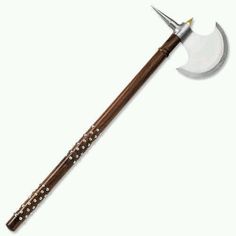
Stabat fulgentem portans in bella bipennem
Cinyphius socerique miser Magonis inire
optabat pugnam ante oculos spe laudis Isalcas,
Sidonia tumidus sponsa vanoque superbus
foedere promissae post Dardana proelia taedae.
huic immittit atrox violentas Appius iras
conantique gravem fronti librare securim
altior insurgens galeam super exigit ictum.
at fragilis valido conamine solvitur ensis
aere in Cinyphio, nec dispar sortis Isalcas
umbonem incerto detersit futilis ictu.
tum quod humo haud umquam valuisset vellere saxum,
ni vires trux ira daret, contorquet anhelans
Appius et lapsu resupino in terga cadentem
mole premit scopuli perfractisque ossibus urget.
vidit coniuncto miscens certamina campo
labentem socer, et lacrimae sub casside fusae
cum gemitu, rapidusque ruit: data foedera nuper
accendunt animos expectatique nepotes.
iamque aderat clipeumque viri atque immania membra
lustrabat visu, propiorque a fronte coruscae
lux galeae saevas paulum tardaverat iras.
haud secus, e specula praeceps delatus opaca,
subsidens campo submissos contrahit artus,
cum vicina trucis conspexit cornua tauri,
quamvis longa fames stimulet, leo: nunc ferus alta
surgentes cervice toros, nunc torva sub hirta
lumina miratur fronte ac iam signa moventem
et sparsa pugnas meditantem spectat harena.
(Silius Italicus, Punica 5.287-315)

Isalcas stood near; he came from Cinyps, and his weapon was a shining axe; his ambition, poor wretch, was to fight and win glory under the eyes of Mago, his father-in-law; for he was proud of his Carthaginian bride-to-be, and flattered by the vain promise that, when war with Rome was over, they should be wedded. Fierce Appius turned his furious rage against Isalcas, and, rising to his full height, delivered his stroke at the helmet, while the other sought to aim his heavy axe at the forehead. But the brittle sword broke against the helmet of the Cinyphian, so sturdy was the stroke. Nor was Isalcas more fortunate: he missed his mark and only cut off the boss of the Roman’s shield. Then Appius, breathing hard, swung aloft a stone, which he could never have lifted from the ground but for the strength that anger gave him, and crushed his foe as he fell backwards with the heavy boulder, and rammed it down upon the shattered bones. Mago, who was fighting not far away, groaned when he saw his son-in-law fall, and the tears fell behind his helmet. Then he rushed up in haste; the marriage he had lately approved, and his hope of grandchildren, stirred his rage. On he came and surveyed the shield and the huge limbs of Appius; and the light that shone from the front of the gleaming helmet, seen at close quarters, cooled his fierce wrath for a space. So a lion, that has rushed down from a wooded height, crouches down upon the plain and gathers his limbs under him, when he sees hard by the horns of a fierce bull, even though long fasting urges him on; the beast stares now at the starting muscles on the great neck, and now at the savage eyes beneath the shaggy forehead, and watches the bull preparing for action and pawing the dust in readiness for fight. (tr. James Duff Duff)

Hōrisen

Statute-of-Limitations-image-5.3.18

Ὁ μὲν τοίνυν νόμος, ὦ ἄνδρες Ἀθηναῖοι, σαφῶς οὑτωσὶ τὸν χρόνον ὥρισεν· Ἀπολλόδωρος δ’ οὑτοσὶ παρεληλυθότων ἐτῶν πλέον ἢ εἴκοσιν τὴν ἑαυτοῦ συκοφαντίαν ἀξιοῖ περὶ πλείονος ὑμᾶς ποιήσασθαι τῶν νόμων, καθ’ οὓς ὀμωμοκότες δικάζετε. καίτοι πᾶσι μὲν τοῖς νόμοις προσέχειν εἰκός ἐσθ’ ὑμᾶς, οὐχ ἥκιστα δὲ τούτῳ, ὦ ἄνδρες Ἀθηναῖοι. δοκεῖ γάρ μοι καὶ ὁ Σόλων οὐδενὸς ἄλλου ἕνεκα θεῖναι αὐτὸν ἢ τοῦ μὴ συκοφαντεῖσθαι ὑμᾶς. τοῖς μὲν γὰρ ἀδικουμένοις τὰ πέντ’ ἔτη ἱκανὸν ἡγήσατ’ εἶναι εἰσπράξασθαι· κατὰ δὲ τῶν ψευδομένων τὸν χρόνον ἐνόμισεν σαφέστατον ἔλεγχον ἔσεσθαι. καὶ ἅμ’ ἐπειδὴ ἀδύνατον ἔγνω ὂν τούς τε συμβάλλοντας καὶ τοὺς μάρτυρας ἀεὶ ζῆν, τὸν νόμον ἀντὶ τούτων ἔθηκεν, ὅπως μάρτυς εἴη τοῦ δικαίου τοῖς ἐρήμοις.
(Demosthenes, Or. 36.26-27)

So the law, men of Athens, defines the time quite clearly. But this man Apollodorus, after the passing of more than twenty years, is asking you to set his malicious accusation above the laws in accordance with which you are sitting as sworn judges. But you are expected to attend to all the laws, and not least to this one, men of Athens. It seems to me that Solon enacted it for no other purpose than to protect you from malicious accusations. He considered that the period of five years was sufficient for victims to obtain redress. He believed that time would provide the surest refutation of liars, but he also realized that it was impossible for contracting parties and witnesses to live forever, and so he enacted this law to replace them and to be a witness of justice for those who have no one to support them. (tr. Douglas M. MacDowell)